






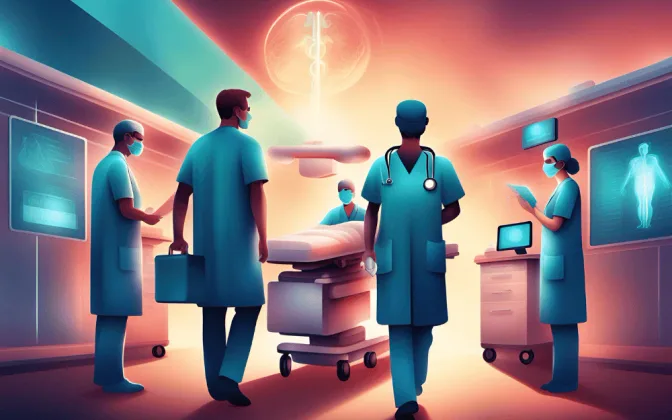
ERP as medical software is a platform that connects patient records, billing, inventory, payroll, and administration in one system. Hospitals, clinics, and other healthcare providers use it to run daily operations.
Integrated data matters because patient, financial, and stock information often sits in separate tools. One connected record lets staff find accurate information quickly and supports safer, better-informed decisions.
Key Takeaways
ERP as medical software connects patient, billing, and inventory data in one system.
Digital records give medical staff immediate access to patient data.
Role-based access keeps patient data private and secure.
Integrated finance tools track payments, expenses, and inventory accurately.
What Is ERP as Medical Software?
ERP as medical software is an integrated platform that manages the administrative and operational side of a healthcare business. It links finance, inventory, payroll, procurement, and patient-related records.
Unlike a standalone tool for one task, an ERP shares data across departments. Billing, stock, staffing, and patient information stay consistent without being typed again in each system.
The main users are:
- Hospitals and clinics: coordinate admissions, billing, supplies, and staff schedules.
- Healthcare administrators: monitor costs, payroll, and operational performance.
- Medical staff: reach patient information and requests through role-based permissions.
- Insurance providers: work from shared records and payment details with providers.
These users depend on the same platform, so access rights matter as much as features. Each role should see only the information needed for its work, which also protects patient privacy.
"In healthcare, a delayed or inconsistent record slows every department. One connected system means billing, stock, and patient information all start from the same facts."
Benefits of ERP as Medical Software
Implementing ERP software in healthcare helps providers streamline daily operations, improve patient data management, and make more informed decisions through connected information across departments.
Easy access to the medical record

Kubanych Takyrbashev, Founder of NAO, shares “When a patient makes an appointment or raises a medical concern, nurses and medical staff should immediately access the patient’s data. Instead of using manual methods through written administration, health service providers can easily access data with one click. During the COVID-19 pandemic, medical centers that had already updated the system had more advantages over those that had not.
The pandemic is impacting an overburdened healthcare system. One way that can help alleviate this problem is by adopting health technology. Examples are the automation of monitoring indicators such as body temperature or oxygen levels and medical and travel history. Patients who need to be handled with medical care as soon as possible can be prioritized. Healthcare providers can also connect with more patients.”
Maintain patient privacy and safety with medical software

Medical records are confidential, and paper folders offer little protection against loss or misuse. Linking electronic medical record (EMR) data to the ERP restricts who can view or edit each record.
With ERP software in health care, patients, providers, and insurers can keep the information they need on one platform. Access controls keep it available only to authorised staff.
Achieve accurate cost monitoring with medical software
Managing the financial process is one of the basics. ERP can be used as the best medical billing software program. ERP systems not only help track patient payments but also help businesses monitor their expenses.
In addition, optimize various backend financial functions, including payroll and inventory management software. This automated system also helps reduce the possibility of human error in both administrative operations and data input related to inventory.
The latest cloud-based solutions, like CollaborateMD billing software, are extra convenient as they let you achieve accuracy and convenience in all financial management matters, without relying on locally installed software.
Healthcare providers have two main objectives that are difficult to achieve simultaneously: quality patient care and cost reduction. However, healthcare institutions can invest in ERP systems that make patient care better, reduce clinical errors, and increase healthcare providers’ efficiency.

Trends and adaptation of health system technology
The healthcare sector needs the latest technological updates, especially trends around disease treatment, diagnosis, and prevention. On the other hand, it adapts to changes because technical sophistication will make the industry more substantial and competitive. Therefore, appropriate attention is needed so that services can run effectively.
The healthcare sector also needs to adapt to changes in workforce demands, particularly as healthcare businesses face challenges in maintaining adequate staffing levels. For professionals considering flexible career opportunities, healthcare travel jobs that pay well can provide another option while helping healthcare facilities address temporary or specialized staffing needs.
The healthcare sector also needs to adapt to changes in workforce demands, particularly as healthcare organizations face challenges in maintaining adequate staffing levels. For professionals considering flexible career opportunities, healthcare travel jobs that pay well can provide another option while helping healthcare facilities address temporary or specialized staffing needs.
Also read: 5 Main Benefits of ERP Software for Professional Services
Assist strategic planning
When you run a hospital, implementing a medical customer engagement system can provide better knowledge to make better decisions. This software can calculate and assess operational efficiency by identifying and targeting areas for improvement.
When areas for improvement are identified, it will be easier for top management to track and determine whether the existing policies are helpful or not.
Also read: How Can ERP Software Boost Strategic Planning?
Conclusion
Implementing an ERP system from HashMicro for the healthcare industry helps put healthcare professionals, insurance companies, and patients under one umbrella and centralizes all critical information.
In addition, user-friendly and innovative ERP solutions enable service providers to improve quality care and patient safety. Switch to HashMicro, click here, and get a free demo right now!
Frequently Asked Questions
In healthcare operations, ERP means enterprise resource planning: software that connects finance, inventory, payroll, procurement, and administration in one system. In clinical research, ERP can also mean event-related potential.
No. Accounting software handles financial tasks such as billing, ledgers, and reporting. An ERP includes accounting and also connects inventory, payroll, procurement, and other departments.
AI is generally being added to ERP systems rather than replacing them. ERP holds the structured business data and workflows, while AI features help analyse that data and automate routine tasks.
It is a certificate or training credential that shows skills in using, configuring, or implementing an ERP system. Vendors and training providers offer them, and everyday users usually need role-based training instead.