







Managing production schedules, supply chains, and inventory across complex operations requires an ERP system that understands the demands of your industry. Epicor ERP is designed to support businesses in sectors such as manufacturing and distribution, but its suitability depends on how well its capabilities match your operational needs. Before committing to the software, it is worth examining what it offers and where it may fall short.
This review explores Epicor ERP’s key features, advantages, limitations, and suitability for different business requirements. For businesses still comparing their options, we’ll also look at alternative ERP solutions with different capabilities and approaches to business management, making it easier to evaluate which platform best aligns with your goals.
Key Takeaways
Epicor ERP is designed to manage and coordinate business processes.
Features of the Epicor ERP system include optimizing production processes and managing inventory more efficiently.
Despite its advanced features, Epicor ERP has several drawbacks to consider.
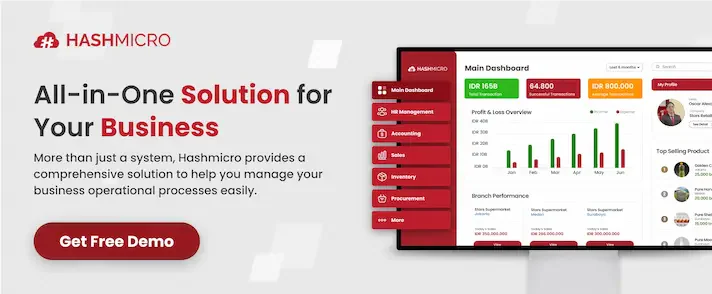
HashMicro is an alternative ERP software to enhance business operational efficiency.
What is Epicor ERP?
Epicor ERP is an enterprise resource planning system engineered to aid in managing and coordinating various business processes. It boasts a range of advanced features and modules, from manufacturing management, sales, accounting, human resources, to customer service.
Founded in 1972 and headquartered in Texas, USA, Epicor continues to evolve its products to meet changing business and technology needs, expanding its global footprint across numerous countries.
Features of Epicor ERP
Epicor ERP provides a broad range of features to support manufacturing, distribution, and financial operations. While the platform is robust, businesses should assess how each capability aligns with their operational needs.
Key features of Epicor ERP include:
- Manufacturing & production management: Supports production planning, scheduling (MRP), quality management, product management, and engineer-to-order processes.
- Supply chain management: Includes inventory control, purchasing, warehouse management, logistics, and traceability.
- Financial management: Covers general ledger, accounts payable and receivable, budgeting, costing, financial analysis, and fixed asset management.
- Sales & customer management: Enables sales order processing and customer relationship management to align sales activities with inventory and production.
- Services & asset management: Supports asset tracking and field service operations for maintenance and service-based workflows.
- Business intelligence: Provides real-time data analysis, reporting, and dashboards for better operational and financial visibility.

Pros of Epicor ERP
According to PCMag, Epicor ERP stands out in the enterprise resource planning market for its comprehensive functionality. This wide range of capabilities enables organizations to integrate core operations within a single system, improving data connectivity, streamlining workflows, and enhancing overall efficiency.
From my experience, the system’s flexibility through its modular design can be beneficial for businesses with different needs. The option to add or adjust modules allows the software to be adapted more effectively to specific operational requirements.
In my experience, Epicor ERP comes with extensive documentation and training resources. Although ERP systems can be complex, the availability of guides, tutorials, and modules makes adoption easier and assists teams in getting better value from the system.
Businesses that prefer a hosted setup can also review cloud ERP for Singaporean businesses.
Cons of Epicor ERP
From my experience, even though Epicor ERP offers many benefits and strong features, there are also several challenges that businesses need to consider before implementation.
According to PCMag, some of the main issues include:
1. Process Flowcharts Are Not Standard
I have noticed that Epicor ERP does not come with standard process flowcharts. For organizations that rely heavily on visual tools to understand and optimize workflows, this can create difficulties.
Flowcharts are often important for mapping operational steps, identifying bottlenecks, and maintaining clarity in process management. Without standard flowcharts, training employees and ensuring process transparency may become more challenging.
2. May Be Too Complex for Smaller SMEs
In my observation, the system’s complexity suits larger organizations but can be overwhelming for smaller SMEs. Its extensive features and customization options may demand more resources than these businesses usually have, making the software feel cumbersome rather than supportive.
Smaller teams may find a simpler platform among the best ERP software options a better starting point.
3. Additional Cost for Modules
I also find that Epicor ERP’s pricing model can be a concern. The core system provides strong functionality, but many businesses discover they need additional modules such as advanced reporting, CRM, or industry-specific tools to fully meet their needs.
These add-ons come at an extra cost, which can significantly increase the total cost of ownership and create budget challenges, particularly for smaller organizations.
4. Confusing Features for New Users
Another issue I have seen is that the wide range of features can be confusing for new users. Teams transitioning from simpler systems may find the interface and functionality challenging to navigate at first.
This can slow adoption and reduce productivity as employees adjust. While training and ongoing support help ease the learning curve, they also require further investment in both time and resources.
| Pros | Cons |
|
|
HashMicro as a Superior ERP Alternative to Epicor

HashMicro is an innovative and integrated ERP software alternative suitable for various industries. With advanced features designed to enhance operational efficiency and business performance, HashMicro has earned the trust of over 2250 clients in major Singaporean industries, including leading company like Toyota. This trust underscores HashMicro’s reputation as a reliable and credible ERP solution provider in Singapore.
Deeply understanding Singaporean business regulations, HashMicro ensures its ERP solutions comply with applicable standards, helping companies avoid compliance risks.
HashMicro stands out with several advantages, offering significant added value for businesses, including:
- Detailed customization to meet business needs: Unlike Epicor, HashMicro provides the flexibility to customize the system according to the unique requirements of different industries. This adaptability allows users to swiftly align the system with rapidly changing business needs without complex programming.
- Intuitive and user-friendly interface: HashMicro prioritizes user experience with an intuitive and straightforward user interface, facilitating quick access and utilization of system features, enhancing productivity and user satisfaction.
- Better integration with other systems: HashMicro’s easy-to-implement integrations enable businesses to connect their ERP solution with other business functions like manufacturing, sales, supply chain, accounting, HR, and CRM, enhancing overall operational efficiency.
- Stronger analytical capabilities: HashMicro offers powerful analytical features, including real-time data analysis, detailed reporting, and in-depth data visualization, empowering businesses to identify trends, predict customer behavior, and make data-driven decisions.
- Web and mobile compatibility: HashMicro has developed responsive solutions accessible on various devices, including desktops, tablets, and smartphones, allowing users to access and use their system anywhere, anytime, without sacrificing functionality or convenience.
- Unlimited users without additional costs: HashMicro differentiates itself in the software market by offering an ERP system that allows unlimited users without extra charges, enabling entire teams to benefit from the ERP software without financial strain.
- Responsive customer support: HashMicro’s customer support excellence lies in its responsive team, effective integration with development and implementation teams, and a deep understanding of customer needs, ensuring users receive timely assistance and training.
For a feature-by-feature breakdown of both platforms, see HashMicro vs Epicor.
Hashy AI Fact

One-size-fits-all systems miss the mark. With Hashy AI, you can train the AI using your own data, so every insight, action, and automation is tailored to your unique workflows.
Request a free demo today!
Conclusion
HashMicro is an ideal choice for businesses in need of an effective and reliable ERP software. Offering more extensive customization features, HashMicro allows businesses to tailor the system to their specific needs.
With its comprehensive integration capabilities and robust analytics, HashMicro provides the necessary tools to enhance your business efficiency and performance. Therefore, HashMicro is more than just an ERP solution; it is a strategic partner in realizing your business vision.
Enhance productivity and integration across departments with HashMicro ERP. Receive up to 70% implementation funding via the CTC Grant. Schedule a free demo today.
Frequently Asked Questions
Epicor does not publish a fixed price list. Cost is quote-based and usually depends on the number of users, the modules selected, and the deployment model. On-premise setups typically add a larger upfront licence fee plus ongoing maintenance.
Yes, it can be. Epicor ERP is offered as a cloud subscription, as a hosted deployment, and as an on-premise installation, so businesses can choose the model that fits their IT resources and data policies.
Epicor Kinetic is the current brand name for Epicor ERP, so references to either name generally describe the same product line. It keeps the manufacturing and distribution focus described in this review.
Epicor ERP is most often compared with Infor CloudSuite, Oracle NetSuite, SAP Business One, Microsoft Dynamics 365, and Acumatica. The right comparison depends on industry, company size, and how much manufacturing depth the business needs.