












Managing a supply chain today means aligning planning, purchasing, inventory, production, and delivery so everything stays efficient and flexible.
The problem is these tasks often run in separate tools or spreadsheets, causing data gaps, slow coordination, and limited visibility when things change.
An ERP system connects the workflow in one place, improving control and enabling faster decisions. Which part of your supply chain is the most difficult right now?
Key Takeaways
|
What is Supply Chain Ecosystem

A supply chain ecosystem includes all the activities involved in the creation, production, distribution, and consumption of goods and services. The ecosystem comprises various stakeholders. Such as suppliers, manufacturers, distributors, retailers, customers, and regulators, who interact to keep the supply chain running smoothly.
The supply chain ecosystem is dynamic and constantly evolving. Therefore, companies need to be agile and adaptable to stay competitive in the marketplace. One key tool for managing and optimizing supply chain enhancement software is an ERP system.
What is an ERP System in Supply Chain Management?
An ERP system for supply chain management helps me achieve greater efficiency and productivity by streamlining processes and automating manual tasks. It also allows me to collaborate more effectively with different stakeholders within the supply chain ecosystem.
As a manufacturer, distributor, retailer, or logistics provider, I rely on an ERP system to manage operations seamlessly. It enables me to integrate procurement, production, inventory, and delivery, ensuring better coordination and efficiency across the entire supply chain management for businesses.
Difference Between ERP System and Supply Chain Management

Here’s a quick side-by-side view to clarify how ERP and Supply Chain Management (SCM) differ in scope and focus.
| Aspect | ERP System | Supply Chain Management (SCM) |
|---|---|---|
| Primary focus | Integrates and automates core business functions across departments. | Manages end-to-end flow of goods, information, and services from suppliers to customers. |
| Scope | Broad: finance, accounting, HR, sales, inventory, operations, and more. | Narrower: procurement, production planning, inventory, logistics, fulfillment. |
| Main goal | Create a single source of truth for company-wide data and improve efficiency. | Improve delivery speed, cost control, resilience, and customer service levels. |
| Typical outputs | Financial reports, HR records, unified dashboards, standardized workflows. | Demand plans, purchase plans, inventory targets, shipment status, and fulfillment performance. |
| Relationship | Often, the “umbrella” system can include SCM capabilities. | Can be a dedicated function/module, sometimes inside ERP, sometimes a separate suite. |
In short, ERP runs the whole business on one data backbone, while SCM concentrates on planning and executing how products move from source to customer.
The Vital Role of ERP in Supply Chain Management
Supply chain management coordinates the flow of goods and services from suppliers to customers to meet demand, and ERP supports this by connecting planning, execution, and data in one system. It helps manage internal movement of goods, align supply with demand, and improve visibility across the supply chain.
Supply chain planning
ERP supports supply chain planning by giving real-time visibility across demand, inventory, and production. With accurate forecasts and automated planning, businesses can reduce waste, align output with demand, and support just-in-time replenishment.
Purchase, procurement, and fulfillment
ERP streamlines procurement by automating purchasing, tracking inventory, and centralizing supplier data. This allows teams to monitor purchase orders, evaluate supplier performance, and respond faster to potential supply disruptions.
Financing
ERP plays a key role in managing the financial side of the supply chain, including payables, credit limits, and cash flow. By keeping transactions and payments up to date, businesses can avoid credit issues and maintain smooth relationships across the supply network.
Customer service
By integrating customer service with supply chain data, ERP helps businesses respond faster and more accurately to customer needs. Real-time access to orders, inventory, and delivery status enables more consistent and personalized service.
Monitoring and maintenance
ERP enables continuous monitoring through real-time KPIs and operational data. With automated alerts and predictive maintenance insights, businesses can prevent disruptions, reduce downtime, and keep operations running efficiently.
Read More: Cost Structure in 2026: Direct vs. Indirect Costs & Allocation


Competitive Benefits of ERP in Supply Chain Management

ERP improves modern supply chains by automating the procurement-to-delivery workflow, reducing overhead and operational costs. It connects material, financial, and information flows from suppliers to customers, helping retailers control storage costs and meet demand.
- Streamline workflow: Automates handoffs between teams, so updates and alerts happen without manual follow-ups.
- Boost efficiency: Reduces manual work and errors while giving real-time visibility for faster decisions.
- Enhance flexibility: Helps teams react quickly to disruptions using forecasting and scenario planning.
- Reduce overall costs: Centralizes supply chain data to cut inefficiencies, delays, and excess handling.
- Increase customer retention: Improves delivery accuracy and reliability, so customers trust your timelines.
- Lower risks of IT issues: Replaces disconnected tools with one system, reducing data conflicts and failures.
6 Ways to Utilize an ERP System to Streamline Supply Chain Management

Effective supply chain management helps businesses stay competitive and meet customer expectations. Modern ERP systems streamline key processes across planning, purchasing, inventory, and warehousing.
- Planning: Forecast demand and align production, labor, and materials to meet orders on time.
- Procurement: Centralize suppliers, approvals, and orders to control spend and improve supplier performance.
- Monitoring: Use real-time dashboards to track supply chain status without manual data consolidation.
- Measurement: Report on KPIs like cycle time, inventory levels, and supplier performance for better decisions.
- Inventory management: Keep stock optimal with automated replenishment alerts based on demand and lead times.
- Warehouse management: Integrate WMS to improve space use, picking accuracy, and fulfillment speed.
Key Factors to Consider when Choosing an ERP System for Supply Chain
Supply chain ERP selection works best when you start from your operational goals, then match them to what the system can realistically support across planning, inventory, and cross-team coordination.
- Cost: Evaluate total cost of ownership (implementation, licenses, maintenance, support) and estimate ROI based on time saved, error reduction, and service-level improvements.
- Ease of use: Choose an interface that teams can learn quickly, because adoption is what turns features into real efficiency gains.
- Integration: Prioritize strong integration with your existing tools and data sources, so information flows cleanly without manual rework.
- Cloud readiness: Consider a cloud option if you want faster deployment, easier scaling, and fewer infrastructure responsibilities.
- Maintenance support: Ensure the vendor offers reliable support and clear SLAs, since downtime can directly disrupt fulfillment and cash flow.
Challenges in Implementing an ERP System in Supply Chain Management
ERP implementation in the supply chain is complex because it must connect many stakeholders, from suppliers to customers, each with different systems and data formats. This makes integration and standardization difficult.
Customization and process changes can increase cost and timeline, and adoption may be slow if teams struggle to adjust how they work. Without clear governance, the project can become harder to control.
Data quality is a major risk. Inaccurate or inconsistent data can lead to wrong inventory decisions, delayed deliveries, and higher costs. Success depends on clean data, a structured rollout plan, the right expertise, and strong executive support.
Read More: The 15 Best Client Management Software in 2026
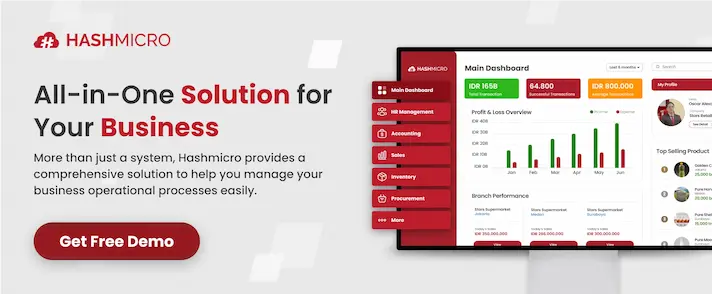
Streamline Supply Chain Management with ERP Platform
A cloud-based ERP platform helps businesses connect demand planning, production scheduling, inventory, and finance in one workflow. This makes it easier to allocate resources and control operating costs.
A mid-sized manufacturer used HashMicro as supply chain planning and inventory control software that also supports production scheduling to connect forecasting, reorder points, and production plans. The result was fewer stockouts and less last-minute rescheduling.
A mid-sized manufacturer used HashMicro as a supply chain planning and inventory control system that also supports production scheduling to connect forecasting, reorder points, and production plans. The result was fewer stockouts and less last-minute rescheduling.


Conclusion
An ERP system can simplify supply chain operations by connecting planning, procurement, inventory, finance, and execution in one flow. This improves visibility and coordination across teams and partners.
However, results depend on readiness. Data quality, integration scope, user adoption, and ongoing support will determine whether the system truly improves performance.
The best approach is to match ERP capabilities to your real workflows and growth plans. A short consultation can help validate priorities, risks, and a practical rollout path.
Frequently Asked Questions About ERP System Supply Chain
-
What is the difference between ERP, CRM, and SCM?
ERP manages overall business operations, CRM handles customer relationships, and SCM focuses on suppliers. Combined, they capture and update data centrally in real time.
-
Is ERP included in SCM?
ERP and SCM are closely connected but serve different purposes. SCM concentrates on planning and executing supply chain activities, while ERP provides a broader view by covering all business functions that influence the supply chain.
-
How do ERP and SCM differ?
ERP systems oversee cross-departmental business processes and enhance collaboration within an organization. On the other hand, SCM systems are more specialized, focusing on the flow from raw material procurement to product delivery.