













ERP implementation is crucial for multinational companies like mine to streamline operations and boost global efficiency. However, without proper planning, challenges such as complex data migration, employee resistance, and misaligned systems.
In fact, the ERP implementation market in Singapore is projected to experience substantial growth, from USD 949.11 million in 2023 to USD 3,455.2 million by 2035, with a CAGR of 12.71%. This shows how vital ERP is for businesses seeking sustainable growth.
That’s why adopting a structured approach and selecting an ERP solution suited for multinational operations is essential to minimize risks, ensure system alignment, and support efficient global operations.
Key Takeaways
|
What is an ERP Implementation?
ERP Implementation is the process of planning, setting up, and launching an ERP system that integrates key business functions, including finance, HR, sales, and manufacturing. This integration boosts productivity and efficiency across the organization.
To ensure a successful ERP implementation, businesses must first carefully define their specific requirements. This involves identifying how processes need to be redesigned to maximize the benefits of the ERP system.
Navigating this process successfully requires a well-structured and rigorous testing before deployment. With careful planning and attention to detail, businesses can unlock the full potential of the best ERP software to enhance productivity and efficiency.
What are the Phases of an ERP Implementation Process?

Implementing an ERP system can be a game-changer for any business, but it requires careful planning to succeed. Before diving into the process, it’s crucial to understand the key phases involved in a typical ERP implementation.
Knowing these stages will help your business navigate the complexities and ensure a smooth transition.
Pre-Implementation
Before any ERP system can be deployed, thorough planning and design are crucial to lay a solid foundation. This phase sets the stage for a successful implementation, ensuring that all requirements and processes are clearly defined.
- Initial discovery & strategic planning
The ERP system implementation journey begins with the discovery and planning phase, which involves researching and selecting a suitable system, assembling a dedicated project team, and defining the system’s detailed requirements.
During this phase, the project team, comprising an executive sponsor, project manager, and representatives from key departments, will develop a project plan, allocate resources, and manage day-to-day tasks.
It’s also essential to involve senior management to ensure adequate support and facilitate organization-wide change. The team may also decide whether to implement an on-premises or cloud-based ERP system.
- Tailored system design
In the design phase, the team works closely with users to develop an optimal design for the new ERP system. This involves creating efficient workflows that capitalize on the system’s capabilities and ensure the business processes are streamlined.
Gap analysis plays a crucial role here, identifying unique business needs that might require customization of the ERP software. Collaborating with the ERP implementation partner ensures the new system aligns with business objectives.
- Custom development & integration
With a clear design in place, the development phase kicks off. This phase focuses on configuring and customizing the software to support the redesigned processes. Integrations with other business applications are also developed during this phase.
This approach prevents unnecessary data clutter and sets up the system for optimal performance post-implementation.
Deployment
With the groundwork in place, it’s time to bring the system to life through careful deployment. This stage focuses on testing, refining, and launching the ERP system to ensure a smooth transition and minimal disruption to operational business processes.
- Comprehensive testing & refinement
Testing is a critical step in ERP software implementation, often occurring concurrently with development. The project team tests specific modules and features, applies necessary fixes, and conducts retests to ensure the system functions as expected.
Rigorous system testing follows, allowing selected employees to simulate their daily activities within the new ERP system. During this phase, the team also tests data migration accuracy and begins introductory end-user training, which helps familiarize staff with the system before full deployment.
- Seamless deployment
Deployment is when the system goes live, marking the culmination of all prior efforts. Minor issues or user confusion may arise despite thorough preparation, so the project team must be on standby to address questions and resolve any hiccups.
Depending on the strategy, some companies choose to deploy all ERP modules simultaneously, while others take a phased approach, initially focusing on high-priority modules.
Post-Implementation
Even after the system goes live, the journey doesn’t end there. Continuous support and improvements are essential to maximize the ERP system’s benefits and adapt to evolving business needs.
- Ongoing support & continuous improvement
Post-deployment support ensures the new ERP system meets business needs and user expectations. During this phase, the project team gathers user feedback, makes necessary adjustments, and potentially adds new features.
Ongoing training is crucial, especially as new employees join the organization. For on-premises ERP systems, periodic software updates and potential hardware upgrades are required, whereas the vendor typically updates cloud-based ERP software automatically.
Implementing an ERP system can be complex, with various ERP implementation challenges at each phase. To simplify your process and get an accurate cost estimate, click the banner below and explore our tailored software pricing.
Challenges in ERP Implementation for Business
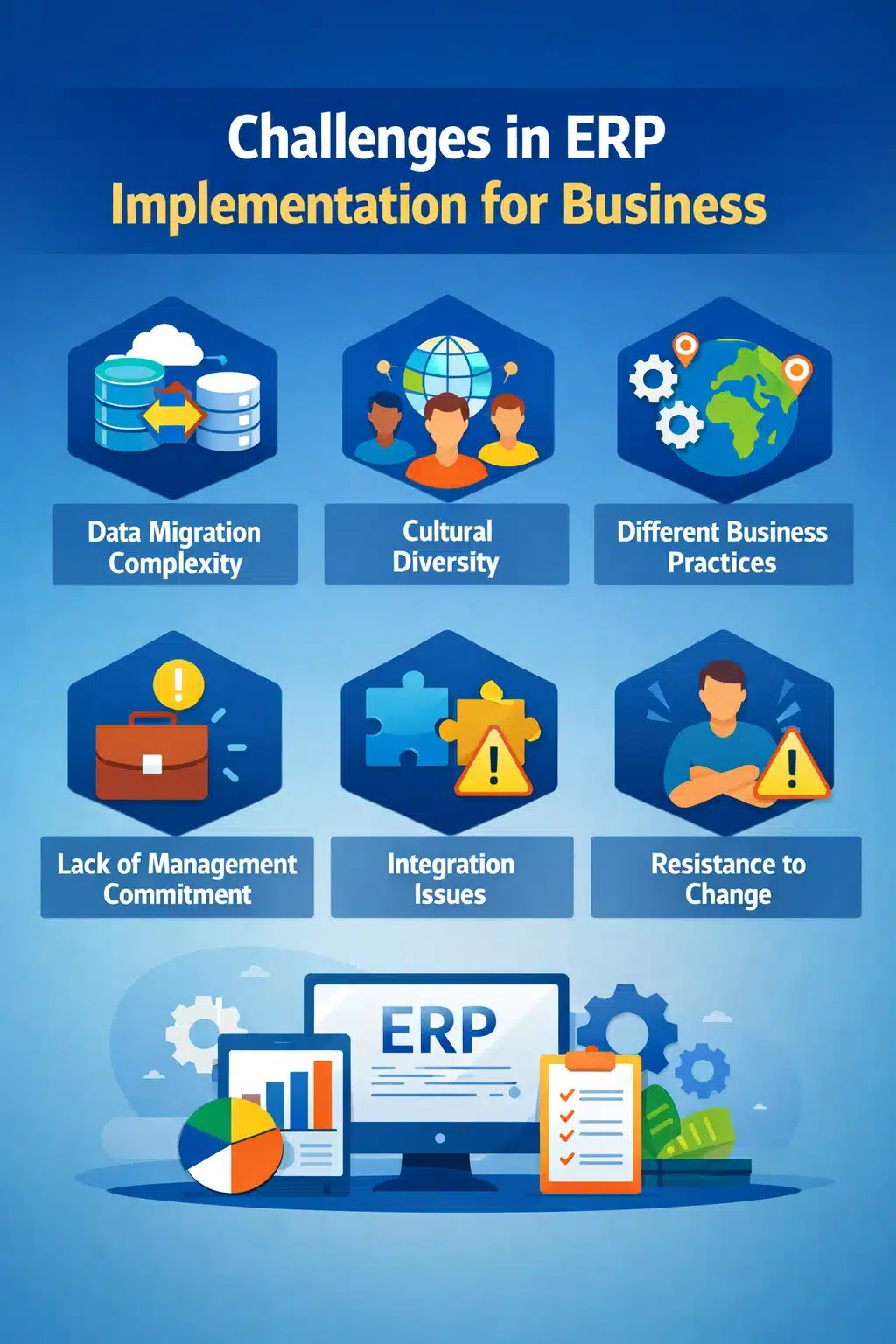
Implementing an ERP system can transform a business, but it also comes with challenges. By understanding potential obstacles early, companies can prepare better strategies and ensure a smoother, more effective implementation.
- Data migration complexity: Moving data from legacy systems to a new ERP requires careful cleaning and validation. Poor data handling can cause errors, delays, and inconsistencies.
- Cultural diversity: Different regions have varying work cultures and expectations. Ignoring these differences can slow adoption and increase resistance to the new system.
- Different business practices across regions: Multinational companies often operate with diverse processes. The ERP must balance standardization with flexibility to support regional needs.
- Lack of commitment from top management: Without strong leadership support, ERP projects may face resource shortages, unclear priorities, and slower execution.
- Integration issues: Connecting the ERP with existing applications can be complex. Weak integration may result in data silos and disrupted workflows.
- Resistance to change: Employees may resist new systems due to unfamiliarity. Clear communication and proper training are essential for smooth adoption.
ERP Implementation Cost and Resource Planning
Cost and resource planning is a crucial part of a successful ERP implementation. Without clear budgeting and role allocation, businesses may face delays, unexpected costs, and implementation failures.
ERP implementation cost components
ERP implementation costs include more than software fees. Key expenses cover system customization, data migration, user training, integration, and ongoing support. Planning these costs early helps businesses control budgets and avoid hidden expenses.
Resource planning for ERP implementation
Effective ERP implementation requires skilled project teams, IT support, and active user involvement across all phases. Proper resource allocation ensures smooth execution, faster adoption, and minimal disruption to daily operations.
Why early planning matters?
Early planning reduces risks, keeps the ERP implementation on schedule, and maximizes long-term value. In 2026, structured cost and resource planning will be essential for companies aiming for efficient and scalable ERP systems.
ERP Implementation Best Practices

Implementing an ERP system can be transformative for any business, but success depends heavily on following best practices. Without a clear roadmap, companies may encounter obstacles that delay the process and increase costs.
By adopting proven strategies, you can streamline implementation and maximize the benefits of your new ERP system.
- Align ERP goals with organizational objectives: Ensure that the ERP system implementation goals align with your organization’s overall objectives. This alignment guarantees the system will support your strategic priorities.
- Create a comprehensive project management strategy: By regularly comparing progress against the original plan, you can identify areas that need adjustments and ensure the project execution management stays on track.
- Assemble a dedicated and skilled project team: Build an implementation team that includes vital department users who will benefit directly from the new ERP system. Their involvement fosters motivation, as they’ll be eager to realize the system’s benefits.
- Customized training for users: Tailor training sessions to meet the specific needs of different user groups within your organization. Customized training enhances user proficiency, ensuring employees feel confident utilizing the ERP software.
- Find easy-to-implement software: Choosing a straightforward ERP system significantly reduces complexities and project timelines. It makes the transition smoother for your entire team.

Conclusion
ERP implementation plays a key role in helping businesses streamline operations, improve productivity, and strengthen decision-making. By integrating core processes into a single system, companies can achieve better data accuracy, efficiency, and operational control.
That said, the success of an ERP initiative depends heavily on selecting a solution that truly fits your business needs, workflows, and long-term goals. A well-aligned ERP system supports scalability and simplifies complexity.
To maximize these benefits, it’s important to approach ERP adoption strategically and with expert guidance. Scheduling a free consultation can help you evaluate the right ERP approach for your business and ensure a smoother, more effective implementation journey.

FAQ About ERP Implementation
-
What is the ERP implementation process?
ERP implementation involves planning, configuring or customizing, and deploying the ERP system across the entire organization. To ensure a smooth process, it’s important to engage key stakeholders both before and during the implementation, preparing the business for the upcoming changes.
-
What are the 7 stages of implementation of ERP?
1. Identifying Internal Needs: Evaluate the internal requirements and challenges of your business to ensure the ERP system aligns with organizational goals.
2. Choosing the Right System: Carefully select an ERP system that best fits your company’s specific needs and operational processes.
3. Customizing the System: Design and tailor the ERP system to meet the unique workflows and preferences of your business.
4. System Installation: Implement the ERP software within your company’s infrastructure, ensuring it integrates seamlessly with existing tools.
5. System Testing: Conduct thorough testing to identify and fix any issues before the system goes live, ensuring smooth operations.
6. System Deployment: Launch the ERP system across the organization, making it accessible to all relevant users for daily operations.
7. Ongoing Improvements and Feedback: Continuously enhance the system based on user feedback and evolving business needs to maintain optimal performance. -
What are the main purposes of ERP?
Enterprise Resource Planning (ERP) software helps automate and streamline various activities within a business, including accounting, procurement, project management, customer relationship management, risk management, compliance, and supply chain operations.
-
What is the main focus of ERP?
ERP software is built to automate information sharing, prevent data duplication, ensure data integrity, and support informed decision-making. Overall, it is an advanced, technology-driven system that meets the unique needs of each department, simplifying business management.