





Are you confident your GST filing is accurate and submitted on time, every time? Even when sales volumes rise, invoices pile up, and the filing deadline is around the corner, small mistakes can still slip in.
For GST-registered businesses in Singapore, filing with IRAS is part of keeping operations clean and predictable. The tricky part is getting the details right, from input vs output tax to what counts as taxable supplies, while still meeting deadlines.
This guide breaks down the GST filing process step by step, including returns, key deadlines, common mistakes, and what to prepare so compliance feels routine instead of stressful.
Key Takeaways
|
What Does GST Filing Mean in Practice?
GST filing is a key requirement for many businesses in Singapore. In simple terms, GST-registered companies report their sales and purchases to IRAS by declaring output tax (GST collected from customers) and input tax (GST paid to suppliers), then paying the difference or claiming a refund.
The main thing to get right is separating output vs input tax and tracking both consistently. When records are messy or numbers are misclassified, it can lead to wrong claims, penalties, or audits, and it also makes cash flow harder to manage.
GST Reporting Criteria and Who They Apply To
In Singapore, GST registration and filing depend on IRAS taxable turnover thresholds, so you need to track revenue consistently, often with a cloud accounting system for Singapore businesses. Late registration can trigger backdated liabilities and penalties. This section covers compulsory vs voluntary registration, plus exemption and de-registration.
1. Compulsory registration
GST registration becomes mandatory once your taxable turnover exceeds S$1 million, based on either the past 12 months or what you reasonably expect in the next 12 months. When this happens, you must register with IRAS within 30 days, so it’s important to track turnover regularly.
2. Voluntary registration
If you’re below S$1 million but make taxable sales, you can still register voluntarily. This can be useful if you want to claim input tax on business purchases, but it also means you must follow all GST rules and stay registered for at least two years.
3. Exemption and de-registration
In some cases, you may request an exemption even if you exceed the threshold, such as when most sales are zero-rated. If you’re already registered, you can apply to de-register when turnover drops below S$1 million or the business stops, but you’ll need IRAS approval and to settle any outstanding GST first.
Key Frequencies and Deadlines for GST Filing
GST filing deadlines in Singapore are strict, and IRAS can penalize late submissions even if you don’t owe any tax. Most GST-registered businesses file quarterly (four times a year), usually based on calendar quarters, though you can apply to use different periods that match your financial year. To avoid last-minute mistakes, plan, close your books promptly, and start preparing the return as soon as each period ends.
1. Quarterly filing
Most GST-registered businesses file quarterly, and the deadline to submit the GST F5 return and pay any GST due is one month after the quarter ends. For example, if your period ends on 31 March, you must file and pay by 30 April, and even a one-day delay can trigger penalties.
2. Monthly or bi-annual filing
Some businesses can apply for a different filing frequency. Monthly filing may suit businesses often in a refund position (such as exporters) because it speeds up refunds, while bi-annual filing may be available for smaller, simpler operations, but it’s less common and requires IRAS approval.
A Step-by-Step Guide to the GST Filing Process

GST filing is easier when you stick to a clear routine. Keep records tidy, calculate output and input tax accurately, and submit on time through the proper portal. This supports financial planning for business cash flow and reduces last-minute stress, penalties, and audit risk.
1. Preparation phase: Gathering necessary documents
Start by collecting and organizing your key records for the period, such as sales tax invoices, supplier invoices showing GST, import permits, and any credit or debit notes. Clean, complete documents make calculations smoother and help support your input tax claims if IRAS ever asks.
2. Calculation phase: Determining net GST payable or refundable
Follow IRAS guidelines by calculating Net GST = Output Tax − Input Tax using only transactions backed by proper receipts or tax invoices that show your GST registration number and that the price includes GST. If a GST-registered customer needs a tax invoice (especially for sales above S$1,000), issue it, and be careful with discounts because GST may be based on the net price or the original price if the discount is later reimbursed.
3. Filing phase: Completing the GST F5 form via myTax Portal
File electronically on IRAS MyTax Portal using the GST F5 form by entering your sales and purchases breakdown (standard-rated, zero-rated, exempt) and the related tax amounts. Before submitting, double-check figures to avoid simple input mistakes.
4. Payment or refund process
If GST is payable, make payment by the due date using options like GIRO, bank transfer, or PayNow. If you’re claiming a refund, IRAS will credit it to your bank account once the return is processed, assuming everything is consistent and complete.
Common GST Filing Mistakes and How to Avoid Them
Even careful businesses can make GST filing mistakes, usually because rules are misunderstood, records are incomplete, or manual tracking leads to slip-ups. Knowing the most common errors upfront helps you tighten your process and avoid the stress, cost, and time drain of fixing issues after an IRAS review.
1. Incorrect input tax claims
A common mistake is claiming input tax on expenses IRAS doesn’t allow, such as personal spending or blocked items like passenger car costs and family entertainment. The fix is simple: keep clear rules on what’s claimable, separate personal vs business expenses, and make sure the team knows the basics.
2. Errors in supply classification
Misclassifying sales as standard-rated (9%), zero-rated (0%), or exempt can throw off your output tax and create reporting issues. For example, treating exports as standard-rated can make you charge GST when you shouldn’t, so keep tax codes consistent and review classifications regularly.
3. Poor record-keeping and bookkeeping
Missing invoices, late entries, or weak supporting documents make GST filing messy and risky. Keep records organized from day one by digitizing invoices, updating books consistently, and doing regular reconciliations so nothing slips through.
4. Late filing or payment
Late filing triggers penalties, and late payment can add extra charges under IRAS guidelines. Using IRAS eGIRO helps because deductions run automatically on the 6th (or the next working day), with a second attempt on the 20th if the first fails, so keep enough funds and a suitable payment limit.
Understanding Penalties and Fines for GST Non-Compliance
IRAS expects GST returns to be filed and paid on time, and the consequences for missing deadlines can be costly. Beyond the cash impact, repeated non-compliance can also create audit risk and operational disruption, which most businesses can avoid with basic planning and clean records.
For late filing, IRAS imposes an immediate S$200 penalty per overdue return, and this can increase each month the return remains outstanding, up to S$10,000 per return. If payment is late, IRAS also charges a 5% penalty on the unpaid tax, plus an additional 2% each month on the outstanding amount, so costs can escalate quickly.
How Technology Simplifies the GST Filing Process in Singapore
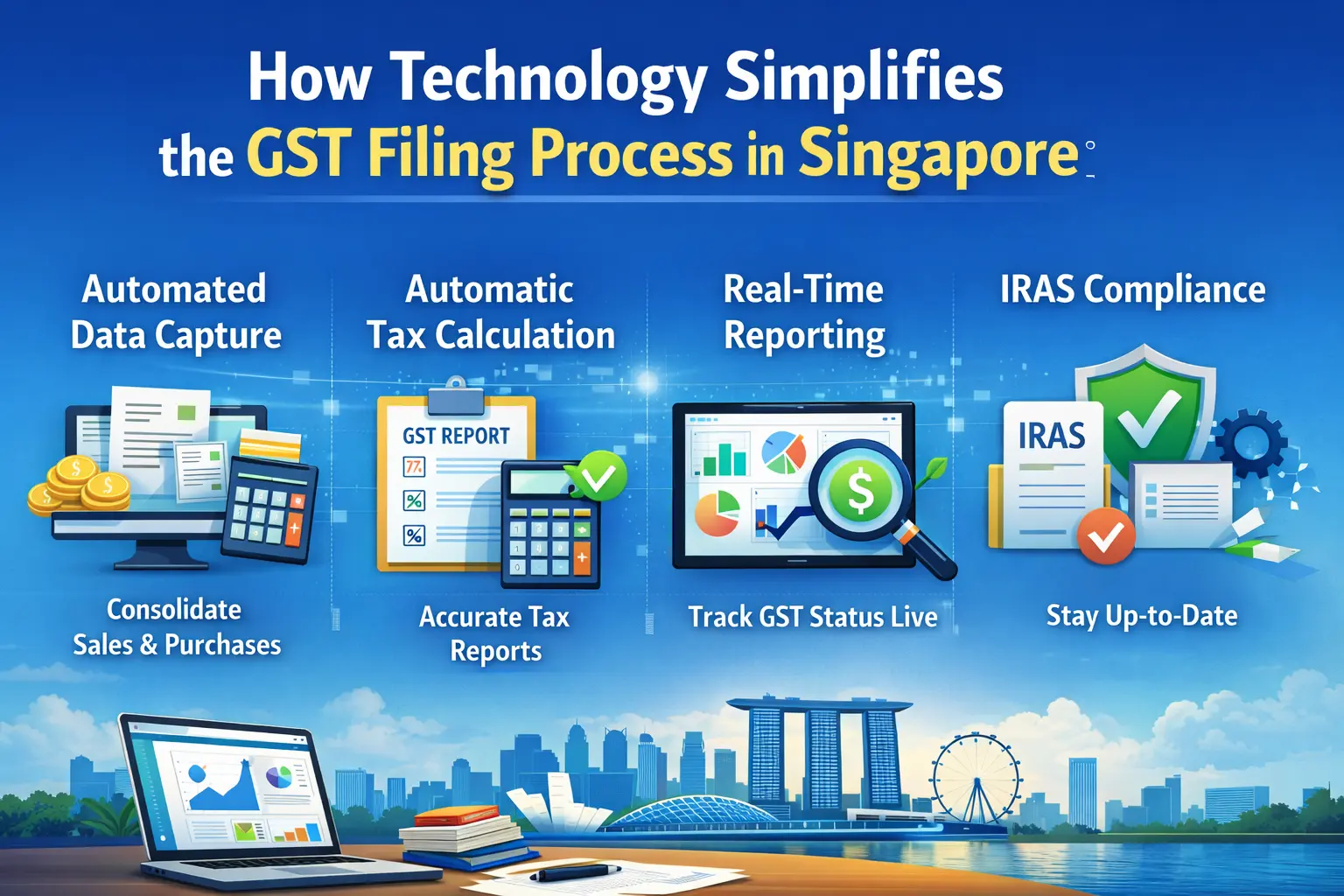
Managing GST manually takes time and increases the chance of mistakes, especially as transactions and deadlines pile up. Using technology like ERP or an accounting platform for accountants streamlines the workflow from recording entries to preparing returns, making compliance faster and more consistent:
1. Automated data capture and consolidation
An ERP or accounting system pulls sales and purchase transactions into one place, keeping your accounting cycle workflow consistent without chasing invoices across teams or spreadsheets. It saves time and helps prevent missed or duplicated entries.
2. Automatic tax calculation and report generation
The system can calculate output and input tax automatically using the right tax codes, then summarize the numbers in a format that matches GST reporting needs. This cuts down on manual calculations and reduces errors.
3. Real-time visibility and reporting
Because data updates as transactions happen, you can check your GST position anytime instead of waiting until period-end. This makes it easier to plan cash flow for payments and spot issues early.
4. Compliance with IRAS standards
Good software stays updated with IRAS requirements, such as tax rate changes, claim rules, and reporting formats. That keeps your filing process aligned and reduces the risk of using outdated methods.
Optimizing Business Management: Accounting System Case Study at Brink’s
Modern ERP and accounting platforms centralize transactions, approvals, and reporting, reducing manual entry and making GST compliance easier to manage. With cleaner data in one place, teams can work faster and avoid avoidable filing errors.
Connected modules like accounting, purchasing, and sales also help track input and output tax more consistently and improve visibility for cash flow planning. This keeps reporting smoother, especially near deadlines.
One example is Brink’s, a global leader in cash management and secure logistics operating in 53 countries, serving financial institutions, retailers, and governments with armored transport and trained personnel. By using HashMicro’s accounting platform system, Brink’s can keep financial records more consistent across teams and support more reliable reporting as operations scale.

Conclusion
GST filing in Singapore is a key compliance task that affects cash flow and business continuity. It requires accurate output and input tax reporting, timely registration when required, and on-time submission to IRAS.
Most problems come from avoidable issues like invalid input tax claims, misclassified supplies, poor records, or late filing and payment. A consistent routine and complete documents reduce mistakes and audit risk.
If you want to tighten your GST process, a short consultation can review your workflow, spot weak points, and turn it into a simple checklist your team can follow each period.
FAQ About GST Filing in Singapore
-
What is the penalty for late GST filing in Singapore?
For late GST filing, IRAS imposes an immediate S$200 penalty, which can accumulate monthly up to S$10,000 per return. Additionally, a 5% penalty on the unpaid tax is levied for late payment, with further interest accruing monthly.
-
How do I file GST F5 online in Singapore?
GST F5 forms must be filed electronically via the myTax Portal on the IRAS website. You will need your CorpPass credentials to log in, fill out the required fields with your sales and purchase data, and submit the return before the deadline.
-
Can I claim GST on employee expenses?
You can generally claim input tax on employee expenses as long as they are directly for your business purpose. However, specific rules apply to certain items like medical fees and certain benefits, and expenses like private car costs are explicitly disallowed.