










 Limited to 100 registrants

Even a minor budget overrun can have significant domino effects on operations. As the cost of doing business continues to rise, many business sectors in Singapore struggle to stay within their initial budget. The issue of cost overrun has raised eyebrows and sparked debate, especially in public infrastructure projects.
One of the most prominent cost overrun cases in Singapore is the Downtown Line (DTL), a Mass Rapid Transit (MRT) project that experienced significant budget inflation. A news report confirms the original MRT Downtown Line budget of SGD 12 billion, which later increased to SGD 20.7 billion, attributing the rise to rising construction costs and material prices.
Cost overruns frequently occur due to a combination of poor initial planning, unforeseen circumstances, and shifting project requirements. Given the ongoing increase in operating expenses, it’s important to understand the causes of these overruns for companies in every industry.
Continue reading this article as we explore the meaning of cost overruns, their common causes, signs, and how you, as a business owner, could create a plan to prevent them.
Key Takeaways
The term “cost overrun” refers to a situation in which a project’s actual costs exceed its initial budget or expected costs.
Although Singapore’s businesses are renowned for their effective project execution and stringent regulatory oversight, cost overruns continue to be a recurring issue in several industries.
Cost overruns often occur gradually, with early warning signs that can have serious financial implications if ignored.
HashMicro Accounting System provides a practical approach to enhance budget management accuracy, reducing mistakes and preventing cost overruns.

What is Cost Overrun?
In Singapore, the term “cost overrun” refers to a situation in which a project’s actual costs exceed its initial budget or expected costs. This problem may impact projects in the public and commercial sectors, particularly those in the technology, infrastructure, procurement construction, and oil and gas sectors.
Cost overruns typically occur due to a combination of inadequate preparation at the start, unanticipated difficulties, and changes made during the project’s development. One of the most frequent reasons is incorrect cost estimation, which occurs when budgets are created using inaccurate information or excessively optimistic assumptions.
This could lead to a significant impact on cash flow, project timelines, investor trust, and long-term operational viability, particularly in Singapore’s stringent regulatory environment and high costs.
Common Causes of Cost Overruns
Although Singapore’s businesses are renowned for their effective project execution and stringent regulatory oversight, cost overruns continue to be a recurring issue in several industries.
Here are the most common causes of cost overruns:
-
Poor communication and collaboration
Establishing a clear line of communication is essential to avoid problems such as rework, unnecessary efforts, or design incompatibilities that are more likely to occur when information is not shared effectively.
-
Inaccurate project estimates
Unrealistic cost projections affect some projects, often due to inadequate preliminary research or pressure to maintain low budgets during the approval stages. This results in under-budgeting and increases the risk of overruns when the project starts.
-
Scope creep and lack of clear scope definition
Costs may rise drastically due to frequent changes in project specifications resulting from unforeseen site conditions or stakeholder demands. This is especially common in high-end development projects with complex infrastructure.
-
Vendor and subcontractor issues
Poor vendor and subcontractor selection often leads to delivery delays, subpar work, or failure to meet contractual commitments, resulting in project schedule delays and necessitating costly corrective actions.
-
Leadership challenges and a lack of project management experience
To complete projects on schedule while staying within budget, strong leadership and capable project management are essential. Poor decision-making, ineffective resource allocation, and missed deadlines can result from inexperienced project managers or weak leadership.
-
Change orders and design errors
Although changes are occasionally required, they often involve additional labor and materials, interrupt workflows, and need the reallocation of resources, all of which increase costs.
-
Unforeseen site conditions or risks
These unforeseen site conditions or risks can halt progress, force design modifications, or require specialized equipment and labor. Thorough site investigations and risk assessments are essential to anticipating potential issues and controlling cost impacts before they escalate.
Read more: The 4 Best Event Management Software in Singapore 2025
Signs That Your Project Is Heading Toward a Cost Overrun

Cost overruns often occur gradually, with early warning signs that can have serious financial implications if ignored. Early detection of these signs enables project managers to address the issue before it gets worse.
Here are some common signs that your project is heading toward a cost overrun:
-
Budget deviations and lack of financial control
It occurs when actual spending starts to depart without a good reason from the amount originally planned. It is a clear sign that the project is financially off course if there is irregular financial tracking or a lack of accountability for expenses.
-
Delayed project timelines and increased labor costs
Schedule slippage frequently results in longer workdays and higher operating costs. If delays are not addressed immediately, they can quickly escalate into significant overruns, particularly when labor prices are high and manpower quotas are tight.
-
Increased change requests from clients
Change requests that are too frequent or poorly handled can cause delays in the project, require rework, and raise labor and material expenses. A trend of late-stage updates frequently indicates poor initial planning or changing client expectations, even though certain changes are inevitable.
-
Lack of progress reporting and real-time tracking
Making informed choices becomes challenging when project teams lack access to precise, current information on budget status, resource utilization, and progress. Poor visibility often masks underlying problems until it is too late for anyone to address them.
What to Do When Cost Overruns Occur
As a business owner, you can prepare to prevent cost overruns, but you still need to have a plan if a cost overrun occurs in your business. When cost overruns occur, the first and most critical step is to pause and thoroughly assess the situation.
This analysis helps you determine whether the issue is isolated or systemic. From there, re-evaluate the project scope and prioritize essential deliverables. At the same time, open and transparent communication with all stakeholders—including clients, contractors, and internal teams—is crucial.
This action helps preserve trust and minimizes reputational risk. Structured and proactive response not only limits financial damage but also demonstrates professionalism and resilience in project delivery.
How to Prevent Cost Overruns
Preventing cost overruns begins with proactive planning, disciplined execution, and continuous oversight. Businesses can significantly reduce the cost overrun risk of exceeding budgets by adopting the following best practices:
-
Accurate project planning and budgeting
A realistic and detailed project plan forms the foundation for effective cost control, especially when aligning budgets with each cost center in accounting. This includes feasibility studies, contingency reserves, and budgets based on accurate market data and historical benchmarks.
-
Effective communication and collaboration across teams
It is easier to align expectations and lower the possibility of misunderstandings, delays, and unnecessary labor when stakeholders, including clients, contractors, consultants, and internal teams, communicate clearly and consistently.
-
Define a clear project scope and expectations with clients
Limiting the number of change orders and preventing scope creep are two benefits of establishing a clearly defined scope early on. The secret to avoiding future disagreements and expense increases is to ensure that everyone agrees on deliverables, deadlines, and roles.
-
Choose reliable vendors and contractors
There is less chance of delays, rework, and budget overruns when you work with experienced, reliable suppliers and contractors. Effective performance monitoring and due diligence help ensure that outside partners meet deadlines and quality standards.
-
Implement proper risk management strategies
Unexpected procurement cost effects can be significantly reduced by anticipating potential risks, such as supply chain disruptions, regulatory delays, or site conditions, and implementing mitigation measures. Project reviews should incorporate regular risk assessments.
-
Use project management tools for better control
Real-time information on project status, resource allocation, and financial condition can be obtained through digital tools and software platforms. By utilizing tools like cost management guidelines, project managers can make more informed decisions and identify issues before they escalate.
-
Regular monitoring and tracking of project progress
Early detection of changes is ensured by continuous monitoring of deliverables, budgets, and milestones. Regular progress reports provide opportunities for timely adjustments and help maintain the project’s direction.
You can also read our other article on cost control in construction to gain deeper insights into effective budgeting and financial management.
Minimize Potential Cost Overrun with HashMicro Accounting Software
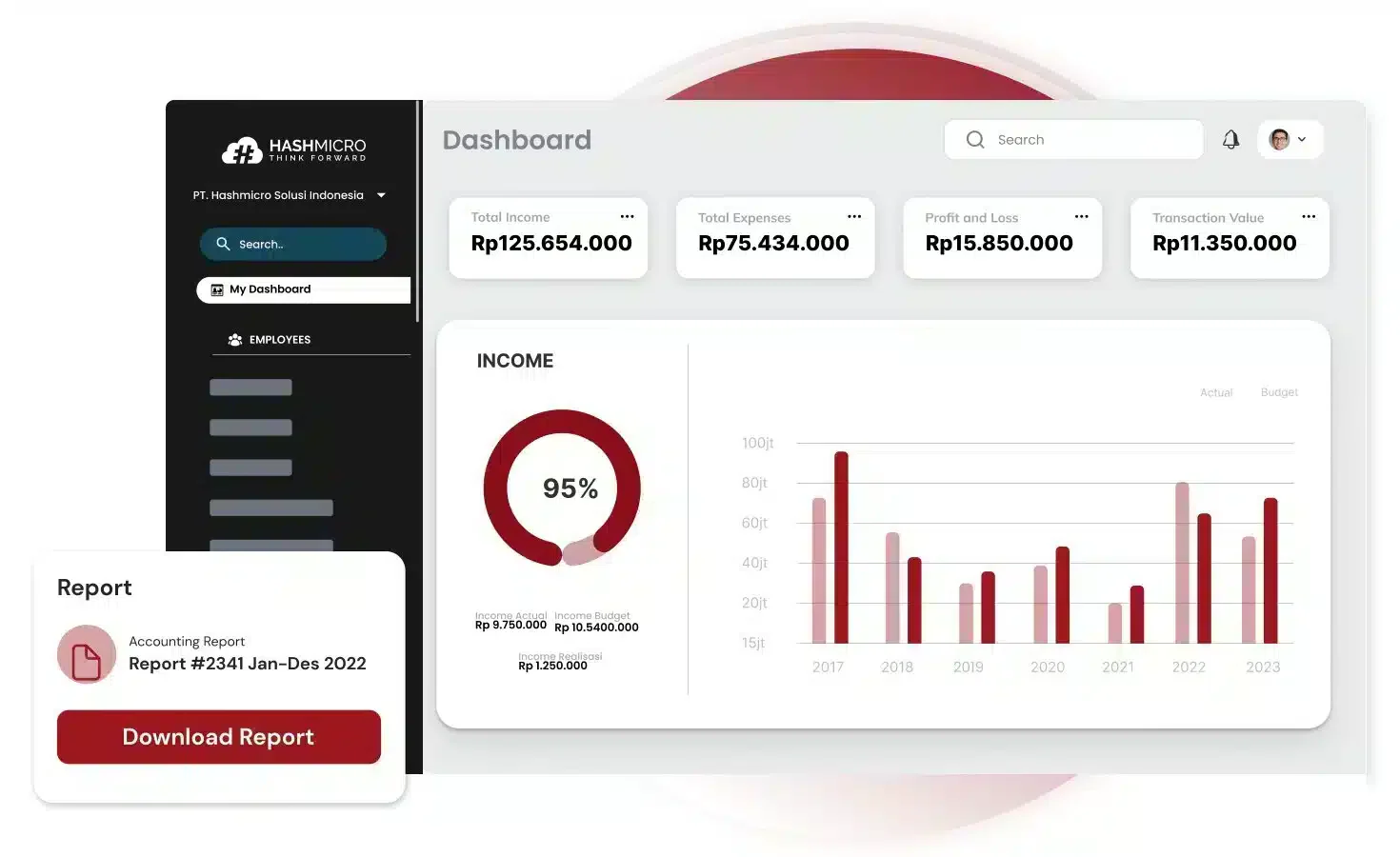
Small errors made when tracking costs manually can quickly turn into major overruns. HashMicro, a leading provider of enterprise resource planning (ERP) solutions in Singapore, plays a vital role in helping businesses prevent and manage cost overruns.
HashMicro Accounting System offers integrated software solutions for project management, procurement, inventory control, and financial tracking, providing accurate budget reports that are very helpful in preventing cost overruns.
Hashy AI from HashMicro enables companies to automate their financial management with real-time insights, fewer errors, and faster reporting. This feature allows for the early identification of budget discrepancies, thereby enhancing decision-making through accurate forecasting and automated reporting.
Here are the key features of the HashMicro Accounting System:
- Financial dashboard: Monitor the financial health of your entire business, including income, cash flow, accounts receivable, accounts payable, and more.
- Cash flow forecasting: Accurately predict your income and expenses for a specific period.
- Fast bank reconciliation: Our accounting software automatically and securely imports all bank transactions, ensuring accurate and secure data management.
- Accrual & amortization: HashMicro’s accounting software reduces human error by automatically recording and calculating accruals and amortizations.
- Peppol e-Invoicing: HashMicro integrates with Singapore’s Peppol e-Invoicing network, ensuring standardized exchange of invoices between parties.
- Analytical Reporting: HashMicro’s accounting software quickly generates income statements, cash flow reports, balance sheets, changes in capital, and other financial reports.

Conclusion
Businesses need to understand cost management to stay within their budget plan. They are better able to plan and modify their budgets when all potential costs are accurately tracked.
The accounting system from HashMicro offers a real-time, automated way to monitor and control project expenses. Businesses may minimize errors, streamline budgeting, and improve overall cost management with its sophisticated features.
Take advantage of a free demo of HashMicro’s accounting solution today and energize your business with the CTC Grant that supports up to 70% funding for HashMicro accounting software.

FAQ About Cost Overrun
A cost overrun is a cost that exceeds the amount budgeted.
The reality is that there are numerous causes of this risk, making it challenging to mitigate or fully treat. However, effective project management and rigorous budget control are essential to minimize these risks.
A cost overrun is the difference between the budget for the completed work and the actual cost of the completed work. Cost growth refers to the difference between the initial budget for a project and its actual final cost.