As climate regulations tighten, I’ve seen carbon accounting software become crucial. Manual tracking is slow and inaccurate, whereas the right tools automate reporting, ensure compliance, and give businesses a competitive edge.
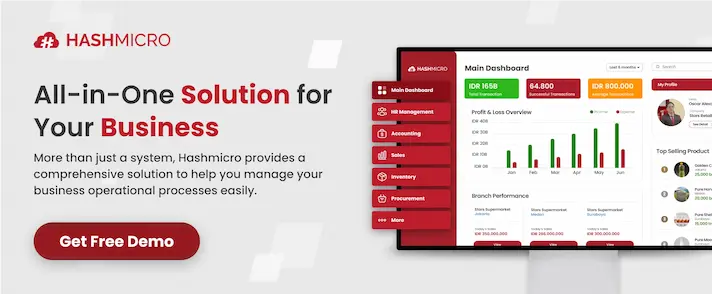
The global market is projected to reach USD 33.08 billion, growing at a CAGR of 38.5% from 2024 to 2029, reflecting a shift toward tech-driven sustainability. HashMicro Accounting Software stands out with automated carbon tracking, real-time reporting, and financial integration.
In this article, I’ll share Singapore’s top 10 carbon accounting software options for 2026. Ready to see it in action? Try our free demo today!
Table of Content
Key Takeaways
Carbon accounting software enables businesses to accurately track, manage, and report their carbon emissions in alignment with sustainability goals and regulations.
Choosing the wrong software can lead to inaccurate data, compliance issues, and inefficient workflows, especially for growing businesses.
HashMicro stands out as a top solution, offering automated tracking, real-time reporting, and flexible integration, making it ideal for businesses seeking to streamline their sustainability efforts.
What is Carbon Accounting Software?
Carbon accounting software helps businesses measure, track, and report greenhouse gas emissions by automating data collection and analyzing key sources of emissions. It supports compliance with frameworks like the GHG Protocol and Singapore’s carbon tax requirements.
The software also strengthens sustainability initiatives by highlighting opportunities to reduce emissions and support ESG frameworks. Automated tracking and real-time analytics enable companies to streamline sustainability efforts and make informed decisions to lower their environmental impact.
12 Best Carbon Accounting Software
Here are top carbon accounting software solutions that help businesses track emissions, ensure compliance, and drive sustainability strategies. Each software has its own strengths, limitations, and key features.
1. HashMicro Carbon Accounting Software
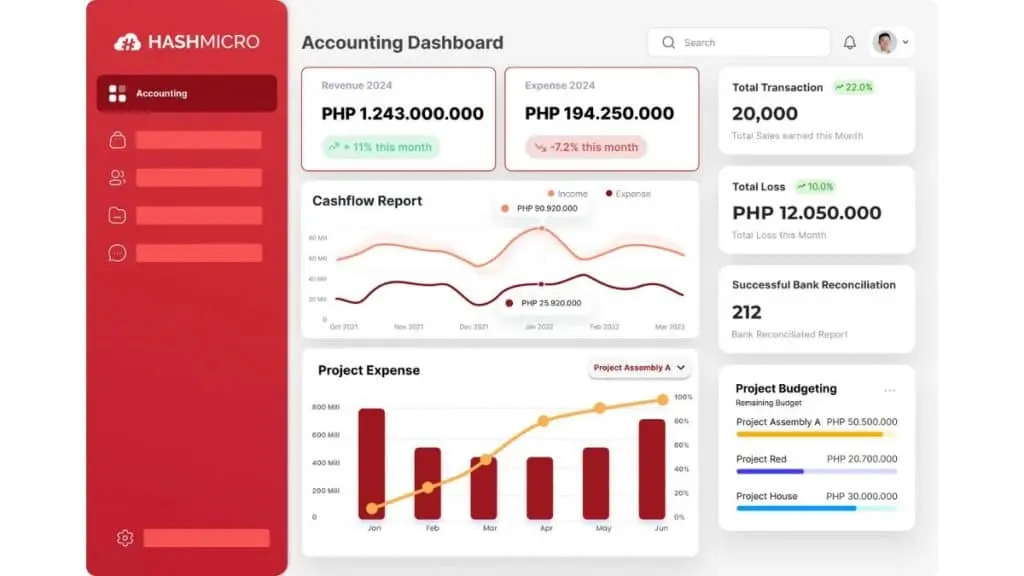
HashMicro provides automated carbon tracking with AI-powered analytics. It helps businesses streamline emissions management and ensure compliance. Real-time reporting allows for accurate measurement and informed decisions.
Seamless integration with financial and ERP systems enhances efficiency. Its user-friendly interface and customizable reports simplify tracking. Request a free demo today and focus on reducing emissions and achieving sustainability goals.
Key Features:
Bank Integration – Auto Reconciliation: Automatically matches bank transactions with system records, speeding up the reconciliation process.
Bank Integration – Auto Payment: Enables direct payments from the system to the bank, reducing manual input and errors.
Multi-Level Analytical: Provides in-depth financial analysis across different levels such as departments, projects, or locations.
Profit & Loss vs Budget & Forecast: Compares actual profit and loss with budgets and forecasts to evaluate performance.
Cash Flow Reports: Delivers real-time cash flow reports to monitor the company’s financial health.
Pros
Cons
Unlimited user access with no extra fees
User-friendly interface for easier adoption
Excellent after-sales support and training
Highly customizable to fit various business needs
Seamlessly integrates with other systems
Industry-ready with tailored modules for different sectors
May require feature adjustments for small to mid-sized businesses
You can view HashMicro’s pricing scheme through the banner below. With flexible options based on modules and business needs, it’s easy to find the right fit. Click the banner for full pricing details!
2. Net Zero Cloud by Salesforce
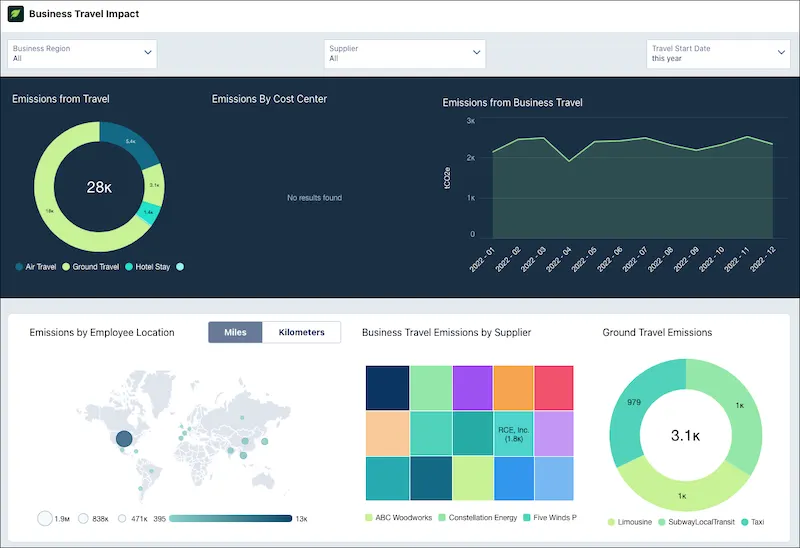
Net Zero Cloud offers an enterprise-grade carbon accounting solution, seamlessly integrating with Salesforce’s ecosystem. It provides real-time emissions tracking, automated reporting, and AI-powered insights to help businesses reduce their carbon footprint efficiently.
Features:
Automated carbon footprint tracking
Real-time data visualization
Customizable sustainability reports
Pros
Cons
Seamless integration with Salesforce
AI-driven insights for emission tracking
Real-time monitoring and compliance support
High cost, best for Salesforce users
Can be complex for beginners
Requires customization for non-Salesforce users
3. Persefoni
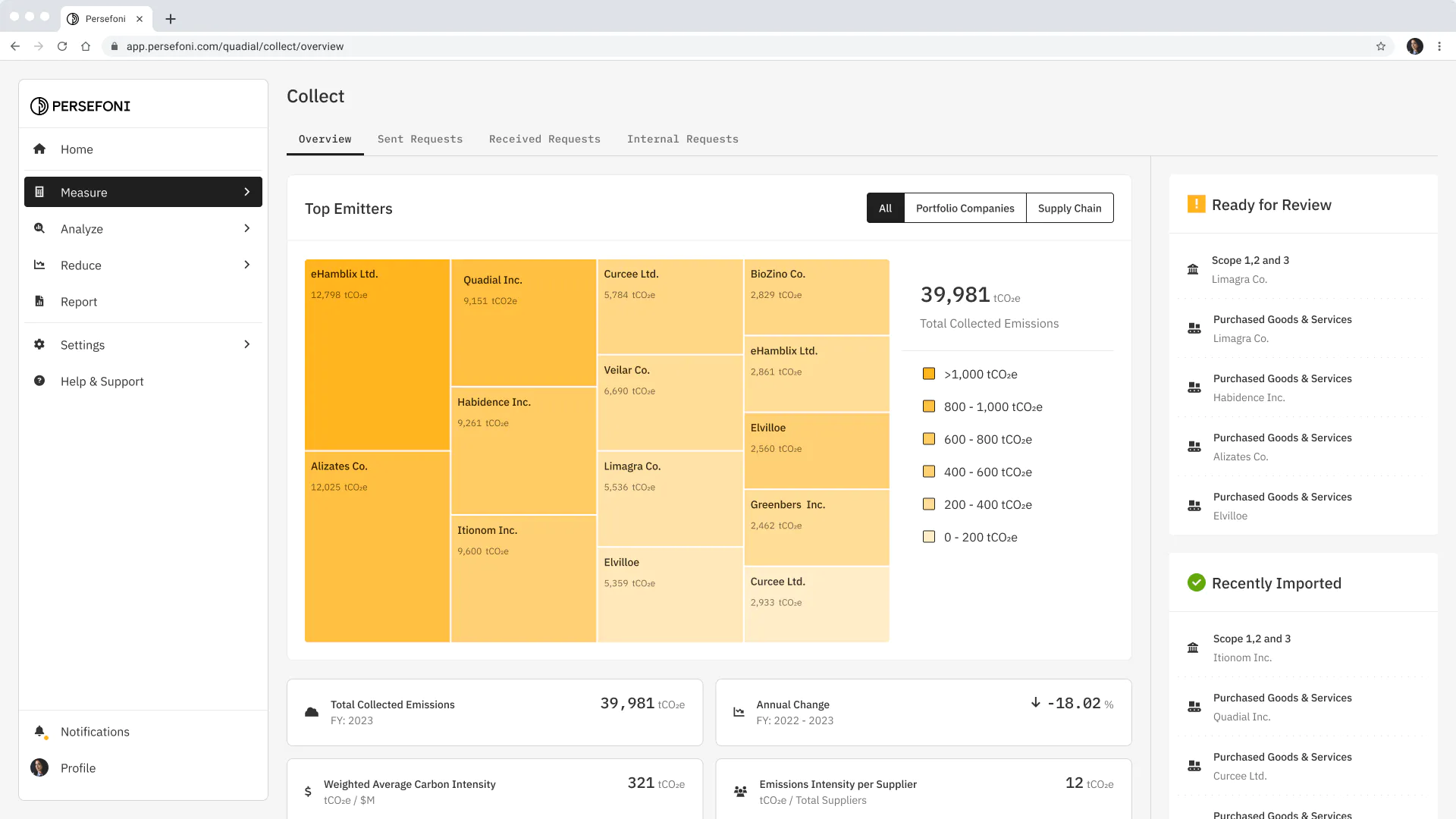
Persefoni is designed for large enterprises that need strong compliance tools. It aligns with GHG Protocol and SEC regulations, making it ideal for accurate reporting and data-driven sustainability strategies.
Key Features:
AI-driven carbon footprint calculations
Automated compliance reporting
Customizable dashboards
Pros
Cons
AI-powered automation for emissions tracking
Compliance with global regulations
Detailed carbon footprint analysis
Steeper learning curve for new users
Pricing can be high for SMEs
Requires proper data integration for full functionality
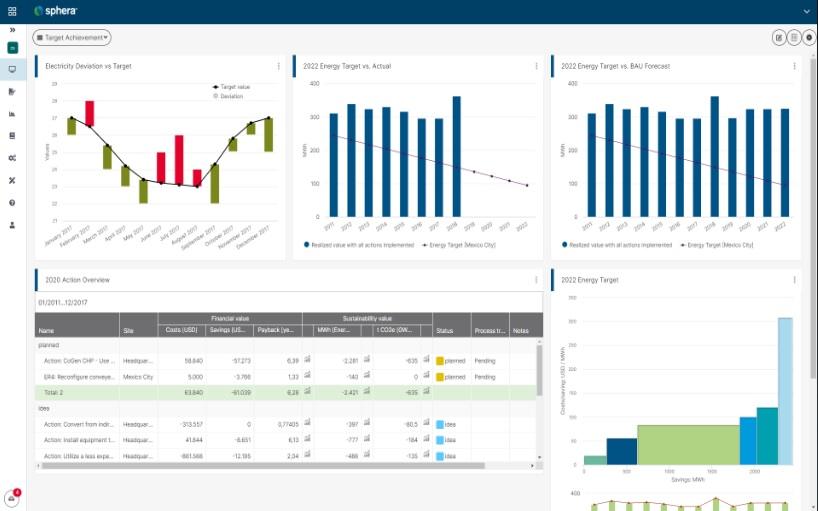
4. Sphera
Sphera is a comprehensive ESG and sustainability platform tailored for industries with high environmental impact, such as manufacturing, oil & gas, and energy. It offers detailed emissions tracking, risk management, and regulatory compliance tools.
Key Features:
Industry-specific carbon tracking
Regulatory compliance tools
Risk assessment and ESG integration
Pros
Cons
Ideal for industrial and energy sectors
Comprehensive ESG and carbon accounting
Strong risk management tools
Expensive for small businesses
Complex setup process
Requires industry-specific customization
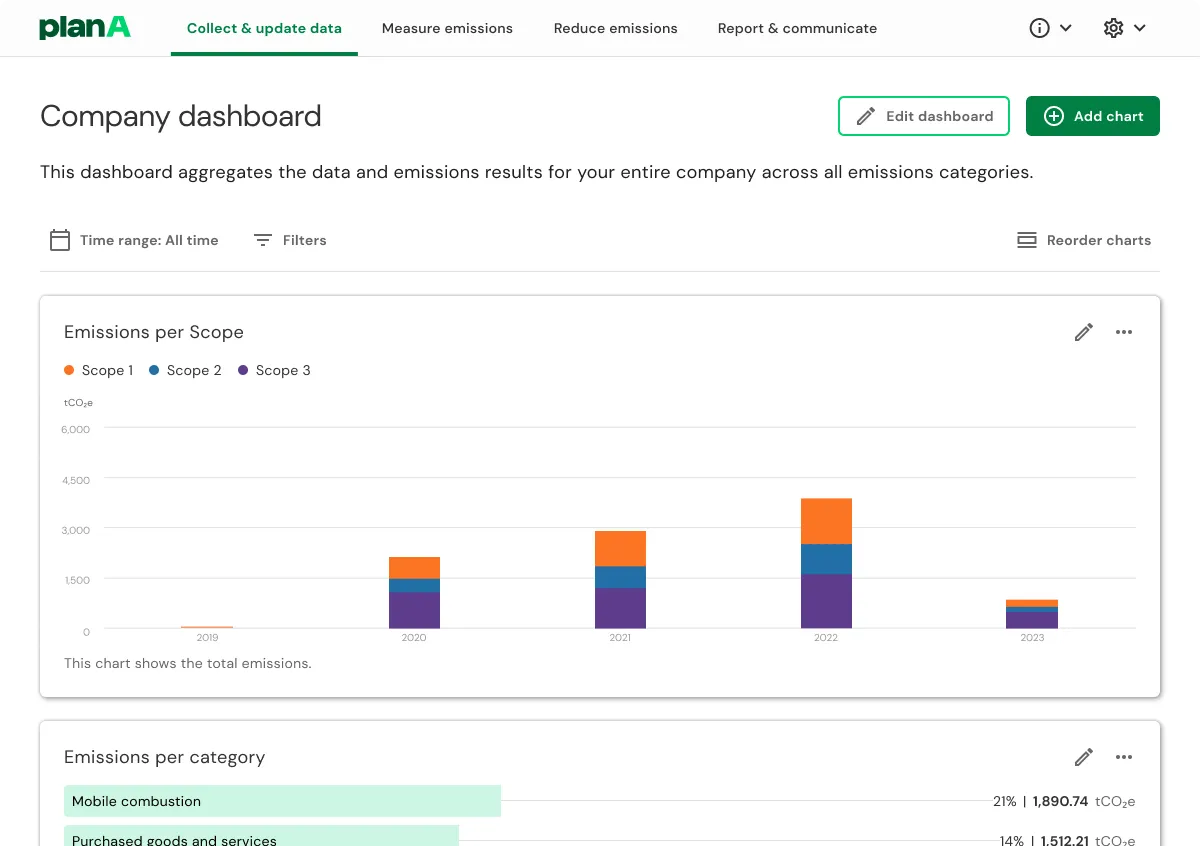
5. Plan A
Plan A is a sustainability platform that helps businesses track, reduce, and report carbon emissions with AI-powered insights. Unlike many competitors, it focuses on carbon reduction strategies rather than just reporting, making it ideal for companies that prioritize sustainability improvements.
Key Features:
Automated carbon tracking
Sustainability strategy planning
Actionable insights for emissions reduction
Pros
Cons
Focus on carbon reduction, not just tracking
User-friendly and intuitive platform
Offers emission reduction recommendations
Limited financial tool integrations
May not support advanced enterprise needs
Less suited for complex ESG reporting
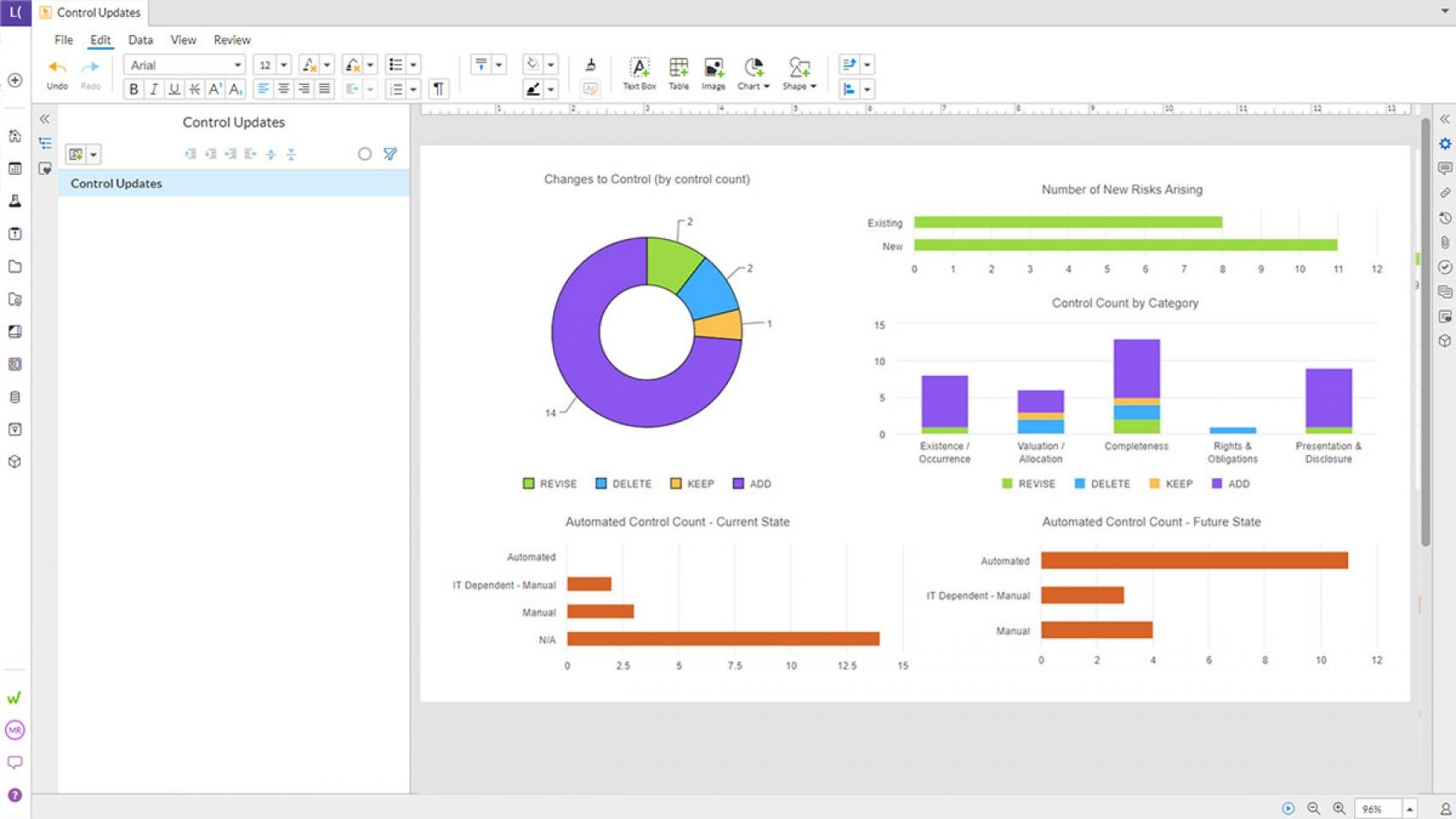
6. Workiva
Workiva is known for its strong ESG and compliance reporting capabilities, making it an excellent choice for businesses needing transparent carbon accounting. It allows organizations to track emissions, collaborate on reports, and comply with financial and regulatory standards.
Key Features:
ESG and carbon accounting integration
Real-time data collaboration
Automated sustainability reporting
Pros
Cons
Strong compliance and ESG reporting
Cloud-based and collaborative
Supports SEC and global sustainability frameworks
Requires customization for detailed tracking
Learning curve for first-time users
Higher pricing for smaller companies
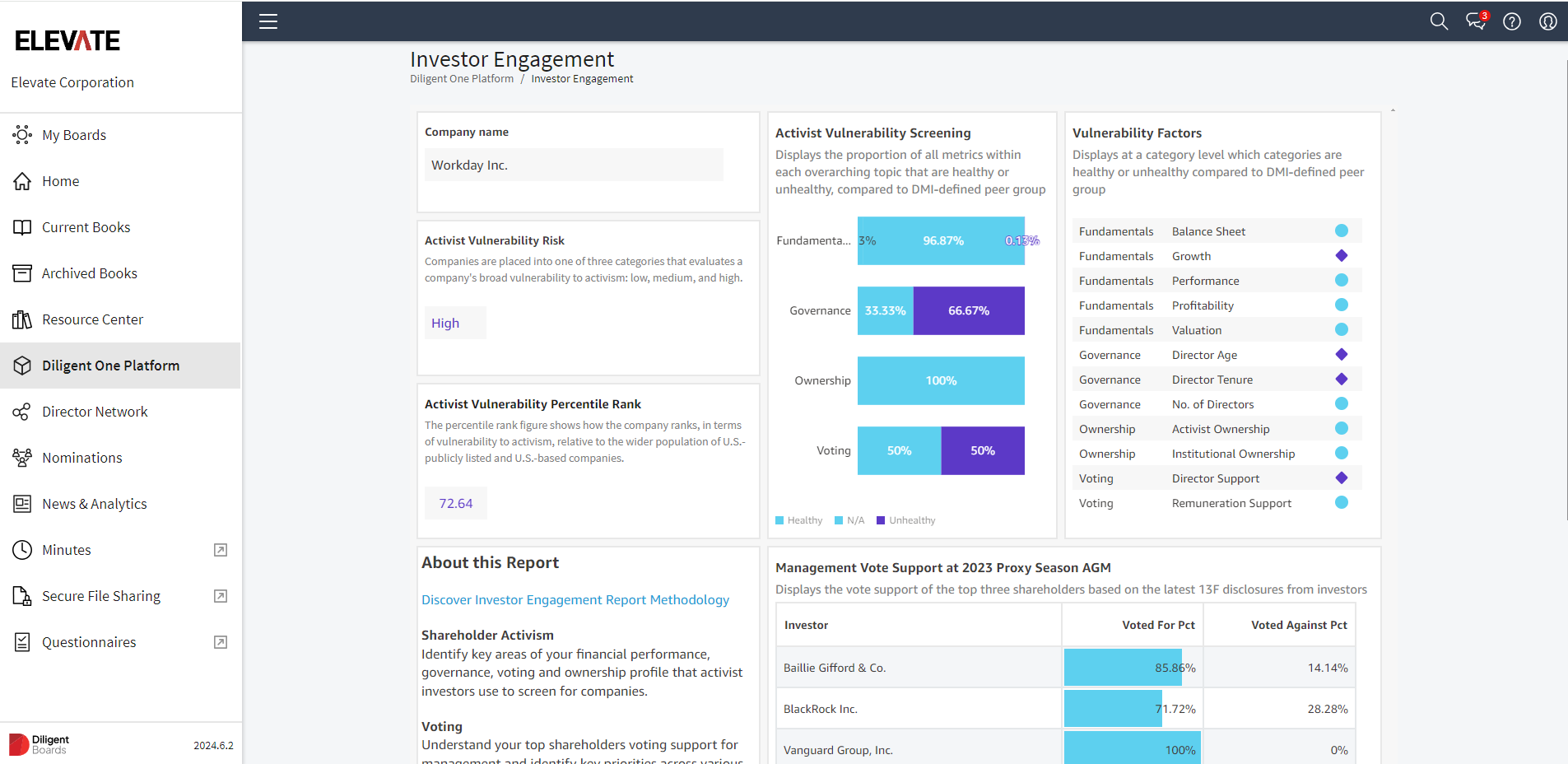
7. Diligent
Diligent combines carbon tracking with governance and risk management, making it ideal for companies focused on corporate compliance and sustainability transparency. Its risk management tools set it apart, providing organizations with a strategic way to manage carbon reporting.
Key Features:
Governance and risk management tools
Compliance-focused carbon tracking
Cloud-based collaboration
Pros
Cons
Strong governance and compliance features
Robust risk management tools
Cloud-based and scalable
Not solely focused on carbon accounting
Requires integration with other ESG platforms
Can be overwhelming for small businesses
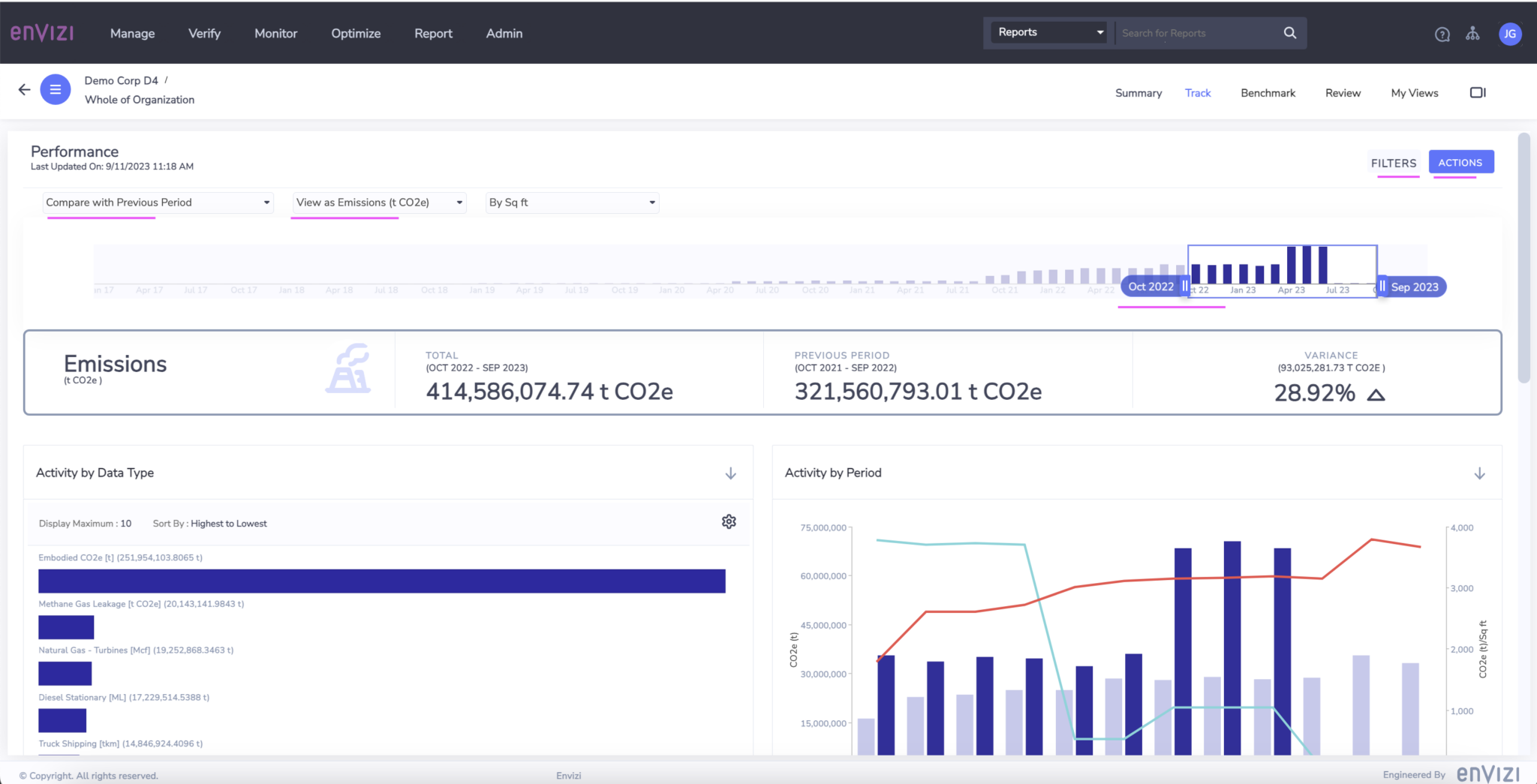
8. IBM Envizi
IBM Envizi is a data-driven sustainability platform that simplifies carbon accounting, ESG reporting, and regulatory compliance. It integrates with IBM’s AI and analytics tools, enabling businesses to track, analyze, and optimize their carbon footprint in real-time.
Key Features:
AI-driven emissions tracking
Automated sustainability reporting
Advanced data analytics for carbon footprint insights
Pros
Cons
AI-powered analytics and automation
Strong integration with IBM tools
Supports ESG and regulatory compliance
High cost for SMEs
Requires IBM ecosystem for full functionality
Complex initial setup
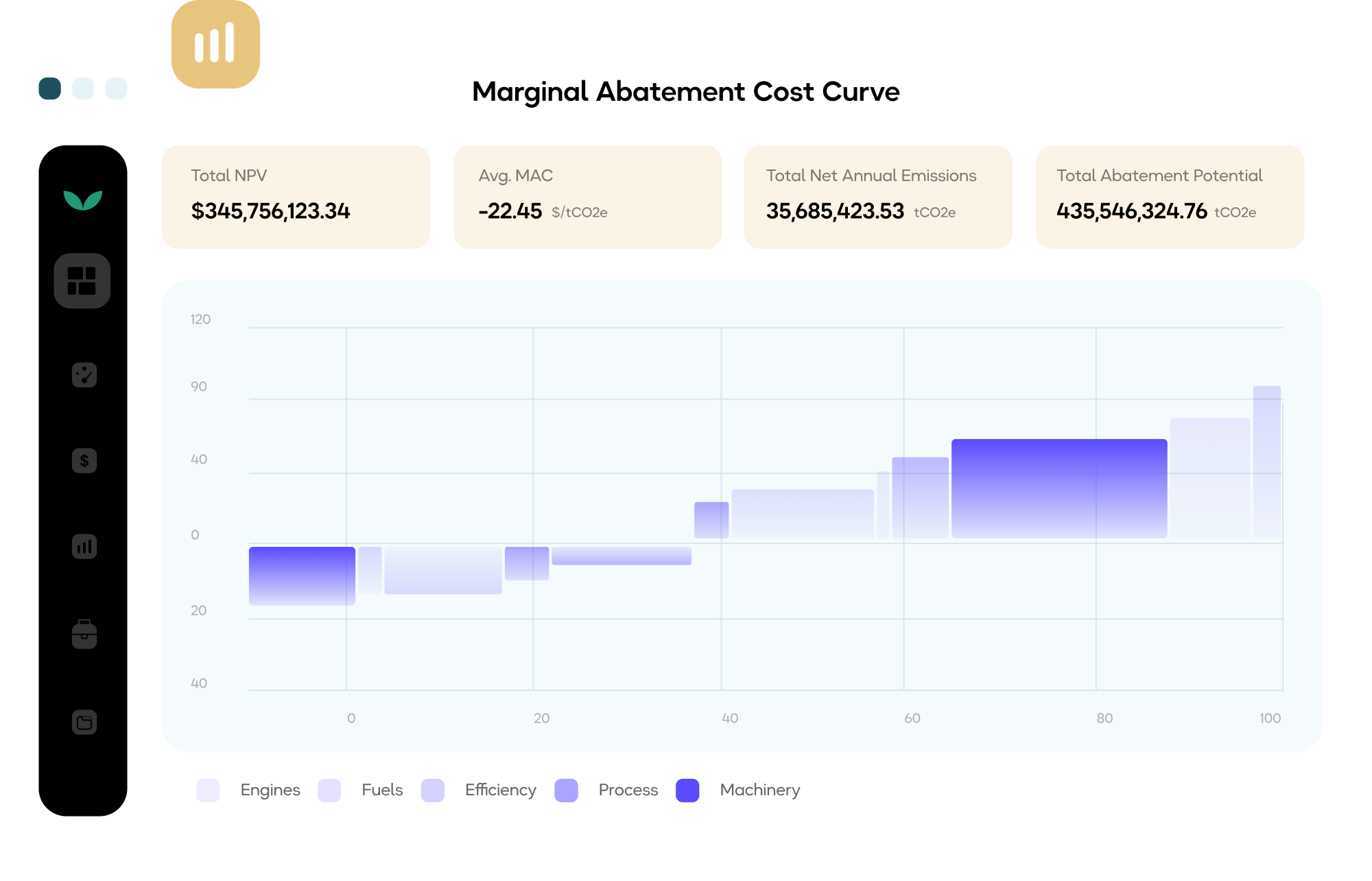
9. SINAI Technologies
SINAI Technologies is designed for companies aiming to model, analyze, and reduce emissions through detailed carbon accounting. It helps organizations forecast carbon reduction strategies while ensuring compliance with global regulations.
Key Features:
Predictive carbon modeling
Scenario analysis for emissions reduction
Regulatory compliance tracking
Pros
Cons
Advanced carbon modeling and forecasting
Supports emissions reduction planning
Aligns with global sustainability standards
Requires detailed data inputs
May be complex for small businesses
Limited integrations with third-party financial software
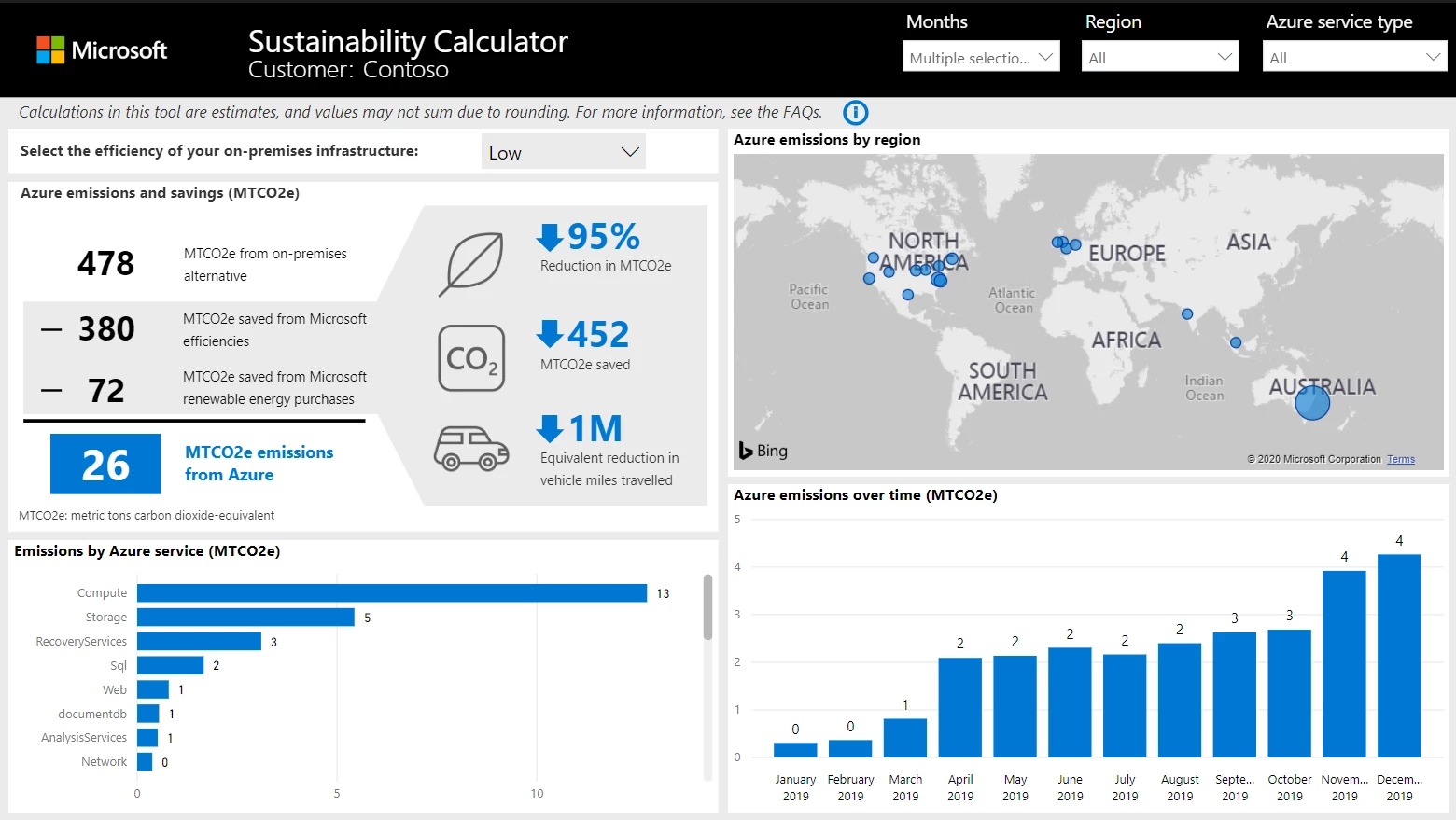
10. Microsoft Sustainability Cloud
Microsoft Sustainability Cloud is a powerful emissions tracking solution built on the Microsoft ecosystem, offering businesses a centralized platform to measure, analyze, and optimize carbon emissions.
Key Features:
AI-powered carbon accounting and reporting
Integration with Microsoft Azure and Power BI
Real-time sustainability insights
Pros
Cons
Deep integration with Microsoft tools
AI-powered data insights and automation
Comprehensive carbon and ESG tracking
Best suited for Microsoft ecosystem users
Can be costly for small businesses
Requires Azure expertise for full functionality
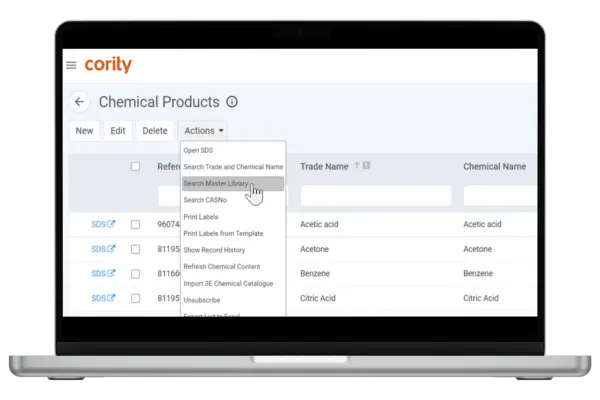
11. Cority
Cority is an all-in-one sustainability and ESG management platform with strong carbon accounting features. It is widely used in industries such as healthcare, manufacturing, and energy, providing automated tracking, risk assessments, and compliance tools.
Key Features:
Automated carbon footprint tracking
Risk management and compliance tools
ESG data management and reporting
Pros
Cons
Comprehensive ESG and carbon tracking
Strong compliance and risk management tools
Industry-specific sustainability solutions
May be complex for small businesses
Higher pricing for premium features
Can require extensive setup and customization
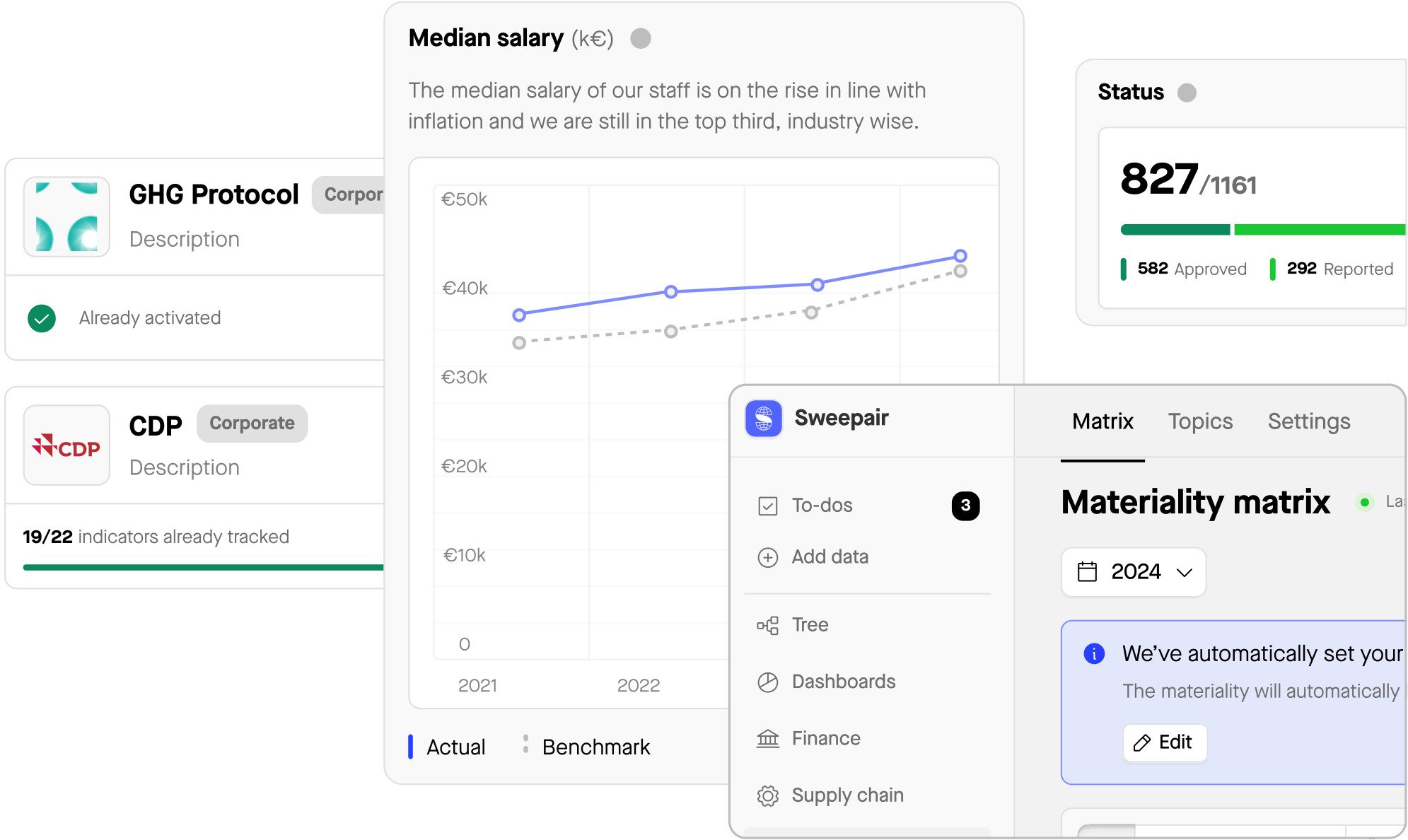
12. Sweep
Sweep is an intuitive carbon accounting and emissions management platform that helps businesses track, reduce, and report their environmental impact. It offers collaborative tools for teams working on sustainability initiatives, making it an excellent choice for companies seeking a user-friendly and scalable solution for tracking carbon emissions.
A business carbon footprint is the total amount of greenhouse gas (GHG) emissions generated by a company’s activities, both directly and indirectly. These emissions come from various sources, such as energy consumption, transportation, production processes, and supply chain operations.
Understanding and managing a company’s carbon footprint is essential for reducing environmental impact and meeting sustainability regulations.
Many businesses now use carbon accounting software to accurately track emissions, identify reduction opportunities, and enhance sustainability reporting.
Essential Features to Look for in Carbon Accounting Software
Selecting the right carbon accounting software is essential for businesses seeking to accurately track and reduce their emissions efficiently. Here are the key features of the ERP solution for energy company to consider:
Automated Data Collection – The software should integrate with various data sources, such as energy bills, transportation records, and operational activities, to track emissions.
Real-Time Emissions Monitoring – A good solution provides real-time insights into carbon emissions, helping businesses identify trends and areas for improvement.
Regulatory Compliance Support – Ensure the software aligns with international standards like the GHG Protocol and local regulations such as Singapore’s carbon tax policies for accurate reporting.
Supply Chain & Scope 3 Tracking – A comprehensive tool should measure emissions beyond direct operations, including supply chain activities, to provide a complete carbon footprint analysis.
User-Friendly Interface – The software should be easy to use, enabling teams to access and interpret emissions data without extensive technical knowledge.
Integration with Financial & ERP Systems – Seamless integration with accounting or enterprise resource planning (ERP) software ensures accurate cost analysis and streamlined sustainability reporting.
By selecting carbon accounting software with these essential features, businesses can improve emissions tracking, enhance compliance, and more effectively achieve sustainability goals.
What are the Three Scopes in Carbon Accounting?
In carbon accounting, greenhouse gas (GHG) emissions are categorized into three scopes to help businesses measure and manage their environmental impact. These scopes, defined by the GHG Protocol, classify emissions based on their sources:
Scope 1: Direct emissions
These are emissions generated directly from a company’s owned or controlled sources. Examples include fuel combustion in company-owned vehicles, manufacturing processes, and on-site energy generation.
Scope 2: Indirect emissions from purchased energy
This includes electricity, heating, and cooling emissions purchased by a business. While these emissions occur outside the company’s facilities, they are a result of the organization’s energy consumption.
Scope 3: Indirect Emissions from the supply chain
Scope 3 encompasses all other indirect emissions associated with a company’s operations, including the extraction of raw materials, transportation, product use, employee commuting, and waste disposal. These emissions often comprise a considerable portion of a business’s carbon footprint.
Understanding these three scopes enables businesses to identify emission sources, enhance reporting accuracy, and develop effective reduction strategies. Using carbon accounting software simplifies tracking and ensures compliance with sustainability regulations.
How to Select the Right Carbon Accounting Software for Your Business
Choosing the best carbon accounting software is essential for accurate emissions tracking and effective sustainability management. Here are key factors to consider when selecting the right solution for your business:
Compliance with regulations: To meet reporting requirements, ensure the software adheres to international standards, such as the GHG Protocol, and local regulations like Singapore’s carbon tax policies.
Automation and data integration: Look for software that automates data collection from energy bills, transportation logs, and supply chain activities. Integration with ERP and financial systems is also beneficial for streamlined operations.
Comprehensive emissions tracking: The software should track Scope 1, Scope 2, and Scope 3 emissions, providing a complete overview of your company’s carbon footprint.
Customizable reporting and analytics: Select a solution with advanced reporting tools that enable businesses to create tailored sustainability reports and analyze emissions trends.
User-friendly interface: A well-designed, intuitive dashboard ensures teams can easily access, interpret, and manage emissions data without extensive training.
Scalability and flexibility: Select a solution that can grow with your business, accommodating future expansion and evolving sustainability goals.
Cost-effectiveness: Compare pricing models to ensure the software aligns with your budget while delivering essential features for emissions tracking and reduction.
By considering these factors, businesses can invest in carbon accounting software that enhances sustainability efforts, improves compliance, and drives long-term reductions in environmental impact.
“Carbon accounting software gives businesses the precision they need to measure emissions accurately, enabling data-driven decisions that push sustainability goals forward with confidence.”
— Angela Tan, Regional Manager
Conclusions
Carbon accounting software enables businesses to track and manage their emissions efficiently. It ensures compliance and supports sustainability goals. The right tool simplifies reporting and reduces environmental impact.
Among the top options, HashMicro Accounting Software offers the best solution. It provides automated carbon tracking, real-time reporting, and seamless financial integration. With AI-powered insights, businesses can simplify emissions management and compliance.
Start managing your carbon footprint effortlessly. Request a free demo today and achieve your sustainability goals!
FAQ About Carbon Accounting Software
What does carbon accounting mean?
Carbon accounting refers to the practice of measuring the amount of greenhouse gases an organization generates, whether these emissions come directly from its operations or indirectly through its broader activities. It defines clear boundaries to ensure all relevant sources are assessed.
What are the core principles behind carbon accounting?
The Greenhouse Gas Protocol outlines five guiding principles for accurate and reliable carbon reporting: relevance, completeness, consistency, transparency, and accuracy. These principles ensure companies capture meaningful data and apply uniform methods when tracking emissions.
How is carbon accounting performed?
To calculate emissions, companies multiply the cost or quantity of each purchased good or service by its respective emission factor. They repeat this process across all activities and materials, and the combined results form the organization’s total carbon footprint.
As a content writer who turns technical complexity into compelling narratives, my words guide businesses through the labyrinth of technology, transforming challenges into opportunities for growth.