









Running a third-party logistics (3PL) warehouse means keeping every client's shipments, invoices, and stock counts separate. When inventory, service charges, and delivery exceptions live in different spreadsheets and tools, teams spend hours reconciling records. Errors reach customers, billing disputes follow, and margins shrink while the warehouse stays busy.
Disconnected systems create a business problem. The Philippine Statistics Authority reported ₱2.74 trillion in digital economy gross value added in 2025. E-commerce accounted for 32.2% of the total. That figure does not measure 3PL demand, but it shows why fulfillment workflows deserve attention. Purpose-built 3PL software closes this gap.
3PL software manages the work a logistics provider performs for other businesses. It connects receiving, storage, picking, packing, shipping, returns, and client reporting while keeping each customer's inventory, orders, and charges separate. This guide compares 11 3PL software options and gives operators a practical way to test them.
Key Takeaways
Compare software by scoring client separation, billing accuracy, integrations, and Philippine support against the same real client workflows.
Choose features that keep client stock separate, automate billing, and give each customer accurate visibility.
These 11 options range from 3PL-focused platforms to ERP-connected and enterprise systems, so shortlist by operating model.
Choose the system that runs your own client workflows reliably in the Philippines at a sustainable total cost.
How Should Philippine 3PL Operators Compare Software?
3PL warehouse management software manages inventory, orders, shipping, and billing for a provider's clients. To compare options, test five workflows with anonymized data: inbound discrepancy, multi-client allocation, peak-day release, failed-delivery return, and month-end billing. Then score each vendor on the same evidence in the table below
| Evaluation area | What to ask the vendor to show | Evidence to retain |
|---|---|---|
| Multi-client control | Two clients sharing a warehouse, with separate stock and user access | Screen recording and role matrix |
| Warehouse execution | Receipt, putaway, pick, pack, dispatch, and return | Transaction history and exception log |
| Billing | Charges generated from a storage event and a pick event | Rate card, audit trail, sample invoice |
| Integrations | Store or ERP order import, cancellation, and failed sync recovery | Integration list and API documentation |
| Philippine operations | Local carrier workflow, time zone, currency, support coverage | Written scope and support terms |
| Commercial terms | Implementation, subscription, training, and change fees | Itemized proposal and contract |
A standard WMS tracks one company's stock, while a 3PL WMS separates client orders, reports, and per-pallet or per-pick charges. Spreadsheet workarounds can complicate revenue, so teams new to third-party logistics (3PL) should confirm billing rules first.
increase administrative work faster than they increase
Which Features Matter Most to a 3PL Provider?
Choosing the right 3PL software features decides whether one warehouse can serve many clients without errors. Weak controls cause stock mix-ups, billing disputes, and manual rework. These five features protect client data and turn services into accurate invoices. Check them against a logistics software comparison before shortlisting vendors.
Features that matter:
- Client-specific inventory and access: Every SKU, movement, order, and return needs a client owner, and customer users should see only their own records.
- Receiving, putaway, and traceability: Scan receipts against expected stock, log discrepancies, assign locations, and trace batches. This warehouse management system guide explains the workflow.
- Pick, pack, ship, and returns: Test one order from allocation to a failed delivery and return to stock, not just the dispatch screen.
- Contract-based billing: Ask for an invoice built from test transactions, and confirm rate changes affect only future activity.
- Integrations and visibility: Detect duplicate orders, cancellations, and failed syncs, and give clients portal views without exposing other customers' data.
Comparison of 3PL Software Options
These 11 examples of 3PL software suit different operating models, not a ranking. We reviewed public vendor descriptions and a MetaOption article on 2027. Each capability warrants a demo to confirm package inclusion and Philippine availability. Businesses fulfilling only their own orders can compare order fulfillment software.
| Product | Pros | Cons | Best for | Pricing |
|---|---|---|---|---|
| HashMicro | Connects warehouse work with broader ERP processes and documents the core inbound, outbound, and returns workflow. | Dedicated 3PL billing scope and client data isolation need confirmation during a product demonstration. | Providers that want warehouse execution linked to broader ERP processes. | Request a Philippine proposal, since the public WMS page does not state a fixed price. |
| Extensiv 3PL Warehouse Manager | Focuses on multi-client warehouse operations and includes documented billing and customer visibility tools. | Philippine carrier and marketplace connections need validation, and support coverage may vary by region. | 3PL operators that prioritize established multi-client warehouse workflows. | Request a tailored quote, because no public subscription amount was confirmed. |
| Logiwa IO | Handles complex order volume and supports both multi-client and multi-warehouse fulfillment operations. | May exceed smaller operators' needs, and Philippine implementation resources need confirmation. | Providers processing high e-commerce order volumes or onboarding many clients. | Custom quote based on fulfillment volume and complexity, and pricing is not per user. |
| Deposco | Offers flexible fulfillment configuration for varied client needs and publicly documents billing and portal capabilities. | Setup may require substantial process design, and Philippine support coverage needs validation. | Operators needing configurable fulfillment and customer self-service. | Request a scoped quote, because a public Philippine price was not confirmed. |
| Infoplus | Configures billing activities in fine detail and handles contracts with unusual charge rules. | Billing setup may need ongoing administration, and customer portal access needs confirmation before purchase. | 3PLs with detailed or unusual client billing rules. | Monthly tier pricing plus selected add-ons, with 3PL billing appearing in the 3PL WMS tier, so request an itemized quote. |
| Teamship | Automates billing according to per-client rules and includes a documented client portal. | Launch includes only three order sources and 400 integration orders, and Philippine references need verification. | Growing 3PLs seeking a focused WMS with a visible entry price. | About ₱25,500 (3PL Growth), ₱31,900 (3PL Launch), ₱59,100 (3PL Plus), and ₱111,100 (3PL Ultimate) per month, converted at US$1 = ₱63.84 (BSP weighted average, November 17, 2026). |
| MetaWMS | Suits Business Central users and offers traceability controls for stock with batch or expiry needs. | Value depends on an existing Microsoft ERP environment, and 3PL billing scope needs demonstration. | Providers already using or selecting Business Central. | Request a quote for MetaWMS plus any Business Central licensing and implementation. |
| Manhattan Active Warehouse Management | Supports deep automation for high-volume operations and orchestrates fulfillment across multiple sites. | Top-tier deals reportedly exceed $500,000 yearly, and customer billing and portal scope requires configuration review. | Large 3PL networks with automation, labor, and multi-site complexity. | Custom quote, with editions from Essentials and Enterprise up to the top tier, Enterprise Premier. |
| Oracle Warehouse Management Cloud | Works well for Oracle-connected businesses and combines returns, wave management, and automation support. | Commercial and implementation structure can be complex, and local carrier workflows need proof-of-concept testing. | Large providers with Oracle systems or complex cross-site operations. | Request a Philippine quote for required modules and minimum commitments, since global list prices are not a local offer. |
| SAP Extended Warehouse Management | Delivers deep warehouse and inventory control and supports labor, yard, batch, serial, and automation processes. | Needs significant implementation planning, and 3PL billing, portal, and client reporting need explicit scope. | SAP-centered enterprises with advanced warehouse requirements. | Request a proposal for licenses, required SAP components, and implementation, because no applicable Philippine price was confirmed. |
| NetSuite WMS | Keeps warehouse data alongside ERP records and supports task management through mobile barcode scanning. | Complex 3PL billing may need configuration or extensions, and portal scope needs confirmation. | Mid-sized providers already using NetSuite or seeking an ERP-native WMS. | NetSuite subscription plus a WMS add-on module and implementation services, so request an itemized quote. |
Best 3PL Software Options
These 11 options for Philippine operators range from 3PL-focused warehouse platforms to ERP-connected and enterprise systems. Each review covers key features, pros and cons, pricing, and ideal users. Use these reviews to build a shortlist, then test each finalist with your own client workflows.
1. HashMicro
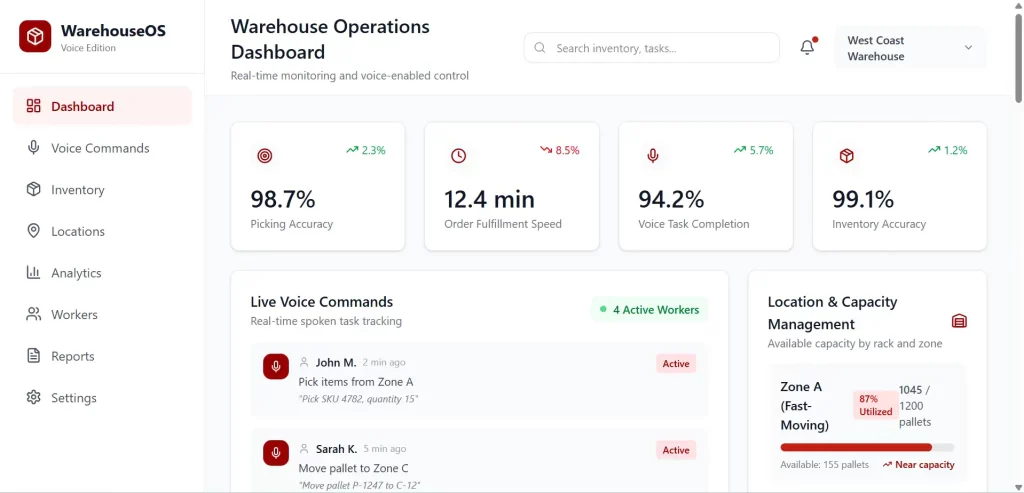
HashMicro offers a Philippine warehouse system connected to its ERP modules for inventory, sales, purchasing, and accounting. It stands out on this 3PL software list because warehouse work shares data with finance and procurement teams.
HashMicro warehouse management software covers receiving, putaway, picking, shipping, and returns. Teams keep stock and finance records in one system, so it suits companies that want one integrated business platform.
Key features:
- ERP-connected inventory: Stock records link to sales, purchasing, and accounting functions inside the same ERP platform.
- Receiving and putaway: Teams record inbound stock and assign it to storage locations.
- Picking and dispatch: Staff pick orders and dispatch shipments with a structured shipping workflow.
- Returns handling: Returns follow a documented process, so staff handle goods coming back to the warehouse.
| Pros | Cons |
|
|
Pricing: Request a Philippine proposal, since the public WMS page does not state a fixed price.
Best for: Providers that want warehouse execution linked to broader ERP processes will benefit most. Confirm billing and client data separation during the demo.
Need one system to manage stock across several clients? Explore how HashMicro warehouse software supports multi-client operations in the Philippines and request a free demo below.

2. Extensiv 3PL Warehouse Manager
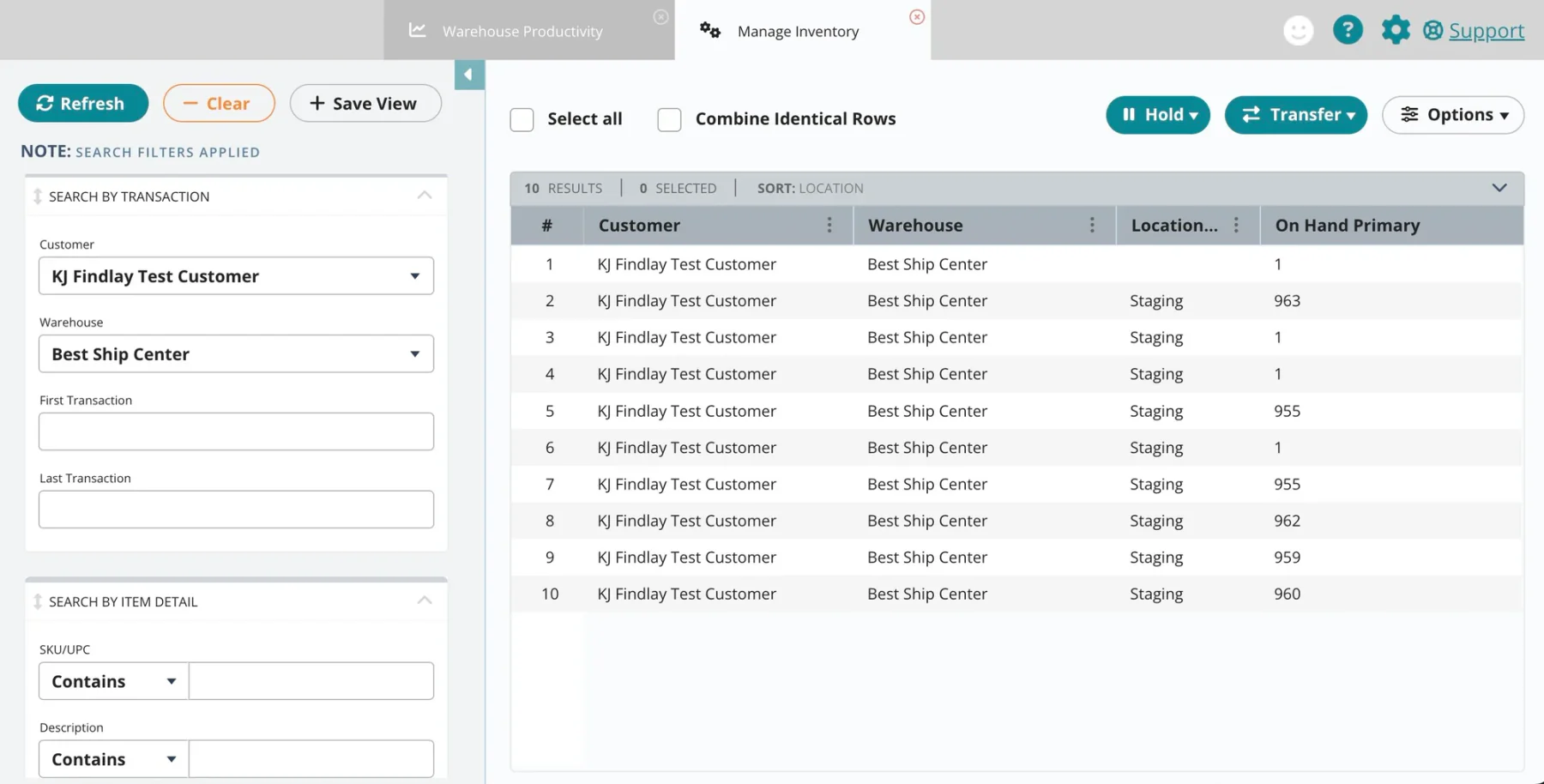
Extensiv 3PL Warehouse Manager is purpose-built third-party logistics provider software that covers inventory, orders, client billing, reporting, scanning, and integrations. It stands out because the platform centers on multi-client warehouse work.
Extensiv is one of the best for cloud inventory management, and it adds documented billing and customer visibility tools. Multi-client operators gain a clear benchmark for client-to-invoice workflows.
Key features:
- Multi-client inventory and orders: Track each client's stock and orders separately inside one warehouse operation.
- Client billing: Documented tools turn warehouse activity into client charges and invoices.
- Customer visibility and reporting: Clients can view inventory and order information, and managers review operational reports.
- Scanning and integrations: Warehouse staff scan items while integrations connect the platform to other business systems.
| Pros | Cons |
|
|
Pricing: Request a tailored quote, because no public 3PL Warehouse Manager subscription amount was confirmed.
Best for: 3PL operators that prioritize established multi-client warehouse workflows gain the most. Use it as a baseline when scoring other vendors.
3. Logiwa IO
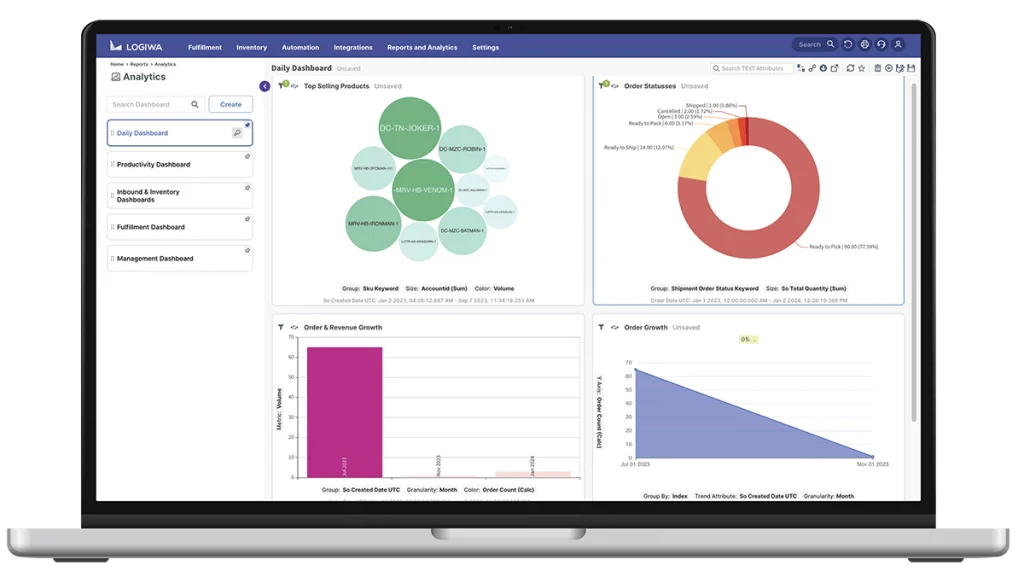
Logiwa IO is a cloud fulfillment platform aimed at high-volume 3PL and e-commerce operations. It works as a 3PL WMS by running multi-client warehouse and order workflows on a single platform.
Logiwa supports complex order volumes across several warehouses and clients. E-commerce fulfillment providers gain a platform designed for high order volume.
Key features:
- Cloud platform: Warehouse teams work in a cloud system built for fulfillment operations.
- Multi-client workflows: Warehouse and order processes support several clients inside the same operation.
- Multi-warehouse operations: One system coordinates inventory and orders across several warehouse sites.
- E-commerce order handling: Fulfillment workflows handle complex, high-volume e-commerce orders for online sellers.
| Pros | Cons |
|
|
Pricing: Logiwa quotes custom pricing based on fulfillment volume and complexity, and it says pricing is not per user.
Best for: Providers processing high e-commerce order volumes or onboarding many clients get the strongest fit. Smaller operators should check whether the platform exceeds their needs.
4. Deposco
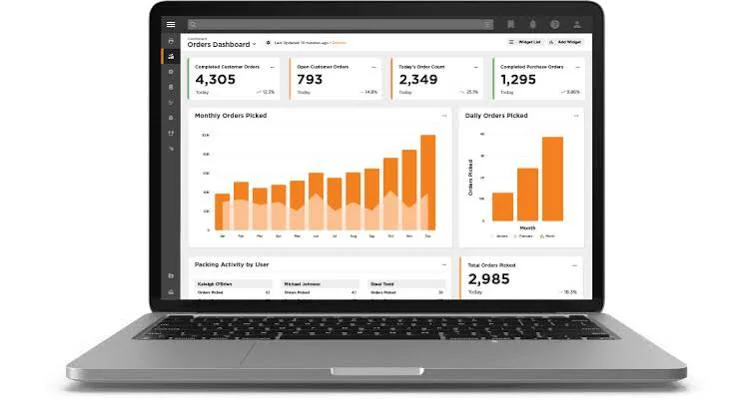
Deposco pairs warehouse fulfillment with 3PL software tools for client inventory, billing guidance, and a customer-facing Bright Portal. It stands out for giving customers self-service access to their own information through that portal.
Configurable fulfillment processes let operators adapt workflows to different client requirements. The documented billing guidance and portal suit teams managing complex client setups.
Key features:
- Bright Portal: Customers get self-service access through a portal built for client-facing use.
- Client inventory management: The platform manages stock for different clients inside one fulfillment operation.
- Billing guidance: Documented guidance helps 3PLs set up billing for client services.
- Configurable fulfillment: Operators tailor fulfillment processes to different client and order requirements.
| Pros | Cons |
|
|
Pricing: Request a scoped quote, because a public Philippine price was not confirmed.
Best for: Operators needing configurable fulfillment and customer self-service should shortlist it first. Plan time for process design before go-live.
5. Infoplus
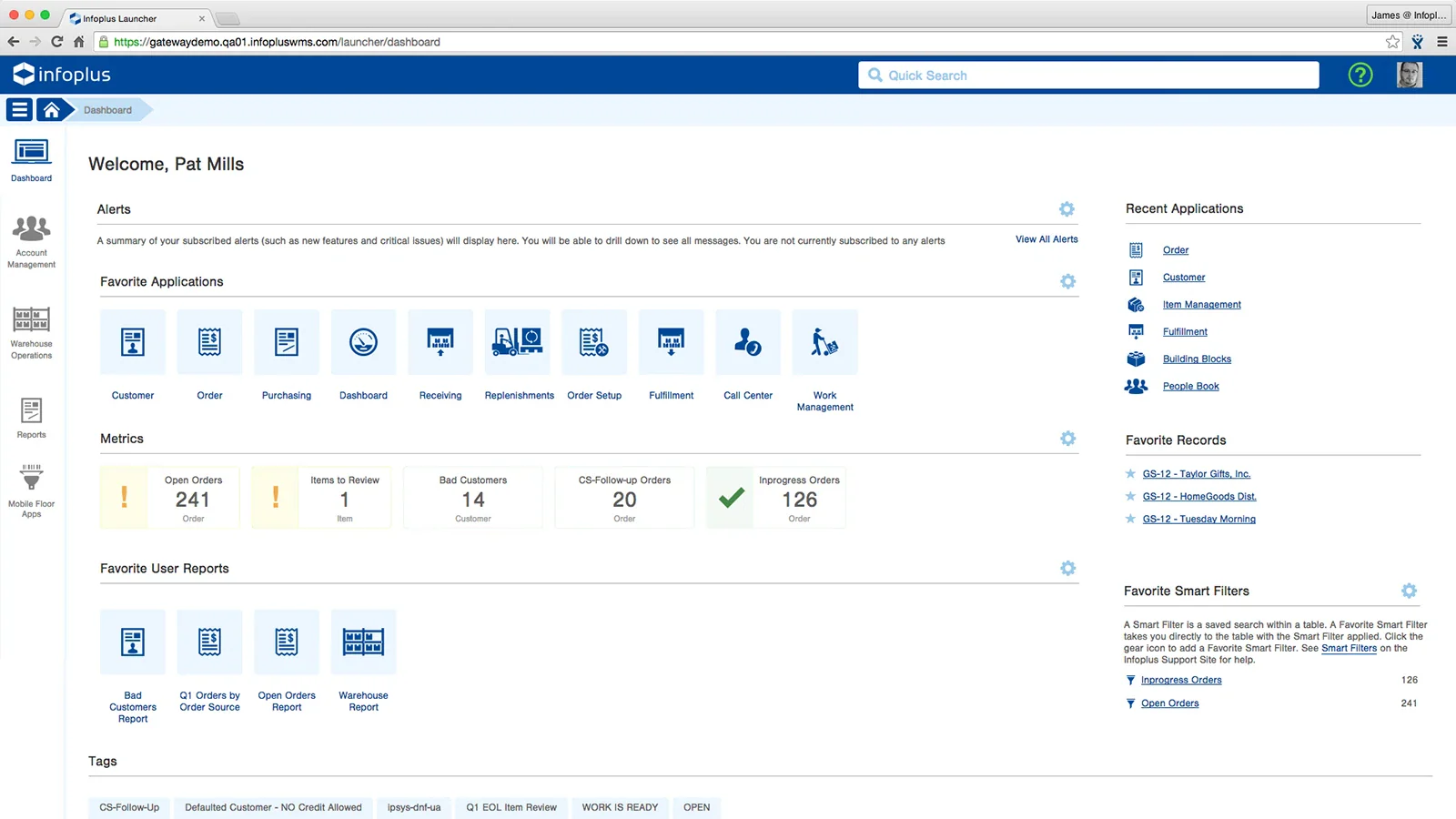
Infoplus delivers 3PL warehouse management software with a separate billing module that applies rules to billable activity. It stands out for letting providers configure detailed charge rules around each warehouse transaction.
The billing module helps providers charge for contracts with unusual rules. Transaction tracking records the warehouse activity behind those charges, so finance teams can review invoices.
Key features:
- Separate billing module: A dedicated module manages 3PL billing apart from core warehouse functions.
- Rule-based charges: Rules apply to billable activity, so charges follow what the warehouse actually does.
- Unusual contract terms: Detailed configuration options support clients whose contracts include unusual charge rules.
- Transaction tracking: The WMS records warehouse transactions that provide the activity base for billing.
| Pros | Cons |
|
|
Pricing: Infoplus publishes monthly tier pricing plus selected add-ons, so request an itemized quote covering the WMS and 3PL billing module.
Best for: 3PLs with detailed or unusual client billing rules are the best match. Ask for a billing demonstration that mirrors your contract terms.
6. Teamship
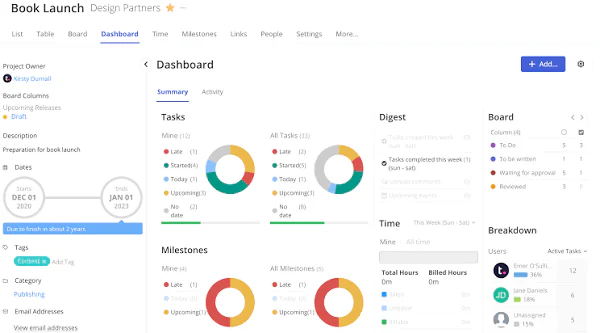
Teamship is cloud-based third-party logistics provider software for 3PLs and distributors. It stands out by combining multi-client inventory, automated per-client billing, and a client portal in one focused warehouse management system.
Per-client service rules support the multi-client warehouse benefits that growing providers in the Philippines pursue. A documented client portal also gives customers direct access to their information.
Key features:
- Multi-client inventory: Stock stays organized by client inside one shared cloud warehouse system.
- Per-client rules: Each customer can have its own service rules and charges.
- Automated billing: The system generates client charges automatically from warehouse activity and configured rules.
- Client portal: Customers use a documented portal to access their own information.
| Pros | Cons |
|
|
Pricing: Teamship lists four monthly plans at about ₱25,500 (3PL Growth), ₱31,900 (3PL Launch), ₱59,100 (3PL Plus), and ₱111,100 (3PL Ultimate).
Best for: Growing 3PLs seeking a focused WMS with a visible entry price fit it well. Confirm Philippine references and order-source integrations before signing.
7. MetaWMS
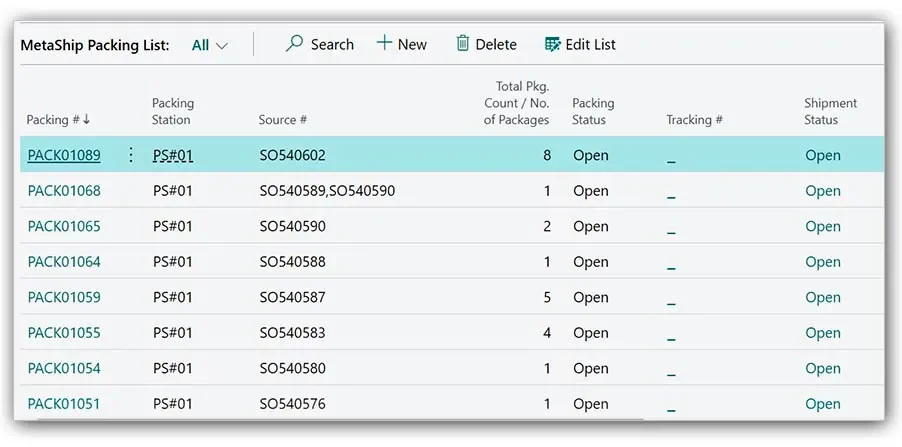
MetaOption's MetaWMS extends Microsoft Dynamics 365 Business Central with warehouse receiving, scanning, inventory, and fulfillment functions. It stands out as 3PL software for providers that already run their business on Microsoft ERP.
Providers keep warehouse work inside the ERP they already use. Lot, serial, expiry, and multi-location controls also help teams that handle traceable stock.
Key features:
- Business Central extension: MetaWMS adds warehouse functions directly to Microsoft Dynamics 365 Business Central.
- Barcode scanning: Staff scan items during receiving, putaway, picking, and shipping tasks.
- Lot, serial, and expiry control: Teams track lot numbers, serial numbers, and expiry dates for controlled stock.
- Multi-location inventory: Inventory stays visible across several storage locations within the warehouse network.
| Pros | Cons |
|
|
Pricing: Request a quote for MetaWMS plus any Business Central licensing and implementation.
Best for: Providers already using or selecting Business Central get the most value. Check implementation partner availability in the Philippines.
8. Manhattan Active Warehouse Management
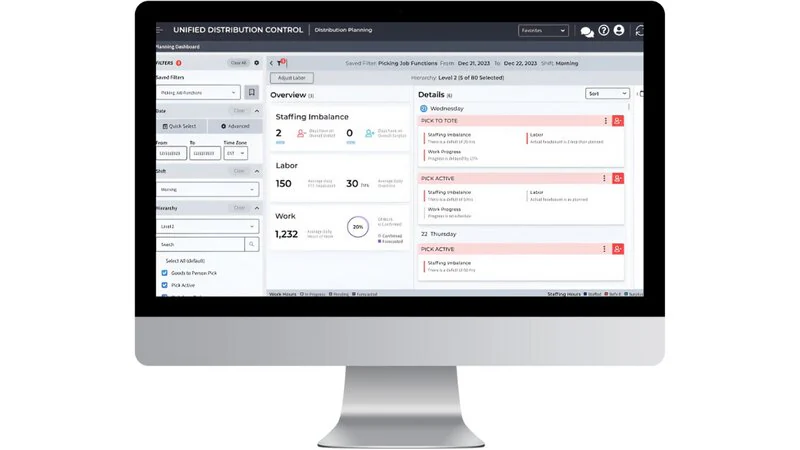
Manhattan Active Warehouse Management is an enterprise platform for complex, high-volume, and automated operations. It stands out as a 3PL WMS for large networks that need advanced execution and fulfillment orchestration.
Its execution and automation tools help large networks coordinate complex labor and fulfillment work. Enterprise providers with several sites gain the most from this depth.
Key features:
- Warehouse execution: Strong execution tools manage complex, high-volume work across the warehouse.
- Automation support: The platform supports automated warehouse operations for high-volume sites.
- Labor management: Managers coordinate complex labor operations across large warehouse networks.
- Fulfillment orchestration: Advanced orchestration coordinates how orders move through fulfillment across sites.
| Pros | Cons |
|
|
Pricing: Manhattan provides a custom quote, with plans starting from Essentials and Enterprise up to the best tier, Enterprise Premier.
Best for: Large 3PL networks with automation, labor, and multi-site complexity are the natural audience. Smaller operators should compare lighter options first.
9. Oracle Warehouse Management Cloud
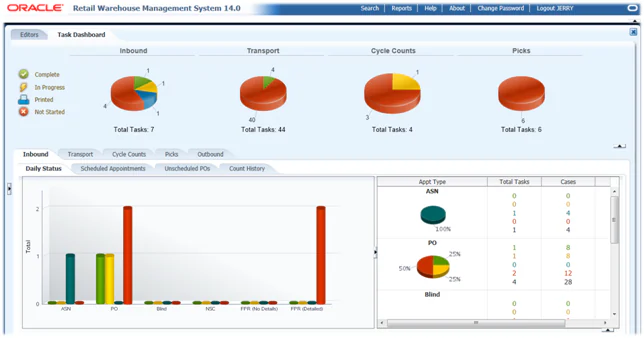
Oracle Warehouse Management Cloud is third-party logistics provider software that supports complex fulfillment, inventory visibility, returns, and multi-client warehouse operations. It stands out through wave management and automation support for large operations.
Operators of a large fulfillment center gain multi-location visibility and returns handling in one cloud system. Oracle-connected businesses benefit most because the warehouse module fits their existing environment.
Key features:
- Complex fulfillment: Workflows handle demanding order fulfillment requirements across large operations.
- Multi-location visibility: Teams see inventory across several locations and warehouses in one place.
- Wave management: Planners group orders into waves to release warehouse work in controlled batches.
- Returns and automation support: The platform handles returns and includes support for warehouse automation.
| Pros | Cons |
|
|
Pricing: Request a Philippine quote for required modules and minimum commitments, since global list prices are not a local offer.
Best for: Large providers with Oracle systems or complex cross-site operations benefit most. Run a proof of concept with local carrier workflows.
10. SAP Extended Warehouse Management
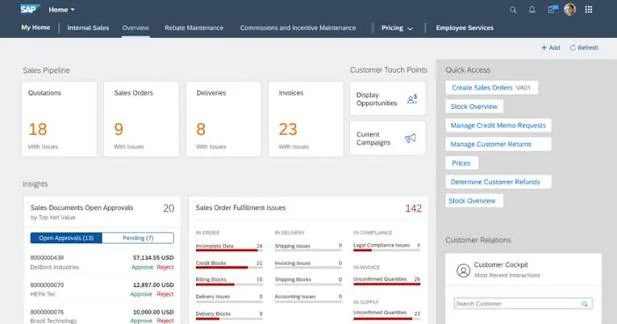
SAP Extended Warehouse Management serves as 3PL warehouse management software for complex inbound and outbound work, stock ownership, and automation. It stands out by pairing yard and labor management with deep inventory control.
Batch, serial, and labor controls give enterprises tight oversight of inventory and warehouse work. SAP S/4HANA users gain the closest integration with their existing system.
Key features:
- Inbound and outbound control: Teams manage complex receiving and shipping flows with detailed warehouse oversight.
- Stock ownership: Records show who owns each stock position inside the warehouse.
- Yard and labor management: Planners coordinate yard activity and warehouse labor within the same platform.
- Batch, serial, and automation: Batch and serial tracking works alongside support for automated warehouse processes.
| Pros | Cons |
|
|
Pricing: Request a proposal for licenses, required SAP components, and implementation, because no applicable Philippine price was confirmed.
Best for: SAP-centered enterprises with advanced warehouse requirements are the clear audience. Scope client billing, portal access, and reporting before signing.
11. NetSuite WMS
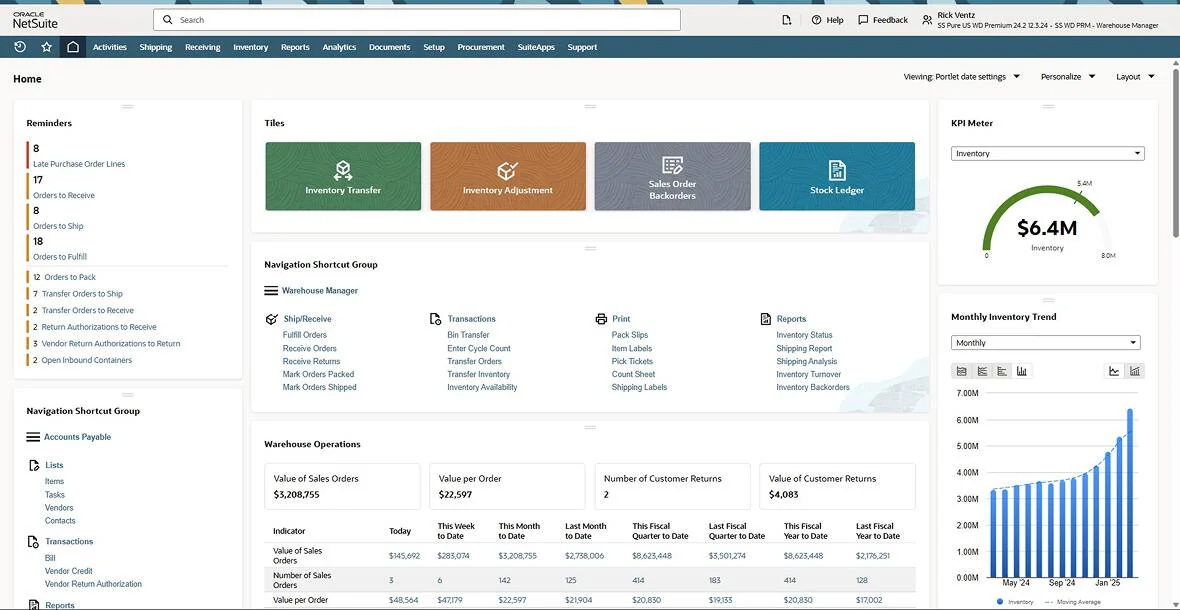
NetSuite WMS is a warehouse add-on within NetSuite ERP, providing mobile scanning, putaway, picking, returns, and cycle counting. It stands out among 3PL software options for working directly with NetSuite records.
Teams weighing ERP vs WMS get both in one environment, with mobile task management in the warehouse. Mid-sized organizations already using NetSuite benefit most.
Key features:
- ERP-linked records: Warehouse activity connects to NetSuite ERP records without a separate system.
- Mobile barcode scanning: Workers scan items on mobile devices during warehouse tasks.
- Task management: The system assigns and tracks putaway and picking tasks for warehouse staff.
- Returns and cycle counting: Teams process returns and run cycle counts to keep inventory accurate.
| Pros | Cons |
|
|
Pricing: Pricing combines an annual NetSuite license, a WMS add-on, and a one-time implementation fee, so request an itemized quote.
Best for: Mid-sized providers already using NetSuite or seeking an ERP-native WMS fit best. Verify complex client billing and portal needs during the demo.
How to Choose the Best 3PL Software According to Your Business Needs
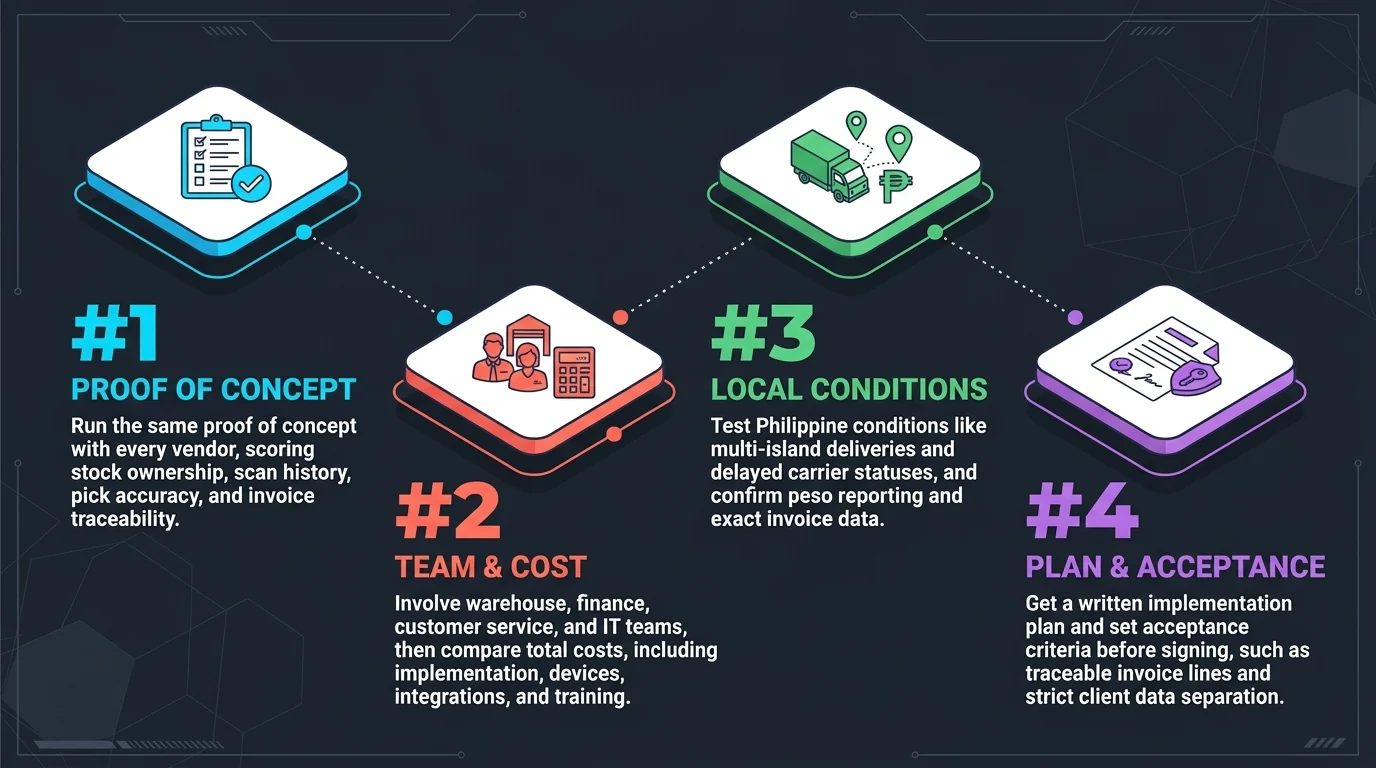
Many 3PL operators discover too late that their first system cannot handle a second client's rules. The wrong 3PL software then forces manual billing, disputed invoices, and costly migrations. Early choices protect client trust and margins. Use these steps to match third-party logistics provider software to your operations.
Steps on how to choose:
- Run the same proof of concept with every vendor: Score stock ownership, scan history, pick accuracy, invoice traceability, and client visibility.
- Involve every team that touches the workflow: Warehouse supervisors, finance, customer service, and IT can spot work the system shifts elsewhere.
- Compare total cost, not only the subscription price: Add implementation, data cleanup, barcode devices, integrations, training, and paid changes for new client rate cards.
- Test Philippine operating conditions: Simulate multi-island deliveries, delayed carrier statuses, and facility transfers, then confirm ready integrations and support hours.
- Check peso reporting and invoice data: Confirm peso reporting and exact invoice data. General invoicing features do not prove local tax fit.
- Get a written implementation plan: Cover migration, training, testing, go-live support, and who owns each integration.
- Set acceptance criteria before signing: Every invoice line must trace to a contract rate, and no customer may see another's records.
Conclusion
The right 3PL software lets you add clients without losing control of stock, service quality, or margins. Do not judge it by feature count. Test whether it can process a real order, recover from an exception, show clients their data, and bill accurately.
The 11 options start from different points. HashMicro combines ERP and warehouse management, Extensiv and Teamship are purpose-built for 3PLs, and Logiwa and Manhattan suit high-volume operations. MetaWMS, Oracle, SAP, and NetSuite are ERP-native.
Run the same proof of concept with each finalist, adding Philippine carriers, peso reporting, and support coverage. Then use HashMicro's free consultation to test an integrated approach.
FAQ About 3PL software
No. A WMS manages warehouse activities such as receiving, putaway, inventory, picking, and dispatch. 3PL software adds the needs of a service provider, particularly separate customer records, client visibility, and billing for contracted services. Some products combine these capabilities in one platform.
Not always. Some 3PL platforms capture billable warehouse events and generate customer charges. Others may require an accounting system or additional setup. Ask the vendor to create a sample invoice from your actual storage, handling, and fulfillment rules, then check that finance can trace every charge.
Some products offer integrations, but availability varies by vendor, partner, and contract. Request a list of supported connections for your specific order sources and carriers. Test cancellations, duplicate orders, tracking updates, and failed sync recovery rather than relying on an integration logo.
There is no reliable single price for every provider. Quotes may depend on facilities, clients, users, transactions, modules, integrations, implementation, and support. Compare itemized proposals over the same period and include the cost of future customer onboarding and workflow changes.
There is no universal winner. Start with products whose implementation model, integrations, support coverage, and total cost match your current scale. A mid-sized provider may prefer an ERP-native option such as HashMicro, MetaWMS, or NetSuite when it wants warehouse and business processes connected, while a focused 3PL WMS may be better when client billing and portal workflows are the priority.