






Stock shortages can hold up orders, while excess inventory ties up cash and warehouse space. For Philippine businesses managing multiple sales channels, warehouses, or product lines, these problems are often difficult to spot until they start affecting customers and margins.
Manual checks can also only go so far, especially when teams need to decide what to reorder, when to reorder it, and which stock risks need attention first. That is why more businesses are exploring AI inventory management software. The challenge is knowing which tools offer useful AI agents and practical recommendations, rather than basic alerts presented as advanced intelligence.
This guide compares eight options based on their published features, pricing, limitations, and likely fit for different business needs. It does not treat a fixed reorder alert as proof of AI, and none of the products were independently tested. Philippine support, billing, and implementation terms should also be confirmed before making a decision.
Key Takeaways
AI inventory software forecasts demand, identifies stock risks, and recommends replenishment actions.
The right tool improves stock visibility, reduces shortages and excess inventory, and supports faster purchasing decisions.
Compare AI capabilities, costs, data needs, and scalability, then test shortlisted tools with real inventory records.
What Is AI Inventory Management Software?
AI inventory management software analyses inventory, sales, purchasing, and supplier data to forecast demand, identify stock risks, answer inventory questions, and recommend replenishment actions.
Its capabilities vary by platform, from demand forecasting and AI assistants to automated replenishment planning. Businesses should assess each tool based on the specific decisions it can support.
Basic reorder alerts follow fixed stock rules and do not qualify as predictive AI on their own. Review whether each recommendation comes from predictive models, predefined rules, or human approval requirements.
What Are the Benefits of AI Inventory Management Software?
AI inventory management software helps businesses make faster, more accurate stock decisions. Its main benefits include:
Earlier demand planning: Forecasting tools estimate future demand, helping purchasing teams plan quantities before shortages or overstock become serious problems.
Faster risk detection: AI can identify potential stockouts, excess inventory, and slow-moving items across products, warehouses, and sales channels.
Quicker inventory answers: Conversational assistants provide instant answers about stock levels, sales trends, purchase orders, and replenishment priorities without requiring multiple manual reports.
More efficient replenishment: Some platforms can recommend replenishment quantities, prepare purchase requests, create orders for review, or support supplier follow-ups.
Better operational control: These benefits depend on accurate inventory records, reliable integrations, suitable thresholds, and human oversight. Businesses that first need stronger stock control should also compare inventory management software.
Comparison of the 8 Best AI Inventory Management Software
This comparison evaluates each tool using vendor-published features, limitations, and business fit. The “Best for” recommendations reflect editorial assessments rather than measured rankings.
| Software | Published pricing | General pros | General cons | Best for |
|---|---|---|---|---|
| HashMicro | Quote required | Stock questions and AI-assisted inventory communications within a broader business platform | No public price; live results were not independently tested | Philippine businesses seeking ERP-connected inventory assistance |
| Penxel | ₱49,000 setup plus ₱1,500/month on its site | Peso pricing, local positioning, multi-location tracking | Public predictive-restocking explanation is limited; setup scope needs confirmation | Smaller Philippine distributors and warehouses |
| Cin7 | Core Standard from US$349/month; ForesightAI is an extra-cost add-on | Demand forecasting and replenishment across locations | Add-on pricing depends on quote or GMV; higher base cost | Growing multichannel product businesses |
| Netstock | Starts at US$900/month; annual subscription and custom quote | Inventory-risk analysis with suggested actions | Requires integration with an existing system | Established businesses adding a planning layer |
| Unleashed | Core US$399/month or Pro US$729/month, paid monthly | Inventory workflows and AI assistance; Pro includes demand forecasting | Add-ons, support, and onboarding can raise total cost | Product businesses needing structured operations |
| Zoho Inventory | Free plan; US Standard from US$29/month billed annually | Ask Zia, configurable agents, accessible entry point | US prices and AI access may not match Philippine terms | Smaller teams, especially existing Zoho users |
| Katana | Free up to 30 SKUs; Advantage custom quote | Production-aware AI Replenishment and free evaluation path | AI Replenishment is beta; Free plan has a SKU limit | Manufacturers and assemblers |
| Prediko | Shopify listing says from US$49; revenue-based plans | Shopify forecasting and purchase-order tools | Shopify-centred; price scales with plan criteria | Shopify merchants and direct-to-consumer brands |
This comparison evaluates each tool using vendor-published features, limitations, and business fit. The “Best for” recommendations reflect editorial assessments rather than measured rankings.
This comparison evaluates each tool using vendor-published features, limitations, and business fit. The “Best for” recommendations reflect editorial assessments rather than measured rankings.
This comparison evaluates each tool using vendor-published features, limitations, and business fit. The “Best for” recommendations reflect editorial assessments rather than measured rankings.
This comparison evaluates each tool using vendor-published features, limitations, and business fit. The “Best for” recommendations reflect editorial assessments rather than measured rankings.
This comparison evaluates each tool using vendor-published features, limitations, and business fit. The “Best for” recommendations reflect editorial assessments rather than measured rankings.
Best AI Inventory Management Software in the Philippines (2026)
Choosing the right AI inventory management software depends on your business size, inventory complexity, sales channels, and forecasting needs. The following platforms are compared based on their core AI capabilities, inventory features, usability, and suitability for Philippine businesses.
1. HashMicro
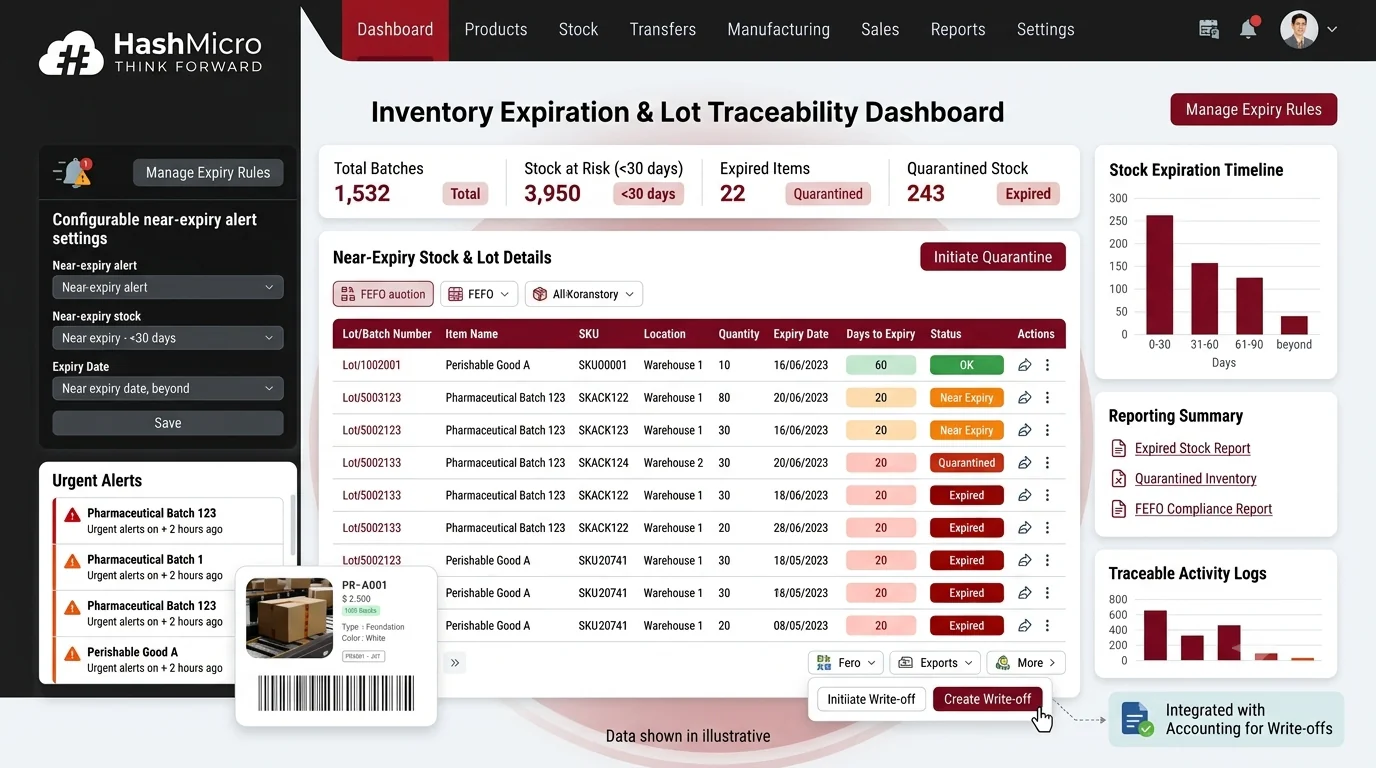
HashMicro provides AI-powered inventory and ERP software designed for Philippine businesses that need better control over stock, purchasing, warehouses, and supplier coordination. Its AI Agent for Inventory connects everyday inventory questions with practical actions across business operations.
The AI Agent gives teams instant visibility into stock levels and incoming deliveries across locations. It also identifies low-stock and excess-stock risks, helping businesses respond before shortages, overstocking, or delayed orders affect operations.
HashMicro stands out by combining natural-language inventory assistance with purchasing and warehouse workflows. Businesses can use it to check stock, prepare reorder messages, follow up on supplier deliveries, and manage purchase-order updates from a more centralised system.
Key features:
- Stock and delivery questions: Answers questions about available stock and incoming deliveries across multiple locations.
- Low-stock notifications: Alerts users when inventory falls below required levels so replenishment can happen sooner.
- Excess-stock notifications: Highlights slow-moving or overstocked items to support better inventory decisions.
- Reorder message drafting: Creates reorder messages using current stock information to reduce manual preparation.
- Supplier follow-ups: Helps track supplier deliveries and purchase-order updates to reduce delays.
- Purchasing and warehouse integration: Connects inventory communication with broader purchasing and warehouse workflows.
| Pros | Cons |
|---|---|
| Combines AI inventory assistance with purchasing and warehouse processes. | Buyers should test approval controls and user-access permissions during a product demonstration. |
| Reduces the need for manual stock and delivery report checks. | Supplier follow-up messages should be reviewed to confirm that they match internal communication policies. |
| Supports natural-language questions for faster access to inventory information. | Businesses should validate how accurately the AI Agent reflects real-time inventory and purchasing data. |
| Provides direct support for Philippine business operations. | Demand forecasting capabilities are not the main focus of the product page. |
| Helps teams identify stock risks and act before they affect fulfilment. |
Pricing and best fit: HashMicro’s AI Agent pricing is available through a tailored quotation because the final investment depends on the required modules, users, locations, workflows, and implementation scope. It best fits Philippine businesses that need AI-assisted inventory decisions connected to purchasing, warehouse management, supplier coordination, and wider ERP operations.
The most suitable platform depends on more than the headline price. Compare each option’s features, implementation requirements, scalability, and expected business value before reviewing the available pricing plans below.

2. Penxel
Penxel presents itself as a Philippine provider of inventory and asset management software. Its platform includes predictive restocking alongside standard stock-control features.
Businesses should evaluate the predictive restocking capability separately from basic alerts triggered by fixed inventory thresholds.
Key features:
Syncs stock across branches and warehouses.
Supports barcode and QR scanning.
Tracks batches, serial numbers, and stock movements.
Describes predictive restocking and configurable reorder alerts.
Pros | Cons |
• Publishes pricing in Philippine pesos. • Lists use cases for distributors, hardware stores, and warehouses. • Describes mobile-based inventory operations. | • Public material does not explain the predictive method or forecast accuracy. • Buyers should confirm which setup and hardware services are excluded. • The predictive function needs validation in a product demonstration. |
Pricing and best fit: Penxel’s site lists a ₱49,000 setup fee and ₱1,500 per month. It may suit a smaller Philippine operation that wants a locally priced inventory platform and can validate the predictive feature during a demo.
3. Cin7

Cin7 serves product-based businesses that manage inventory, purchasing, and sales across multiple channels. Its ForesightAI platform supports demand forecasting and replenishment planning, with at least six months of historical data recommended to improve forecast accuracy.
Cin7 serves product-based businesses that manage inventory, purchasing, and sales across multiple channels. Its ForesightAI platform supports demand forecasting and replenishment planning, with at least six months of historical data recommended to improve forecast accuracy.
Key features:
Forecasts demand using sales history and other product data.
Plans inventory across multiple locations.
Calculates replenishment needs and safety stock.
Supports purchase-order generation from forecast requirements.
Pros | Cons |
• Connects forecasting to Cin7 inventory data. • Supports planning across channels and warehouses. • Publishes specific forecasting and replenishment functions. | • ForesightAI is an extra-cost add-on. • Add-on pricing is based on gross merchandise value. • Forecast quality depends on reliable historical data. |
Pricing and best fit: Cin7 Core Standard starts at US$349 per month for new customers, excluding tax; request a separate ForesightAI price. Cin7 best fits a growing product business with reliable sales history and an established inventory process.
4. Netstock
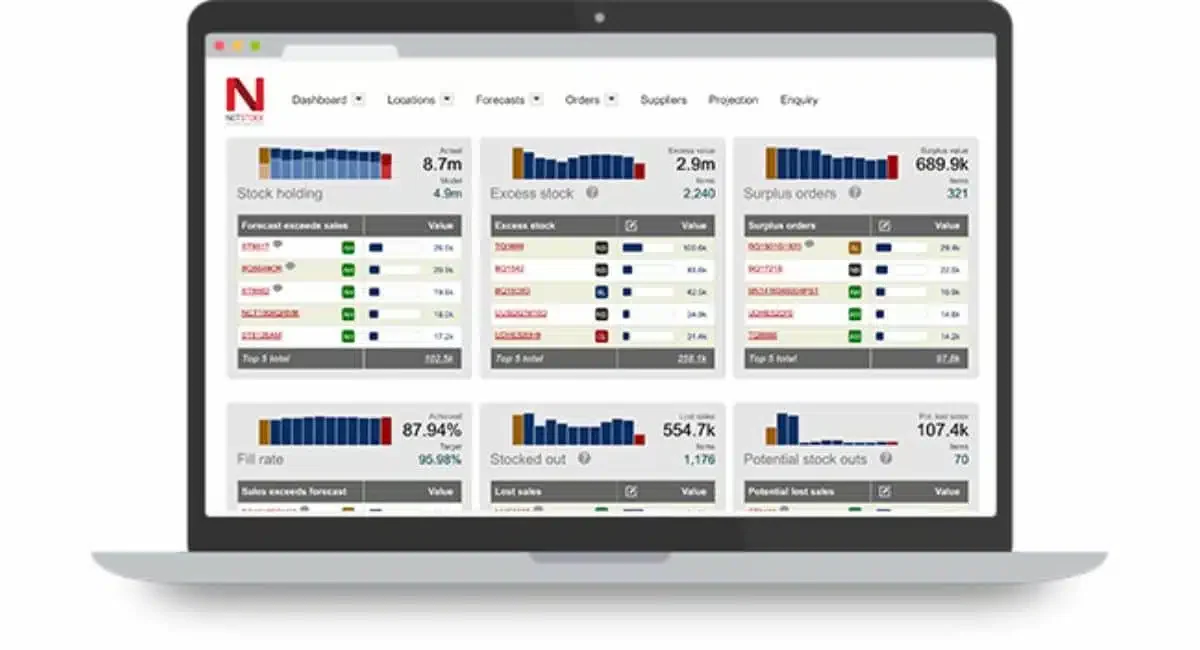
Netstock is an inventory planning platform designed to work alongside an existing ERP or core business system. Its AI Opportunities feature analyses inventory risks and recommends practical actions for planners.
The platform identifies potential stockouts, excess inventory, and location-level risks, helping teams focus on the exceptions that need attention first. It supports better planning without replacing core purchasing, accounting, or warehouse transactions.
Key features:
Flags potential stockouts and excess-stock conditions.
Suggests actions based on operational data.
Analyses risks across inventory locations.
Helps planners prioritise exceptions.
Pros | Cons |
• Highlights issues that need planner attention. • Suggests actions, not just risk indicators. • AI Opportunities is described as included for Netstock customers. | • Requires integration with an existing business system. • It does not replace all purchasing, accounting, or warehouse transactions. • Data quality affects the value of recommendations. |
Pricing and best fit: Netstock plans start at approximately ₱57,300 per month, based on the vendor’s published starting rate converted at an indicative rate of around ₱63.67 per US dollar. Annual terms and a custom quotation apply, so the final Philippine cost may vary.
Netstock plans start at approximately ₱57,300 per month, based on the vendor’s published starting rate converted at an indicative rate of around ₱63.67 per US dollar. Annual terms and a custom quotation apply, so the final Philippine cost may vary.
5. Unleashed
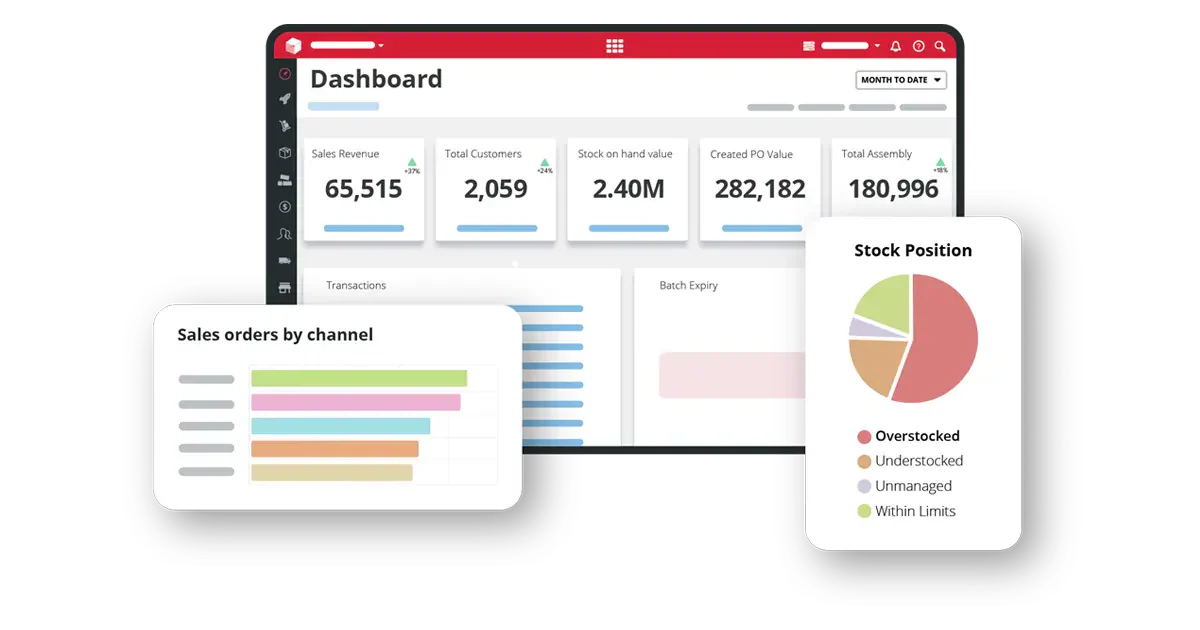
Unleashed provides inventory software for product-based businesses, with Access Evo helping users find information and prioritise tasks across purchasing, sales orders, and production workflows. Its platform also offers demand forecasting through selected plans and modules, so buyers should assess AI assistance and forecasting as separate capabilities.
Unleashed provides inventory software for product-based businesses, with Access Evo helping users find information and prioritise tasks across purchasing, sales orders, and production workflows. Its platform also offers demand forecasting through selected plans and modules, so buyers should assess AI assistance and forecasting as separate capabilities.
Key features:
Uses Access Evo to surface information and prioritised tasks.
Connects inventory with purchasing and sales-order workflows.
Supports production-related workflows.
Offers demand forecasting through its published plan and module options.
Pros | Cons |
• Brings several product operations into one platform. • Access Evo may help staff find relevant information faster. • Publishes starting subscription prices. | • AI assistance and forecasting are distinct functions. • Extra modules, support, and onboarding can increase total cost. • Buyers should confirm AI access on the selected plan. |
Pricing and best fit: Unleashed’s Core plan starts at approximately ₱25,405 per month, while Pro starts at approximately ₱46,417 per month when billed monthly, based on an indicative rate of US$1 = ₱63.672; taxes, extra modules, support, and onboarding may increase the total cost. It best suits growing product businesses that need structured operations and can budget for the modules they require.
Unleashed’s Core plan starts at approximately ₱25,405 per month, while Pro starts at approximately ₱46,417 per month when billed monthly, based on an indicative rate of US$1 = ₱63.672; taxes, extra modules, support, and onboarding may increase the total cost. It best suits growing product businesses that need structured operations and can budget for the modules they require.
6. Zoho Inventory
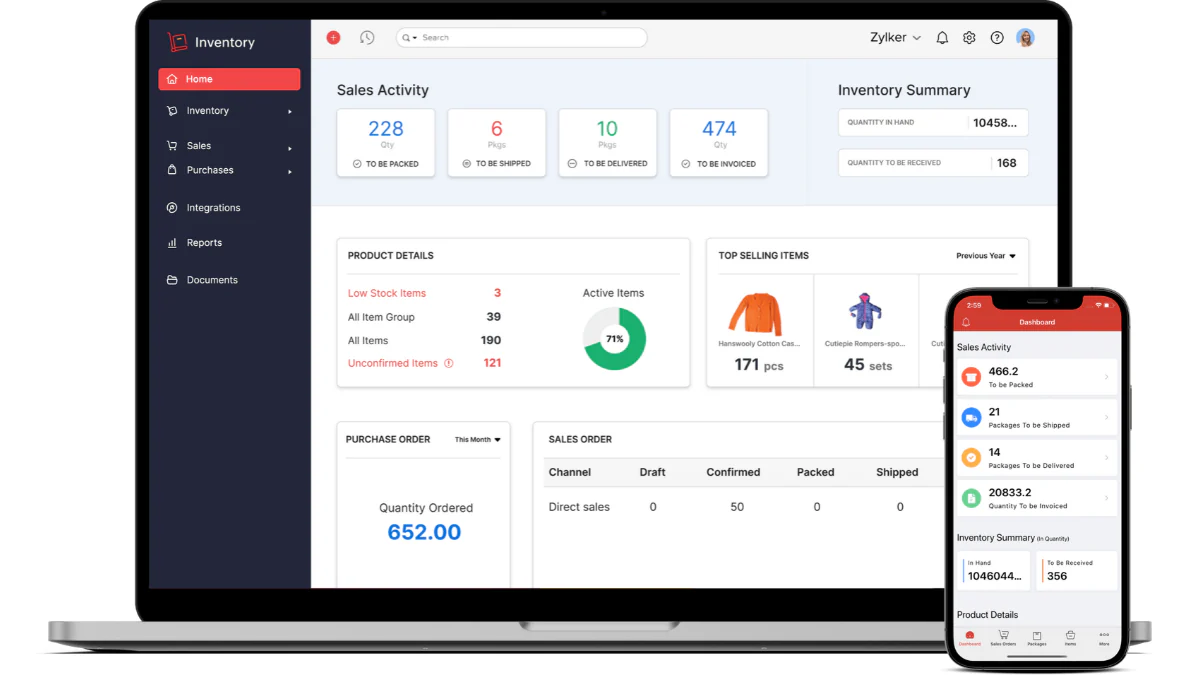
Zoho Inventory connects stock, purchasing, orders, and fulfilment through one platform, with Ask Zia answering inventory questions and configurable agents supporting recurring tasks such as replenishment and picklist management. It suits smaller teams, especially existing Zoho users, because it links inventory data with wider business workflows and offers a free plan for basic evaluation.
Zoho Inventory connects stock, purchasing, orders, and fulfilment through one platform, with Ask Zia answering inventory questions and configurable agents supporting recurring tasks such as replenishment and picklist management. It suits smaller teams, especially existing Zoho users, because it links inventory data with wider business workflows and offers a free plan for basic evaluation.
Key features:
Answers stock and order questions through Ask Zia.
Provides links from answers to related actions.
Describes configurable replenishment and picklist agents.
Connects inventory records with other Zoho workflows.
Pros | Cons |
• Offers a free plan for basic evaluation. • Natural-language questions may suit existing Zoho users. • Has a wider application ecosystem. | • Configurable agents may require setup. • US pricing is not a Philippine quote. • Buyers must confirm AI access by plan and region. |
Pricing and best fit: The Standard plan starts at approximately ₱1,846 per organisation per month when billed annually, based on an indicative rate of US$1 = ₱63.672; buyers should confirm AI access, plan availability, and regional terms before subscribing.
The Standard plan starts at approximately ₱1,846 per organisation per month when billed annually, based on an indicative rate of US$1 = ₱63.672; buyers should confirm AI access, plan availability, and regional terms before subscribing.
7. Katana
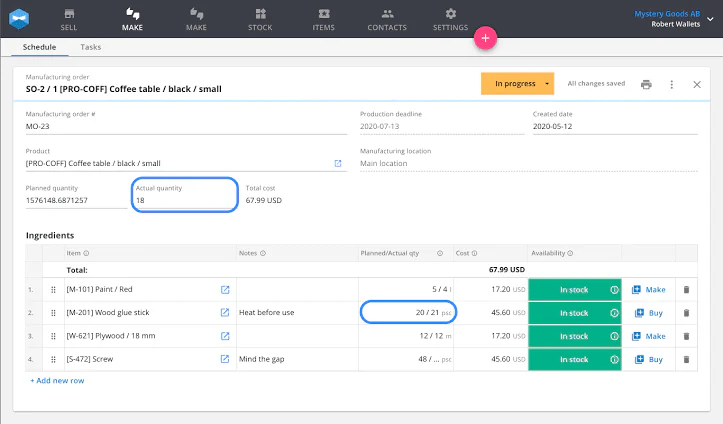
Katana provides inventory and production management software for manufacturers and assemblers that need replenishment decisions linked to production requirements. Its AI Replenishment feature uses sales history, open orders, and current stock to forecast demand and recommend order quantities.
The platform calculates safety stock and reorder points while suggesting minimum, recommended, and maximum order quantities. Users can then create purchase or manufacturing orders after reviewing and approving the recommended action..
Key features:
Forecasts demand from current and historical data.
Suggests minimum, recommended, and maximum order quantities.
Calculates safety stock and reorder points.
Can create purchase or manufacturing orders after a user chooses an action.
Pros | Cons |
• Connects replenishment with production needs.< • Publishes the feature’s main inputs and outputs. • Offers a free evaluation path. | • Katana labels AI Replenishment beta. • Buyers should test feature availability and results in their account. • The ongoing Free plan is limited to 30 SKUs. |
Pricing and best fit: Katana offers a Free plan at ₱0, with no credit card required. The Free plan allows unlimited SKUs for the first 15 days before applying the 30-SKU limit, while the Advantage plan uses custom pricing. Katana best fits manufacturers and assemblers that need replenishment planning connected to production operations.
Katana offers a Free plan at ₱0, with no credit card required. The Free plan allows unlimited SKUs for the first 15 days before applying the 30-SKU limit, while the Advantage plan uses custom pricing. Katana best fits manufacturers and assemblers that need replenishment planning connected to production operations.
8. Prediko
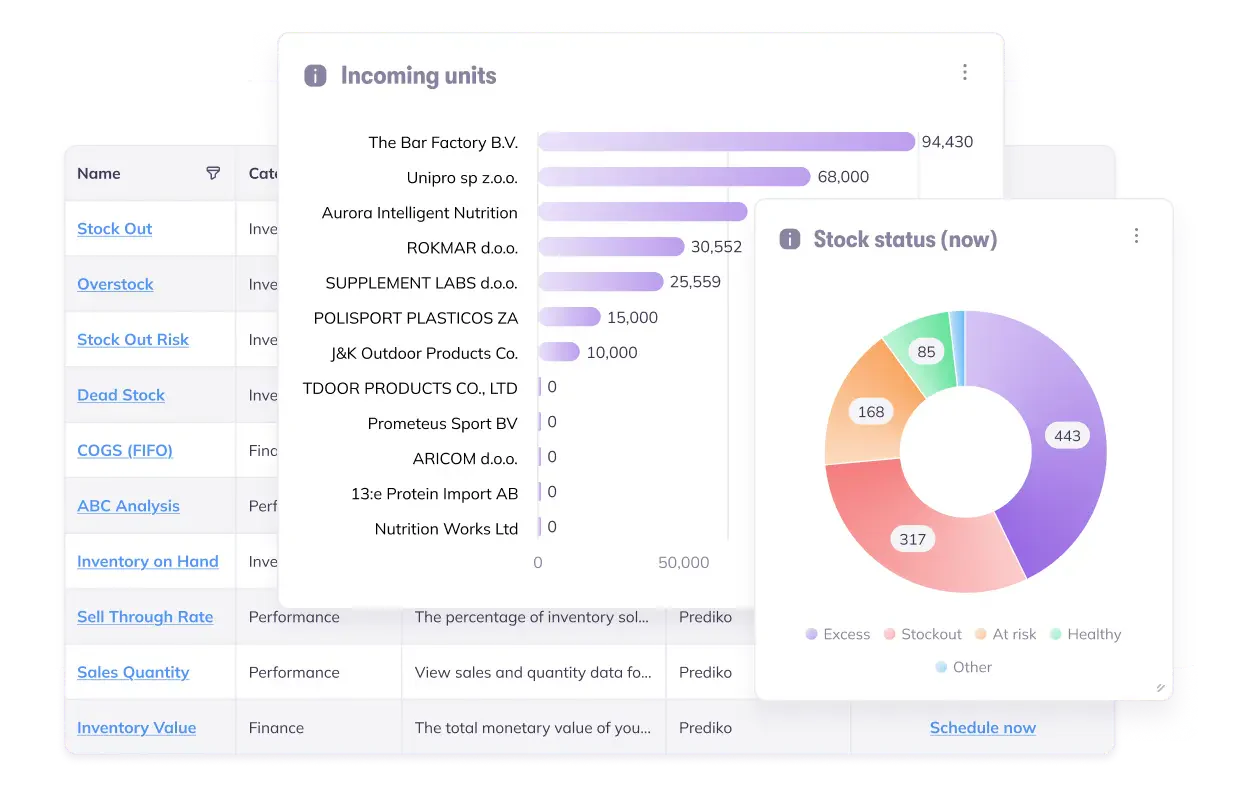
Prediko is an inventory planning application available through the Shopify App Store for merchants that need stronger demand planning and purchasing control. It focuses on forecasting, replenishment alerts, inventory transfers, and purchase order management.
Prediko is an inventory planning application available through the Shopify App Store for merchants that need stronger demand planning and purchasing control. It focuses on forecasting, replenishment alerts, inventory transfers, and purchase order management.
Key features:
Forecasts demand by product and SKU.
Provides replenishment alerts and planning.
Supports inventory transfers across locations.
Manages purchase orders.
Pros | Cons |
• Targets the restocking decisions Shopify merchants face. • Describes multi-location planning and transfers. • Has a lower published starting price than several full platforms. | • Buyers using other commerce systems should validate integrations. • Revenue-based pricing can rise as a store grows. • Its scope should be checked against accounting or manufacturing requirements. |
Pricing and best fit: Prediko is free to install, with plans starting at approximately ₱3,120 per month, based on the published US$49 starting price and an indicative exchange rate of US$1 = ₱63.67. Additional charges may apply as the store grows. Prediko best fits Shopify merchants and direct-to-consumer brands that need focused demand planning and purchase order management.
Prediko is free to install, with plans starting at approximately ₱3,120 per month, based on the published US$49 starting price and an indicative exchange rate of US$1 = ₱63.67. Additional charges may apply as the store grows. Prediko best fits Shopify merchants and direct-to-consumer brands that need focused demand planning and purchase order management.
How to Choose the Right Software for Your Business
The best shortlist starts with a clear inventory problem, then tests whether a product can solve it using your own data. Work through the following checks in order so that a compelling AI demonstration does not obscure gaps in everyday operations.
1. Identify the decision you need to improve
Start with the stock decision that causes the most cost or delay. For demand forecasting, compare Cin7, Katana, and Prediko. If planners already use an ERP but struggle to spot urgent exceptions, examine Netstock. For stock questions and follow-up work, assess HashMicro, Zoho, and Unleashed. For forecasting-specific comparisons, see the inventory forecasting software guide.
Once the main use case is clear, ask each vendor to demonstrate that exact workflow rather than a general AI feature tour.
2. Test the claimed AI capability with your data
Use representative sales, stock, and purchasing records in the evaluation. Ask which inputs drive the output, what happens when records are incomplete, and how recommendations are reviewed. Check whether a user can approve an order or supplier message before it is sent. A demonstration with sample data cannot establish how well the system will handle your catalogue.
A useful recommendation still needs to reach the team and systems responsible for carrying it out.
3. Confirm integrations and Philippine operating support
Check connections to your accounting system, POS, ecommerce channels, warehouses, and purchasing process. If you manage multiple locations, test transfers and location-specific stock visibility. Ask the vendor to confirm Philippine onboarding, billing currency, support hours, and implementation responsibilities in writing. Treat these as contract questions, especially for international platforms.
4. Compare total cost and run a pilot
Include subscriptions, AI add-ons, integrations, onboarding, support, extra users, order limits, taxes, and hardware. Compare a short pilot using your own records against a baseline: how long the decision takes today, which errors the tool flags, and whether your team can act on its recommendations. Choose the product that improves the target workflow at an acceptable total cost.
Conclusion
There is no single best tool for every Philippine business. HashMicro is worth assessing for ERP-connected inventory assistance; Penxel for a locally priced stock platform; Cin7 for demand forecasting across channels; and Netstock for planning on top of an existing system. Unleashed suits structured product operations, Zoho offers an accessible entry point, Katana connects replenishment with production, and Prediko focuses on Shopify merchants.
Choose two or three products that match your main inventory problem. Then compare their outputs, controls, support, and total cost using your own data. To see how AI can improve your inventory operations, explore HashMicro’s AI Agent for Inventory through a free demo.
Choose two or three products that match your main inventory problem. Then compare their outputs, controls, support, and total cost using your own data. To see how AI can improve your inventory operations, explore HashMicro’s AI Agent for Inventory through a free demo. Discover how it helps your team make smarter stock decisions and improve operational efficiency.
Choose two or three products that match your main inventory problem. Then compare their outputs, controls, support, and total cost using your own data. To see how AI can improve your inventory operations, explore HashMicro’s AI Agent for Inventory through a free demo. Discover how it helps your team make smarter stock decisions and improve operational efficiency.
Choose two or three products that match your main inventory problem. Then compare their outputs, controls, support, and total cost using your own data. To see how AI can improve your inventory operations, explore HashMicro’s AI Agent for Inventory through a free demo. Discover how it helps your team make smarter stock decisions and improve operational efficiency.
Choose two or three products that match your main inventory problem. Then compare their outputs, controls, support, and total cost using your own data. To see how AI can improve your inventory operations, explore HashMicro’s AI Agent for Inventory through a free demo. Discover how it helps your team make smarter stock decisions and improve operational efficiency.
Choose two or three products that match your main inventory problem. Then compare their outputs, controls, support, and total cost using your own data. To see how AI can improve your inventory operations, explore HashMicro’s AI Agent for Inventory through a free demo. Discover how it helps your team make smarter stock decisions and improve operational efficiency.
Choose two or three products that match your main inventory problem. Then compare their outputs, controls, support, and total cost using your own data. To see how AI can improve your inventory operations, explore HashMicro’s AI Agent for Inventory through a free demo. Discover how it helps your team make smarter stock decisions and improve operational efficiency.
Choose two or three products that match your main inventory problem. Then compare their outputs, controls, support, and total cost using your own data. To see how AI can improve your inventory operations, explore HashMicro’s AI Agent for Inventory through a free demo. Discover how it helps your team make smarter stock decisions and improve operational efficiency.

FAQ about AI Inventory Management Software
Regular inventory software records stock movements and can send fixed-threshold alerts. AI features may forecast demand, identify patterns, answer stock questions, or recommend actions using operational data. The functions vary by product. Ask a vendor to show which outputs use AI and which follow rules your team configures.
It depends on the feature. A stock-question assistant may use current records, while a demand forecast needs enough sales history to reveal patterns. Cin7 recommends at least six months for stronger ForesightAI forecasts. Ask vendors to test your actual history, including seasonal gaps, returns, and new products.
Usually, a planning layer is intended to work with an existing operational system. Netstock, for example, draws on connected business data to analyse risk and recommend actions. Check whether the proposed tool also handles the transactions you need, such as accounting, purchasing approval, goods receipt, warehouse transfers, and reporting.
Ask whether the vendor can onboard a Philippine company, bill in the required currency, support your working hours, and integrate with the systems you use locally. A public website or Shopify listing does not confirm every implementation term. Obtain written answers on taxes, support, data residency, and any local requirements that matter to your operation.
Compare the recurring subscription with setup, training, migration, integrations, AI add-ons, extra users, order or SKU limits, support, and taxes. Cin7 lists ForesightAI as an add-on, while Unleashed publishes separate modules and onboarding charges. A low entry price is useful only when the quoted plan covers your required workflow.