









A customer may receive several invoices in one month, make partial payments, or receive credits for returned goods. When these transactions are recorded separately, the customer and finance team may have different views of the outstanding balance.
A statement of account brings these transactions together in one document. It summarizes account activity over a specific period, including issued invoices, payments received, credits applied, and the remaining balance. This gives both parties a clearer view of what has been billed and what is still due.
This article explains what a statement of account is, what information it should include, how to prepare one, and how Philippine businesses can use a practical statement of account template.
Key Takeaways
A statement of account provides a consolidated record of customer transactions and outstanding balances over a specific period.
The template helps organize customer transactions and clarify outstanding balances while keeping supporting invoice documents separate for BIR compliance.
Following the right steps to prepare customer billing statements helps businesses present transaction records accurately and clarify outstanding and overdue balances.
What Is a Statement of Account?
A statement of account is a summary of transactions between a business and a customer over a specific period. It typically includes the opening balance, invoices, payments, credit notes, adjustments, and closing balance.
Finance teams use statements of account to reconcile accounts receivable, monitor customer balances, and support collection activities. Customers can also use them to check paid invoices, outstanding amounts, and how the current balance was calculated. Unlike an invoice, which documents a specific sale or service transaction, a statement of account summarizes multiple transactions.
In the Philippines, a statement of account is generally treated as a supporting document. BIR Revenue Regulations distinguishes supporting documents from the invoice used as the primary sales document for goods and services. Therefore, a statement of account should not automatically be treated as a replacement for a BIR-compliant invoice.
What Information Does a Statement of Account Include?

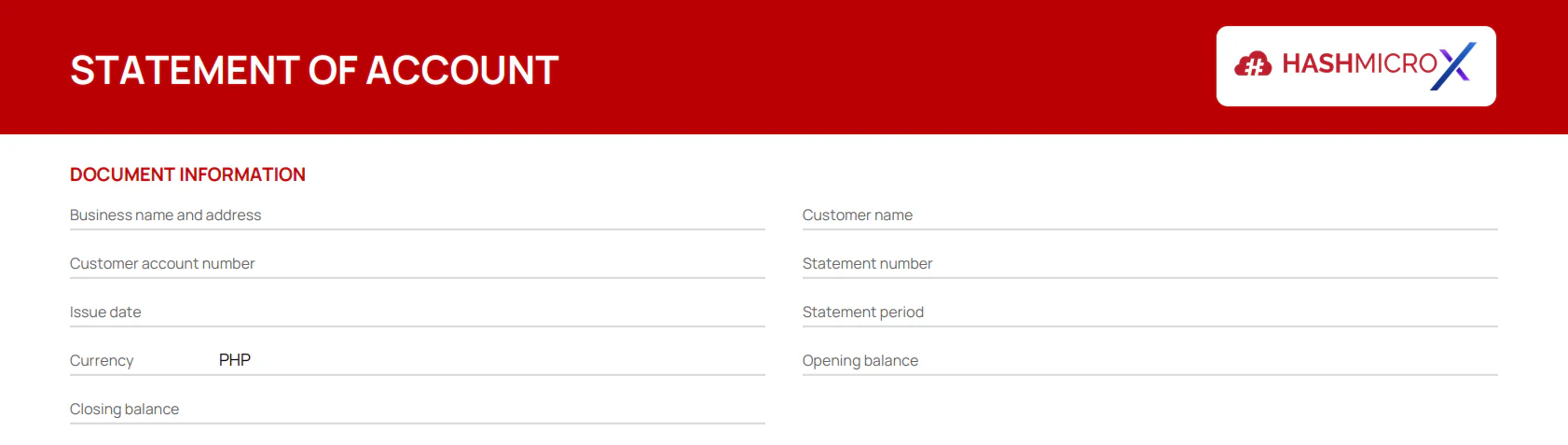
A clear statement of account should contain enough information for both parties to identify the account, review transaction history, and verify the outstanding balance. The following details should be included:
Business and Customer Details
Business Information: The business name, address, and contact details identify the company issuing the statement.
Customer Information: The customer's name, billing address, and account number help ensure the statement is assigned to the correct account.
Statement Number and Issue Date: A unique statement number and issue date make the document easier to reference and track.
Reporting Period: This specifies the period covered by the statement, helping customers understand which transactions are included.
Currency: The currency used should be clearly stated to avoid confusion when reviewing transaction amounts.
Transaction Details
Transaction Date and Reference: Each entry should include its date and a reference number linked to the relevant invoice, receipt, payment, or credit note.
Transaction Description: A brief explanation identifies the type of transaction, such as a purchase, payment, refund, or account adjustment.
Invoice Due Date: Each unpaid invoice should show its individual due date so customers can identify upcoming and overdue payments.
Amount Charged: This shows the amount billed for each transaction.
Payment or Credit Amount: Any payments received or credits applied should be recorded to show how they reduce the outstanding balance.
Running Balance: This displays the remaining amount after each transaction is added or deducted.
Opening and Closing Balances: The opening balance shows the amount carried forward from the previous period, while the closing balance reflects the total amount remaining at the end of the reporting period.
The total account balance does not necessarily mean that the entire amount is overdue. Customers should review each invoice's due date to determine which payments are still pending and which have passed their deadlines.
Statement of Account Sample for Philippine Businesses
The following example is for a fictional Philippine company, Luzon Office Supplies, and its customer, Mabini Trading. The statement period is 1 to 31 March 2026. All amounts are illustrative and shown in Philippine pesos.
| Date | Reference | Description | Charges | Payments or Credits | Running Balance |
|---|---|---|---|---|---|
| 1 Mar 2026 | Opening balance | Balance carried forward | ₱25,000 | ₱0 | ₱25,000 |
| 5 Mar 2026 | INV-1042 | Office supplies purchase | ₱18,500 | ₱0 | ₱43,500 |
| 12 Mar 2026 | PAY-778 | Customer payment | ₱0 | ₱20,000 | ₱23,500 |
| 20 Mar 2026 | INV-1058 | Additional supplies purchase | ₱12,000 | ₱0 | ₱35,500 |
Closing balance: ₱35,500
The closing balance is calculated as follows:
₱25,000 opening balance + ₱30,500 new charges − ₱20,000 payment = ₱35,500
For collection purposes, the business should also include a list of open invoices with their remaining amounts and due dates. The ₱20,000 payment must match the payment recorded in the accounting system. If the customer paid several invoices at once, the payment should be allocated correctly across those invoices.
Statement of Account Template
Add the approved payment channels and the finance team’s contact details. If customers can dispute transactions, include instructions for submitting a question or reconciliation request.
This template is a customer account summary. Use the appropriate invoice documents to document sales and comply with applicable BIR requirements.
Statement of Account
Preparing a Statement of Account for Customer Billing
Businesses commonly send a statement of account after the monthly billing cycle so customers can review their transactions before the next payment. A statement is also useful when several invoices remain unpaid, a customer makes a partial payment, requests balance confirmation, or receives a credit or refund. For collection purposes, show the total account balance separately from the overdue amount so the customer knows what needs immediate attention.
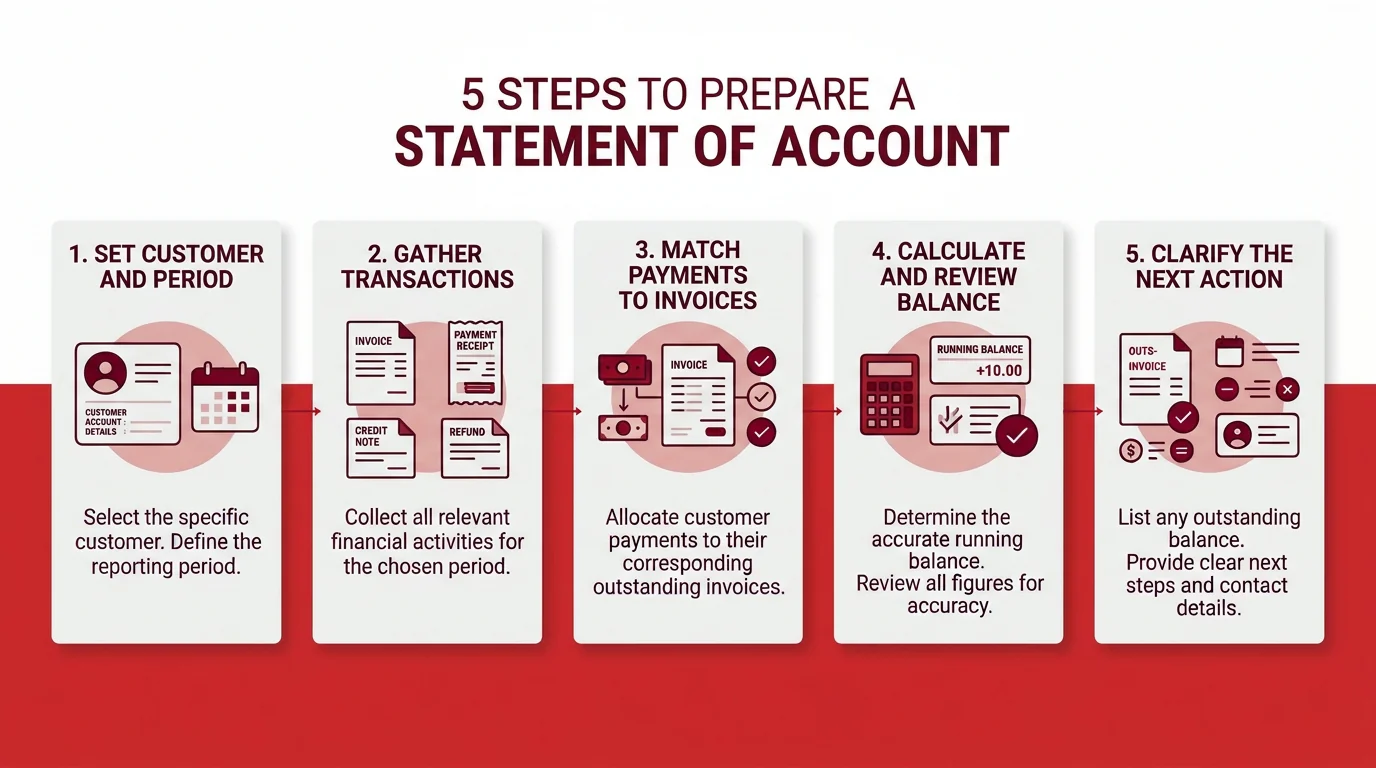
To prepare an accurate statement:
- Set the customer and period. Select one customer account and specify the reporting dates. Check that the opening balance matches the previous statement’s closing balance.
- Gather the transactions. Include invoices, payments, credit notes, refunds, and approved adjustments within the period. Confirm that each transaction belongs to the correct customer.
- Match payments to invoices. Apply each payment to the appropriate invoice. If a payment covers multiple invoices, check that the allocations add up to the amount received. Keep partially paid invoices open for their remaining balances.
- Calculate and review the balance. List transactions by date and update the running balance after each charge or credit. Compare the closing balance with the accounts receivable record, checking for duplicates, missing payments, unapplied credits, and incorrect amounts.
- Make the next action clear. Show open invoices, their remaining balances and due dates, payment instructions, and a contact for billing questions. Send the statement through your business’s approved customer communication channel.
Common Statement of Account Mistakes to Avoid
Even a well-structured statement of account can contain errors if transaction records are not reviewed carefully. The following mistakes can lead to inaccurate balances, payment confusion, and unnecessary disputes with customers.
Sending an Unreconciled Balance
A payment that has not been allocated to the correct invoice can make a customer appear to owe more than the actual amount. Finance teams should match payment records with bank transactions and outstanding invoices before issuing the statement.
Recording an Invoice Twice
Duplicate invoice entries can increase the outstanding balance and lead to unnecessary collection disputes. Check invoice numbers, transaction dates, and customer records to identify duplicate entries before preparing the statement.
Omitting Credits or Adjustments
Credit notes, product returns, refunds, and approved adjustments can change the amount a customer owes. Make sure these transactions are recorded and applied to the correct account to avoid inaccurate closing balances.
Using One Due Date for All Transactions
Different invoices may have different payment terms. Display the due date for each open invoice so customers can identify upcoming payments and overdue amounts correctly.
Using Unclear Reference Numbers
Missing or inconsistent reference numbers make transactions harder to trace. Use clear identifiers for invoices, payments, and credit notes that match the corresponding accounting records.
Sending Unverified Information
Unusual transactions, disputed invoices, and unmatched payments should be reviewed before sending the statement. Verify supporting records and the closing balance to reduce errors and avoid unnecessary customer queries.
How Accounting Software Simplifies Statements of Account
A spreadsheet may be sufficient when a business handles only a few customers and transactions. However, as invoice volumes and payment activity increase, manually updating balances becomes more time-consuming and creates more room for calculation errors. Accounting software helps organize customer transactions in one system.
It can store invoices and payment records, maintain customer account histories, and update balances based on recorded transactions. Finance teams can also allocate payments to specific invoices, review outstanding receivables, and generate customer statements more consistently. These capabilities make account reconciliation easier because the information needed to verify each balance is available in one place.
HashMicro Accounting Software Philippines supports invoice, payment, and receivables management for Philippine businesses. Before implementation, ask the product team to demonstrate a customer account with two invoices, one partial payment, and one credit note. This helps verify whether the generated statement matches the business's accounting and collection processes.
Conclusion
A clear statement of account helps businesses and customers stay aligned on transaction history, outstanding invoices, recorded payments, and remaining balances. Accurate records and clear due dates also make it easier to review account activity and resolve discrepancies.
To maintain reliable statements, finance teams should regularly verify transaction records and distinguish statements of account from invoices and payment confirmations. Each document serves a different purpose in the billing and collection process.
For businesses managing growing transaction volumes, accounting software can help organize invoices, payments, and receivables in one system. Explore a free demo to learn how connected accounting tools can support customer account management and financial reporting.

FAQ about Statement of Account
No. A statement of account summarises several account transactions, while an invoice documents a specific sale or service transaction.
Yes. Showing unpaid invoices and their remaining balances is one of the main purposes of a statement of account. Include the due date for each invoice.
The frequency depends on the billing cycle and transaction volume. Monthly statements are common for business accounts. Additional statements may be needed when there are partial payments, disputes, or overdue invoices.
A statement of account is generally used as a supporting document rather than the primary tax document for every sale. Invoice requirements depend on applicable BIR rules. Whether a business sends statements also depends on its billing process and customer agreements.
Yes. Use a running-balance formula and reconcile the spreadsheet with your invoices and payment records. For larger account volumes, control spreadsheet access and keep a clear record of the version sent to each customer.