




Running a ghost kitchen looks affordable on paper until the first month of actual orders. There is no dining room to pay for, no front-of-house team, and no premium location lease, but every order still has to cover ingredients, packaging, kitchen labor, rent, utilities, platform commissions, and the occasional refund before a single peso of profit appears.
That gap between low visible overhead and slim actual margin is the central challenge for any ghost kitchen in the Philippines. Delivery platforms charge a service fee based on the rate agreed in each merchant's e-commerce service agreement, which means the commission hitting your margin on every GrabFood or Foodpanda order may not match any number you have seen published, and a model built on the wrong assumption rarely survives scale.
This guide treats the ghost kitchen Philippines model as an operating decision, not just a cheaper restaurant format. It explains how it works, how it differs from cloud kitchens and central kitchens, which costs to calculate before you commit, and how to protect your contribution margin per order before you think about growing.
Key Takeaways
A ghost kitchen is a delivery-first food operation that serves customers without a traditional dine-in area.
Ghost kitchens, cloud kitchens, central kitchens, and ghost restaurants represent distinct operating models and roles.
Contribution margin per order determines profitability after food, packaging, labor, discounts, refunds, and platform fees.
Recipe costing, inventory control, menu engineering, and sales reporting protect margins as order volume increases.
What Is a Ghost Kitchen?
A ghost kitchen is a food business that prepares meals for delivery or pickup without a dine-in space. Customers find the brand through delivery apps, social media, or a direct ordering channel, never through a visible storefront.
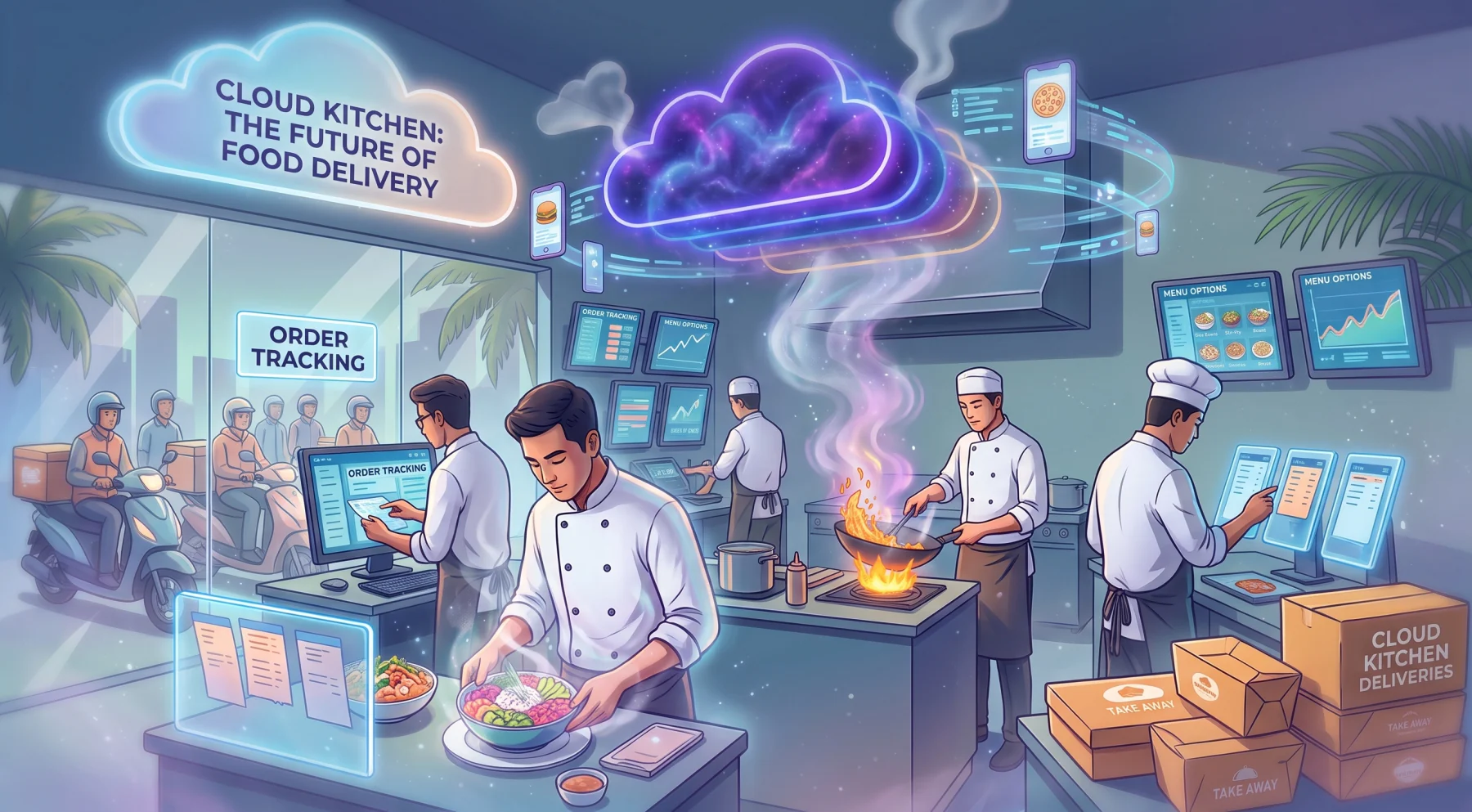
The operating model is built around kitchen efficiency. A team receives digital orders, prepares food using standard recipes, packs each order for travel, and hands it to a delivery rider. One physical kitchen can also run several virtual food brands at the same time, provided that recipes, stock capacity, and food safety processes stay controlled.
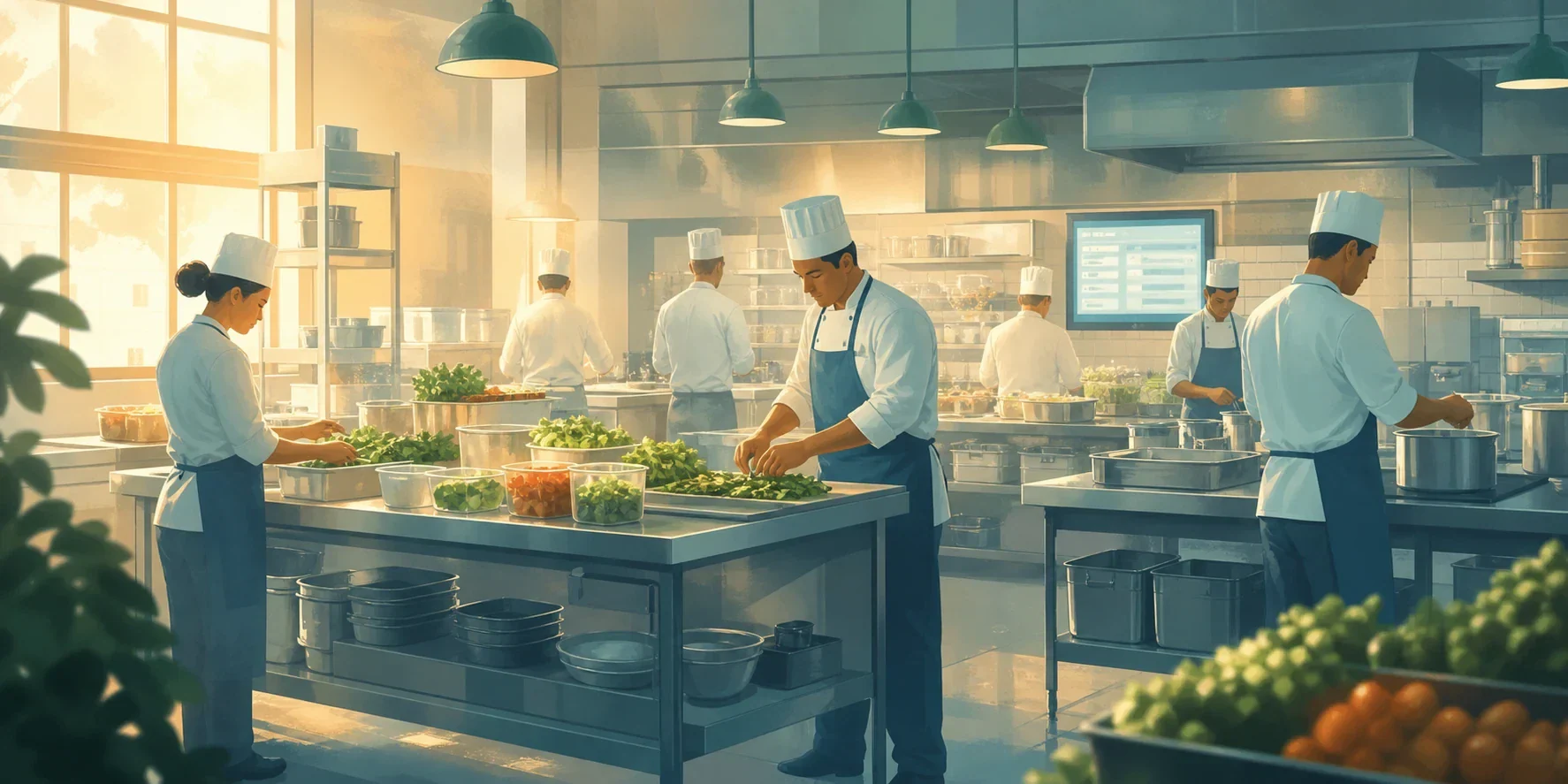
The key point is that a ghost kitchen still needs a real, well-equipped operating base. That means sufficient preparation space, storage, equipment, sanitation controls, staff workflows, and the registrations required for its location and business structure.
Ghost Kitchen vs Cloud Kitchen vs Central Kitchen vs Ghost Restaurant
These terms are often used interchangeably, but each describes a different layer of a delivery-first food operation: the business model, the customer-facing brand, the physical kitchen facility, or the production system behind multiple locations. A single food business can operate across more than one of these layers at the same time, which is why understanding each term separately matters before choosing a setup.
| Model | Main Focus | Typical Setup | Example |
|---|---|---|---|
| Ghost kitchen | Delivery-only restaurant operation | Kitchen without a dine-in area | A burger brand that accepts orders only through delivery apps |
| Ghost restaurant | Virtual customer-facing food brand | One or more brands operating from a kitchen | A Korean chicken concept sold online from a shared kitchen |
| Cloud kitchen | Commercial kitchen infrastructure for delivery businesses | Rented or shared kitchen units | A facility hosting several food brands |
| Central kitchen | Centralized production and supply | One production site serving outlets or brands | A kitchen that prepares sauces, marinades, and portions for branches |
How Does a Ghost Kitchen Work?
A ghost kitchen follows a delivery-focused workflow from the moment an order arrives until the sale and costs are reconciled. Each step affects food quality, delivery speed, customer ratings, and the contribution margin from every order.
1. Receive the Customer Order
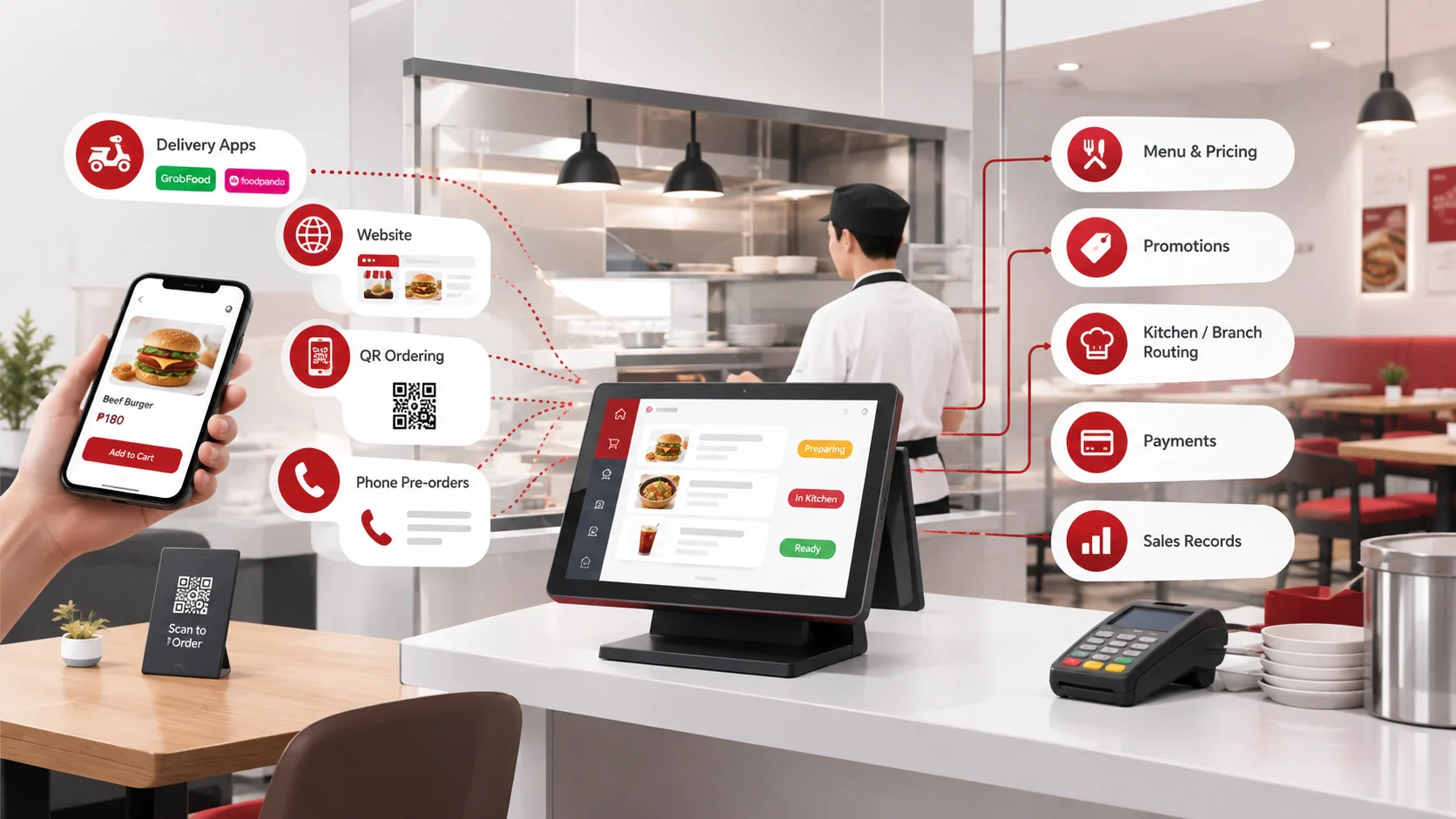
Customers place orders through a delivery app, website, social media page, or direct ordering channel. The system records the menu items, quantities, modifiers, payment details, and delivery information.
2. Confirm Availability and Send the Kitchen Ticket
Staff check that all ordered items are available before accepting the order. The kitchen team then receives the correct quantities, preparation notes, and special requests.
3. Prepare the Food
The kitchen prepares each item according to its recipe, portion standard, and required pickup time. Delays can result in late rider handoffs, cancellations, refunds, and lower customer ratings.
4. Check and Package the Order
Before sealing the package, staff verify the items, quantities, modifiers, condiments, and customer instructions. Suitable packaging should help protect the food’s temperature, appearance, and quality during delivery.
5. Hand the Order to the Rider
Staff confirm the order details before giving the package to the assigned rider. Having the order ready at the agreed pickup time reduces waiting and helps prevent delivery delays.
6. Reconcile Sales and Review Performance
After the order is fulfilled, the business should compare gross sales with food costs, packaging, promotions, platform deductions, cancellations, and refunds. Reviewing these figures by platform, brand, and menu item helps identify which orders contribute to profit.
Useful metrics include:
- Preparation time
- Order accuracy rate
- Cancellation rate
- Refund rate
- Food waste
- Average order value
- Contribution margin per order
- Repeat-order rate
- Customer rating by platform and brand
How to Start a Ghost Kitchen in the Philippines
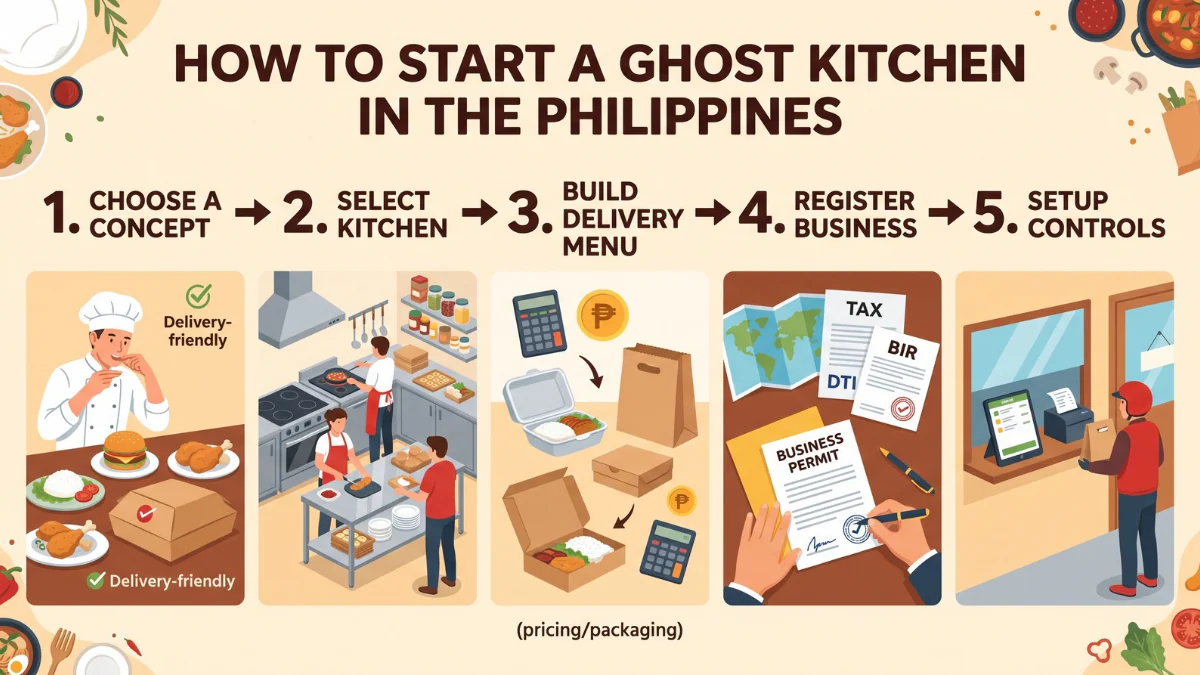
Starting a ghost kitchen requires more than choosing a menu and joining a delivery platform. You need a food concept that travels well, a suitable kitchen, accurate costing, complete registrations, and reliable controls for every order.
1. Choose a Focused Food Concept
Start with a concept that is distinctive, practical to prepare, and suitable for delivery. Rice meals, burgers, fried chicken, noodle dishes, desserts, and Filipino comfort food can work when recipes and portions stay consistent.
Keep the opening menu focused to reduce ingredient requirements, food waste, preparation time, and training needs. Test each dish after its expected travel time because soggy food, spills, and poor temperature retention can lead to refunds and low ratings.
2. Select the Right Kitchen Setup
An owned commercial kitchen provides greater control over equipment, layout, operating hours, and storage, but it requires more capital. A shared or rented kitchen lowers the initial commitment, although storage, schedules, and customization may be limited.
A central kitchen is better suited to operators supplying several brands or outlets through batch production and standardized recipes. Choose your setup based on expected order volume, menu complexity, available capital, storage needs, and expansion plans.
3. Build a Delivery-Friendly Menu
Every menu item should be quick to prepare, easy to pack, and able to retain its quality during transport. Its selling price must also cover ingredients, packaging, labor, platform deductions, promotions, and possible refunds.
A popular dish is not always a profitable delivery item. Review preparation time, portion consistency, packaging requirements, travel performance, and contribution margin before keeping it on the menu.
4. Register the Business and Verify Local Requirements
Complete the registrations that apply to your business structure and kitchen location. Sole proprietors can register a business name through the DTI Business Name Registration System, while tax registration follows the current Bureau of Internal Revenue process.
Local requirements can differ between cities and municipalities, so confirm them with the relevant government offices. These may include a business permit, sanitary permit, fire-safety clearance, tax registration, and food-related approvals.
5. Set Up Ordering and Kitchen Controls
A delivery-platform account is only one part of the operation. Your kitchen also needs reliable order monitoring, kitchen tickets, standardized recipes, purchasing controls, inventory tracking, stock replenishment, and refund records.
Sales should be reconciled daily by platform, brand, and menu item to show which orders remain profitable after deductions. Prepare your business registration, tax details, bank information, menu, and food photos before applying for merchant onboarding with a delivery platform.
How Much Does a Ghost Kitchen Cost?
Ghost kitchen costs vary by location, kitchen size, menu, equipment, and operating model. For clearer budgeting, divide them into three main groups instead of relying on one nationwide startup estimate.
One-Time Setup Costs: These may include kitchen equipment, refrigeration, worktables, storage racks, utensils, ventilation work, initial packaging, menu photography, technology setup, and registration fees. The total depends on whether the kitchen is owned, rented, shared, or already equipped.
Recurring Operating Costs: Monthly expenses include rent, utilities, wages, ingredients, cleaning supplies, software, marketing, maintenance, and packaging replenishment. Multi-brand kitchens should allocate shared expenses properly so each brand’s actual performance remains visible.
Per-Order Costs: These expenses increase with each sale and may include ingredients, packaging, variable labor, platform fees, payment charges, discounts, refunds, and remakes. Operators should include every deduction when setting prices because ingredient cost alone does not show the true margin per order.
How Delivery Commissions Affect Ghost Kitchen Profit

Delivery platforms can help a ghost kitchen reach more customers without building its own delivery fleet. However, platform fees, payment charges, discounts, refunds, and remakes reduce the amount retained from each order, so operators should use their actual merchant agreement and payout statement when reviewing profitability.
Calculate the amount remaining after order-level deductions:
Next, calculate the contribution margin available to cover fixed operating costs:
For a meal priced at ₱350, the full selling price is not available to cover rent or generate profit. The remaining contribution margin must first absorb order-level costs, then contribute to fixed expenses such as rent, base salaries, utilities, and software.
Strategies to Improve Ghost Kitchen Profitability
Improving profitability starts with understanding what happens after an order is received. The following strategies help operators control direct costs, protect contribution margin, and identify which menu items, brands, and platforms deserve more attention.
1. Use Recipe Costing Before Setting Prices
Calculate each menu item using actual ingredient quantities, purchase prices, yield, and expected wastage. Update the recipe cost whenever supplier prices change so your selling price reflects current conditions.
Recipe costing shows whether an item should be repriced, reformulated, bundled, or removed. It also prevents pricing decisions based only on competitor rates or rough ingredient estimates.
2. Apply Menu Engineering
Compare each menu item’s demand with its contribution margin. High-demand, high-margin items should receive stronger visibility, while low-demand, low-margin items may need improvement or removal.
Do not remove every slow-selling item immediately. Some dishes support your brand identity or encourage larger orders, but each item should have a clear commercial purpose.
3. Increase Average Order Value Carefully
Bundles, add-ons, sides, desserts, and drinks can raise average order value without creating the same preparation workload as a new main dish. For example, a rice-meal brand can offer drinks, extra rice, desserts, or group bundles.
Check every offer against food cost, packaging cost, discount exposure, and preparation time. A larger order is only useful when it adds contribution margin rather than extra work with little return.
4. Reduce Waste and Stock Variance
Food waste directly increases actual food cost through spoilage, overproduction, expired ingredients, recipe variance, and unrecorded staff meals. Track expected usage against physical consumption to identify unusual differences early.
Higher sales do not always mean higher profit if ingredient control is weak. Inventory records should be accurate enough to show where usage, purchasing, or production practices are causing avoidable losses.
5. Track Results by Brand and Platform
Review sales, food cost, packaging, discounts, refunds, and contribution margin separately by brand, platform, and menu category. This makes it easier to see whether a brand is genuinely profitable or only appears successful because shared costs are hidden in the overall kitchen total.
How Central Kitchen Software Supports Ghost Kitchen Operations

A ghost kitchen needs clear control over recipes, ingredient usage, purchasing, inventory, sales, and costs across every brand it operates. HashMicro central kitchen software brings these processes into one system, helping Philippine food businesses monitor operations and make decisions using more reliable data.
HashMicro supports central kitchen teams with features such as:
- Recipe and menu management. Standardize ingredients, portions, and preparation guidelines across brands.
- Ingredient consumption tracking. Compare expected usage with actual consumption to identify waste and recipe variance.
- Central kitchen inventory control. Monitor raw materials, prepared components, packaging, and stock transfers between locations.
- Purchasing and replenishment planning. Plan purchases based on stock levels and demand to reduce shortages and excess inventory.
- Multi-brand and multi-outlet visibility. Review sales, costs, stock usage, and menu performance by brand, outlet, or delivery platform.
- Cost and profitability reporting. Compare revenue with ingredient costs, packaging, discounts, and operating expenses.
- Integrated operations. Connect sales, inventory, purchasing, accounting, and reporting in one platform.
With clearer operational data, business owners can make better decisions about pricing, purchasing, menu updates, and brand expansion. A free consultation can help you assess how HashMicro Central Kitchen Software fits your current workflow and growth plans.
Conclusion
A ghost kitchen in the Philippines can help entrepreneurs test delivery concepts, launch virtual brands, or extend an existing food business without opening a full dine-in space. However, lower overhead does not guarantee profit unless each order is priced and managed carefully.
Sustainable performance depends on controlling food cost, packaging, labor, discounts, platform deductions, and contribution margin per order. Recipe costing, inventory tracking, menu engineering, and sales reporting help operators identify which products and promotions support profitable growth.
As the operation expands, HashMicro Central Kitchen Software can help connect recipes, purchasing, inventory, sales, and cost reporting in one system. Book a free consultation to review your current workflow and explore a setup that supports more controlled and sustainable growth.
FAQ about Ghost Kitchen
A ghost kitchen is a food operation that prepares meals for delivery or pickup without a traditional dine-in space. Customers typically order through delivery apps, websites, social media, or direct ordering channels.
A ghost kitchen can operate legally when it follows the applicable registration, tax, local-permit, sanitation, fire-safety, and food-business requirements for its location and business structure. Verify the latest requirements with the relevant LGU and government agencies before launching.
A ghost kitchen describes the delivery-only operating model, while a cloud kitchen often refers to the commercial kitchen facility that supports delivery businesses. In practice, the terms are frequently used interchangeably, but a cloud kitchen may host several different food brands.
The cost depends on the kitchen model, equipment needs, location, lease terms, menu complexity, staffing, packaging, registration requirements, and working capital. Separate the budget into setup costs, recurring monthly costs, and per-order costs before deciding whether the concept is viable.
They can be profitable, but only when the selling price covers actual platform deductions, ingredients, packaging, variable labor, discounts, refunds, and fixed costs. Calculate contribution margin per order and break-even order volume instead of relying on gross sales.
The best food travels well, can be prepared consistently, has manageable ingredient costs, and can be packed securely. The ideal menu also has enough margin to cover packaging, delivery-platform charges, promotions, and kitchen labor.
Yes. One kitchen can operate several virtual brands, but each brand needs separate recipe costing, menu controls, inventory allocation, packaging requirements, and profitability reporting. Without those controls, a high-selling brand can hide the losses of another brand.