






In enterprise direct procurement, one material purchase can touch planning, procurement, warehouse, finance, and operations before it reaches production or resale. For Philippine manufacturers, retailers, food businesses, distributors, and contractors, weak coordination can appear as stockouts, urgent purchases, excess inventory, delayed projects, or invoices that cannot be matched confidently.
Direct procurement is therefore more than placing purchase orders. It is an operating model for controlling the materials that create revenue, support service delivery, or complete a project.
This guide explains what direct procurement means, how it differs from indirect procurement, how the process should flow, which metrics matter, and where ERP controls can help. It is intended for teams that already feel procurement, supplier, stock, or cost-control pain and need a practical framework before changing software or policies.
Key Takeaways
Direct procurement should connect forecasts, direct-material specifications, supplier orders, receiving, inventory records, invoice checks, and management reporting.
Direct and indirect procurement require different controls because direct purchases affect revenue-producing goods, stock availability, production continuity, and cost of goods.
Track eight metrics across cost, delivery, quality, planning, control, and supplier performance before making software or process decisions.
ERP supports direct procurement best when teams define approval rules, master data, ownership, and reporting needs before configuration.
What Is Direct Procurement?
Direct procurement is the purchase of goods and materials that directly support a company's production, resale, service delivery, or project completion. It covers sourcing, ordering, receiving, quality checking, and financial recording of items that become part of an output or are essential to delivering it. Direct materials carry into inventory at their full cost of purchase under IAS 2, so a misclassified item distorts both stock valuation and reported margins.
A direct material is normally traceable to a product, customer order, service job, or project. A Philippine food manufacturer may classify ingredients, bottles, labels, and cartons as direct materials. Retailers treat merchandise bought for resale as direct procurement, and contractors include cement, steel, and project-specific equipment.
Direct vs. Indirect Procurement: The Key Differences
Direct and indirect procurement both require governance, but their business purpose and controls differ. Misclassification can distort inventory records, cost-centre budgets, supplier accountability, and financial reporting.
| Dimension | Direct procurement | Indirect procurement |
|---|---|---|
| Business purpose | Supports production, resale, service delivery, or project completion | Supports internal administration and general operations |
| Typical examples | Ingredients, merchandise, components, construction materials, project-specific parts | Office supplies, cleaning services, software subscriptions, uniforms |
| Demand predictability | Often linked to forecasts, sales orders, bills of materials, or project plans | Often driven by departmental budgets and recurring needs |
| Inventory impact | Usually increases stock or work-in-progress inputs and affects valuation | May be expensed immediately or tracked as consumables or assets |
| Production or resale impact | Can stop production, delay fulfilment, or reduce available saleable stock | Usually affects employee productivity or facility operations |
| Supplier relationship | Requires technical specifications, capacity checks, quality agreements, and delivery coordination | Often managed through service-level terms, catalogues, or framework contracts |
| Approval workflow | Commonly involves operations, planning, procurement, warehouse, and finance | Usually starts with a department or cost-centre owner and finance |
| Risk exposure | Stockouts, rejected materials, production stoppage, margin erosion, and customer delays | Budget leakage, uncontrolled subscriptions, service gaps, and maverick spend |
| Suitable KPIs | Purchase price variance, on-time delivery, lead-time variance, rejection rate, availability | Budget variance, contract utilisation, request cycle time, and policy compliance |
A single item may be direct in one context and indirect in another. A fleet tyre purchased for a transport company’s customer delivery service could be treated as a direct operating input, while a tyre for an executive vehicle may be indirect. Finance and operations should document the rule and apply it consistently. An inventory management system for stock visibility can then preserve the correct SKU type, cost centre, project code, warehouse location, and receiving status.
How Direct Procurement Works

A reliable direct procurement process moves information through controlled stages.
- Forecast demand. Operations and sales estimate requirements by product, branch, project, or service schedule. Record forecast quantity, required date, and assumptions.
- Plan materials. Planning compares demand with on-hand stock, safety stock, open orders, minimum order quantities, and supplier lead times. A bill of materials may convert finished-goods demand into component requirements.
- Raise a requisition. The requesting team specifies item code, description, quantity, technical requirements, destination warehouse or project, and requested delivery date.
- Approve the request. The approval matrix routes the requisition according to value, category, budget, urgency, and branch authority. Exceptions should be recorded rather than handled through informal messages.
- Select a supplier. Procurement checks the approved supplier list, quoted price, capacity, quality history, payment terms, tax invoice requirements, and delivery capability. For imported materials, shipment milestones and documentation should be visible.
- Issue the purchase order. The PO confirms specification, quantity, price, currency, taxes, delivery schedule, incoterm where relevant, and acceptance conditions. In a purchase order system, its status should show draft, approved, sent, acknowledged, partially received, or closed.
- Schedule delivery. Procurement coordinates the supplier and warehouse on appointment windows, shipment references, and expected arrival. Lead-time changes should trigger planning review.
- Receive goods. Warehouse compares the delivery with the PO and records a goods receipt note, lot or serial details where applicable, received quantity, shortages, damage, and backorders.
- Perform quality checks. Quality or operations records accepted, quarantined, or rejected quantities against agreed specifications. Rejected receipts should create a documented supplier follow-up.
- Match the invoice. Finance compares the PO, goods receipt, and supplier invoice. The three-way matching result should identify price, quantity, tax, duplicate, or missing-document exceptions before posting.
- Approve payment. Once exceptions are resolved and the invoice is authorised, finance schedules payment according to terms and cash-flow priorities.
- Update records and report. Accepted quantities update inventory and valuation inputs; commitments and actual costs flow to accounting. Management reviews supplier performance, availability, purchase price variance, and ageing.
Why Direct Procurement Matters to Business Performance
Direct procurement shapes far more than the purchasing budget. Its impact runs across operations, finance, and project delivery:
- Production continuity: A late component can delay an entire production run and push back downstream schedules.
- Stock availability: An unrecorded receipt can make on-hand items appear unavailable, triggering unnecessary reorders or lost sales.
- Margins and landed cost: An invoice exception can hold payment or conceal the true landed cost of materials.
- Cash flow and working capital: Order timing, payment terms, and delivery schedules determine how much capital sits in inventory.
- Supplier reliability and quality: Consistent sourcing protects both delivery dates and the quality of what reaches production.
- Project execution: Material availability is tied directly to project milestones and cost control for contractors.
- Management visibility: Clear procurement records give leaders an accurate view of committed spend and incoming stock.
The effect looks different by industry. For a retailer, accurate ordering reduces the gap between customer demand and available merchandise. For a food business, dependable ingredient and packaging deliveries protect production schedules and batch quality. For contractors, material availability keeps project milestones and budgets on track.
Challenges That Weaken Direct Procurement Performance
| Challenge | Operational symptom | Affected team | First control action |
|---|---|---|---|
| Inaccurate demand signals | Forecast-versus-actual gaps, emergency orders, or excess stock | Operations, sales, planning | Establish a regular forecast review and record assumptions by SKU, branch, or project |
| Fragmented supplier and item data | Duplicate SKUs, inconsistent specifications, wrong prices, or outdated contacts | Procurement, warehouse, finance, IT | Clean item and supplier masters; assign ownership for approval and changes |
| Approval delays | Requisitions age in inboxes, causing missed delivery dates or urgent POs | Requesters, managers, procurement | Set an approval matrix with delegated authority, ageing alerts, and escalation rules |
| Lead-time uncertainty | Promised dates change, imported shipments arrive late, or safety stock is unreliable | Procurement, planning, warehouse | Track supplier lead-time history and update planning parameters from actual receipts |
| Receiving and quality gaps | Quantity differences, damaged goods, unrecorded backorders, or rejected materials | Warehouse, quality, operations | Use a standard goods receipt and quality disposition process linked to the PO |
| Weak spend or inventory visibility | Leaders cannot explain commitments, ageing stock, price changes, or invoice exceptions | Finance, procurement, executives | Reconcile PO, receipt, inventory, and accounting data in one recurring report |
These responses are diagnostic starting points, not a substitute for reviewing the company’s actual workflow. Philippine enterprises with multiple branches or project sites should also clarify who may buy, receive, change specifications, and approve exceptions at each location.
8 Direct Procurement Metrics Worth Tracking
The following direct procurement metrics balance cost, delivery, planning, quality, availability, and financial control. Each requires defined data ownership and a consistent review cadence, which is easier to sustain when HashMicro procurement software records the underlying transactions.
| Metric | Definition and formula or method | Data source | Review owner | Management action |
|---|---|---|---|---|
| Purchase price variance | Actual purchase price minus standard, budget, or prior agreed price; analyse by quantity and category | PO and accounting records | Procurement and finance | Investigate supplier changes, specification changes, and negotiation opportunities |
| Supplier on-time delivery | Deliveries received on or before the confirmed date divided by total deliveries | PO and goods receipt records | Procurement | Review commitments, escalation paths, and supplier allocation |
| Lead-time variance | Actual elapsed time from PO confirmation to receipt minus planned lead time | PO status and receipt timestamps | Planning and procurement | Adjust planning parameters or supplier schedules |
| Order cycle time | Time from approved requisition to PO issue, measured by request and PO timestamps | Requisition and PO records | Procurement operations | Remove approval or data-entry bottlenecks |
| Supplier defect or rejection rate | Rejected quantity or rejected receipts divided by total received quantity or receipts | Quality checks and goods receipts | Quality and procurement | Correct specifications, supplier processes, or inspection plans |
| Forecast-to-order accuracy | Compare forecast quantity with ordered quantity for the same period and item; use absolute or percentage variance | Forecast, requisition, and PO records | Operations and planning | Improve demand assumptions, review seasonality, and align safety stock |
| Stockout or material availability rate | Available material days or fulfilled material requests divided by total required days or requests | Inventory records and production or project requests | Warehouse and operations | Rebalance stock, revise reorder points, or address supplier risk |
| Invoice matching exception rate | Invoices with quantity, price, tax, duplicate, or missing-document exceptions divided by total invoices | PO, receipt, and accounting records | Finance | Resolve master-data and receiving issues; strengthen three-way matching |
A connected data model is important because spreadsheets maintained separately by procurement, warehouse, and finance can produce conflicting denominators or outdated statuses. Review the eight metrics together and prioritize the failure mode that currently harms continuity, cash, quality, or control.
Best Practices to Strengthen Direct Procurement

Each practice below names the accountable owner, the data it depends on, and the failure mode it prevents.
- Classify direct materials: Finance and operations agree on SKU type, cost allocation, inventory treatment, and the product or project link, which prevents misstated inventory, cost of goods, and unclear budget ownership.
- Standardise specifications: Operations, engineering, and quality maintain the item master, units of measure, tolerances, and approved alternatives to prevent wrong-item purchases, inconsistent quality, and receipt disputes.
- Segment suppliers: Procurement and quality classify suppliers by category, capability, lead-time history, defect history, and criticality to avoid overdependence, unmanaged risk, and unsuitable sourcing decisions.
- Define approval matrices: Finance, procurement, and IT set value thresholds, categories, branches, delegates, and escalation rules so approvals do not stall and maverick spend has no room to grow.
- Align forecasts with inventory rules: Planning and warehouse connect forecasts to reorder points, safety stock, MOQ, and lead times, which prevents stockouts, excess inventory, and emergency buying.
- Monitor delivery and quality: Procurement, warehouse, and quality track PO status, receipt dates, inspection results, and backorders to catch unreliable suppliers before production or project schedules slip.
- Review metrics in recurring governance meetings: Cross-functional leadership reviews KPI definitions, owners, trends, and corrective actions so reports lead to decisions instead of repeating the same control failures.
Readiness should be assessed before an ERP project or process redesign. This framework reflects process requirements and implementation practice, not independent competitor testing.
How Procurement Software Supports Direct Procurement Control
How ERP Software Supports Direct Procurement Control
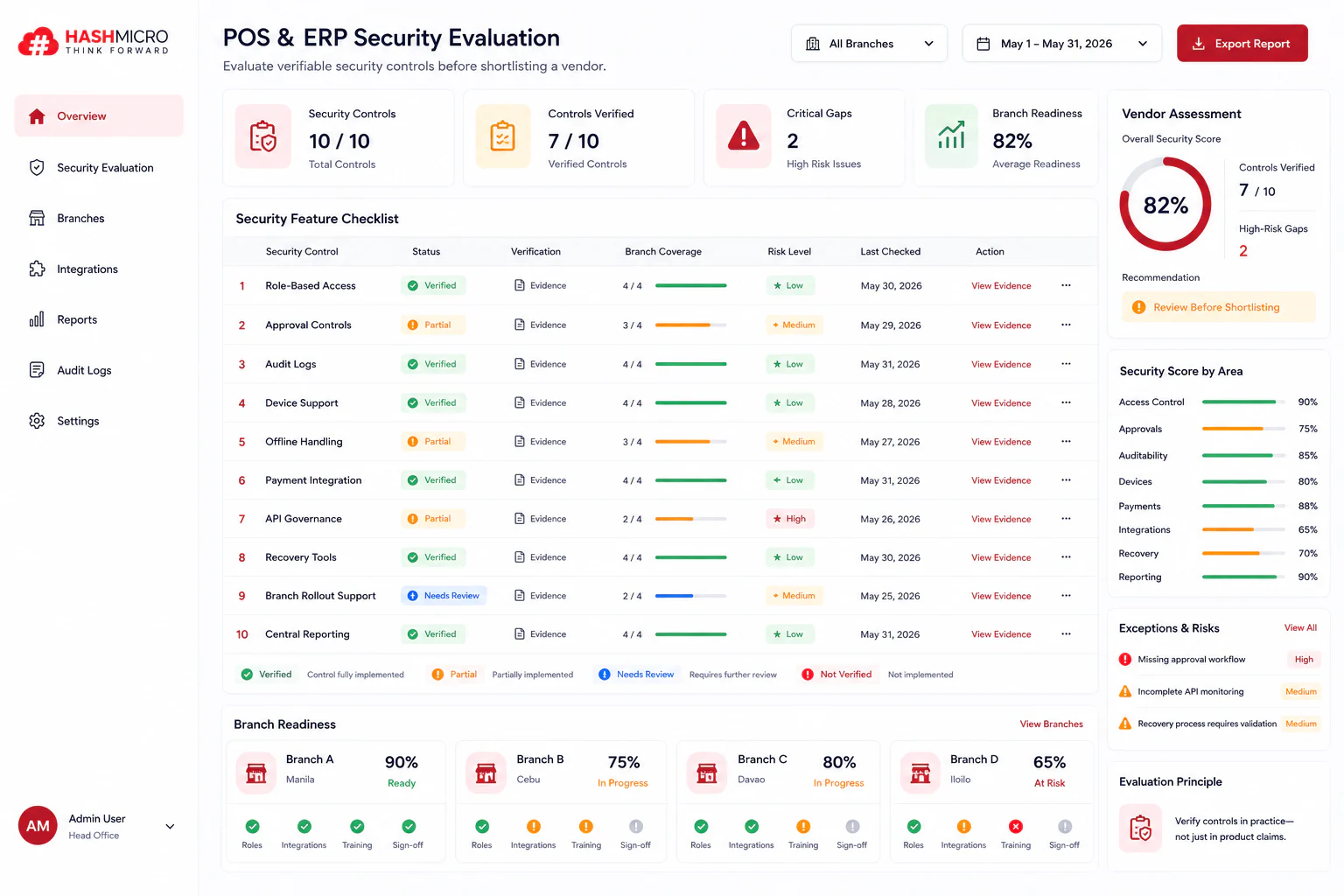
Procurement software supports direct procurement by connecting requisitions, approvals, supplier orders, receiving, inventory-related records, and reporting in a shared workflow. It becomes relevant when recurring stockouts, manual approval bottlenecks, disconnected supplier data, poor visibility, multi-branch purchasing, or unreliable KPI reporting make spreadsheet controls difficult to sustain.
When evaluating a system, these are the capabilities that decide whether direct procurement stays under control:
- Item and supplier master data: Enforces required fields, clear ownership, duplicate prevention, consistent units of measure, supplier status, and approved alternatives so buyers order the right item from a qualified source.
- Demand and replenishment rules: Holds forecast inputs, reorder points, safety stock, MOQ, lead times, and branch or warehouse parameters so purchasing follows planning instead of reacting to shortages.
- Requisition and approval workflow: Applies approval levels, delegated authority, urgent exceptions, ageing alerts, and a complete audit history so requests move without losing accountability.
- Purchase-order execution: Tracks version control, supplier acknowledgement, delivery schedules, partial receipts, and change history so buyers always know the current commitment.
- Warehouse and quality integration: Links goods receipt notes, lot or serial tracking, quarantine, rejection reasons, and backorder visibility so what arrived and what passed inspection are recorded together.
- Finance and invoice control: Runs three-way matching, tax and account coding, invoice status, payment terms, and exception queues so finance pays against verified receipts.
- Reporting and access governance: Defines KPIs, role-based access, branch visibility, integrations, exports, and auditability so procurement performance can be reviewed and defended.
HashMicro positions its procurement software as a way to support purchasing controls across procurement, inventory, accounting, and operations. The company states a footprint of more than 1,750 enterprise clients across Southeast Asia. Teams that want to see those controls working end to end can request a free product tour before committing to a rollout plan.
Conclusion
Direct procurement covers every purchase that becomes part of what a business sells or delivers, so its impact reaches inventory accuracy, cost of goods, customer fulfilment, and project timelines. Treating it as a control model rather than a buying task is what keeps those outcomes predictable.
Most of these controls break down when the data sits in separate spreadsheets and inboxes. Connecting requisitions, approvals, purchase orders, receipts, inventory, and invoice matching in one system gives each team the same record and makes every hand-off visible and owned.
Before comparing platforms, document your current workflow, data condition, integration priorities, and control gaps, then use that documentation to evaluate whether procurement management software fits how your organisation actually buys.

Frequently Asked Questions About Direct Procurement
Classify the item according to its primary business use, inventory treatment, cost allocation, and whether it supports production, resale, service delivery, or internal operations. Finance and operations should validate the rule together because a one-size-fits-all classification can distort inventory and expense reporting.
Start with a balanced shortlist: purchase price variance, supplier on-time delivery, lead-time variance, material availability, quality rejection rate, and invoice matching exceptions. Prioritise the metrics linked to the organisation’s current failure mode rather than optimising purchase price alone.
Common triggers include recurring stockouts, manual approval bottlenecks, disconnected procurement and finance data, poor supplier visibility, multi-branch purchasing complexity, and unreliable KPI reporting. These signals suggest that shared records and workflow controls may be more valuable than additional spreadsheets.
Prepare the current workflow, representative item and supplier samples, approval rules, warehouse structure, reporting needs, integration points, pain points, and baseline metrics. This helps a discussion focus on requirements and process fit without assuming a fixed implementation approach.