






Somewhere in your shared drive, a supplier contract waits for a signature nobody chased. The University of Southeastern Philippines 2024 review of Philippine public procurement traced 20% of delays to poor planning and 9% to slow approvals. Contract management software gives procurement, legal, finance, and operations one controlled place for those agreements.
This guide compares manual tracking, shared repositories, and dedicated platforms. It then reviews 12 tools using public product information, not paid rankings. A ten-point framework covers approvals, obligations, security, integrations, and implementation. Philippine examples include multi-branch approvals and BPO service agreements. You can consult our team to compare it with your requirements before shortlisting vendors.
Key Takeaways
Contract management software centralizes agreements across the full lifecycle, from storage and drafting to approval routing, obligation tracking, and renewal alerts. Treat those as the minimum any demonstration must prove.
The 12 tools below are described from public product information, not paid rankings. Each entry lists key features, limitations, and pricing so you can shortlist two or three before booking demonstrations.
Score every vendor with a ten-step process covering search, approvals, e-signature behavior, obligations, access control, and integrations. Add the total cost of ownership before you sign.
What Is Contract Management Software?
Contract management software centralizes agreements across the full contract lifecycle. It handles document storage, drafting, templates, approval routing, e-signatures, obligation tracking, renewal alerts, and compliance reporting. Unlike a shared folder, it records who can view, edit, approve, sign, and act on each contract.
For example, a retail chain stores a supplier agreement and routes it to a branch head and finance director. It captures the payment terms and alerts the procurement owner before the contract expires. Pairing this with an ERP and process automation platform connects those terms to purchasing and accounting transactions.
A contract repository answers "Where is the file?" Contract lifecycle management answers "What happens next, who owns it, and what is the business impact?" Philippine companies shortlisting the best contract management software should test both questions in a product demonstration.
Benefits of Contract Management Software for Philippine Businesses
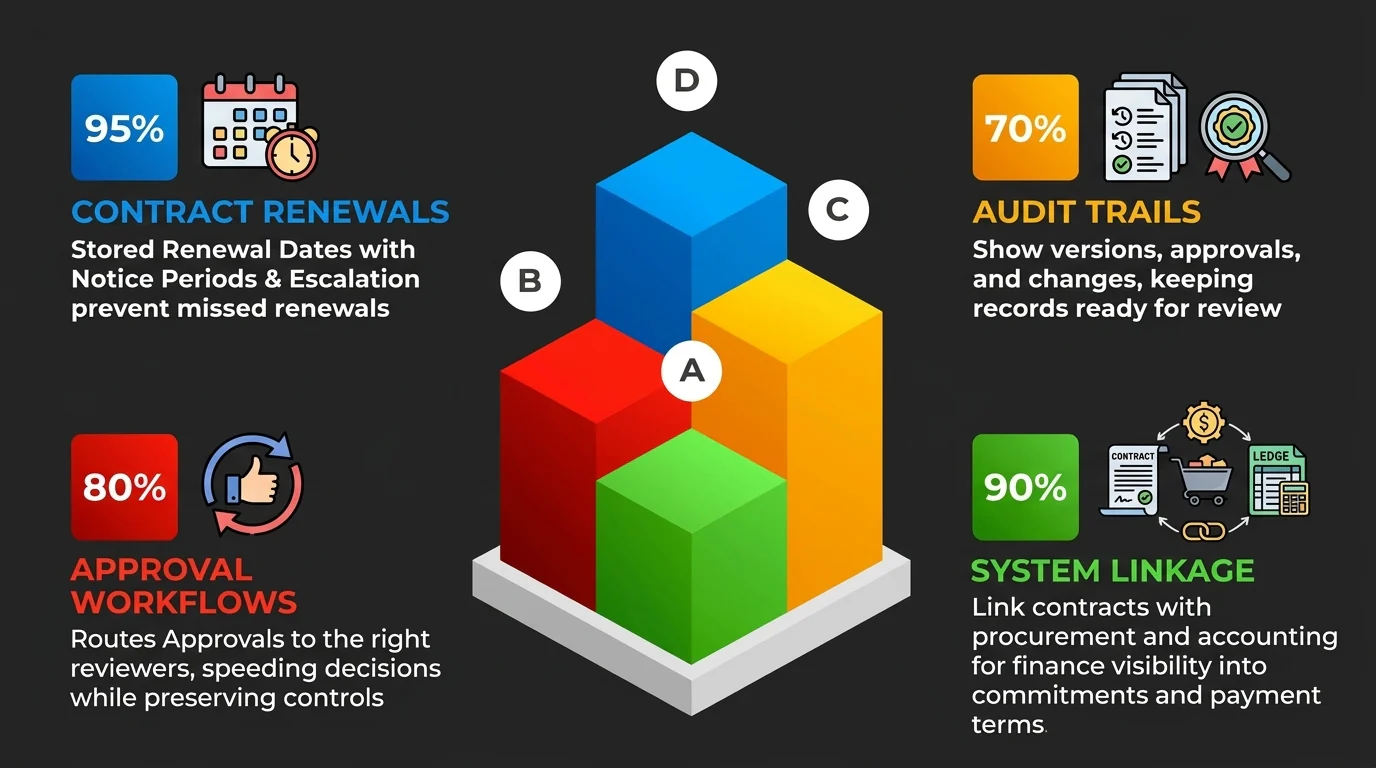
The best contract management software gives Philippine businesses one place for every agreement. Procurement, legal, and finance teams stop chasing files and focus on the right information at the right time. Project-based industries that rely on construction contract management gain the most when contract terms connect to milestones and payments.
1. Fewer missed renewals
Renewal dates often sit in email threads or spreadsheets. A contract management system stores the date with notice periods, an accountable owner, and escalation rules. For a BPO service agreement, the system can alert the account owner and legal team before an automatic renewal window closes.
2. Faster, controlled approvals
A purchase agreement may require branch, procurement, finance, and executive review. Workflow automation sends the right version to each approver, records decisions, and prevents unauthorized edits. You gain speed without losing governance across locations.
3. Audit-ready records
Internal reviewers and external auditors need evidence of versions, approvals, signatures, and changes. A searchable audit trail shows what happened and when, instead of forcing staff to reconstruct decisions from inboxes. Keep retention and access policies aligned with your own legal and regulatory advice.
4. Clearer commitment visibility
Finance needs to see peso-denominated commitments, payment terms, minimum purchases, and termination liabilities before they affect cash planning. Linking contracts with procurement and accounting helps teams compare agreed terms with purchase orders, invoices, and budgets.
Quick Comparison of Contract Management Software
The table below compares 12 contract management software options side by side. Each entry lists its core features and the business type it serves best. Philippine buyers can use it to shortlist quickly before reading the full reviews and requesting vendor demonstrations.
| Software | Features | Best for |
|---|---|---|
| 1) HashMicro | Contract-to-transaction linking, multi-level approval workflows, obligation and renewal tracking | Philippine enterprises wanting contracts embedded in one ERP across procurement, finance, and multiple branches |
| 2) DocuSign CLM | Native e-signature integration, clause libraries and templates, automated workflow rules | Companies already running DocuSign that want control before and after signing |
| 3) Icertis | Structured contract metadata, governance and compliance controls, post-signature obligation management | Large enterprises managing complex contracts across several business units |
| 4) Agiloft | No-code configuration, flexible contract data models, automated renewal escalations | Companies with varied contract processes that configure workflow rules in-house |
| 5) Conga | Automated document generation, clause libraries and version control, CRM and finance synchronization | Sales-led companies managing customer contracts alongside quoting and revenue operations |
| 6) Ironclad | Guided intake forms, visual workflow designer, in-app redlining and negotiation | Technology and professional services teams letting business users request contracts directly |
| 7) Juro | Browser-native editor, template governance, automated approvals and renewal reminders | Growing legal and commercial teams that want self-service contracts in a browser |
| 8) ContractSafe | AI-assisted search, automated deadline reminders, reporting dashboards | Teams that need to find and monitor existing contracts fast |
| 9) ContractWorks | Smart document tagging, role-based permission controls, automatic renewal alerts | Small and mid-sized companies replacing shared drives with a structured repository |
| 10) CobbleStone | Configurable multi-stage workflows, sourcing and vendor management, reporting dashboards | Procurement teams and enterprises with formal, multi-stage review requirements |
| 11) SAP Ariba Contracts | Native SAP integration, supplier network access, clause libraries and approval workflows | Large procurement operations already standardized on SAP supplier and purchasing processes |
| 12) Zoho Contracts | Native Zoho integration, clause libraries and templates, obligation and renewal tracking | Growing companies already using Zoho applications across sales and finance |
Best fit by Philippine business type:
- Very small professional firms with a few agreements can start with ContractWorks, which replaces shared drives without a heavy rollout.
- A hospitality group needing storage and controlled access suits ContractSafe, where search, permissions, and reminders arrive before workflow complexity.
- Retail chains, BPOs, and construction firms with many departments need Agiloft, which configures branch rules and varied approval paths.
- Manufacturing and distribution companies benefit from HashMicro, where supplier contracts drive purchase requests, orders, receipts, and payment plans.
12 Best Contract Management Software in the Philippines
This shortlist was assembled from public product positioning and common buyer requirements. It is not a performance ranking. Shortlist two or three platforms, then verify each against your own supplier, customer, and renewal scenarios. Select the one most fitting for your business model.
1. HashMicro
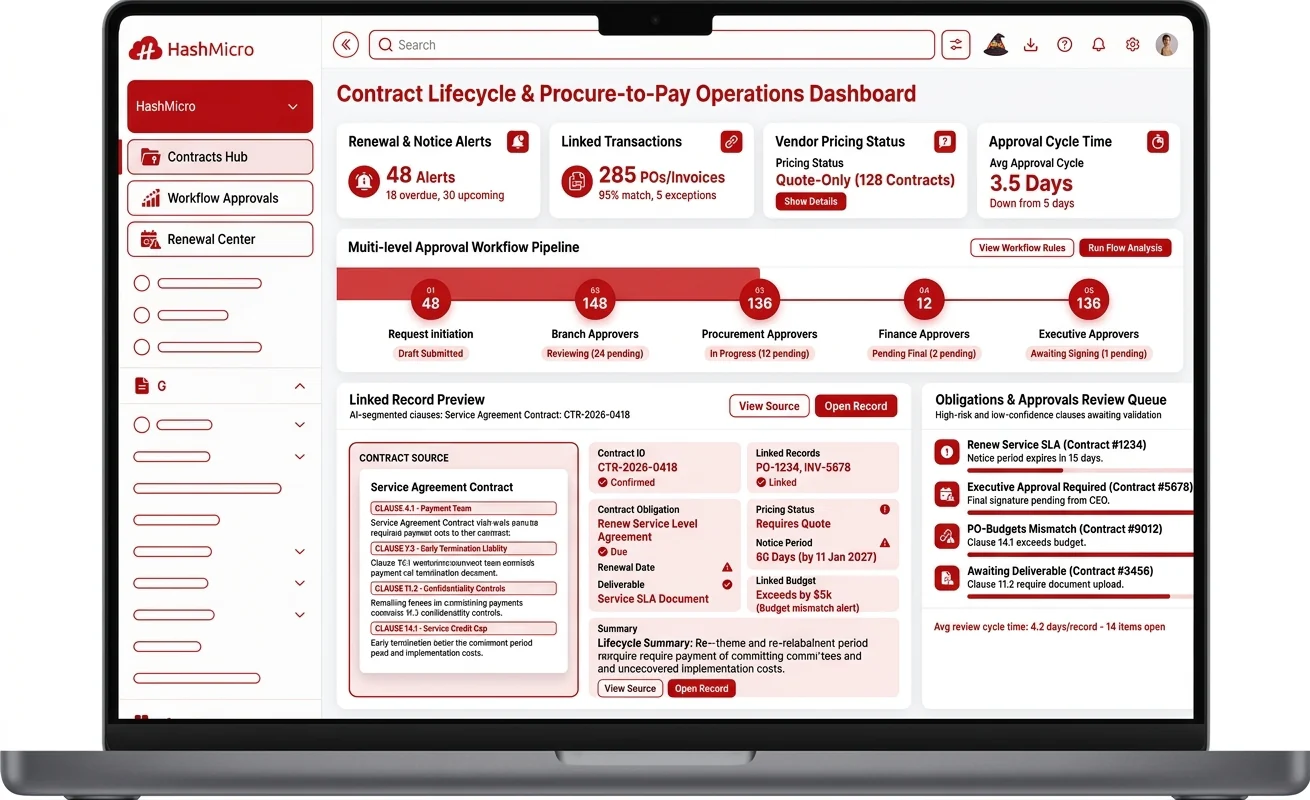
HashMicro delivers ERP-integrated contract control, where agreements connect directly with procurement, accounting, and renewal activities inside one business system. Contracts stop living in isolated folders and start driving purchase orders, payment schedules, and budget commitments.
The contract management software by HashMicro suits Philippine companies that run multiple branches and want one operating layer across departments. Teams evaluating the best contract management software in the Philippines should test how contract terms flow into transactional records rather than judging the repository alone.
Best for: Philippine enterprises that want contract management embedded in a single ERP covering procurement, finance, and multi-branch operations.
| Key features | Limitations |
|---|---|
|
|
Pricing: HashMicro does not publish fixed rates. Pricing depends on the modules, user count, and deployment scope your company needs. Request a free consultation, and the team will map your contract requirements to a tailored quote before you commit.

2. DocuSign CLM
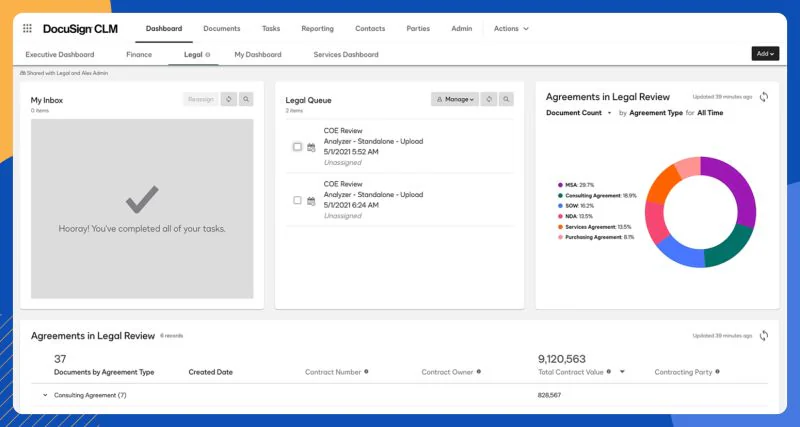
DocuSign CLM extends the DocuSign signature platform into full contract lifecycle management. It adds a central repository, clause libraries, templates, workflow routing, and post-signature obligation tracking on top of the e-signature layer companies already use.
The platform fits businesses that have standardized on DocuSign and want control before and after signing. Teams weighing the best contract management software in the Philippines should ask how templates, clause changes, obligation alerts, reporting, and ERP integrations work for local entities.
| Key features | Limitations |
|---|---|
|
|
Pricing: DocuSign publishes tiered plans for its core platform. Personal runs about ₱560 per month, Standard about ₱1,400 per month, and Business Pro about ₱2,240 per month. Enhanced plans covering full CLM capability are customizable, and DocuSign quotes them after a requirements review.
3. Icertis
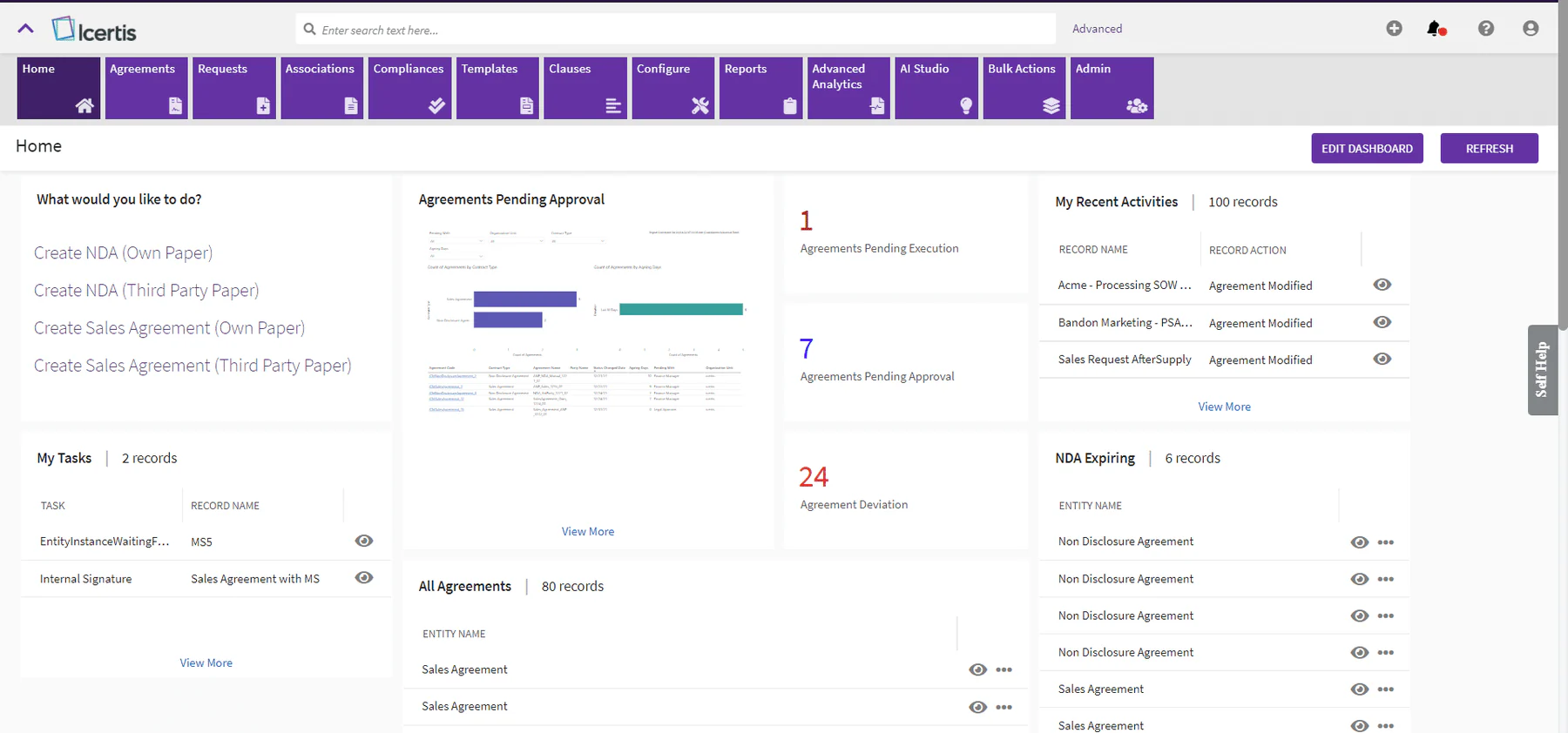
Icertis is an enterprise contract lifecycle management platform built around structured contract data. It captures every agreement as governed metadata rather than a stored file, so legal, procurement, sales, and compliance teams work from the same commercial terms.
The platform suits large businesses running contracts across several business units and countries. Teams comparing the best contract management software in the Philippines should ask Icertis to demonstrate data models, approval exceptions, and post-signature obligation tracking during evaluation.
Best for: Large enterprises with legal, procurement, sales, and compliance stakeholders managing complex contracts across multiple business units.
| Key features | Limitations |
|---|---|
|
|
Pricing: Icertis does not publish rates publicly. Pricing depends on contract volume, user count, modules, and integration scope, and the vendor quotes each deployment after a requirements review. Expect enterprise-level costs and a structured procurement process before implementation.
4. Agiloft
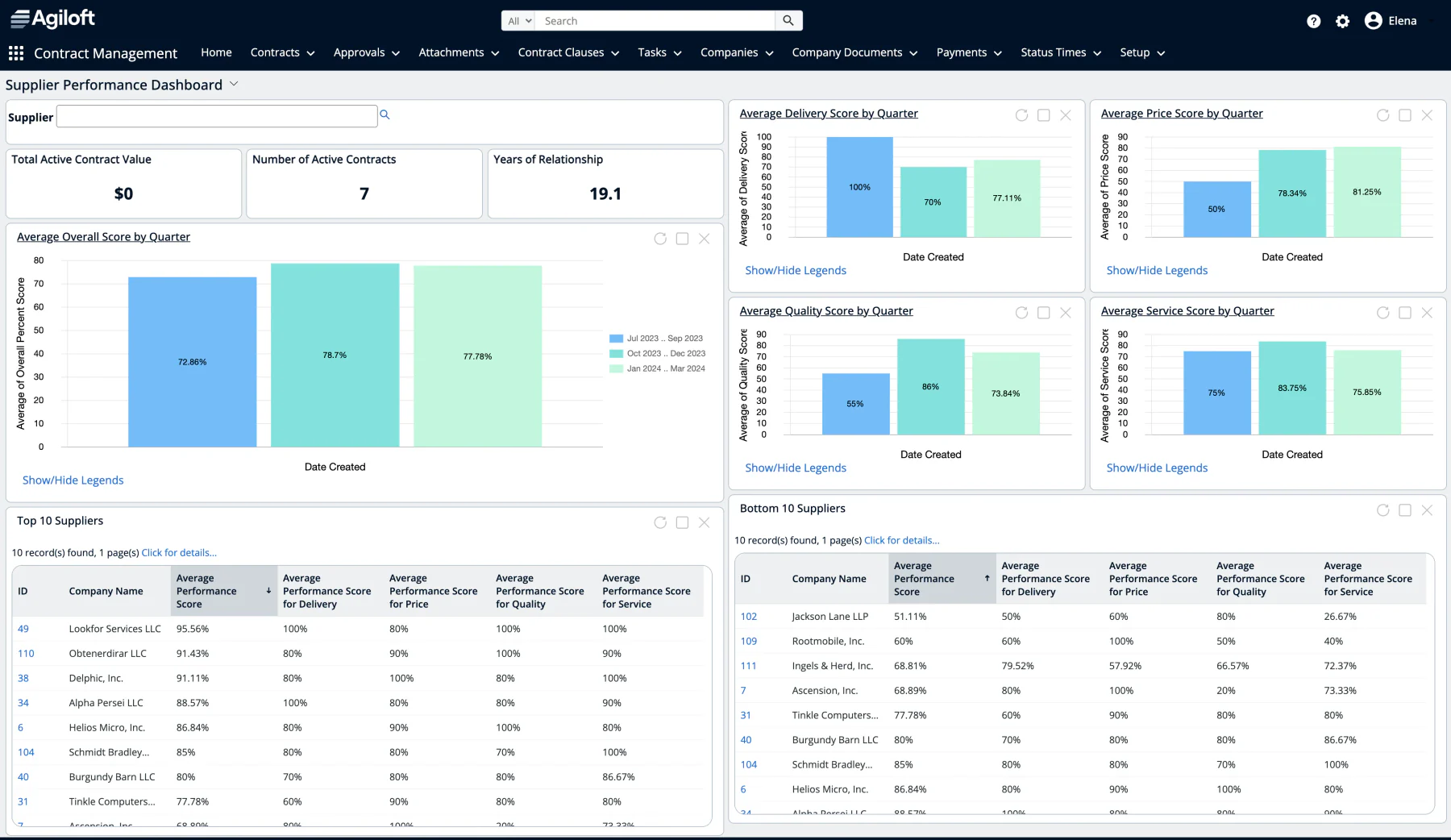
Agiloft is a highly configurable contract management software platform built on a no-code engine. Teams adjust data fields, workflows, and approval rules without developer support, so the system adapts to unusual agreement types instead of forcing a standard template.
That flexibility suits companies running varied contracts, approval paths, and service requirements across departments. During evaluation, test how much effort Philippine branch rules, role permissions, and renewal escalations take to configure and maintain.
Best for: Companies with unusual or highly varied contract processes that need workflow rules configured in-house rather than bought off the shelf.
| Key features | Limitations |
|---|---|
|
|
Pricing: Agiloft prices by user and configuration scope rather than a single flat rate. The vendor quotes each deployment after reviewing contract volume, workflow complexity, and integration needs. Ask for the total cost including configuration support, since build effort drives much of the first-year spend.
5. Conga
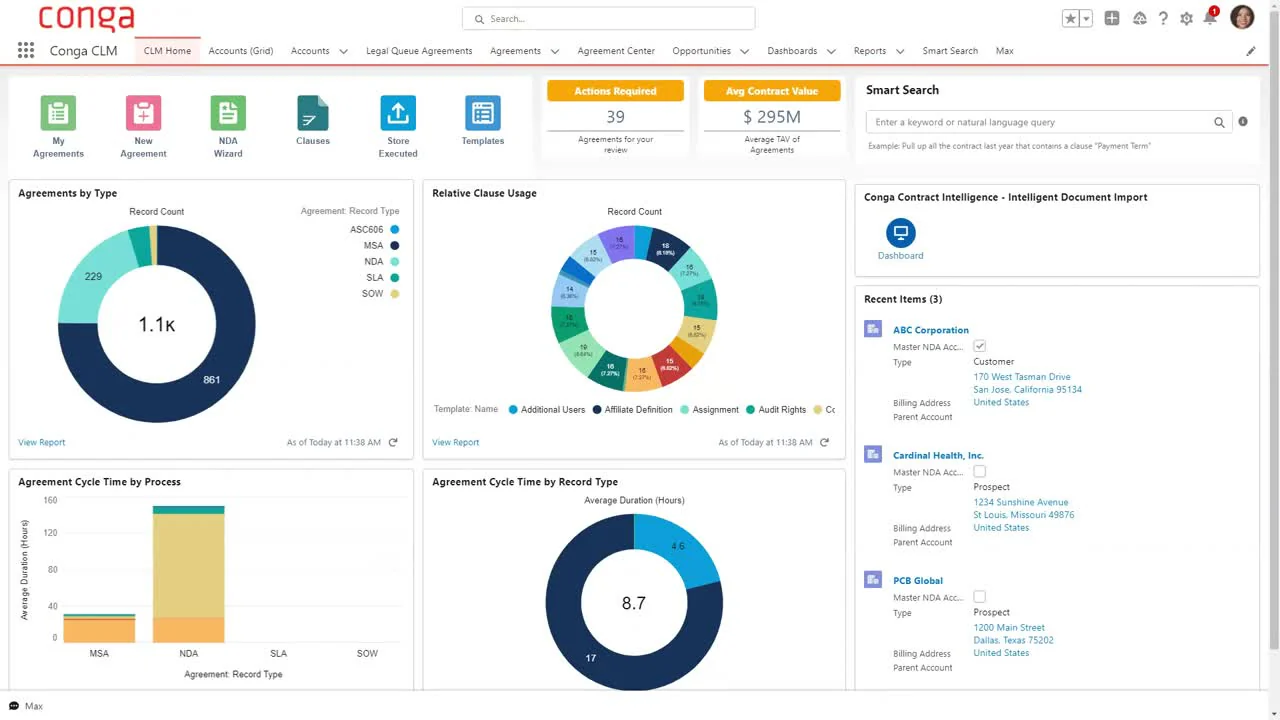
Conga combines document generation, contract lifecycle management, and CRM-linked commercial operations in one platform. Sales teams generate quotes, route agreements for approval, and capture signed terms without leaving the CRM record. Contracts stay tied to the deal that created them.
The platform fits sales-led companies managing customer agreements alongside quoting and revenue workflows. Teams comparing the best contract management software should ask Conga to demonstrate version control and clause libraries. Check how CRM records, signed contracts, and finance systems stay in sync.
Best for: Sales-led companies that manage customer contracts alongside quoting and revenue operations inside a CRM.
| Key features | Limitations |
|---|---|
|
|
Pricing: Conga builds each quote around your business needs rather than a fixed rate card. The scope, budget alignment, and commitment level of the partnership shape the final figure. The vendor positions its approach around flexibility, competitive pricing, and transparency, so request a full cost breakdown before signing.
6. Ironclad
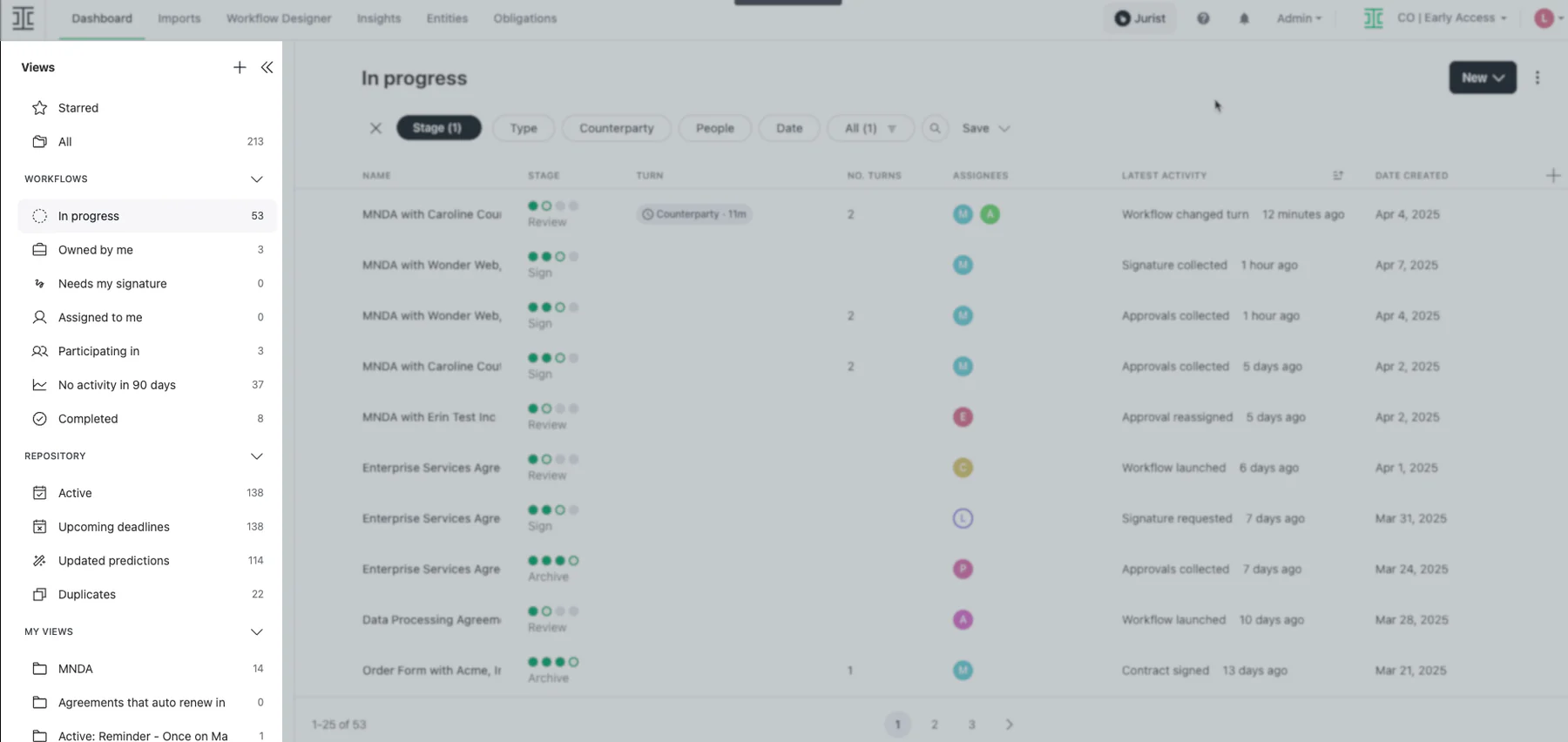
Ironclad is a contract lifecycle platform built around an approachable intake experience. Business teams request contracts through guided forms, and the system drafts, routes, and tracks each agreement. Legal keeps control without becoming the bottleneck for every request.
The platform suits technology, professional services, and commercial teams with high contract volume. Teams shortlisting the best contract management software should test non-standard clauses, legal review queues, and renewal ownership. Check analytics and access controls across multiple Philippine offices.
Best for: Technology and professional services teams that want business users to request contracts without routing every draft through legal.
| Key features | Limitations |
|---|---|
|
|
Pricing: Ironclad sets a fixed price per engagement, then adjusts the scope to accommodate time and materials work. Buyers choose between a monthly retainer and consulting hours, depending on how much implementation support they need. Request a full breakdown before signing.
7. Juro
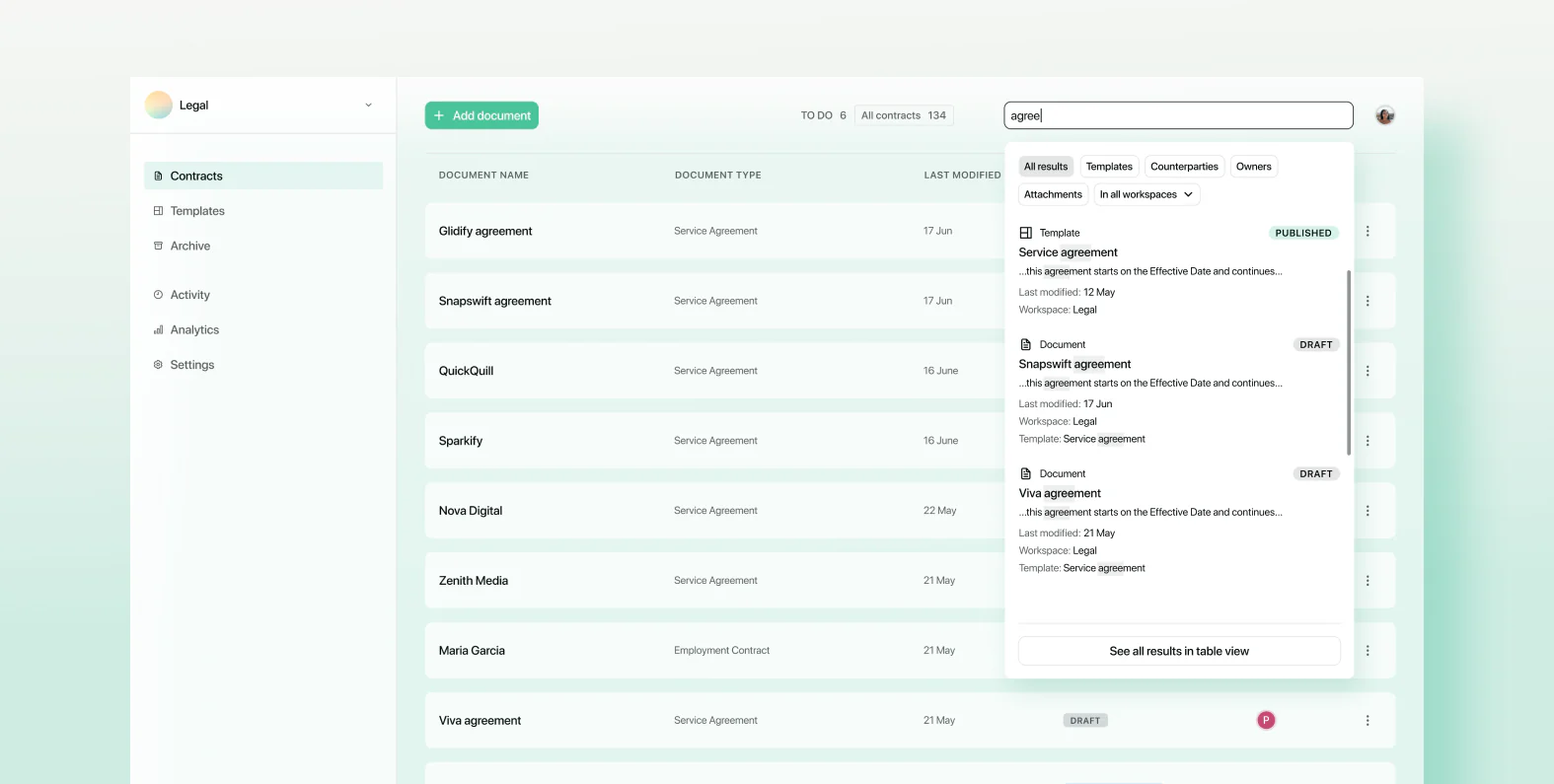
Juro is a browser-based contract workspace that keeps drafting, negotiation, and signing in one place. Contracts live as structured web documents rather than files, so teams edit and comment without downloading a version. Business users create agreements from templates that legal controls.
The platform fits growing legal and commercial teams that want to cut email exchanges from the contract process. Teams comparing the best contract management software should confirm template governance, negotiation history, and post-signature obligations. Check export and integration options for accounting and procurement data.
Best for: Growing legal and commercial teams that want business users to self-serve routine contracts inside a browser-native workspace.
| Key features | Limitations |
|---|---|
|
|
Pricing: Juro builds each quote around your contract volume and the types of agreements you manage. AI features and the integrations you need also shape the final figure. Request a scoped quote that lists every included module before you compare vendors.
8. ContractSafe
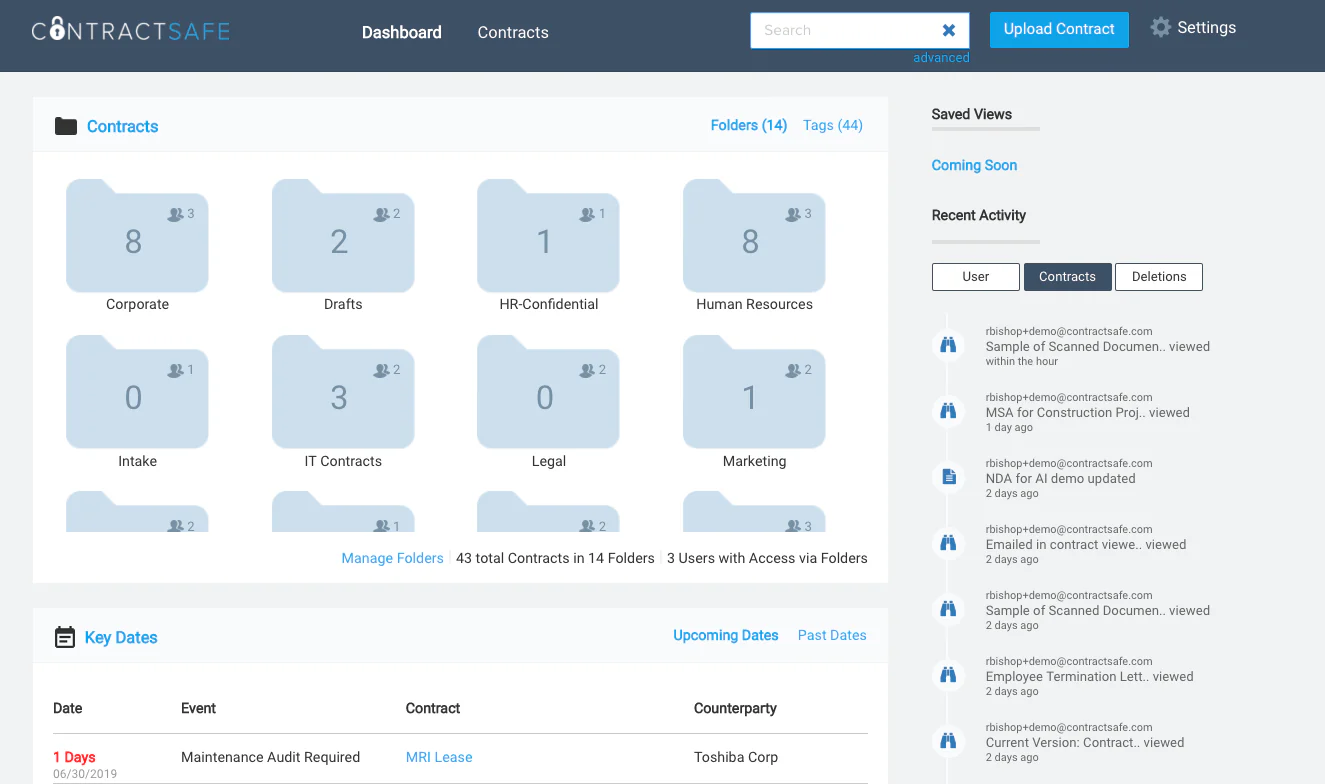
ContractSafe is contract management software built around storage, search, and reminders rather than complex drafting. It pulls agreements into one searchable repository, tags key dates, and alerts owners before deadlines pass.
The platform fits teams whose immediate problem is visibility, not negotiation workflow. Before committing, ask whether its permissions, metadata, and integration depth cover multi-branch approvals. Confirm the reporting handles supplier commitments across your Philippine locations.
Best for: Teams that need to find, track, and monitor existing contracts quickly without building complex drafting and negotiation workflows.
| Key features | Limitations |
|---|---|
|
|
Pricing: ContractSafe publishes three tiers. Organize starts at about ₱25,200 per month, Finalize at about ₱36,960 per month, and Maximize at about ₱45,640 per month. Each tier adds contract capacity, users, and features, so match the plan to your document volume.
9. ContractWorks
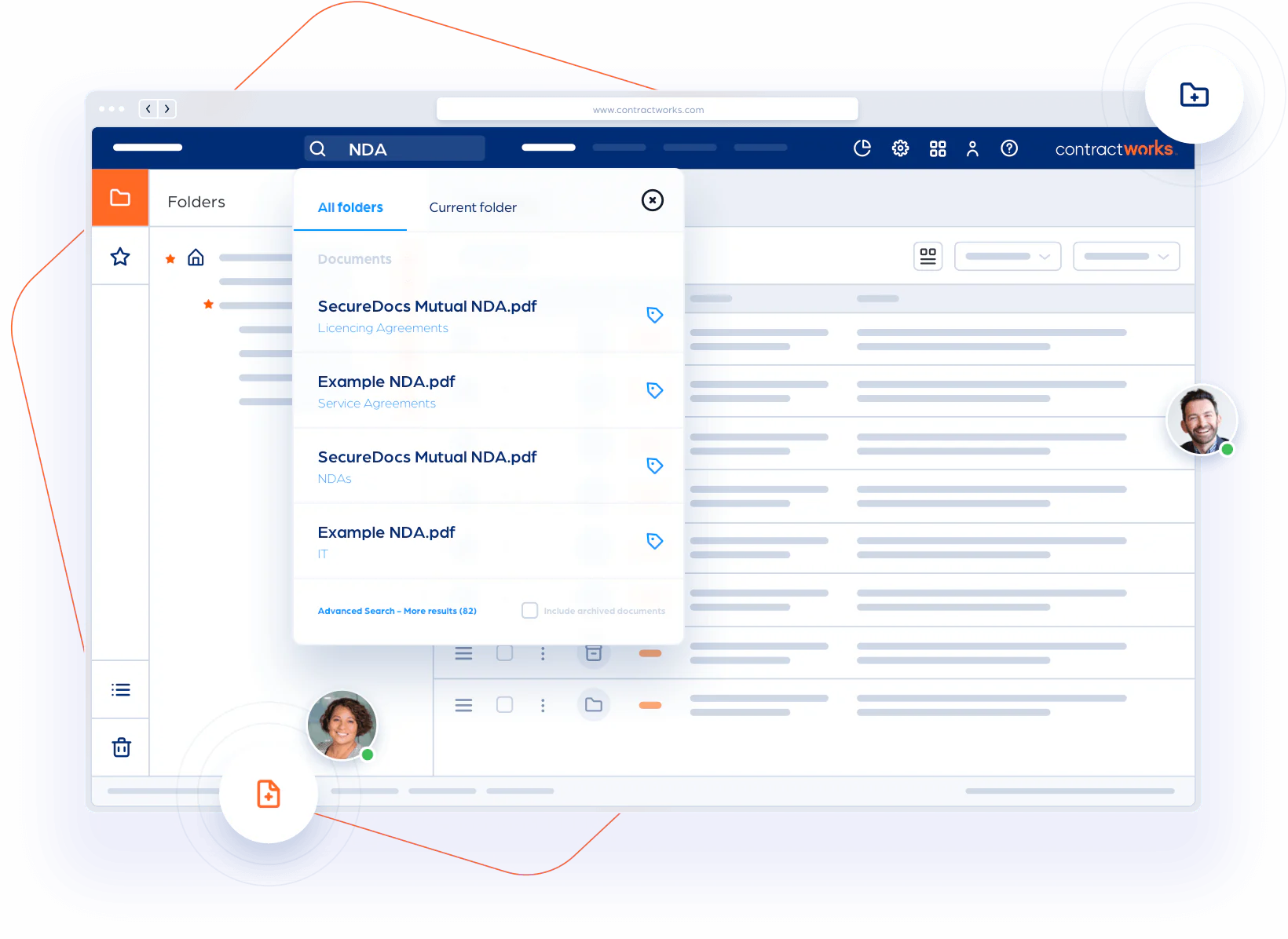
ContractWorks is contract management software built for teams leaving shared drives behind. It provides a searchable repository with tagging, permission controls, and automatic renewal reminders, so contracts stay findable and monitored without heavy configuration.
The platform suits small and mid-sized companies that need structure fast. During the demo, ask how it handles approval evidence, obligation owners, and bulk migration from existing folders. Confirm retention rules and links to your purchasing or customer systems.
Best for: Small and mid-sized companies replacing shared drives with a structured, permission-controlled contract repository they can deploy quickly.
| Key features | Limitations |
|---|---|
|
|
Pricing: ContractWorks shares rates only through a consultation. Standard covers unlimited users, 2,500 documents, and 5 e-signature licenses. Professional raises that to 10,000 documents and 10 licenses. Premium adds drafting, redlining, and workflows for companies scaling to full contract lifecycle management.
10. CobbleStone
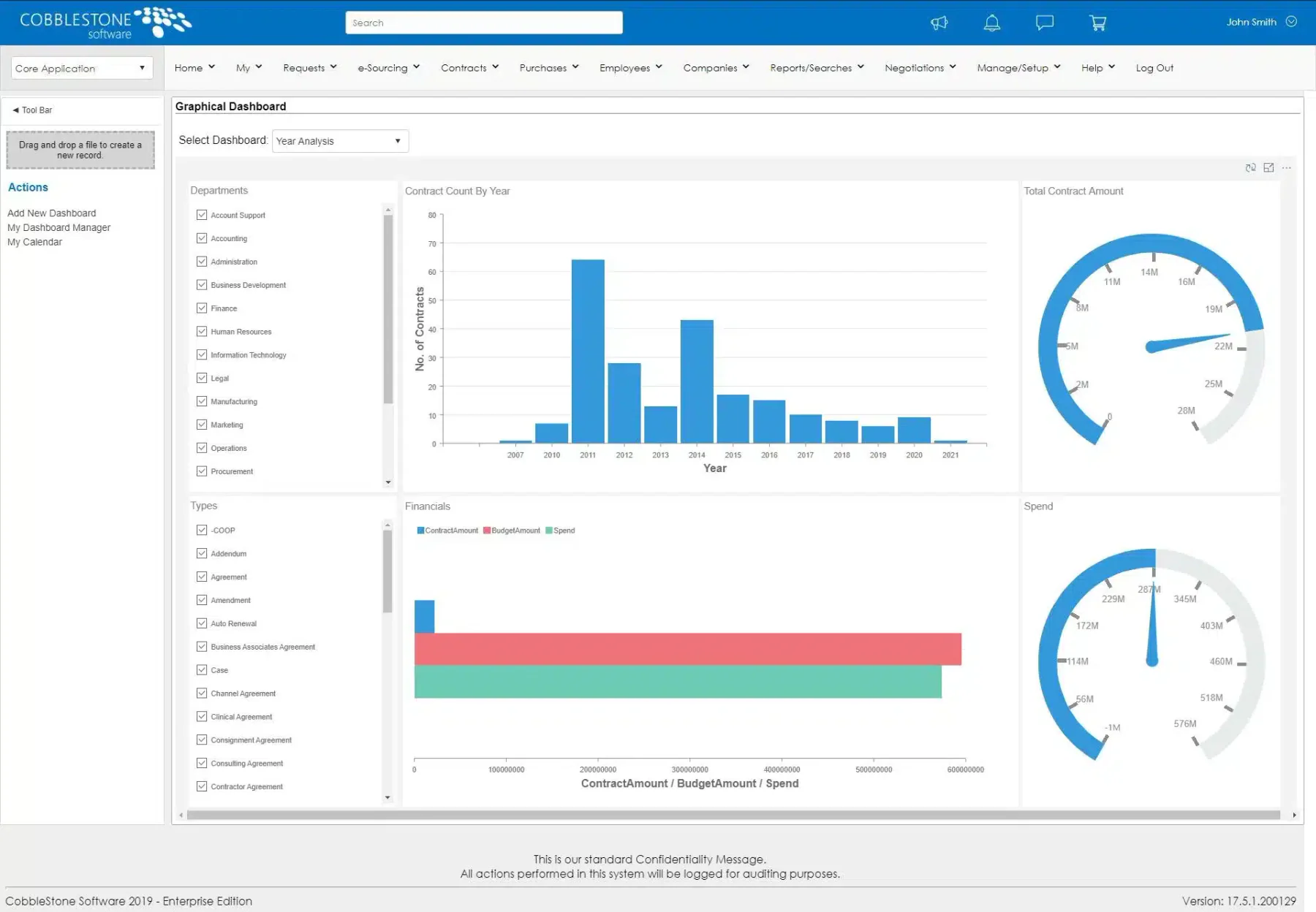
CobbleStone is contract management software that pairs a configurable repository with sourcing and formal review workflows. It handles requests, approvals, clause libraries, and reporting, so organizations with strict governance rules can enforce each stage on record.
The platform suits procurement teams, public-sector-style governance, and enterprises with multi-stage review requirements. During evaluation, clarify implementation responsibilities, localization needs, and integration methods. Confirm that the dashboards answer the questions your finance and operations leaders raise every month.
Best for: Procurement teams and enterprises with formal, multi-stage review requirements that need sourcing and contract governance in one configurable system.
| Key features | Limitations |
|---|---|
|
|
Pricing: CobbleStone quotes each deployment after a consultation. User count, modules, contract volume, and integration scope shape the final figure. Ask the vendor to separate license cost from implementation and configuration fees, since setup effort drives much of the first-year spend.
11. SAP Ariba Contracts
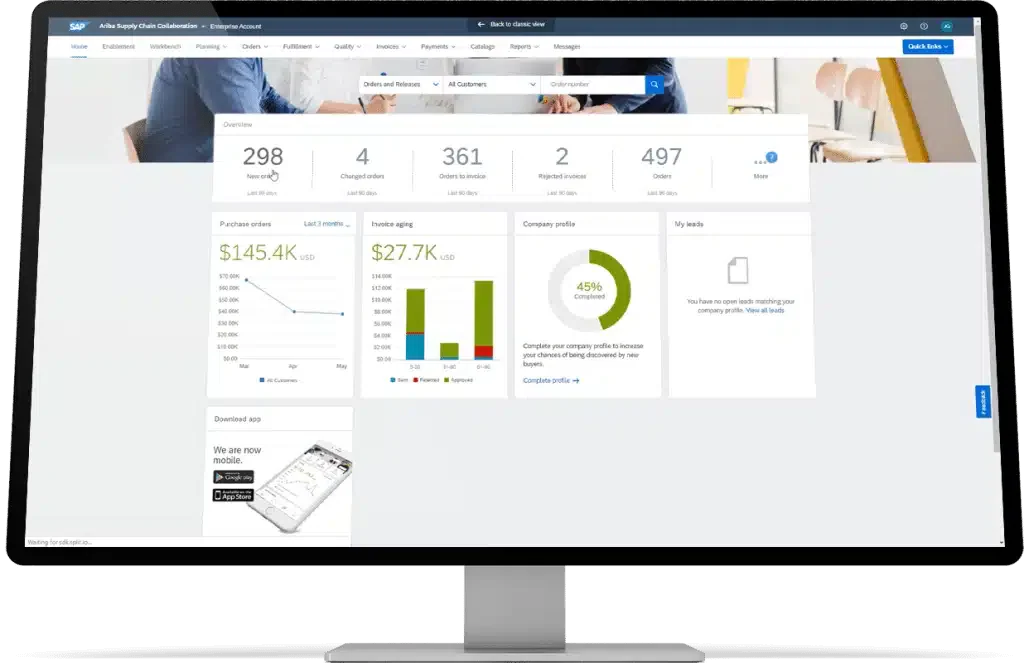
SAP Ariba Contracts sits inside the SAP procurement ecosystem and connects agreements to sourcing, supplier management, and procure-to-pay controls. Contract terms flow directly into purchase orders and invoices, so buyers enforce negotiated pricing at the transaction level.
The platform fits large procurement operations already running SAP supplier and purchasing processes. Teams evaluating the best contract management software in the Philippines should ask how non-SAP records and branch approvals work. Confirm renewal alerts and local support coverage before committing.
Best for: Large procurement organizations already standardized on SAP that need contract terms enforced across sourcing and procure-to-pay.
| Key features | Limitations |
|---|---|
|
|
Pricing: SAP provides pricing structure details on request. The quote depends on user count, transaction volume, modules, and the SAP components already in place. Ask for a total that includes implementation, since deployment cost often exceeds the annual license for enterprise rollouts.
12. Zoho Contracts
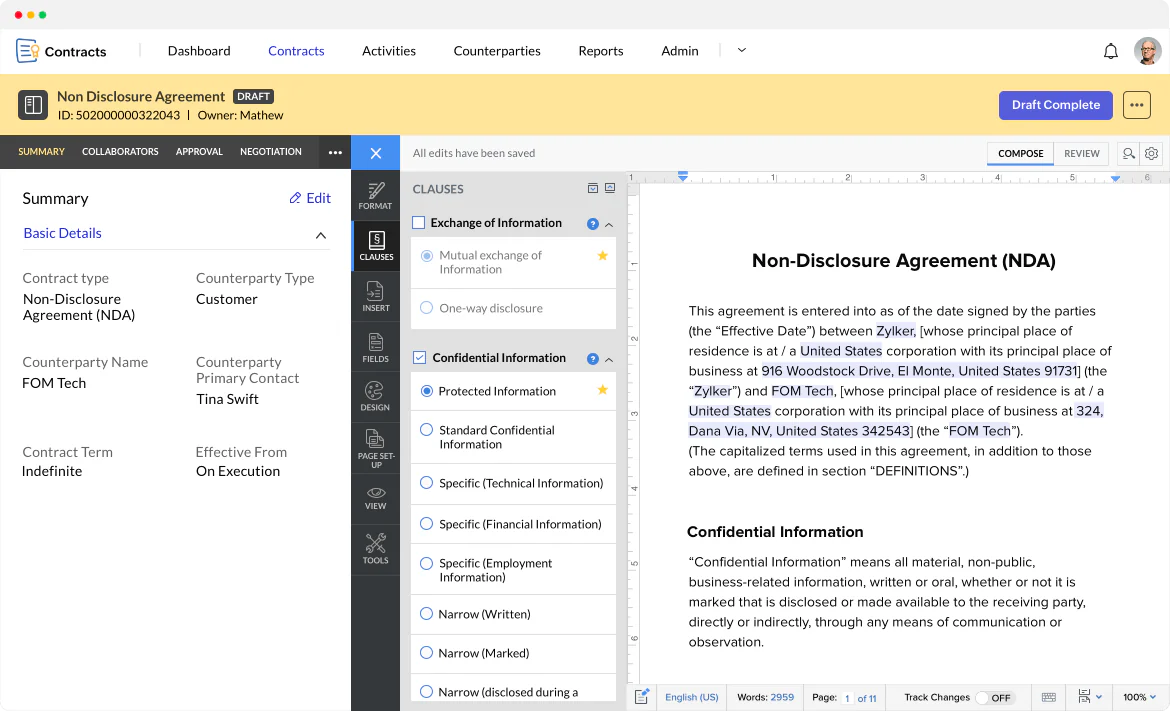
Zoho Contracts manages agreement workflows, e-signatures, and contract records inside the wider Zoho business suite. It handles drafting, approval routing, obligation tracking, and renewal management while sharing data with Zoho CRM, Books, and other connected applications.
The platform fits growing companies already running Zoho apps across sales and finance. Teams comparing the best contract management software in the Philippines should test integration ownership, approval complexity, and custom fields. Confirm how contract data reaches your ERP or accounting platform.
Best for: Growing companies already using Zoho applications that want contracts connected to their existing CRM and finance data.
| Key features | Limitations |
|---|---|
|
|
Pricing: Zoho Contracts prices each tier by user type. Standard runs about ₱340 per Lite user and ₱1,680 per full user monthly. Professional costs about ₱670 and ₱2,690, while Premium runs about ₱1,010 and ₱3,360. Match your seat mix before comparing totals.
How to Choose the Best Contract Management Software
Choosing the best contract management software works better as one sequence than two separate exercises. Bring procurement, finance, legal, IT, sales, and operations into a single scoring workshop. Then work through the steps below before you shortlist vendors or book demonstrations.
- Inventory and classify agreements: Record contract types, owners, branches, currencies, and renewal rules. Separate must-have workflows and integrations from desirable features.
- Prepare three demonstration scripts: a supplier purchase, a BPO service agreement, and a renewal exception.
- Test search: Request metadata fields, full-text search, filters, duplicate handling, and permission-aware results. Procurement and legal should run their own scenarios.
- Check template and clause governance: Ask about approved templates, version controls, and retiring outdated language.
- Test the approval workflow: Run parallel approvals, delegation, thresholds, branch variations, and exception routing. Confirm the intake form blocks incomplete requests.
- Verify e-signature behavior: Check signer order, status synchronization, storage, and what happens when a signer declines.
- Confirm obligation tracking: Assign owners, due dates, milestones, recurring tasks, and escalation rules during the demonstration.
- Review reporting and access control: Request expiry and commitment dashboards, then check export permissions. Have IT examine permissions, audit logs, and retention settings.
- Verify must-have integrations and implementation scope: Cover master data, purchase orders, payment terms, and budgets. Ask which system owns each field. Request a migration sample, training approach, and support model.
- Run a controlled pilot: Test representative records before signing a longer deployment commitment.
Score every vendor across these points, then add total cost of ownership. Pricing usually depends on users, modules, contract volume, integrations, and support. Request comparable quotations rather than relying on a license figure alone.
How Should Contract Management Software Integrate With ERP, Procurement, and Finance?
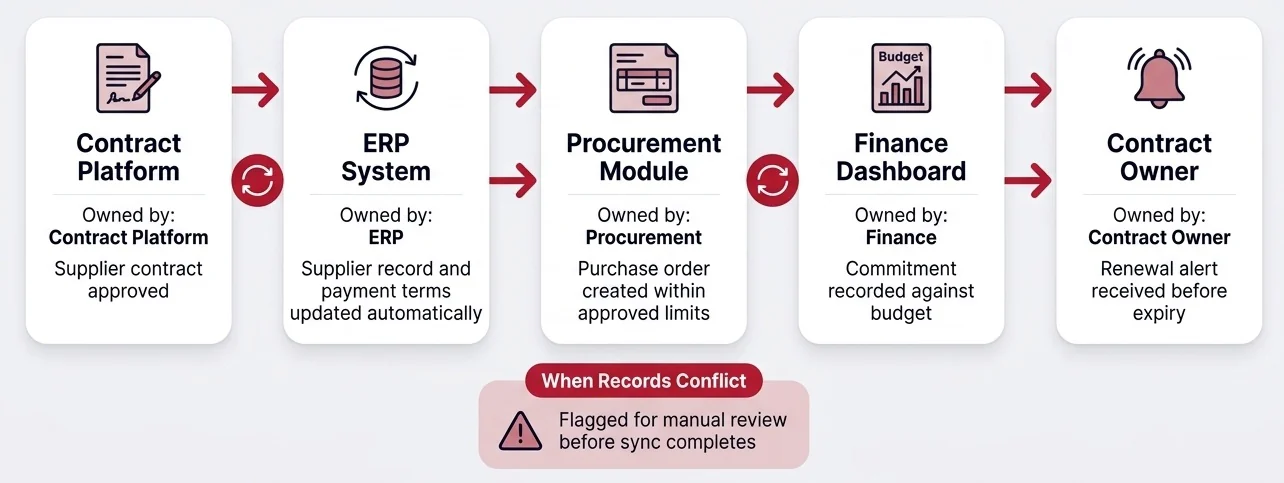
Must-have contract management integration usually includes supplier and customer master records, purchase orders, payment terms, budgets, approval status, and renewal dates. Optional connections may include CRM opportunity data, ticketing, project systems, analytics warehouses, or identity providers. The priority is a reliable data trail, not a long list of connectors.
Illustrative workflow: a supplier contract approved in the contract platform updates the supplier record and agreed payment terms in the ERP. Procurement creates a purchase order within those limits. Finance sees the commitment against a budget, while the contract owner receives a renewal alert. The demonstration should show which system owns each field, how changes synchronize, and what happens when a record conflicts.
Ask vendors whether integration is real-time or scheduled, how failed synchronization is reported, how branch entities are mapped, and how access rights carry across systems. A procurement management system can be assessed alongside the contract platform when contracts must drive purchasing and accounting decisions.
Conclusion
Contract management software centralizes agreements across the full lifecycle, from drafting and approval routing to renewal alerts. The system's structure solves the problem that the guide opened with. The unsigned contract, the ownerless renewal date, and the invisible commitment all stem from missing ownership rules, not missing files.
No single platform among the 12 wins every scenario. Teams standardized on SAP or Zoho gain the most from native options. Buyers searching for the best contract management software in the Philippines usually need ERP-connected control, which is where HashMicro fits across purchase requests, orders, and payments.
Contract value appears after signature, not before it. Renewals stop slipping, approvals move faster without losing governance, and finance sees peso commitments early. Map those outcomes to your contract volume and branch structure first, then request a free consultation to compare requirements.
FAQ About Contract Management Software
Prepare a clean contract inventory first. Record the counterparty, effective and expiry dates, notice periods, and peso value for each agreement. Add payment terms, the owning branch or entity, and a named owner. Flag documents kept under BIR retention rules, since those affect storage.
Assign ownership by contract type, not by department default. Procurement owns supplier agreements, sales owns customer contracts, and HR owns employment records. Legal governs clause standards across all of them. Name a single administrator who controls user roles, and record a backup owner for every branch.
The most common mistake is migrating every old file before agreeing on a naming and metadata standard. Teams end up with a searchable system full of unusable records. Start with active contracts, set the tagging rules, then load the archive. Skipping user training compounds the problem.
Move when tracking failures start costing money, not when contract volume hits a fixed number. Clear triggers include a missed renewal, an approval nobody can trace, or contracts spread across several branches. Companies opening new Philippine sites or entities usually cross that line first.
Yes. Most platforms accept bulk uploads and extract key dates and parties automatically. Scanned or handwritten Philippine documents often need manual checking. Migrate active and recently expired agreements first, then verify a sample against the originals. Decide later whether the older archive justifies the effort.