







 Limited to 100 registrants
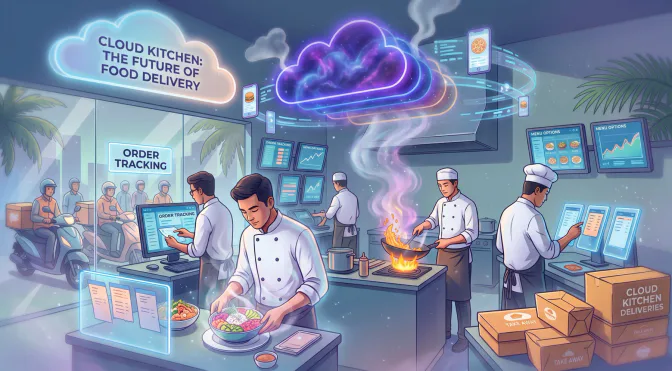
Running a food business in the Philippines can come with high costs, especially when rent, dining space, staff, and other overhead expenses are added to a traditional restaurant setup. For small businesses, these costs can make it harder to open a new location or expand into new areas while keeping operations manageable.
A cloud kitchen offers a lower-overhead alternative by focusing on food preparation and delivery. Its growth also follows the rising use of food delivery services in the Philippines, giving businesses another way to reach customers without a dine-in space.
This guide covers cloud kitchen models, startup costs, permits, and how to manage multiple brands from one kitchen.
Key Takeaways
A cloud kitchen prepares food mainly for delivery without a traditional dine-in area.
Explore five cloud kitchen models in the Philippines based on kitchen ownership and brand control.
Cloud kitchens must meet key business and food-related registration requirements set by the relevant Philippine LGU.
What Is a Cloud Kitchen?
A cloud kitchen is a food business that prepares meals primarily for delivery rather than dine-in customers. It operates without a traditional dining area or walk-in counter, with orders coming through food delivery apps, websites, social media, or other online channels.
Instead of serving customers on-site, the kitchen focuses on food preparation, packaging, and order fulfillment. A single facility can also support multiple food brands, allowing businesses to offer different menus from the same kitchen without maintaining separate dine-in locations.
1. Difference Between Cloud Kitchen, Ghost Kitchen, and Dark Kitchen
Cloud kitchen, ghost kitchen, and dark kitchen generally refer to food businesses that prepare meals for delivery without a traditional dine-in area. The terms are often used interchangeably, although some sources use them to describe slightly different operating models.
| Term | What it usually means | How it is used in the Philippines |
|---|---|---|
| Cloud kitchen | A kitchen serving orders that arrive through online channels | The most common term in listings and lease agreements |
| Ghost kitchen | A kitchen with no public-facing storefront | Used interchangeably, more common in app and media coverage |
| Dark kitchen | A closed facility producing delivery orders only | Less common locally, mostly seen in European and global guides |
2. How a cloud kitchen differs from a traditional restaurant
A traditional restaurant serves both food and a dine-in experience, with space for customers, table service, and on-site dining. A cloud kitchen focuses on food prepared for delivery, so packaging, preparation speed, order accuracy, and food quality during transport become more important to daily operations.
3. What a cloud kitchen is not
The word “cloud” refers to the online ordering model, not cloud computing or software hosting. A cloud kitchen is still a physical kitchen with cooking equipment and staff, and it is not automatically a catering business, food cart, or franchise, although these businesses can use a cloud kitchen setup.
Why Cloud Kitchens Are Growing in the Philippines?
Cloud kitchens are growing in the Philippines as delivery becomes a common way to order food while rent continues to rise. The model helps food service businesses reduce costs associated with traditional restaurants, particularly dining space and service staff.
- How food delivery changed the way Filipinos order
Food delivery apps have made it possible for customers to browse menus, compare options, and place orders without visiting a restaurant. This gives delivery-focused businesses a way to reach customers based on their delivery coverage and online presence rather than relying entirely on a storefront location. - Why rising rent pushed kitchens out of the dining room
A traditional restaurant needs space for customers, tables, service areas, and other front-of-house facilities. A cloud kitchen can use more of its space for food preparation and storage, which can reduce the physical space and resources needed to operate a delivery-focused business. - Who is opening cloud kitchens in Metro Manila, Cebu, and Davao
Cloud kitchens can suit different types of food businesses, from new operators testing a concept to established restaurants expanding delivery coverage. They can also support delivery-only brands that operate without a dine-in location, particularly in major urban areas such as Metro Manila, Cebu, and Davao.
Types of Cloud Kitchen Models
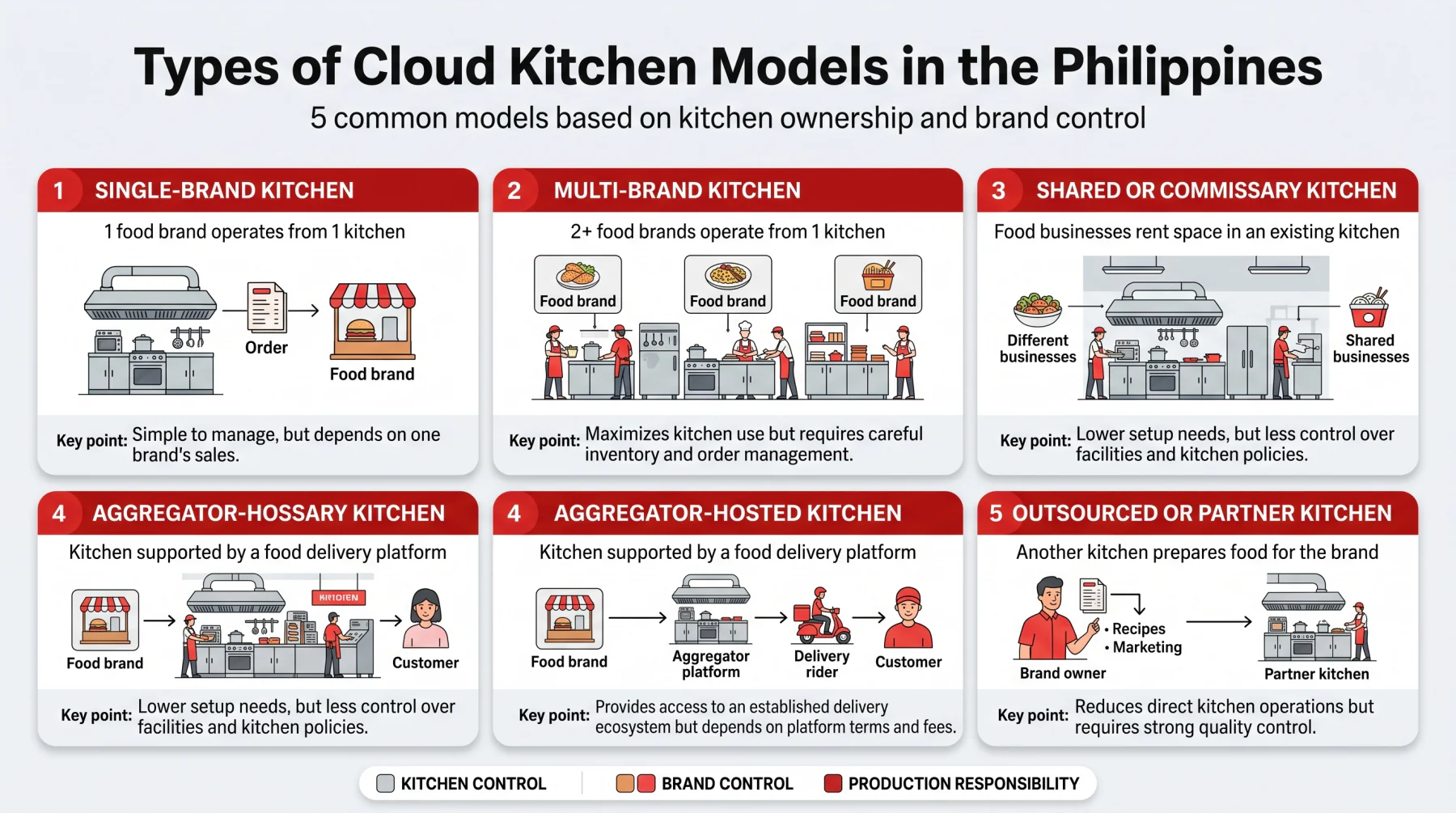
There are five common cloud kitchen models in the Philippines, and they differ mainly in who owns the space and who controls the brand. Your choice sets your startup budget more than any other decision.
1. Single-brand kitchen
A single-brand kitchen operates one food brand from one kitchen. It is relatively simple to manage because the menu, ingredients, staff, and orders are organized around one brand.
The trade-off is that the kitchen depends on the performance of that single brand. If order volume is low, there are no other brands generating sales from the same space.
2. Multi-brand kitchen
A multi-brand kitchen operates two or more food brands from the same facility. Brands can share equipment, staff, storage, and selected ingredients while maintaining separate menus and identities.
This model can make better use of the kitchen space, but it requires careful inventory tracking, recipe costing, order management, and brand coordination.
3. Shared or commissary kitchen
A shared or commissary kitchen allows food businesses to rent space in an existing commercial kitchen. The facility may already provide equipment, utilities, storage, and other operational infrastructure.
This can reduce the time and resources needed to set up a kitchen, but businesses have less control over factors such as operating hours, available equipment, storage capacity, and kitchen policies.
4. Aggregator-hosted kitchen
An aggregator-hosted kitchen is operated with support from a food delivery platform that may provide kitchen facilities and access to its ordering network. The food business typically contributes the brand, menu, and food preparation.
This model can provide access to an established delivery ecosystem, but operations may depend heavily on the platform's terms, fees, technology, and customer base.
5. Outsourced or partner kitchen
An outsourced or partner kitchen uses another kitchen to prepare food under a separate brand. The brand owner generally manages areas such as recipes, menu development, and marketing, while the partner handles food production.
This reduces the need to operate a kitchen directly, but quality control becomes important because preparation takes place outside the brand owner's facility. Clear recipes, food safety procedures, service standards, and regular quality checks can help maintain consistency.
How Much Does It Cost to Start a Cloud Kitchen in the Philippines?
Starting a cloud kitchen in the Philippines can involve different costs depending on the location and operating model. The main expenses usually include kitchen space, equipment, permits, delivery platforms, and working capital.
- Kitchen rent and shared space fees
A commissary slot is usually billed monthly, often with a deposit and an advance. Rent already covers the shell, basic utilities, and shared facilities. A bare space costs less per square metre but adds fit-out, electrical upgrades, exhaust, grease traps, and plumbing before you can cook anything. - Equipment and initial setup
Budget for cooking equipment, refrigeration, storage racks, preparation tables, and small wares. Refrigeration and exhaust are usually the two largest items. Second-hand equipment lowers the entry cost, but check power draw and parts availability before buying. Downtime on a single chiller can stop a whole service. - Permits, registration, and professional fees
This covers government fees plus any professional help you hire, such as a bookkeeper for BIR registration or an electrical engineer for fire safety compliance. Process these before you commit to a lease term. A space that cannot pass fire or sanitary inspection is not a cheap space. - Delivery app onboarding and commission deposits
Each platform has its own onboarding process, documentary requirements, and commission structure. Some require a deposit or a minimum commitment. Commission is not a startup cost, but it belongs in your pricing from day one. A menu priced for walk-in customers will not survive platform commission. - Working capital for ingredients and staff
You need enough cash to cover ingredients, wages, packaging, and utilities before delivery payouts start arriving. Payout cycles are not immediate. Plan working capital for at least the first few months of operation. This is the line most new owners underestimate. - Total startup cost: two realistic scenarios
A commissary kitchen generally requires less upfront investment because the space is already equipped, while a private kitchen requires more spending on fit-out and equipment. The trade-off is between lower initial costs with a commissary setup and greater control over the kitchen with a private facility.
| Model | Startup cost | Control | Speed to open | Best for |
|---|---|---|---|---|
| Single-brand kitchen | Moderate to high | Full | Slow | Owners committed to one concept |
| Multi-brand kitchen | High | Full | Slow | Operators with menu and costing experience |
| Shared or commissary kitchen | Lowest | Limited | Fastest | First-time owners testing demand |
| Aggregator-hosted kitchen | Low | Limited | Fast | Brands that want order flow on day one |
| Outsourced or partner kitchen | Low | Recipe only | Fast | Brands expanding to a new city |
Permits and Registrations That Need to Operate
A cloud kitchen needs the same core business and food-related registrations as other food businesses in the Philippines, even without a dine-in area. Requirements can vary by city and barangay, so confirm the current requirements with the relevant local government unit (LGU) before signing a lease.
1. DTI or SEC registration
Sole proprietors generally register their business name with the DTI, while partnerships and corporations register with the SEC. The registered business entity can operate multiple delivery brands, so each virtual food brand does not necessarily require a separate business registration.
2. Barangay clearance and Mayor's Permit
A Barangay Clearance is typically obtained before applying for a Mayor's or Business Permit from the city or municipality where the kitchen operates. Since LGUs may classify delivery kitchens differently from traditional restaurants, confirm the applicable business classification and permit requirements with the local government.
3. BIR registration and receipt requirements
The business must register with the BIR revenue district office covering the kitchen's location and comply with applicable requirements for books of accounts and sales invoices or other required registration documents. Sales received through delivery platforms should also be properly recorded and reconciled with platform statements.
4. Sanitary Permit and health certificates for staff
The kitchen generally needs a Sanitary Permit, while food handlers may need health certificates issued under local health requirements. Both the facility permit and employee documentation may require renewal, so businesses should track their expiration and renewal dates.
5. Fire Safety Inspection Certificate
A Fire Safety Inspection Certificate (FSIC) may be required as part of the business permitting process, with the Bureau of Fire Protection assessing applicable fire safety requirements. Cooking equipment, electrical systems, ventilation, and fire protection measures should be considered when evaluating a potential kitchen space.
6. When an FDA License to Operate applies
An FDA License to Operate may apply when a business manufactures, repacks, or distributes certain processed food products rather than simply preparing meals for immediate consumption. Businesses planning to sell products such as packaged sauces or frozen food should confirm the applicable FDA requirements before launching the product line.
| Permit | Issuing office | When to process | Note for cloud kitchens |
|---|---|---|---|
| Business name registration | DTI or SEC | First step | Register the entity, not each delivery brand |
| Barangay Clearance | Barangay hall | Before the Mayor’s Permit | Required even with no walk-in customers |
| Mayor’s or Business Permit | City or municipal hall | Before operating | Ask how the LGU classifies a delivery-only kitchen |
| BIR registration | BIR revenue district office | Before first sale | Platform payouts are recorded revenue |
| Sanitary Permit and health certificates | Local health office | Before operating | Facility and staff are certified separately |
| Fire Safety Inspection Certificate | Bureau of Fire Protection | Before the Mayor’s Permit | Inspect the space before signing the lease |
How a Cloud Kitchen Actually Runs Day to Day
A cloud kitchen runs on a loop that never touches a customer: an order lands from an app, the kitchen cooks it, a rider collects it, and the platform closes the ticket. Every delay shows up in your ratings.
1. From app order to kitchen ticket
Orders come through food delivery apps, websites, social media, or an order management system and are sent to the kitchen for preparation. Staff check the order details, including menu items, quantities, and special instructions, before starting production.
2. Preparing and packing for delivery, not dine-in
Food is prepared and packed based on how it will hold up during delivery rather than immediate dine-in service. Packaging should help maintain the food's temperature, texture, and presentation until it reaches the customer.
3. Handing off to riders and tracking order status
Once an order is ready, staff place it in a designated pickup area and confirm the order before handing it to the delivery rider. Keeping bags clearly labeled and updating the order status accurately can help reduce pickup delays and order mix-ups.
4. Handling refunds, cancellations, and late orders
Cloud kitchens also need a process for handling canceled orders, refunds, missing items, and delivery delays. Recording these issues helps identify recurring problems and track their impact on sales and daily operations.
Running Several Brands from One Kitchen
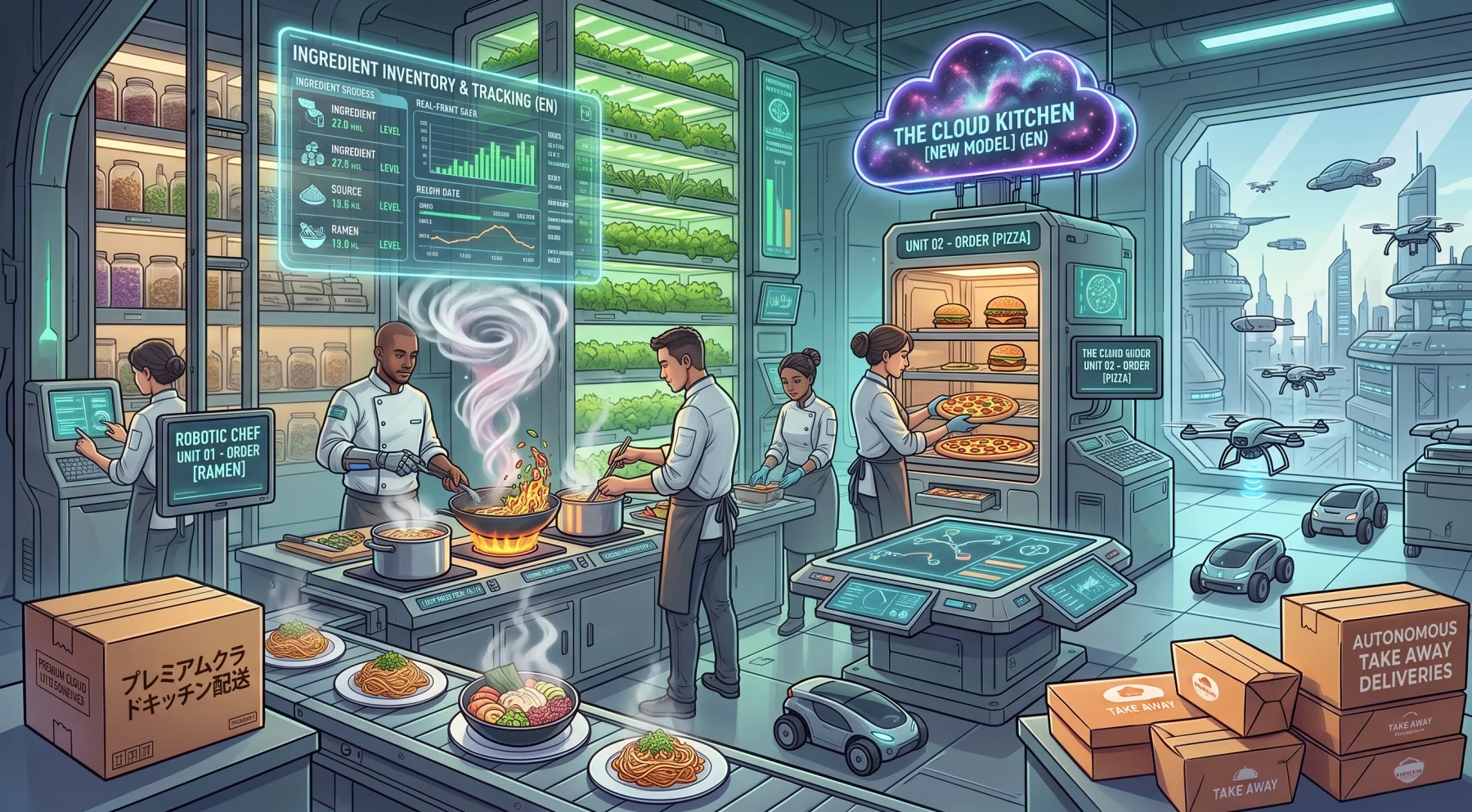
A single cloud kitchen can operate multiple virtual brands from the same facility, allowing businesses to use shared space, equipment, staff, and ingredients. However, each brand should still be tracked separately to understand its actual sales, costs, and profitability.
- Why one kitchen can host several virtual brands
The same kitchen can prepare different menus for multiple virtual brands using shared equipment and staff. Each brand can maintain its own name, menu, packaging, and delivery listing without requiring a separate dine-in location. - Tracking shared ingredients across brands
Ingredients used by several brands should be allocated based on actual usage in the restaurant inventory rather than assigned to only one brand. Accurate tracking helps prevent food costs from being overstated for one brand and understated for another. - Reading profit per brand, not just per kitchen
A kitchen can generate an overall profit while one of its brands is losing money. Tracking sales, food costs, labor, and shared operating expenses by brand provides a clearer view of which concepts are contributing to the business. - Why commission rates make identical menus earn differently
The same menu item can generate different margins across delivery platforms because commission rates, promotions, and other fees may vary. Reviewing sales and platform costs by channel helps businesses understand the actual margin earned from each order.
The Systems You Need to Run It
A cloud kitchen needs connected systems to manage orders, kitchen operations, payments, and financial records. Keeping these processes connected helps reduce manual work and gives the business a clearer view of daily operations.
- Receiving orders from several delivery apps
Orders from multiple delivery platforms can be difficult to manage when each app uses a separate device. An integrated ordering system can bring orders into one screen, reducing manual data entry and the risk of missed or incorrect orders. - Kitchen display and order routing
A kitchen display system shows incoming orders, preparation details, and their status in one place. For kitchens running multiple brands, order routing can also direct items to the appropriate preparation station, helping staff manage orders more efficiently. - Accepting GCash, Maya, and cash on delivery
Cloud kitchens may receive payments through delivery platforms as well as direct orders using options such as GCash, Maya, or cash on delivery. Tracking each payment channel and reconciling settlements regularly helps ensure that sales records match the payments received. - Keeping sales, inventory, and books in one place
Sales data, inventory records, and financial information can become difficult to manage when they are stored across different apps and spreadsheets. Connecting these records in one system gives the business a clearer view of sales, stock levels, costs, and financial performance.
Mistakes That Close Cloud Kitchens in Year One
Cloud kitchens rarely close because the food was bad. They close because the maths was wrong, and nobody noticed until the working capital ran out.
1. Relying on a single delivery app
One platform means one algorithm deciding whether customers see you. A ranking change, a promo you cannot afford, or an account suspension stops your revenue entirely. Launch on a second channel early, even at low volume. It is insurance, not expansion.
2. Pricing menus without absorbing commission
A menu priced for a dine-in customer loses money the moment commission and packaging are deducted. To calculate food cost accurately, work backwards from the net amount received per order rather than the menu price shown to customers. The order may still appear profitable on the app dashboard, but the actual margin can be much lower.
3. Tracking food cost for the kitchen instead of per brand
A single food cost percentage across three brands tells you almost nothing. It averages a strong brand and a weak one into a number that looks acceptable. Calculate food cost per brand and per item. The answer often contradicts what the sales volume suggests.
4. Opening first and sorting permits later
Operating while permits are pending risks closure orders, penalties, and delisting from platforms that require documentation. The permit list in this article is not a post-launch checklist. Process it before the first order, as covered earlier under permits and registrations.
Conclusion
Opening a cloud kitchen is a step-by-step process, not a quick leap. You need to choose the right model, calculate your operating costs, secure the required permits, and set up the systems that will keep orders, inventory, and delivery operations under control.
The best model depends on your budget, location, and how much control you want over daily operations. A shared commissary kitchen can help you start faster with lower upfront costs, while a dedicated kitchen gives you more control over branding, workflow, and long-term margins.
If you want to manage cloud kitchen operations more efficiently, try free demo and see how its F&B and inventory software can help you track ingredients, monitor food costs, manage orders, and keep every kitchen process organized from one platform.
FAQ about Cloud Kitchen
It depends mainly on whether you rent a slot in a fitted commissary or build a kitchen from a bare space. A commissary slot front-loads rent and working capital, while an own kitchen front-loads fit-out and equipment. Get quotes locally, because pricing varies widely between cities.
In practice there is no difference in the Philippine market. Cloud kitchen, ghost kitchen, and dark kitchen all describe a facility that prepares food for delivery only, with no dining area. Some global guides separate the terms, but local operators and landlords use them interchangeably.
Yes, and that is one of the model's main advantages. One registered business can operate several virtual brands from the same kitchen, sharing equipment and staff. The complication is accounting: shared ingredients must be allocated by usage so each brand shows a true food cost.
It can be, but only if commission is priced into the menu from the start. Margins differ between platforms because commission rates differ, so the same dish can be profitable on one app and loss-making on another. Work backwards from the net payout per order.
A slot in a commissary that already holds its permits is the fastest route, since the facility-level requirements are done. Building from a bare space takes longer because fit-out, fire safety inspection, and sanitary clearance all precede the Mayor's Permit. Timelines vary by local government unit.
Paragraf baru...
Paragraf baru...
Paragraf baru...