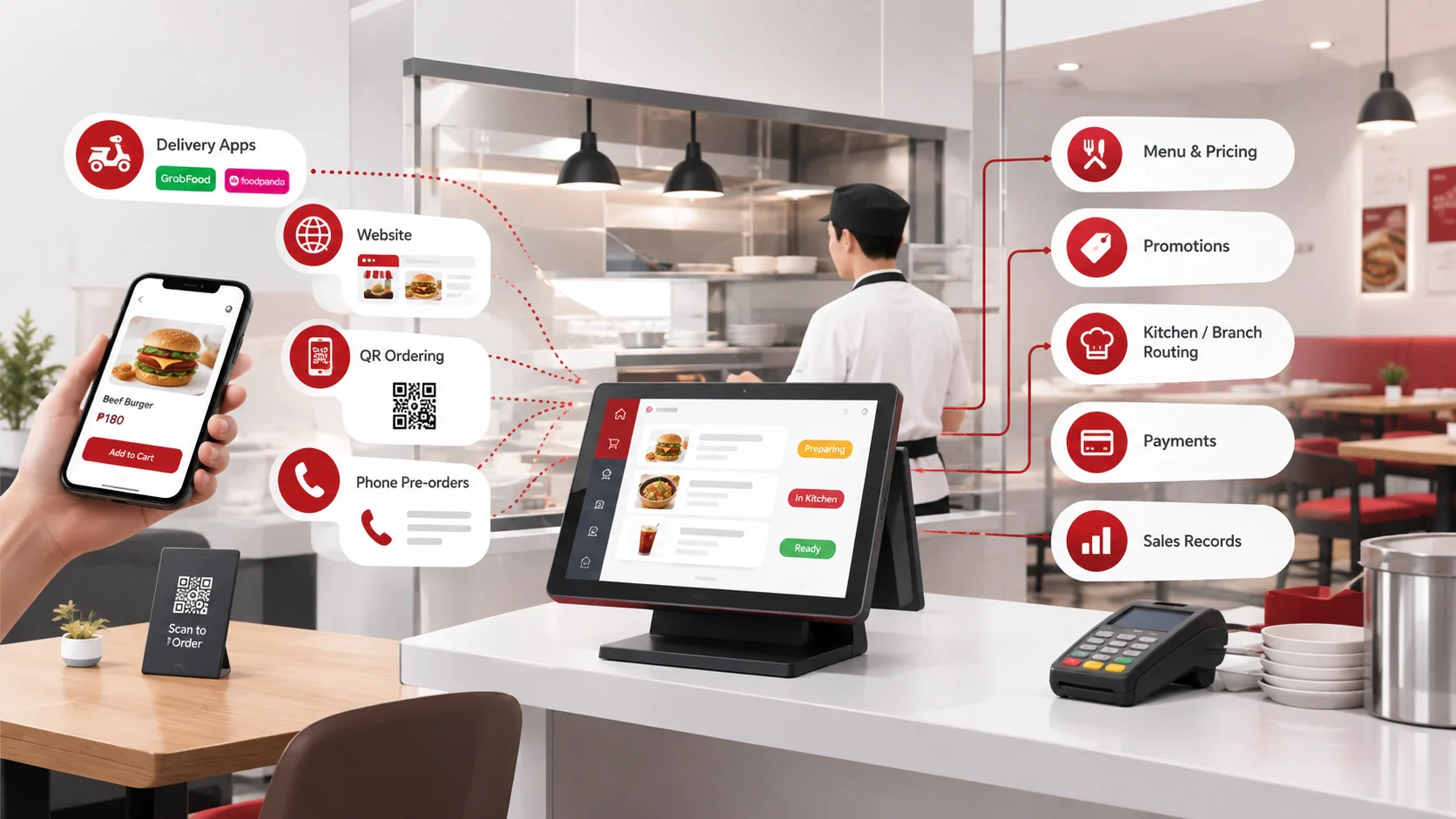









A busy restaurant can sell plenty of meals and still lose margin on every plate. Cooks may use different ingredient quantities, trim more than expected, or serve larger portions. If supplier prices change without a recipe update, yesterday’s profitable menu price may no longer cover today’s costs.
The problem matters at scale. The Philippine Statistics Authority’s 2024 survey reported ₱568.93 billion in total expenses for formal-sector restaurants and mobile food services. That industry figure does not measure individual kitchens, but it shows why cost control matters. Recipe costing helps operators track ingredients, yields, and portions before setting prices.
This guide shows how to calculate ingredient, yield, and portion costs using a Philippine restaurant example. It also explains standardized recipe cards and gives you a template for Excel or Google Sheets. Use the steps to compare actual spending with your menu prices and spot margin gaps.
Key Takeaways
Recipe costing calculates the ingredient cost of a dish or batch using purchase prices, usable yield, and portion size.
Recipe costing helps restaurants set sustainable prices, control portions, reduce waste, and review menu profitability.
The recipe costing formula adds ingredient costs, then divides the batch total by the number of sellable portions.
Restaurant software can bring recipe, inventory, purchasing, and sales records together to make cost reviews easier.
What Is Recipe Costing?
Recipe costing calculates the ingredient cost for a dish or batch. For example, a restaurant may purchase chicken by the kilogram but use only part of the purchased weight after trimming and preparation. It tracks usable yield, portion size, and wastage.
For takeaway meals, include packaging in the cost per portion. Unlike recipe costing, menu pricing also considers labor, rent, utilities, taxes, and target margin. The restaurant and retail POS differences explain how each system handles orders and sales.
Why Recipe Costing Matters for Philippine Restaurants
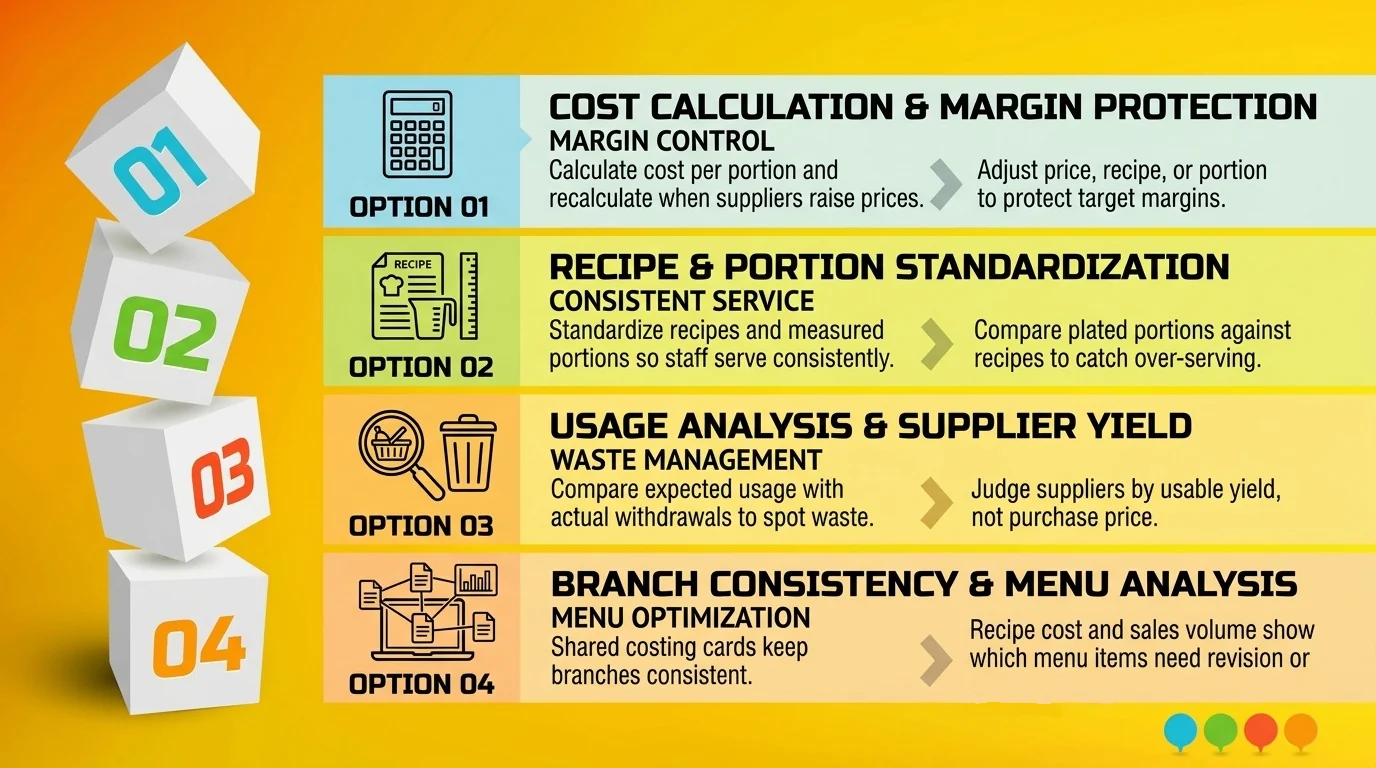
Recipe costing helps Philippine restaurants protect margins when ingredient prices, portion sizes, and waste change. A recipe costing template records expected quantities and costs, giving kitchen, purchasing, and finance teams one reference. Use it to test menu prices, investigate losses, and keep dishes consistent across branches.
1. Improve menu pricing
Start with the cost per portion before setting a selling price. When suppliers raise ingredient prices, recalculate the dish and compare its contribution with your target margin. Adjust the price, recipe, or portion before the gap grows.
2. Standardize portions
A standard recipe states each ingredient and its measured quantity for one batch or portion. Kitchen staff can follow the same instructions on every shift. Compare plated portions with the recipe to catch over-serving and protect consistency.
3. Reduce food waste
Compare expected usage with actual withdrawals to spot trimming loss, spoilage, or storage problems. These food and beverage production tips can improve handling. An inventory aging report also flags ingredients nearing their usable limit.
4. Compare supplier prices
Update ingredient prices in your costing card whenever suppliers change their quotes. Compare offers by usable yield, not just purchase price per kilogram. This shows whether a cheaper ingredient actually lowers the cost of each portion.
5. Support branch consistency
A shared costing card gives every branch the same ingredients, portions, and preparation method. Managers can compare actual costs across locations and investigate differences. Record approved changes centrally so one branch does not use an outdated recipe.
6. Review menu profitability
Combine recipe cost, selling price, and sales volume to assess each dish. One of the POS benefits for a restaurant is its ability to provide sales data. Include operating expenses before revising, promoting, or removing a menu item.
Recipe Costing Formula
Use the recipe costing formula to turn purchase prices and kitchen quantities into a cost per serving. Start with each ingredient, then adjust for usable yield and divide by portions produced. The best restaurant POS system can record sales and selling prices, helping you compare calculated costs with menu performance.
- The basic recipe costing formula is:
- To calculate the cost of one serving:
- To calculate the cost of an ingredient used in a recipe:
- For ingredients affected by trimming or preparation loss:
- To calculate food cost percentage:
- For example, if a dish costs ₱60 to produce and sells for ₱200:
A 30% food cost percentage means ingredient costs equal 30% of the selling price. It does not show net profit. Labor, rent, utilities, taxes, delivery fees, and other expenses also reduce earnings.
Recipe Costing Example for a Philippine Restaurant
Use this recipe costing example to connect ingredient prices, batch yield, and portion cost in a Philippine restaurant. Apply the recipe costing formula to test each result, then use these tips for optimizing food and beverage production to improve consistency, reduce waste, and protect menu margins.
The following fictional Chicken Adobo Rice Bowl yields 10 portions. Replace these illustrative figures with current supplier prices, measured kitchen quantities, and actual waste records before using the results to make pricing or purchasing decisions.
| Ingredient | Purchase price | Quantity used | Cost used |
|---|---|---|---|
| Chicken thigh | ₱220 per kg | 2 kg | ₱440.00 |
| Soy sauce | ₱95 per litre | 250 ml | ₱23.75 |
| Vinegar | ₱80 per litre | 150 ml | ₱12.00 |
| Garlic | ₱180 per kg | 80 g | ₱14.40 |
| Onion | ₱160 per kg | 150 g | ₱24.00 |
| Rice | ₱300 per 5 kg | 1.5 kg | ₱90.00 |
| Cooking oil | ₱100 per litre | 100 ml | ₱10.00 |
| Total batch cost | ₱614.15 |
The cost per portion is:
If the restaurant sells the dish for ₱200, the illustrative food cost percentage is:
This calculation does not mean that 30.71% is suitable for every restaurant. The restaurant must also evaluate labour, rent, utilities, delivery commissions, packaging, taxes, and other operating costs.
The team should also check whether the 10-portion yield is realistic. If the kitchen produces only 9 sellable portions, the actual portion cost becomes higher:
How to Calculate Recipe Costing Step by Step
Accurate recipe costing starts with current purchase prices, measured quantities, and dependable stock records. Apply the recipe costing formula in a recipe costing template, then verify each result against kitchen output. These food distribution software options in the Philippines can help keep purchasing and stock records aligned.
Calculation steps:
- List every ingredient: Include sauces, seasonings, oil, garnishes, condiments, and takeaway packaging when relevant.
- Record current prices: Use supplier invoices or approved price lists, and note each price date.
- Standardize units: Convert purchase and recipe quantities into matching units before calculating costs.
- Measure usable yield: Weigh ingredients after trimming, peeling, deboning, cooking, or other preparation.
- Calculate ingredient costs: Divide purchase cost by usable quantity, then multiply by recipe quantity.
- Calculate batch cost: Add every ingredient cost and any applicable packaging cost.
- Calculate portion cost: Divide the batch cost by the actual number of sellable portions.
- Check the selling price: Divide the portion cost by the selling price, then multiply by 100.
- Review the calculation: Ask kitchen and finance teams to confirm prices, quantities, yields, and portions.
- Approve the recipe card: Record its effective date, approver, and version before staff uses it.
Keep recipe costs aligned with sales and ingredient usage as prices change. Explore how HashMicro’s restaurant software supports food cost tracking and stock control.

Recipe Costing vs Food Cost Percentage
Recipe costing calculates a dish’s ingredient cost, while food cost percentage compares it with the selling price. Neither figure alone shows profitability because labor, rent, utilities, delivery fees, packaging, and sales volume also matter. Explore inventory forecasting software options in the Philippines to plan ingredient purchasing.
| Term | Meaning |
|---|---|
| Recipe costing | Calculates the ingredient cost of a dish or batch |
| Cost per portion | Calculates the cost of one standard serving |
| Food cost percentage | Compares portion cost with the selling price |
| Menu engineering | Evaluates dishes using cost, contribution, sales volume, and popularity |
How Restaurant Software Supports Recipe Costing
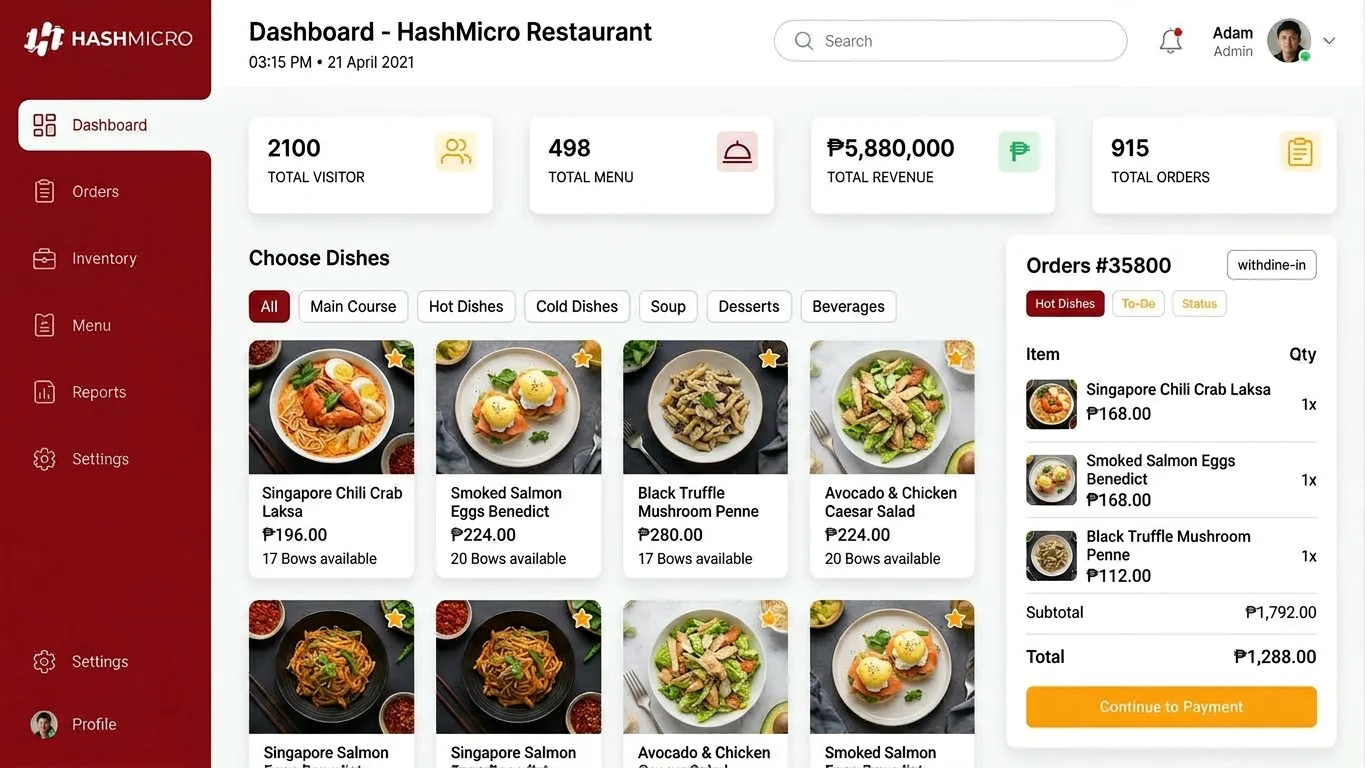
As menus, suppliers, branches, and sales grow, manual spreadsheets make recipe costing harder to maintain. Restaurant software can connect the quantities behind a recipe costing formula with current ingredient prices, inventory movements, and sales. Teams can then spot changes that call for a recipe or price review.
Restaurant or accounting software may help teams:
- Store standardized recipes: Save approved ingredient quantities. Give cooks consistent portions across shifts.
- Update ingredient records: Record units and supplier prices. Revise costs when invoices change.
- Connect recipes with inventory: Record ingredients used for each dish. Check the resulting stock balance.
- Compare expected and actual usage: Check recipe quantities against stock withdrawals. Investigate significant gaps.
- Monitor food cost variance: Track changes in cost per portion. Flag dishes for review.
- Review menu performance: Compare sales and contribution by dish. Assess promotions and menu changes.
Before publishing specific feature claims, verify them against approved documentation for the Philippine solution. Restaurants evaluating connections across recipes, inventory, purchasing, POS, and reporting can explore HashMicro Restaurant Software Philippines.
Conclusion
Recipe costing calculates the ingredient cost of a dish or batch using purchase prices, usable yield, and portion size. For Philippine restaurants, it supports menu pricing, portion control, waste reduction, supplier comparisons, and branch reviews. It also helps teams identify dishes whose costs are rising.
When ingredient prices and recipe data sit in separate files, teams may price dishes using outdated costs. Regular costing updates bring those figures together, reveal portion or waste problems, and help prevent avoidable increases in expenses.
Restaurant software can connect recipe quantities, ingredient usage, inventory, and sales data. This helps teams review costs when prices or portions change. To see HashMicro’s restaurant tools in action, try the free demo provided by HashMicro's team of experts.
FAQ About Recipe Costing
Create columns for ingredient, purchase price, purchase unit, quantity used, usable yield, and cost used. Convert quantities into matching units, then multiply the cost per usable unit by the quantity used. Sum the costs for the batch and divide by sellable portions.
No universal food cost percentage suits every restaurant. Set a target using your menu prices, ingredient costs, labor, overhead, delivery fees, and desired margin. Compare it with actual results by dish and sales channel. Recheck the target when supplier prices or operating costs change.
Basic recipe costing counts ingredients and, when relevant, takeaway packaging. It usually excludes labor because staff also handle preparation, service, and cleanup across multiple dishes. For a fuller dish cost, allocate direct preparation labor separately and document your method so comparisons remain consistent.
Measure how much of each purchased ingredient remains usable after trimming, peeling, or cooking. Divide its purchase cost by the usable quantity to find the cost per usable unit. Use that rate in the recipe, then divide the batch cost by sellable portions.
Update recipe cards whenever supplier prices, ingredients, quantities, yields, portion sizes, or preparation methods change. Review popular dishes more often because small cost differences can add up. Record each revision date and approver, then check that every branch uses the current version.