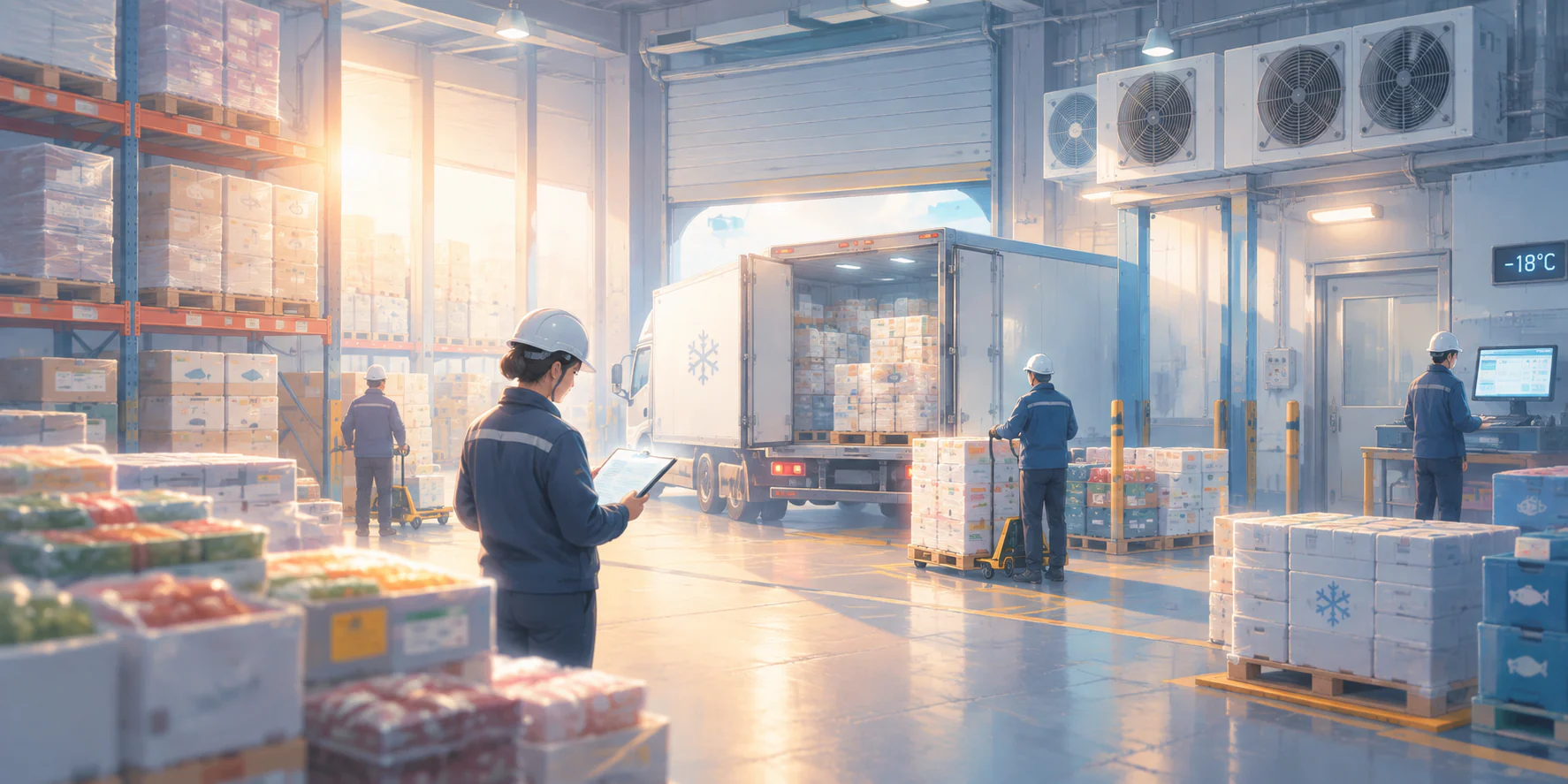






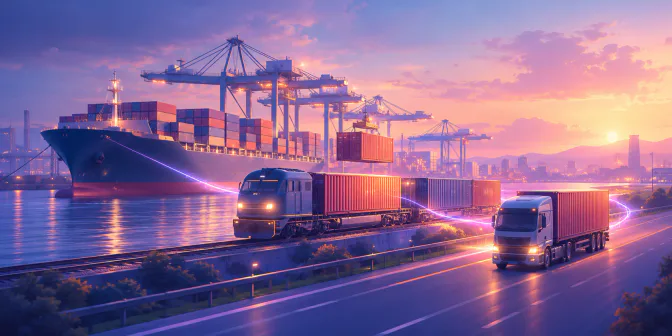
A container leaves a Manila warehouse on schedule, then loses three days waiting for vessel space in Batangas. Cargo gets opened and repacked at a transfer point and arrives with crushed outer cases. These are the everyday costs of moving goods across the country without a coordinated plan.
Intermodal transportation is the practical answer. It links two or more transport modes into one continuous journey while the cargo stays inside the same container. That matters in the Philippines, a country of more than 7,600 islands where no single mode can serve a national distribution network on its own. The World Bank tracks this kind of national shipping and customs performance in its Logistics Performance Index, which consistently shows infrastructure and timeliness as the pressure points for archipelagic economies.
This guide covers what intermodal transportation is, the modes involved, a worked Philippine example, how intermodal differs from multimodal shipping, and what to plan for when you run cross-island freight.
Key Takeaways
Intermodal transportation moves freight through two or more modes while the cargo stays inside one loading unit, so it is never unpacked at a transfer point.
Road and RoRo form the backbone of Philippine intermodal chains, with rail and air freight covering narrower corridors and cargo types.
Intermodal splits liability and documentation per leg, while multimodal puts one carrier in charge of the whole journey.
A Transportation Management System gives one view across every mode, carrier, and document once shipment volume grows.
What Is Intermodal Transportation?
Intermodal transportation is the movement of freight using two or more modes of transport, such as truck, ship, rail, or air, within a single journey, where the cargo remains inside the same loading unit (a standardized container or pallet) across every mode.
The defining feature is not that several vehicles are involved. It is that the cargo itself is never unloaded and repacked between modes. The container holding your goods transfers from one carrier to the next intact. This requires effective freight management to coordinate carriers, schedules, and transfers across the shipment journey.
How Intermodal Transportation Works
A typical intermodal shipment in the Philippines follows this sequence:
- The shipper loads cargo into a standardized container or loading unit.
- Road transport moves the container to an origin terminal or RoRo port.
- The truck or container transfers onto the next mode, for example a RoRo vessel.
- The in-transit leg carries the cargo by sea, rail, or air.
- The cargo arrives at the destination port or hub.
- Road transport completes the last-mile delivery to the consignee.
Each leg may run under a different carrier and a separate bill of lading, but the cargo never leaves its container.
Modes of Transportation Used In Intermodal Shipping (infographic)
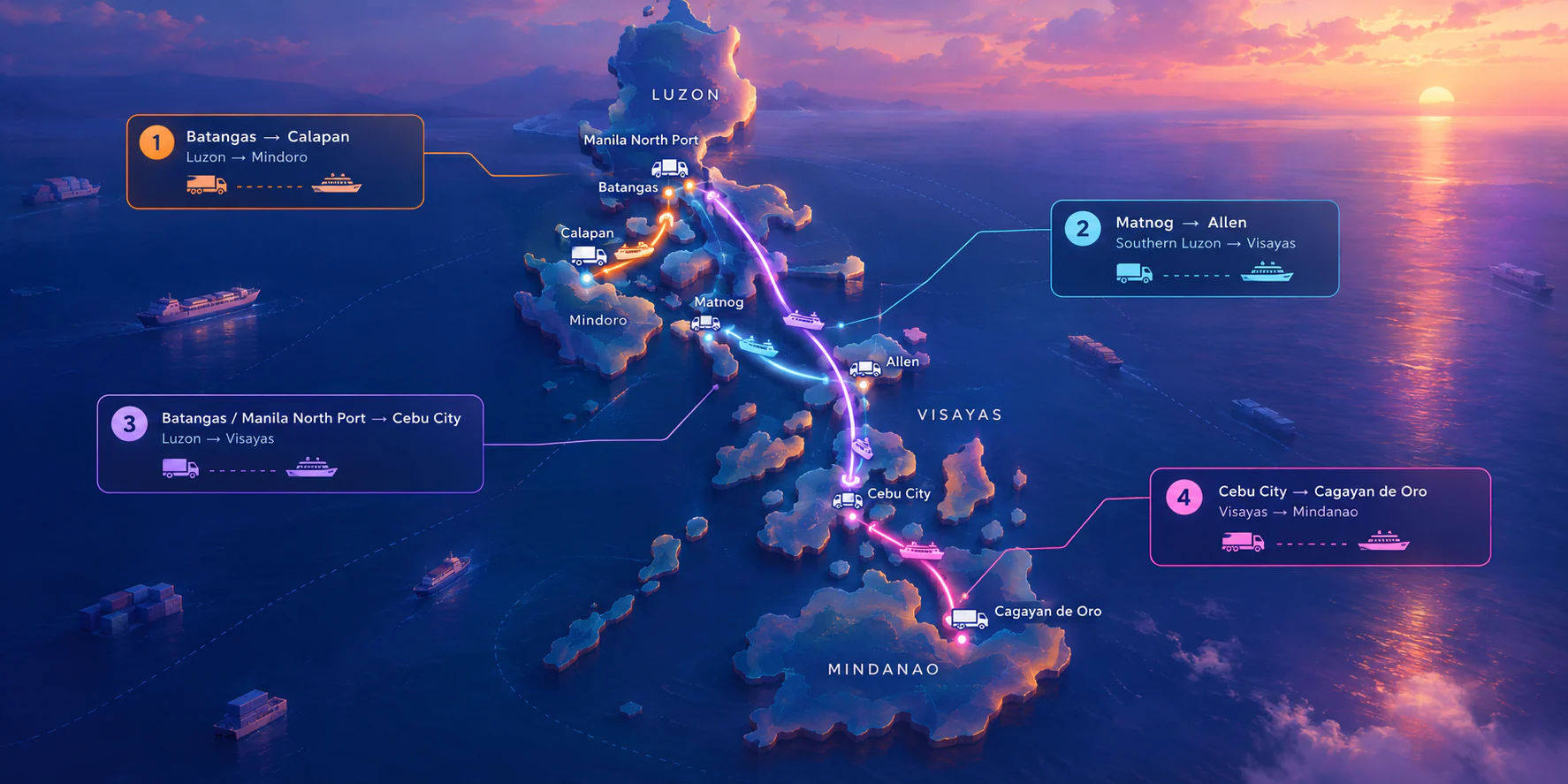
Knowing which modes are available, and when each one makes sense, is the foundation of intermodal planning. In the Philippines the mode mix is shaped directly by island geography.
1. Road Transport
Road transport is the universal connector in any intermodal chain. Trucks handle the first and last miles of inbound and outbound logistics, collecting cargo from the warehouse and delivering it to the final destination after the other modes have finished.
Road transport also feeds the RoRo terminals. Without reliable truck access to ports, inter-island intermodal logistics would not function at all.
2. Maritime Transport and RoRo (Roll-on/Roll-off)
For businesses shipping between islands, maritime transport, specifically Roll-on/Roll-off (RoRo), is the backbone of Philippine intermodal logistics.
RoRo vessels are built so that trucks and wheeled vehicles drive directly onto the ship and drive off at the destination port, with no unloading or repacking. That makes RoRo a natural intermodal move: the same truck that leaves a warehouse in Manila can roll onto a vessel in Batangas and roll off in Calapan with its cargo completely untouched.
| Origin | Destination | Corridor |
|---|---|---|
| Batangas | Calapan, Oriental Mindoro | Luzon to Mindoro |
| Matnog, Sorsogon | Allen, Northern Samar | Southern Luzon to Visayas |
| Batangas or Manila North Port | Cebu City | Luzon to Visayas |
| Cebu City | Cagayan de Oro | Visayas to Mindanao |
The national government has supported the integration of these routes with the road network through an integrated RoRo highway programme connecting Luzon, Visayas, and Mindanao, designed to create continuous road-and-sea freight corridors.
3. Rail Transport
Rail plays a limited but relevant role. Rail transport in the Philippines is currently undergoing infrastructure development, with applicability in select Metro Manila and Luzon freight corridors where track and capacity are available.
Where it is usable, rail fits the intermodal model cleanly, because containers transfer between truck chassis and flatcar without the cargo being opened. Treat rail as a corridor-specific option to confirm with the operator, not as a national default.
4. Air Freight
Air freight is the narrowest mode in Philippine intermodal logistics, and it is almost never a standalone one. An air shipment is intermodal by necessity: a truck collects the cargo, an aircraft covers the long leg, and another truck completes the last mile, which means at least two modes on every air booking.
One technical difference matters for planning. Air freight does not use ISO sea containers. Cargo travels in unit load devices (ULDs) or on aircraft pallets, so the loading unit changes at the airport rather than staying constant across the whole chain. In practice that makes air a truck-plus-air intermodal leg rather than a fully container-sealed move, and it is why air is chosen for value and speed instead of cargo integrity.
Air freight is the right choice for:
- Perishable goods such as seafood, fresh produce, and agricultural products, where transit time determines whether the cargo still has value on arrival.
- High-value or time-sensitive cargo such as electronics, medical supplies, and spare parts.
- Remote island destinations without reliable or frequent sea connections.
Intermodal Transportation Example in the Philippines
A worked intermodal transportation example makes the structure concrete. Take a 40-foot container of packaged food moving from a plant in Bulacan to a distributor in Davao:
- Road, Bulacan to Manila North Port. The container is sealed at the plant and trucked to the port. One carrier, one bill of lading.
- Sea, Manila to Cebu. The container is loaded onto a vessel. A second carrier, a second bill of lading. The seal is untouched.
- Transship, Cebu to Cagayan de Oro. The same container transfers to a Mindanao-bound vessel without being opened.
- Road, Cagayan de Oro to Davao. A local trucker completes the last mile delivery and the seal is broken only at the consignee's dock.
Four legs, three carriers, one container. The cargo is handled as a unit at every transfer, not as individual cases. Note where the risk sits: legs 2 and 3 are the only ones tied to published vessel schedules, so a missed sailing in Cebu affects the delivery date far more than a delayed truck in Bulacan. Treat any transit-day figure your carrier quotes for those legs as a planning estimate and confirm it per sailing.
Intermodal vs. Multimodal Transportation
Intermodal and multimodal transportation are often used interchangeably, but they are not the same, and the difference has real consequences for liability, documentation, and operational control.
| Differences | Intermodal | Multimodal |
|---|---|---|
| Liability | Per carrier, per leg | One carrier covers all legs |
| Documentation | Separate bill of lading per leg | A single bill of lading |
| Shipper control | Higher, routing adjustable per leg | Lower |
| Flexibility | Greater, carriers can be switched | Less flexible |
| Best suited for | Cross-island Philippine routes | Single-vendor simplicity |
Many Philippine businesses run a hybrid model, for example intermodal structures for long-haul inter-island movements, and multimodal contracts for predictable, recurring local distribution.
Benefits of Intermodal Transportation
1. Cost efficiency
Combining modes lets you assign the cheapest suitable option to each leg. Sea freight carries a significantly lower cost per ton-kilometre than long-haul road freight, which makes RoRo the natural choice for inter-island distance while trucks cover the shorter first and last miles.
2. Reduced cargo damage
Because the cargo stays in one container for the whole journey, it goes through fewer physical handovers. Fewer touchpoints mean fewer chances for damage, loss, or mishandling.
3. Scalability
The same intermodal structure works for one container or a hundred. It absorbs seasonal volume spikes without a logistics overhaul. For businesses building out their wider distribution model, intermodal transportation sits naturally inside a broader supply chain management strategy that connects procurement, warehousing, and delivery into one coordinated flow.
4. Lower carbon footprint.
Sea and rail transport generally produce lower emissions per ton-kilometre than road-only logistics. UNCTAD's Review of Maritime Transport tracks this shift in global shipping, and for businesses with sustainability commitments, moving a leg from road to sea or rail lowers the footprint of every shipment.
Common Challenges to Prepare For
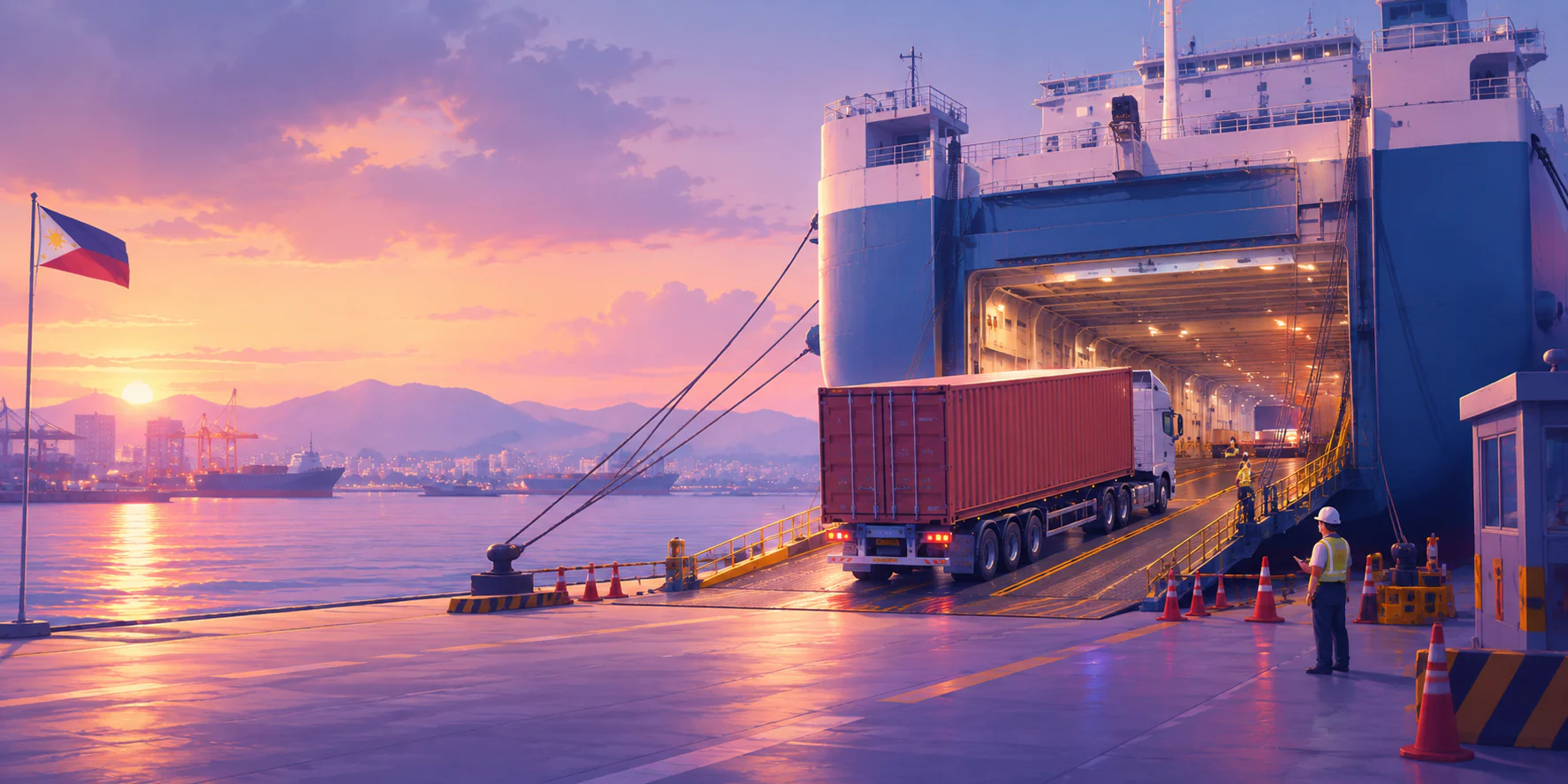
Transit time variability. Multi-leg journeys carry more variables. Weather, port congestion, vessel schedules, and road conditions all move the delivery date. Typhoon season is the sharpest case, since sea routes can be suspended with little notice.
Documentation management. Every carrier leg generates its own paperwork. Reconciling multiple bills of lading, cargo manifests, and declarations across carriers is manageable at ten shipments a month and unmanageable at two hundred, which is where teams usually move this work into logistics management software.
Archipelago scheduling. Intermodal logistics in an island nation depends on vessel schedules and port capacity, which are far less flexible than land routing. A delayed departure at one RoRo terminal can cascade through the entire delivery timeline.
How TMS Software Helps Manage Intermodal Freight
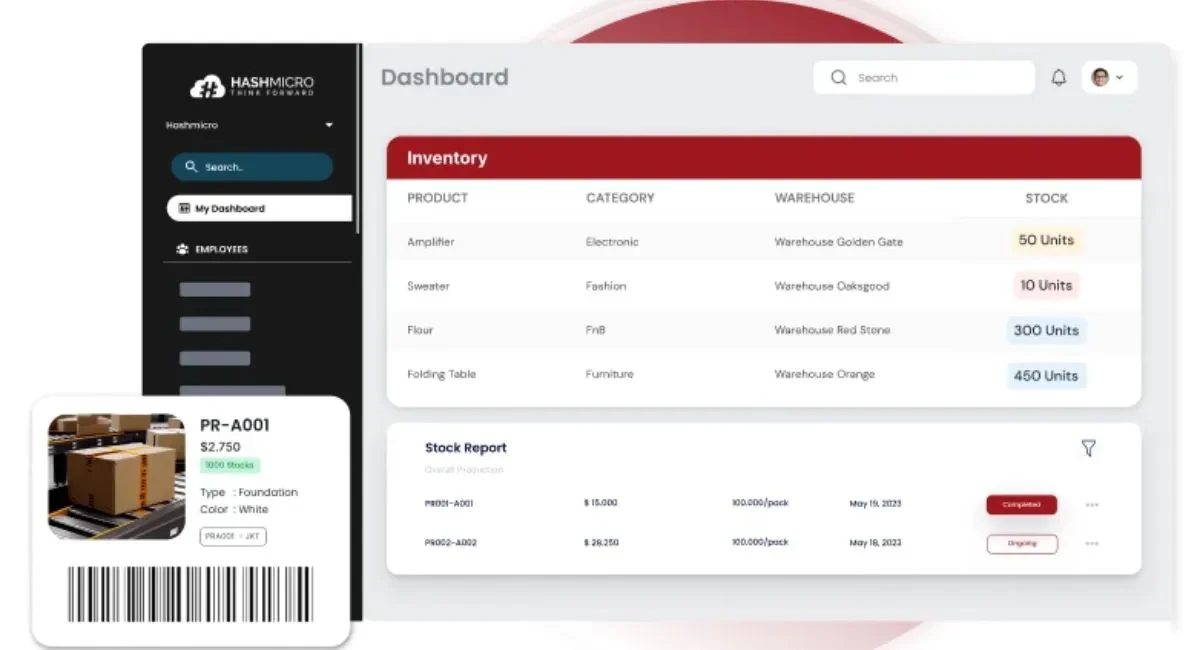
Managing intermodal freight by hand, tracking cargo across several carriers, watching each transit leg, and consolidating documents from every handover, gets more error-prone with every shipment you add.
A Transportation Management System (TMS) gives logistics teams one platform to monitor shipments across all modes in real time. It can track each leg, automate documentation per carrier, consolidate freight costs across modes, and trigger alerts when cargo hits a milestone.
For businesses operating across multiple islands, that visibility matters most during the RoRo and inter-island segments, which are the legs most exposed to weather and schedule variability. HashMicro's Transportation Management System provides end-to-end tracking and coordination built for multi-modal freight, so the team stays in control regardless of how many carriers are in the chain.
Conclusion
Intermodal transportation is not only a logistics strategy in the Philippines. It is a geographic requirement. Moving goods from warehouse to customer almost always means combining at least two modes, with the RoRo sea crossing forming the critical inter-island link.
The businesses that handle this well do three things consistently. They match each mode to the segment it actually suits, they plan around the scheduling variables specific to island logistics, and they keep visibility across every carrier handover instead of chasing updates leg by leg.
If your distribution is scaling across multiple islands, HashMicro's Transportation Management System is the coordination layer that makes intermodal freight manageable at volume. Book a free consultation to see how end-to-end multi-modal tracking works on your own routes.
FAQ Around Intermodal Transportation
Intermodal transportation uses a separate carrier contract and bill of lading for each leg, so the shipper can adjust routing at any stage. Multimodal transportation puts the whole journey under one carrier contract and one bill of lading, which trades that flexibility for simpler paperwork and a single point of liability.
With more than 7,600 islands, no single transport mode can cover national distribution. Intermodal transportation, especially road and RoRo combinations, is the practical way to move freight between islands without unpacking and repacking cargo at each transfer point, which protects both the schedule and the cargo.
RoRo, or Roll-on/Roll-off, is a maritime method where trucks drive straight onto a vessel and off again at the destination port. It forms the sea leg in most Philippine intermodal chains, linking Luzon, Visayas, and Mindanao in one continuous journey where the cargo never leaves its transport unit.
Assign the cheapest suitable mode to each leg: sea via RoRo for long inter-island distance, road for first and last miles. Consolidating shipments, planning departures around published vessel schedules, and using a TMS to optimise routing across modes all pull the total landed cost down.
A Transportation Management System is the primary tool. It provides multi-mode shipment tracking, automated carrier documentation, freight cost consolidation across legs, and delivery monitoring, which gives logistics teams end-to-end visibility across every handover in the chain.
What is the difference between intermodal and multimodal transportation?
Intermodal transportation uses a separate carrier contract and bill of lading for each leg, so the shipper can adjust routing at any stage. Multimodal transportation puts the whole journey under one carrier contract and one bill of lading, which trades that flexibility for simpler paperwork and a single point of liability.
Why is intermodal transportation important for businesses in the Philippines?
With more than 7,600 islands, no single transport mode can cover national distribution. Intermodal transportation, especially road and RoRo combinations, is the practical way to move freight between islands without unpacking and repacking cargo at each transfer point, which protects both the schedule and the cargo.
What is RoRo and how does it relate to intermodal shipping?
RoRo, or Roll-on/Roll-off, is a maritime method where trucks drive straight onto a vessel and off again at the destination port. It forms the sea leg in most Philippine intermodal chains, linking Luzon, Visayas, and Mindanao in one continuous journey where the cargo never leaves its transport unit.
How can businesses reduce intermodal freight costs in the Philippines?
Assign the cheapest suitable mode to each leg: sea via RoRo for long inter-island distance, road for first and last miles. Consolidating shipments, planning departures around published vessel schedules, and using a TMS to optimise routing across modes all pull the total landed cost down.
What software helps manage intermodal logistics operations?