







A good supply chain management (SCM) requires careful coordination to ensure smooth operations. When key processes, such as inventory management and order fulfilment, are out of sync, it can lead to delays, increased costs, and customer dissatisfaction.
Problems like overstocking, understocking, and inaccurate stock tracking are just the tip of the iceberg. These inefficiencies can lead to dead stock, delayed deliveries, and lost sales opportunities that can hurt a business’s bottom line.
In the Philippines, a report by the Department of Trade and Industry (DTI) reveals that supply chain inefficiencies contribute to an estimated 15-20% increase in operational costs for local businesses.
If you’re facing these challenges, this article will show you how supply chain management (SCM) systems can help transform your operations. Keep reading to discover how SCM software can be the game-changer your business needs.
Key Takeaways
Effective supply chain management improves operations by streamlining processes, reducing delays, and ensuring timely deliveries, leading to greater customer satisfaction.
Effective supply chain management depends on five key elements: planning, sourcing, manufacturing, delivery, and returns working together to improve efficiency and customer satisfaction.
The energy crisis in the Philippines makes SCM software essential for reducing supply chain disruptions, controlling costs, and improving operational resilience.
HashMicro SCM software unifies supply chain operations, improving visibility, forecasting, efficiency, and order fulfillment.
What is Supply Chain Management? Definition and Meaning of SCM
A practical supply chain management definition is the coordination of a company’s entire production flow, from sourcing raw materials to delivering finished products to customers. It integrates logistics, operations, and processes to improve efficiency and customer satisfaction at every stage.
A well-optimized SCM system involves sourcing materials, manufacturing goods, storing inventory, and efficiently transporting products to their destinations. Modern SCM technology enables real-time monitoring, analysis, and optimization, allowing businesses to respond quickly to market changes and minimize disruptions.
The purpose of SCM extends beyond efficiency; it fosters collaboration between internal teams and external partners to meet demand effectively. By leveraging logistics management software, businesses can streamline workflows, reduce costs, and gain a competitive advantage in today’s dynamic marketplace.
Why Is SCM (Supply Chain Management) Important for Businesses

Understanding the supply chain management meaning helps explain why SCM is vital for minimizing costs, reducing waste, and shortening production cycles. Companies with advanced SCM capabilities often gain a competitive advantage, as studies show they can achieve up to 23% higher profitability than their peers.
Beyond profitability, an effective logistics and supply chain management system helps businesses anticipate disruptions, regulatory challenges, forecast demand, and supplier risks. It also supports timely deliveries and consistent product quality, strengthening customer satisfaction and trust.
Sustainability is another important objective. By improving the supply chain process, optimizing transportation, and adopting energy-efficient practices, businesses can reduce their environmental impact while maintaining operational performance.
Logistics and Supply Chain Management: Differences and How They Work Together
Logistics and supply chain management are closely connected but not identical. Supply chain management sets the strategy for coordinating sourcing, procurement, production, inventory, and distribution across the end-to-end supply chain. Logistics supports this strategy by executing the physical movement, storage, fulfillment, and return of goods.
The Difference Between Logistics and Supply Chain Management
Logistics is a component of SCM rather than a separate end-to-end system. This distinction helps companies assign responsibilities and evaluate performance correctly. For example, SCM may determine which supplier and inventory strategy to use, while logistics operations arrange the transportation and warehousing needed to carry out that decision.
| Comparison Area | Logistics | Supply Chain Management |
|---|---|---|
| Scope | Movement, storage, and delivery of goods | End-to-end coordination from suppliers to customers |
| Primary objective | Deliver the right goods at the right time and cost | Optimize the entire network for cost, resilience, and service |
| Core activities | Transportation, warehousing, fulfillment, and returns | Planning, sourcing, procurement, production, inventory, and distribution |
| Business role | Executes the physical flow of goods | Sets strategy and coordinates all supply chain functions |
How Logistics Supports the Supply Chain Process
Logistics turns broader plans into physical operations. Transportation moves materials from suppliers, warehousing protects and organizes inventory, and fulfillment delivers orders to customers. Companies may manage these activities internally or work with outsourced logistics providers for transportation, warehousing, and order fulfillment. Reverse logistics handles returned or defective goods.
Together, these activities support the supply chain process by connecting demand planning, procurement, manufacturing, and distribution through a controlled flow of inventory.
Example of Logistics and Supply Chain Management Integration
Consider a Philippine retailer preparing for a seasonal demand. Its SCM team forecasts demand, selects suppliers, and determines purchasing quantities. Logistics teams then coordinate inbound transportation, receive products at warehouses, allocate inventory among stores and fulfillment centres, and manage final delivery. Shared inventory and order data help both teams respond when demand or supplier availability changes.
Benefits of Integrating Logistics with Supply Chain Management
Integration gives planners better visibility into orders, stock, shipments, and delivery capacity. Coordinated transportation and inventory decisions can reduce unnecessary storage and freight costs, while accurate allocation helps prevent stockouts. Connecting fulfillment with demand and procurement data also supports faster order processing and more reliable delivery, strengthening customer satisfaction across coordinated supply chain activities.
These operational links become clearer when examining real-world supply chain management examples across retail, manufacturing, and other industries.
How the Supply Chain Process Works: 5 Key Stages
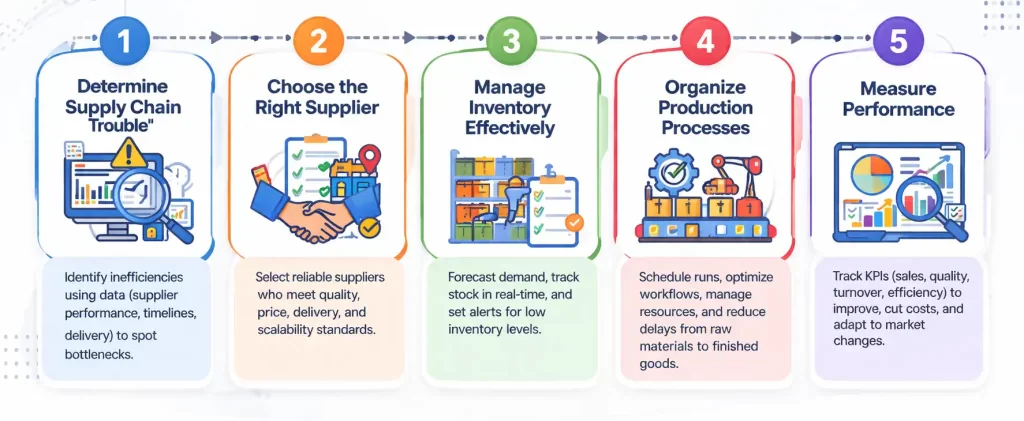
The supply chain management definition becomes clearer when broken into five connected stages, starting with planning, sourcing, manufacturing, delivery, and returns. Together, these stages coordinate the movement of materials, information, and finished products from suppliers to customers.
Let’s explore these stages in more detail:
1. Planning
Planning aligns customer demand with material availability, inventory, production capacity, labor, and equipment. Businesses analyse supplier performance, production timelines, delivery accuracy, and stock levels to identify potential bottlenecks. ERP systems with SCM modules can combine procurement, production, inventory, and demand data, helping teams allocate resources, reduce planning errors, and respond to changing conditions.
2. Sourcing and Procurement
Sourcing identifies suppliers that can meet requirements for quality, price, capacity, lead time, and scalability. Procurement then ensures that materials are ordered in the correct quantities and delivered when needed. Integrated records for purchase dates, delivery schedules, supplier performance, order numbers, and received quantities help businesses prevent shortages, resolve discrepancies, and maintain reliable material availability.
3. Manufacturing
Manufacturing converts raw materials into finished products through coordinated production schedules, labor, machinery, and quality controls. Supply chain software helps teams confirm resource availability, monitor production timing and waste, identify bottlenecks, and adjust output according to demand. Connecting production with procurement and inventory data also helps maintain product quality without creating unnecessary stock.
4. Delivery and Fulfillment
Delivery covers warehousing, inventory allocation, order fulfillment, transportation, and distribution. Accurate inventory records and efficient warehouse workflows help businesses avoid stockouts, overstocking, and processing delays. Barcode or RFID scanning can record incoming goods and inventory movements, while real-time shipment visibility helps teams monitor orders until products reach customers.
5. Returns and Performance Improvement
Returns management handles defective, excess, or outdated products while keeping inventory and financial records accurate. Businesses should also monitor inventory turnover, fulfillment accuracy, production efficiency, supplier performance, delivery reliability, and customer satisfaction. Regular performance reviews allow teams to identify recurring problems and improve the entire supply chain process.
When these stages operate through an integrated SCM system, businesses gain the visibility and control needed to coordinate decisions across departments, manage disruptions, and deliver a more consistent customer experience.

Supply Chain Management Examples Across Key Industries

The meaning of supply chain management extends beyond manufacturing. Retail, food and beverage, FMCG, healthcare, construction, and many other industries depend on coordinated sourcing, inventory, logistics, and delivery activities.
Let’s dive deeper to understand which industries genuinely rely on it:
- Retail: Understanding customer needs is essential in the retail industry. If you’re still facing challenges in this area, an SCM system is the solution. SCM plays a pivotal role in retail success by helping companies accurately forecast customer demand and efficiently fulfil those needs.
- Manufacturing: In manufacturing, the supply chain refers to the series of processes and activities involved in producing, distributing, and delivering manufactured goods, from raw materials suppliers to end consumers. SCM in this industry is key to integrating the entire supply chain, from upstream suppliers to the final user, ensuring a smooth flow of goods.
- Food & beverage (F&B): In the F&B industry, SCM ensures that high-quality ingredients are delivered on time for processing and production. From sourcing raw materials from selected suppliers to delivering the final product to customers or stores worldwide, SCM helps coordinate every step of the process smoothly and efficiently.
- Fast-moving consumer goods (FMCG): The FMCG industry requires an efficient SCM system because these products sell quickly and have short shelf lives. Goods like food, beverages, and personal care items must be moved swiftly to avoid spoilage or unsold stock.
Without a strong SCM system, products may expire or fail to meet demand. SCM ensures a smooth flow of goods from factories to stores, keeping products available for consumers when they need them. It also encourages strong partnerships with suppliers for an efficient exchange of goods.
8 Benefits of Supply Chain Management for Businesses

For businesses asking what is supply chain management in practice, it is a coordinated framework for improving sourcing, production, inventory, logistics, and delivery. Without an effective SCM system, companies may experience delayed shipments, poor inventory control, and rising costs.
Implementing the right SCM solution can address these issues and turn operational complexities into growth opportunities. Below are some key benefits that businesses can gain by adopting an effective SCM system:
1. Cost efficiency
SCM helps reduce operational costs by streamlining logistics and eliminating inefficiencies in the production cycle. By optimizing processes, companies can lower transportation, storage, and production costs, resulting in better profit margins. With reduced waste and improved logistics management, businesses can maintain profitability and stay competitive in the market.
2. Enhanced risk management
SCM systems allow companies to identify and manage potential risks in their supply chain. By recognizing possible disruptions early on, businesses can take proactive measures to prevent delays or stockouts. This approach ensures that operations continue smoothly, maintaining consistent delivery and reducing unexpected challenges.
3. Improved customer satisfaction
An optimized SCM system ensures timely deliveries and consistent product quality, directly impacting customer satisfaction. Customers expect products on time and in perfect condition, and SCM makes this possible. Meeting these expectations strengthens customer loyalty, enhances brand reputation, and fosters long-term relationships.
4. Data-driven decision making
With SCM software, businesses gain real-time visibility into their operations, making it easier to make informed decisions. Companies can track inventory levels, adjust production schedules, and respond quickly to changes in demand. Real-time data helps businesses adapt to market fluctuations and stay agile in an ever-changing environment.
5. Sustainability
Sustainable SCM practices not only optimize logistics but also reduce environmental impact. By minimizing waste, optimizing transportation routes, and using eco-friendly materials, businesses can lower their carbon footprint. This appeals to today’s environmentally-conscious consumers and strengthens a company’s commitment to sustainability.
6. Improved delivery accuracy
SCM systems provide complete visibility across the supply chain, allowing businesses to identify issues early and automate processes to reduce human error. This ensures that products are delivered to customers on time and as promised, enhancing customer trust. Reliable delivery and accurate tracking are crucial for maintaining strong relationships with customers.
7. Better inventory management
SCM helps businesses manage inventory more efficiently by providing accurate tracking and forecasting. This reduces the risk of overstocking or running out of stock, which can disrupt operations and increase costs. By having the right products in the right quantities at the right time, businesses can avoid unnecessary storage costs and improve cash flow.
8. Operational budget savings
By focusing on supply chain optimization, SCM systems help businesses reduce unnecessary expenses. From lowering transportation and storage costs to minimizing waste, companies can save significantly. These savings can then be reinvested to improve operations further, driving growth and increasing profitability.
In conclusion, implementing an effective SCM system is essential for improving operational efficiency, reducing costs, and delivering better customer experiences. With the right tools in place, businesses can stay competitive, manage risks effectively, and drive long-term growth.
Common Approaches to Supply Chain Management

In the world of Supply Chain Management (SCM), no single approach fits all businesses. Companies can adopt different strategies depending on their goals, resources, and challenges. These approaches can help organizations optimize their supply chain management process flow, improve efficiency, and maintain competitive advantage.
Let’s explore some of the most common approaches to SCM and how they contribute to a business’s success:
1. Lean Supply Chain Management
This approach centres on reducing waste and increasing efficiency throughout the supply chain. By minimizing excess inventory, unnecessary transportation, and redundant processes, businesses can achieve a more streamlined, cost-effective operation.
2. Agile Supply Chain Management
Agile SCM focuses on quickly adapting to changes in customer demand and market conditions. This flexible approach involves practices like rapid replenishment, short production cycles, and adaptive supplier contracts to ensure businesses can pivot quickly when needed.
3. Six Sigma
This approach uses data-driven methodologies to eliminate defects and reduce process variability. By applying statistical analysis, companies can pinpoint and eliminate inefficiencies, leading to more consistent product quality and smoother operations.
4. Total Quality Management (TQM)
TQM is a comprehensive approach that aims to improve quality across the entire supply chain. Focusing on continuous improvement and supplier collaboration, TQM ensures that businesses meet customer expectations and enhance overall satisfaction.
5. Resilient Supply Chain Management
A resilient supply chain is designed to withstand disruptions and quickly adapt to unforeseen challenges. Companies employing this approach build risk mitigation strategies, such as diversifying suppliers and creating contingency plans, to ensure business continuity even in turbulent times.
6. Green Supply Chain Management
Green SCM prioritizes sustainability and reducing the environmental impact of supply chain activities. Practices like sustainable procurement, eco-friendly logistics, and participation in the circular economy are key components of this approach.
7. Digital Supply Chain Management
Digital SCM leverages advanced technologies such as artificial intelligence (AI), machine learning (ML), and the Internet of Things (IoT) to enhance operations.
By understanding and applying these approaches, businesses can select the best strategies that align with their specific needs, whether it’s enhancing efficiency, building resilience, or embracing sustainability.
How SCM Helps Philippine Businesses Manage Energy Disruptions
An outlook study by the ICSC on the Philippine energy crisis of 2024–2026 has exposed weaknesses throughout the supply chain process. Rotating brownouts in Luzon, Visayas, and Mindanao have disrupted warehousing operations, cold chain logistics, and manufacturing production lines, driving up operational costs at a time when margins are already razor-thin.
How the Energy Crisis Directly Hits Your Supply Chain
- Cold chain failures: Power interruptions spoil perishable inventory, a critical issue for food, pharma, and agri-businesses across the archipelago.
- Production stoppages: Unplanned downtime on factory floors breaks fulfillment commitments and erodes customer trust.
- Fuel & logistics cost spikes: As Meralco rates climb and backup generators run overtime, last-mile delivery costs surge squeezing already tight distribution budgets.
- Supplier unreliability: SME suppliers that is the backbone of many Philippine supply chains are disproportionately affected, creating upstream disruptions for larger enterprises.
How SCM Software Helps Philippine Businesses Adapt
Modern supply chain management software in the Philippines gives businesses the real-time visibility and automation they need to operate resiliently during the energy emergency:
- Demand-sensing & buffer stock planning: Predictive tools let you pre-build critical inventory before brownout windows hit your suppliers or warehouse.
- Automated re-routing: When a supplier goes offline, SCM systems can trigger alternative sourcing workflows automatically minimizing manual scrambling during outages.
- Energy-aware scheduling: Leading SCM platforms allow production and warehouse operations to be scheduled around off-peak power windows, reducing dependency on costly diesel backup power.
- Real-time cost tracking: With integrated analytics, you can immediately see the financial impact of power disruptions on landed costs and adjust pricing or sourcing decisions accordingly.
How SCM Software Streamlines the Supply Chain Process

Amazon is among the most widely recognized supply chain management examples because its operating model coordinates purchasing, warehousing, inventory, fulfillment, and delivery. It shows how connected data, workflows, and effective sales and planning can support complex daily operations. SCM software applies the same principle by helping companies coordinate decisions without relying on disconnected manual processes.
Let’s take a closer look at how the right SCM processes work and how they can help your business:
1. Unified Data
SCM software creates a shared source of information for demand, suppliers, purchase orders, production, inventory, shipments, and returns. Teams can work from consistent records instead of reconciling separate spreadsheets or departmental systems.
2. Workflow Automation
Automated workflows can route purchase requests, update inventory after receiving, trigger replenishment, and pass approved demand into production planning. This reduces repetitive data entry and helps transactions move between procurement, manufacturing, warehousing, and distribution.
3. Exception Alerts
The system can notify responsible teams when stock approaches a threshold, a supplier delivery is delayed, received quantities differ from purchase orders, or production falls behind schedule. These alerts help users focus on conditions requiring intervention.
4. Real-Time Visibility
Dashboards provide current information about inventory availability, purchase order status, production progress, warehouse movements, and shipments. This visibility helps teams understand how a disruption in one area may affect downstream operations.
5. Forecasting and Planning
Forecasting tools analyse demand and operational data to support purchasing, production, and inventory decisions. Businesses can compare expected requirements with available stock, supplier lead times, and capacity before committing resources.
6. Performance Analytics
SCM analytics help companies evaluate supplier reliability, inventory movement, order accuracy, production performance, delivery status, and returns. Reviewing these results enables managers to identify bottlenecks, investigate recurring issues, and refine future plans.
By combining these capabilities, SCM software connects strategic planning with operational execution while giving each department access to the information needed to act consistently.
Build a More Efficient Supply Chain with HashMicro SCM Software
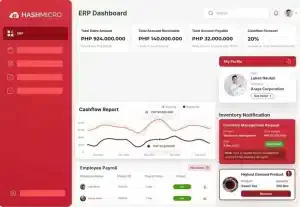
A top provider of supply chain management (SCM) software should be designed to optimize supply chain processes, boost efficiency, and automate the supply chain process. With advanced technology, it helps businesses automate logistics, improve inventory control, and ensure timely order fulfillment. HashMicro SCM is one of the best provider in this field.
Curious how HashMicro’s SCM software can improve your supply chain? Try the free consultation to see how it reduces errors, enhances forecasting, and optimizes your supply chain for better competitiveness.
Why we recommend it: HashMicro’s SCM software provides advanced features like real-time inventory tracking, automated order management, and performance analytics. These tools help businesses eliminate bottlenecks, cut costs, and improve supply chain visibility, resulting in smoother operations and better customer satisfaction.
HashMicro’s SCM software is designed to meet the diverse needs of businesses seeking to enhance their supply chain efficiency and performance. Whether you’re managing procurement, production, or distribution, this solution empowers you to optimize every aspect of your operations.
Here are some key features offered:
- Inventory Management: This feature helps businesses manage their inventory efficiently, ensuring products are available when needed. It reduces the risk of stockouts and overstocking, improving operational efficiency.
- Shipment Tracking: This feature provides real-time updates on shipments, showing the status and location of goods in transit. It helps businesses ensure timely deliveries and keeps customers informed, which boosts satisfaction.
- Return Management: This tool streamlines product returns, improving customer service and keeping inventory records accurate.
- Order Management: This feature automates the entire order process, from creation to fulfillment. It ensures accurate order handling and faster deliveries, increasing customer satisfaction.
- Procurement Management: This tool automates purchasing tasks and helps businesses manage supplier relationships. It ensures timely procurement while keeping costs under control.
- Manufacturing Production Scheduling: This feature helps plan and schedule production activities efficiently, including resource allocation and timing. It allows businesses to streamline production and meet delivery deadlines.
- Stock Optimizer: This feature helps businesses monitor market demand, predict necessary stock levels, and avoid overstocking or stockouts. It ensures optimal inventory levels and improves cash flow.
- Planning & Forecasting Management: This tool allows businesses to forecast future demand accurately and align operations accordingly. It helps companies make smarter decisions and prepare for market changes.
Additionally, HashMicro’s SCM software integrates seamlessly with other modules, ensuring a smooth and unified workflow across departments. Its customizable and user-friendly interface adapts to your business needs, allowing you to focus on growth while keeping your supply chain running efficiently.
Conclusion
Supply chain management is essential for business success, yet managing it without the right system can lead to inefficiencies and costly errors. An inadequate SCM system often results in inventory discrepancies, delayed shipments, and operational disruptions.
Effective logistics and supply chain management helps businesses control inventory, prevent delivery delays, reduce costs, and improve operational visibility. HashMicro’s SCM software connects procurement, inventory, production, finance, and distribution within one integrated system.
Click the image below to get a free consultation to try HashMicro’s SCM software and see for yourself how it can revolutionize your business operations.
FAQ for Supply Chain Management
While AI can enhance various aspects of supply chain management, it is unlikely to fully replace it. Instead, AI will serve as a powerful tool for automating repetitive tasks, predicting demand, and optimizing routes, but human oversight will remain essential for decision-making and managing complex issues.
Supply chain management is a critical function in any organization that produces, distributes, or sells goods. It applies to industries such as manufacturing, retail, logistics, healthcare, and more. Essentially, it ensures the smooth flow of goods and services from suppliers to consumers.
You can study supply chain management at universities, colleges, technical institutes, or accredited online learning platforms. Choose a degree, diploma, or certificate covering logistics and supply chain management, procurement, inventory, operations, analytics, and transportation. Compare the curriculum, industry accreditation, internships, faculty experience, delivery format, and graduate career support before enrolling.
Power shortages and outages can interrupt production, disable warehousing and cold-storage equipment, delay order processing, and force businesses to use backup power or reschedule operations. These disruptions can spread through the supply chain process, affecting supplier deliveries, inventory availability, fulfillment, and customer service. The Philippine DOE has documented grid alerts and generation outages during constrained periods.
There is no single verified nationwide figure applicable to every Philippine business. Costs vary by industry, location, product, and distribution network. Companies should measure transportation, warehousing, inventory carrying, spoilage, stockouts, processing delays, and lost sales when assessing logistics and supply chain management inefficiencies. The DTI provides freight-cost information and advisory support for MSMEs.