









 Limited to 100 registrants

Procurement cost reduction is the process of lowering purchasing expenses without sacrificing quality, supplier reliability, or operational continuity. For Philippine businesses, procurement affects cash flow, inventory availability, and production timelines, so every peso saved on purchasing goes straight back into working capital.
This article covers ten practical cost reduction strategies, the mistakes that cancel out savings, and how to measure the savings your purchasing team actually delivers.
Key Takeaways
Procurement cost reduction lowers total buying costs through spend visibility, planning, and control, not just price negotiation.
Cutting procurement costs requires spend analysis, supplier consolidation, contract negotiation, purchase policies, automation, and better supplier performance tracking.
Avoid chasing the cheapest supplier. Measure total cost of ownership and track contract renewals to protect long-term savings
What is Procurement Cost Reduction?
Procurement cost reduction refers to the actions a business takes to lower the total cost of buying goods, materials, services, and supplies. It covers more than price negotiation. A strong plan also improves purchase planning, supplier selection, approval control, contract terms, inventory visibility, and reporting accuracy.
1. Definition and scope
In procurement, cost reduction covers every expense that appears before, during, and after a purchase. This includes unit price, freight, duties, taxes, storage, payment terms, rush order fees, quality failures, and administrative work. Teams measure the savings against a baseline, such as last year's price or the approved budget.
For example, a Metro Manila food manufacturer may find a Cebu supplier offering a lower price per case. The quote requires bulk pickup, 15-day payment, and inter-island freight. However, typhoon delays and Metro Manila warehouse rent can erase the discount. The cheapest quote does not always deliver the lowest total cost.
2. Cost reduction vs cost avoidance
Cost reduction lowers a cost that a business already pays. A company that paid PHP 500 per unit and negotiates PHP 460 records a direct saving of PHP 40. The baseline price makes the saving easy to verify.
Cost avoidance prevents a future cost. Procurement avoids a supplier price increase, blocks duplicate purchases, or stops unnecessary orders before approval. These actions protect margin, although the books show no obvious price drop.
3. Why lower prices alone do not create savings
Price negotiation can be helpful with cost reduction in purchasing and procurement, but it solves only part of the problem. Sustainable savings come from better buying behavior. Teams need to see who buys, what they buy, which suppliers they use, and how prices move. They also need proof that purchases follow policy.
A 2023 McKinsey article reports that external spend can reach 50 to 80 percent of a company's cost base. That share makes procurement a strategic function, not a back-office task. Strong procurement lifts margin, resilience, and supplier performance.
Why Cost Reduction in Purchasing and Procurement Matters
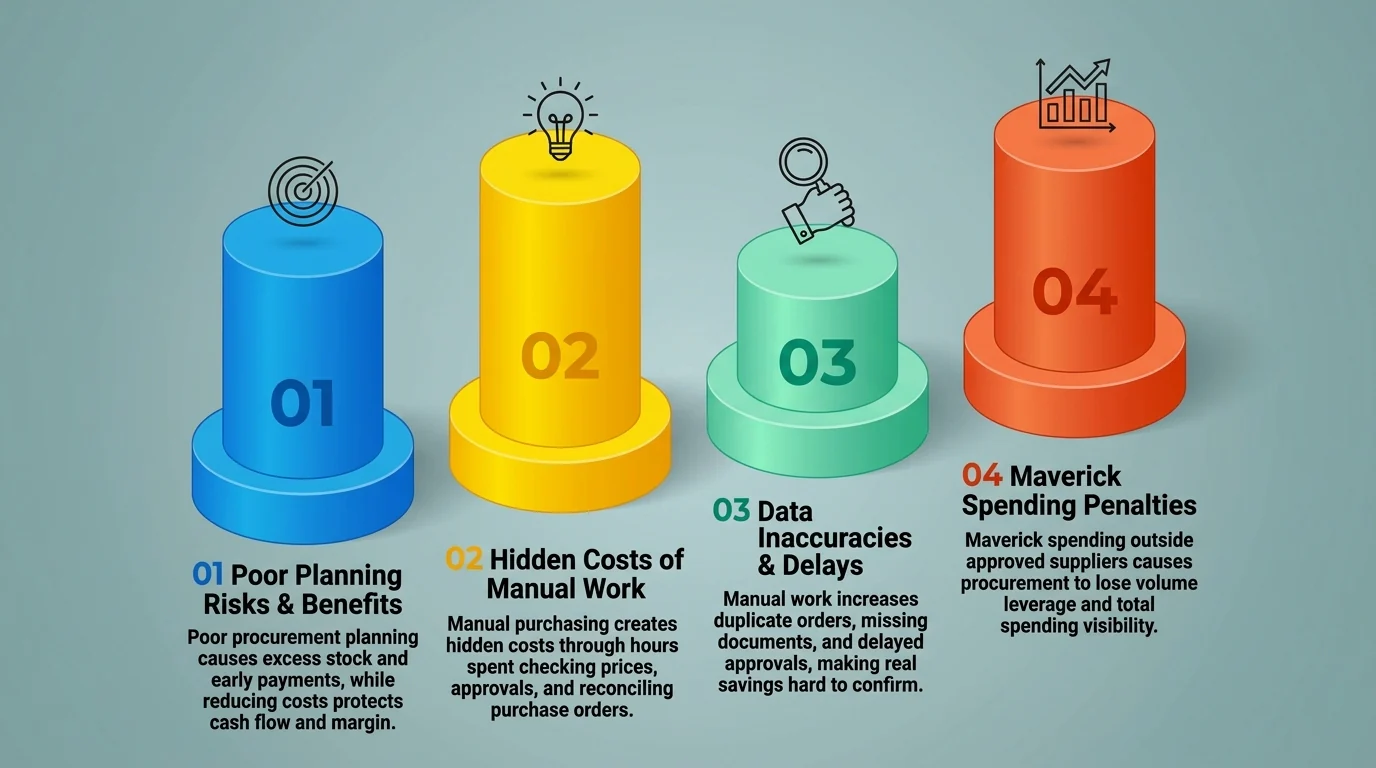
Cost reduction in purchasing and procurement matters because every purchase affects profit, cash flow, and operational stability. Strong procurement cost reduction helps companies control spending before small leaks become margin pressure. Poor procurement control can raise expenses quietly, even when sales continue to grow.
1. Effect on cash flow and profit margin
Procurement spending usually happens before a company receives revenue from finished goods, services, or customer orders. Poor planning can leave the business with excess stock, early supplier payments, or purchases that do not support urgent demand.
Reducing procurement costs protects cash flow and improves gross margin. The company spends less to produce, distribute, or deliver the same output. This gives finance and operations teams more room to manage payroll, inventory, expansion, and supplier commitments.
2. Hidden costs inside manual purchasing
Manual purchasing often creates hidden costs. Teams may spend hours checking supplier prices, collecting approvals, comparing quotes, and reconciling purchase orders with invoices. These tasks may not appear as direct procurement expenses, but they reduce productivity.
Manual work also increases the risk of duplicate orders, missing documents, delayed approvals, and inaccurate reporting. These issues make it harder for finance and procurement teams to confirm whether savings are real. Building a clear procurement strategy helps teams control these hidden costs before they add up.
3. Risks of uncontrolled and maverick spending
Maverick spending happens when employees buy outside approved suppliers, contracts, budgets, or purchase policies. It can happen because the process moves too slowly, the policy feels unclear, or teams do not know which supplier to use.
When maverick spending becomes common, procurement loses volume leverage. The company may pay different prices for the same item, miss negotiated supplier terms, and lose visibility over total spending.
Procurement Cost Pressure in the Philippine Market
Philippine businesses face changing prices, transport costs, supplier lead times, and documentation requirements. These pressures make procurement cost reduction essential for companies with multiple branches, warehouses, or product lines. Better controls help teams protect cash flow, compare total costs, and approve purchases before avoidable expenses grow.
1. Input and Logistics Costs for Local Businesses
Procurement teams should monitor price movements because fuel, materials, construction inputs, and imported goods can change supplier quotations. The Philippine Statistics Authority reported a 6.1 percent headline inflation rate in August 2026. It also recorded a 3.6 percent year-over-year increase in the NCR Construction Materials Wholesale Price Index.
These indicators do not replace supplier-level analysis. They show why procurement teams need current price records, branch-level comparisons, and clear approval rules before committing to purchases. This discipline supports cost reduction in purchasing and procurement by linking each buying decision to current market conditions and expected business needs.
2. Multi-Branch and Multi-Supplier Complexity
A business with several branches may buy the same item from different suppliers at different prices. One location may receive better payment terms, while another pays higher freight charges because it places a last-minute order.
Without consolidated procurement data, management cannot compare supplier performance, purchase prices, freight costs, and payment terms across locations. This fragmented view weakens supplier leverage and makes it harder to identify repeat savings opportunities.
3. Compliance and Documentation Requirements
Procurement also shapes documentation quality. Purchase requests, quotations, purchase orders, receiving records, invoices, and approvals must remain complete enough for finance review and audit preparation. Clear records help teams trace each purchase from request to payment.
Missing or inconsistent documents make procurement cost reduction harder to prove. A business may negotiate a lower price but still lose control during receiving, billing, or payment reconciliation. Complete documentation protects savings and supports cost reduction in purchasing and procurement.
10 Procurement Cost Reduction Strategies
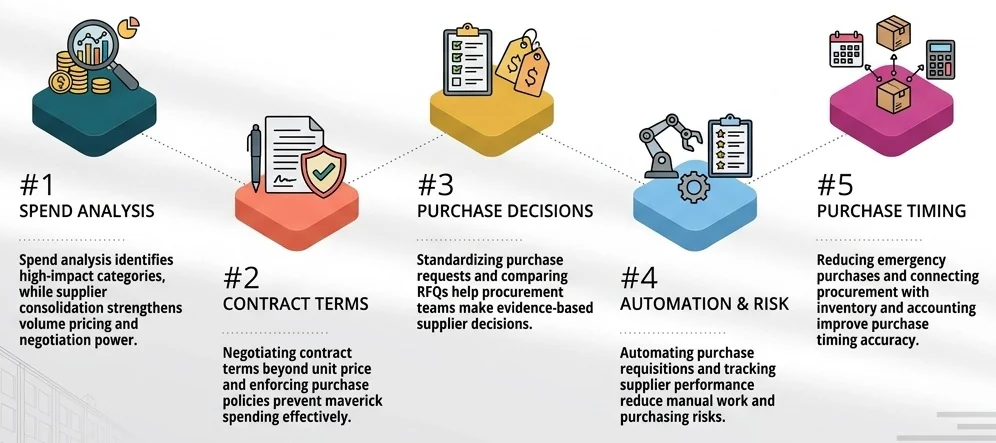
The best procurement cost reduction strategies combine spend visibility, supplier control, purchasing discipline, and measurable savings. They help businesses reduce purchasing costs without weakening quality, service, or operational continuity. The right approach connects procurement decisions with budgets, inventory, accounting records, and supplier performance across every buying category.
1. Analyze Spending Patterns Before Cutting Costs
Begin with spend analysis before cutting procurement costs. Review purchasing categories, requesting departments, suppliers, order volumes, and frequent price increases. This evidence highlights high-impact areas, including major spend, unstable prices, limited competition, and repeated urgent orders, helping procurement target savings strategically instead of making random reductions.
2. Consolidate Suppliers for Better Volume Pricing
Too many suppliers can weaken the company’s buying power. When branches or departments use different vendors for the same item, procurement loses opportunities to negotiate volume-based pricing and consistent service terms.
Supplier consolidation does not require one vendor for every category. It means selecting preferred suppliers for important items and using combined purchase volume to negotiate better rates, delivery terms, and service commitments.
3. Negotiate Contract Terms, Not Just Unit Price
A lower unit price can reduce spending, but contract terms may create greater value. Procurement teams should negotiate payment terms, minimum order quantities, delivery schedules, warranty coverage, return policies, and price validity periods.
For example, a slightly higher unit price with longer payment terms may support cash flow better. A cheaper quote may require immediate payment, large orders, or expensive delivery arrangements.
4. Prevent Maverick Spending With a Purchase Policy
A purchase policy gives employees clear rules for requesting, approving, and buying goods or services. It defines approved suppliers, budget limits, quotation requirements, approval levels, and exceptions. The policy improves compliance, supports cost reduction in purchasing and procurement, reduces maverick spending, and helps the company capture negotiated prices and terms.
5. Standardize Purchase Requests and Approvals With Procurement Process Steps
Standardized purchase requests make procurement decisions easier to review. Each request should include the item, quantity, expected delivery date, cost center, branch, warehouse, budget, and business reason.
Approval workflows should match the purchase risk. Routine, low-value purchases may need fewer approvals, while high-value or urgent requests require stricter review. A clear procurement process reduces delays and limits unnecessary exceptions.
6. Compare RFQs Before Issuing a Purchase Order
Request for quotation comparison helps procurement evaluate suppliers before committing to a purchase order. Teams should compare price, lead time, payment terms, quality history, warranty coverage, and delivery reliability. RFQ comparison works especially well for recurring purchases, high-value items, and categories with frequent price changes, giving procurement stronger evidence for supplier selection and contract negotiations.
7. Automate Purchase Requisitions and Purchase Orders With a Purchasing System
Purchase automation reduces manual work and approval delays. With a digital purchasing system, employees can submit requests, route approvals, compare supplier information, and create purchase orders with fewer manual handoffs.
Automation also helps procurement enforce budgets and approval rules. When teams record requests in one place, managers can review pending purchases before they create unexpected costs or duplicate orders.
8. Track Supplier Performance and Lead Time
Supplier performance affects total purchasing cost. A low-priced vendor with frequent delivery delays may cause stockouts, emergency purchases, production downtime, or extra transportation expenses. Procurement teams should track delivery accuracy, lead time, product quality, responsiveness, and invoice accuracy to support supplier reviews and strengthen contract negotiations.
9. Reduce Emergency and Rush Purchases
Emergency purchases often cost more because teams have less time to compare suppliers or negotiate terms. Rush orders can increase freight charges and force employees to accept unfavorable conditions. Procurement should coordinate with inventory, production, and operations teams, while better demand planning helps buyers order before stock reaches critical levels.
10. Connect Procurement With Inventory and Accounting
Procurement cost reduction becomes more effective when purchasing data connects with inventory and accounting. If teams can see stock levels, pending receipts, unpaid bills, and budget usage, they can avoid overbuying and improve purchase timing.
An integrated procurement system also helps finance match purchase orders, receiving records, and vendor invoices. This reduces reconciliation problems and gives management a clearer view of actual purchasing costs.
To turn this visibility into daily control, businesses need software that connects purchase requests, approvals, receiving, billing, and supplier records. HashMicro procurement software helps teams manage purchasing workflows, monitor budgets, compare vendors, and reduce avoidable procurement costs.

Common Procurement Cost Reduction Mistakes and Their Solutions
Procurement cost reduction can fail when teams focus only on short-term savings. The right approach lowers unnecessary spending while protecting quality, availability, supplier reliability, and operational continuity. The table below explains common mistakes and practical solutions that support sustainable savings.
| Common mistakes | Solution |
|---|---|
| Choosing the cheapest supplier every time | Compare total value, including quality, delivery reliability, support, freight, and hidden fees. A dependable supplier may reduce emergency purchases and disruptions despite a higher quoted price. |
| Cutting costs without measuring total cost of ownership | Calculate the full cost of ownership before approval. Include shipping, storage, maintenance, training, downtime, returns, and disposal to prevent cheap purchases from creating higher long-term expenses. |
| Ignoring contract renewal and price escalation | Track renewal dates, price adjustment clauses, and supplier performance. Review alternatives before renewal so procurement can negotiate stronger terms and avoid automatic increases or rushed vendor decisions. |
How to Measure Procurement Cost Savings
Procurement cost reduction needs clear measurement. Without consistent tracking, teams may claim savings that finance cannot verify or repeat. Reliable metrics show which procurement cost reduction strategies deliver real results, which purchases follow policy, and how much value each supplier agreement returns.
1. Cost Savings vs Cost Avoidance Metrics
Cost savings measure direct reductions against a previous baseline, such as last year's price or the approved budget. Cost avoidance measures costs the business prevented, including rejected price increases, blocked duplicate orders, and avoided urgent purchases.
Both metrics matter, but teams should report them separately. This separation helps management see which savings improve current expenses and which savings protect future budgets. It also prevents procurement from overstating results during finance review.
2. Purchase Price Variance and Spend Under Management
Purchase price variance compares the actual purchase price with a standard price, budgeted price, or previous price. It shows whether procurement pays more or less than expected, and it highlights categories where supplier prices move quickly.
Spend under management measures how much company spending follows procurement controls. A higher percentage means more purchases go through approved suppliers, contracts, and workflows. This metric shows how widely procurement cost reduction strategies reach across branches and departments.
3. Reporting Cadence and Process Ownership
Procurement teams should review reports on a fixed schedule. Monthly reporting helps them monitor savings, supplier performance, purchase delays, and policy exceptions. A steady cadence also keeps procurement cost reduction visible to management instead of appearing only during budget season.
Ownership also matters. Procurement should identify savings opportunities, and finance should validate the numbers. Operations should confirm that cost reduction does not weaken quality or service continuity. Clear ownership prevents disputes when teams report results.
Conclusion
Procurement cost reduction goes beyond asking suppliers for lower prices. It depends on spend visibility, supplier consolidation, negotiated contract terms, clear purchase policies, standardized approvals, and accurate measurement. Teams that track cost savings and cost avoidance separately can prove which purchasing decisions protect margin.
For Philippine businesses, this discipline matters because inflation, freight costs, and multi-branch buying patterns shift quickly. Companies that avoid the cheapest-supplier trap, calculate total cost of ownership, and review contracts before renewal protect cash flow, strengthen supplier leverage, and keep purchasing costs predictable. HashMicro's procurement software helps sustain this discipline.

FAQ About Procurement Cost Reduction Strategies
Most Philippine businesses start with a single-digit target, roughly 3 to 7 percent of addressable spend in year one. Once spend data, supplier records, and approval history become reliable, teams can raise the target and pursue deeper savings across every category.
Procurement should lead the effort and manage supplier negotiations day to day. Finance validates the actual savings against the budget baseline. Operations confirms that quality, delivery, and business continuity remain intact. Many Philippine companies form a small cross-functional committee to keep these roles aligned.
Approval control and duplicate purchase prevention can show measurable results within the first few purchasing cycles. These improvements often appear within one to two months. Supplier consolidation and contract savings usually take longer. They depend on renewal dates, negotiation timelines, and supplier response speed.
It does not have to, if done correctly. Supplier relationships usually grow stronger when cost reduction focuses on better forecasting and fair contract terms. Volume planning and performance transparency also help, instead of one-sided price pressure. Suppliers respond well to predictable orders and honest communication about budget constraints.
Many raw materials and equipment are imported and priced in US dollars. Peso depreciation raises landed costs even when supplier quotes stay stable. Businesses can hedge exposure through forward contracts, multi-currency agreements, or peso-denominated contracts, and by diversifying between local and imported suppliers.