








 Limited to 100 registrants

Philippine businesses are turning to order fulfillment software as online order volumes outgrow manual tracking. The 2026 MHI Annual Industry Report surveyed more than 500 supply chain leaders in partnership with Deloitte. It found that 56% are increasing their technology and automation investments.
Order fulfillment software sits at the center of that spending. Companies use it to track stock, route picking, and confirm shipments without manual work. Philippine businesses face the same pressure as order volumes climb, and manual methods cannot keep pace.
Without the right order fulfillment software, businesses risk poor integration with e-commerce, ERP, and inventory systems, disrupting data flow and delaying orders. As companies grow, managers also often worry about scalability and adaptability, potentially leading to inefficiencies and increased costs.
Is your business utilizing order fulfillment software to optimize operations? If not, continue reading to discover the 10 best order fulfillment software in the Philippines for 2026 and how it can transform your business.
Key Takeaways
Order fulfillment software improves inventory accuracy, reduces operational costs, and boosts customer satisfaction across every order.
Top order fulfillment software in the Philippines covers standalone, cloud-based, and ERP-integrated options for every business size.
Choosing order fulfillment software requires evaluating business needs, scalability, cost and ROI, integration capabilities, and customization options.
What is an Order Fulfillment Software?
Order fulfillment software is a digital solution that helps businesses manage their order processing, inventory, and shipping more efficiently. It integrates with platforms like e-commerce stores, shipping carriers, and ERP systems to automate and optimize the entire fulfillment process.
This software ensures accuracy in tracking orders, coordinates picking and packing, and facilitates faster delivery times. By streamlining these operations, businesses can reduce errors, improve operational efficiency, and provide better customer service.
In addition, order fulfillment software helps businesses scale by easily handling increased order volumes. This ultimately leads to faster growth, enhanced customer satisfaction, and a more competitive edge in the market.
What are the Benefits of Order Fulfillment Software?

In today’s fast-paced e-commerce landscape, businesses must adopt advanced solutions to stay competitive and meet rising customer expectations. Order fulfillment software offers a comprehensive approach to streamlining operations, improving efficiency, and delivering exceptional service.
By automating key processes, businesses can save time, reduce errors, and focus on enhancing customer satisfaction.
1. Enjoy a reduced order cycle time
Order fulfillment software significantly cuts order cycle time, a crucial metric in e-commerce. By integrating with sales channels like Amazon and Shopify, the system captures and processes orders in real time, eliminating manual errors.
Speed now decides sales. The 2026 AlixPartners Home Delivery Survey found that consumers expect free delivery within 2.7 days on average. That window has tightened from more than 3.5 days in earlier years, and missing it puts real revenue at risk.
Automation cuts the time spent picking and packing, so orders leave the warehouse faster. Shipping carrier integration also lets businesses select the quickest and most cost-effective delivery options, which helps them meet those tightening expectations.
2. Get greater inventory visibility and access data in real-time
One of the significant advantages of order fulfillment software is real-time inventory tracking. With the integration of barcode scanners and RFID technology, businesses gain full visibility of their stock levels, locations, and movements.
This allows for more accurate stock replenishment and allocation, reducing the risk of stockouts or overstocking. Access to real-time data helps companies avoid lost sales and unnecessary holding costs, directly impacting their bottom line.
3. Easily track key KPIs and performance
Order fulfillment software seamlessly tracks key performance indicators (KPIs), such as order cycle time, order fill rate, and pick rate. Access to these metrics in real-time helps businesses pinpoint areas for improvement, whether optimizing picking strategies or enhancing labor productivity.
This data-driven approach speeds up warehouse fulfillment processes and reduces operational costs. This improved efficiency contributes to a more streamlined, cost-effective operation.
4. Offer enhanced customer experience
A smooth and accurate order fulfillment process is essential to retaining customers, and order fulfillment software ensures just that. Automated workflows guarantee quick, error-free order processing, from picking to shipping.
Customers appreciate real-time tracking and timely deliveries, which lead to higher satisfaction and loyalty. Additionally, the software simplifies the returns process, making it hassle-free for customers and contributing to a better overall experience.
10 Best Order Fulfillment Software in the Philippines
In today’s fast-paced business landscape, selecting the right order fulfillment software is crucial for maintaining operational efficiency and meeting customer expectations. With so many options available, choosing a solution that aligns with your company’s needs, from integration capabilities to scalability, is essential.
Here are 10 of the best order fulfillment software options for 2026 to help you make an informed decision.
1. HashMicro’s Order Fulfillment Software
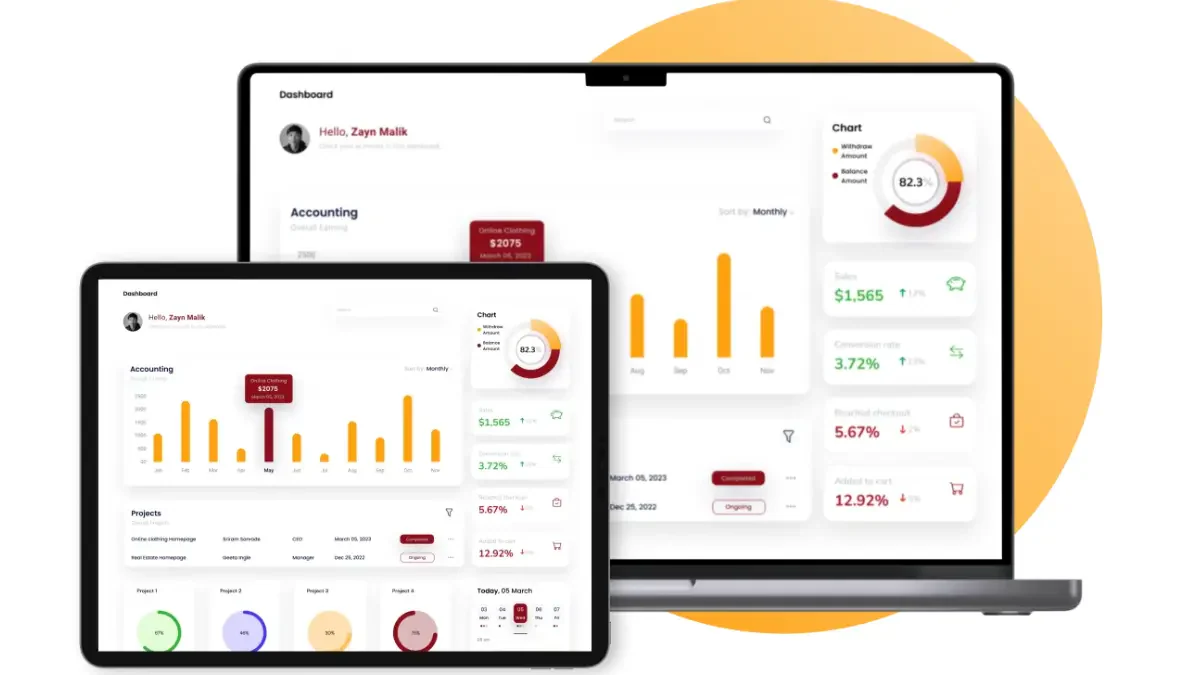
HashMicro is a leading ERP provider in Southeast Asia, known for highly customizable solutions built for industries such as e-commerce, distribution, and logistics. Founded in 2015, the company developed HashMicro's Order Fulfillment Software to streamline warehouse operations, improve order accuracy, and automate resource management across every stage of the fulfillment cycle.
The platform connects order processing with inventory, warehousing, and delivery in one system, and it integrates with third-party applications so data moves smoothly between platforms. HashMicro suits companies that want AI-driven automation and deep module integration as their order volumes grow.
Key Feature:
- RFID Warehouse Rack Stock Automation
- Barcode, Lot, and Serial Number Tracking
- Cycle Time Analysis
- Stock Optimizer per Warehouse
- 3D View of Stock Location
- Removal Strategy Management
- Pick, Pack, Delivery 3-Step Route Warehousing
- Comprehensive Reporting/Analytics
| Advantages | Disadvantages |
| Easy to use with a simple interface | Implementation can take time |
| Seamless integration with other platforms | Features are diverse and can be complex, requiring further consultation with a team of professionals |
| Responsive customer support | Pricing is not published publicly |
| Highly flexible automation | Built primarily for mid-sized and large operations |
Best fit for: Mid-sized to large Philippine companies in e-commerce, distribution, and logistics that manage multiple warehouses and need customizable, automation-heavy fulfillment rather than an off-the-shelf tool.
Pricing: After knowing some of the advantages offered by order fulfillment software from HashMicro, you can start considering the price calculation by clicking the banner below. Immediately support the success of your Philippine company with HashMicro!
2. Zoho Inventory
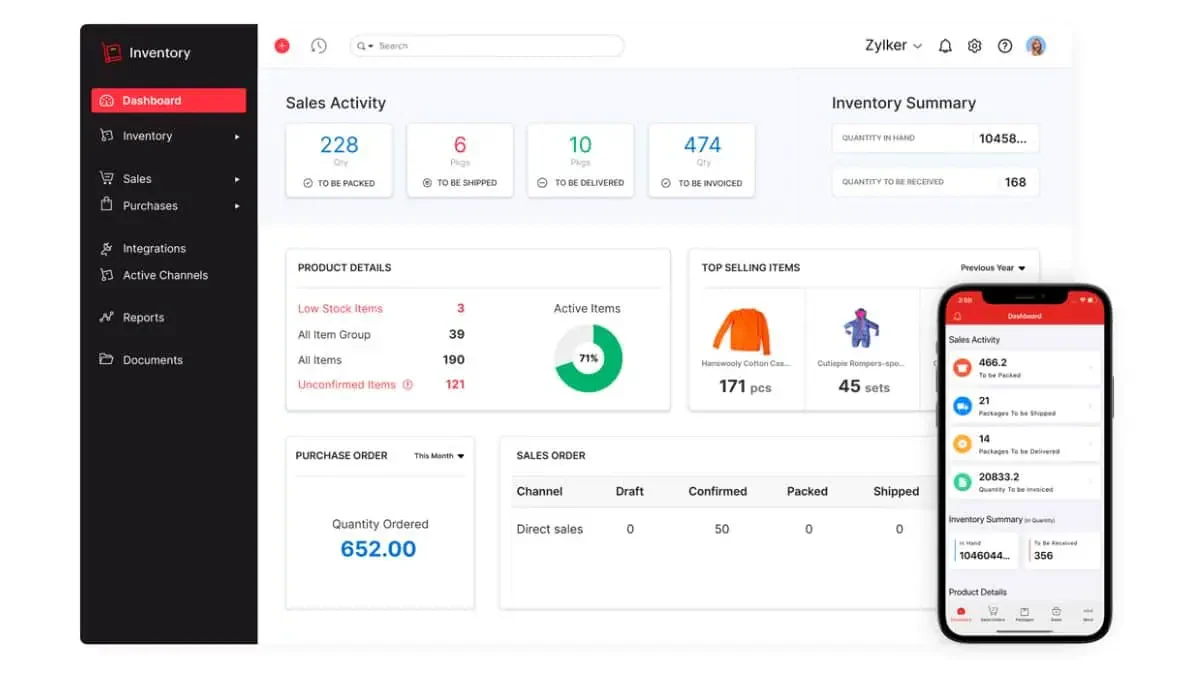
Zoho is a long-established player in the software industry, offering a wide range of business solutions, including order fulfillment. With multi-channel integration and comprehensive automation features, Zoho Inventory is ideal for businesses looking to improve efficiency and accuracy in order management. The platform offers flexibility, a user-friendly interface, and responsive customer support.
Key Features:
- Multi-channel integration
- Automated inventory management
- Real-time order management
- Shipment tracking
| Advantages | Disadvantages |
| Easy to use with a simple interface | Some advanced features require payment |
| Seamless integration with other platforms | Limited for large-scale businesses |
| Responsive customer support | Implementation can take time |
| Highly flexible automation | Limited customization in the basic package |
Best fit for: Small to mid-sized Philippine e-commerce sellers managing several sales channels at once, who need automated inventory tracking and shipment visibility without heavy customization or a long implementation.
Pricing: Free at ₱0, Standard from ₱1,230/month, Professional from ₱3,080/month, and Premium from ₱4,320/month. Billing is in US dollars, so the peso amount varies with the exchange rate.
3. ShipBob
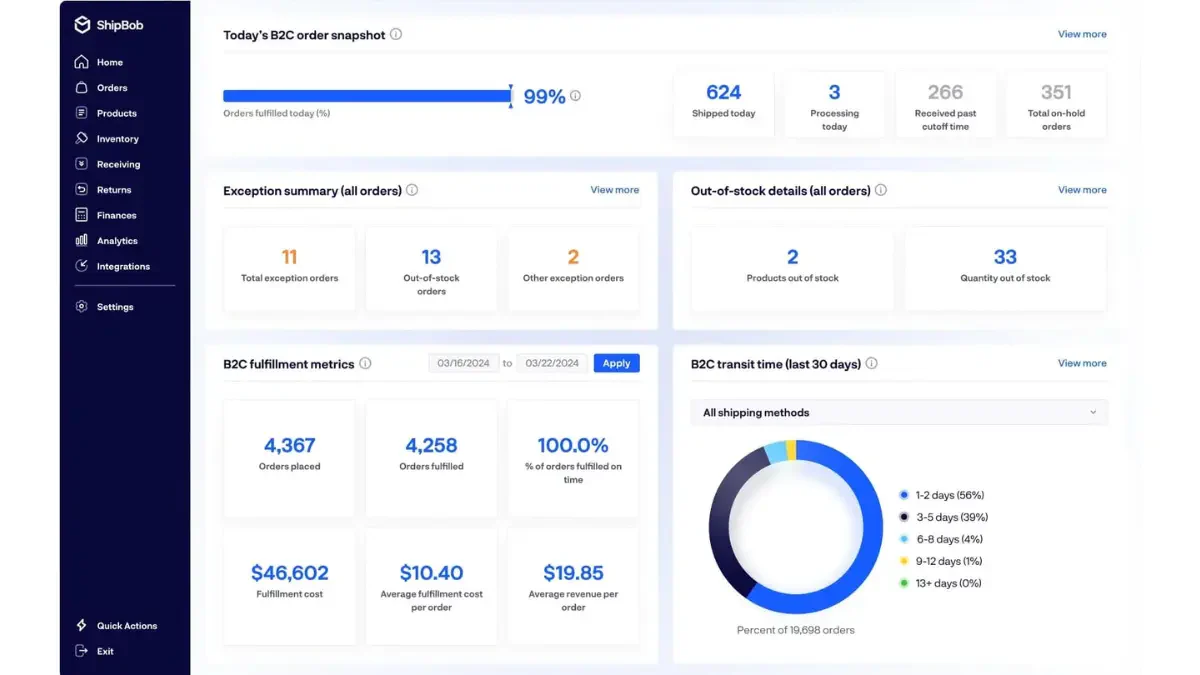
ShipBob is a cloud-based fulfillment software known for offering both software and warehousing services, particularly for e-commerce businesses. According to many ShipBob reviews, it provides full features from inventory management and order tracking to integration with popular e-commerce platforms. ShipBob is an excellent choice for businesses focused on logistics and distribution, providing significant time and cost savings.
Key Features:
- Multi-warehouse management
- Real-time shipment tracking
- Integration with popular marketplaces
- Global logistics support
| Advantages | Disadvantages |
| Accurate inventory tracking | Relatively high pricing |
| Fast shipping services | Dependent on warehouse location |
| Easy integration with Shopify, Amazon | Limited customization options |
| Global logistics support | Not ideal for smaller businesses |
Best fit for: Mid-sized to large Philippine e-commerce brands that want to outsource warehousing and shipping alongside the software, especially those selling through Shopify or Amazon and shipping across multiple markets.
Pricing: ShipBob does not publish a public price list. Costs depend on storage volume, order count, packaging, and shipping destinations, so businesses need to request a custom quote from the ShipBob team.
4. NetSuite
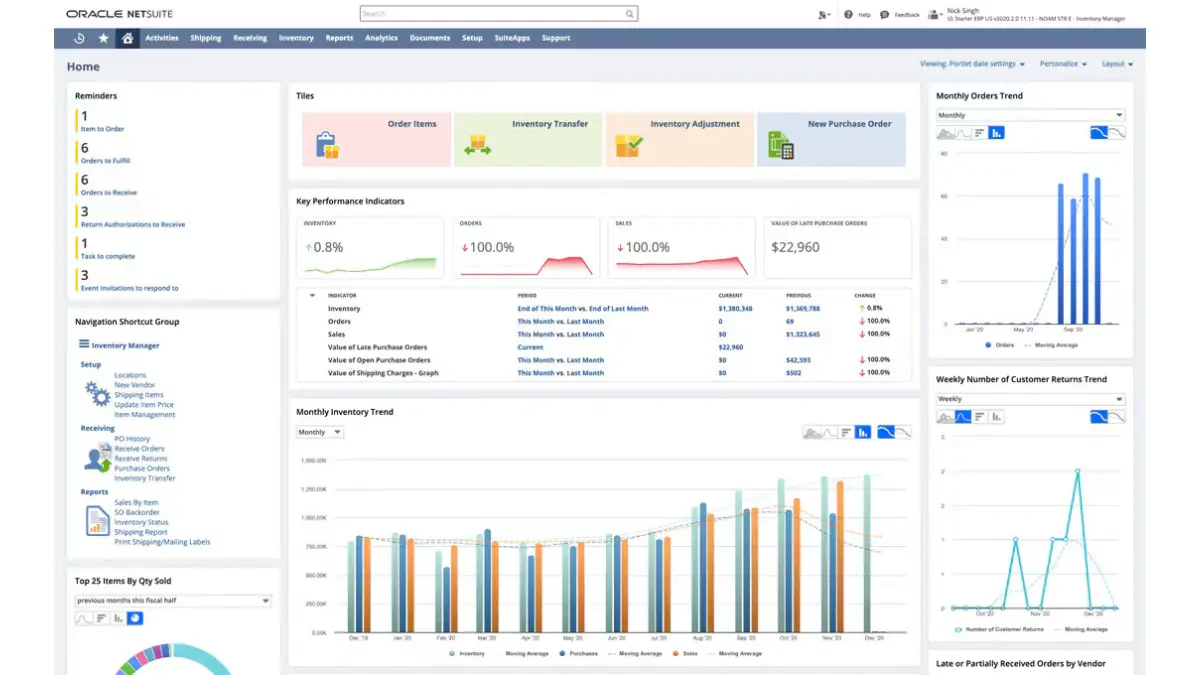
NetSuite is a comprehensive ERP solution that includes integrated order fulfillment features along with financial and inventory management. It offers end-to-end visibility, making it a top choice for large enterprises seeking scalable and flexible solutions. With its intuitive interface and strong technical support, NetSuite minimizes errors and boosts efficiency in fulfillment operations.
Key Features:
- Integrated ERP order management
- Multi-location inventory tracking
- Automated supply chain management
- In-depth analytics reporting
| Advantages | Disadvantages |
| Comprehensive ERP solution | High implementation costs |
| Scalable for large enterprises | Complex configuration process |
| Professional technical support | Requires staff training |
| Detailed analytics and reporting | Expensive annual maintenance fees |
Best fit for: Large Philippine enterprises and fast-growing multi-entity companies that want order fulfillment built into a full ERP alongside financials, and that have the budget and internal team to support a longer implementation.
Pricing: NetSuite starts at around ₱61,610/month for the base platform, plus ₱7,960 to ₱12,270 per user per month. Add-on modules are priced separately, so the total depends on module scope and user count.
5. SPS Commerce
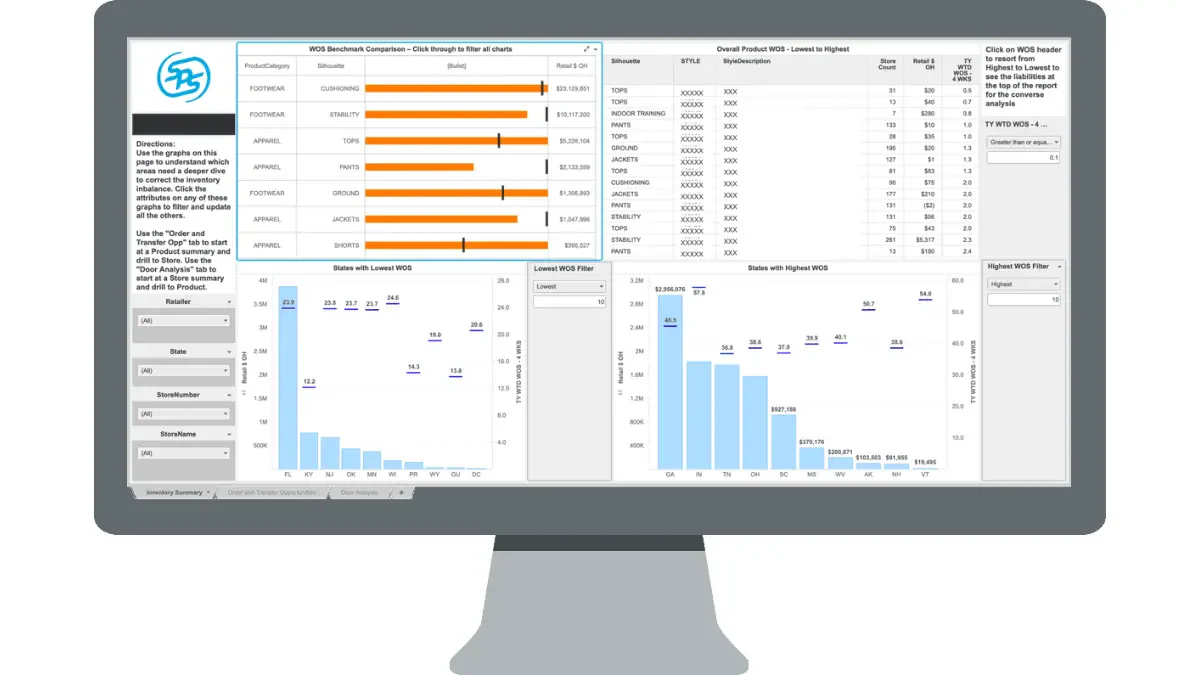
SPS Commerce is a cloud-based fulfillment software designed to enhance retail operations by increasing collaboration between suppliers, distributors, and retailers. It focuses on automating order processing and shipment tracking to maximize supply chain efficiency. Its business-to-business collaboration features make integration and transparency in order management easier to achieve.
Key Features:
- Supplier and retailer collaboration
- Automated order processing
- Real-time shipment tracking
- Strong ERP and CRM integration
| Advantages | Disadvantages |
| Efficient collaboration between partners | Not ideal for smaller businesses |
| Strong order automation | Setup process can be time-consuming |
| Extensive integration capabilities | Relatively high pricing |
| Responsive customer service | Interface requires adaptation |
Best fit for: Philippine suppliers, distributors, and wholesalers that sell into large retail chains and need automated EDI-style document exchange with their trading partners rather than a standalone warehouse tool.
Pricing: SPS Commerce builds pricing around each customer's setup, so there is no published rate card. Costs scale with trading partner count, document volume, and the integrations required, and businesses need to contact the SPS team for a package quote.
6. Extensiv

Extensiv provides a robust order fulfillment solution, excelling in multi-channel order management and supply chain integration. It enables businesses to centralize order management from multiple e-commerce platforms and marketplaces. With comprehensive analytics reporting, Extensiv helps businesses optimize their fulfillment processes.
Key Features:
- Multi-channel order management
- Real-time analytics reporting
- Integration with e-commerce platforms
- Automated fulfillment processes
| Advantages | Disadvantages |
| Extensive multi-channel integration | Relatively high implementation costs |
| Efficient automation | Takes time to configure |
| Comprehensive analytics | Not suitable for small businesses |
| High scalability | Requires user training |
Best fit for: Mid-sized to large Philippine e-commerce businesses and 3PL providers selling across multiple marketplaces and storefronts, who need centralized order management and detailed fulfillment analytics rather than a single-channel tool.
Pricing: Extensiv does not publish a public price list. Costs are customized around order volume, the modules selected, and the number of connected sales channels, so readers need to consult the Extensiv team for a package quote.
7. Logiwa
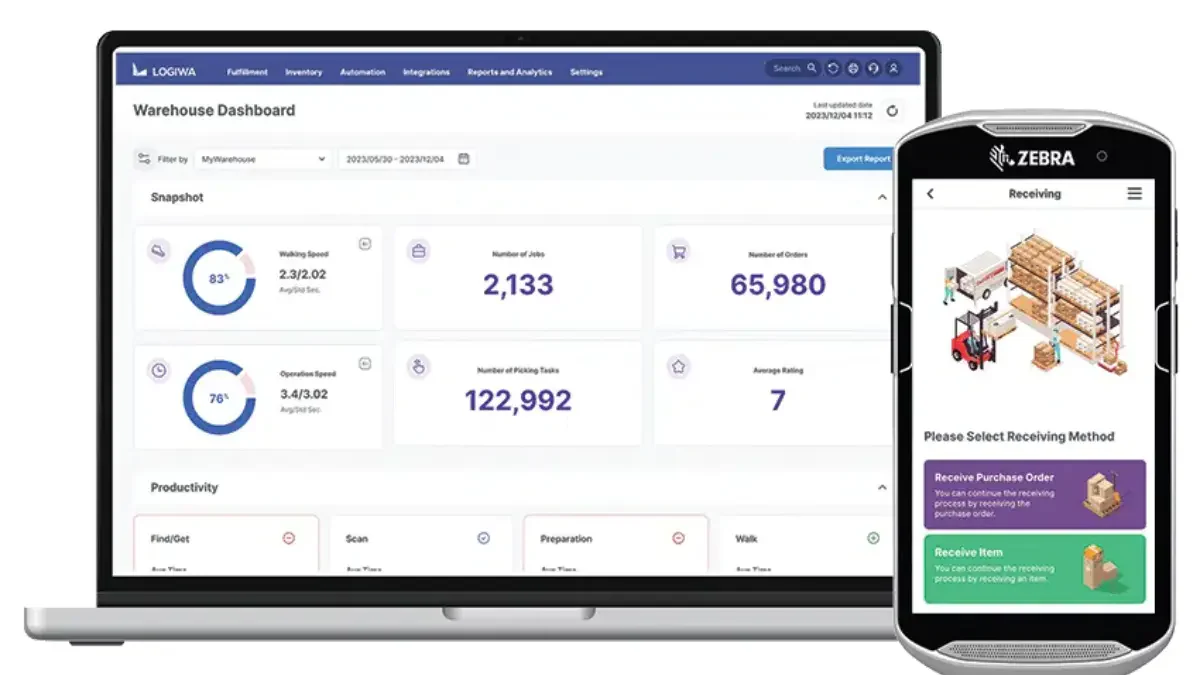
Logiwa is a cloud-based fulfillment software focusing on warehouse and inventory management for e-commerce businesses. It offers strong multi-platform integration, helping businesses manage inventory with high accuracy. Logiwa also features real-time order and shipment tracking, providing a complete solution for managing fulfillment processes.
Key Features:
- Centralized warehouse management
- Multi-platform e-commerce integration
- Real-time inventory tracking
- Automated order management
| Advantages | Disadvantages |
| Accurate warehouse management | Requires time for integration |
| Integration with popular platforms | Limited customization options |
| Easy order tracking | Relatively high implementation cost |
| Efficient order automation | Not ideal for small-scale businesses |
Best fit for: Philippine 3PL providers and high-volume e-commerce brands that run their own warehouses and need automated, high-accuracy inventory control across several sales channels.
Pricing: Logiwa builds pricing around fulfillment volume and operational complexity rather than user count, and all plans include unlimited users. The company publishes no rate card, so businesses need to book a demo to receive a tailored quote.
8. Magaya Supply Chain
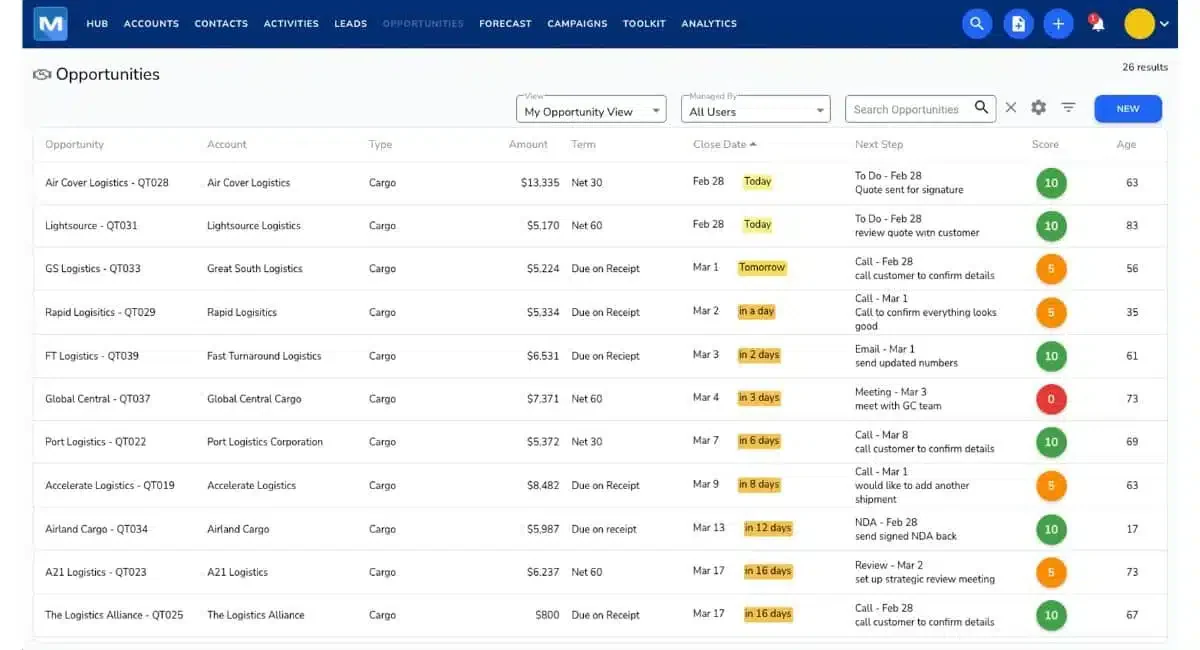
Magaya Supply Chain offers a comprehensive solution for managing supply chain and order fulfillment. It is one of the top supply chain management software solutions, with features like shipment tracking, order automation, and inventory management. It delivers efficient operations, smooth cross-platform connectivity, and support for multi-platform integration, which simplifies the fulfillment process for businesses.
Key Features:
- Real-time shipment tracking
- Automated supply chain management
- Comprehensive inventory management
- External platform integration support
| Advantages | Disadvantages |
| Extensive integration capabilities | Relatively high pricing |
| Effective supply chain automation | Interface takes time to adapt |
| Accurate inventory tracking | Not ideal for small businesses |
| Responsive customer support | Implementation process can be complex |
Best fit for: Philippine freight forwarders, customs brokers, and logistics providers that manage shipments end to end, along with importers and exporters that need shipment tracking tied directly to inventory and order records.
Pricing: Magaya Supply Chain starts at around ₱12,330 per user per month (US$200). Because the price is charged per user rather than per company, total cost scales directly with team size, and larger operations should request a quote before budgeting.
9. QuickBooks Enterprise
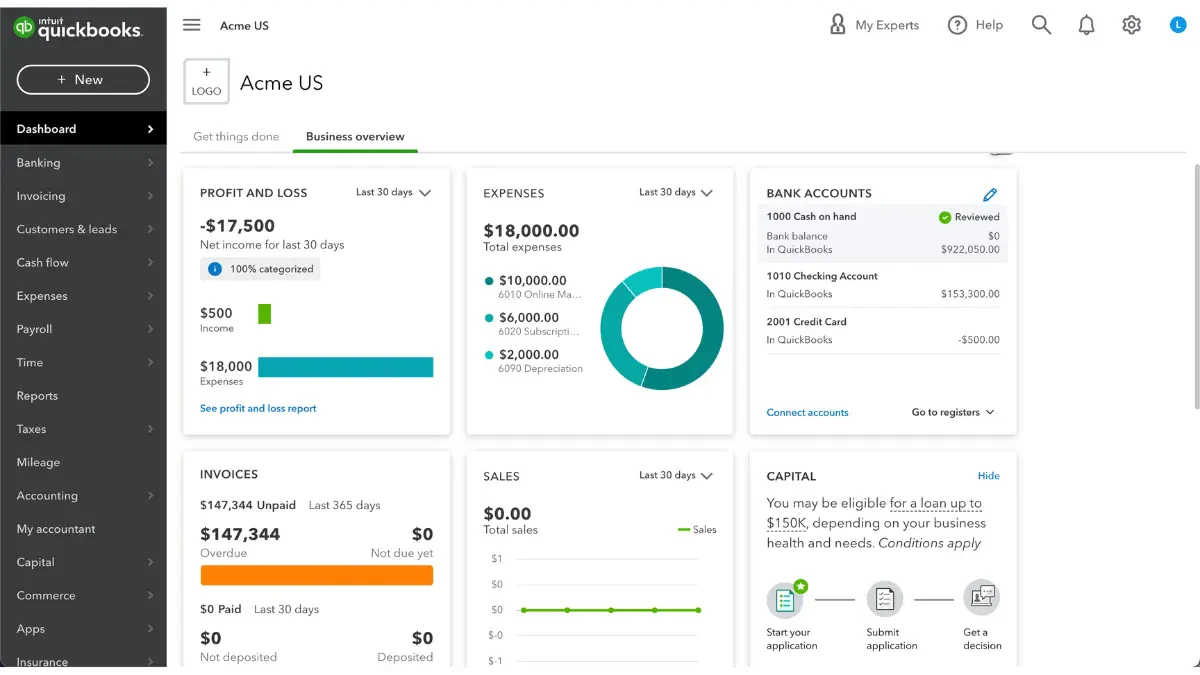
QuickBooks Enterprise is well-known for its financial management capabilities, but it also offers integrated order fulfillment solutions. Its robust order and inventory management features make QuickBooks accounting a powerful tool that helps businesses maintain a smooth workflow.
QuickBooks accounting software is ideal for companies seeking an all-in-one solution that merges financial management with fulfillment.
Key Features:
- Integrated inventory management
- Real-time order reporting
- Automated order processing
- Integration with accounting software
| Advantages | Disadvantages |
| Comprehensive financial management | Less flexible for large enterprises |
| Efficient inventory tracking | Paid advanced features |
| Strong customer support | Limited integration with some platforms |
| Easy to use | High annual subscription costs |
Best fit for: Small to mid-sized Philippine businesses that want accounting and order management in one system, and that value bookkeeping depth over advanced warehouse features.
Pricing: QuickBooks offers four plans: Simple Start at ₱1,313.70/month, Essentials at ₱1,939.20/month, Plus at ₱2,877.50/month, and Advanced at ₱5,567.40/month. New subscribers can currently get 90% off for the first six months, which brings the entry tier down to ₱131.37/month during the promotional period.
10. Mintsoft
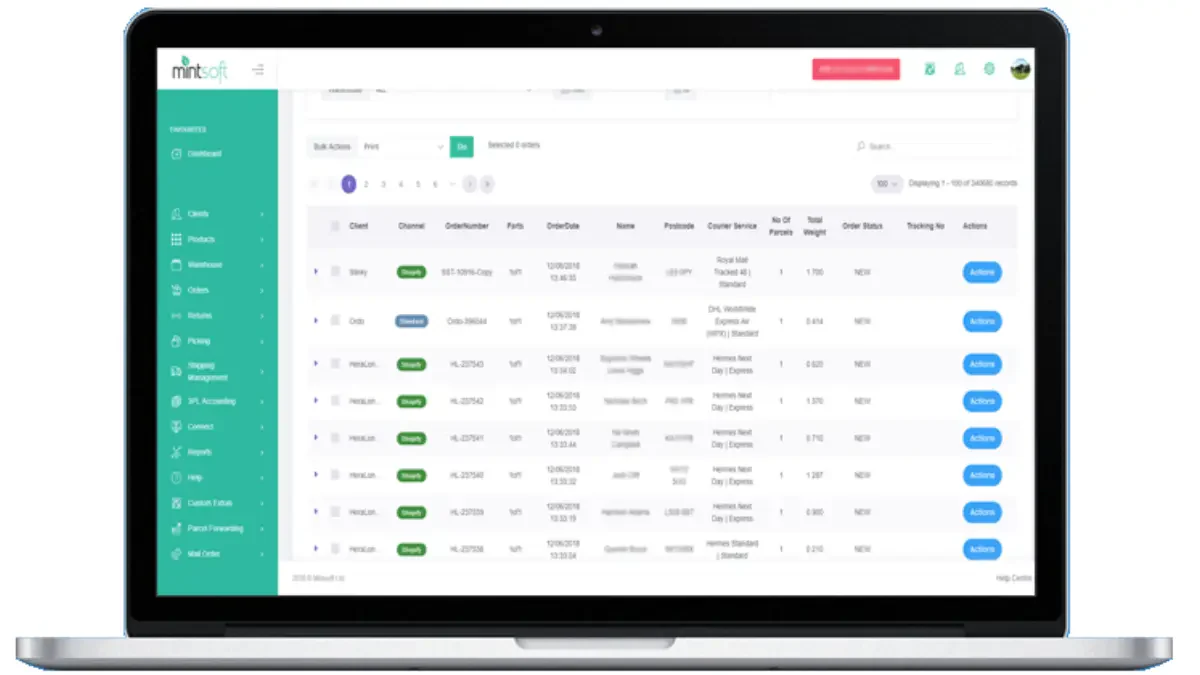
Mintsoft is a cloud-based solution designed to help e-commerce businesses efficiently manage their inventory and orders. With multi-channel capabilities and real-time shipment tracking, Mintsoft simplifies the end-to-end fulfillment process. It’s ideal for companies looking to speed up order processing and enhance accuracy.
Key Features:
- Multi-channel e-commerce management
- Real-time order tracking
- Automated fulfillment processes
- Centralized inventory management
| Advantages | Disadvantages |
| Accurate inventory tracking | Interface requires adaptation |
| Strong order automation | Limited customization options |
| Extensive integration capabilities | High subscription pricing |
| Real-time reporting | Requires time for user training |
Best fit for: Philippine e-commerce brands, wholesalers, and third-party logistics providers that sell across several channels and want order, inventory, and shipment tracking managed from one cloud platform.
Pricing: e-commerce Brands and Wholesalers from ₱13,410/month, 3PL from ₱31,630/month, and Enterprise on request. Billing is in British pounds, so the peso equivalent moves with the exchange rate.
Factors to Consider When Choosing Order Fulfillment Software

When selecting the right order fulfillment software for your business, ensuring that the solution aligns with your operational needs and long-term goals is essential. Well-chosen software can streamline processes, reduce errors, and improve efficiency.
However, with various options available, knowing which factors to prioritize is crucial for making the right decision. Here are key factors to consider when choosing order fulfillment software.
- Assess your business needs: Evaluate your unique operational requirements, including order volumes, product types, and sales channels. The software should align with your business model and meet industry-specific regulations, ensuring smooth fulfillment processes.
- Scalability: Choose software that grows with your business, handling increased order volumes and expanding product lines. It should adapt to your long-term growth strategy without causing disruptions or requiring costly upgrades.
- Cost and ROI: Consider the total cost, including setup and ongoing fees, and weigh it against potential savings from improved efficiency. Ensure the software delivers a solid return on investment by speeding up fulfillment and improving customer satisfaction.
- Integration capabilities: The software must integrate seamlessly with your current systems, from e-commerce platforms to CRM and shipping carriers. This ensures efficient data flow, eliminates silos, and optimizes your overall operations.
- Customization: Look for software tailored to your specific workflows, from order processing to shipping preferences. Customizability ensures that the software adapts to your needs, enhancing operational flexibility and efficiency.
Conclusion
Order fulfillment software plays a crucial role in the growth of businesses in the Philippines, especially as the e-commerce industry continues to expand. By automating key processes such as order tracking, inventory management, and shipping, companies can boost efficiency, reduce errors, and ultimately provide a better customer experience, helping them stay competitive in the fast-paced market.
HashMicro’s Warehouse Management System offers a comprehensive solution for businesses looking to optimize their order fulfillment processes. With seamless integration across platforms and real-time tracking, HashMicro ensures that your operations run smoothly, making it an ideal choice for companies aiming to scale and succeed in the Philippines.
We offer a free demo for those who want to experience HashMicro capabilities firsthand and explore how it can transform your business. This is an excellent opportunity to discover the unique features that can help streamline your operations and drive long-term growth.
FAQ About Order Fulfillment Software
An order fulfillment method is the approach a business uses to receive, process, pack, and deliver customer orders. Common methods include in-house fulfillment, third-party logistics (3PL), dropshipping, and hybrid models. The right method depends on order volume, business size, and product complexity.
1.Receiving Inventory: After a customer places an order, the company quickly acquires the necessary inventory and prepares it for shipment. This ensures stock is available and ready for the fulfillment process.
2. Storing Inventory: Once received, the inventory is organized and stored in a warehouse or storage facility. Efficient storage is crucial for easy access and quick order processing.
3. Processing Orders: When an order is placed, the fulfillment system processes it by confirming the item, quantity, and customer details. This step ensures the accuracy and smooth flow of the entire process.
4. Picking Teams: A dedicated picking team retrieves items from storage based on customer orders. They ensure the right products are selected and prepared for packing.
5. Packing Materials: After picking, the products are securely packed using appropriate materials to protect them during shipping. Proper packing reduces the risk of damage in transit.
6. Shipping Orders: Once packed, orders are sent out for delivery through selected shipping carriers. This step includes tracking shipments and capturing electronic proof of delivery (ePOD) to ensure timely and accurate delivery to customers.
7. Processing Returns: If a customer returns an item, the fulfillment team handles the return process efficiently. This includes inspecting the returned product and updating inventory accordingly.
The three types of order fulfillment are in-house fulfillment, where a business manages its own warehousing and shipping; third-party logistics (3PL), where an external provider handles the entire process; and dropshipping, where the supplier ships directly to customers without the business holding any inventory.
OMS (Order Management System) software is used to track and manage the complete order lifecycle, from placement through delivery. It centralizes order data across multiple sales channels, automates routing and fulfillment assignments, and provides real-time stock and shipping visibility to improve accuracy and customer satisfaction.
An OMS focuses specifically on managing customer orders, tracking fulfillment, and coordinating shipping across channels. An ERP is broader as it covers finance, inventory, HR, and procurement in one platform. Many businesses choose an ERP with built-in order management capabilities to handle both fulfillment and overall operations without switching systems.