





Philippine restaurant and hospitality operators accepting digital orders is not the main challenge. The bigger issue is coordinating orders across delivery apps, websites, social media, phone calls, and in-store staff without creating duplicate tickets, selling unavailable items, or losing track of payments and branch inventory.
The demand for online ordering continues to grow in the Philippines. According to the Annual Survey of Philippine Business and Industry (ASPBI) by the Philippine Statistics Authority (PSA), restaurants and mobile food service generated ₱2.32 billion in e-commerce transactions in 2022, accounting for 39.1% of total e-commerce sales in the accommodation and food service sector.
This article explains how businesses can manage multiple ordering channels more effectively. It covers common challenges, key features to consider, and practical ways to keep orders, payments, menus, and inventory organized across channels.
Key Takeaways
An online ordering system helps Philippine F&B businesses manage digital orders, menus, payments, and sales across multiple channels in one place.
The best online ordering systems help Philippine businesses manage orders, payments, and operations more efficiently.
Choose the right online ordering system based on your business workflow, operational needs, and growth plans.
What Is an Online Ordering System?
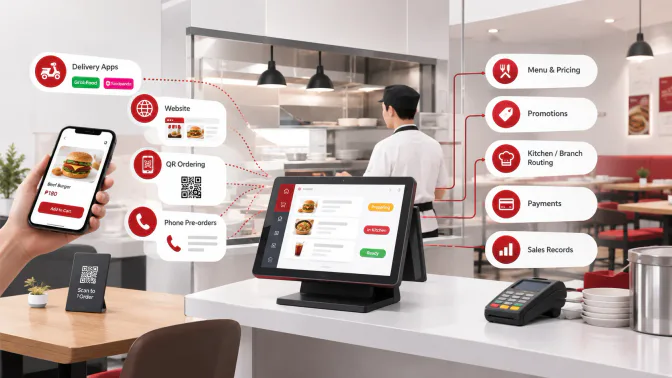
An online ordering system is software that manages customer orders from digital channels such as delivery apps, websites, QR-based ordering, and phone pre-orders. For Philippine F&B businesses, it can also manage menus, pricing, promotions, kitchen or branch routing, payments, and sales records.
The process covers order placement, confirmation, kitchen preparation, delivery or pickup, and payment reconciliation with POS and inventory. When these steps are handled by disconnected systems, businesses may face duplicate orders, unavailable items being sold, mismatched payments, or delayed inventory updates.
Benefits of Online Ordering Systems for Philippine Hospitality Businesses
Online ordering systems can help Philippine hospitality businesses improve order accuracy, inventory control, sales reporting, and cost management. The main benefits include:
Reduced Order Errors
A single menu master keeps item names, prices, and availability consistent across all ordering channels. This helps prevent customers from ordering items that are already unavailable and reduces duplicate orders, incorrect tickets, and refund requests.
Real-Time Stock Visibility
Connecting the ordering system with inventory data allows businesses to monitor ingredient levels as orders come in. When an ingredient runs out, the system can pause the related item and help staff prepare purchase requests before busy periods.
Faster End-of-Day Close
Instead of checking sales from each channel separately, businesses can consolidate orders from delivery platforms, websites, and in-store sales into one report. This makes end-of-day reconciliation faster and gives managers a clearer view of daily revenue.
Lower Refund and Reorder Costs
Inventory alerts can help staff identify items that are running low before peak ordering periods. This reduces the risk of accepting orders that cannot be fulfilled and helps limit refunds, cancellations, and repeat orders caused by unavailable items.
Accurate Commission Tracking
An online ordering system can help track sales and commissions from each aggregator by branch and reporting period. This makes it easier to compare platform costs with sales and identify discrepancies during payment reconciliation.
Integration with POS, Inventory, and Finance
An online ordering system works better when connected to POS, inventory, and finance systems. The main outbound data flow is the menu master, which sends menu, price, and availability updates from the POS to all ordering channels. Orders from delivery apps and direct channels then use an inbound data flow to enter the POS session, so sales from different channels are recorded in one place.
Inventory uses another inbound data flow to record stock movements from confirmed orders. This inventory decrement updates stock levels automatically and gives businesses better visibility into ingredient availability, helping prevent customers from ordering items that are already out of stock.
For finance, payout and commission data also flows inbound to the finance system, where aggregator payouts can be matched with processed orders and commission fees recorded separately from revenue. Finally, consolidated reporting combines sales, inventory, and financial data into one view, making daily and month-end reconciliation easier.
Full Comparison of Online Ordering Systems
The table below compares all ten systems across the dimensions that matter most to Philippine operators:
| System | Type | GCash / Maya | QR Ph | POS Integration | Inventory Link | BIR Receipt | Best Fit |
|---|---|---|---|---|---|---|---|
| HashMicro | ERP-Integrated | Native | Native | Native | Real-time | Native | Multi-branch groups |
| GrabFood | Aggregator | GrabPay | Via GrabPay | Middleware req. | Not included | Not included | High-reach launch |
| Foodpanda | Aggregator | Yes | Partial | Middleware req. | Not included | Not included | Luzon coverage |
| Klikit | Aggregator Hub | Via aggregators | Via aggregators | Limited | Not included | Not included | Multi-aggregator ops |
| UTAK POS | Cloud POS | Yes | Yes | Native | Basic | Yes | Small-mid PH chains |
| peddlr | Mobile Direct | GCash | Not included | Not included | Not included | Not included | Micro-sellers |
| Orderna | Cloud POS | Yes | Yes | Native | Basic | Partial | Cafes, QSR PH |
| Shopify | Ecommerce | Via Dragonpay | Not included | Shopify POS only | Limited | Not included | Packaged food brands |
| Square Online | Direct Channel | Not included | Not included | Square POS only | Basic | Not included | Square POS users |
| Flipdish | White-Label Direct | Via gateway | Not included | API-dependent | Not included | Not included | Mid-large chains |
10 Best Online Ordering Systems in the Philippines
The following ten systems cover the full range of options available to Philippine operators: aggregator platforms for reach, direct-channel tools for margin control, and ERP-integrated platforms for full operational visibility. Each entry is evaluated on channel coverage, PH payment support, integration depth, and suitability for the local market.
1. HashMicro Restaurant POS
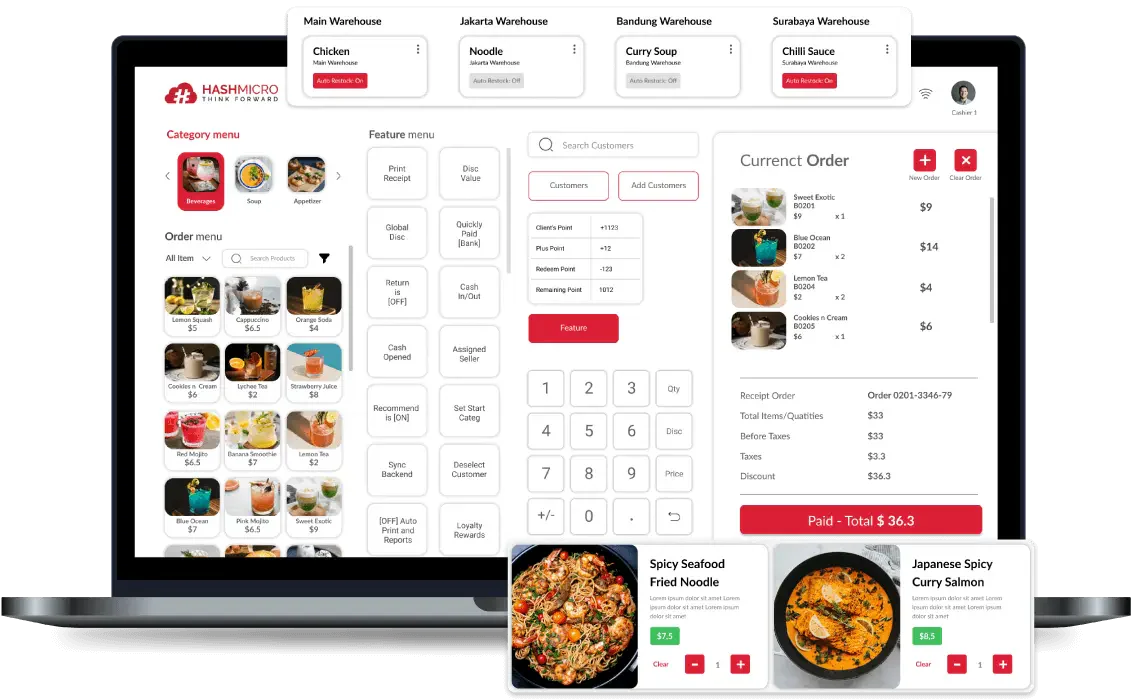
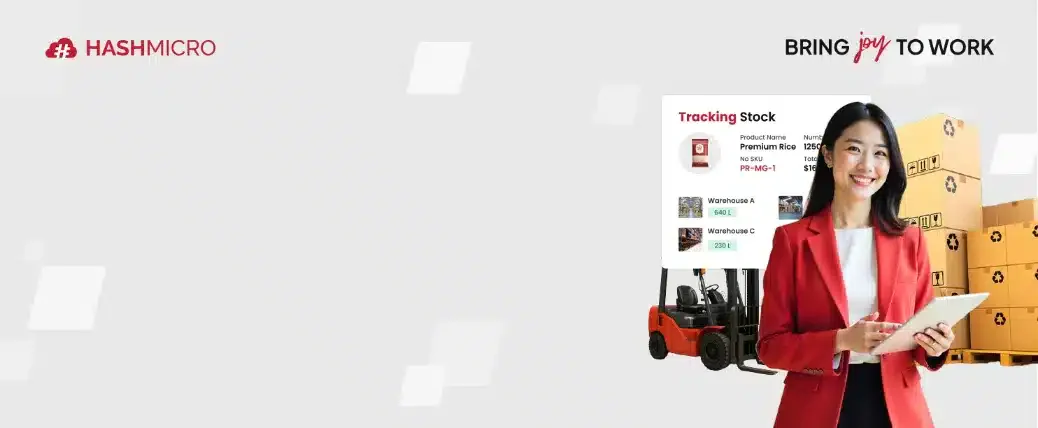
HashMicro Restaurant POS is an ERP-integrated restaurant management system designed for multi-branch restaurant groups, hotels, and catering businesses. It connects online orders, in-store sales, inventory, purchasing, and accounting in one platform, helping operators reduce manual reconciliation across sales channels.
Key features:
- Multi-channel order capture
- Real-time inventory deduction
- BIR-compliant receipt generation
- GCash, Maya, and QR Ph payment support
- Automated aggregator commission recording
- Multi-branch stock visibility
- Purchase order generation based on stock depletion
- Consolidated P&L reporting by branch
| Pros | Cons |
|---|---|
|
|
Best for: Multi-branch restaurant groups, hotels, and catering operations that need unified operations across channels.
Pricing: Custom pricing based on business needs.
Custom pricing based on business needs.
PH note: HashMicro is the only system in this list that connects online ordering directly to inventory, purchasing, and accounting within one ERP. Operators avoid end-of-day reconciliation across separate tools. Supports GCash, Maya, QR Ph, and BIR-registered invoice issuance natively.
2. Maya Business
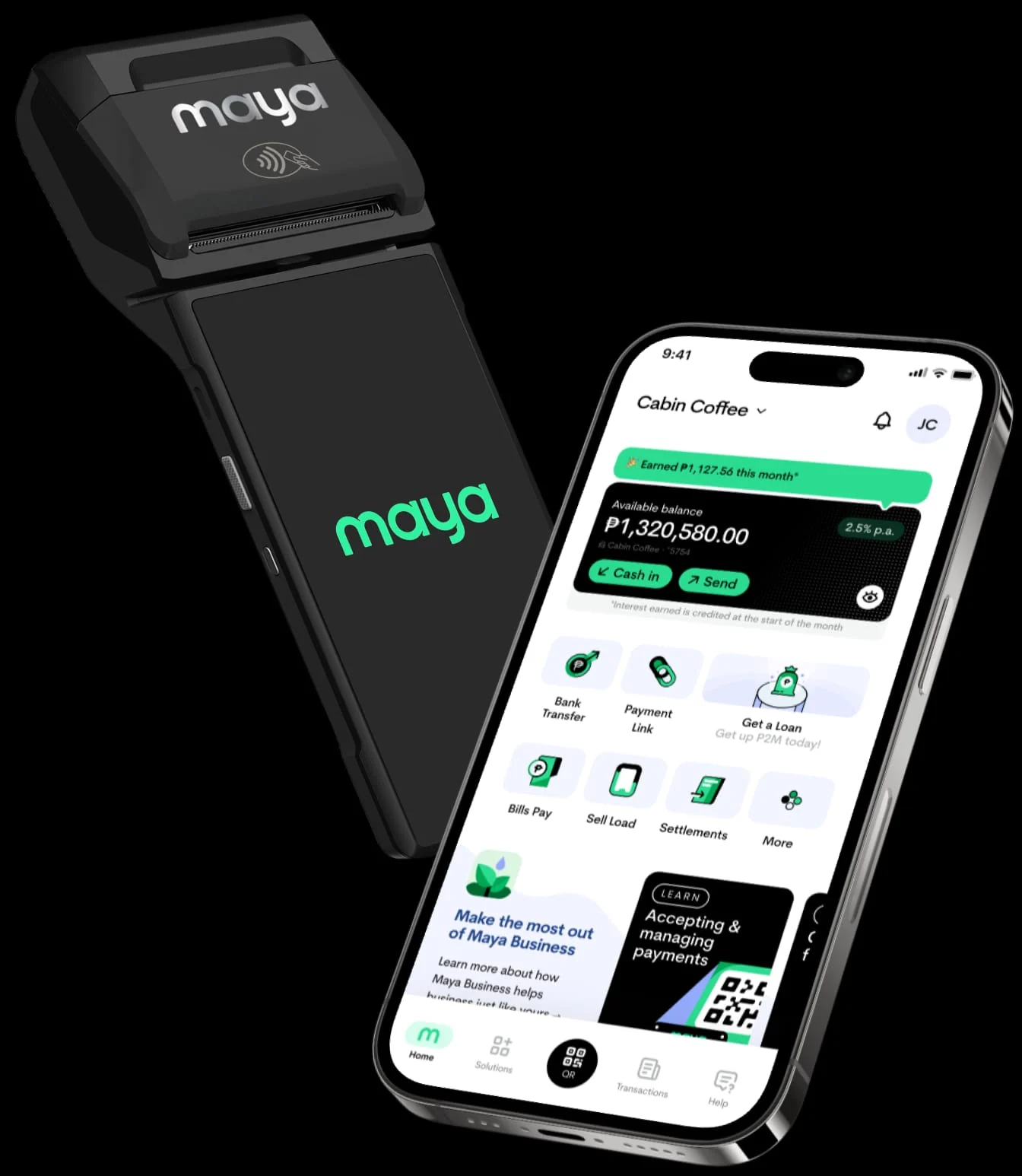
Maya Business is a Philippine business payments platform that helps merchants accept digital payments, manage invoices, handle business transfers, and access other business services. Its payment options include Maya QR, QRPh, cards, GCash, and other supported wallets through Maya Terminal.
Key features:
- Maya QR and QRPh payments
- Card and contactless payments through Maya Terminal
- Real-time transaction and settlement reports
- Digital invoices and payment links
- Business transfers and supplier payments
| Pros | Cons |
|---|---|
|
|
Best for: Businesses that want to accept multiple cashless payment methods through one provider.
Pricing: From 1% per transaction.
PH note: Maya Terminal's listed rates start at 3.50% MDR for Visa, Mastercard, and JCB/Amex, while Maya QR and QRPh start at 1.0% MDR. Maya also states that its Terminal can integrate with existing electronic cash registers, which can help businesses connect payment acceptance with their current POS setup.
3. Foodpanda
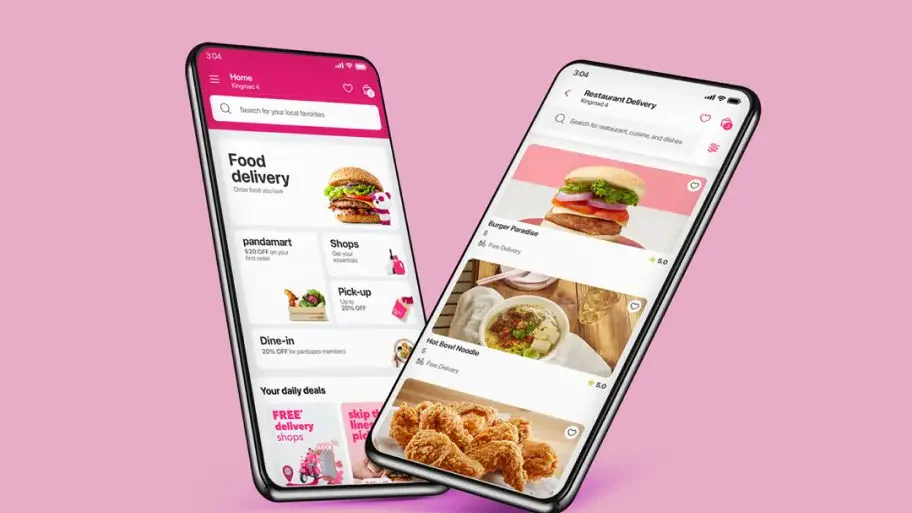
Foodpanda is a food delivery aggregator that allows restaurants to accept online orders, manage menus, and reach customers through the Foodpanda platform. It is suitable for restaurants that want to complement GrabFood with a second delivery channel.
Key features:
- Vendor Hub for menu and order management
- Food delivery fleet coverage
- GCash and card payment support
- Outlet-level analytics
- Online menu and promotion management
| Pros | Cons |
|---|---|
|
|
Best for: Operators seeking a second aggregator channel to complement GrabFood coverage.
Pricing: Custom commission pricing.
PH note: Strong in Luzon with growing Visayas coverage. Like GrabFood, commission-based pricing means margin per order is lower than a direct channel. Most PH operators run both aggregators simultaneously.
4. Klikit
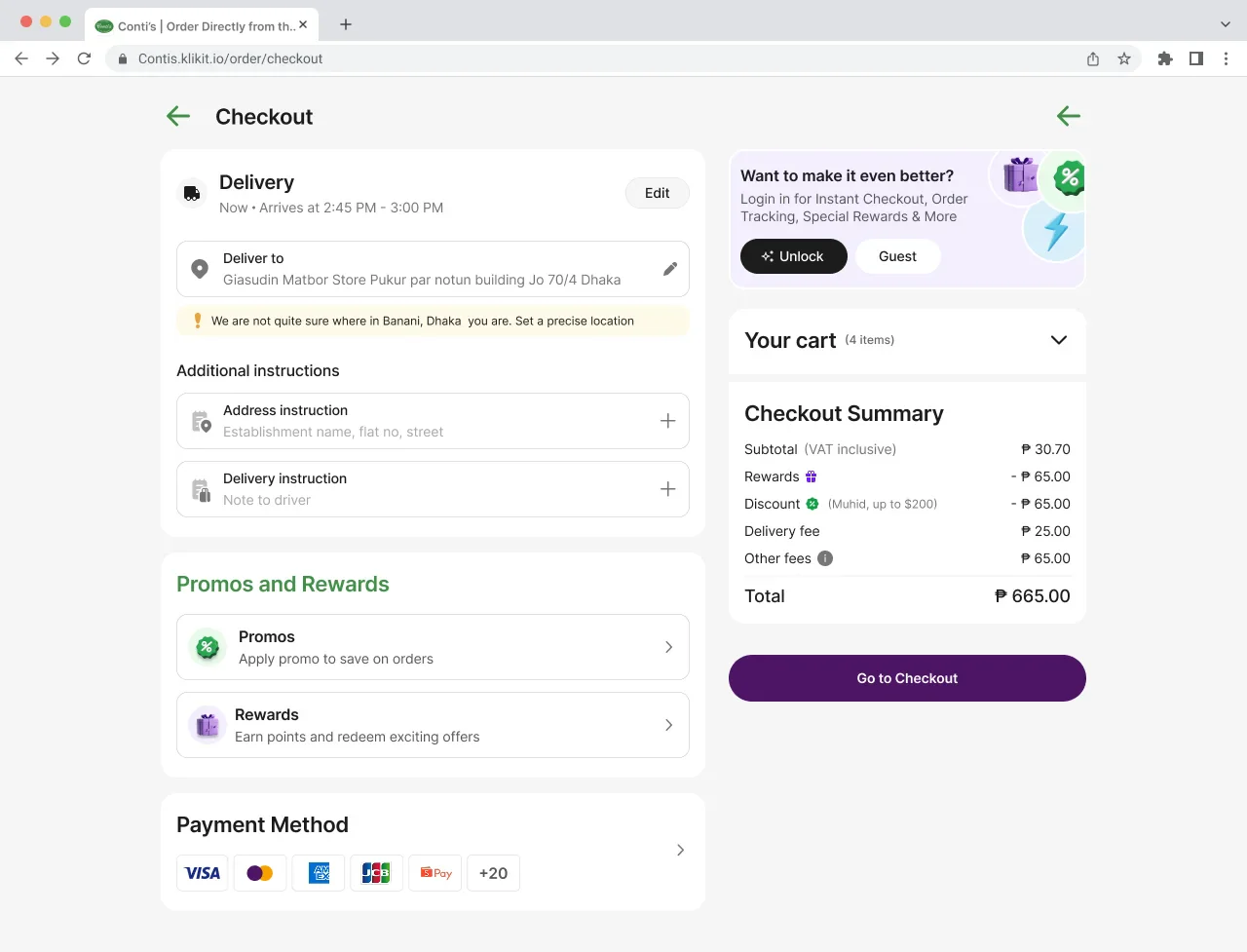
Klikit is a multi-channel order management platform designed for businesses that receive orders from several delivery aggregators. It brings orders from GrabFood, Foodpanda, ShopeeFood, and other supported platforms into one consolidated dashboard.
Key features:
- Centralized order inbox
- Unified menu publishing
- Real-time order status updates
- Bulk menu updates across platforms
- Sales analytics by channel and outlet
| Pros | Cons |
|---|---|
|
|
Best for: Operators managing GrabFood, Foodpanda, and ShopeeFood simultaneously who need one consolidated order inbox.
Pricing: Custom pricing based on selected features.
Custom pricing based on selected features.
PH note: PH-headquartered platform with a local support team. Particularly useful for cloud kitchens running multiple brands from one location. Does not replace a POS or inventory system.
5. UTAK POS
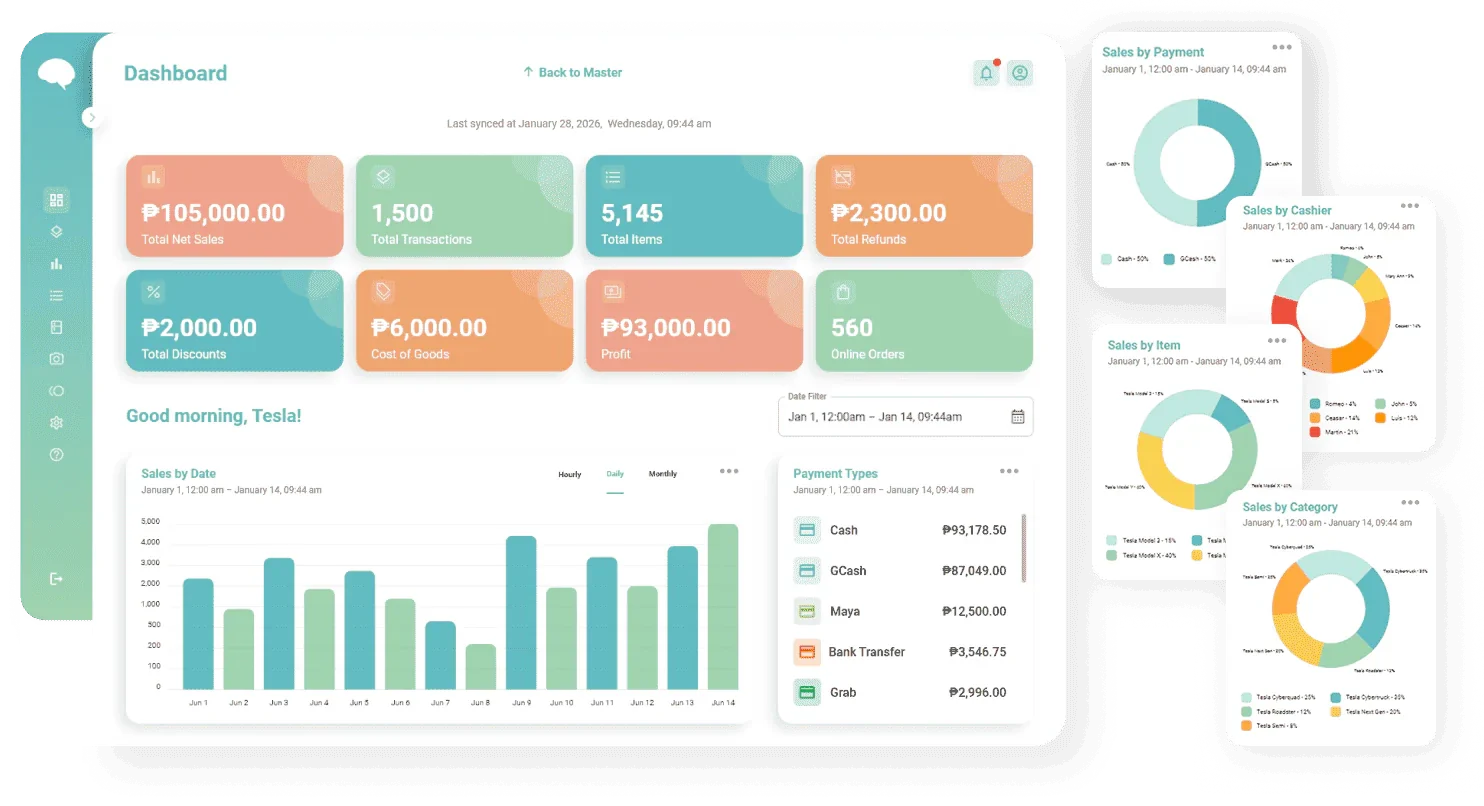
UTAK POS is a cloud-based point-of-sale system with QR ordering and delivery aggregator integrations. It is designed for small to mid-size Philippine restaurants that need basic online ordering, payment acceptance, sales reporting, and inventory tracking.
Key features:
- QR code table ordering
- GCash and Maya payment support
- BIR-compliant receipts
- Real-time sales reports
- Basic inventory tracking
- Android tablet compatibility
| Pros | Cons |
|---|---|
|
|
Best for: Small to mid-size PH restaurants needing an affordable local POS with basic online ordering.
Pricing: From ₱2,333/month, excluding hardware costs.
From ₱2,333/month, excluding hardware costs.
PH note: Local development team with PH-based support. Suited to single-location or small-chain operators. Multi-branch reporting and ERP integration are limited compared to enterprise options.
6. peddlr
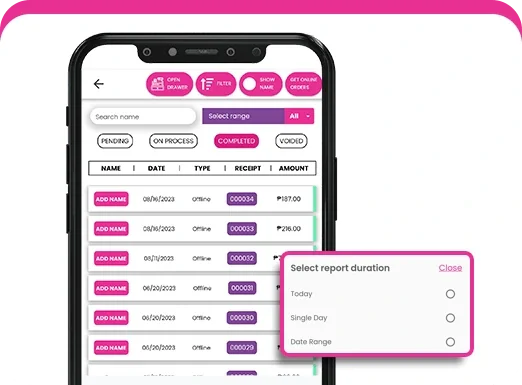
peddlr is a mobile-first ordering platform for micro and small food businesses. It allows sellers to share ordering links through social media and messaging apps, making it suitable for home-based food sellers, sari-sari stores, and solo operators.
Key features:
- Mobile ordering link
- Facebook, Instagram, and Viber sharing
- GCash and cash-on-delivery support
- Simple menu builder
- Basic order tracking
| Pros | Cons |
|---|---|
|
|
Best for: Home-based food sellers, sari-sari stores, and solo operators taking orders via social media.
Pricing: Free basic plan.
PH note: Designed for the PH micro-seller market. Zero monthly fee entry tier. Does not include inventory management or BIR receipt generation, operators need a separate accounting tool as they grow.
7. Orderna
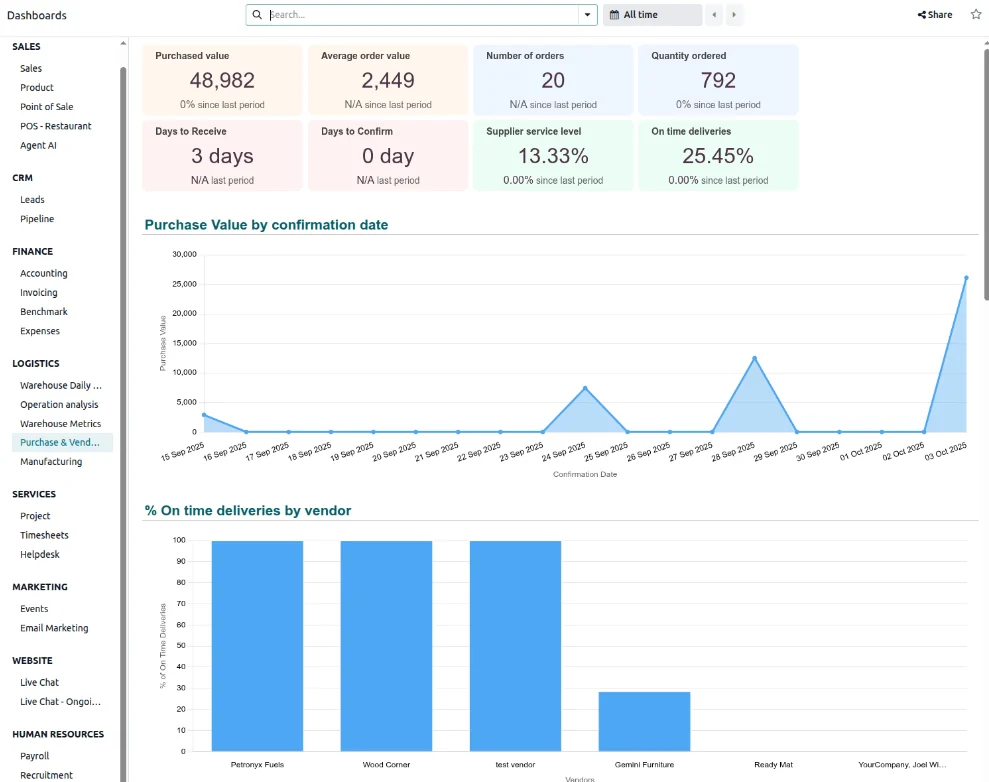
Orderna is a Philippines-built cloud POS platform with an integrated online ordering module. It is designed for cafes, quick-service restaurants, and food courts that need QR ordering, payment processing, kitchen coordination, and daily sales reporting.
Key features:
- QR self-ordering
- Dine-in and takeaway order management
- GCash and card payment support
- Kitchen display screen support
- Daily sales and product reports
- Basic inventory depletion tracking
| Pros | Cons |
|---|---|
|
|
Best for: Cafes, quick-service restaurants, and food courts in the Philippines.
Pricing: From ₱1,000/store/month.
From ₱1,000/store/month.
PH note: PH-registered company with local implementation and support. Positioned for the QSR and cafe segment. Finance and multi-branch consolidation require a connected accounting tool.
8. Shopify
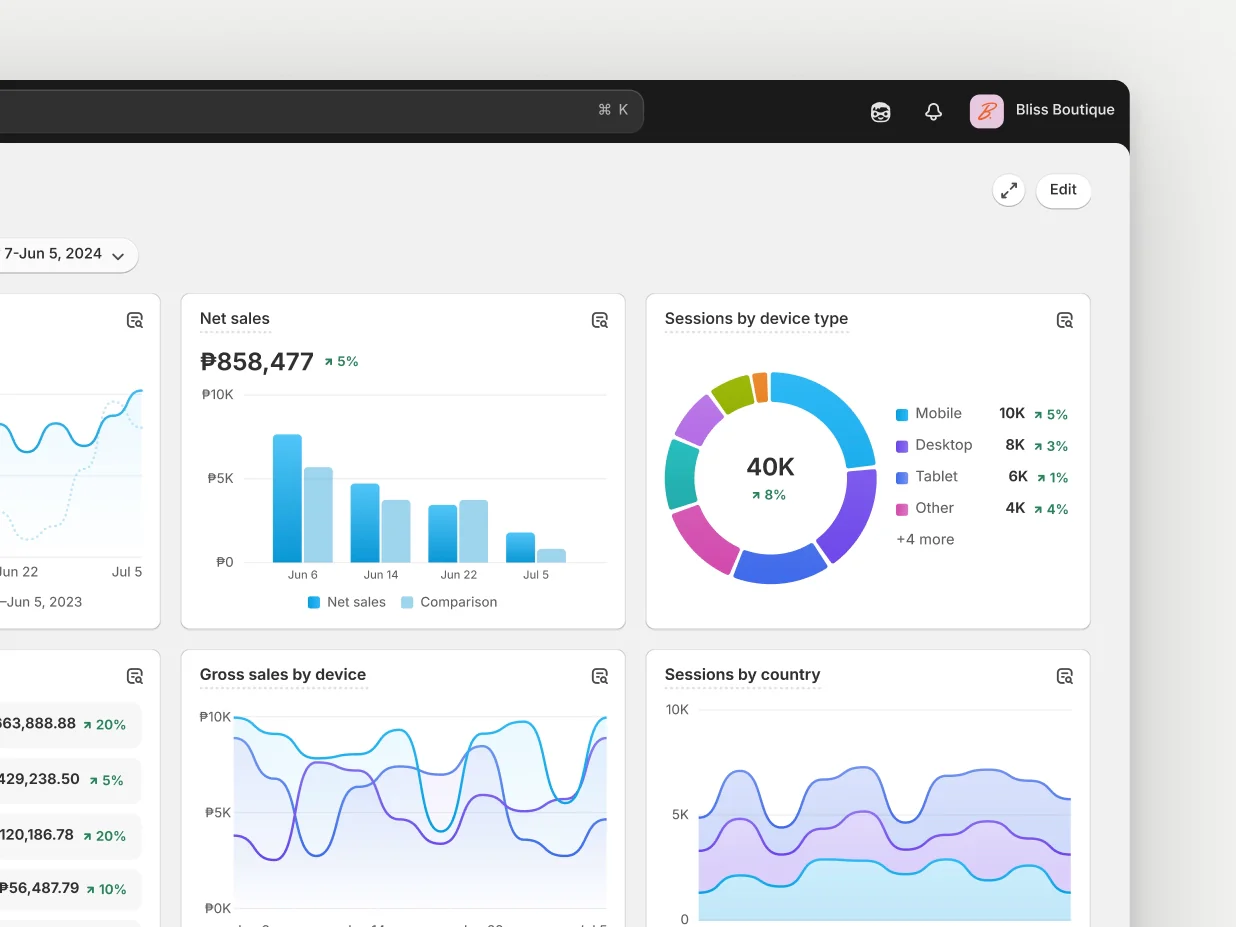
Shopify is an e-commerce platform that can be adapted for food and beverage businesses that want to build a branded online ordering channel. It is best suited for packaged food brands, catering businesses, and ghost kitchens with direct ordering or pre-order workflows.
Key features:
- Branded online storefront
- Payment gateway integrations
- GCash payment support through selected providers
- Subscription and pre-order capabilities
- Shopify POS for hybrid retail
- Apps for delivery scheduling and order management
| Pros | Cons |
|---|---|
|
|
Best for: Packaged food brands, catering services, and ghost kitchens building a branded direct order channel.
Pricing: From ₱1,194/month, excluding payment gateway fees.
PH note: No native BIR receipt module; operators use a third-party app or a manual process for BIR compliance. Best suited to packaged or pre-order food businesses rather than hot-food quick service. International support; no local PH team.
9. Square Online
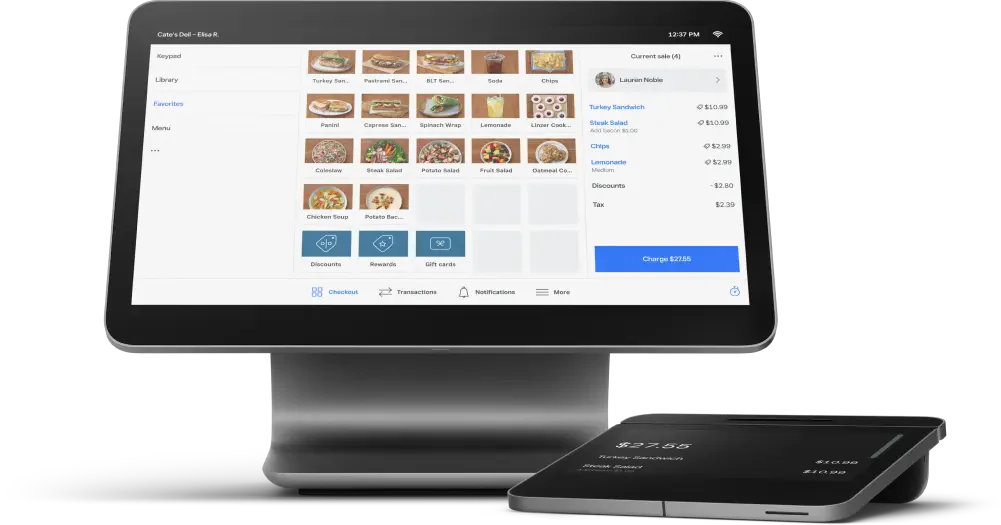
Square Online is a direct ordering website builder connected to Square POS. It is designed for small restaurants that already use Square and want to add online ordering, pickup, delivery scheduling, and basic inventory synchronization.
Key features:
- Online ordering page
- Square POS synchronization
- Curbside pickup support
- Delivery scheduling
- Facebook and Instagram integration
| Pros | Cons |
|---|---|
|
|
Best for: Small restaurants already on Square POS looking to add a branded online ordering page.
Pricing: Free plan available, excluding payment processing fees.
PH note: Square's hardware and payment processing have limited official PH coverage. Operators may face card processing and BIR compliance gaps. Best evaluated as a direct supplement if Square POS is already in use.
10. Flipdish
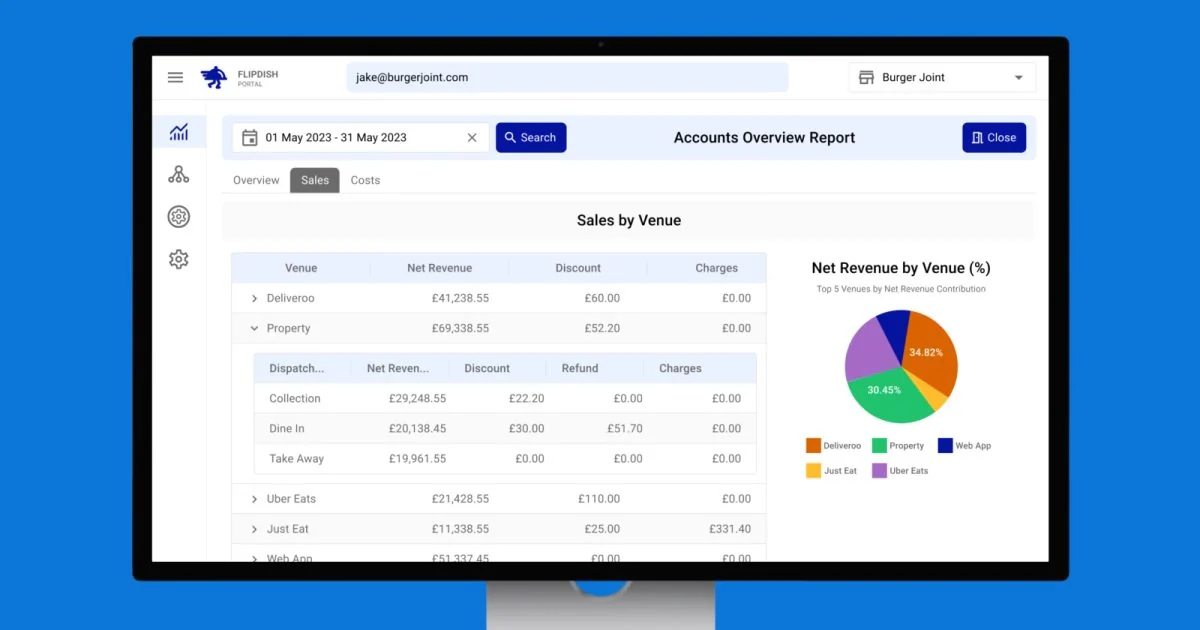
Flipdish is a white-label online ordering platform that helps restaurants create branded ordering websites and mobile apps. It is designed for mid-size and large restaurant brands that want to increase direct orders and reduce dependence on third-party aggregators.
Key features:
- Branded iOS and Android ordering apps
- Direct web ordering
- Loyalty and voucher programs
- POS integrations through API
- Order analytics dashboard
| Pros | Cons |
|---|---|
|
|
Best for: Mid-size to large restaurant brands building a proprietary direct ordering channel to reduce aggregator dependency.
Pricing: From ₱7,479/month, depending on selected features.
PH note: Suited to established chains wanting to shift a portion of aggregator volume to a branded channel. Implementation requires PH-compatible payment gateway setup and local BIR compliance handled separately. Verify local support availability before onboarding.
How to Choose the Right Online Ordering System
Choosing an online ordering system should start with understanding how the business currently handles orders. This helps businesses avoid paying for features they do not need while missing features that could solve their operational problems.
1. Model Selection: Aggregator, Direct, or ERP-Integrated
There are three common online ordering models. Aggregators like GrabFood and Foodpanda help restaurants reach more customers but charge commissions, while direct channels like Shopify and Flipdish give businesses more control over customer data and sales.
Many Philippine restaurants use a hybrid approach, combining aggregators for reach, direct channels for repeat orders, and an integrated system to manage operations in one place.
2. Feature Checklist
Before choosing a system, check whether it supports the features needed for daily operations. Important features include:
- Single menu master that updates menus across all channels
- Consolidated order inbox for aggregator and direct orders
- Real-time inventory decrement when an order is confirmed
- Automatic item pausing when stock runs out
- POS integration without manual data entry
- Aggregator commission recording as a separate finance expense
- Per-branch reporting and multi-location stock visibility
- Promotion and pricing management without manually updating menus
- Refund and void workflows that also update inventory and finance
- Staff training and documentation that are easy to follow
- Baseline metrics such as order errors, reconciliation time, and refund volume to measure improvement after implementation
3. Philippine-Specific Requirements
Businesses in the Philippines should choose a system that supports local tax and payment requirements, including sales invoices or receipts and payment methods such as GCash, Maya, and QR Ph.
Card payment integrations such as PayMongo or Dragonpay can provide additional options. Multi-branch businesses should also check for local customer support and clear data ownership so they can access their order and customer records when needed.
Conclusion
An online ordering system should make daily operations easier, not create another system for staff to manage. The right choice depends on how well it connects ordering channels with POS, inventory, finance, and reporting while fitting the business's workflow and branch needs.
Before implementation, businesses should assign an internal owner, check menu and pricing data, and record baseline metrics such as order errors, reconciliation time, and refund volume. Reviewing these results after 30 and 90 days can help determine whether the system is improving operations before expanding it to other branches.
If sales, recipe, inventory, and purchasing data are still managed separately, an integrated solution can help bring them together. Book a free consultation to explore how the solution can fit your business and branch operations.
FAQ About Online Ordering System
Explain the trade-off between discoverability, customer-data control, fulfilment responsibility, integration depth, and internal workload. Recommend a hybrid framework only when the business can govern menus, inventory, and customer-service processes across channels. Verify current platform policies before making specific claims.
Describe the required data flow from order capture to item availability, payment status, inventory adjustment, refund handling, accounting treatment, and reporting. Explain that the exact connection depends on documented connectors, APIs, field mapping, permissions, and exception handling.
Explain that buyers should verify provider coverage, settlement timing, refund handling, reconciliation, branch configuration, security, and applicable Philippine regulatory or invoicing requirements with authoritative sources. Do not state that a specific system supports a payment method without current documentation.
Use operational signals rather than a revenue threshold: disconnected branch reporting, repeated menu or stock errors, manual reconciliation, limited customer insight, complex fulfilment, and a need for integrated inventory or finance workflows. Explain that moving does not necessarily require abandoning third-party channels.
Recommend tracking order accuracy, preparation time, cancellations, fulfilment reliability, inventory variance, reconciliation time, reporting timeliness, and exception volume against a documented baseline. Clarify that targets should be set internally and not presented as universal benchmarks.