







Dynamic pricing is changing how we buy and sell products in the Philippines. In 2026, you can see this strategy in action every time you book a ride on a rainy afternoon in Manila or browse for a new smartphone on a major e-commerce app. The Philippine Price Act prohibits illegal price manipulation involving necessities and prime commodities, so businesses should keep pricing practices compliant while responding to market conditions.
This guide will show you how to use these price changes to help your business grow without losing the trust of your Filipino customers.
Key Takeaways
Dynamic pricing changes prices in response to demand, stock levels, and competitor moves in the Philippine market.
Five types cover time-based and surge, segmented, peak and off-peak, competitor-based, and clearance pricing.
Implementation runs in five steps: floor price, demand forecast, competitor monitoring, rule automation, and small tests.
A POS pushes price changes to the counter, website, and shelf labels, while fixed pricing still suits SRP goods.
What is Dynamic Pricing in the Philippines?
Dynamic pricing is a strategy where businesses change prices to match live market conditions. Prices rise when demand climbs, but they fall when stock builds up or when rivals cut theirs. This keeps each price close to what buyers will pay.
In the Philippines, online marketplaces use it most. Sellers raise prices during peak demand and cut them hard on sale days like 11.11 and 12.12. Your retail management system supplies the sales data behind every move. A rainstorm lifts umbrella demand in Makati, so nearby stores raise their prices by a few pesos. More Pinoy businesses adopt this approach to stay competitive.
That data comes from your point of sale, and acting on it fast decides the margin you keep. HashMicro POS tracks demand and stock in real time, then adjusts prices automatically so you never miss a selling moment.
Types of Dynamic Pricing
What is dynamic pricing? Is it a ride-hailing fare that jumps during a rainstorm, or a grocery discount on bread that expires tomorrow? Dynamic pricing has many types, and each one responds to a different signal. Philippine businesses can choose from five common models, explained below.
1. Time-Based and Surge Pricing
This type lifts prices during predictable busy windows. A cafe charges more on weekend mornings than Tuesday afternoons. Surge pricing pushes that idea harder. Ride-hailing apps in Metro Manila multiply fares every rush hour, then drop them again once demand cools off.
2. Segmented Pricing
Segmented pricing sets separate rates for separate buyer groups. Students, senior citizens, and loyal members each see their own price. Your system reads purchase history and loyalty tier to pick it. Retail, travel, and digital services lean on this model hardest.
3. Peak and Off-Peak Pricing
Businesses cut prices when foot traffic slows. Happy-hour deals fill tables between 2 pm and 5 pm. Hotels use the same logic on quiet midweek nights. A discounted seat still protects your gross profit margin when the price clears your cost. A fixed price leaves that capacity idle.
4. Competitor-Based Pricing
This model tracks rival prices and reacts fast. Sellers on Shopee and Lazada match or undercut a competitor within hours. Automation matters more here than in any other type. Manual watching turns small price cuts into long margin-eroding wars.
5. Clearance and Near-Expiry Pricing
Convenience stores mark down food as its expiry date nears. That markdown moves stock before it becomes waste. Clothing retailers run the same play at every season change. Each peso you recover beats a peso of written-off inventory.


Paragraf baru...
Paragraf baru...






Dynamic Pricing Examples in the Philippines
Philippine businesses use a dynamic pricing strategy to handle high transaction volumes every day. Automated pricing helps them balance supply and demand in real time. It also supports smarter supply chain management by reducing waste and stockouts. The examples below show how major industries apply it.
1. Shopee and Lazada
Online marketplaces like Shopee and Lazada change prices constantly. Flash sales, vouchers, and payday campaigns on the 15th and 30th move prices within hours. Sellers use repricing tools to match competitors. Shoppers who spot two prices in one day lose trust, so pair repricing with customer retention strategies.
2. Grab and Ride-Hailing
Ride-hailing apps like Grab and JoyRide use surge pricing every day. When rush hour hits EDSA, or a typhoon arrives, fares go up. Higher fares encourage more drivers to go online and pick up passengers. Without it, riders might wait hours because few drivers accept low fares in traffic.
3. Hotels and Airlines
Hotels in Boracay and Palawan adjust rates by season. A room that costs ₱5,000 in the rainy season can cost ₱15,000 during Holy Week. Airlines like Cebu Pacific and Philippine Airlines apply the same logic to fares, raising prices as seats fill and departure nears.
4. Supermarkets and Sari-Sari Stores
Supermarkets in Metro Manila are starting to use digital shelf labels. If milk or bread nears its expiration date, the system can cut the price by 30% automatically. Sari-sari stores apply a simpler version by hand. They often mark down ripe fruit or bread at day's end to avoid waste.
Pros and Cons of Dynamic Pricing
Dynamic pricing offers clear benefits, but it also carries real risks. Businesses can boost revenue, clear inventory, and respond to demand faster. However, Filipino shoppers value fairness and dislike sudden price hikes. Poor timing or unclear explanations can hurt trust, so companies must weigh both sides carefully.
| Pros | Cons |
|---|---|
| Raises revenue by increasing prices when demand is high | Sudden price hikes upset customers who expect good value for their money |
| Clears excess or near-expiry stock before it spoils | Shoppers with a personal bond to local brands and neighborhood shops react more emotionally |
| Responds to competitors and market shifts in real time | Unexplained increases can weaken customer retention built over many years, such as a bakeshop losing loyal regulars after a sudden bread roll price hike |
| Automates repricing and saves manual work | Algorithms alone can set unfair prices without human oversight |
| Gains customer acceptance when the reason is clear, such as fuel costs, shortages, or seasonal demand | Prices that feel exploitative can spark social media complaints and damage the brand's reputation |
Rules You Must Follow Under the PH Price Act
The Price Act (RA 7581) bans profiteering on basic necessities. DTI sets SRP ceilings for goods like sardines, bread, and bottled water. Prices freeze by law once a province declares a State of Calamity. Program your pricing rules to respect these blocks and avoid heavy fines.
Raising rice prices during a flood can trigger legal action or cost you your business permit. BIR rules also require receipts to match the digital price at purchase. The best POS software in the Philippines helps by updating prices across all channels instantly, so the counter never disagrees with the shelf.
How to Implement Dynamic Pricing: 5 Steps
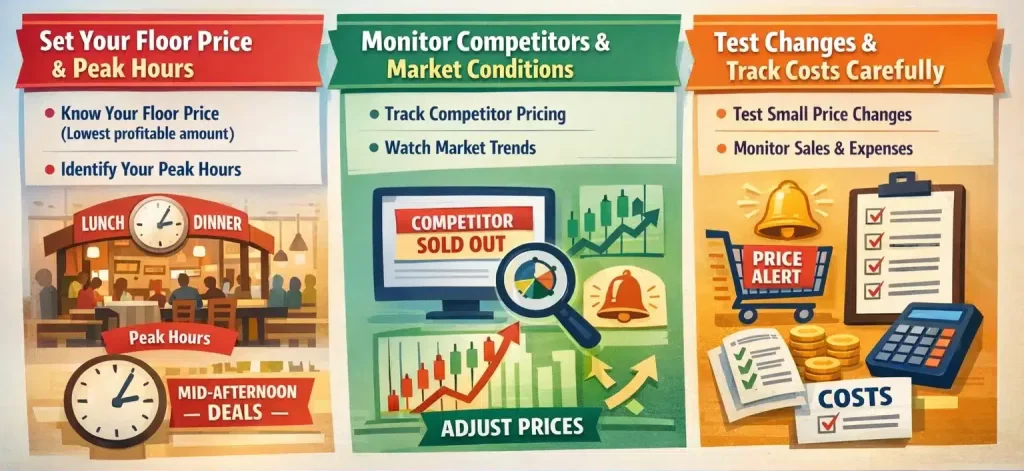
Setting up a dynamic pricing strategy takes more than installing software. You need clear limits, reliable data, and a testing habit. The five steps below walk you through the process, from finding your floor price to reviewing your first results. Each step builds on the one before it.
1. Set Your Floor Price and Peak Hours
Start by finding your floor price, the lowest amount you can charge while staying profitable. Never let your system drop below it outside a planned promo. Then map your peak hours. A restaurant in BGC fills tables at weekday lunch and dinner, so mid-afternoon fits lower prices.
2. Forecast Demand From Your Sales Data
Your sales history shows what demand will do next week. Pull reports from your POS and look for patterns by day, weather, and payday. Strong demand forecasting feeds everything later. Without it, a dynamic pricing strategy can fail.
3. Monitor Competitors and Market Conditions
Watch what your rivals charge and why. Some tools alert you when a competitor runs out of stock. That gap opens a short window to win their buyers. Your dynamic pricing strategy should respond to real market conditions, not to hunches.
4. Automate Your Pricing Rules
Manual repricing collapses once you manage more than a few items. Set rules that trigger price changes when stock, demand, or rival prices hit your limits. Automation applies your rules across every channel, so your app and counter show one price.
5. Test Small and Track Your Costs
Test every change on a small group of items first. Watch how volume responds, because a big sales drop means your price overshot the market. Measure that response as your price elasticity of demand. Track supply costs too, since rising inputs quietly erase the margin your new prices created.
How Your POS System Handles Price Changes
Frequent price changes only work when one system controls them. Your POS pushes new prices to the counter, website, and shelf label in seconds. The best inventory management software can read stock and update prices automatically, so near-expiry batches drop automatically. The table below compares fixed and dynamic pricing.
| Feature | Fixed Pricing | Dynamic Pricing |
|---|---|---|
| Price change frequency | Rare, usually seasonal | Real time, hourly or daily |
| Profit potential | Steady but limited | High, captures demand spikes |
| Best for | Basic necessities under SRP | Fashion, tech, travel, services |
| Consumer reaction | Predictable and trusted | Mixed, needs clear communication |
| Data required | Cost sheet and margin target | Live sales, stock, and competitor prices |
| Staff workload | Low, set once per season | Moderate, rules need review |
| System requirement | Any POS with a price list | POS with rule-based pricing and channel sync |
Three controls keep the system safe. Set an approval ceiling so no rule breaks your floor price. Keep a price change log showing the user, time, and reason. Test how your terminals behave when the internet drops mid-shift.
Conclusion
Dynamic pricing lets Philippine businesses move prices with demand, stock levels, and competitors' moves. Grab, Shopee, hotels, and supermarkets already run it daily. Businesses use it to protect margins during peak demand and to clear stock before it turns into waste.
Implementation follows a clear order. Set your floor price and map your peak hours. Forecast demand from sales data, watch competitor moves, then automate your pricing rules. Test on a small group of items first. Respect Price Act limits on necessities, and keep a human reviewing every rule.
HashMicro POS Software handles that work for you. It updates prices across the counter, your website, and shelf labels at once. It tracks stock and demand in real time and logs every price change for BIR. Test POS system from HashMicro based on your price list.
FAQ About Dynamic Pricing in the Philippines
Yes, dynamic pricing is legal in the Philippines as long as businesses do not violate Republic Act No. 7581 or the Price Act. Companies must still follow DTI rules, especially for basic necessities and prime commodities subject to Suggested Retail Price (SRP) guidance or price freeze rules during a state of calamity.
Dynamic pricing works best for industries with changing demand, such as retail, travel, hospitality, ride-hailing, and service-based businesses. It is especially useful for products or services where demand can rise quickly during peak hours, bad weather, holidays, or promotional events like 11.11 and 12.12.
Businesses should apply dynamic pricing carefully by keeping price changes transparent, reasonable, and relevant to market conditions. Filipino consumers are highly sensitive to fairness, so sudden or unexplained price hikes may damage loyalty, while clearly justified adjustments are more likely to be accepted.
Businesses need an integrated POS and inventory system that can update prices across physical stores, websites, and apps in real time. This helps prevent pricing mismatches, keeps receipts accurate for BIR compliance, and makes it easier to monitor whether price adjustments improve sales performance.