





Fleet tracking helps businesses monitor vehicle locations, movements, and activity in real time. For Australian companies that rely on delivery vehicles, service fleets, trucks, or mobile teams, it provides greater visibility across daily operations.
Modern fleet tracking systems use GPS technology and telematics to collect vehicle data and turn it into actionable insights. Businesses can use this information to improve dispatching, monitor driver behaviour, reduce delays, and control operating costs.
This guide explains what fleet tracking is, how GPS fleet tracking works, the key features to look for, and how Australian businesses can use fleet tracking software to improve fleet performance and management.
Key Takeaways
Fleet tracking helps businesses monitor vehicle locations, routes, and driver activity in real time, improving visibility across daily operations.
GPS fleet tracking combines location data, telematics, and software to help businesses monitor vehicles, optimise routes, and improve operational efficiency.
Key fleet tracking software features include real-time GPS monitoring, route history, driver behaviour tracking, maintenance alerts, and performance reporting.
Fleet tracking helps businesses reduce delays, improve dispatching, monitor driver performance, and gain better control over fleet operating costs.
What Is Fleet Tracking?
Fleet tracking is the process of monitoring business vehicles using GPS technology, telematics devices, and tracking software. It allows companies to view vehicle locations, routes, driver activity, and vehicle status from a central dashboard.
Instead of relying on manual updates or phone calls, fleet tracking provides real-time visibility into fleet operations. Managers can quickly see where vehicles are, whether routes are being followed, and if any issues require attention.
Fleet tracking is commonly used by logistics providers, delivery companies, construction firms, field service businesses, and any organisation that manages vehicles as part of its operations.
How Does Fleet Tracking Work?

Fleet tracking works by collecting vehicle location and activity data through GPS or telematics devices and displaying it in fleet tracking software. This gives managers real-time visibility into vehicle movement, route performance, and operational issues.
1. GPS Device Collects Vehicle Location Data
GPS devices use satellite signals to track a vehicle’s location, speed, direction, and movement. This allows managers to view vehicle locations in real time without relying on manual driver updates.
2. Telematics Records Vehicle and Driver Activity
Telematics systems collect additional data such as fuel usage, engine performance, idling, mileage, harsh braking, and acceleration. This helps businesses understand vehicle utilisation, driver behaviour, and maintenance requirements.
3. Fleet Tracking Software Displays Real-Time Insights
Fleet tracking and management software converts GPS and telematics data into maps, dashboards, alerts, and reports. Managers can monitor vehicle activity, review routes, and respond more quickly to delays or operational issues.
4. Managers Use Tracking Data for Better Decisions
Tracking data helps businesses improve dispatching, maintenance planning, driver management, and cost control. By turning vehicle data into actionable insights, companies can make faster and more informed decisions."Effective fleet tracking is not just about knowing where vehicles are. It is about using real-time data to improve efficiency, reduce costs, and make better operational decisions."
Active vs Passive Fleet Tracking
Fleet tracking systems fall into two types: active and passive. Active tracking gives real-time vehicle visibility, while passive tracking records data for later review and historical reporting.
| Active Fleet Tracking | Passive Fleet Tracking |
| Provides real-time or near real-time vehicle updates | Stores vehicle data for later review |
| Shows live vehicle locations and route progress | Focuses on trip history and mileage records |
| Supports dispatching and operational decisions | Primarily used for reporting and analysis |
| Sends alerts for route changes and geofencing events | Does not provide live alerts |
| Ideal for logistics, delivery, and field service businesses | Suitable for basic tracking and record-keeping |
For most Australian businesses, active fleet tracking offers greater operational value because it supports faster decision-making, improved dispatching, and better fleet visibility throughout the workday.
Key Features of Fleet Tracking Software
The best fleet tracking software helps businesses monitor vehicle activity, improve efficiency, and make better operational decisions.
1. Real-Time GPS Location Tracking
Real-time GPS tracking allows managers to view vehicle locations throughout the day, helping improve dispatching, customer communication, and operational visibility.
2. Route History and Trip Reports
Route history records where vehicles have travelled, how long trips took, and whether drivers followed planned routes. This information is useful for route optimisation and performance reviews.
3. Driver Behaviour Monitoring
Fleet tracking software can monitor speeding, harsh braking, excessive idling, and other driving habits. This helps improve safety, reduce fuel consumption, and identify training opportunities.
4. Vehicle Maintenance Alerts
Maintenance alerts use mileage and vehicle usage data to remind teams when servicing is due. This helps reduce breakdowns and extend vehicle lifespan.
5. Fuel Usage and Cost Visibility
Tracking systems can identify fuel-wasting behaviours such as unnecessary idling and inefficient routes. This helps businesses manage fuel expenses more effectively.
6. Geofencing and Location Alerts
Geofencing creates virtual boundaries around specific locations and sends alerts when vehicles enter or leave those areas. This improves monitoring and operational control.
7. Fleet Performance Reports
Reporting tools provide insights into vehicle utilisation, driver performance, trip history, and operating trends. These reports support better planning and fleet management decisions.
Benefits of Fleet Tracking for Australian Businesses
Fleet tracking helps Australian businesses improve visibility, reduce manual coordination, and make faster decisions across daily operations.
- Improve fleet visibility: Monitor vehicle locations in real time across regional, remote, and long-distance routes.
- Reduce delivery delays: Help dispatchers assign jobs faster and provide more accurate customer updates.
- Monitor driver behaviour: Track speeding, harsh braking, idling, and other driving habits to improve safety and performance.
- Plan maintenance proactively: Use mileage and vehicle usage data to schedule servicing and reduce unexpected breakdowns.
- Control operating costs: Identify inefficient routes, unnecessary travel, and excessive idling that increase fuel and labour expenses.
When vehicle locations, driver behaviour, and cost data are connected in one system, Hashy AI can review what is happening across your fleet and surface the issues that need attention today.






Fleet Tracking vs Fleet Management
Fleet tracking focuses on vehicle location, movement, and activity, while fleet management covers the broader process of managing vehicles, drivers, maintenance, fuel, costs, compliance, and performance.
| Fleet Tracking | Fleet Management |
| Tracks vehicle locations and routes | Manages vehicles, drivers, and assets |
| Provides real-time GPS visibility | Includes maintenance and fuel management |
| Monitors trips and driver activity | Tracks costs, compliance, and performance |
| Supports dispatch decisions | Provides end-to-end operational control |
Businesses that only need vehicle visibility may find fleet tracking sufficient. However, companies looking for greater control over vehicle optimization, maintenance, costs, scheduling, and reporting typically benefit more from a complete fleet management system.
GPS Fleet Tracking in Australia: What Should Businesses Consider?
Australian businesses should choose GPS fleet tracking software based on route coverage, fleet size, reporting needs, and integration requirements. Coverage is especially important for fleets going across regions, states, or remote locations.
Businesses should also ensure the system supports the features they need, such as driver monitoring, maintenance alerts, and fuel tracking.
Fleet tracking delivers the most value when it integrates with maintenance, scheduling, payroll, accounting, and reporting systems, helping businesses improve operational visibility and control.
Common Fleet Tracking Challenges
Fleet tracking can improve visibility, but it needs the right setup and process. Many businesses struggle when they collect data without clear rules, reports, or follow-up actions.
- Incomplete driver adoption: Drivers may resist tracking if they see it as surveillance rather than a tool for safety, accountability, and operational efficiency.
- Poor tracking data accuracy: Device issues, weak network coverage, or incorrect setup can lead to unreliable GPS data and reporting.
- Disconnected systems: Tracking data is less valuable when it is not connected to maintenance, scheduling, or fleet management workflows.
- Too much data: Without clear dashboards and reports, managers may struggle to identify the insights that require action.
- Driver privacy concerns: Businesses should clearly explain what data is collected, how it is used, and who can access it to maintain trust and compliance.
How Fleet Tracking Software Supports Better Fleet Management
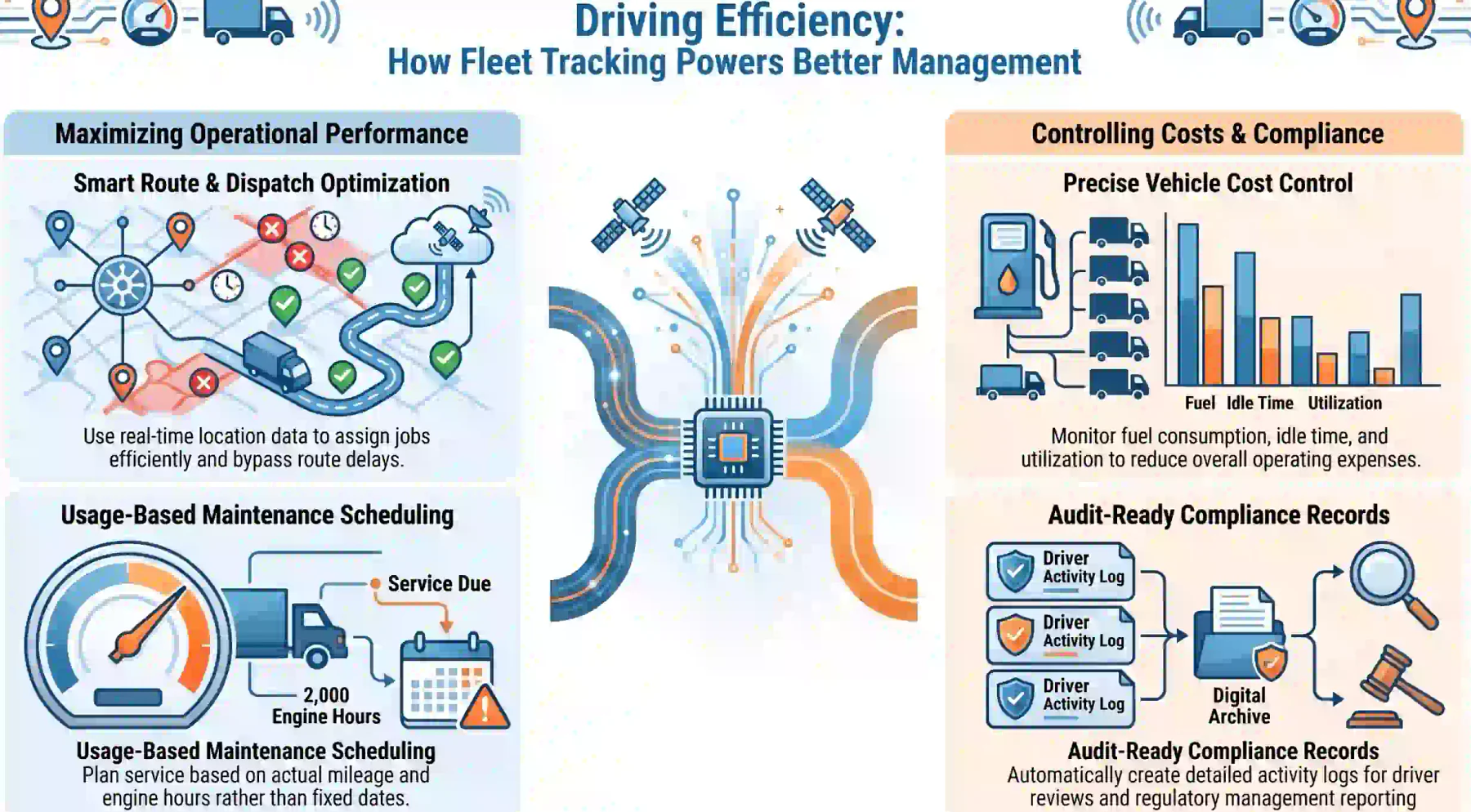
Fleet tracking software supports better fleet management by turning vehicle data into decisions. When location, usage, maintenance, and driver activity are visible, managers can improve planning and reduce operational blind spots.
- Maintenance scheduling: Vehicle usage data helps businesses plan maintenance based on mileage, engine hours, and usage patterns rather than fixed service dates.
- Route and dispatch optimisation: Real-time vehicle location data helps dispatchers assign jobs more efficiently and identify route delays or inefficiencies.
- Vehicle usage and cost control: Tracking reports help managers monitor vehicle utilisation, fuel consumption, idle time, and overall operating costs.
- Compliance and reporting: Fleet tracking creates detailed records of vehicle activity, supporting audits, driver performance reviews, and management reporting.
Conclusion
Fleet tracking helps businesses improve visibility over vehicle locations, driver activity, and daily operations. For organisations that manage delivery fleets, service vehicles, or mobile teams, it can support better decision-making and operational efficiency.
The greatest value comes when tracking data is connected with maintenance, scheduling, reporting, and cost management processes. This helps businesses gain a more complete view of fleet performance.
If you're exploring fleet tracking solutions, our experts can help recommend the right system for your operations. Book a free consultation to discover how a connected fleet management platform can support your business.
Frequently Asked Questions
Active fleet tracking shows vehicle locations in real time, while passive tracking stores data for later review. Active tracking is better for businesses that need live updates throughout the day.
Vehicle tracking software helps businesses monitor vehicle locations, routes, driver activity, and fleet performance. It improves visibility and helps teams manage operations more efficiently.
Yes. GPS fleet tracking helps small businesses track vehicles, improve routing, reduce fuel costs, and provide better customer service.
Businesses should consider coverage, fleet size, reporting features, software integrations, and future growth needs before choosing a fleet tracking solution.