









 Limited to 100 registrants

Fleet maintenance is how businesses keep every vehicle safe, roadworthy, and available for operations. It covers inspections, routine servicing, fault repairs, and the records that support compliance.
For companies running trucks, vans, or service vehicles, a missed service can delay customers and disrupt schedules. Every day a vehicle is unavailable has a direct effect on operations.
This blog covers what fleet maintenance is, the types, a practical checklist, how to build your own schedule, and how fleet maintenance can be optimized with software.
Key Takeaways
Fleet maintenance is the process of inspecting, servicing, and tracking business vehicles to keep them safe, operational, and available for daily work.
Types of fleet maintenance: preventive, corrective, predictive, condition-based, and emergency. Most businesses need a combination of all five to manage vehicles properly.
Building a fleet maintenance schedule: Combine daily, weekly, monthly, quarterly, and mileage-based intervals matched to each vehicle's actual usage and operating conditions.
HashMicro helps manage fleet maintenance by connecting vehicle records, schedules, work orders, spare parts, and reporting in one platform.
What Is Fleet Maintenance?

Fleet maintenance is the process of inspecting, servicing, repairing, and tracking business vehicles. It applies to delivery vans, trucks, company cars, and any vehicle used in operations.
Managing a private car needs little more than a service reminder. It requires records, schedules, cost tracking, and service history across vehicles. Without a structured system, minor issues compound into delays and rising costs.
A logistics company must monitor tyres, brakes, engine condition, and repair history across multiple depots. Without structure, small faults become operational disruptions.
"Fleet maintenance is not just about keeping vehicles on the road. It is about making sure the business can deliver on its commitments every day. When maintenance is tracked properly, managers can plan instead of reacting to breakdowns."
Why Fleet Maintenance Matters for Australian Businesses
Vehicles are revenue-supporting assets. When one is unavailable, the business may lose delivery capacity, delay field service jobs, or face expensive emergency repairs.
For businesses on regional and remote routes, downtime quickly affects customer commitments and margins. Maintenance also supports safety and compliance recordkeeping.
According to the ABS Motor Vehicle Census, more than 20 million vehicles are registered in Australia. A substantial share are used across transport, construction, and logistics.
Businesses need clear records of inspections, service schedules, repairs, and vehicle condition. These records support long-term strategies for fleet efficiency by helping managers reduce downtime, control costs, and improve vehicle utilisation.
Types of Fleet Maintenance
Fleet maintenance is not a single activity. It includes five distinct approaches, and most businesses need a combination of all of them.
1. Preventive maintenance
Preventive maintenance is scheduled before a vehicle breaks down. It includes routine checks, oil changes, tyre inspections, brake servicing, and battery checks tied to time or mileage intervals.
Staying ahead of faults reduces surprise failures. It also lowers average repair costs and keeps vehicles available for work.
2. Corrective maintenance
Corrective maintenance happens after a fault is found during an inspection or driver report. Work can include replacing worn components, fixing electrical faults, or repairing leaks.
Corrective work is more effective when fault records are complete. Technicians can see what was found and what was done previously.
3. Predictive maintenance
Predictive maintenance uses vehicle data to forecast when a component may fail. Data comes from telematics systems, usage history, odometer readings, and sensor alerts.
This allows fleet managers to service vehicles at the right time. It avoids fixed intervals that may not match actual usage.
4. Condition-based maintenance
Condition-based maintenance triggers servicing based on the actual condition of a vehicle. It does not rely on a fixed calendar or mileage schedule.
A truck used heavily on rural roads may need attention far sooner than a sales vehicle on short city trips. This approach helps businesses avoid both under-servicing and unnecessary work.
5. Emergency maintenance
Emergency maintenance is unplanned repair work carried out after an unexpected vehicle failure. Every fleet will face emergencies occasionally.
A pattern of frequent emergency jobs usually points to weak scheduling or incomplete maintenance records. Tracking emergency frequency helps managers identify high-risk assets early.
Fleet Vehicle Maintenance Checklist
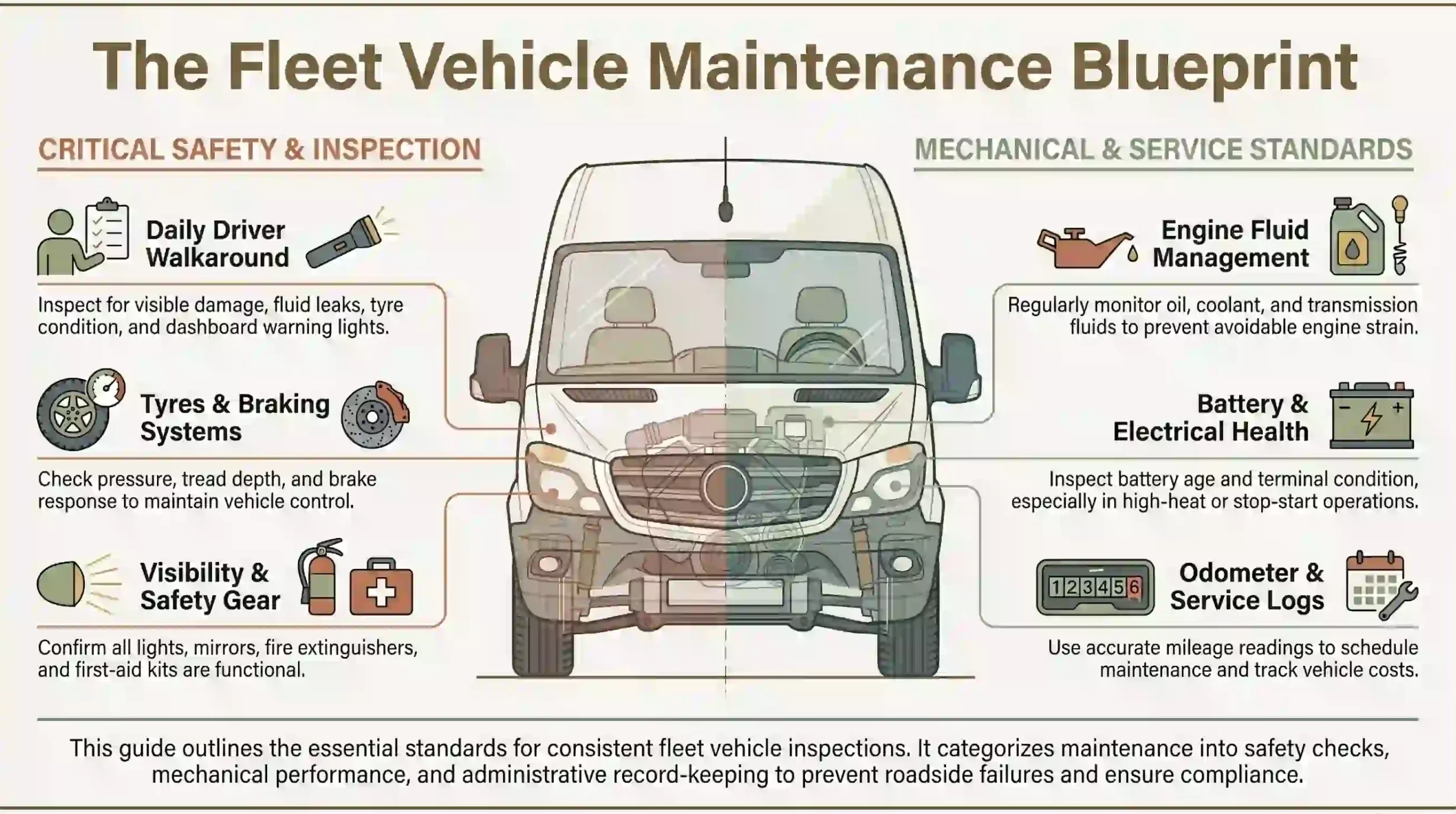
A fleet vehicle maintenance checklist gives drivers and managers a consistent inspection process. It also creates a clear record to review later.
It should cover safety, performance, appearance, and service indicators. Every vehicle in the fleet should use the same checklist format.
1. Daily driver inspection
Drivers should inspect each vehicle before use. Checks should include visible damage, fluid leaks, tyre condition, lights, mirrors, and dashboard warnings.
Horn, seat belts, and safety equipment should also be confirmed. A pre-start inspection catches developing issues before they become failures on the road.
2. Tyres and brakes
Tyres and brakes affect safety, fuel consumption, and vehicle control directly. Teams should check tyre pressure, tread depth, uneven wear, brake response, and brake fluid levels.
Any unusual sounds during braking should also be noted. These checks matter most for vehicles carrying heavy loads or covering long distances.
3. Engine oil and fluids
Oil, coolant, brake fluid, transmission fluid, and washer fluid should be inspected regularly. Low or contaminated fluids cause engine strain, overheating, and avoidable repairs.
Both scheduled fluid changes and unexpected top-ups should be recorded. This helps managers identify vehicles developing recurring issues.
4. Battery and electrical system
Battery failures can stop a vehicle before the workday starts. Teams should check battery age, terminal condition, charging performance, and dashboard warning lights.
Vehicles on long routes or in stop-start operations should be checked more regularly. High-heat environments also increase battery wear.
5. Lights, mirrors, and safety equipment
Headlights, brake lights, indicators, mirrors, and reverse cameras should be checked during routine inspections. Fire extinguishers, first-aid kits, and safety signage should also be confirmed.
These items are straightforward to inspect. They directly affect driver safety and compliance readiness.
6. Odometer and service records
Odometer readings help managers schedule services based on mileage rather than guesswork. Accurate readings support cost comparisons across vehicles and operating conditions.
Service entries should include the date, tasks completed, parts used, supplier details, and any follow-up actions. Consistent records make audits and vehicle history reviews easier.
7. Vehicle cleanliness and damage reports
Clean vehicles are easier to inspect thoroughly. Drivers should report dents, scratches, broken fittings, damaged interiors, and cleanliness issues consistently.
Regular damage reports help managers distinguish normal wear from misuse. They also help identify recurring issues at specific branches or depots.
How to Build a Fleet Maintenance Schedule
A fleet maintenance schedule should combine time-based, mileage-based, usage-based, and manufacturer-recommended intervals.
The right schedule depends on vehicle type, route conditions, load frequency, operating hours, and the cost of downtime for each asset class.
Start by listing every vehicle with its age, service history, odometer reading, route type, and operating pattern. Group vehicles by risk. A high-use delivery van needs far more frequent attention than a sales vehicle on short routes.
For businesses operating heavy vehicles, the National Heavy Vehicle Regulator (NHVR) sets compliance requirements that should inform your maintenance intervals and inspection records.
Afterwards, assign service intervals using a combination of the following approaches:
| Schedule Type | Best Used For | Example |
| Daily | Driver safety checks | Tyres, lights, mirrors, dashboard warnings |
| Weekly | Basic condition checks | Fluids, battery, cleanliness, visible damage |
| Monthly | Operational inspection | Brake condition, service logs, tyre wear |
| Quarterly | Planned servicing review | Preventive service, work order review, cost analysis |
| Mileage-based | High-use vehicles | Oil change after a defined kilometre threshold |
Review the schedule every quarter and adjust intervals when vehicle usage, route conditions, or fleet composition changes.
A schedule that does not reflect real operations will produce gaps, whether by over-servicing low-risk vehicles or missing critical checks on high-use assets.
Common Fleet Maintenance Challenges
Fleet maintenance becomes difficult when records are scattered, vehicles operate across multiple locations, and maintenance tasks depend on manual reminders.
These challenges develop slowly and become visible when breakdowns increase, costs rise, or compliance records fall short.
1. Missed service schedules
Missed service schedules usually happen when teams rely on calendars, spreadsheets, or memory to track upcoming work.
As the fleet grows, managers can lose track of which vehicles are overdue, which issues need follow-up, and which services are complete. Centralising service tracking with automated alerts is the most reliable way to close this gap.
2. Manual recordkeeping
Paper forms and spreadsheets can work for a very small fleet, but they become difficult to audit as vehicle numbers increase. Records can end up incomplete, duplicated, or stored separately at different branches.
This makes it harder to identify recurring problems, compare vehicle histories, optimise route, or demonstrate maintenance compliance when required.
3. Unexpected breakdowns
Unexpected breakdowns often occur when minor faults go unreported or untracked. A vehicle may show early warning signs through driver reports or inspection findings, but the business only acts after it fails.
This reactive cycle produces urgent repairs, operational delays, and higher costs than scheduled maintenance would have required.
4. Spare parts not available
Maintenance work can stall when the required parts are not in stock. If maintenance, inventory, and procurement run as separate systems, teams may discover a stock shortage only after a vehicle is already out of service.
Connecting these workflows reduces delays and helps purchasing teams anticipate demand before it becomes critical.
5. High maintenance costs
Maintenance costs rise when emergency repairs, duplicated work orders, and poor supplier visibility go unmonitored. Detailed cost records let the business make better repair-or-replace decisions before costs escalate further.
Without cost tracking by vehicle, branch, or service type, managers may keep spending on assets that are no longer cost-effective to repair.
6. Poor visibility across branches or depots
Multi-branch businesses need consistent visibility across every location. A shared system gives managers a single view of all vehicles regardless of where they operate, providing centralised fleet control across branches, depots, and operating regions.
When each depot manages its vehicles independently, headquarters may struggle to compare maintenance performance, monitor compliance, or standardise procedures across the fleet.
7. Difficulty tracking vehicle history
Vehicle history helps managers decide whether to repair, refurbish, or retire an asset. Without a complete record of past parts and activities, teams may continue investing in vehicles that are no longer economical to maintain.
A full service history also makes it easier to spot patterns, such as recurring faults tied to a specific make, model, or route type.
Manual vs Automated Fleet Maintenance
Manual fleet maintenance can work for very small teams, but it becomes harder to manage reliably as vehicle count, branch count, and maintenance frequency grow.
Automated maintenance gives managers clearer schedules, cleaner records, and faster visibility into overdue tasks across the entire fleet.
| Area | Manual | Automated |
| Service reminders | Calendars, spreadsheets, or manual notes | Automated alerts based on date, mileage, or condition |
| Work orders | Paper forms or messages | Centralised work orders with status tracking |
| Spare parts | Checked manually after a repair request | Linked to inventory availability and procurement |
| Costs | Difficult to consolidate across vehicles | Tracked by vehicle, branch, supplier, or service type |
| Reports | Prepared manually | Available through dashboards and maintenance logs |
Key Features to Look for in Fleet Maintenance Software
These are the key features that professional modern fleet maintenance software usually provides to completely manage the maintenance process.
- Fleet maintenance software: should help businesses schedule servicing, track work orders, store vehicle history, and monitor maintenance costs. Many organisations also rely on software for vehicle tracking to improve visibility into vehicle usage, location, and maintenance requirements.
- Preventive maintenance scheduling: lets managers create recurring service tasks based on dates, mileage, or usage patterns.
- Work order management: assigns, tracks, and closes maintenance jobs with clear ownership and status. Vehicle service history stores repair records, inspection results, supplier details, and service notes for every asset.
- Spare parts inventory tracking: lets teams verify part availability before maintenance work begins, reducing delays and unplanned purchasing.
- Maintenance cost tracking: monitors expenses by vehicle, branch, service type, or supplier so managers can identify where costs are highest.
- Driver inspection reports: capture daily vehicle checks and fault submissions in a consistent, reviewable format. Alerts and reminders notify teams before service deadlines pass, reducing the risk of missed inspections or overdue work.
- Reporting dashboard: gives managers real-time visibility into tasks, trends, and asset performance across locations. ERP integration connects maintenance with inventory, procurement, accounting, and asset records to unify data.
How HashMicro Helps Manage Fleet Maintenance
HashMicro integrates vehicle records, maintenance schedules, work orders, spare parts, procurement, asset tracking, and reporting into a single platform.
This gives fleet managers a consistent view across all vehicles, teams, and branches without relying on spreadsheets or separate systems.
HashMicro’s fleet platform centralises maintenance records, allowing teams to review service history, track overdue tasks, and identify which vehicles need attention from a single place.
Preventive maintenance scheduling helps fleet teams plan servicing before breakdowns occur and updates records as technicians close each job.
When maintenance work requires parts, HashMicro’s inventory module lets teams check stock availability before the job begins.
When teams need to order parts, they can raise a purchase request directly from the maintenance record without manual handoffs between departments.
Cost tracking lets managers review maintenance expenses by vehicle, location, supplier, or service category.
This helps the business identify high-cost assets early and make better-informed decisions about whether to repair, service, or replace a vehicle.
Conclusion
Fleet maintenance is more than routine servicing. It is a structured way to keep vehicles safe, reduce downtime, and control costs across the business.
HashMicro integrates maintenance schedules, work orders, spare parts, and cost tracking into a single system. That visibility helps Australian businesses plan servicing and avoid costly surprises.
To learn further regarding fleet maintenance, you can book a free consultation with us today.

Frequently Asked Questions
Fleet maintenance software schedules vehicle servicing, manages inspections, tracks work orders, stores service history, and monitors maintenance costs.
Fleet vehicle maintenance includes tyre checks, brake inspections, oil and fluid checks, battery checks, safety equipment checks, damage reports, odometer records, and scheduled servicing.
Frequency depends on vehicle type, mileage, usage intensity, and operating conditions. Most businesses combine daily checks with weekly, monthly, quarterly, and mileage-based schedules.
Preventive fleet maintenance is scheduled servicing performed before a vehicle breaks down. It includes routine inspections, part replacement, and condition checks to reduce unexpected failures.
Software helps manage servicing, inspection records, work orders, parts availability, costs, and multi-branch fleet operations in one centralised system.