




Cross-selling helps businesses increase the value of each sale by recommending products or services that complement what a customer is already buying. When done well, it improves the customer experience by offering relevant solutions rather than unnecessary extras.
Successful cross-selling is based on understanding customer needs and presenting the right recommendation at the right time. Whether suggesting accessories, replacement parts, or additional services, the offer should provide genuine value and support the customer's purchase.
This guide explains what cross-selling is, how it differs from other sales techniques, and the best practices Australian businesses can use to build an effective cross-selling strategy that drives revenue while maintaining customer trust.
Key Takeaways
Understand the differences between cross-selling, upselling, bundling, and add-on selling to choose the right sales approach for every customer.
Learn why cross-selling is important and how relevant product recommendations can increase sales while improving the customer experience.
Build an effective cross-selling strategy using customer data, product insights, and the right sales channels to deliver relevant offers.

What Is Cross-Selling?

Cross-selling is the practice of recommending a product or service that complements a customer's main purchase. Instead of replacing the original item, the additional offer meets a related need and adds more value to the purchase.
For example, a business buying a commercial coffee machine may also need coffee beans, cleaning products, water filters, or a maintenance plan. These recommendations support the original purchase and help the customer get the most from their investment.
Cross-selling can happen at various stages of the customer journey, including during a sales consultation, on a product page, at checkout, after a purchase, or during customer support. The most effective recommendations are relevant, compatible with the customer's purchase, and based on factors such as previous purchases, stock availability, and customer needs.
Cross-Selling vs Upselling, Bundling and Add-On Selling
Cross-selling, upselling, product bundling and add-on selling can all increase transaction value, but they use different methods.
| Sales method | Offer | Goal | Example |
|---|---|---|---|
| Cross-selling | Related product | Add value | Laptop + carrying case |
| Upselling | Better version | Increase sale value | Upgrade to a premium laptop |
| Product bundling | Products sold together | Save money or add convenience | Laptop, case, and mouse bundle |
| Add-on selling | Optional extra | Improve the product | Extended warranty |
1. Cross-selling vs upselling
Cross-selling recommends related products, while upselling encourages customers to buy a more expensive version of the same product. For example, toner for a printer is cross-selling, while a higher-end printer is upselling.
2. Cross-selling vs product bundling
Cross-selling lets customers add related products separately, while bundling sells several products together as one package, often at a lower price.
3. Cross-selling vs add-on selling
Add-on selling offers optional extras, such as warranties or premium support. Cross-selling has a broader focus by recommending other complementary products or services.
"Effective cross-selling is about solving customer needs, not simply selling more products."
Why Is Cross-Selling Important?
Cross-selling helps businesses increase sales by recommending related products that customers are likely to need. It can also increase the value of each purchase without finding new customers.
It makes shopping easier by suggesting useful items at the right time. For example, recommending a cable with a new device helps customers avoid buying it later.
Cross-selling also helps businesses understand customer buying habits. These insights can improve product recommendations, sales strategies, and the overall customer experience.
Where Cross-Selling Fits in the Customer Journey
Cross-selling does not belong exclusively at checkout. The best touchpoint depends on when the customer is most likely to recognise the related need.
1. Product Discovery
Recommend related products while customers are exploring the main product. Suggestions should help them choose compatible accessories or services without distracting from the purchase.
2. Cart and Checkout
Show a few relevant recommendations, such as accessories, warranties, or delivery services, before customers complete their purchase. Keep the offers simple to avoid slowing down checkout.
3. Point of Sale (POS)
Store staff can suggest complementary products during checkout using a POS checkout system based on the customer's purchase. Recommendations should be quick, relevant, and not delay the transaction.
4. Post-Purchase
Follow up with related product or service recommendations after the purchase. Time these messages carefully so they match the customer's needs.
5. Customer Support and Renewals
Support and account review conversations can reveal opportunities to recommend additional products or services. Always resolve the customer's issue first before making any sales suggestion.
Cross-Selling Examples by Industry
Cross-selling varies according to product type, purchase cycle and channel. The same recommendation logic should not be applied to every industry.
1. Retail
Retailers often recommend related products in-store or at checkout. For example, a clothing store may suggest matching accessories, while a hardware store may recommend compatible batteries.
2. Ecommerce
Online stores can recommend products on product pages, in shopping carts, or after checkout. Common examples include "Frequently Bought Together" and compatible accessories.
3. Food and Beverage
Restaurants and cafes often suggest drinks, sides, or desserts to go with a meal. These recommendations should be relevant and available.
4. B2B Sales and Distribution
B2B businesses can recommend products or services that support the customer's purchase. Examples include machinery with spare parts or software with training services.
5. Professional Services
Service businesses can recommend additional services that complement an existing one. For example, an accounting firm may offer payroll services alongside bookkeeping.
How to Build an Effective Cross-Selling Strategy
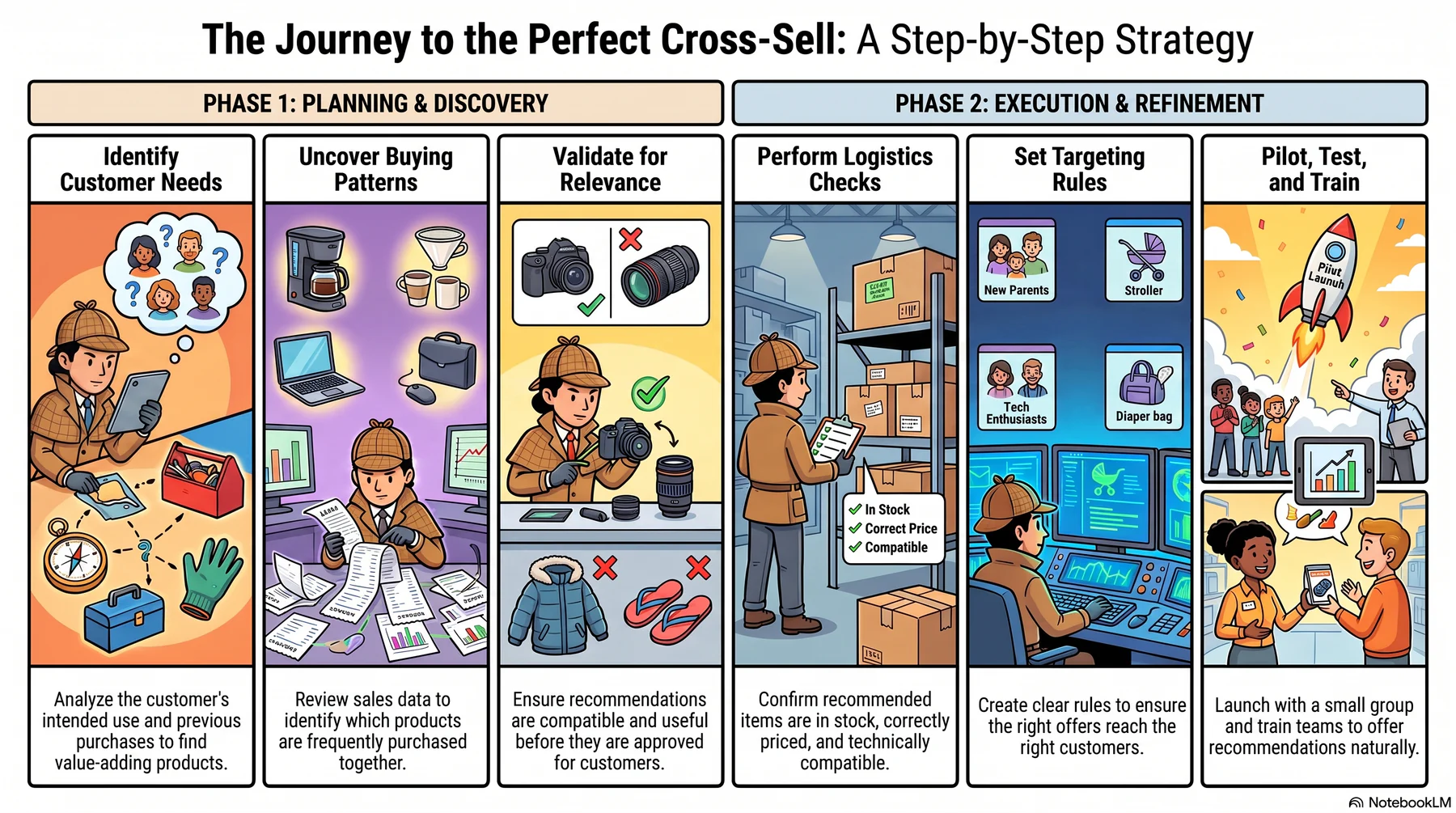
A cross-selling strategy should define which products can be recommended, which customers are eligible and what evidence determines whether the offer creates incremental value.
1. Identify Customer Needs
Start by understanding what the customer is trying to achieve. Consider their intended use, existing products, and previous purchases to recommend products that genuinely add value.
2. Analyse Buying Patterns
Review sales data to find products that are often purchased together. Look at factors such as customer type, sales channel, season, and buying behaviour before making recommendations.
3. Validate Recommendations
Not every popular product combination is a good cross-sell. Check that each recommendation is relevant, compatible, and useful before offering it to customers.
4. Check Products Before Recommending
Make sure each recommendation is compatible, in stock, correctly priced, and relevant to the customer. Checking these factors helps avoid suggesting products that are unavailable or unnecessary.
5. Target the Right Customers
Not every customer should receive the same recommendation. Use factors such as previous purchases, customer type, and location to show relevant offers to the right people.
6. Set Recommendation Rules
Create clear rules for which products should be recommended together and when they should be excluded. This keeps recommendations accurate and consistent across sales channels.
7. Test and Train
Start with a small group of product recommendations and measure the results before expanding. Train sales teams to explain the value of each recommendation and offer it naturally without pressuring customers.
How to Measure Cross-Selling Performance
Cross-selling measurement should distinguish between offers shown, offers accepted and purchases that would probably have happened without the recommendation.
1. Cross-Sell Conversion Rate
This measures how often customers accept a cross-sell offer. A higher conversion rate shows that your recommendations are relevant and effective.
2. Product Attach Rate
Product attach rate shows how often a complementary product is purchased with the main item. It helps identify which product combinations perform best.
3. Average Order Value (AOV)
AOV measures the average amount customers spend per order. Successful cross-selling often increases this value without affecting the customer experience.
4. Incremental Gross Margin
Track whether cross-selling increases profit after accounting for product costs, discounts, and returns. This gives a clearer picture of overall performance.
5. Return Rate and Customer Experience
Monitor return rates, complaints, checkout abandonment, and customer feedback. These metrics help ensure cross-selling improves sales without creating a poor customer experience.
Australian Cross-Selling and Direct-Marketing Considerations
Australian businesses should distinguish between recommendations presented during a transaction and direct-marketing communications sent later using customer information.
1. Get Customer Consent
Before sending cross-selling emails or SMS, make sure customers have given permission to receive marketing messages. Business using cold email marketing should also include their business details and a clear unsubscribe option in every message.
2. Use Customer Data Responsibly
Only use customer information to make relevant recommendations. Follow Australian privacy rules and avoid personalisation that could feel intrusive or unexpected.
3. Be Clear About Pricing
Make sure prices, discounts, and promotional claims are accurate and easy to understand. Customers should know exactly what they are paying for and any conditions that apply.
How Technology Supports Cross-Selling
Technology helps businesses turn sales activity into controlled recommendations, but it does not replace commercial judgement.
1. CRM and Customer Data
A comprehensive CRM system helps businesses recommend relevant products based on customer history, previous purchases, and communication preferences. This makes cross-selling more accurate and personalised.
2. POS and Ecommerce
POS systems and ecommerce platforms can recommend complementary products during shopping or checkout. Recommendations should be relevant, in stock, and easy for customers to add.
3. Inventory and Pricing
Cross-selling only works when products are available and priced correctly. Connecting inventory and pricing data helps avoid recommending unavailable or outdated offers.
4. Reporting and Analytics
Track key metrics such as accepted offers, revenue, and product performance. Regular reporting helps businesses improve recommendations and identify the best-performing product combinations.
Conclusion
Cross-selling increases sales by recommending products or services that add value to a customer's purchase. When done well, it also improves the customer experience.
Using accurate customer, sales, and inventory data helps businesses deliver more relevant recommendations and achieve better results.
Ready to improve your cross-selling strategy? Consult with HashMicro for free to discover how our integrated business solutions can help your business grow.
FAQ
The main purpose of cross-selling is to increase sales by recommending complementary products or services that add value to a customer's original purchase.
Businesses can use cross-selling throughout the customer journey, including on product pages, at checkout, after a purchase, or during customer support when recommendations are relevant.
A good recommendation is relevant, compatible with the customer's purchase, and meets a genuine need. It should improve the customer experience rather than simply increase sales.
CRM, POS, and inventory management software help businesses recommend the right products based on customer data, buying history, and stock availability, making cross-selling more accurate and effective.