




The real estate sector is experiencing one of the biggest operational shifts in a generation. AI has moved from a speculative technology to an everyday tool embedded in the platforms Australian property businesses use.
Morgan Stanley's 2025 industry research found that AI could unlock $34 billion in real estate operating efficiencies by 2030, by automating 37% of common industry tasks.
This article covers how AI is being applied across Australian real estate, from automated valuations and lead scoring to property management operations and practical implementation guidance.
Key Takeaways
AI in real estate helps automate routine tasks, improve decision-making, and increase operational efficiency across sales and property management.
From property valuations and lead scoring to chatbots and predictive analytics, AI supports every stage of the real estate lifecycle.
Businesses can maximise the value of AI by starting with repetitive workflows, choosing integrated platforms, and training their teams.

What Is AI in Real Estate?

AI in real estate uses technologies like machine learning, natural language processing, computer vision, and predictive analytics to automate tasks and improve decision-making.
Unlike traditional property software that simply stores data, AI analyses information to identify patterns, predict outcomes, and automate workflows. It can recommend listing prices, answer buyer enquiries 24/7, and detect maintenance issues before they become bigger problems.
By turning property data into actionable insights, AI helps real estate businesses work faster, improve accuracy, and deliver better customer experiences
How AI Is Changing Australian Real Estate in 2026
Australia's property market is well suited to AI because agencies handle large amounts of data, changing market conditions, and complex regulations. When integrated with a property management system, AI can streamline routine tasks, improve data accuracy, and support faster decisions across leasing, maintenance, and portfolio operations.
At the same time, buyers, sellers, and renters expect faster, more personalised digital experiences. AI helps agencies meet these expectations while reducing manual work.
As a result, AI adoption is growing across the Australian real estate industry as businesses look to improve efficiency and stay competitive.
"AI is most valuable when it supports the people behind the business, helping real estate professionals work more efficiently while keeping client relationships at the centre."
Key Applications of AI in Real Estate
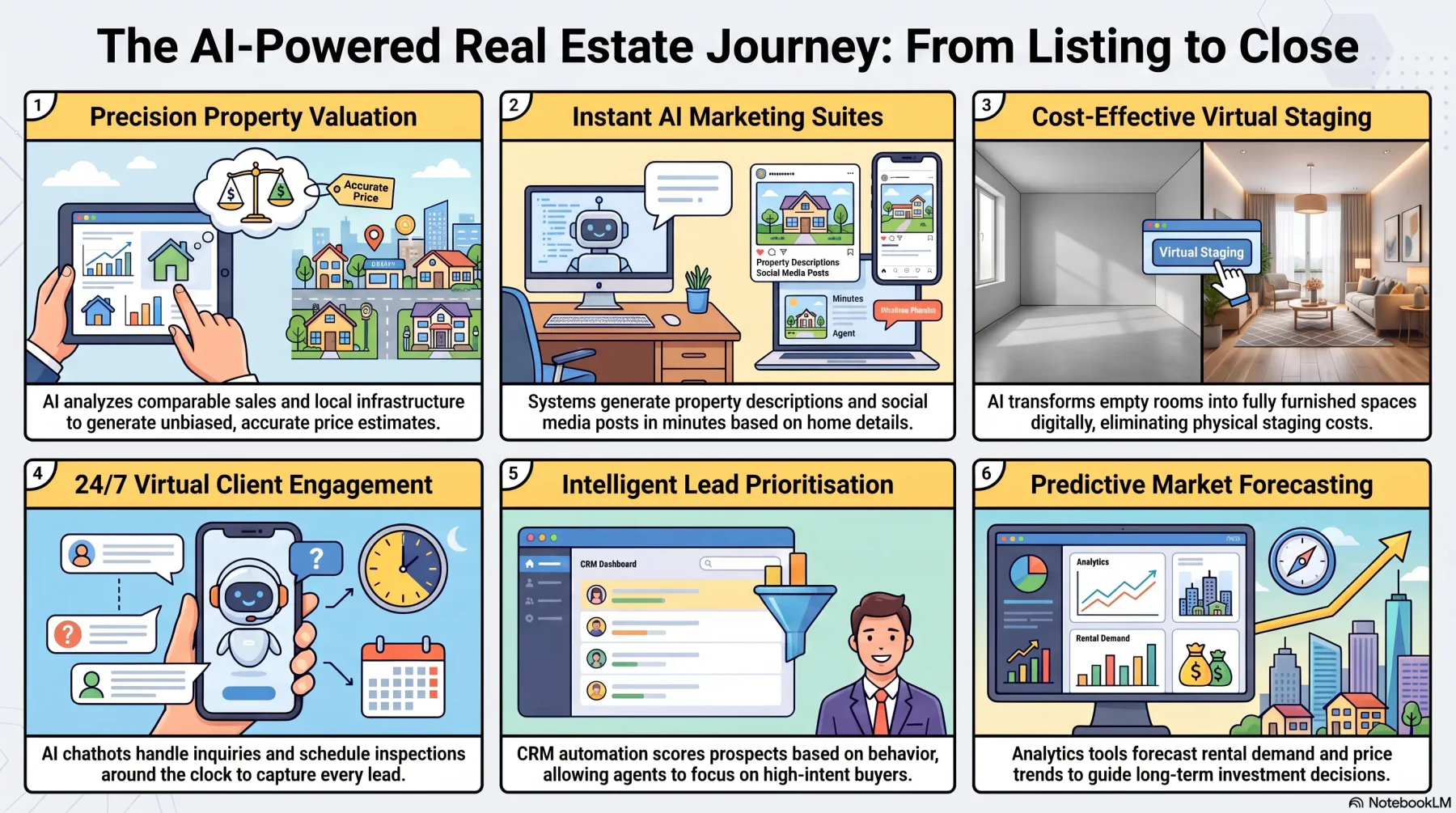
AI is transforming every stage of the real estate process, from pricing properties and qualifying leads to creating marketing content and forecasting market trends. Here are some of the most common applications used by Australian real estate businesses today.
1. Property Valuation and Automated Pricing Models
AI-powered valuation tools analyse comparable sales, market trends, infrastructure projects, and other local factors to generate more accurate property price estimates. This helps agents set competitive listing prices while reducing the risk of human bias.
2. Lead Scoring and CRM Automation
AI automatically scores and prioritises leads based on behaviour, enquiry history, and buying intent. This allows agents to focus on high-quality prospects while automating follow-ups for less active leads.
3. Chatbots and 24/7 Client Engagement
When integrated with a property management system, AI can streamline routine tasks, improve data accuracy, and support faster decisions across leasing, maintenance, and portfolio operations. An AI chatbot for business can also answer routine property enquiries, qualify prospects, and direct complex requests to the appropriate team.
4. AI-Generated Listings and Marketing Content
AI can create property descriptions, social media posts, email campaigns, and other marketing content in minutes using property details. Agents can then review and personalise the content before publishing.
5. Virtual Staging and Immersive Property Tours
AI-powered virtual staging transforms empty rooms into furnished spaces, while virtual property tours allow buyers to inspect homes remotely. These tools help properties attract more interest without the cost of physical staging.
6. Predictive Market Analytics
AI analyses market data to forecast property prices, rental demand, and market trends. These insights help agents, investors, and developers make more informed decisions based on current and predicted conditions.
How AI Is Helping Australian Real Estate Agencies Meet AUSTRAC AML Obligations
Real estate has long been flagged as one of the sectors most exposed to money laundering. Australia is closing that gap under the Anti-Money Laundering and Counter-Terrorism Financing Amendment Act 2024.
Real estate agents become AUSTRAC reporting entities from 1 July 2026, with enrolment already open since 31 March 2026.
This "Tranche 2" reform brings agencies the same customer due diligence, screening, and reporting obligations that banks have followed for years.AI is becoming a practical way to meet these requirements without adding significant manual workload to every transaction.
1. AI-powered identity verification for buyer and tenant onboarding
AI-driven identity verification checks buyer and tenant documents against government databases, screening for politically exposed persons and sanctions matches.
For agencies handling high transaction volumes, this turns a compliance step that used to take days into one that takes minutes.
2. Automated transaction monitoring for high-value properties
AI can monitor transaction patterns for signs that may warrant a closer look, such as unusual payment structures or a mismatched source of funds.
Where a transaction meets the threshold for suspicion, agencies still need a documented process to lodge a suspicious matter report with AUSTRAC.
3. Preparing for AUSTRAC's ongoing compliance requirements
Beyond onboarding, agencies must maintain an AML/CTF program, keep due diligence records for at least seven years, and train staff to recognise red flags.An integrated document management system keeps that audit trail organised and retrievable when it's needed.
These obligations apply regardless of agency size, so the real question is not whether to prepare, but how to do it without slowing down transactions.Reviewing requirements against AUSTRAC's official reforms guidance is the recommended starting point.
AI in Property Management Operations
AI helps property managers automate routine tasks, improve response times, and manage properties more efficiently. With AI-powered asset management, teams can also monitor building conditions, schedule maintenance, and plan asset replacements more effectively. This allows them to spend less time on administration and more time supporting landlords and tenants.
1. Maintenance Request Triage and Routing
AI automatically classifies maintenance requests by urgency and assigns them to the right tradespeople based on availability and location. This speeds up repairs, improves tenant satisfaction, and reduces manual coordination.
2. Lease Management and Renewal Automation
AI tracks lease dates, triggers renewal reminders, generates documents, and highlights opportunities for rent reviews. It also helps property managers stay compliant with changing rental regulations.
3. Energy Optimisation and Building Performance
AI monitors building performance and adjusts systems such as lighting and air conditioning to reduce energy use. This helps lower operating costs while improving efficiency and supporting sustainability goals.
Who Benefits from AI in Real Estate?
AI delivers value across the real estate industry by helping professionals automate routine work, improve decision-making, and provide better customer service. The biggest benefits vary depending on each role.
1. Real Estate Agents and Agencies
AI helps agents save time by automating tasks such as listing creation, lead qualification, and appointment scheduling. This gives them more time to focus on clients, property sales, and business growth.
2. Property Managers and Strata Managers
AI streamlines property management by automating maintenance requests, lease renewals, tenant communication, and other routine tasks. This improves efficiency while helping managers oversee larger property portfolios.
3. Property Developers and Investors
AI provides insights into market trends, project feasibility, pricing, and investment performance. These tools help developers and investors make faster, data-driven decisions with property software and maximise returns.
Will AI Replace Real Estate Agents in Australia?
The short answer is no. While AI can automate many routine tasks, real estate still depends on human expertise, negotiation, and relationship building.
Instead of replacing agents, AI handles administrative work such as data entry, lead qualification, and report generation. This gives agents more time to focus on clients, property inspections, and closing deals.
As AI becomes more common, the biggest advantage will go to agents who use it to improve their efficiency and service. Those who embrace the technology will be better positioned to meet growing client expectations.
How to Implement AI in Your Real Estate Business
Adopting AI is most effective when you start with practical, high-impact tasks. A gradual approach helps your team adapt while delivering measurable improvements in efficiency.
1. Start with Repetitive Workflows
Focus on routine tasks such as lead follow-up, listing creation, or maintenance requests. Automating high-volume processes delivers faster results and a clearer return on investment.
2. Train Your Team
Help your team understand how to use AI alongside their existing workflows. With the right training, staff can review AI-generated recommendations, make better decisions, and get the most value from the technology.
3. Choose an AI-Enabled Platform
Look for a real estate platform with AI Coworker built into its core features rather than standalone tools. An integrated system allows data to flow across CRM, property management, and finance, making AI more effective.
Looking to improve your real estate operations with AI? Contact our team for a free consultation to discover the right solution for your business. With AI Hashy, you can automate routine tasks, gain real-time insights, and make faster, data-driven property decisions.






Conclusion
AI is transforming the Australian real estate industry by helping agencies, property managers, developers, and investors automate routine tasks, improve decision-making, and deliver better customer experiences.
As AI becomes more accessible, businesses that adopt it will be better equipped to improve efficiency, reduce manual work, and stay competitive in a rapidly evolving market. Starting with the right tools and workflows can deliver measurable results from day one.
If you're considering AI for your real estate business, now is the ideal time to explore your options. A well-planned implementation can help maximise the value of your investment and support long-term growth.
Ready to see how AI can streamline your real estate operations? Contact us for a free consultation to discuss your business needs and discover the right AI-powered solution for your busines.

Frequently Asked Questions About AI in Real Estate
Real estate agents use AI for property valuations, CRM and lead scoring, chatbots, listing generation, virtual staging, and market analytics. These tools help automate routine tasks and improve productivity.
Yes. AI can be used legally as long as businesses comply with the Privacy Act 1988 and the Australian Privacy Principles (APPs). Personal information must be collected, stored, and processed responsibly.
Pricing depends on the platform and business size. Basic AI tools may start from around $100 per month, while full property management or ERP platforms typically cost more based on users, features, and portfolio size.
Can AI accurately predict property prices? AI can provide reliable property value estimates by analysing market data and comparable sales. However, it works best as a decision-support tool alongside an experienced agent's local knowledge.
Traditional software stores and manages data, while AI analyses that data to automate tasks, identify trends, and provide recommendations. This helps property managers work more efficiently and make better decisions.