



Australian mining operations don’t have a software shortage problem. Instead, they have a fit problem. Geological teams need 3D modelling tools. FIFO coordinators need roster management. Finance teams need ERP. And most mid-sized miners end up running all three in parallel, manually bridging the gaps.
This guide covers 12 mining management software across those categories, from specialist mine planning tools to operational ERP, so mining companies can identify which type of software actually matches their operational bottleneck, not just their industry label.
Key Takeaways
Australian mining companies rely on software solutions to improve operational efficiency, safety, compliance, and real-time decision-making.
Mining businesses commonly use different types of software, including fleet management, maintenance, ERP, inventory, and production management systems.
The 12 best mining management software in Australia offer different capabilities, deployment options, and features for mining operations of various sizes.
A comparison table highlights the key features, pricing, deployment options, and suitability of leading mining management software.
Choosing mining software becomes easier once you identify the operational challenges affecting your sites the most, such as equipment downtime, contractor management, inventory control, or operational reporting. The shortlist below highlights mining software platforms based on the areas where they are commonly used across Australian mining operations.


Best Because
Mine planning and operational optimisation platform.
Best Because
Mobile safety and compliance management platform.
Best Because
Geological modelling and mine planning software.

Best Because
Mining ERP with maintenance and inventory tools.
What Is Mining Management Software?
Mining management software helps companies manage operations, maintenance, workforce coordination, inventory, and compliance more efficiently. Some platforms also support mine planning, procurement, contractor management, and operational reporting across mining sites.
Unlike general business software, mining solutions are built to handle remote operations, large-scale assets, and the operational complexity common in the Australian mining sector.
Why Australian Mining Companies Need Software Solutions
Australian mining companies also operate under strict regulatory requirements. Mining companies must comply with work health and safety in mining to reduce operational risks, making digital systems valuable for tracking maintenance, incidents, inspections, and compliance records.
1. FIFO workforce coordination
Managing FIFO rosters, certifications, and accommodation schedules manually becomes harder as operations scale. software for miners helps improve workforce coordination and reduce administrative delays.
2. Compliance and safety requirements
Australian mining companies operate under strict safety and regulatory requirements. Mining software helps centralise inspections, incident reporting, and compliance tracking.
3. Remote and multi-site operations
Many mining operations are located in remote areas with limited operational visibility. Cloud-based systems help teams access operational and maintenance data across sites in real time.
4. Asset-intensive environments
Mining operations rely heavily on expensive equipment and machinery. Software supports preventive maintenance, asset tracking, and downtime monitoring.
5. Operational visibility and reporting
Disconnected systems can make operational reporting slower and less accurate. Integrated software helps management teams monitor maintenance, workforce activity, and site performance more efficiently.
Types of Mining Software Australian Businesses Commonly Use
Mining companies use different software platforms depending on operational needs such as mine planning, maintenance, workforce management, and compliance. Some systems focus on geological modelling, while others support operational visibility and asset management.
1. Mine planning and geological modelling software
These platforms support exploration data, resource estimation, and mine design through 3D modelling and planning tools. They are commonly used during exploration and production planning.
2. Fleet management systems
Fleet management software monitors haul trucks, loaders, and heavy equipment in real time. These systems help improve dispatch coordination, equipment utilisation, and operational efficiency.
3. Mining ERP software
Mining ERP systems centralise procurement, inventory, accounting, workforce management, and reporting into one platform. They help improve operational and financial visibility across sites.
4. Asset maintenance and EAM software
Asset management software supports preventive maintenance, work order management, and equipment tracking. This helps mining companies reduce downtime and improve equipment reliability.
5. Compliance and safety management software
These systems help manage inspections, incident reporting, contractor compliance, and safety documentation. They are commonly used to support regulatory compliance across mining sites.
How To Choose Suitable Mining Management Software for Your Business?
The right mining software depends on the specific operational challenge a business needs to solve, rather than a single all-purpose platform.
- Exploration, design, and resource work: Choose mine planning and geological modelling tools.
- Operational plans and material movement: Choose production and scheduling tools.
- Equipment reliability and work orders: Choose maintenance and EAM tools.
- Safety, contractors, and site coordination: Choose safety and workforce tools.
- Finance, procurement, inventory, workforce, and reporting in one connected system: Consider an ERP suite.
- Multiple specialised systems: Check integration capability and data ownership before selecting a platform.
How We Evaluated These Mining Software Solutions
Each platform was evaluated against the following criteria to determine its suitability for mining environments:
- Operational scale and site complexity: Fit with the workforce structure and complexity of each mining operation.
- Operational capabilities: Strength of core features across different mining functions.
- Scalability and integration support: Ability to scale and connect with other business systems.
- Compliance and reporting tools: Depth of compliance tracking and reporting features.
- Ease of implementation: How straightforward the platform is to deploy and adopt.
- Remote and multi-site visibility: Support for remote operations and visibility across multiple sites.
This article was prepared by the HashMicro content team, and HashMicro provides business software. The comparison is intended to support initial research; vendor capabilities, integrations, compliance coverage, and pricing should be verified with each provider and against current official documentation
Quick Comparison Table
Comparison scores are editorial indications of fit against the criteria listed above, not independent market-share ratings. A higher score does not mean a platform is best for every mine. Confirm current features, integrations, implementation scope, support coverage, and pricing with the provider before purchase.| Software | Best For | Mining ERP Fit | Remote/FIFO Support | Safety Fit |
|---|---|---|---|---|
| Pronto Xi | ERP | |||
| RPMGlobal | Mine Planning | |||
| SafetyCulture | Safety | |||
| HashMicro | Mining ERP | |||
| Maptek Vulcan | Mine Design | |||
| Felix | Contractors | |||
| Datamine | Resource Modelling | |||
| Micromine | Exploration | |||
| GEOVIA Surpac | Mine Design | |||
| Hexagon Mining | Fleet Ops | |||
| Kynection | Workforce Safety | |||
| DINGO | Asset Maintenance |
"Mining software creates the most operational value when maintenance, workforce management, inventory, and reporting work within one connected system."
12 Best Mining Management Software in Australia
Mining software platforms support different operational needs, from mine planning and maintenance to workforce management and compliance. Below are some of the top mining management software solutions used by Australian mining companies in 2026.
1. Pronto Xi
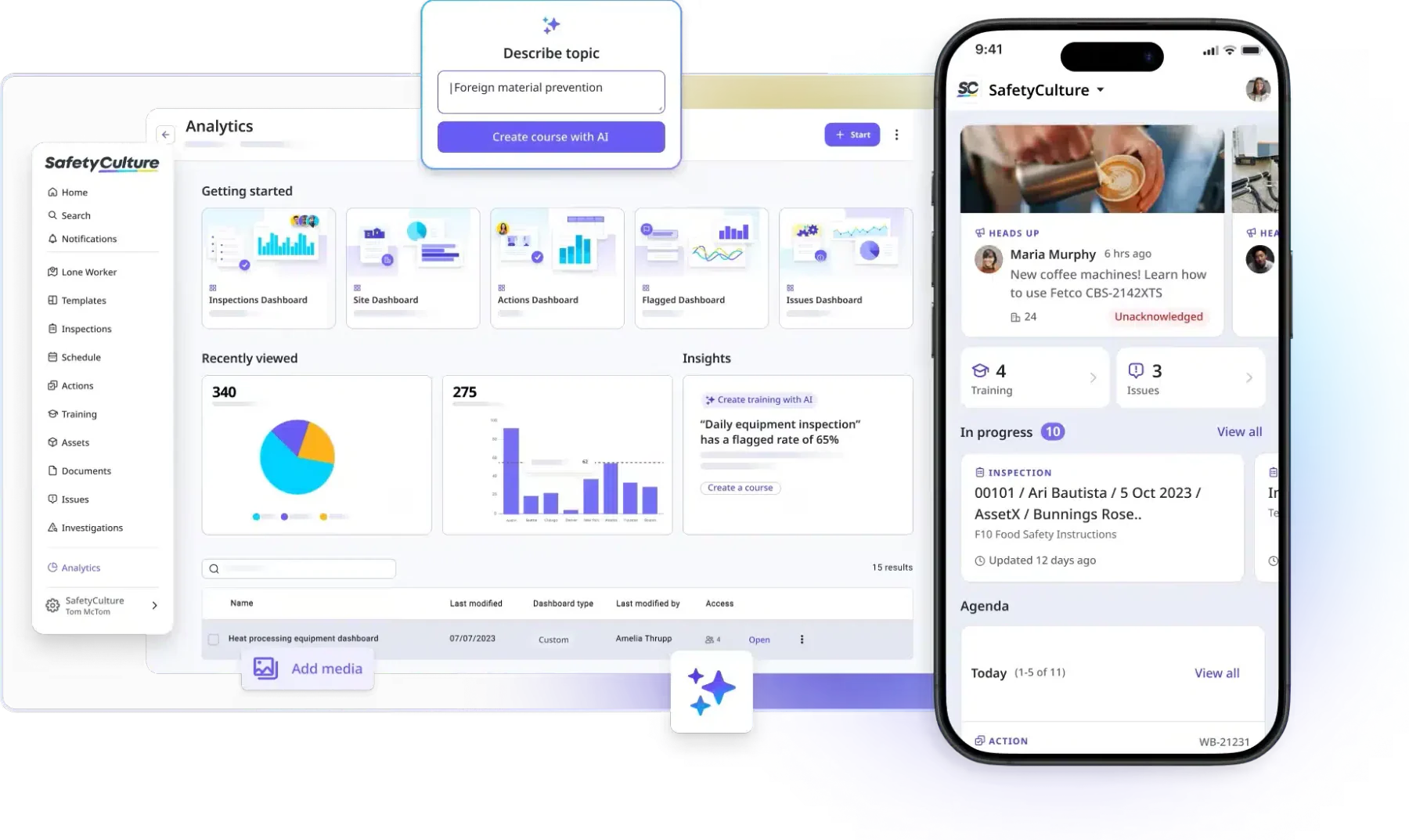
Pronto Xi is an Australian-developed ERP platform widely used in asset-intensive industries, including mining, manufacturing, and distribution. The software combines financial management, inventory control, procurement, and asset maintenance into a single system, making it suitable for mining companies managing complex multi-site operations.
One of Pronto Xi’s strongest advantages is its maintenance and inventory management capability. Mining operators can track spare parts, schedule preventive maintenance, and monitor operational reporting through built-in analytics and ERP integration.
Key Features:
- Asset Management: Track equipment maintenance and lifecycle performance.
- Inventory Tracking: Monitor spare parts and procurement across sites.
- Operational Reporting: Access centralised operational and maintenance dashboards.
- ERP Integration: Connect finance, inventory, and procurement workflows.
| Pros | Cons |
| ✓ Strong ERP and maintenance integration. | ×Implementation can take longer for complex operations. |
| ✓ Australian-developed with local support. | ×Advanced reporting may require additional configuration. |
| ✓ Suitable for multi-site operational environments. | ×Interface feels less modern compared to newer cloud-first platforms. |
Best for: Mid-sized to enterprise mining companies needing integrated ERP, maintenance, and inventory management.
Pricing: Custom quote-based pricing depending on operational scale and modules.
2. RPMGlobal
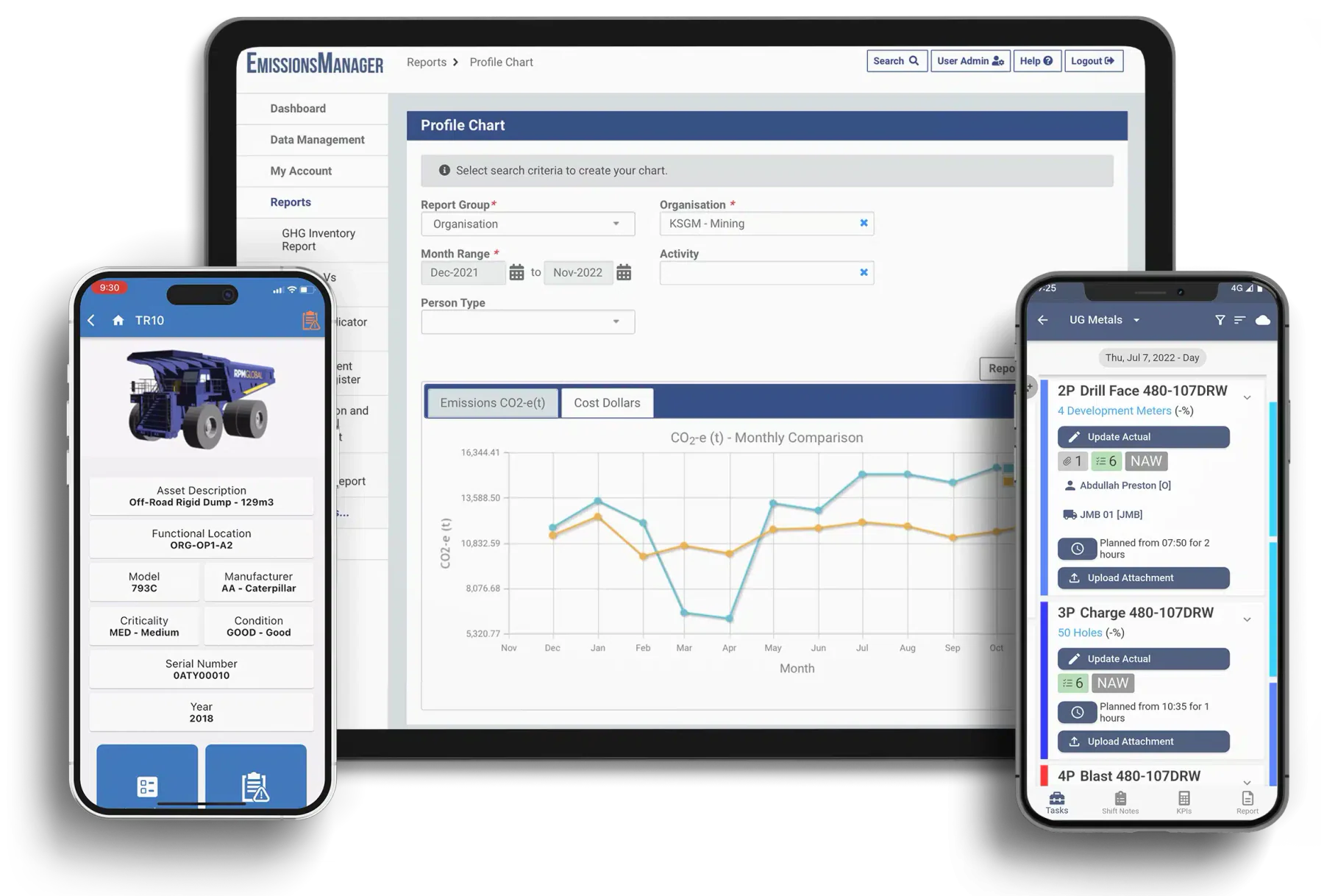
RPMGlobal is one of Australia’s most established mining software providers, offering specialised solutions for mine planning, scheduling, simulation, maintenance, and operational optimisation. The platform is widely used by large mining companies that require advanced operational visibility across complex mining environments.
Its software suite supports long-term mine planning, financial modelling, fleet optimisation, and asset maintenance management. RPMGlobal is particularly strong in helping mining operators improve productivity, maintenance forecasting, and operational decision-making across large-scale mining operations.
Key Features:
- Mine Planning: Manage scheduling, simulation, and operational forecasting.
- Asset Maintenance: Forecast equipment maintenance and lifecycle costs.
- Operational Simulation: Model haulage, production, and mining scenarios.
- Financial Modelling: Support budgeting and life-of-mine cost planning.
| Pros | Cons |
| ✓ Strong mine planning and simulation capabilities. | ×Steeper learning curve for some advanced modules. |
| ✓ Designed specifically for mining operations. | ×Pricing is not publicly transparent. |
| ✓ Supports enterprise-scale mining environments. | ×May be excessive for smaller mining businesses. |
Best for: Mid-sized to enterprise mining companies needing integrated ERP, maintenance, and inventory management.
Pricing: Custom enterprise quote-based pricing depending on modules and operational requirements.
3. SafetyCulture
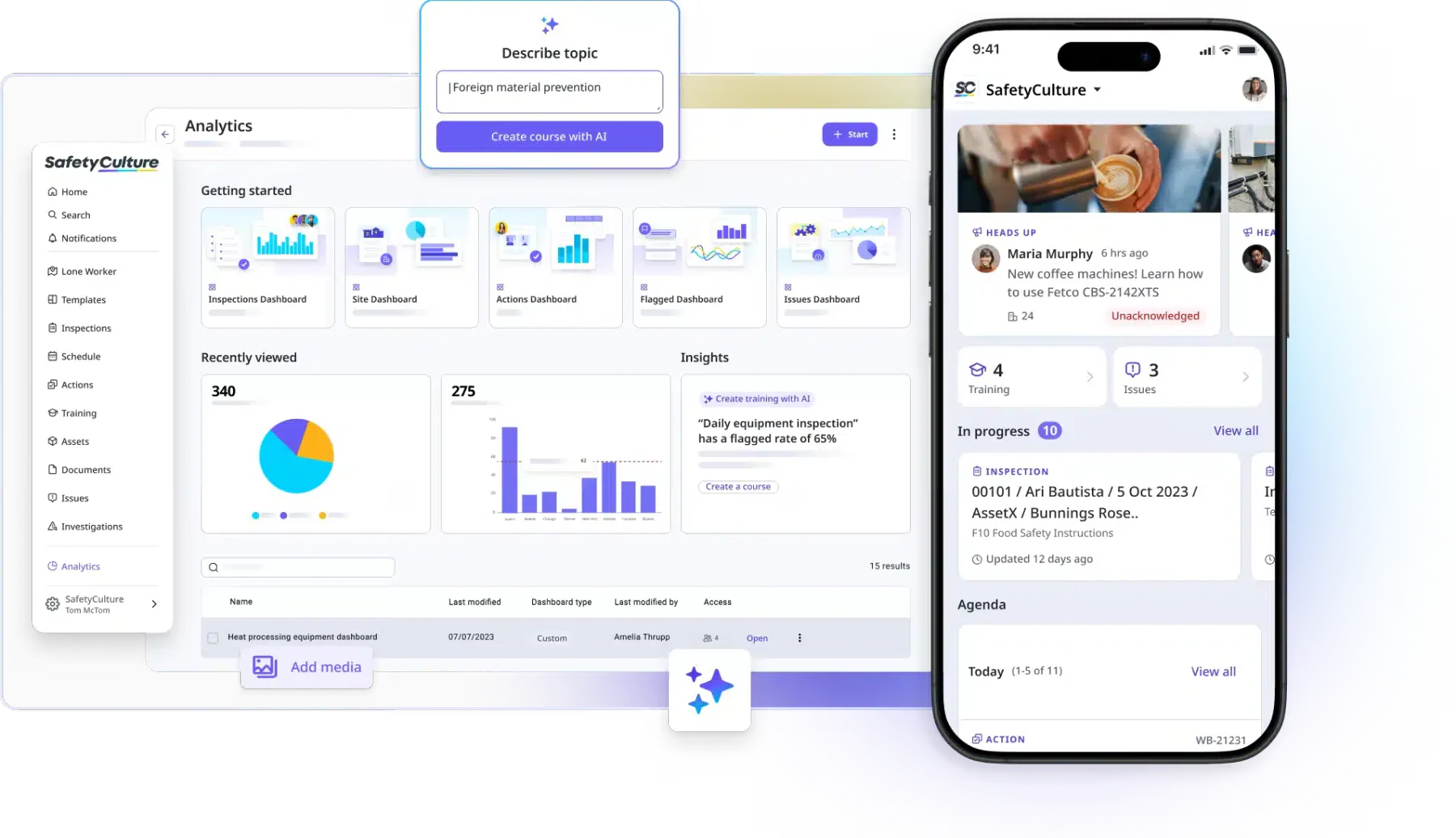 SafetyCulture is a mobile-first operational and safety management platform widely used across mining, construction, manufacturing, and field operations. The software helps mining companies digitise inspections, safety audits, incident reporting, and operational checklists through a cloud-based platform accessible from mobile devices.
The platform is particularly useful for mining businesses focused on improving compliance visibility, frontline reporting, and operational consistency across remote sites. Its user-friendly mobile interface and flexible inspection templates make it popular for safety-driven operations and contractor-heavy environments.
Key Features:
- Digital Inspections: Create mobile safety and operational checklists.
- Incident Reporting: Track hazards, incidents, and corrective actions.
- Analytics Dashboards: Monitor compliance and operational trends in real time.
- Mobile Access: Complete inspections and reporting from remote locations.
| Pros | Cons |
| ✓ Very easy to use across frontline teams. | ×Advanced features require higher-tier plans. |
| ✓ Strong mobile inspection and compliance tools. | ×Can become expensive as user count increases. |
| ✓ Supports offline inspections for remote sites. | ×Less focused on ERP and operational planning. |
Best for: Mining companies focused on safety inspections, compliance reporting, and frontline operational visibility.
Pricing: Free plan available; Premium plans start around AUD $24/user/month billed annually or AUD $29/user/month billed monthly.
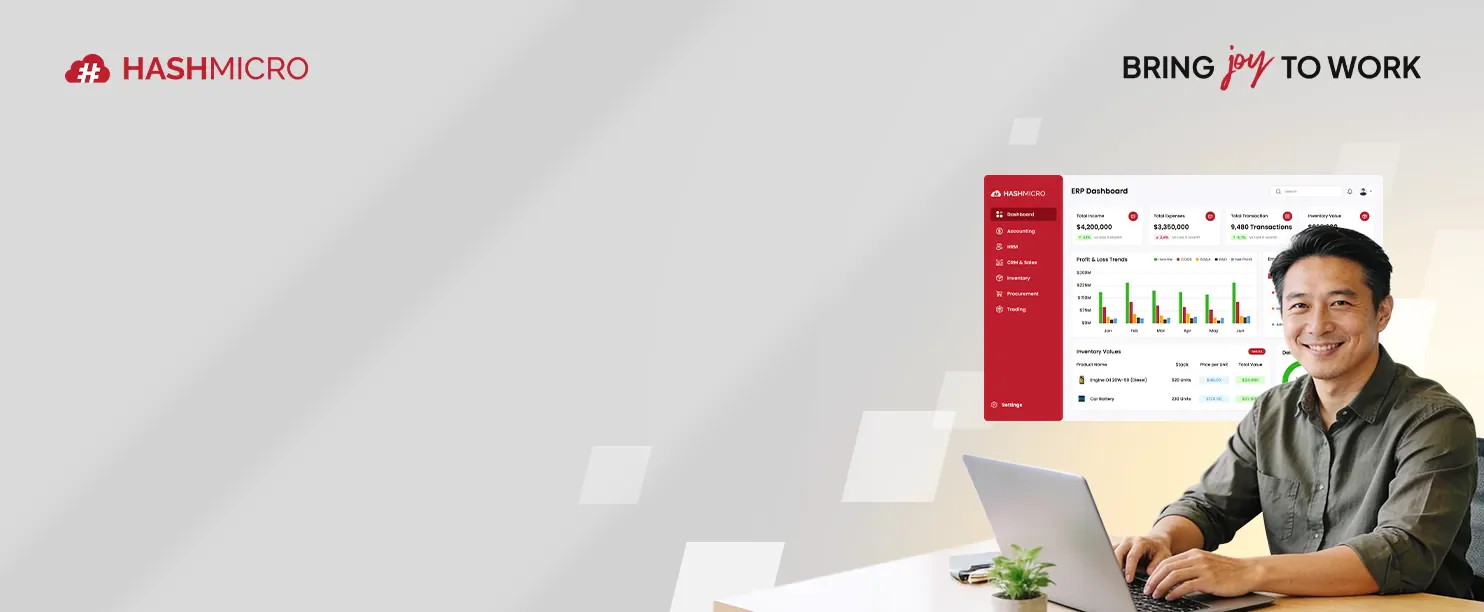
4. HashMicro
HashMicro is an ERP platform built for operational complexity, making it particularly suited for mining companies that need procurement, maintenance, inventory, and finance connected in one system rather than running through separate tools.
Where dedicated mine planning tools focus on geological modelling and production planning, HashMicro addresses the operational and administrative side. It manages spare parts across remote sites, tracking contractor compliance, and connecting site-level data to finance and procurement without manual re-entry.
Key Features:
- Spare parts & site inventory: Track stock across multiple remote sites with real-time visibility.
- Preventive maintenance scheduling: Set maintenance intervals by equipment hours or calendar, with automated work orders and mobile sign-off for field teams.
- Multi-site reporting dashboard: Consolidate operational data from different sites into one view.
- Contractor & workforce compliance: Track contractor certifications, inductions, and WHS documentation.
| Pros | Cons |
| ✓ Flexible ERP modules with integrated workflows. | ×Pricing is not publicly available. |
| ✓ Strong inventory and procurement management. | ×Implementation scope may vary depending on customisation needs. |
| ✓ Supports operational visibility across departments. | ×Some advanced configurations may require onboarding support. |
Best for: Mid-sized mining companies needing integrated ERP, inventory, procurement, and operational management.
Pricing: Custom quote-based pricing depending on modules, users, and implementation scope. Access our pricing simulator by clicking the banner below.
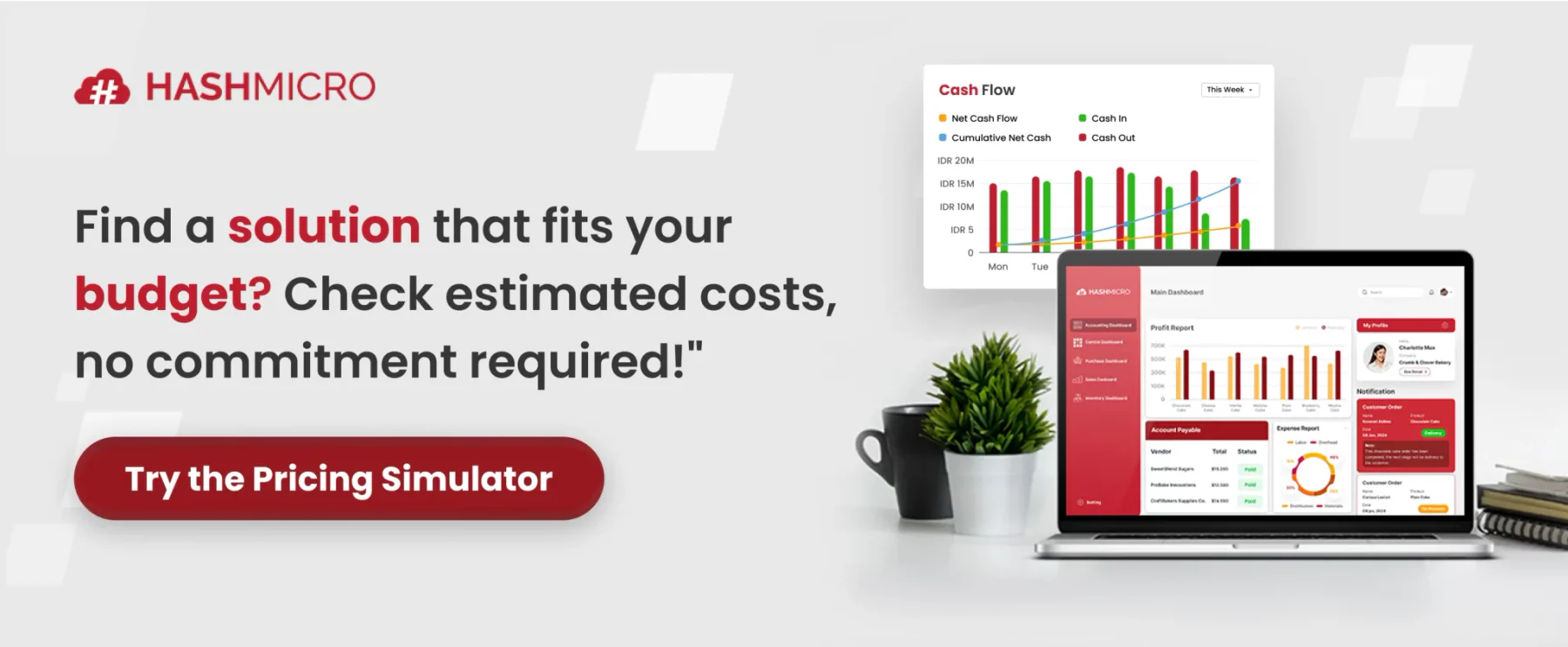
HashMicro provides a modular Mining ERP solution that can be tailored to different mining operations, helping businesses match the right modules to their operational requirements.
Furthermore, businesses can gain smarter insights, automate workflows, and make faster data-driven decisions with Hashy AI, HashMicro’s built-in AI assistant. Mining ERP specialists are also available to help businesses identify the most suitable solution based on their operational needs and business goals.
5. Maptek Vulcan
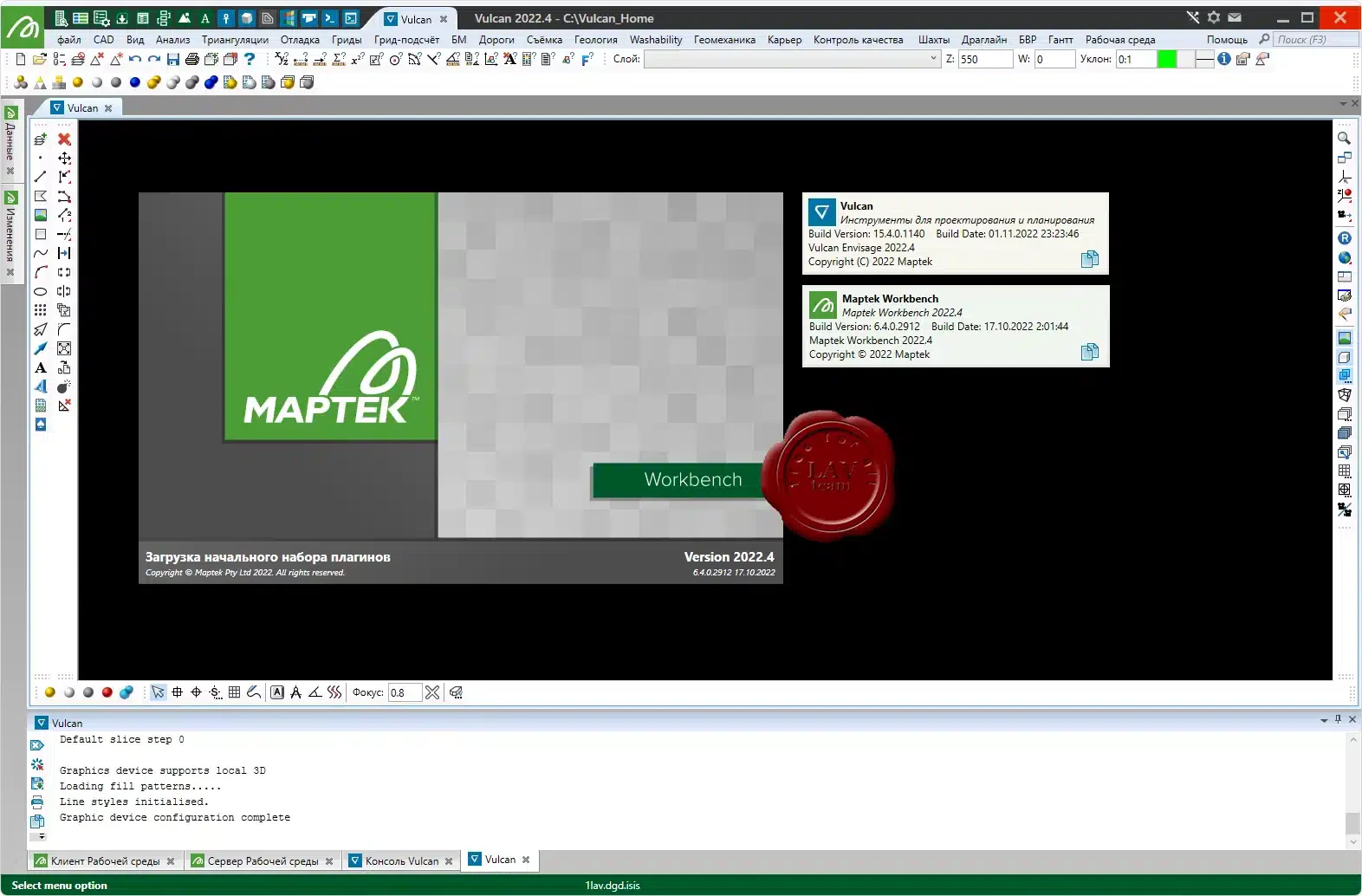
Maptek Vulcan is one of the most widely used mining software platforms for geological modelling, mine design, and production planning. The platform helps mining engineers and geologists build 3D geological models, manage mine designs, and improve operational planning across both underground and open-pit mining projects.
Its strong visualisation and mine planning capabilities make Vulcan particularly popular for exploration, reserve estimation, drill and blast planning, and operational mine scheduling. The software is commonly used by mining companies requiring advanced geological and technical modelling workflows.
Key Features:
- 3D Geological Modelling: Build detailed geological and resource models.
- Mine Planning: Create mine designs and operational schedules.
- Drill and Blast Planning: Support drilling layouts and blast analysis workflows.
- Visualisation Tools: Access advanced 3D mine visualisation and analysis.
| Pros | Cons |
| ✓ Strong geological modelling and mine planning tools. | ×Steeper learning curve for new users. |
| ✓ Widely used across global mining operations. | ×Pricing is not publicly transparent. |
| ✓ Advanced 3D visualisation capabilities. | ×Better suited for technical mining teams than general operations. |
Best for: Mining companies focused on geological modelling, mine design, and operational planning.
Pricing: Custom enterprise pricing based on licensing and operational requirements.
6. Felix
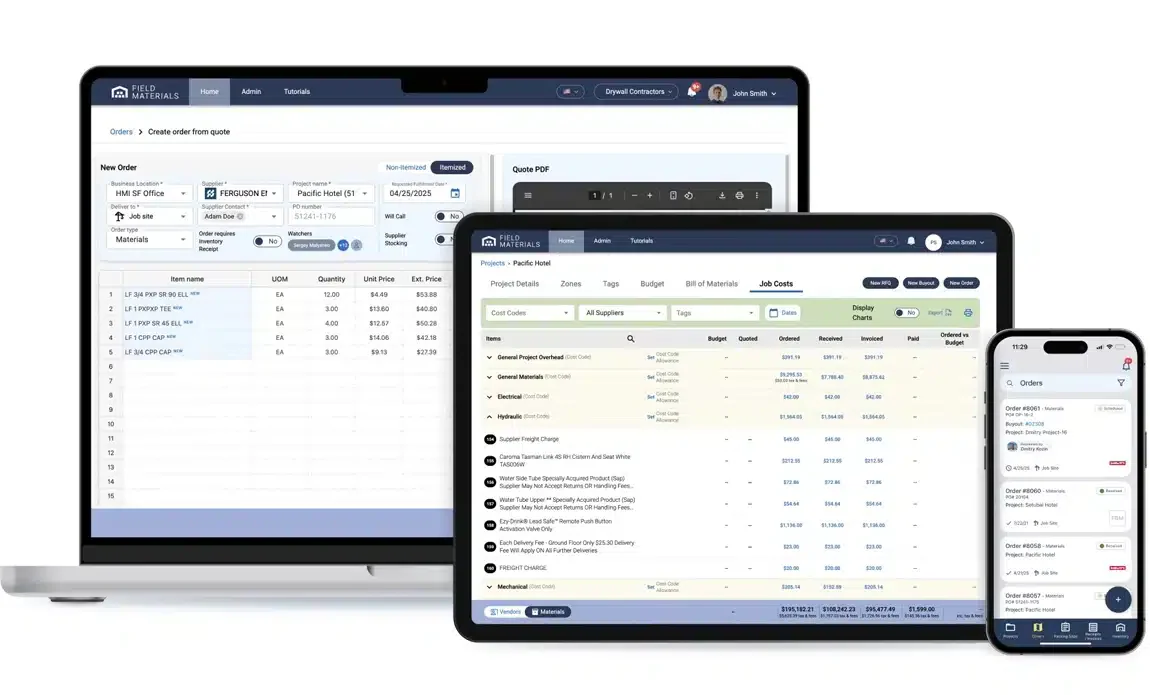
Felix is an Australian-developed vendor management and procurement platform widely used across mining, infrastructure, and asset-intensive industries. The software helps mining companies manage contractors, procurement workflows, supplier compliance, ESG reporting, and sourcing activities through a centralised cloud-based platform.
The platform is particularly useful for mining businesses managing large contractor networks and complex supply chains across multiple projects or operational sites. Felix also provides strong visibility into vendor compliance, procurement risk, and contract management processes.
Key Features:
- Vendor Management: Centralise contractor and supplier information.
- Procurement Workflows: Manage sourcing, tenders, and approvals digitally.
- Compliance Tracking: Monitor vendor compliance, insurance, and ESG requirements.
- Contract Management: Track contracts, renewals, and procurement reporting.
| Pros | Cons |
| ✓ Strong contractor and vendor management capabilities. | ×Pricing is not publicly available. |
| ✓ Supports procurement and compliance visibility. | ×May require process adjustment during onboarding. |
| ✓ Designed for asset-intensive operational environments. | ×Less focused on mine planning or asset maintenance. |
Best for: Mining companies managing contractor-heavy operations, procurement workflows, and supply chain compliance.
Pricing: Custom quote-based pricing depending on modules and operational scale.
7. Datamine
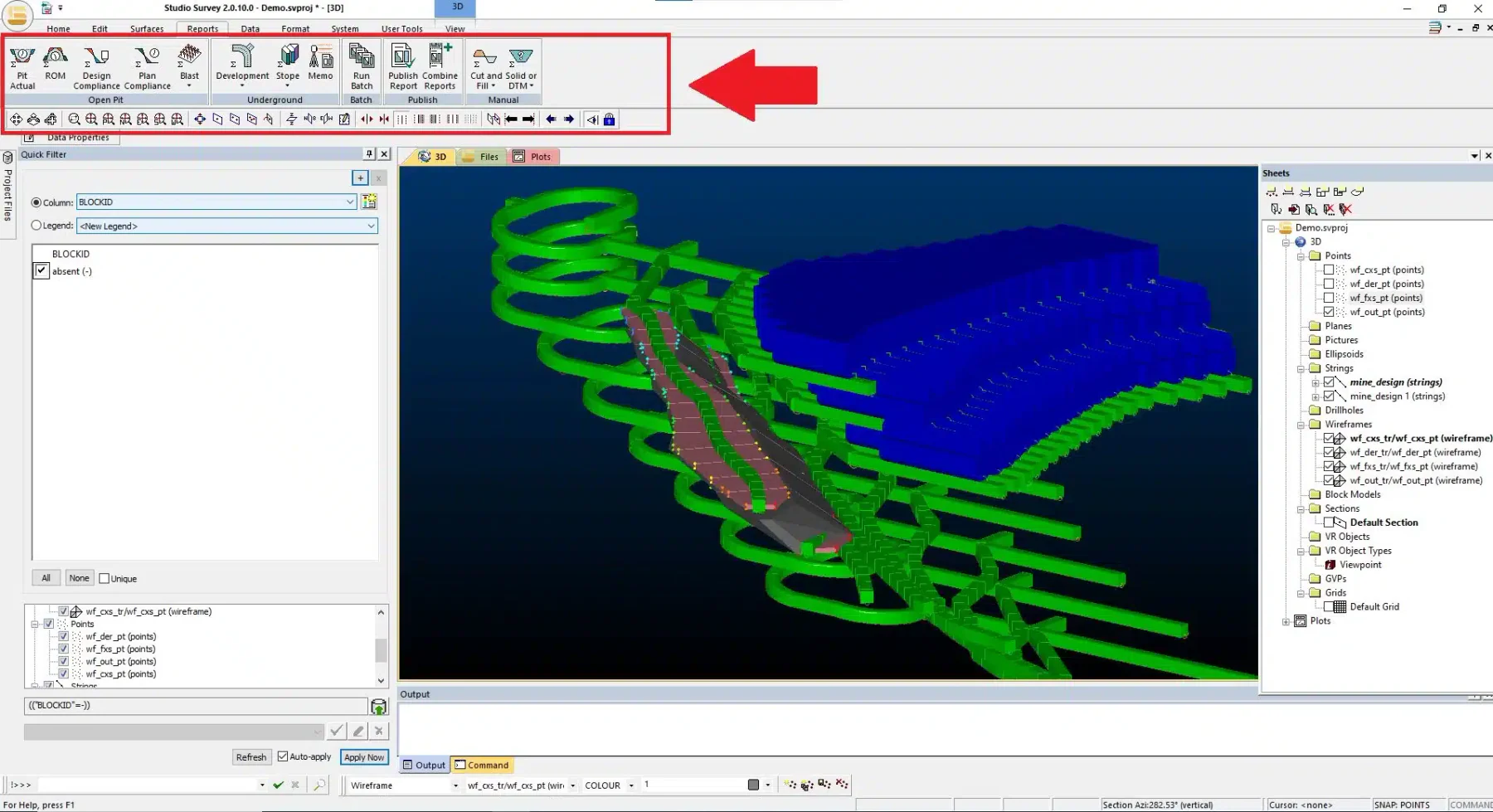
Datamine is a mining software platform focused on geological modelling, mine planning, production management, and operational optimisation. The software is widely used across exploration and mining operations that require integrated workflows for resource modelling, scheduling, and operational analysis.
Its platform supports mine planning, geological interpretation, drill and blast analysis, and production optimisation through advanced modelling and analytics tools. Datamine is particularly suitable for mining companies managing large-scale operational planning and exploration activities.
Key Features:
- Geological Modelling: Build resource and exploration models in 3D environments.
- Mine Planning: Manage production scheduling and operational planning.
- Data Integration: Centralise geological and operational datasets.
- Operational Analytics: Analyse mine performance and production trends.
| Pros | Cons |
| ✓ Strong mine planning and geological modelling tools. | ×Pricing is not publicly transparent. |
| ✓ Supports integrated exploration workflows. | ×Advanced modules may require specialised training. |
| ✓ Widely used across mining and exploration projects. | ×Better suited for technical mining teams than general operations. |
Best for: Mining companies focused on geological modelling, exploration workflows, and operational mine planning.
Pricing: Custom quote-based pricing depending on licensing and operational requirements.
8. Micromine
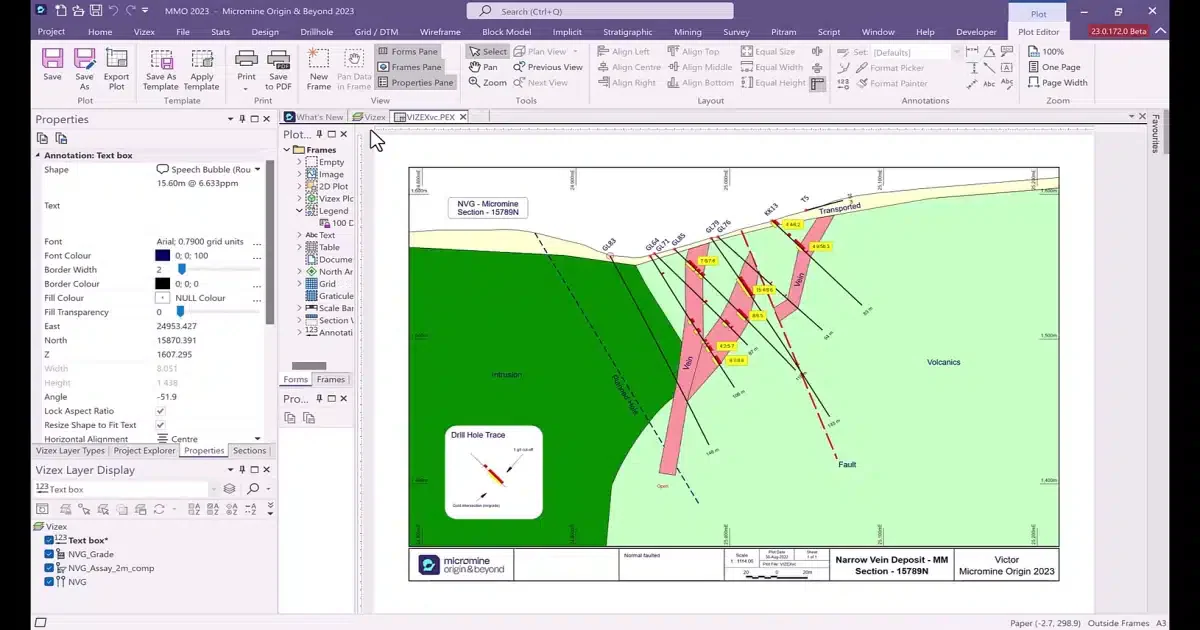
Micromine is an Australian-developed mining software platform covering exploration, geological modelling, mine design, planning, and production management. The software is widely used by mining and exploration companies requiring end-to-end visibility across the mining lifecycle.
Its platform provides tools for 3D modelling, resource estimation, drillhole planning, survey processing, and operational analysis. Micromine is particularly popular among mining engineers and geologists looking for flexible modelling and mine planning capabilities.
Key Features:
- 3D Modelling: Create geological and resource models for mine planning.
- Mine Design: Support operational mine layouts and scheduling.
- Data Management: Centralise exploration and survey data.
- Production Planning: Manage mine production workflows and forecasting.
| Pros | Cons |
| ✓ Comprehensive tools across the mining lifecycle. | ×Pricing is not publicly available. |
| ✓ Strong geological modelling and planning capabilities. | ×Some advanced workflows require technical expertise. |
| ✓ Australian-developed with global mining adoption. | ×Implementation may be complex for smaller teams. |
Best for: Mining companies needing geological modelling, exploration management, and production planning tools.
Pricing: Custom quote-based pricing depending on modules and deployment requirements.
9. GEOVIA Surpac
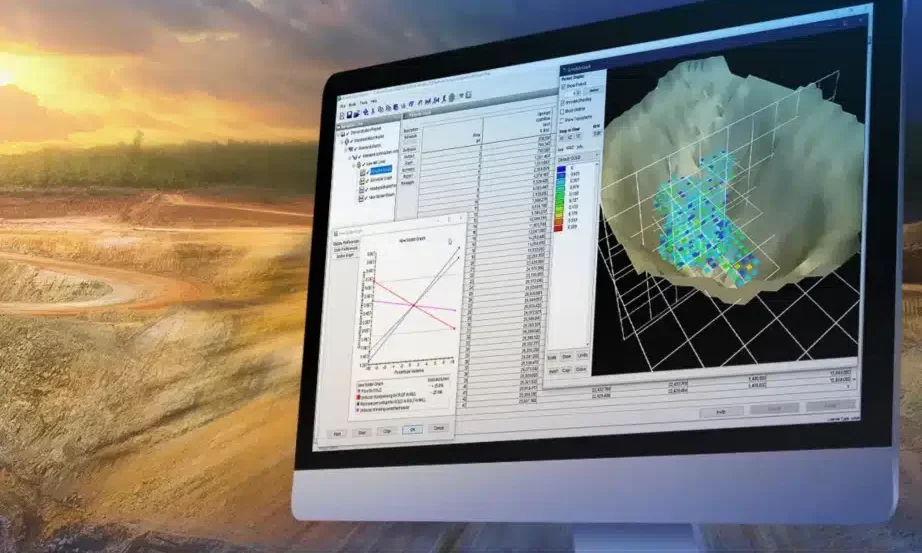
GEOVIA Surpac is a mine planning and geological modelling platform developed by Dassault Systèmes for mining and exploration operations. The software supports resource estimation, drillhole management, mine design, and production planning through integrated 3D modelling capabilities.
The platform is widely used across open-pit and underground mining projects that require detailed geological interpretation and operational mine planning. Its modelling and visualisation capabilities make it suitable for technically focused mining teams managing exploration and production workflows.
Key Features:
- Resource Estimation: Build geological and orebody models for planning.
- Mine Design: Support open-pit and underground mine layouts.
- Drillhole Management: Organise and analyse drilling data.
- 3D Visualisation: Access advanced geological visualisation tools.
| Pros | Cons |
| ✓ Strong geological modelling and mine design capabilities. | ×Pricing is not publicly transparent. |
| ✓ Widely adopted across mining operations globally. | ×Can require specialised technical training. |
| ✓ Supports both underground and open-pit mining. | ×Less focused on ERP or operational workflows. |
Best for: Mining companies focused on geological modelling, resource estimation, and mine design.
Pricing: Custom enterprise pricing depending on licensing and project requirements.
10. Hexagon Mining
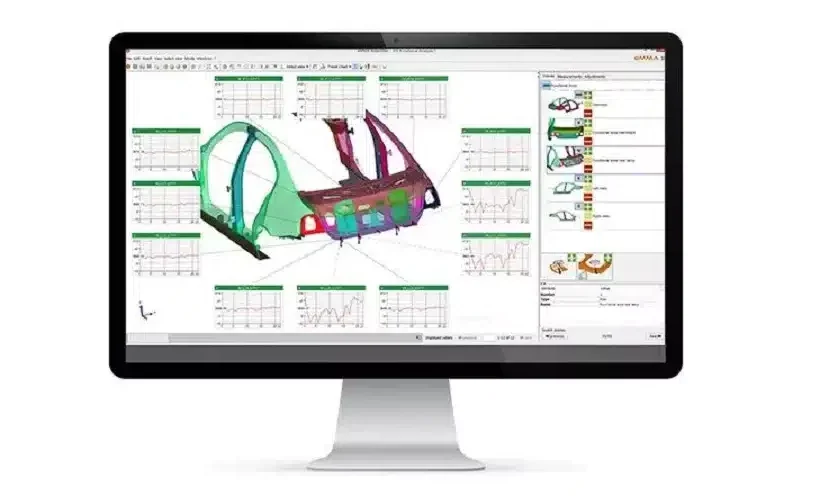
Hexagon Mining provides operational technology and mine management solutions focused on fleet management, safety, automation, and operational optimisation. The platform helps mining companies improve equipment utilisation, production visibility, and site safety through real-time operational data and analytics.
Its solutions are commonly used in large mining environments that require fleet tracking, collision avoidance systems, dispatch optimisation, and operational monitoring across multiple assets and sites.
Key Features:
- Fleet Management: Monitor haul trucks and mining equipment in real time.
- Operational Analytics: Track productivity and site performance metrics.
- Safety Systems: Support collision avoidance and operational safety monitoring.
- Automation Tools: Improve dispatch coordination and equipment utilisation.
| Pros | Cons |
| ✓ Strong fleet management and operational monitoring tools. | ×Pricing is not publicly available. |
| ✓ Supports large-scale mining environments. | ×Implementation can be complex for smaller operations. |
| ✓ Advanced safety and automation capabilities. | ×Primarily focused on operational technology rather than ERP workflows. |
Best for: Large mining companies focused on fleet management, operational optimisation, and mining automation.
Pricing: Custom enterprise quote-based pricing depending on operational scale and modules.
11. Kynection
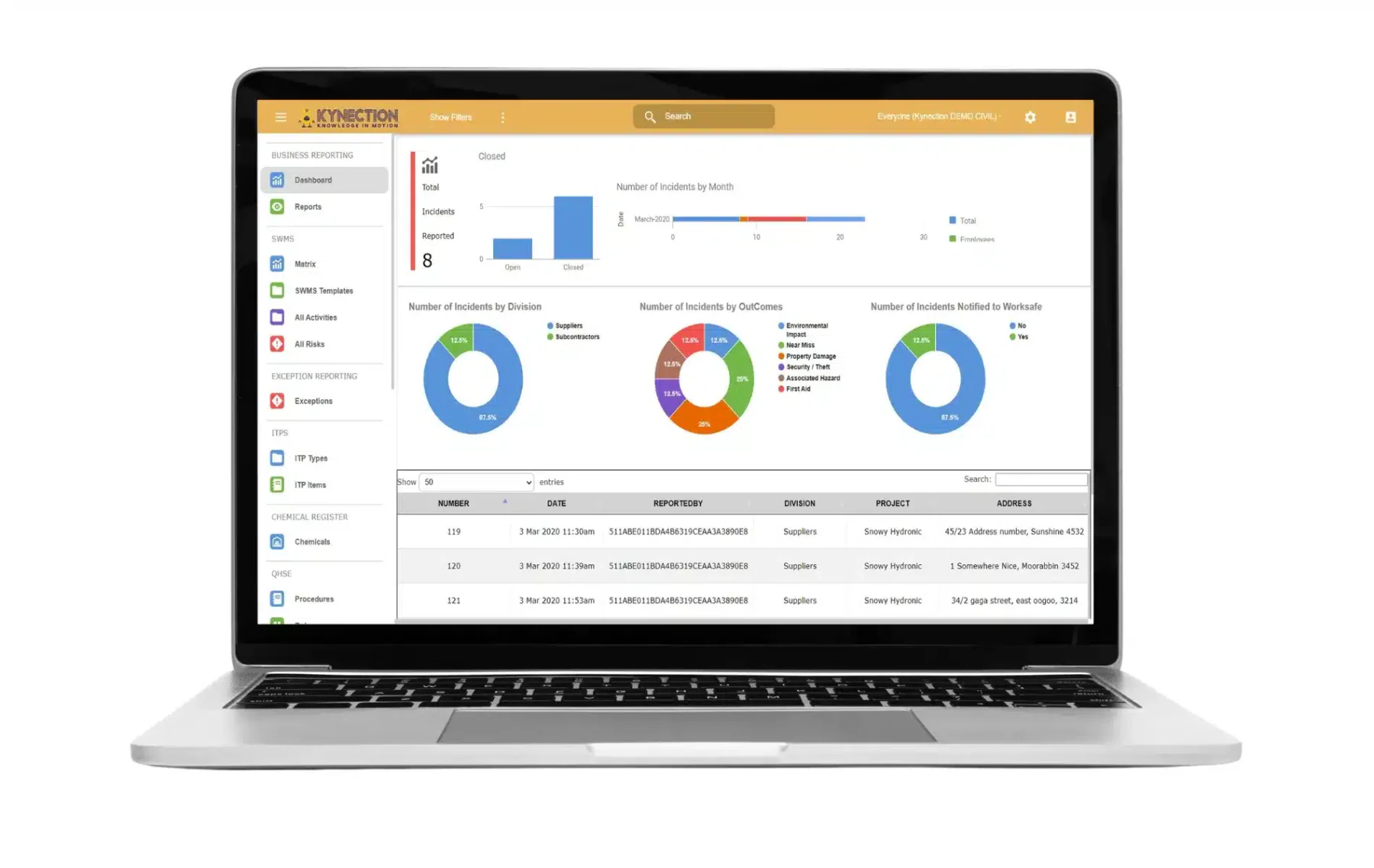
Kynection is an Australian workforce and field operations management platform designed for industries with mobile and remote workforces, including mining, construction, and field services. The platform helps mining companies manage workforce scheduling, contractor management, digital forms, compliance workflows, and field reporting through mobile-enabled tools.
Its mobile-first approach makes it suitable for mining operations requiring real-time workforce visibility, remote approvals, and digital compliance processes across multiple operational sites.
Key Features:
- Workforce Management: Manage rosters, field teams, and contractor workflows.
- Digital Forms: Replace paper-based inspections and operational forms.
- Compliance Tracking: Monitor certifications, inductions, and safety requirements.
- Mobile Access: Support field reporting and approvals from remote locations.
| Pros | Cons |
| ✓ Strong mobile workforce management capabilities. | ×Pricing can vary depending on deployment size. |
| ✓ Supports remote field operations and compliance workflows. | ×Less focused on mine planning and geological workflows. |
| ✓ Useful for contractor-heavy operational environments. | ×Advanced integrations may require additional setup. |
Best for: Mining companies managing mobile workforces, contractor compliance, and field operations.
Pricing: Subscription pricing varies depending on users, modules, and operational requirements.
12. DINGO
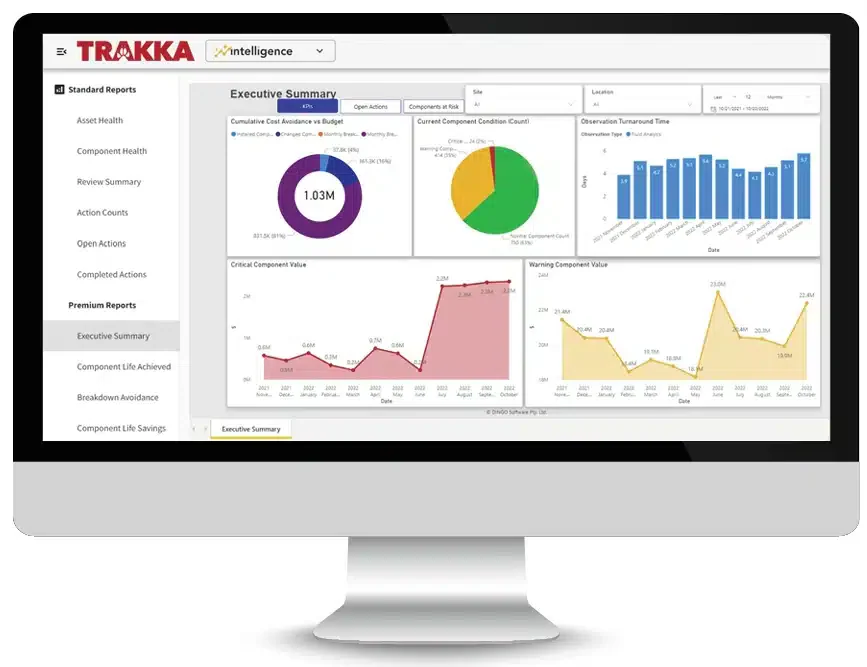
DINGO is an asset performance and predictive maintenance platform designed for heavy asset industries such as mining, energy, and transportation. The software helps mining companies monitor equipment condition, predict failures, and improve maintenance planning through data-driven asset management tools.
Its predictive maintenance capabilities are particularly useful for mining operators looking to reduce unplanned downtime and improve equipment reliability across heavy operational environments.
Key Features:
- Predictive Maintenance: Forecast equipment failures using condition-based monitoring.
- Asset Performance Monitoring: Track equipment reliability and operational health.
- Maintenance Planning: Improve preventive maintenance scheduling workflows.
- Operational Analytics: Analyse equipment performance and downtime trends.
| Pros | Cons |
| ✓ Strong predictive maintenance and asset monitoring tools. | ×Pricing is not publicly available. |
| ✓ Designed for heavy asset operational environments. | ×Less focused on workforce or ERP management. |
| ✓ Supports equipment reliability and downtime reduction. | ×May require integration with other enterprise systems. |
Best for: Mining companies focused on predictive maintenance, asset reliability, and equipment performance monitoring.
Pricing: Custom quote-based pricing depending on operational scale and asset monitoring requirements.
Key Features to Look for in Mining Management Software
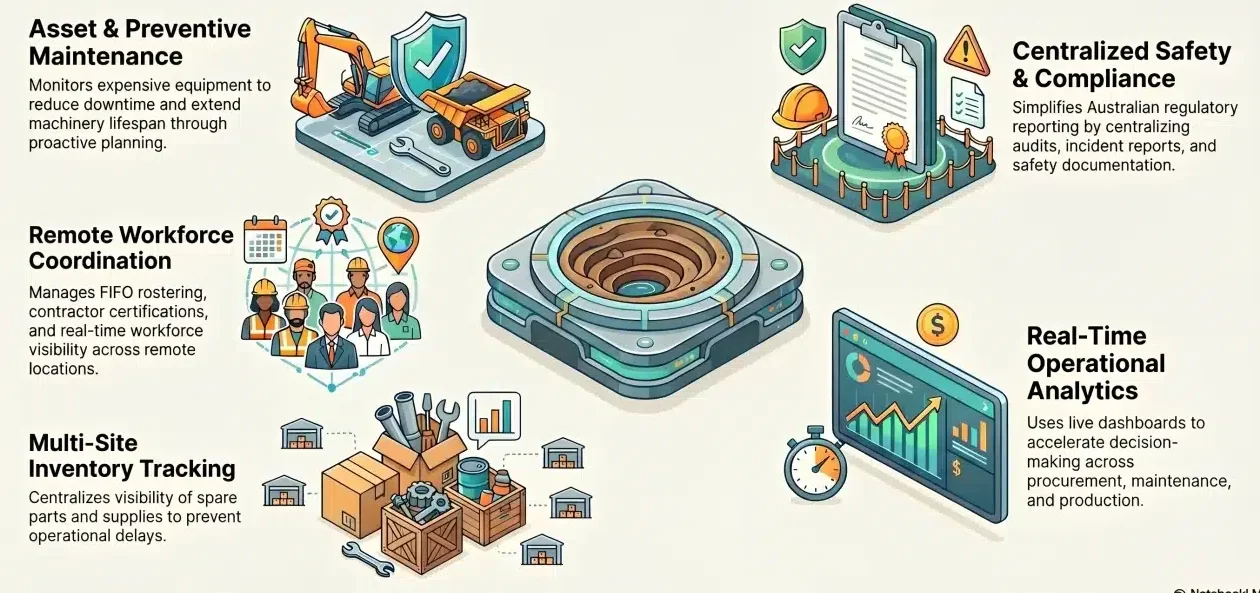
Mining software should support operational visibility, maintenance management, workforce coordination, and compliance across multiple sites. The right platform can help mining companies improve efficiency and reduce operational delays as operations scale.
1. Asset and maintenance management
Mining operations rely heavily on expensive equipment that requires regular monitoring and preventive maintenance. Software with asset management tools helps reduce downtime, improve maintenance planning, and extend equipment lifespan. Consistent equipment lifecycle tracking also makes it easier to compare reliability across sites.
2. Workforce and contractor management
FIFO scheduling, contractor compliance, and workforce coordination can become difficult across remote sites. Mining software should support rostering, certification tracking, digital forms, and workforce visibility in real time.
3. Inventory and procurement tracking
Mining businesses often manage large volumes of spare parts, tools, and operational supplies across multiple locations. Inventory and procurement features help improve stock visibility and reduce supply delays.
4. Compliance and safety reporting
Australian mining companies must maintain accurate safety documentation and operational records. Software with compliance tracking and incident reporting helps centralise audits, inspections, and regulatory reporting processes.
5. Operational reporting and analytics
Real-time dashboards and reporting tools help management teams monitor operational performance more accurately. Better reporting visibility can support faster decisions across maintenance, workforce, procurement, and production activities.
Benefits of Mining Management Software
Mining management software helps mining companies streamline daily operations by connecting data across maintenance, inventory, workforce, procurement, and compliance. With a centralised platform, teams can improve visibility, reduce manual work, and respond to operational issues more efficiently. Much of that gain comes from automating routine site work that would otherwise sit with already stretched teams.
- Improves operational visibility by centralising data from multiple sites into a single platform.
- Reduces equipment downtime through preventive maintenance scheduling and asset monitoring.
- Strengthens inventory control by tracking stock levels, spare parts, and warehouse movements in real time.
- Enhances workforce coordination with better scheduling, task allocation, and performance tracking.
- Automates reporting and compliance to reduce manual administration and improve reporting accuracy.
- Supports faster decision-making using real-time data, AI insights, and integrated business workflows.
As AI becomes more common in mining operations, businesses should also follow AI and digital technologies in the workplace guidance to support responsible implementation.






How Much Does Mining Management Software Cost in Australia?
Mining software pricing in Australia varies depending on operational scale, deployment type, and required modules. Enterprise platforms for ERP, fleet management, or mine planning often use custom quote-based pricing instead of fixed monthly plans.
Smaller operational tools may start from around AUD $20–$50 per user per month. Larger implementations can also involve additional costs for onboarding, integrations, training, and ongoing support.
Conclusion
Mining management software helps companies improve operational visibility, maintenance coordination, workforce management, and compliance across mining sites. Integrated systems also help reduce manual reporting and operational delays.
The right platform depends on operational priorities such as mine planning, ERP integration, asset maintenance, or contractor management. Mining companies should evaluate software based on operational scale and operational needs.
If ERP integration is among the priorities your team is evaluating, HashMicro’s mining team can walk through how it works in practice, tailored to your operation size. Book a free consultation with us to find the most suitable mining modules for your business.
FAQ
Mining ERP software focuses on operational and financial management such as procurement, inventory, and reporting, while mining management software also includes tools like mine planning and geological modelling.
The best mining software depends on priorities such as mine planning, maintenance, compliance, or ERP integration. Companies should evaluate options based on scale, site complexity, and reporting requirements.
Yes, many mining management platforms support FIFO workforce management through rostering, contractor tracking, certification management, workforce scheduling, and mobile workforce visibility tools.
Mining software pricing in Australia varies by modules, deployment type, and scale. Smaller tools may start from around AUD $20 to $50 per user monthly, while enterprise platforms often use custom quote-based pricing.
Yes, many mining software platforms support contractor management, safety inspections, incident reporting, and compliance tracking to help companies manage operational and regulatory requirements efficiently.
There is no single mining software used by every operation. Common choices include mine planning and geological modelling platforms, production scheduling tools, and ERP platforms for site and business management.
Mining engineers commonly use mine planning, geological modelling, surveying, production scheduling, and resource evaluation software. Tools vary by commodity, operation type, and engineering discipline.