




Fleet optimization helps companies run vehicles efficiently, cut costs, and ensure timely deliveries. Tracking routes, fuel, and maintenance keeps operations smooth and reduces waste.
Data and technology drive smarter decisions. GPS, telematics, and route software give real-time insights on vehicle location, traffic, and driver behavior.
Optimizing fleets also improves safety, productivity, and sustainability. Companies that refine operations stay competitive and adapt quickly to changing logistics needs.
Key Takeaways
Fleet optimization is the strategic use of data and technology to improve vehicle performance, reduce costs, enhance safety, and maximize overall fleet efficiency.
Fleet optimization works by using data from vehicles and drivers to improve routes, maintenance, safety, and overall efficiency.
Fleet optimization reduces costs, improves safety, increases efficiency, and ensures compliance while boosting overall fleet performance.
Fleet optimization adapts to each industry by improving routes, asset use, and efficiency for logistics, construction, services, government, and last-mile delivery.
What Is Fleet Optimization?
Fleet optimization maximizes fleet productivity while cutting costs and reducing risks. Unlike basic fleet management, it focuses on continuous improvement, asking not just “where are my vehicles?” but “how can they perform better?”
It relies on analyzing data from vehicles, drivers, and routes to spot inefficiencies like idling, poor route planning, or underused assets. The goal is to right-size the fleet to meet demand without carrying excess capacity.
In Australia, optimization also ensures compliance with regulations like the Chain of Responsibility (CoR) and NHVR safety rules. Efficient fleets must balance operational performance, cost control, and legal obligations.
True optimization considers Total Cost of Ownership, including maintenance, insurance, downtime, depreciation, and resale value. Managing these factors helps businesses make smarter procurement and retirement decisions.
How Does Fleet Optimization Work?

Fleet optimization uses telematics and analytics to monitor vehicles, analyze performance, and guide improvements. This digital view helps managers cut costs, boost efficiency, and stay compliant across the fleet.
Businesses can further enhance this process by using a platform for optimizing fleet that integrates tracking, analytics, and route planning into a single system.
1. Data acquisition and telematics
High-quality data forms the foundation of fleet optimization. Telematics or OEM-embedded systems capture real-time information like GPS, engine status, fuel, and driving behavior. In remote Australian areas, store-and-forward technology ensures data is saved until connectivity is restored.
2. Advanced data analytics and processing
Raw data alone is overwhelming and not very useful. Fleet optimization software analyzes telemetry to turn it into actionable insights. For example, it distinguishes between necessary idling, such as traffic or unloading, and wasteful behavior, helping managers make smarter decisions.
3. Route and dispatch optimization
Dynamic route planning is a key part of fleet optimization. Unlike static routes, optimization software considers traffic, vehicle capacity, delivery windows, driver hours, and fuel use. It finds the most efficient paths, cutting kilometers, fuel costs, and wear. In real time, it can reroute drivers for accidents or last-minute pickups.
4. Predictive maintenance
Predictive maintenance is a core part of fleet optimization. Rather than servicing trucks on a fixed schedule or waiting for breakdowns, data predicts when parts may fail. Maintenance is planned during downtime, preventing costly roadside repairs and keeping vehicles available longer.
5. Driver behavior modification
Technology alone does not optimize a fleet; drivers play a key role. Optimization systems track behaviors like speeding, harsh braking, and acceleration to create scorecards. Managers can coach drivers, and awareness encourages smoother driving. This improves fuel efficiency by 10–15% and lowers accident risk.
6. Asset utilization analysis
Optimization also audits asset utilization. By analyzing usage, idle days, and load factors, managers spot underused vehicles. These can be redeployed, sold, or replaced with better-suited types. Right-sizing ensures the fleet matches actual operational demand.
How Fleet Management System Helps Optimize Fleet for Your Business
A fleet management system helps businesses optimise fleet performance by centralising data and automating key processes. It provides real-time visibility into vehicle location, fuel usage, and driver behaviour.
With integrated analytics, businesses can identify inefficiencies, optimise routes, and reduce operational costs. Automated maintenance scheduling also helps prevent breakdowns and extends vehicle lifespan.
By using a system-based approach, businesses can improve decision making, ensure compliance, and maintain consistent fleet performance across operations.
Benefits of Fleet Optimization
A full fleet optimization strategy delivers major benefits. It cuts costs while improving safety, sustainability, and customer satisfaction. For Australian businesses facing high costs and strict regulations, these advantages can determine profit or loss.
- Significant cost reductions
Fleet optimization boosts profits. Smarter routing cuts fuel by 10–20%, predictive maintenance lowers repairs, and right-sizing cuts insurance and depreciation.
- Enhanced safety and risk mitigation
Safety is key under Australia’s strict laws. Monitoring driver behavior reduces accidents, protects lives, cuts legal costs, and can lower insurance premiums.
- Improved Operational Efficiency and Productivity
Optimization boosts fleet efficiency. Automated routing cuts unnecessary driving and frees dispatchers, letting fleets handle more jobs and increase revenue without extra costs.
- Regulatory compliance and chain of responsibility
In Australia, CoR laws hold all parties liable. Fleet optimization uses EWDs and checklists to ensure compliance and protect companies during audits.
- Sustainability and environmental impact
As CSR gains focus, reducing emissions is key. Fleet optimization cuts fuel use, tracks CO2, and helps plan routes and vehicles for EV adoption.
- Superior customer service
Fleet optimization provides real-time tracking and accurate ETAs, boosting trust, reducing delays, and improving brand reputation through efficient goods shipment management.
Australian Compliance Regarding Fleet Optimization
Australian Compliance Regarding Fleet Optimization
Fleet optimization must align with national transport regulations to ensure safety and accountability. Businesses are required to manage risks across operations, not just at the driver level.
The Chain of Responsibility (CoR) law places legal responsibility on all parties involved in transport activities. This includes managing fatigue, load safety, and vehicle conditions.
Compliance is also regulated by the National Heavy Vehicle Regulator through NHVR safety rules. These rules cover vehicle maintenance, driver fatigue, and operational safety standards.
Fleet Optimization Examples by Industry
Optimization principles are universal, but each sector applies them differently. Long-haul logistics face different challenges than local councils or construction firms. Here’s how Australian industries use fleet optimization to tackle their unique needs.
Logistics & transportation
For the logistics sector, margins are tight and fuel costs are a major concern. Optimization focuses on route efficiency, fuel management, and compliance with fatigue regulations.
For example, a national freight carrier running B-doubles between Melbourne and Brisbane uses telematics integrated with engine systems. Route planning avoids traffic and steep terrain, fatigue cameras monitor drivers, and auxiliary power units cut idling by 80%. Backloading is automated, reducing empty trips and maximizing revenue per kilometer.
Construction & heavy equipment
In construction, fleets include trucks and heavy equipment like excavators, bulldozers, and cranes. The main challenges are asset utilization and theft prevention.
For example, a civil engineering firm with equipment across five Western Australian sites uses GPS tracking and geofencing. Maintenance is scheduled by engine hours, and data shows underused excavators at one site can be redeployed to another, cutting rental costs. Geofences also alert managers to unauthorized movement, preventing theft.
Utilities & field services
For service industries like telecommunications, plumbing, and electrical work, fleets move skilled labor to job sites. The main focus is on response times and first-time fix rates.
For example, an electrical services company in Sydney uses dynamic scheduling to assign the closest technician with the right skills and parts. Routes are optimized to reduce driving time and ensure technicians have everything needed. This integration boosts efficiency, cutting repeat visits and increasing jobs completed per day by 15%.
Government & public sector
Government fleets, like those of local councils, must balance cost and sustainability while managing diverse vehicles.
For example, a council with 50 staff sedans uses a car-sharing system to track usage. Data shows only 35 vehicles are needed, so 15 are sold to cut costs. Trip analysis reveals most journeys are under 50 km, supporting a shift to EVs that reduces fuel and maintenance expenses while meeting sustainability goals.
Delivery & last-mile services
E-commerce has made last-mile delivery the costliest supply chain stage, where speed and density are key.
For example, a courier under driver pressure uses advanced route optimization, including left-turn avoidance and exact drop-off locations. Zone routing lets drivers master neighborhoods, and live tracking with flexible delivery options reduces failed deliveries, cutting costs and improving customer satisfaction.
Step-by-Step Guide to Implementing Fleet Optimization
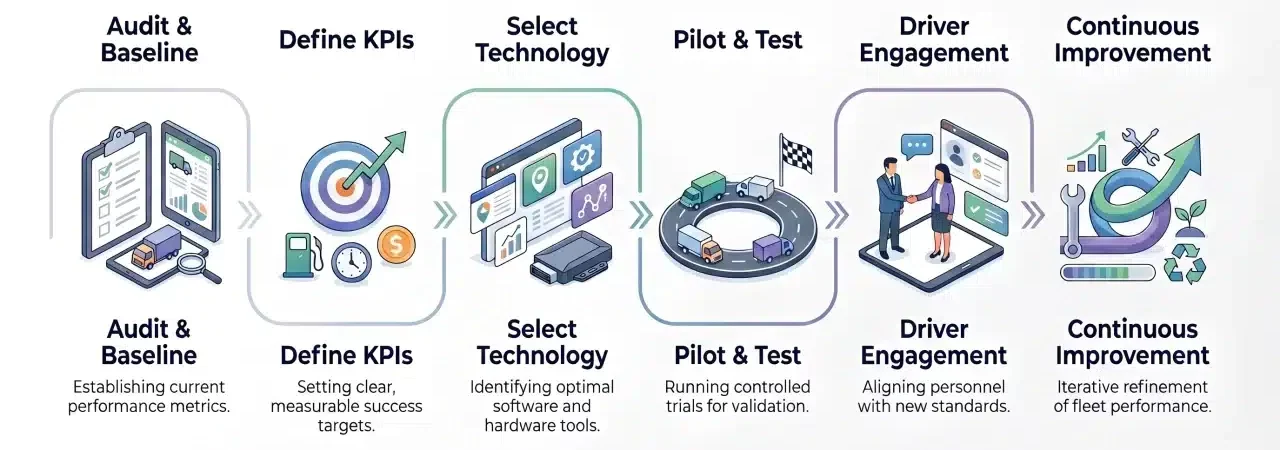
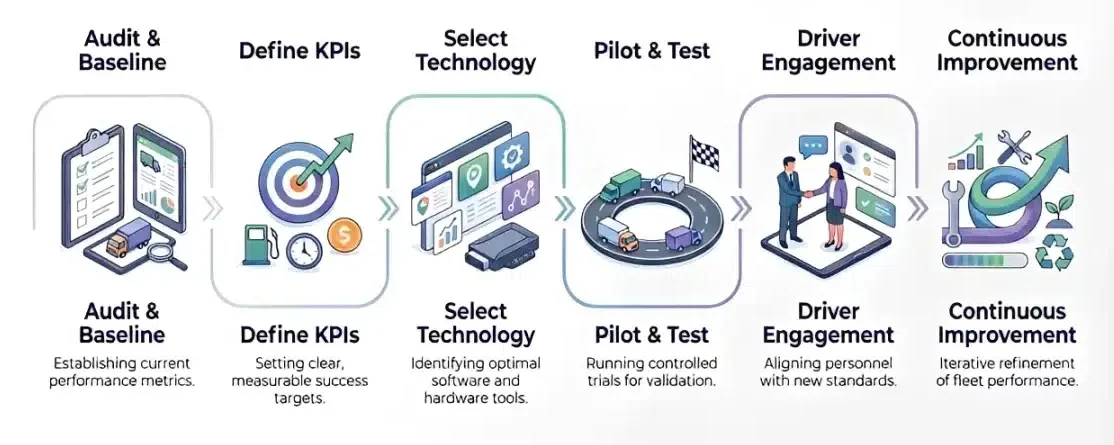
Moving from basic fleet management to full optimization takes careful planning. It is not just about software but requires a shift in operational culture. Here is a structured approach to implementing fleet optimization.
1. Conduct a comprehensive audit
Before optimizing, establish a baseline. Audit all vehicles, noting age, maintenance, and fuel costs. Analyze routes and driver schedules, and identify pain points like fuel misuse, accidents, or downtime. This benchmark guides future improvements.
2. Define clear objectives and KPIs
Optimization requires specific targets. Vague goals like “save money” are insufficient. Instead, set quantifiable Key Performance Indicators (KPIs). Examples include:
- Reduce fleet fuel consumption by 12% within 12 months.
- Increase daily job completion rate by 15%.
- Reduce idle time to under 5% of total engine hours.
- Achieve 100% compliance with maintenance schedules.
3. Select the right technology stack
Choose a fleet management provider that fits your goals. Ensure hardware suits your vehicles and software integrates with existing systems. Many businesses improve efficiency by implementing a robust fleet operation system.
4. Pilot program and calibration
Start with a pilot program using a small group of vehicles and drivers. This helps fix technical issues and adjust alert settings, such as harsh braking sensitivity, before full rollout.
5. Driver engagement and training
Human cooperation is essential for fleet optimization. Communicate benefits like safety, less paperwork, and protection in accidents. Use incentives for smooth driving and low idling to make it a collaborative effort.
6. Continuous analysis and iteration
Optimization is ongoing, not a set-and-forget task. Review data monthly or quarterly, track trends like rising fuel costs or costly vehicles, and use insights to refine policies and set new targets.
Common Pitfalls and How to Avoid Them
Even with the best intentions, fleet optimization initiatives can fail. Being aware of common traps helps businesses navigate the complexities of implementation.
- Data overload (Analysis Paralysis)
Modern telematics produce massive amounts of data, which can overwhelm fleet managers. Avoid tracking everything at once. Focus on exception reporting and set alerts only for threshold breaches. Track 3–5 core KPIs at a time.
- Ignoring the human element
Relying only on data without driver input can backfire. If a route shows 30 minutes but school traffic slows it down, the data is misleading. Set up a feedback loop so drivers can annotate trips and validate insights with real-world experience.
- Short-termism
Expecting instant ROI is unrealistic. Hardware and training costs may raise expenses at first, while real benefits like longer vehicle life and lower insurance take time. Plan ROI over 24–36 months to secure stakeholder support.
- Siloed information
Fleet data often stays siloed, but optimization affects finance, HR, and sales. Poor communication can lead to missed maintenance or breakdowns during critical jobs. Integrate fleet software with other systems to ensure data flows across departments.
Advanced Practices: The Future of Fleet Optimization

As technology evolves, so does the definition of optimization. Forward-thinking Australian businesses are already looking beyond standard telematics toward next-generation strategies.
Predictive analytics and AI
Current systems show what happened, but AI-powered predictive analytics look ahead to prevent problems. By analyzing historical patterns, it can forecast battery failures, anticipate traffic delays, and guide proactive actions to keep the fleet running smoothly.
Electric vehicle (EV) transition strategy
Current systems show what happened, but AI-driven predictive analytics look ahead. They can forecast issues such as faster battery failure in certain climates or upcoming traffic delays, allowing managers to take proactive actions and prevent disruptions.
Mobility-as-a-service (MaaS) integration
Fleet ownership is evolving. Modern optimization evaluates if a dedicated vehicle is necessary. MaaS data can suggest alternatives like ride-share or car-share for urban trips, making mobility budgets more efficient than maintaining pool cars.
Computer vision and camera integration
Telematics shows that harsh braking happened, but AI-powered cameras reveal why. Fleets can tell if it was driver distraction or a real hazard, enabling targeted training and reducing risk. In Australia, this evidence also helps manage rising insurance costs.
Fleet optimization turns chaotic transport variables into predictable, profitable operations. By applying these strategies, Australian businesses can make their fleets a competitive advantage rather than just a cost.
"Computer vision allows fleet managers to understand the context behind driving events, helping identify risks more accurately and improve driver safety through targeted insights."
Conclusion
Fleet optimization is now essential for any Australian business relying on vehicles. It turns fleets into data-driven assets, cutting fuel and maintenance costs, improving safety, and ensuring compliance while adapting to changing conditions.
With AI and electrification evolving, businesses need the right system to stay competitive. Get advices from experts to ensure your strategy aligns with operational needs and regulatory requirements.
Frequently Asked Question
The five pillars of fleet management typically include vehicle acquisition, maintenance management, driver management, fuel management, and compliance monitoring. These areas ensure efficient and controlled fleet operations.
Fleet standardisation refers to using similar vehicle types, models, or specifications across a fleet to simplify maintenance, reduce costs, and improve operational efficiency.
Yes. Even for small fleets, optimization software can identify fuel wastage, improve customer response times, and ensure compliance with safety regulations, offering a high return on investment.
It automates the collection of data required for Chain of Responsibility (CoR) laws, manages driver fatigue through Electronic Work Diaries, and ensures vehicle maintenance schedules are strictly adhered to.