




Manufacturing compliance covers the documents, inspections, and training records a factory needs to prove that its processes actually work as declared.
A compliant workflow ties each of these records to a specific role and approval step, so a missed inspection or an expired certificate surfaces before it reaches a customer or an auditor.
Key Takeaways
Manufacturing compliance software ranges from mobile inspection apps to validated EQMS platforms, depending on how much regulatory control your sector requires.
Food, pharmaceutical, and general manufacturers each answer to different Australian frameworks, from FSANZ to TGA to AS/NZS ISO 9001.
ERP-integrated quality control ties inspection results directly to production orders and inventory status, reducing the manual hand-offs point tools leave behind.
Total cost of ownership includes validation, integration, and internal approval resources, not just the advertised subscription price.

No two manufacturers weigh the same things when comparing compliance platforms, a food processor cares about batch traceability, a device maker cares about validated change control. The shortlist below covers that spectrum, from focused inspection tools to ERP-integrated quality systems.



Best Because
Mobile inspections, audits, and frontline corrective actions.

Best Because
Validated eQMS for pharmaceutical and medical-device workflows.

Best Because
QMS built specifically for medical-device design and post-market quality.

Best Because
Plant-wide food safety, HACCP, and production quality control.
What Is Manufacturing Compliance Software?
Manufacturing compliance software controls documents, inspections, corrective actions, training records, and traceability evidence. Scope ranges from a standalone inspection app to a validated EQMS or quality controls built into ERP.
1. Compliance software vs QMS vs EHS
The category matters because a validated change-control process and a failed production inspection solve different problems.
- QMS manages quality processes like audits, non-conformances, and CAPA, usually connected to ERP or PLM.
- EQMS adds validated workflows and change controls, best suited to life sciences and highly regulated operations.
- EHS software handles workplace safety and environmental processes across multiple sites.
- Inspection tools capture checklists and field observations for mobile audits and frontline checks.
- ERP-integrated QC connects inspection results with production, procurement, and inventory data directly.
A QMS doesn't automatically replace EHS or specialist laboratory systems. A document repository alone won't connect a failed inspection with quarantined stock and the affected production order.
2. Core capabilities to expect
At minimum, test whether the platform can provide:
- Controlled documents, version histories, approvals and effective dates.
- Configurable inspections, non-conformances and corrective actions.
- Role-based permissions and reviewable audit trails.
- Competency records, training assignments and expiry alerts.
- Supplier-quality records and lot or batch traceability.
Australian Regulations Your Compliance Software Must Support
No single checklist applies to every Australian manufacturer. Translate applicable laws and standards into evidence requirements before asking any vendor if their product is compliant.
| Sector | Framework or authority | Evidence the system may need |
|---|---|---|
| Food manufacturing | FSANZ Food Standards Code | Food-safety checks, corrective actions, training |
| Medicines | TGA requirements and applicable GMP | Batch histories, deviations, change controls |
| Medical devices | TGA and ISO 13485 where applicable | Complaints, risk controls, supplier quality, CAPA |
| General manufacturing | AS/NZS ISO 9001 where adopted | Document control, competence, inspections |
| Workplace operations | Applicable WHS laws | Hazards, incidents, training, corrective actions |
| Trade measurement | National Measurement Institute | Instrument verification and measurement records |
1. Food and beverage: FSANZ Standard 3.2.2A and HACCP
FSANZ Standard 3.2.2A applies extra food-safety requirements to specified food-service and retail activities. Confirm it applies to your activities rather than assuming every facility has identical duties.
Useful software evidence includes approved procedures, critical checks, exception handling, and proof that staff completed required food-safety training.
2. Pharma and medical device: TGA, GMP, ISO 13485
Pharmaceutical and medical-device businesses generally need stronger control over records, access, and review. The demonstration should show controlled documents, batch histories, audit trails, and approvals, though validation requirements need separate confirmation.
3. General manufacturing: AS/NZS ISO 9001, WHS Act, NMI measurement
ISO 9001-based quality management commonly requires control over documented information, competence, and non-conformity processes. Software can support that evidence, but certification depends on the implemented system, not the product name.
WHS regulators vary by jurisdiction, so check model WHS laws alongside your applicable state or territory regime.
How to Choose Manufacturing Compliance Software by Sector and Regulation
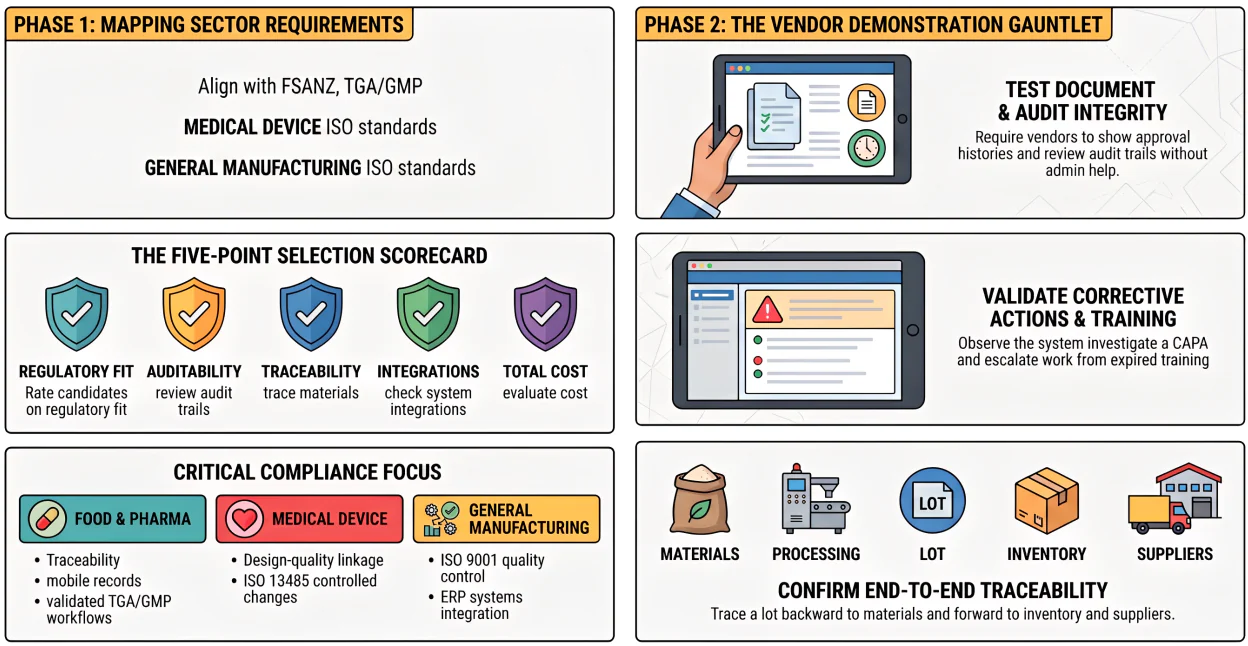
Choose by working backwards from sector risk and required evidence. A platform suited to mobile food-safety inspections may not satisfy validated life-sciences workflows.
1. What to weigh by sector
- Food and beverage: mobile records, alerts, and batch traceability against FSANZ and customer schemes.
- Pharmaceutical: validated workflows and detailed audit trails against TGA and GMP requirements.
- Medical device: design-quality linkage and controlled changes against TGA and ISO 13485.
- General manufacturing: configurable QC with ERP integration against ISO 9001 and WHS.
Score each candidate consistently across regulatory fit, auditability, traceability, integrations, and total cost, measured against the key performance indicators that matter most for your operation.
2. Six tasks every vendor should demonstrate
- Revise a controlled document and show its approval history.
- Review an audit trail without administrator reconstruction.
- Open, investigate, and close a corrective action.
- Identify an expired training record and escalate affected work.
- Record a supplier non-conformance linked to purchasing and stock.
- Trace one finished lot backwards to materials and forwards to inventory.
A polished demo can obscure project dependencies. Use these six tasks as a shared requirements brief before requesting quotes.
Quick Comparison of the Best Manufacturing Compliance Software in Australia
| Features | HashMicro | SafetyCulture / Mitti | MasterControl | Greenlight Guru | Arena PLM | ETQ Reliance | Qualio | SafetyChain / FoodReady | Intellect QMS | ComplianceQuest |
|---|---|---|---|---|---|---|---|---|---|---|
| ERP Integration | ||||||||||
| Regulated Validation Depth | ||||||||||
| Food Safety and HACCP Fit | ||||||||||
| Ease of Use | ||||||||||
| AU Local Support |
10 Best Manufacturing Compliance Software in Australia
This is a category-based shortlist, not a best-to-worst ranking. Confirm workflow depth, integrations, and local support during a demonstration before deciding.
1. HashMicro
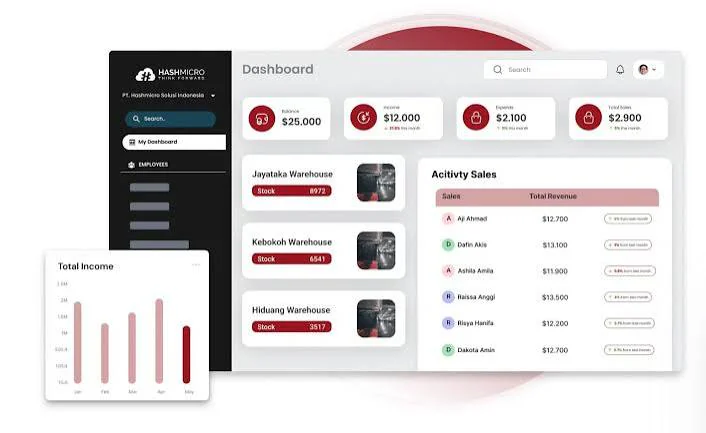
HashMicro connects QC, production, procurement, and inventory evidence within one ERP environment rather than a standalone compliance tool.
The platform suits manufacturers that want a failed inspection to automatically quarantine stock and trigger a corrective action, without switching between systems.
Key Features:
- ERP-Connected QC: Link inspections to work orders and inventory.
- Lot Traceability: Trace materials to finished goods and back.
- Corrective Action Workflow: Route, investigate, and close CAPA.
- Supplier Non-Conformance: Connect quality issues to purchasing.
- Audit Trail: Preserve document and approval history.
| Pros | Cons |
| ✓ Strong ERP and production integration. ✓ Traceability tied to real inventory data. ✓ Suitable for multi-site manufacturers. | × Not built for validated life-sciences workflows. × Implementation takes longer than a point tool. × Custom pricing may not suit small teams. |
Best for: Manufacturers that want QC, production, procurement, and inventory evidence connected within one ERP.
Pricing: Custom pricing based on modules, sites, and users.
2. SafetyCulture
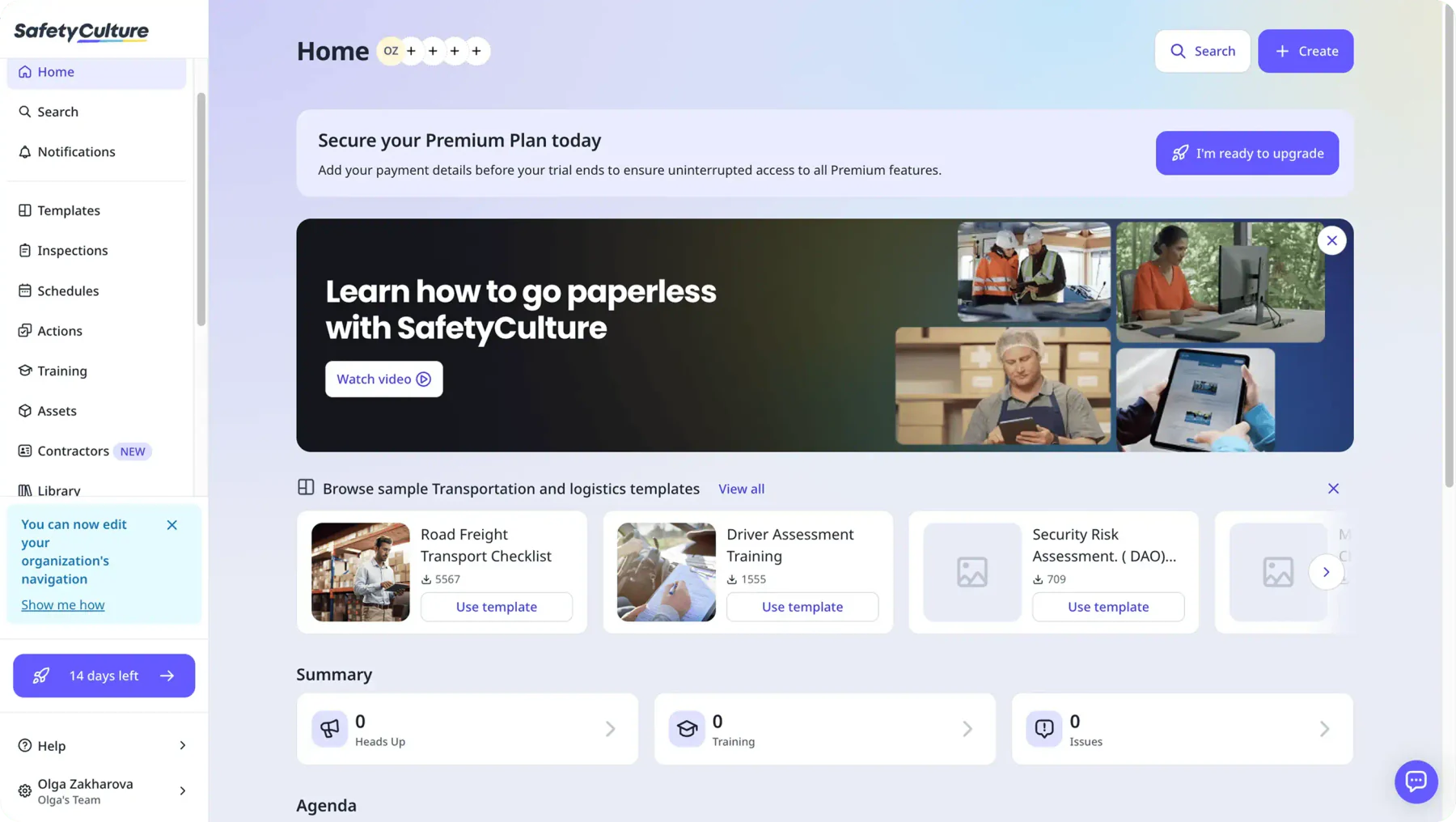
SafetyCulture focuses on mobile inspections, audits, and frontline action tracking, while Mitti operates as a separate managed food-safety offering under the same shortlist category.
Key Features:
- Mobile Inspections: Capture checklists and photos on site.
- Corrective Actions: Assign and track frontline fixes.
- Custom Checklists: Build inspections without code.
- Analytics Dashboard: Monitor inspection trends.
- Offline Capture: Record checks without connectivity.
| Pros | Cons |
| ✓ Easy for frontline staff to adopt. ✓ Strong mobile inspection experience. ✓ Fast to deploy for simple checklists. | × Limited native ERP or production data linkage. × Mitti needs separate evaluation for food safety. × Less suited to formal GMP evidence. |
Best for: Teams prioritising mobile inspections, audits, and frontline action tracking.
Pricing: Custom pricing based on users and modules.
3. MasterControl
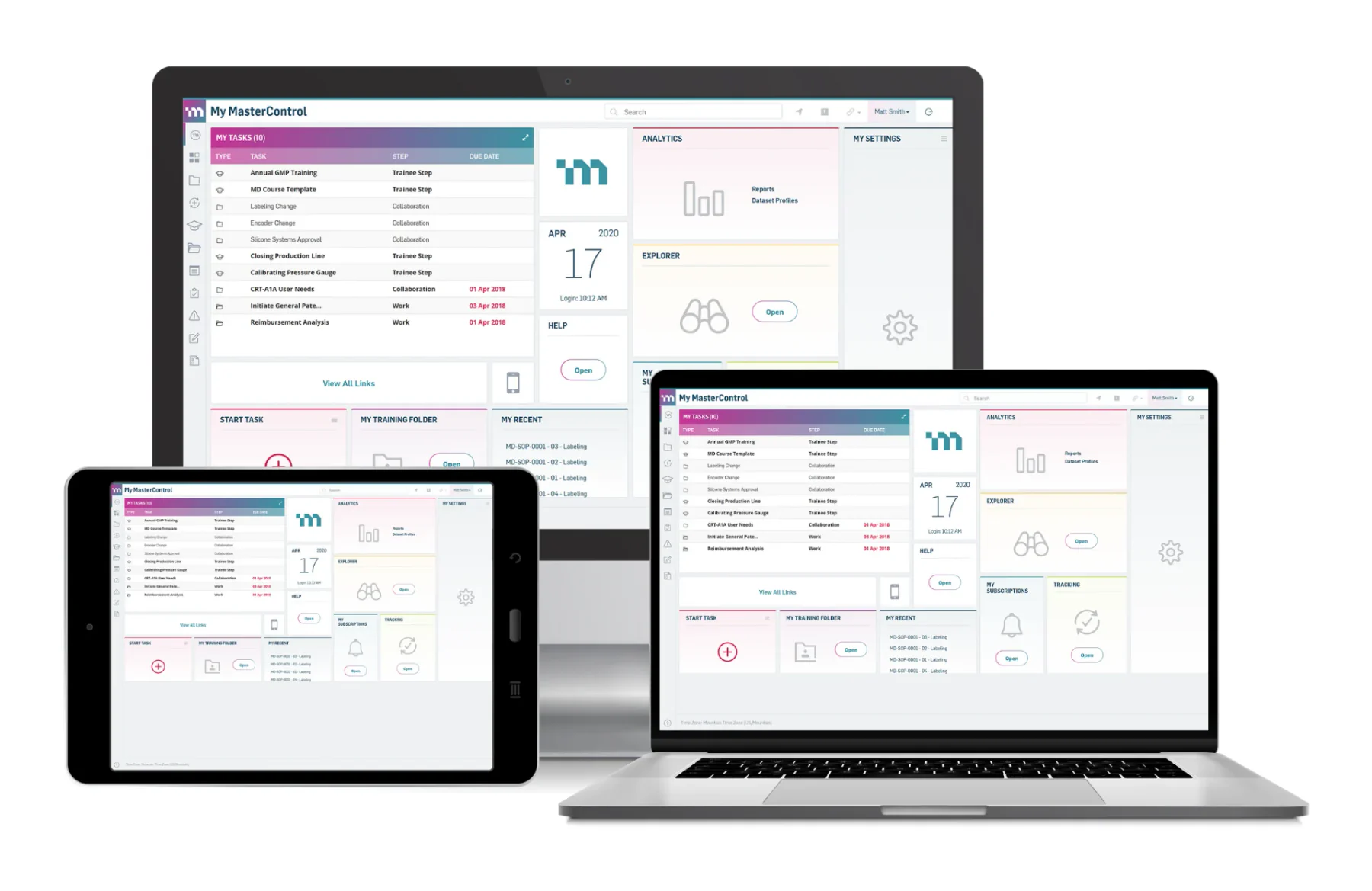
MasterControl is built for pharmaceutical, medical-device, and life-sciences environments that need structured, validated electronic quality processes.
Key Features:
- Validated Workflows: Support GxP-aligned electronic records.
- Document Control: Manage revisions and approvals.
- Deviation Management: Track and investigate quality events.
- Training Assignment: Link competency to job roles.
- Change Control: Route and approve procedure changes.
| Pros | Cons |
| ✓ Deep validation and audit-trail support. ✓ Established in regulated industries. ✓ Strong document and change control. | × More than most general manufacturers need. × Limited direct ERP or production linkage. × Implementation requires specialist resourcing. |
Best for: Pharmaceutical, medical-device, and life-sciences environments requiring structured electronic quality processes.
Pricing: Custom pricing based on validation scope and users.
4. Greenlight Guru
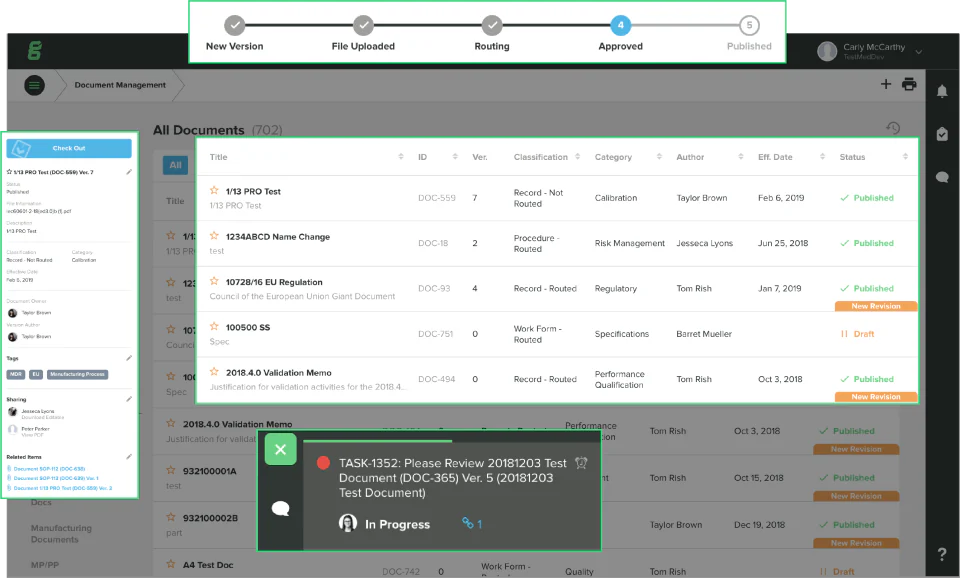
Greenlight Guru builds QMS workflows specifically around medical-device product development and post-market quality processes.
Key Features:
- Design Controls: Manage device design history files.
- CAPA Management: Track corrective and preventive actions.
- Risk Management: Link risk files to design and complaints.
- Complaint Handling: Route and investigate post-market issues.
- Audit Readiness: Maintain inspection-ready documentation.
| Pros | Cons |
| ✓ Purpose-built for medical-device workflows. ✓ Strong design and risk traceability. ✓ Good post-market quality tools. | × Narrow fit outside medical devices. × Limited production-floor connectivity. × Requires TGA-specific configuration checks. |
Best for: Medical-device organisations wanting QMS workflows built around product development and post-market quality.
Pricing: Custom pricing based on product lines and users.
5. Arena PLM
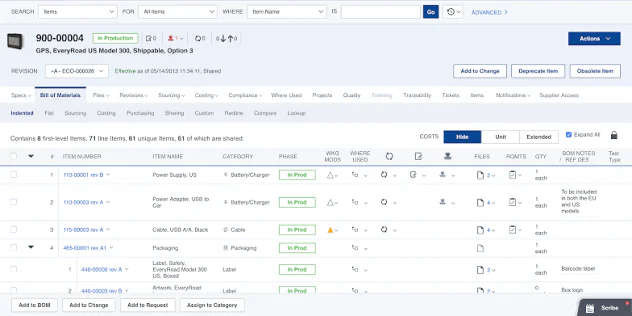
Arena connects product lifecycle records with quality processes, positioning QMS alongside PLM for manufacturers managing engineering change.
Key Features:
- BOM Management: Maintain accurate bills of materials.
- Engineering Change Orders: Route and approve design changes.
- Quality Events: Link non-conformances to product records.
- Supplier Collaboration: Share specs and quality data.
- Document Revisions: Track product documentation history.
| Pros | Cons |
| ✓ Strong product and BOM traceability. ✓ Good fit for engineering-heavy teams. ✓ Connects quality to design changes. | × Shop-floor inspection depth varies. × Less suited to pure production QC. × Integration effort depends on existing PLM. |
Best for: Manufacturers needing product lifecycle records and bills of materials connected with engineering changes.
Pricing: Custom pricing based on modules and users.
6. ETQ Reliance
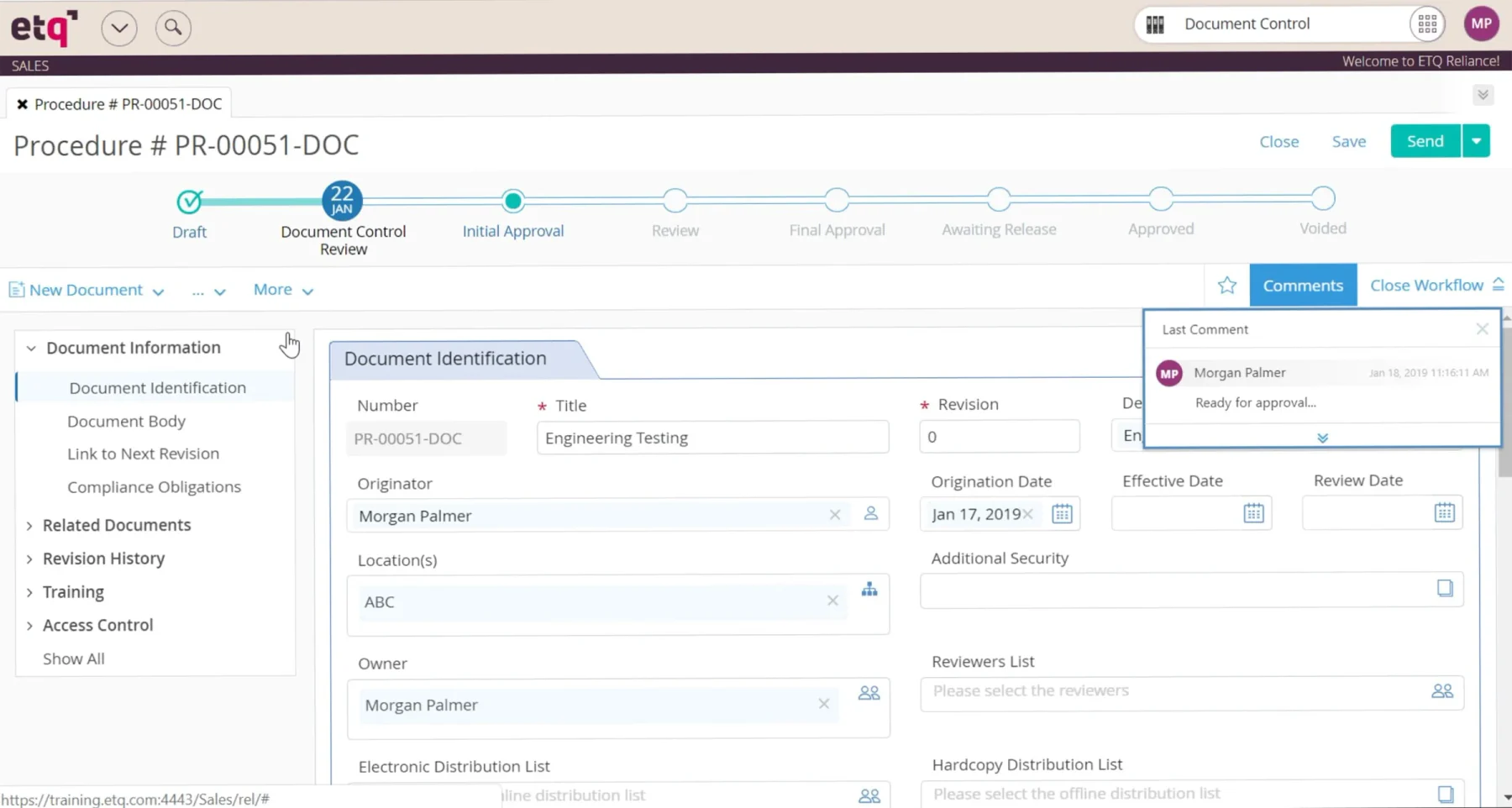
ETQ Reliance offers configurable enterprise quality workflows built for larger or multi-site businesses managing broader risk controls.
Key Features:
- Configurable Workflows: Build quality processes without code.
- EHS Modules: Extend into safety and environmental risk.
- Multi-Site Governance: Standardise workflows across plants.
- Analytics: Report on trends across sites and processes.
- Document Control: Manage approvals and version history.
| Pros | Cons |
| ✓ Deep configurability for complex sites. ✓ Combines QMS and EHS scope. ✓ Suitable for enterprise governance. | × Configuration overhead can be significant. × Needs dedicated admin resourcing. × Overkill for single-site manufacturers. |
Best for: Larger or multi-site businesses needing configurable enterprise quality workflows and broader risk controls.
Pricing: Custom pricing based on sites and configuration scope.
7. Qualio
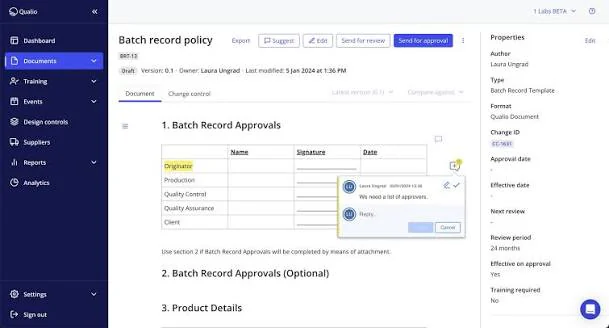
Qualio offers cloud eQMS functions aimed at emerging and mid-sized life-sciences companies replacing document-heavy quality processes.
Key Features:
- Controlled Documents: Manage SOPs and version history.
- Training Records: Track competency against roles.
- Quality Events: Log and investigate non-conformances.
- Supplier Management: Track approved vendor status.
- Audit Trail: Preserve reviewable change history.
| Pros | Cons |
| ✓ Easier to adopt than enterprise EQMS. ✓ Good fit for growing life-sciences teams. ✓ Clean, modern interface. | × Manufacturing-floor depth is limited. × Scalability for large product lines varies. × Fewer native integration options. |
Best for: Emerging and mid-sized life-sciences companies replacing document-heavy quality processes.
Pricing: Custom pricing based on users and modules.
8. SafetyChain
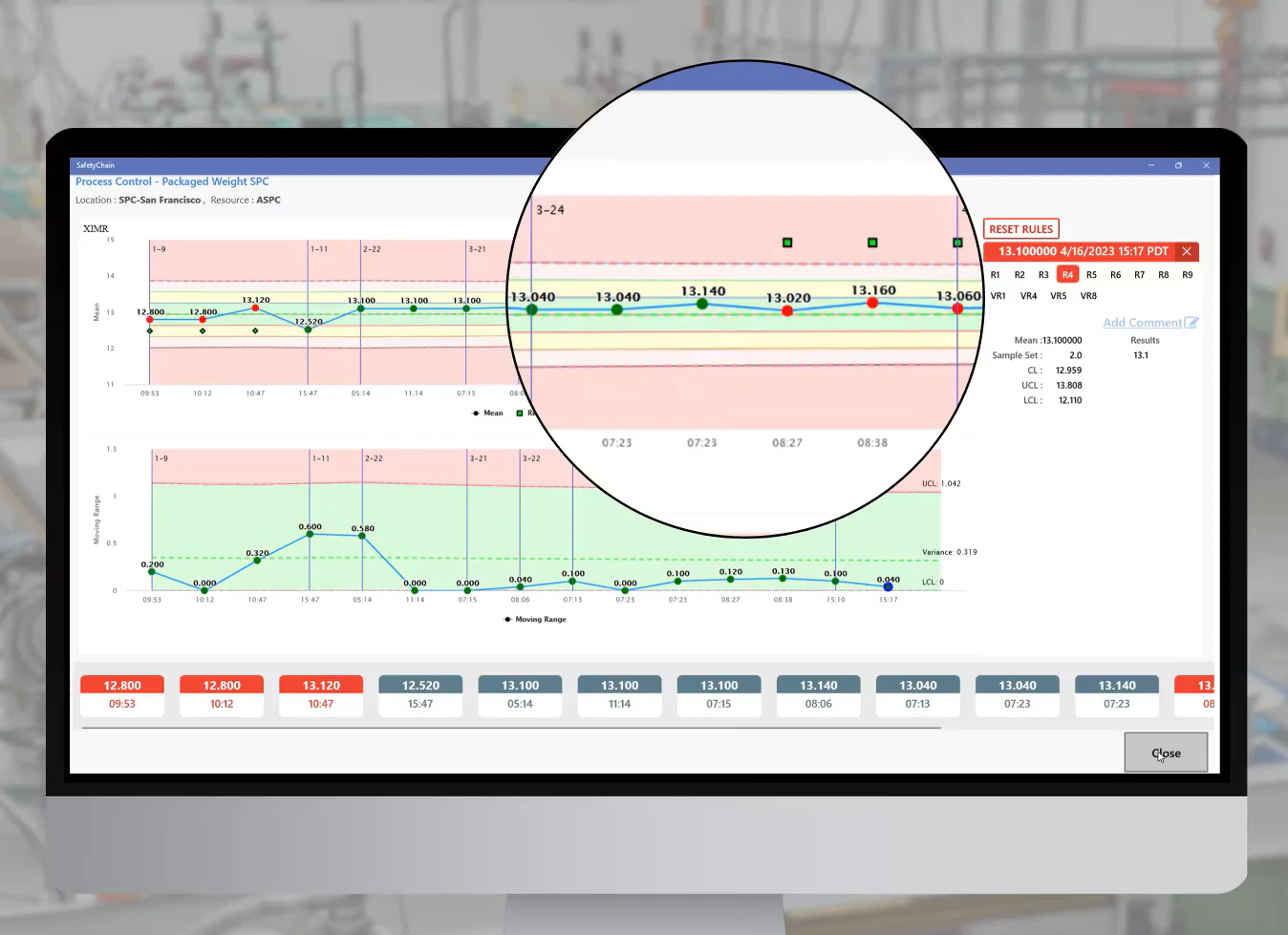
SafetyChain and FoodReady are separate platforms sharing this category, both aimed at food manufacturers needing production checks and HACCP-oriented workflows.
Key Features:
- HACCP Workflows: Capture critical control point checks.
- Batch Traceability: Trace lots through production.
- Supplier Certificates: Manage food-safety documentation.
- Instrument Connectivity: Log temperature and process data.
- Corrective Actions: Route food-safety exceptions.
| Pros | Cons |
| ✓ Strong food-safety and HACCP focus. ✓ Good batch traceability tools. ✓ Supports supplier certification tracking. | × Two separate platforms need individual evaluation. × Less suited outside food manufacturing. × ERP integration depth varies by product. |
Best for: Food manufacturers needing production checks, food-safety records, and HACCP-oriented workflows.
Pricing: Custom pricing based on sites and modules.
9. Intellect QMS
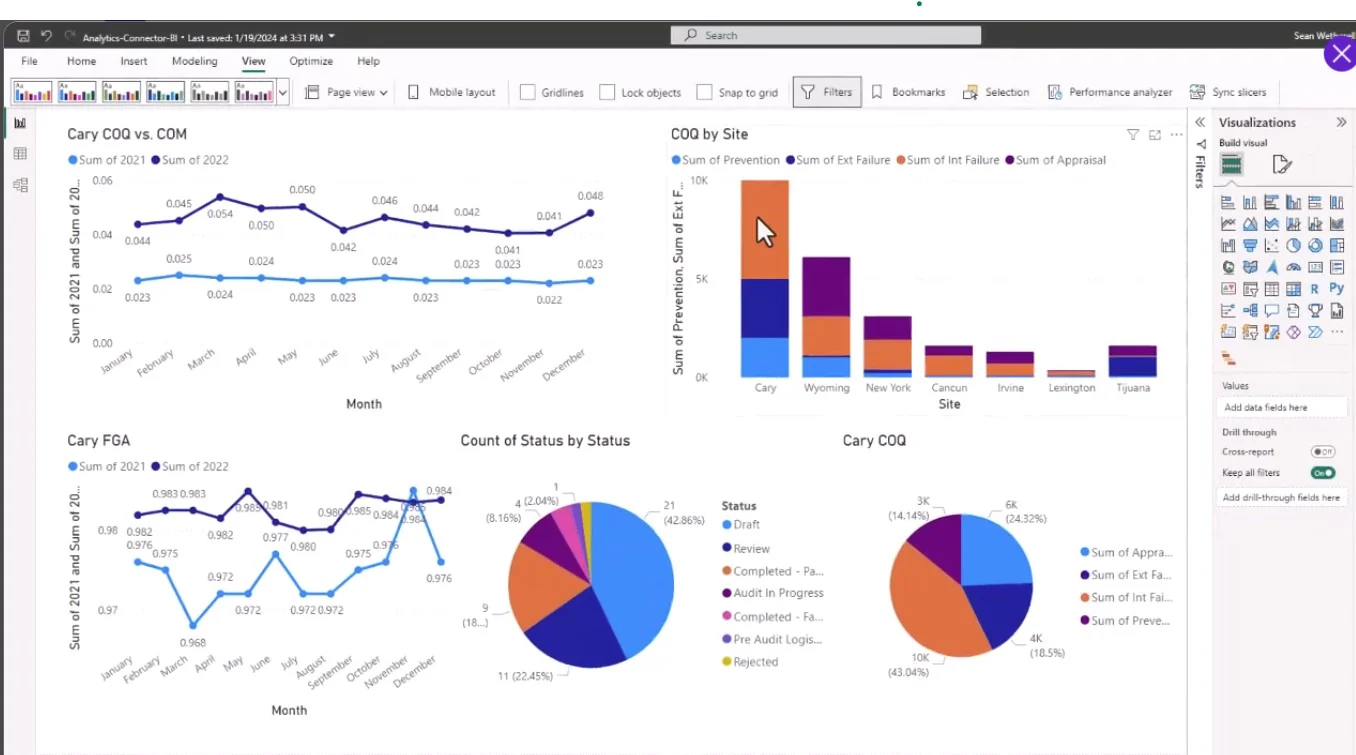
Intellect describes no-code quality-management capabilities, suited to businesses wanting configurable applications without building workflows from scratch.
Key Features:
- No-Code Builder: Configure quality apps without development.
- Document Control: Manage revisions and approvals.
- CAPA Management: Track corrective actions end to end.
- Training Matrix: Monitor competency and expiry.
- Mobile Access: Capture checks from the shop floor.
| Pros | Cons |
| ✓ Flexible, configurable workflow builder. ✓ No custom code required. ✓ Adapts to varied quality processes. | × Extensive tailoring adds testing effort. × Governance needed to control configuration sprawl. × Mobile performance depends on setup. |
Best for: Businesses wanting configurable quality applications without building every workflow from code.
Pricing: Custom pricing based on configuration scope and users.
10. ComplianceQuest
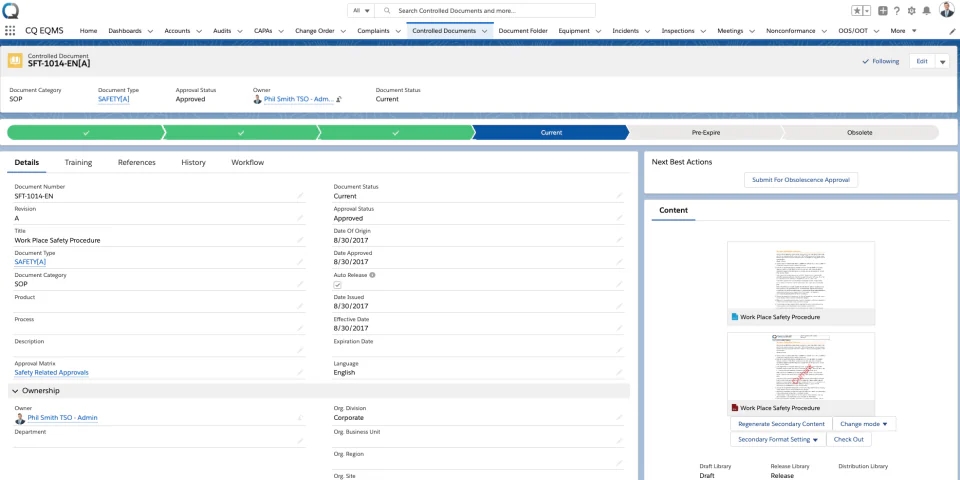
ComplianceQuest is a QMS built on the Salesforce platform, aimed at enterprises wanting cloud quality management alongside operational QC data.
Key Features:
- Salesforce-Native: Run quality processes on Salesforce.
- Document Control: Manage approvals and version history.
- Supplier Quality: Track non-conformances and audits.
- Reporting: Analyse trends across sites and processes.
- Integration Framework: Connect to existing Salesforce data.
| Pros | Cons |
| ✓ Strong fit for existing Salesforce users. ✓ Broad enterprise QMS scope. ✓ Good reporting and analytics. | × Salesforce licensing dependency. × Custom development can raise cost. × Production-floor connection needs separate work. |
Best for: Enterprises seeking cloud quality management built on Salesforce.
Pricing: Custom pricing based on licensing and configuration.
Why ERP-Integrated Compliance Beats Point Tools
ERP-integrated compliance works best when evidence depends on production orders, suppliers, inventory status, or lots. It reduces hand-offs, though regulated validation or lab processes may still justify a dedicated EQMS connected to ERP.
1. Compliance evidence tied to production and lot traceability
A point tool may record a failed inspection but leave staff to place stock on hold elsewhere. In an integrated workflow, the same event can quarantine the affected quantity and create a corrective action automatically.
- Failed incoming inspection links to the purchase order, supplier, and receipt, though advanced supplier-quality workflows may stay in a QMS.
- Failed production inspection links to the work order, lot, and inventory status, while lab results may still originate in a LIMS.
- Training expiry links to the worker, role, and production access.
- Corrective action links to the supplier, asset, or work-order context, though regulated CAPA may require validated EQMS controls.
"Compliance evidence only becomes useful when it moves with the transaction, not when it sits filed away waiting for an audit."
2. One source of truth for QC, inventory, and recall readiness
For batch traceability, the goal isn't another report. It's following raw materials through production and locating affected finished stock without reconciling several spreadsheets, part of a broader smart manufacturing approach.
Measure improvement against your own baseline: overdue corrective actions, repeat non-conformances, and traceability response time. Related asset controls can sit alongside a predictive maintenance strategy.
How Much Does Manufacturing Compliance Software Cost in Australia?
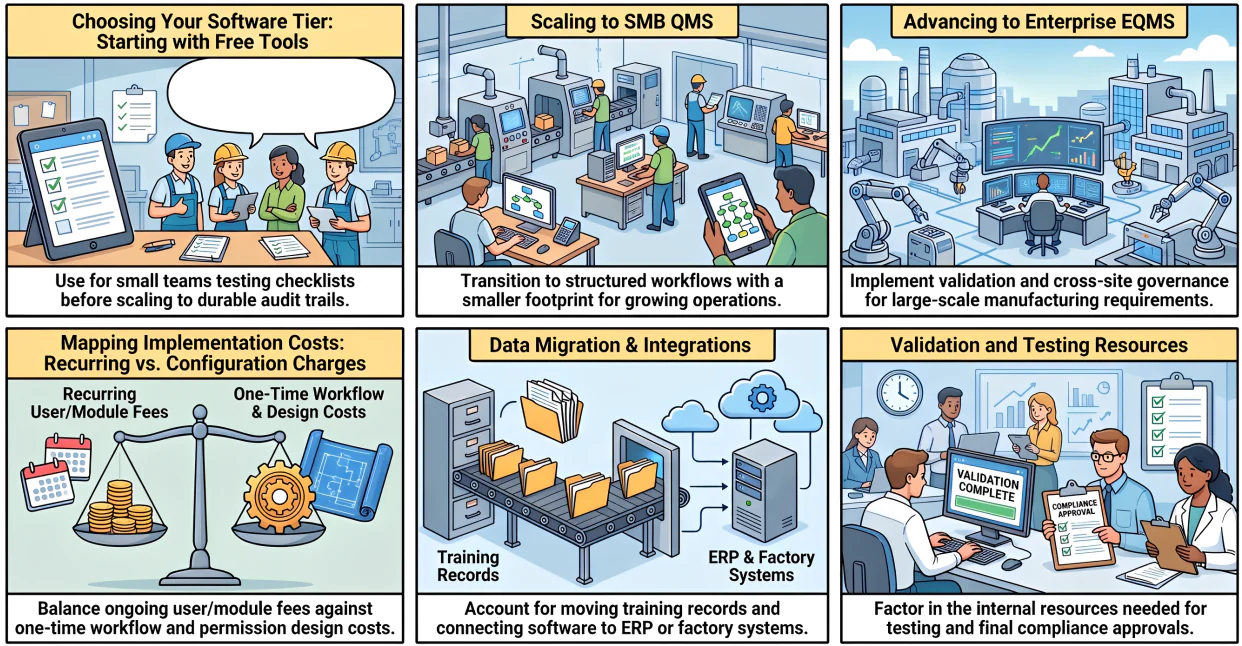
There's no reliable single market price, since compliance software ranges from a limited inspection tool to a validated enterprise platform. Compare quotes in AUD using the same scope and assumptions.
1. Free tools vs SMB QMS vs enterprise EQMS
Free tools suit a small team testing a checklist, but need durable audit trails and approval segregation before scaling. SMB QMS offers structured workflows with a smaller footprint; enterprise EQMS adds validation and cross-site governance.
2. AUD pricing, implementation scope, and custom ERP cost
Normalise each proposal across:
- Recurring charges for users, sites, and modules.
- Configuration, workflow design, and role-based permissions.
- Data migration for documents, suppliers, and training records.
- Integrations with ERP, PLM, LIMS, or factory systems.
- Validation, testing, and internal approval resources.
Ask vendors to price the same demonstration scenario. An ERP deployment plan can expose migration and adoption work that a licence comparison alone misses.
How HashMicro Supports Manufacturing Compliance
HashMicro is relevant where compliance evidence needs to connect with production and inventory execution, not as a claim to replace every dedicated EQMS or LIMS platform.
A configured workflow can connect incoming inspections with purchase receipts, production checks with work orders, and rejected output with inventory holds. Manufacturers can also relate supplier governance to a broader vendor management process instead of an isolated register.
The case is strongest when quality data drives scheduling and stock decisions, tracked against production measures such as throughput, yield, and downtime rates. HashMicro is less suited as the sole platform where highly specialised life-sciences validation is required.
Conclusion
Manufacturing compliance software ranges from a mobile inspection app to a validated EQMS or quality controls built into ERP, and the right fit depends on sector risk, required evidence, and how closely quality data needs to connect with production and inventory.
When your requirements are ready, book a free consultation with HashMicro for a structured assessment of your compliance and ERP requirements, with no obligation to proceed.

Frequently Asked Questions
It covers controlled records, inspections, corrective actions, training, and traceability. A QMS suits general quality governance, while an EQMS fits regulated workflows needing stronger validation. ERP-integrated QC works best when evidence must connect with production and inventory.
There is no universal winner. Food manufacturers may prioritise batch traceability, pharmaceutical businesses may need a validated EQMS, and ERP-connected operations may benefit most from integrated QC. Confirm fit through sector-specific demonstrations.
FSANZ workflows may need food-safety records and training evidence. TGA-regulated operations may need controlled documents and audit trails. ISO 9001 evidence commonly includes document control, competence, and corrective actions.
Free tools can work for low-risk checklists or a small proof of concept. Before relying on one, check audit trails, permissions, retention, integrations, and multi-site scalability, since a free licence can still create real administration costs.
Yes, depending on the product. Common connection points include production orders, QC results, lot records, inventory status, and supplier data. Test one end-to-end scenario, such as failing an inspection and tracing the affected lot.