
Privacy Act 1988 & Australian Privacy Principles
Consent, access requests, corrections, and retention policies handled automatically. All 13 APPs enforced with breach-ready audit logs.
Ask Hashy AI. Your Smart
Coworker.
AI built into your business software to get it all done.
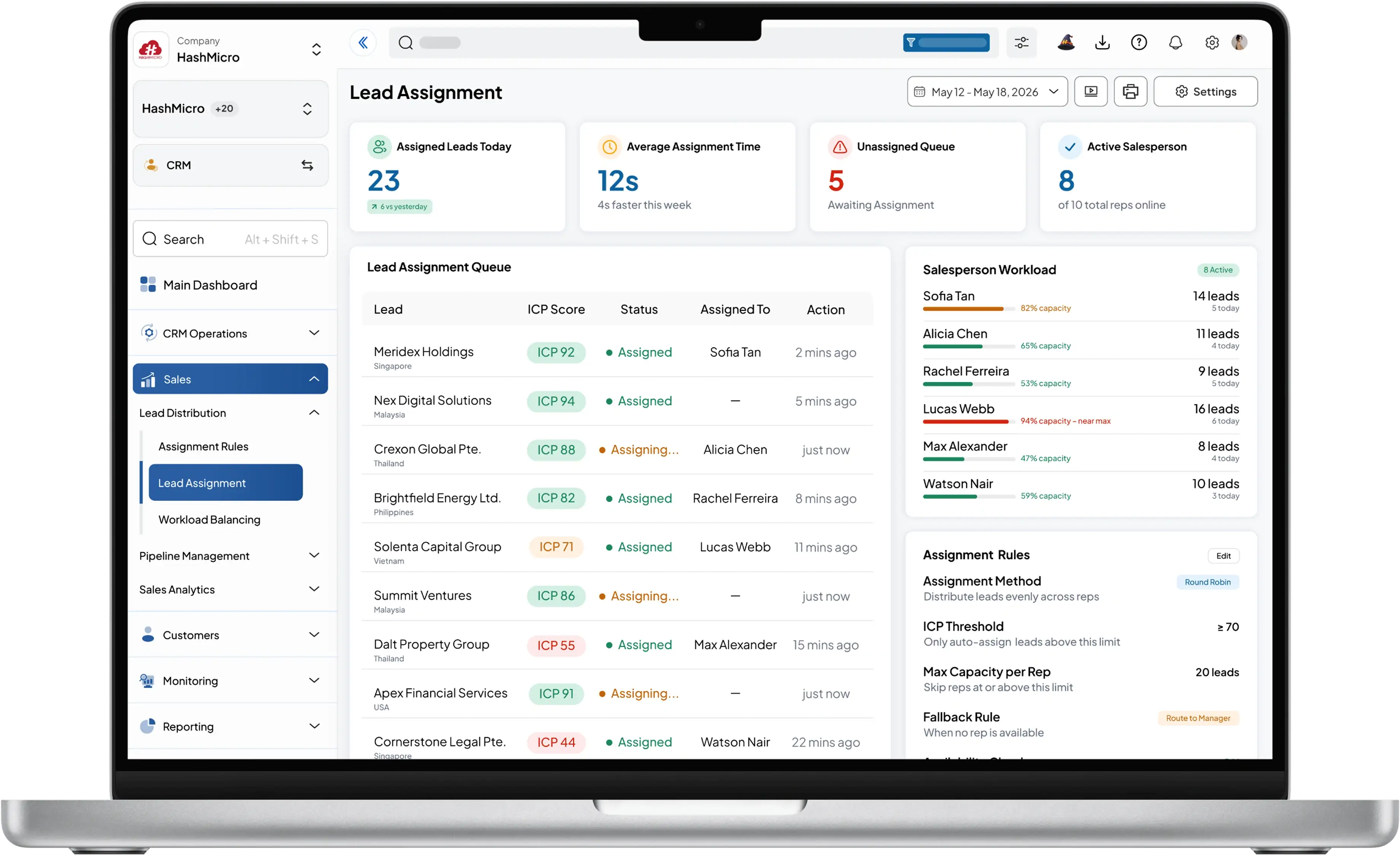
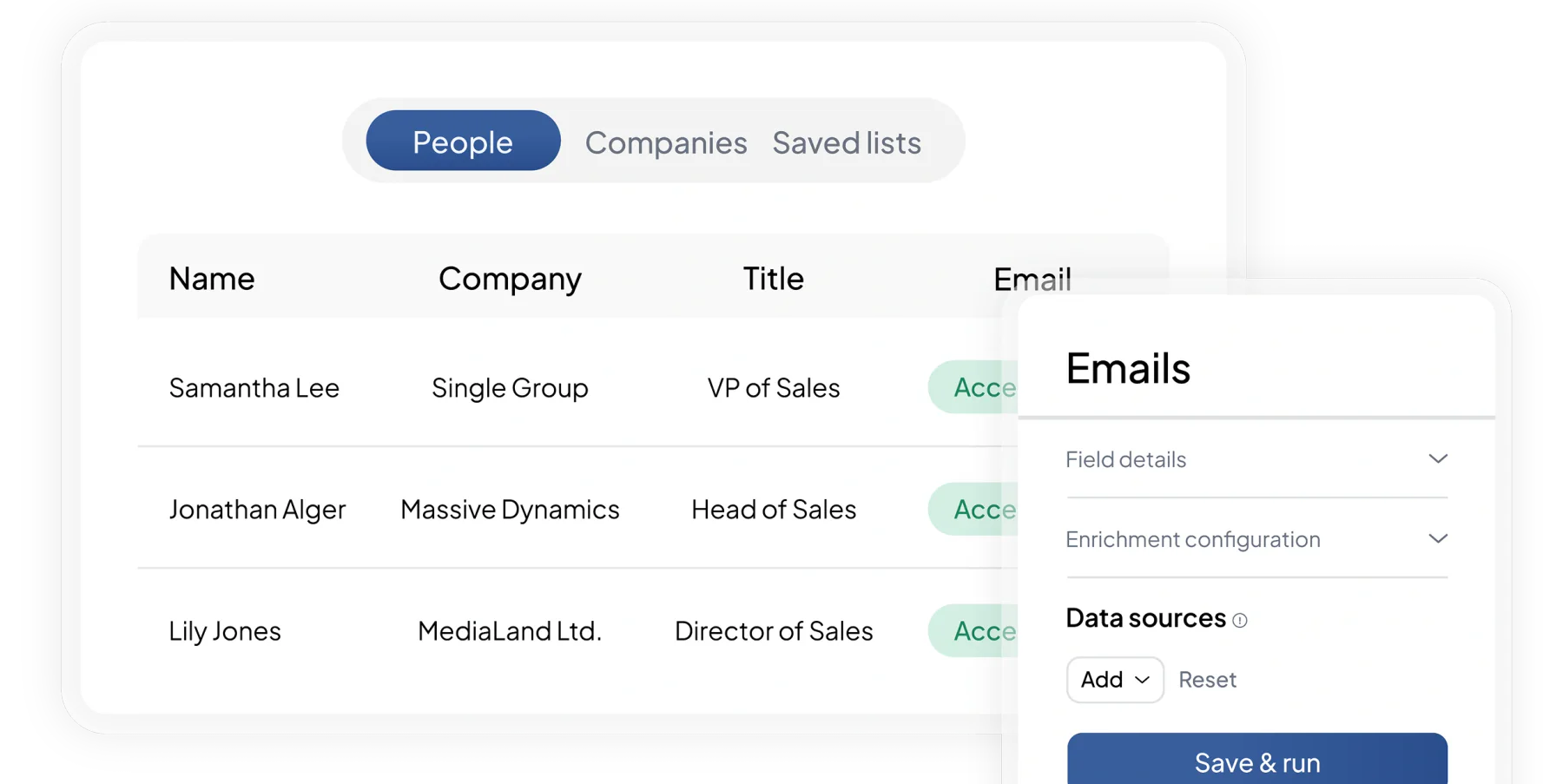
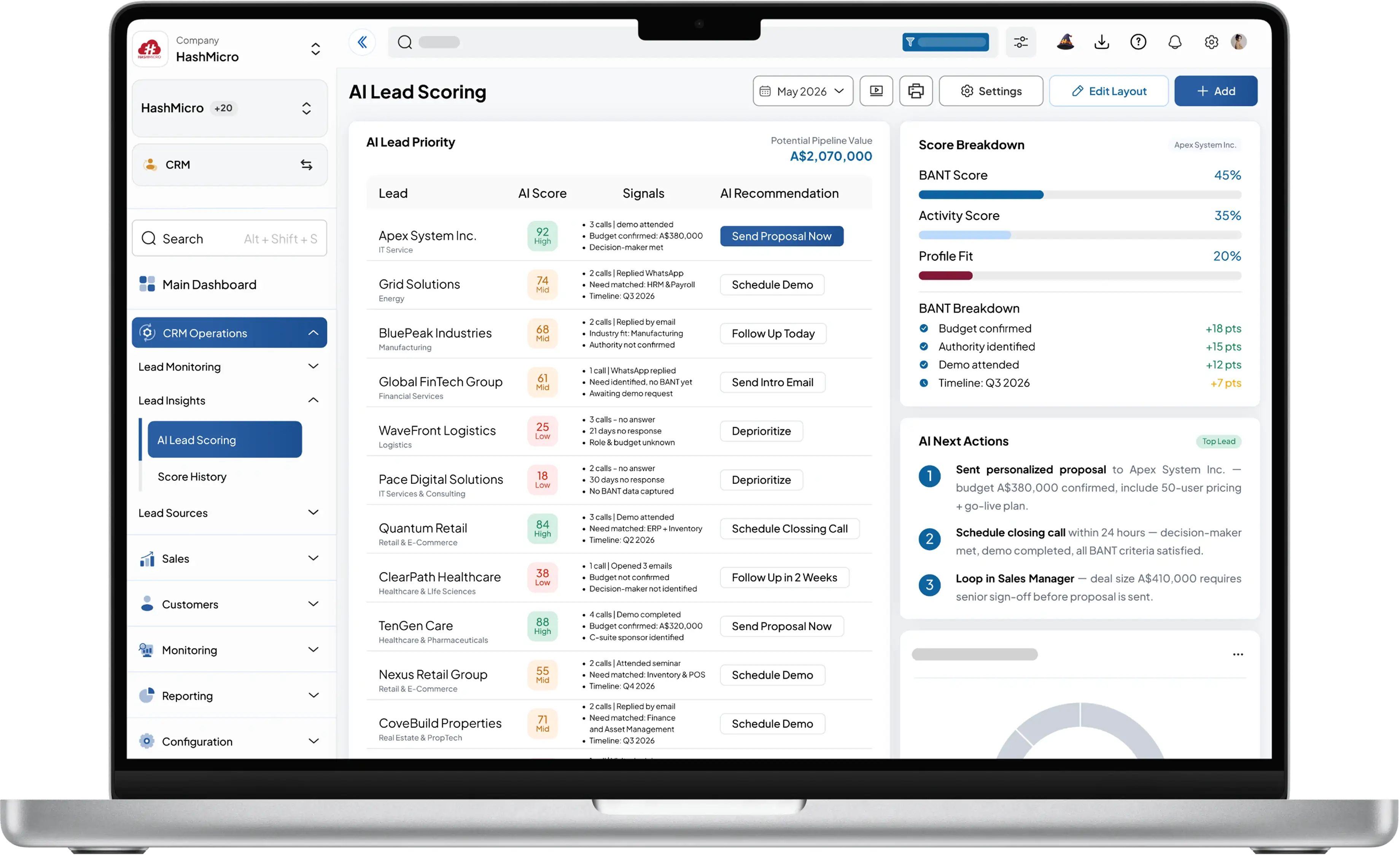
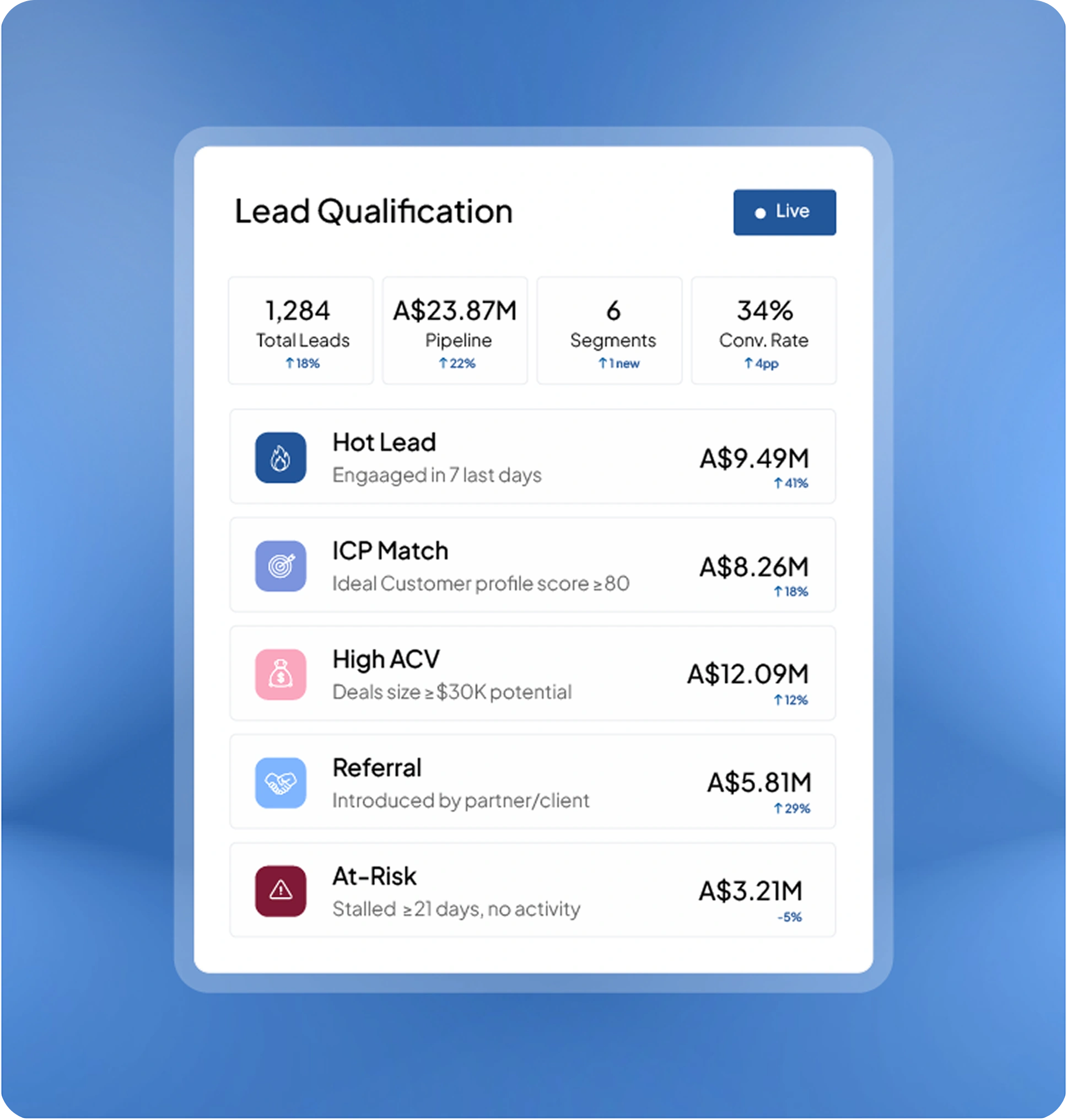
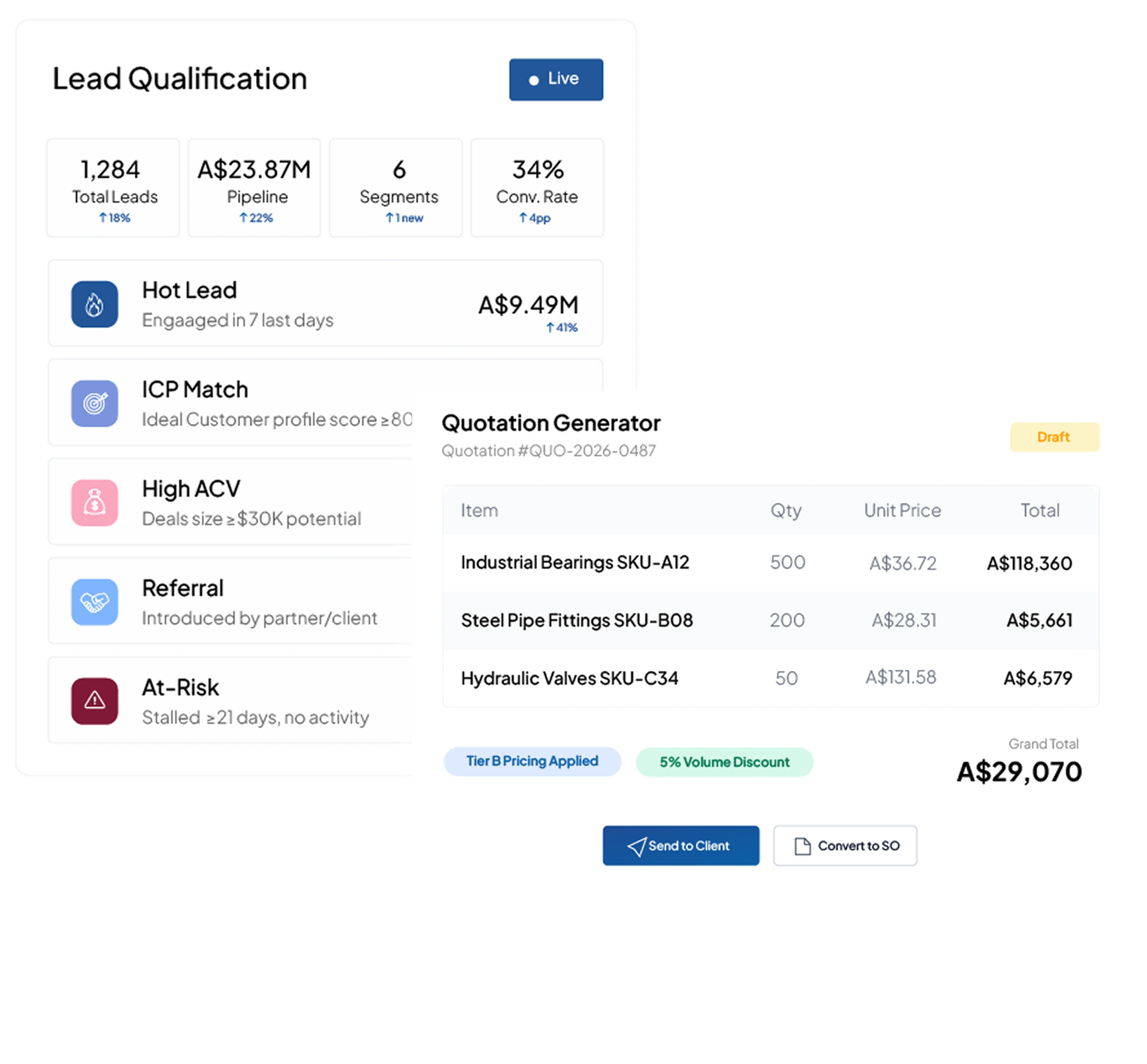
Manage lead database in a centralized repository and identify qualified leads more easily.
General sales report in a matter of seconds and gain insights into your sales performance.
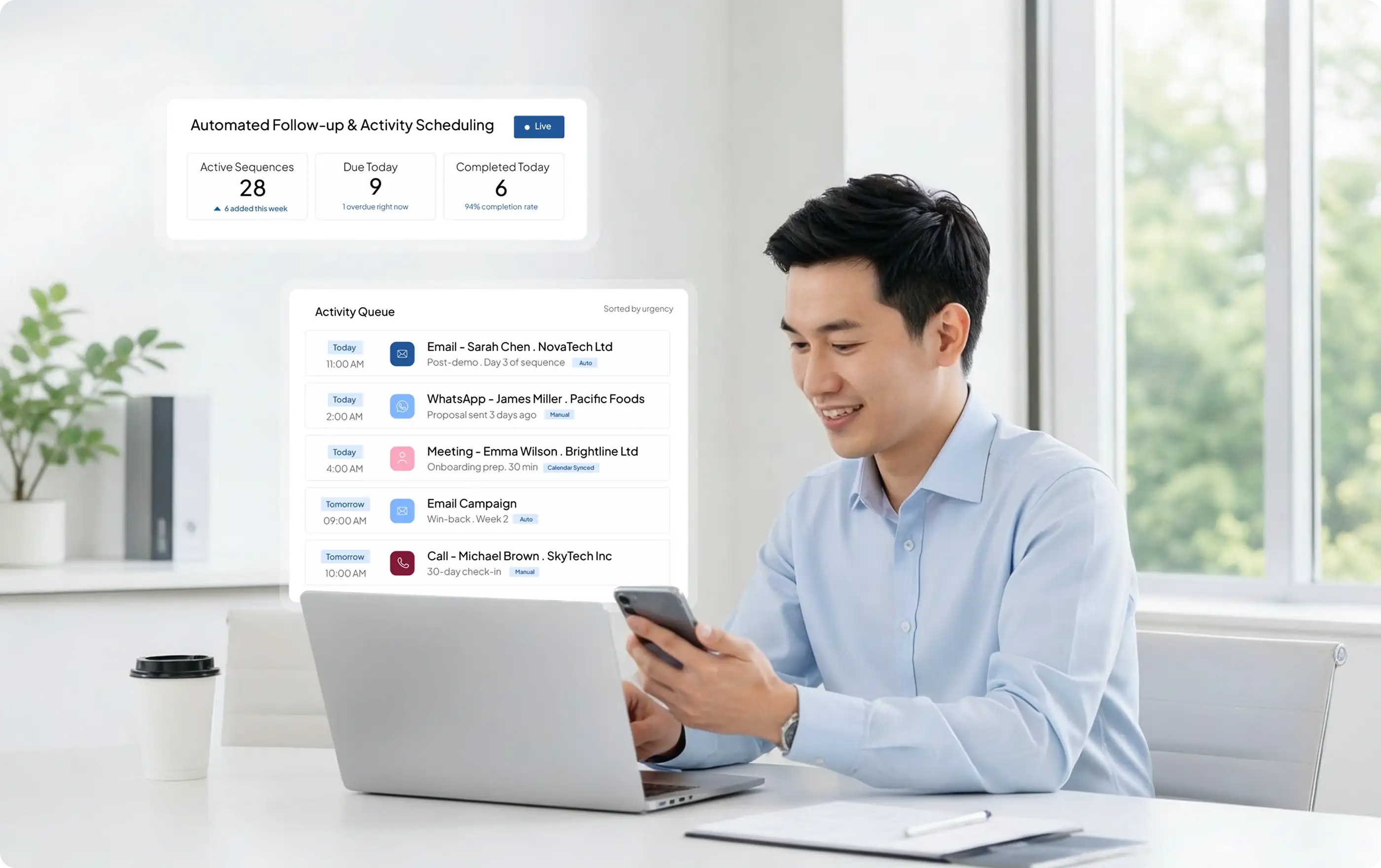
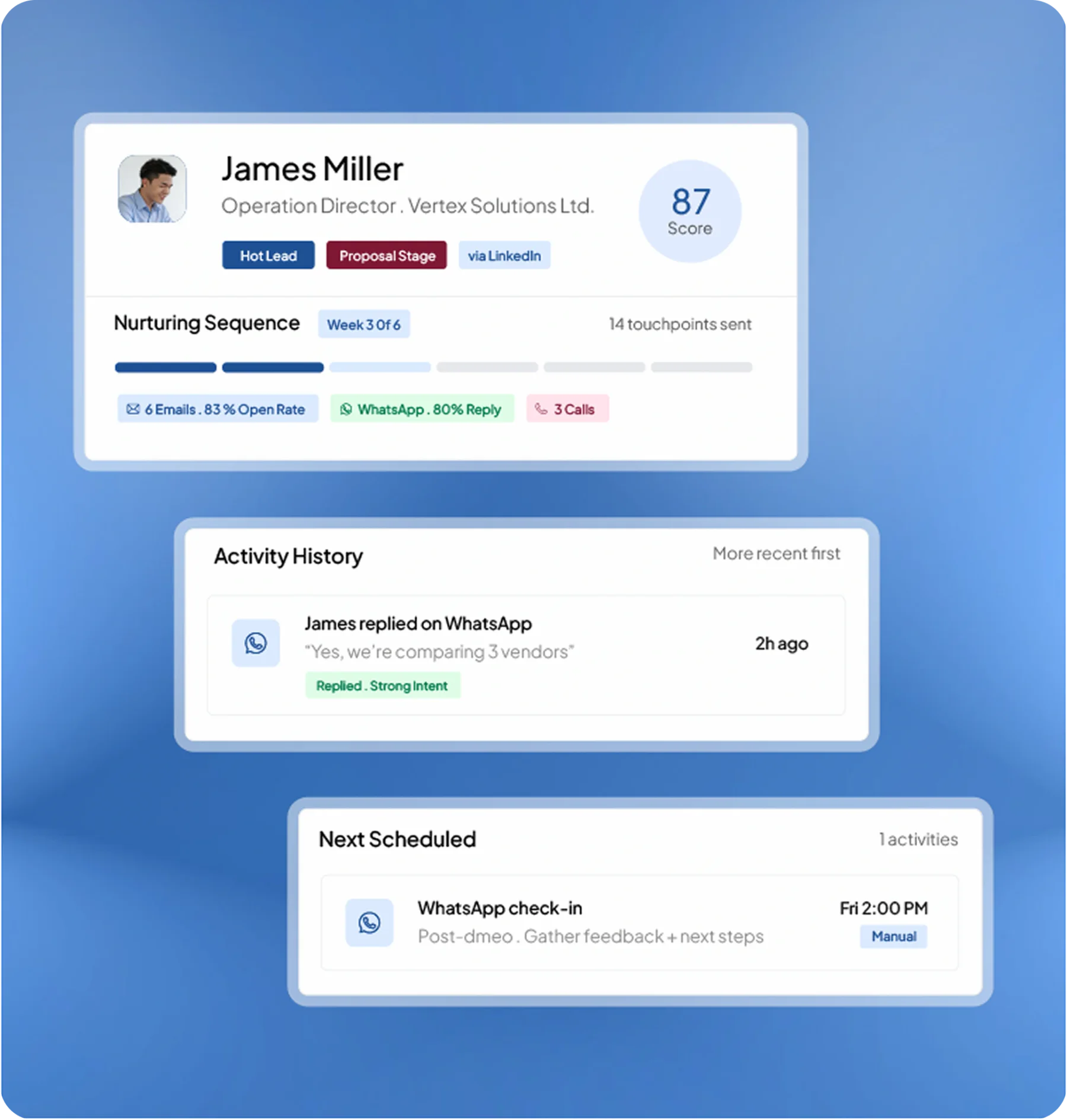
Keep track of all sales activities such as meetings, follow-ups, tasks, and various updates.
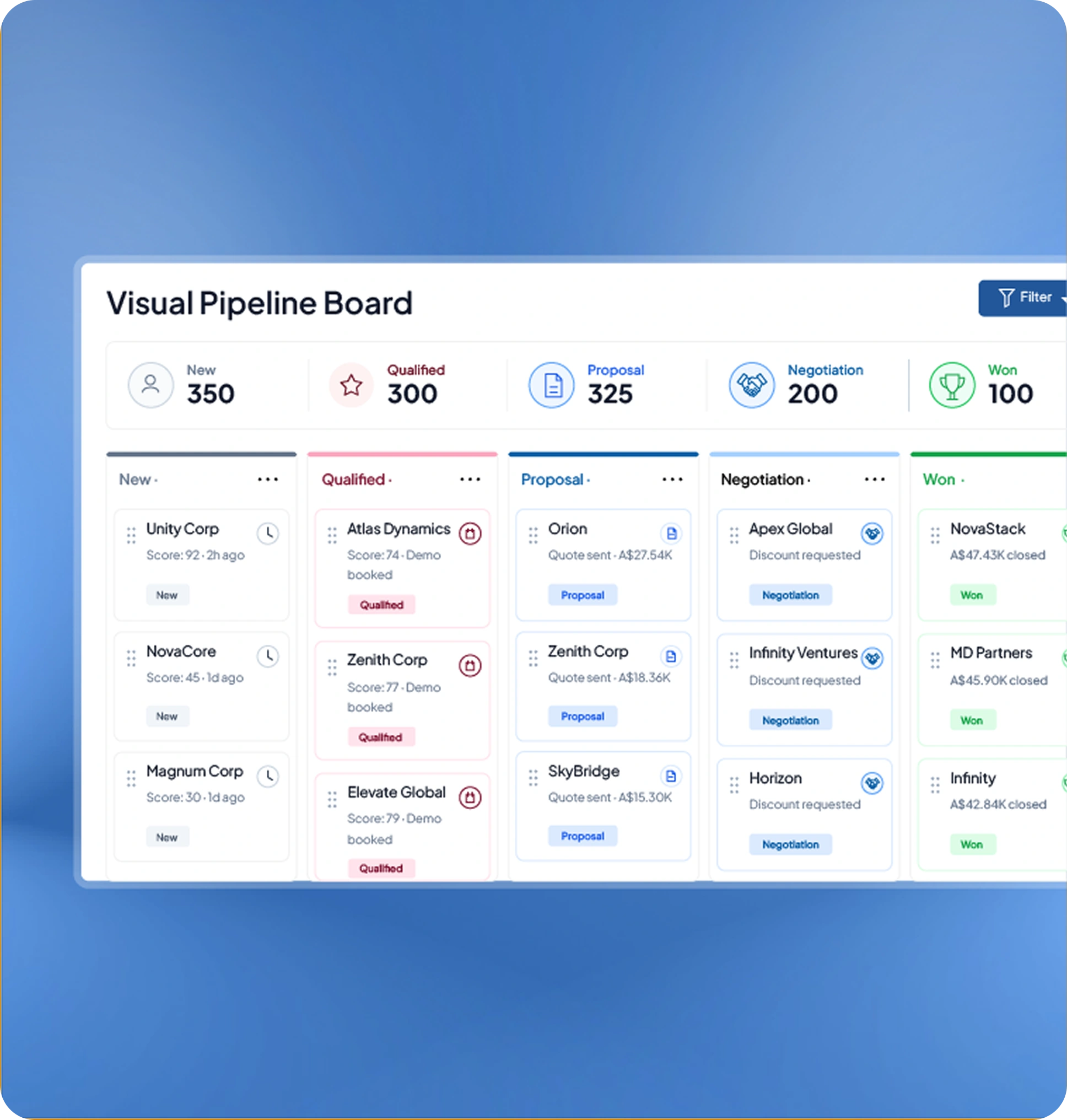
Create sales stages with the drag & drop function through configurable sales workflows.
Discover All Exclusive Features of The Most Favorable CRM Software for Asia-Pacific Enterprises
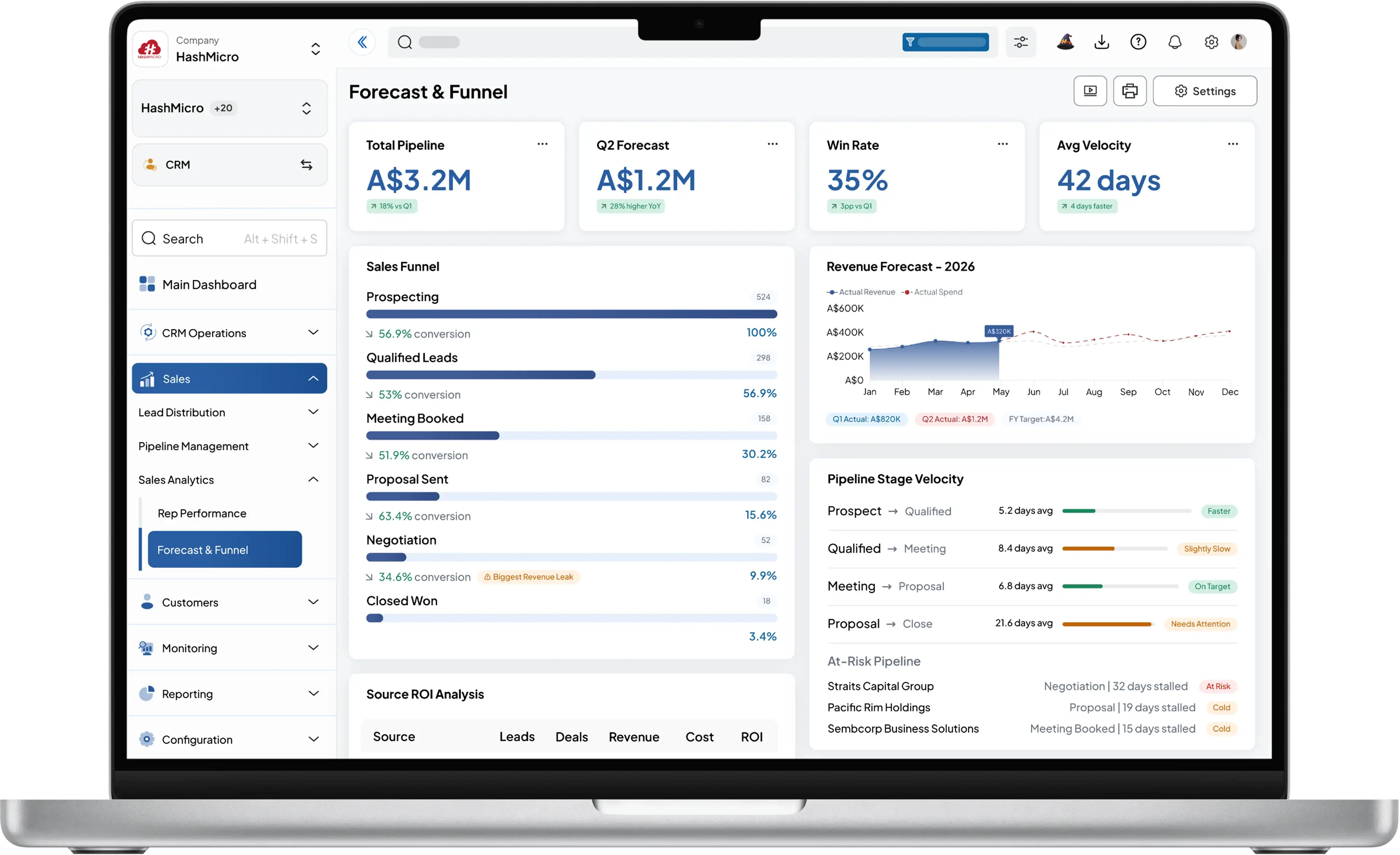
Real-Time Funneling Process Monitoring
HashMicro CRM software makes it easy for you to spot opportunities based on comprehensive analysis results on one intuitive dashboard
Features
Leads Pipeline
Daily Sales Activity
Quotation Overview
Follow Up Status
Opportunity Overview
Revenue Calculation
Organize All Leads Data Faster & Easier
You can easily monitor the status and follow-up process with detailed information of all leads data, staging, & revenue calculation
Features
Leads Overview
Leads Quality Scoring
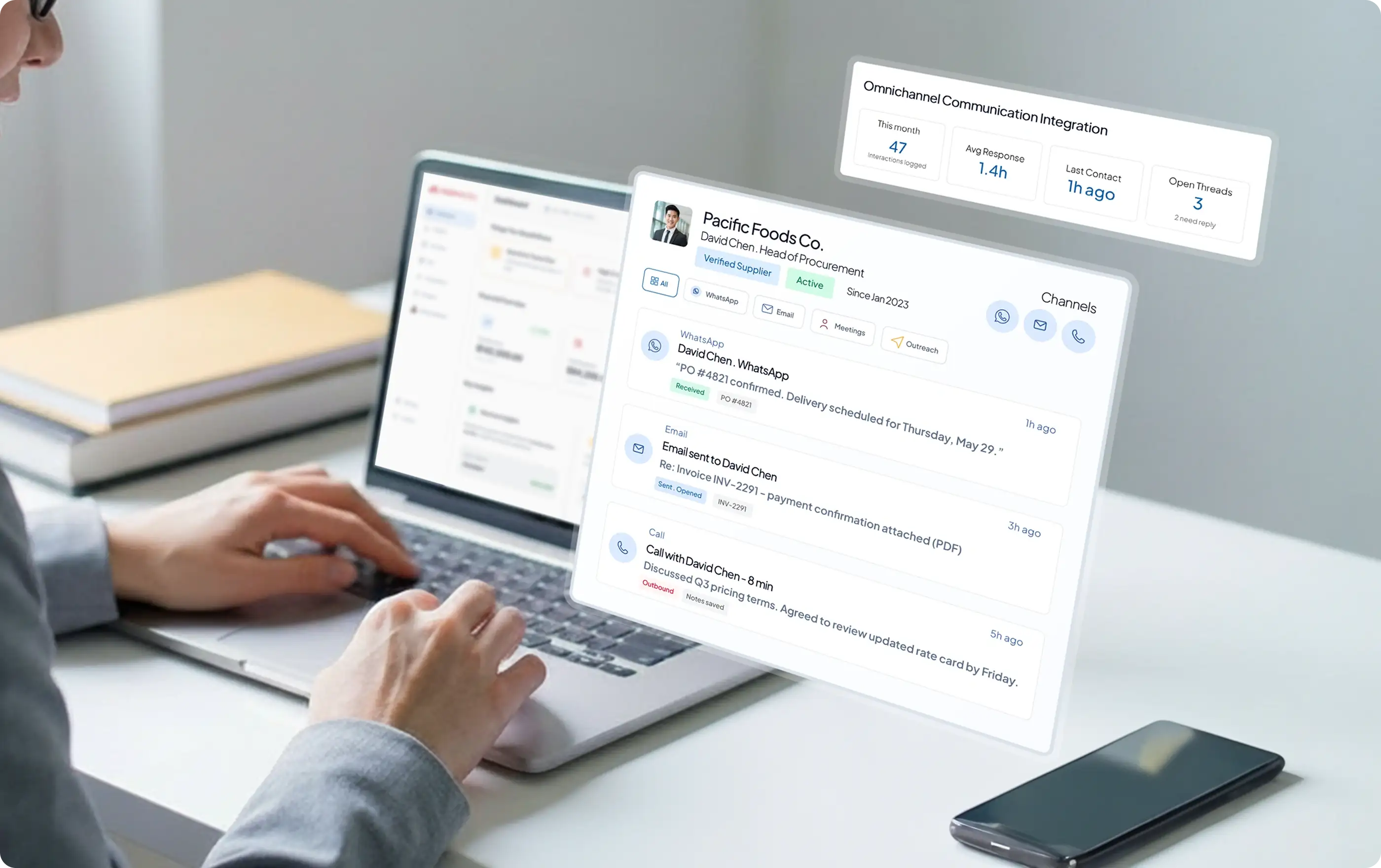
WhatsApp Integration
Lead Age Audit
Follow Up Activity
Revenue Calculation
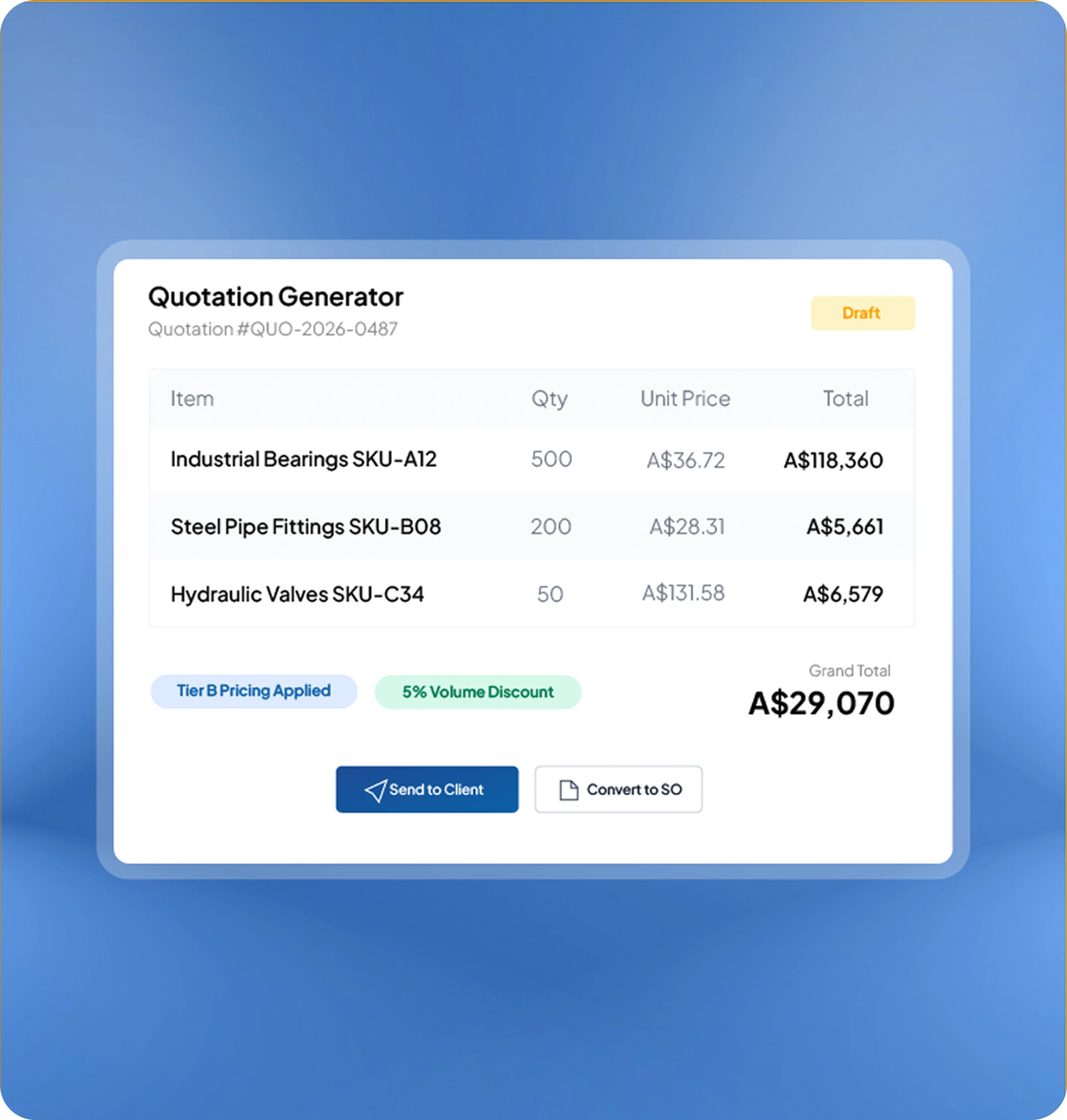
Enhance Opportunities to Close More Deals
Optimize the sales process from quotation to prospects follow-up process with the aim of increasing sales opportunities
Features
Sales Order Management
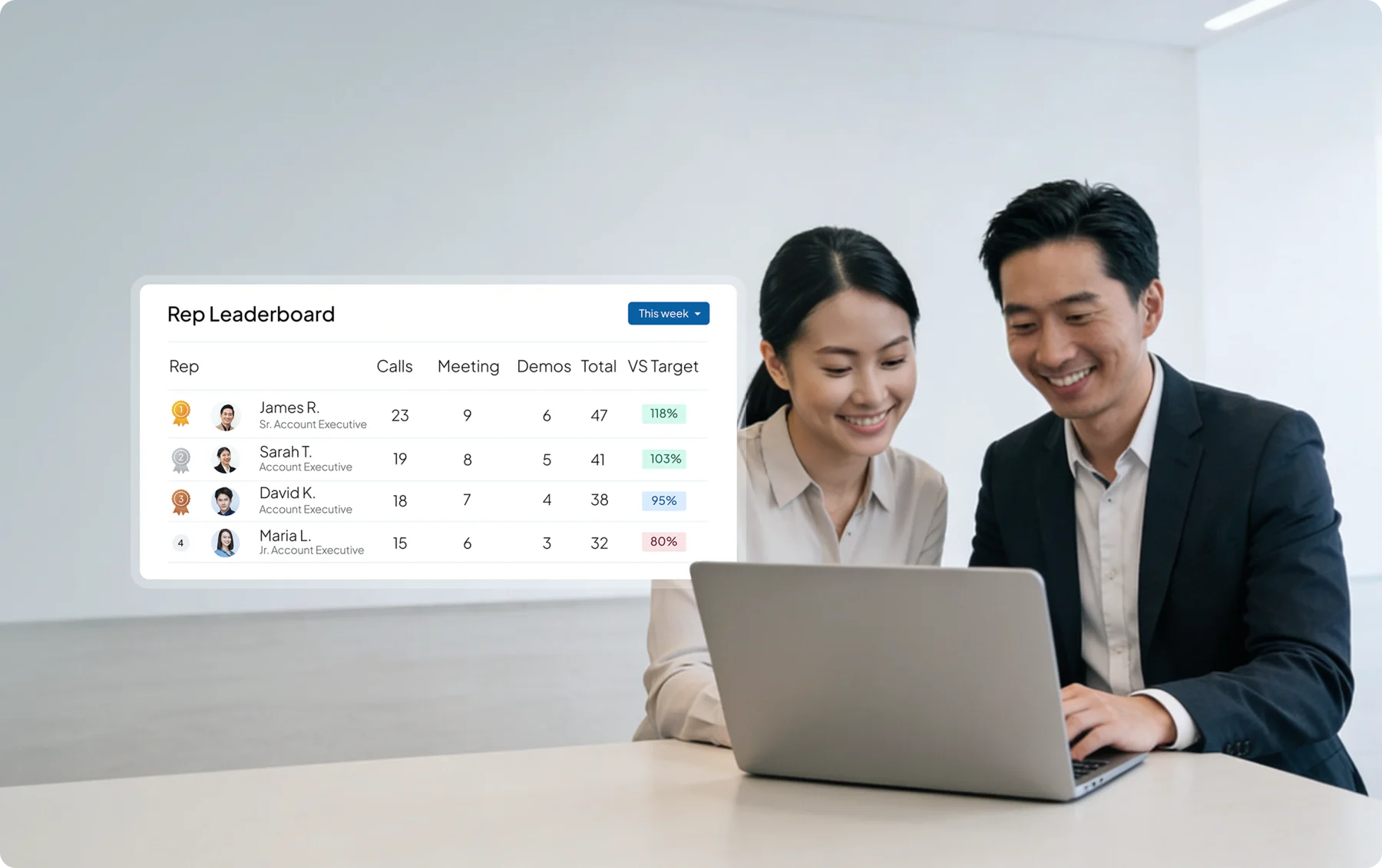
Sales Team Report
Quotation Management
Follow Ups Management
Opportunity Overview
Customers Management
Draw Better Conclusion from Meeting Result
Helps you see the opportunity and quality of all prospects to determine the effective and smarter closing strategy with accurate analysis
Features
Meeting Calendar Overview
Quotation Status
Potential Overview
Meeting Analysis
Meeting Types
Summary Template
Get Real-Time Reports with Accurate Data
Have a data-driven analysis & report of the entire funneling process from lead data management to potential prospect follow-ups
Features
Follow Ups Analysis
Leads Pivot Analysis
Salesperson Tracking
Meeting Analysis
Phone Calls Analysis
Leads Lifetime Report
Follow Up the Potential Prospects with Ease
Make better analysis and decision to enhance the efficiency of funneling process starting from cold calls to scheduling meetings systematically
Features
Call Summary
Contact Information
Follow Up Scheduling
Meeting Scheduling
Target Follow Ups
Priority Ranking
Collecting customer data in Australia comes with real legal obligations. Privacy, marketing outreach, and data portability each have their own rules. HashMicro CRM has them covered out of the box.
Consent, access requests, corrections, and retention policies handled automatically. All 13 APPs enforced with breach-ready audit logs.
Campaigns reach only opted-in contacts. Sender ID and unsubscribe links auto-applied. DNCR numbers flagged and blocked before dialling.
API-ready data exports in standard formats, so customers can move or share their data when they choose. Built with data portability and secure sharing in mind from the ground up.
Integration of the accounting system with the CRM system will help you control and analyze sales expenses better.
See MoreThe purchasing system makes it easier for the sales team to submit purchase requests for goods/services to ensure the smooth-running of sales operations.
See MoreThe inventory management system helps the sales team know the availability of goods and provide the right information to prospects and customers.
See MoreIntegrate CRM-Leads with CRM-Sales to enable you to create sales orders and quotations, set multiple price lists, and calculate sales commissions automatically.
See moreThe HRM system automates the calculation of salaries, commissions, incentives, and allowances. It helps you analyze your sales team performance as well!
See MoreProviding the right solutions for our clients is our focus and priority.
We also provide other modules your business might need.
CRM stands for Customer Relationship Management. It is a strategy and technology used by businesses to manage and analyze customer interactions and data throughout the customer lifecycle, with the goal of improving business relationships with customers, assisting in customer retention and driving sales growth. CRM systems typically include a combination of software and techniques for managing, automating, and analyzing customer interactions, such as marketing, sales, and customer service.
CRM systems can also help businesses to better understand their customers' needs and preferences, which can in turn help businesses to create more personalized and effective marketing campaigns, sales pitches, and customer service experiences. Additionally, CRM tools can be used to track and analyze customer data, such as purchase history, demographics, and communication preferences, to help businesses identify patterns and trends in customer behavior. This information can then be used to make more informed decisions about how to best target and interact with customers. Overall, CRM tools is essential for any business that wants to improve its interactions with customers and drive growth.
CRM software can provide a number of benefits for businesses, including:
1. Improved customer insights: CRM software can help businesses to gain a better understanding of their customers by collecting, storing, and analyzing customer data, such as purchase history and communication preferences. This information can be used to create more targeted and effective marketing campaigns, sales pitches, and customer service experiences.
2. Increased efficiency: CRM software can automate many of the tasks associated with customer management, such as data entry and customer communication, which can help businesses to save time and increase productivity.
3. Enhanced collaboration: CRM software can help to improve communication and collaboration between different departments and teams within a business, such as sales, marketing, and customer service, which can help to ensure that customer interactions are handled consistently and effectively.
4. Better decision making: CRM software can provide businesses with valuable insights and metrics that can help to inform strategic decision-making, such as which products or services are most popular, which customers are most profitable, and which marketing campaigns are most effective.
5. Improved customer retention and acquisition: CRM software can help businesses to identify and target the most valuable customers, and keep track of customer interactions and feedback, which can help to improve customer retention and attract new customers.
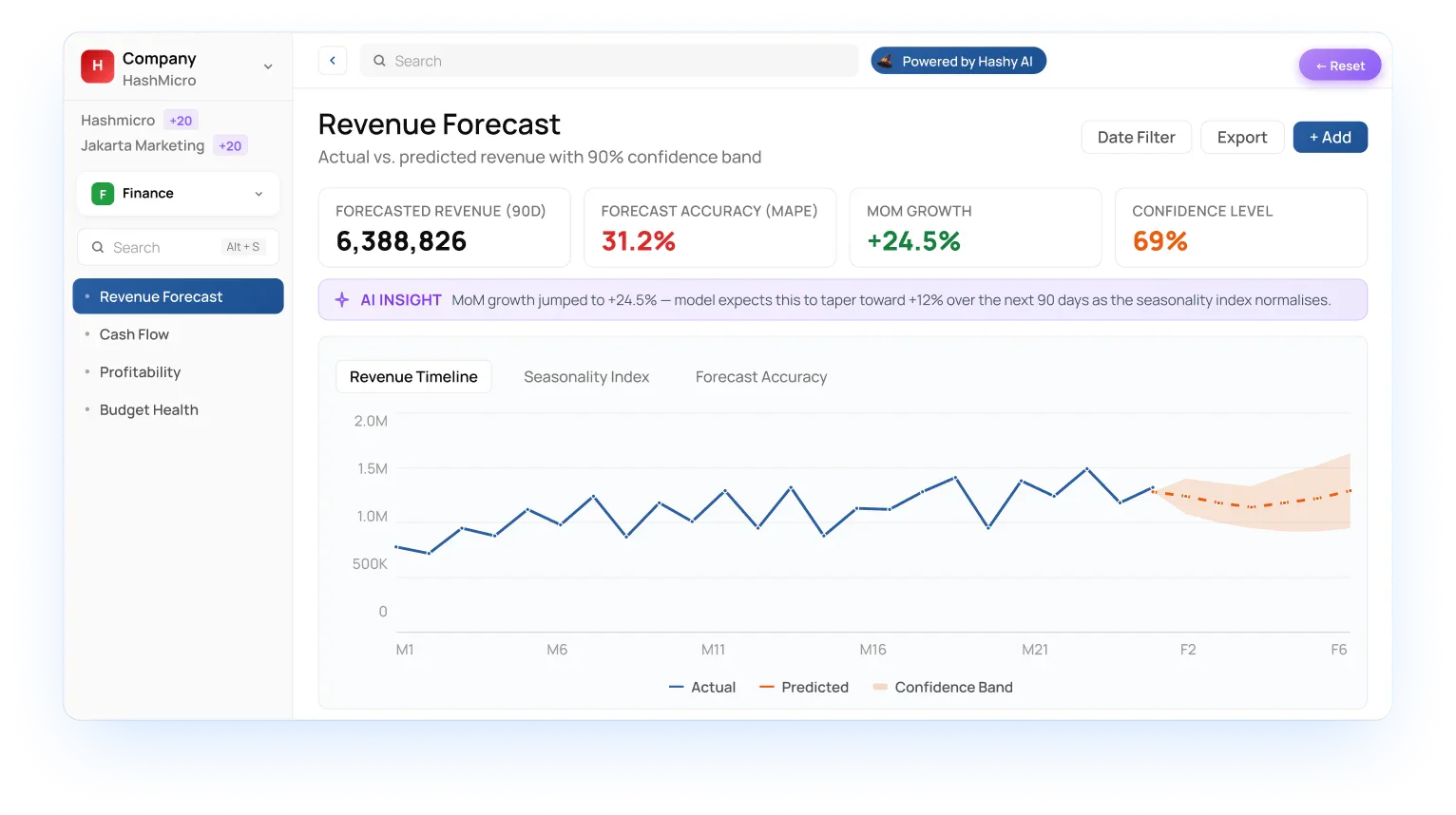
6. Better reporting and forecasting: CRM software can provide businesses with detailed reports and analytics that can help to identify trends and forecast future customer behavior, which can help businesses to plan for future growth and success.
CRM systems can be beneficial for a wide variety of companies, regardless of size or industry. However, some types of companies that may particularly benefit from using a CRM system include:
1. Sales-driven companies: Companies that rely heavily on sales, such as software companies, consulting firms, or telecommunication companies, can use CRM software to track leads, manage sales pipelines, and analyze sales performance.
2. Service-based companies: Companies that provide services, such as a bank, a healthcare provider, or a retail store, can use CRM software to manage customer interactions, schedule appointments, and track customer complaints and feedback.
3. E-commerce companies: Companies that sell products online can use CRM software to track customer purchase history, preferences and demographics, and use that information to personalize marketing campaigns and improve customer service.
4. Companies with multiple departments: Companies with multiple departments, such as marketing, sales, and customer service, can use CRM software to ensure that customer interactions are handled consistently and effectively across all departments.
5. Companies with multiple locations: Companies with multiple locations, such as retail chains, can use CRM software to track customer interactions and preferences across all locations and make better decisions about how to target and interact with customers.
6. Companies with a large customer base: Companies with a large customer base, such as a large insurance firm, can benefit from CRM software by organizing, analyzing and utilizing the customer data, to improve customer retention and acquisition.
7. Companies with a high customer turnover: Companies with a high customer turnover, such as a restaurant or a hotel, can use CRM software to track customer interactions and preferences, which can help to improve customer retention and attract new customers.
There are several different types of CRM tools, each of which is designed to meet the specific needs of different types of businesses. The main types of CRM software include:
1. Operational CRM: This type of CRM software is used to manage and automate day-to-day customer interactions and processes, such as sales, marketing, and customer service. It includes features such as contact management, lead tracking, and customer service management.
2. Analytical CRM: This type of CRM tool is used to analyze customer data and metrics, such as purchase history and communication preferences, to gain insights into customer behavior and preferences. It includes features such as data mining, reporting, and forecasting.
3. Collaborative CRM: This type of CRM software is used to improve communication and collaboration between different departments and teams within a business, such as sales, marketing, and customer service. It includes features such as shared calendars, task lists, and team communication tools.
4. Strategic CRM: This type of CRM tool is used to inform strategic decision-making, such as which products or services are most popular, which customers are most profitable, and which marketing campaigns are most effective. It includes features such as dashboard, reporting, and analytics.
5. Mobile CRM: This type of CRM software is designed for use on mobile devices, such as smartphones and tablets, and includes features such as contact management, appointment scheduling, and customer communication.
6. Social CRM: This type of CRM tools is used to manage interactions with customers on social media platforms, such as Facebook and Twitter, and includes features such as social media monitoring, sentiment analysis and social media management.
7. Cloud-based CRM: This type of CRM tools is hosted on remote servers and can be accessed via the internet, this type of CRM software is known for its scalability, ease of access and cost-effectiveness.
The specific features of CRM software will vary depending on the type and vendor of the software. However, some common features found in many CRM systems include:
1. Contact management: Allows businesses to store and organize information about customers, such as contact information, demographic data, and communication history.
2. Lead management: Allows businesses to track and manage leads, including lead scoring, lead tracking, and lead nurturing.
3. Sales management: Allows businesses to track and manage sales activities, such as sales pipelines, quotes, and orders.
4. Marketing automation: Allows businesses to automate and track marketing campaigns, such as email marketing, social media marketing, and targeted advertising.
5. Customer service and support: Allows businesses to track and manage customer service requests, including customer support tickets, customer complaints, and customer feedback.
6. Analytics and reporting: Allows businesses to track and analyze customer data, such as purchase history, demographics, and communication preferences, to gain insights into customer behavior and preferences.
7. Collaboration tools: Allows different teams and departments within a business to share information, such as calendars, task lists, and team communication tools.
8. Mobile and remote access: Allows businesses to access CRM software from mobile devices and remote locations.
9. Integration: Allows businesses to integrate the CRM software with other business systems, such as accounting software, email marketing software, and e-commerce platforms.
10. Data security: Allows businesses to protect customer data and keep it secure.
11. Customization: Allows businesses to customize the CRM software to meet their specific needs and workflows.
12. Automation: Allows businesses to automate repetitive tasks and processes to increase efficiency and productivity.
The cost of CRM software in Australia can vary widely depending on the type and vendor of the software, as well as the specific features and level of customization required.
Cloud-based CRM software is typically offered on a subscription basis, with prices ranging from free to several hundred dollars per user per month. Some CRM software vendors offer different pricing plans, with different features and capabilities, to meet the needs of businesses of different sizes and types.
On-premise CRM software, where the software is installed and run on a company's own servers, is generally more expensive and requires additional costs for hardware, maintenance and support. The cost of such solutions could range from several thousands to tens of thousands of dollars.
It's important to note that many CRM software vendors offer free trials or demos of their software, so it can be a good idea to try out several different options before making a decision. It's also important to consider the long-term costs of a CRM software, including ongoing maintenance, support, and upgrades, when making a decision about which software to purchase.
Overall, CRM software can be a significant investment for a business, but it can also provide significant benefits in terms of improved customer insights, increased efficiency, enhanced collaboration, and better decision-making, which can lead to increased revenue and growth.
There are many customer relationship management software options available in Australia, and the best one for your business will depend on your specific needs and budget. Some popular CRM software options that are widely used in Australia include:
1. HashMicro Customer Relationship Management Software: HashMicro CRM is a cloud-based CRM software that offers a range of features for sales, marketing, and customer service. It is known for its flexibility and customization options.
2. Salesforce: Salesforce is a cloud-based customer relationship management software that is widely used in Australia, it offers a wide range of features and is suitable for businesses of all sizes and industries. It offers a strong sales automation, customer service and marketing automation features.
3. Microsoft Dynamics 365: Microsoft Dynamics 365 is a cloud-based customer relationship management software that offers powerful sales, marketing, and customer service capabilities. It is designed to integrate with other Microsoft products, such as Office 365 and Power BI, which makes it a good choice for businesses that already use these products.
4. SAP C/4HANA: SAP C/4HANA is a one of the best CRM software that is known for its advanced analytics, customer engagement and commerce capabilities. It is suitable for large enterprise businesses.
5. Oracle CX Cloud: Oracle CX Cloud is considered as one of the best CRM software that offers a range of features for sales, marketing, and customer service. It is known for its scalability and integration capabilities.
200 George Street Level 32, Sydney NSW 2000
Grace
Typically replies within an hour