

Procurement strategies help businesses manage purchasing, supplier relationships, and procurement costs more effectively. They provide a structured approach to sourcing goods and services while supporting operational efficiency and long-term business goals.
Modern procurement strategies focus on more than just reducing costs. Businesses now prioritise supplier reliability, sustainability, risk management, and supply chain resilience to remain competitive.
By implementing the right procurement strategy, businesses can improve procurement performance, strengthen supplier collaboration, and adapt more effectively to changing market conditions.
Key Takeaways
Procurement strategies improve business performance by helping businesses control costs, manage suppliers, and lift operational efficiency.
Effective procurement strategies reduce supply chain risks, strengthen supplier relationships, and support long-term business growth.
Procurement strategies come in several types, including strategic sourcing, cost reduction, supplier management, and sustainable procurement.
Key procurement strategy frameworks help businesses make better purchasing decisions, optimise spending, and strengthen procurement efficiency.

What Are Procurement Strategies?

Procurement strategies are plans businesses use to manage purchasing, suppliers, and procurement spending. These strategies help businesses improve efficiency, control costs, and support business goals.
A procurement strategy guides the end-to-end purchasing flow, from supplier selection and contract negotiation through to ongoing procurement operations. Depending on business priorities, strategies may focus on cost reduction, sustainability, risk management, or operational efficiency.
Modern procurement strategies focus on more than finding the lowest price. Businesses now use procurement to improve profitability, supply chain resilience, and long-term performance.
Why Procurement Strategies Are Important
Effective procurement strategies help businesses improve financial performance, strengthen supplier relationships, and reduce operational risks.
1. Cost Control and Value Optimisation
One of the primary goals of procurement strategies is controlling costs while maximising value. Businesses can reduce unnecessary spending by standardising procurement processes, negotiating better supplier contracts, and consolidating purchases.
Key benefits include:
- Reduced procurement and operational costs
- Better supplier pricing and payment terms
- Improved budget forecasting
- Increased return on procurement investments
- Greater visibility into organisational spending
Rather than focusing solely on the lowest price, value optimisation considers product quality, supplier reliability, lifecycle costs, and long-term business outcomes.
2. Risk Management in Supply Chains
Supply chain disruptions, supplier failures, and market volatility can significantly impact business operations. Procurement strategies help businesses identify and minimise these risks through proactive supplier management and contingency planning.
Risk management strategies may include:
- Diversifying supplier networks
- Evaluating supplier financial stability
- Monitoring supply chain performance
- Establishing backup suppliers
- Improving contract management and compliance
Strong procurement planning reduces dependency on single suppliers and improves supply chain resilience during disruptions.
3. Supporting Business Growth and Efficiency
Procurement strategies help businesses scale operations more efficiently by improving purchasing workflows, supplier coordination, and resource allocation.
A well-designed procurement strategy supports growth by:
- Streamlining procurement processes
- Improving inventory availability
- Enhancing supplier collaboration
- Supporting expansion into new markets
- Increasing operational efficiency across departments
Strategic procurement also enables businesses to align purchasing decisions with broader organisational objectives.
"Strong procurement strategies help businesses reduce costs, manage supplier risks, and improve supply chain efficiency."
Types of Procurement Strategies
Businesses use different procurement strategies depending on operational priorities and supply chain requirements.
1. Cost Reduction Strategy
This strategy focuses on lowering procurement costs while maintaining product quality and operational performance. Common methods include supplier negotiations, bulk purchasing, and adopting an automated purchasing platform to reduce manual workload and processing time.
2. Strategic Sourcing
Strategic sourcing focuses on long-term supplier relationships and data-driven purchasing decisions. It helps businesses improve supplier reliability, reduce costs, and strengthen supply chain performance.
3. Supplier Management and Optimisation
Supplier management strategies focus on strategic supplier oversight, using scorecards, performance reviews, and contract monitoring to improve collaboration and long-term supplier outcomes.
4. Risk Management Strategy
This strategy focuses on reducing supply chain disruptions and supplier-related risks. Businesses may implement backup suppliers, compliance monitoring, and contingency procurement plans.
5. Sustainable (Green) Procurement
Sustainable procurement prioritises environmentally and ethically responsible purchasing practices. This may include selecting eco-friendly suppliers and reducing procurement-related waste.
6. Global Sourcing Strategy
Global sourcing involves purchasing products or services from international suppliers. Businesses often use this strategy to reduce costs or access specialised materials and expertise.
Key Procurement Strategy Frameworks
Procurement frameworks help businesses structure purchasing processes and improve procurement efficiency.
1. Category-Based Procurement Strategy
This framework groups procurement activities into categories such as IT, logistics, or raw materials. It improves spend visibility, supplier management, and sourcing efficiency.
2. Centralised vs Decentralised Procurement
Centralised procurement places purchasing under one procurement team, improving control and standardisation. Decentralised procurement allows departments to manage purchasing independently for greater flexibility and faster decision-making.
3. Value-Based Procurement Approach
Value-based procurement focuses on long-term business value rather than lowest-cost purchasing. It considers factors such as quality, supplier reliability, and lifecycle costs.
How to Develop a Procurement Strategy
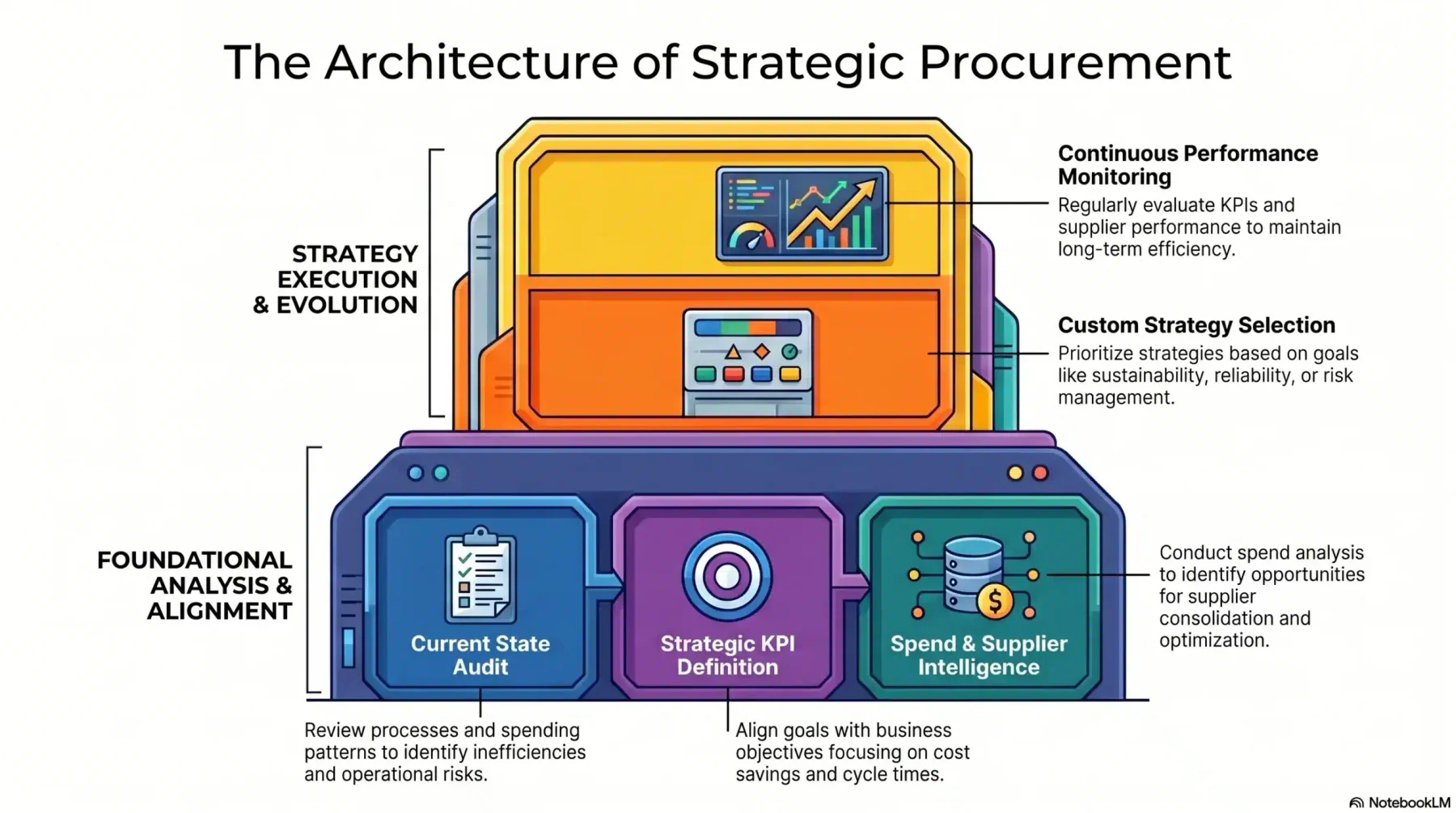
Developing a procurement strategy requires planning, analysis, and continuous improvement.
1. Assess Current Procurement Performance
Businesses should review current procurement processes using tools for efficient procurement planning, including spend analysis and supplier performance tracking. This helps identify inefficiencies, cost-saving opportunities, and operational risks.
2. Define Objectives and KPIs
Procurement goals should align with overall business objectives. Common KPIs include cost savings, supplier lead times, procurement cycle times, and contract compliance rates.
3. Analyse Spend and Supplier Base
Spend analysis helps businesses understand procurement expenses and supplier performance. It also helps identify opportunities for supplier consolidation and cost optimisation.
4. Select Appropriate Strategy Types
Businesses should choose procurement strategies based on operational goals and industry requirements. Different enterprises may prioritise cost reduction, sustainability, supplier reliability, or risk management.
5. Implement and Monitor Performance
After implementation, businesses should regularly monitor procurement KPIs and supplier performance. Continuous evaluation helps maintain procurement efficiency and improve long-term results.
Procurement Strategy Examples
Procurement strategy examples show how businesses apply different approaches to improve efficiency, reduce costs, and strengthen supplier relationships.
1. Cost-Focused Strategy in Manufacturing
- Use bulk purchasing to lower material costs
- Consolidate suppliers to improve pricing leverage
- Automate procurement workflows to reduce manual tasks
- Improve cost efficiency and operational performance
2. Supplier Collaboration Strategy
- Work closely with suppliers on forecasting and inventory planning
- Improve communication across the supply chain
- Reduce stock shortages and delivery delays
- Strengthen long-term supplier relationships
3. Sustainable Procurement Strategy
- Prioritise environmentally responsible suppliers
- Source sustainable and recyclable materials
- Support ESG and sustainability initiatives
- Improve brand reputation and compliance standards
Challenges in Procurement Strategy
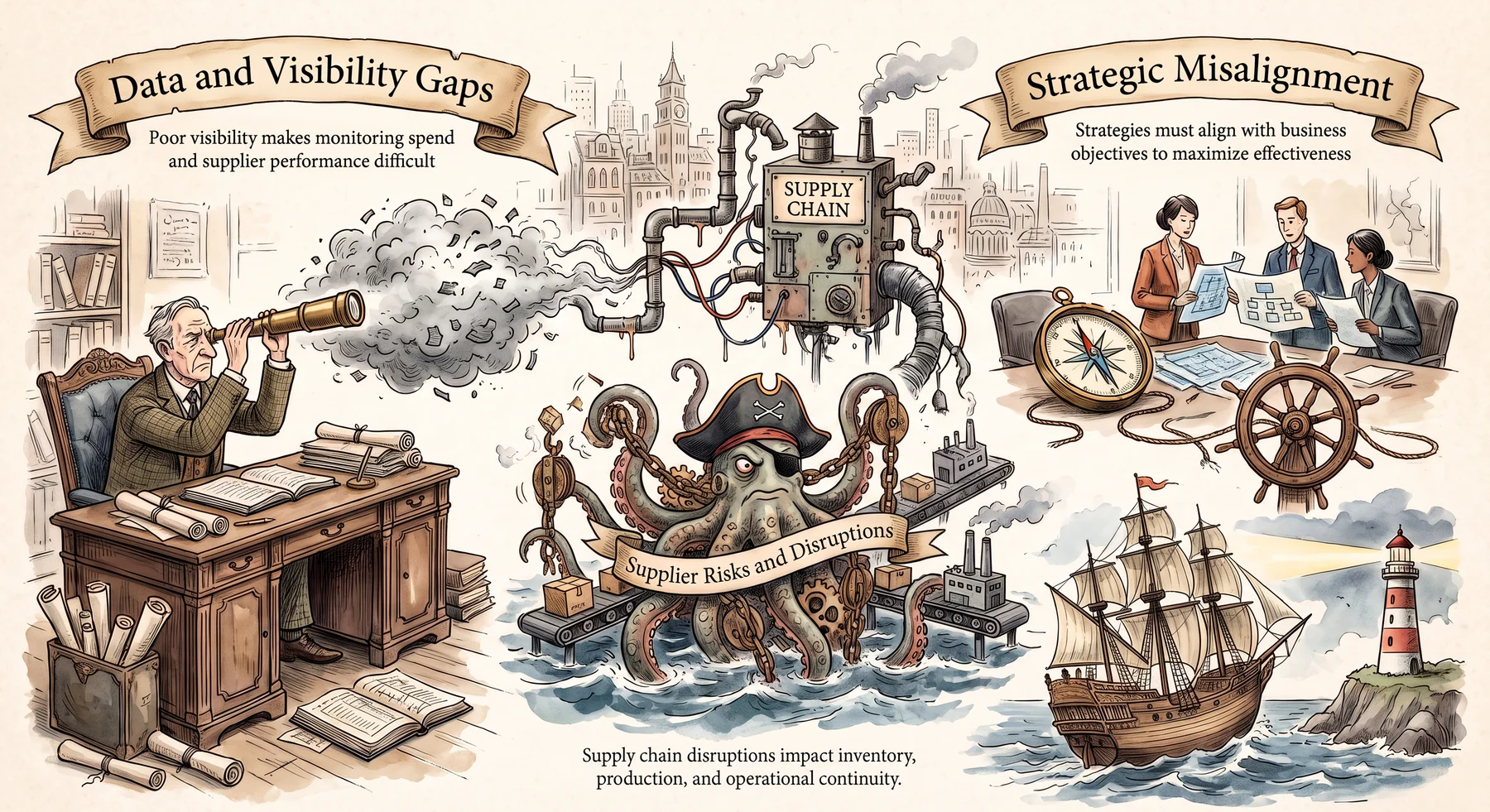
Businesses often face procurement challenges related to supplier risks, limited visibility, and changing market conditions.
1. Lack of Data and Visibility
Poor procurement visibility can make it difficult to monitor spending and supplier performance.
2. Supplier Risks and Disruptions
Supply chain disruptions can impact inventory, production schedules, and operational continuity.
3. Misalignment with Business Goals
Procurement strategies should align with broader business objectives to maximise effectiveness.
Best Practices for Effective Procurement Strategies
Businesses can improve procurement performance by adopting structured procurement practices and continuously reviewing procurement activities.
1. Align Procurement with Business Objectives
Procurement activities should support overall organisational goals and operational priorities.
2. Leverage Data and Analytics
AI-driven purchasing insights and procurement analytics improve visibility, supplier management, and procurement decision-making across the full purchasing cycle.
3. Build Strong Supplier Relationships
Strong supplier relationships improve reliability, communication, and long-term collaboration.
4. Continuously Review and Optimise
Regular procurement reviews help businesses adapt to changing market and operational conditions.
These practices work best on connected procurement data. Hashy, HashMicro's AI Coworker, then surfaces spend concentrations, flags off-contract purchases, and answers procurement questions instantly through the Company Nexus.






How Payment Times & "Buy Australian" Rules Shape Procurement Strategy in Australia
Australian procurement strategy does not operate in isolation, since national payment-time and local-sourcing rules now influence how businesses choose suppliers and structure contracts. The sections below explain how each rule shapes procurement decisions and what your business should do about them.
1. The Payment Times Reporting Scheme and Supplier Terms
The Payment Times Reporting Scheme requires large businesses to report how quickly they pay their small business suppliers. This transparency pushes procurement teams to set fair, documented payment terms rather than relying on long or inconsistent cycles. As a result, prompt payment has become a procurement strategy issue, not only a finance one.
2. "Buy Australian" and Local Sourcing Priorities
Government procurement increasingly favours local suppliers through the Buy Australian agenda and the Commonwealth Procurement Rules. For businesses bidding on public contracts, supplier selection now weighs local capability, economic benefit, and supply chain resilience alongside price. Therefore, a sourcing strategy that documents local content strengthens both compliance and competitiveness.
3. Weighing Compliance Cost Against Supplier Choice
These rules can narrow the supplier pool or add reporting work, so procurement teams must balance obligation against flexibility. A clear supplier scorecard that records payment performance, local content, and risk keeps decisions defensible. Consequently, businesses meet their obligations without losing the freedom to negotiate on value.
4. What These Rules Mean for Your Procurement Strategy
Together, these frameworks reward businesses that pay suppliers promptly and source responsibly. Procurement teams should track payment times, record local sourcing, and keep supplier data audit-ready throughout the year. A connected procurement system makes meeting both obligations far simpler than manual tracking across spreadsheets.
Future Trends in Procurement Strategies
Procurement strategies continue evolving as businesses adopt digital technologies, sustainability initiatives, and more resilient supply chain models.
1. Digital and Data-Driven Procurement
- Use automation to streamline procurement processes
- Apply AI and analytics for better decision-making
- Improve procurement visibility with real-time data
- Increase efficiency through digital procurement platforms
- Centralise sourcing, approvals, and supplier records in a single procurement system that connects purchasing data to finance and inventory
2. Sustainability and ESG Focus
- Prioritise ethical and sustainable sourcing practices
- Monitor supplier environmental compliance
- Reduce carbon emissions across supply chains
- Support long-term ESG and sustainability goals
Agile and Resilient Supply Chains
- Diversify suppliers to reduce supply chain risks
- Improve flexibility during disruptions and market changes
- Strengthen supply chain continuity and responsiveness
- Use real-time monitoring for faster issue management
Conclusion
Procurement strategies play a critical role in helping businesses manage costs, reduce risks, strengthen supplier relationships, and support long-term growth.
Modern procurement is no longer limited to transactional purchasing activities but has become a strategic business function that directly impacts operational performance and competitiveness.
By implementing the right procurement strategies, businesses can improve efficiency, optimise supplier performance, increase supply chain resilience, and align procurement activities with broader organisational objectives.
Schedule a consultation with our experts to discover the best procurement strategy for your business.

Frequently Asked Question
Procurement strategies are structured plans businesses use to manage purchasing, suppliers, and procurement operations efficiently.
Procurement strategies help businesses reduce costs, manage supplier risks, improve operational efficiency, and support long-term business goals.
Common procurement strategies include cost reduction, strategic sourcing, supplier management, risk management, sustainable procurement, and global sourcing.
Businesses develop procurement strategies by assessing procurement performance, analysing spend data, defining objectives, selecting suitable strategies, and monitoring KPIs.
Strategic sourcing helps businesses improve supplier relationships, reduce procurement costs, strengthen supply chain reliability, and support long-term procurement efficiency.