




Procurement has shifted well beyond paperwork and purchase orders. For Australian businesses, it now shapes margin, supplier risk, and how fast the company can react when costs or supply chains move.
Modern procurement software turns raw spending data into clear, actionable insight, so buyers can see who they spend with, where leakage hides, and which suppliers genuinely deliver value. As a result, leaders make sharper calls on budgets, contracts, and renewals from one dashboard.
These platforms also tighten supplier management and regulatory compliance, which Australian businesses cannot afford to overlook. Therefore, we have reviewed the 20 best procurement software platforms in Australia for 2026, comparing features, pricing, and fit so you can pick the one that suits your operation.
Key Takeaways
Procurement software manages the full purchasing lifecycle, covering sourcing, purchase orders, contract records, and invoice matching in one connected system.
Australian buyers need GST and BAS handling, AUD reporting, and connections to Xero, MYOB, or an existing ERP before anything else on the feature list matters.
Twenty platforms sit in this comparison, grouped from enterprise source-to-pay suites through to lightweight tools built for smaller Australian teams.
Best Procurement Software in Australia at a Glance

Best Because
a strong global supplier network and advanced sourcing tools.
Best Because
seamless integration connects procurement with finance and ERP operations.

Best Because
Best for Australian businesses that want procurement connected to inventory, accounting, and broader ERP workflows.


Best Because
Its AI-powered automation delivers clear spend visibility and control.

Best Because
Procurement, corporate cards, and expense management are unified in one platform.
What is Procurement Software?
Procurement is the end-to-end business process of identifying a need, sourcing and evaluating suppliers, obtaining approvals, purchasing goods or services, receiving them, processing invoices and payments, and reviewing supplier performance. While procurement describes the business process, procurement software digitises and connects these activities through workflows, controls, records, and reporting.
Procurement software is a digital tool that helps a business manage purchasing from start to finish. It handles sourcing, purchase orders, contracts, and invoice matching in one system. Therefore, teams avoid scattered processes and reduce manual errors.
It also turns traditional buying into a data-driven purchasing system. Instead of relying on guesswork, businesses use real-time data to track spend and supplier performance. This helps improve cost control and decision-making.
A typical procurement lifecycle is: (1) identify the requirement, (2) source and evaluate suppliers, (3) submit and approve the request, (4) issue a purchase order, (5) receive goods or services, (6) match the invoice and arrange payment, and (7) review supplier performance and spend. Software connects these steps so teams can track status, approvals, and exceptions in one record.
Modern procurement software also supports compliance and approval workflows. It ensures every purchase follows internal policies and budget limits, so companies maintain control over spending and accountability.
"Strong system integration ultimately determines the long-term value of a procurement platform."
Why Does Your Business Need Procurement Management Software?
Procurement management software helps businesses control costs and improve visibility across all purchasing activity. It reduces maverick spending by enforcing approval rules and budget tracking. As a result, finance teams gain clearer oversight of company expenses.
It also improves efficiency by automating the procure-to-pay process. For example, purchase requests, approvals, and invoicing move through the system without manual handling. Therefore, teams save time and reduce processing errors.
Most importantly, it strengthens supply chain decisions through a data-driven purchasing system. Businesses gain real-time insights into supplier performance and spending patterns. This supports better planning and long-term cost efficiency.
What to Look for in Australia’s Procurement Software
Choosing the right procurement software in Australia comes down to how well it fits your day-to-day purchasing needs. Look for tools that support local requirements, connect with your financial systems, and simplify purchasing workflows. For government and council buyers, tender and record-keeping requirements may also apply.
1. GST & ATO compliance
Procurement software in Australia must accurately calculate GST on purchase orders and invoices while handling GST-free items and different tax codes. It should also generate BAS-ready reports to prevent compliance risks and potential ATO penalties.
2. Local accounting integrations
The system must seamlessly integrate with Australian accounting software like Xero, MYOB, or enterprise ERPs. Real-time data syncing ensures budgets, commitments, and general ledger updates remain accurate and aligned.
3. Multi-currency & AUD support
A robust platform should manage multi-currency transactions while reporting in Australian Dollars (AUD). Automatic exchange rate updates are essential for accurate forecasting and financial reporting.
4. Approval workflows
The software should provide flexible and customizable approval workflows based on spending thresholds and roles. This ensures strong internal controls without slowing down operational efficiency.
5. Supplier management
A modern procurement system should support supplier onboarding, performance tracking, and compliance document storage. It should also help monitor ethical sourcing requirements, including sustainability and compliance with the Modern Slavery Act.
6. Procure-to-pay automation
The platform should automate the full P2P cycle, from requisition to buying order, goods receipt, and three-way matching. This reduces manual workload, improves accuracy, and minimizes payment errors.
The Australian Taxation Office (ATO) oversees GST compliance by ensuring businesses correctly register, report, and pay GST under Australian law. It uses data monitoring and compliance programs to detect errors and maintain accurate tax reporting.
7. Spend analytics
Procurement software should provide real-time spend analytics across suppliers, categories, departments, and purchasing activities. Better visibility helps businesses identify cost leakage, monitor supplier concentration, and improve procurement decisions.
- Tracks purchasing trends and supplier spending patterns.
- Identifies maverick spend and off-contract purchases.
- Improves budgeting and procurement forecasting accuracy.
- Supports data-driven supplier negotiations and cost optimisation.
Purchasing Software vs Procurement Software: What’s the Difference?
Purchasing software focuses mainly on placing orders and processing transactions. It helps a business raise purchase orders, track invoices, and complete payments in a simple workflow. Therefore, it works best for basic buying needs with limited supplier complexity.
Procurement software goes further by managing the full purchasing lifecycle. It covers sourcing, supplier management, contract tracking, and spend analysis in one system. As a result, a data-driven purchasing system gives businesses stronger control over costs and supplier performance.
Many companies in Australia also use procurement management software to improve compliance and visibility. It supports approval workflows, budget control, and reporting across departments. Therefore, finance and procurement teams gain a clearer view of every transaction from request to payment.
In contrast, purchasing software suits smaller businesses with straightforward operations. However, companies with growing supplier networks often shift to procurement software for better scalability and control. This helps reduce risk while improving long-term financial planning.
How We Evaluated These Procurement Software
We reviewed publicly available vendor documentation and product pages to assess each platform. We compared procurement workflows, supplier management, approval controls, invoice and three-way matching, integrations, Australian support and compliance considerations, pricing transparency, and suitability by business size.
HashMicro publishes this comparison and is included as one of the listed vendors. However, we use the same criteria for every provider and recommend that readers verify current features, pricing, integrations, and implementation scope directly with each vendor.
| Criterion | What we checked | Why it matters |
|---|---|---|
| Procurement workflows | Requisition, sourcing, purchase order, and goods receipt coverage end to end | Gaps here push the work back into email and spreadsheets |
| Supplier management | Onboarding, performance records, certifications, and document expiry | Supplier risk stays invisible when records sit outside the system |
| Approval controls | Spend thresholds, delegation, multi-level routing, and audit trails | Weak controls are the usual source of maverick spend |
| Invoice and three-way matching | Matching of purchase order, receipt, and invoice, plus exception handling | Decides how much manual checking accounts payable still carries |
| Integrations | Connectors to Xero, MYOB, ERP, inventory, and payment systems | Procurement data loses value when finance cannot read it |
| Australian support and compliance | GST and BAS handling, AUD reporting, local support hours, data hosting | Imported platforms often treat these as configuration, not defaults |
| Pricing transparency | Published rates, quote-only models, and disclosed implementation fees | Setup costs frequently outweigh the first-year subscription |
| Suitability by business size | Fit for small teams, mid-market, or enterprise procurement structures | An enterprise suite in a ten-person business usually goes unused |
However, we use the same criteria for every provider and recommend that readers verify current features, pricing, integrations, and implementation scope directly with each vendor.
However, we use the same criteria for every provider and recommend that readers verify current features, pricing, integrations, and implementation scope directly with each vendor.
Those eight criteria carry equal weight here. Reweigh them against your own purchase volume, supplier count, and finance stack before you shortlist anything.
Two limits apply. We did not run hands-on trials or interview customers, and vendor pricing moves often enough that any figure quoted here should be confirmed in writing.
We also do not publish a single score per vendor, because the weighting depends on context. A platform that wins for a construction group can be the wrong call for a professional services firm.
20 Best Procurement Management Software in Australia for 2026
The following list represents the top-performing procurement solutions available to Australian businesses this year, ranging from comprehensive ERP suites to specialized standalone tools.
1. SAP Ariba
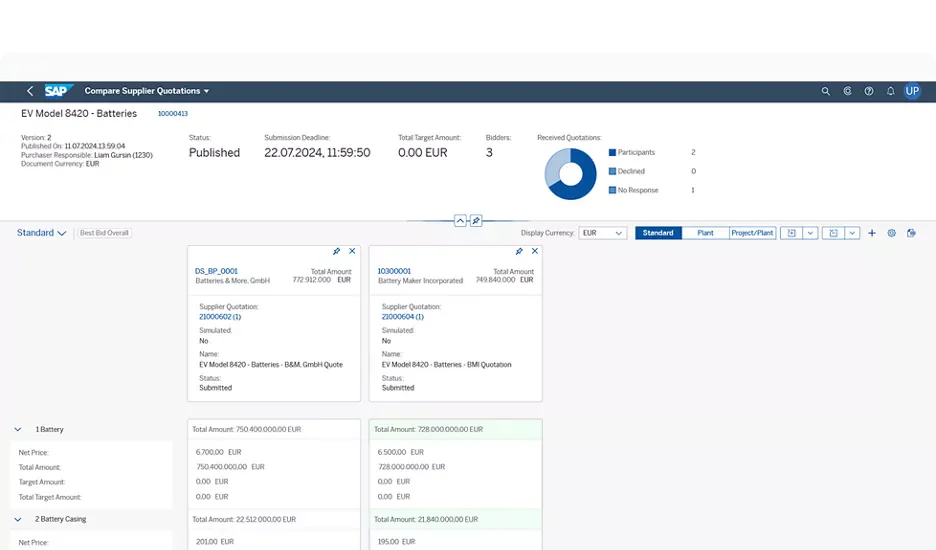
SAP Ariba remains a heavyweight source-to-pay (S2P) platform in the global procurement space. It is particularly renowned for its massive supplier network, the Ariba Network, which connects millions of companies globally. For large Australian enterprises with complex, international supply chains, SAP Ariba offers unparalleled depth.
Key Features:
- Contract management
- Supplier risk management
- Spend analysis
| Pros | Cons |
|
|
Pricing: SAP Ariba uses a quote-based subscription model, typically over 3–5 years, with costs depending on company size, spend volume, and selected modules. Fees may include spend-based transaction charges. Suppliers can choose between a free Standard tier or paid plans with additional features.
Suitable for: Large enterprises requiring global supplier networks and advanced strategic sourcing capabilities.
2. Oracle NetSuite Procurement
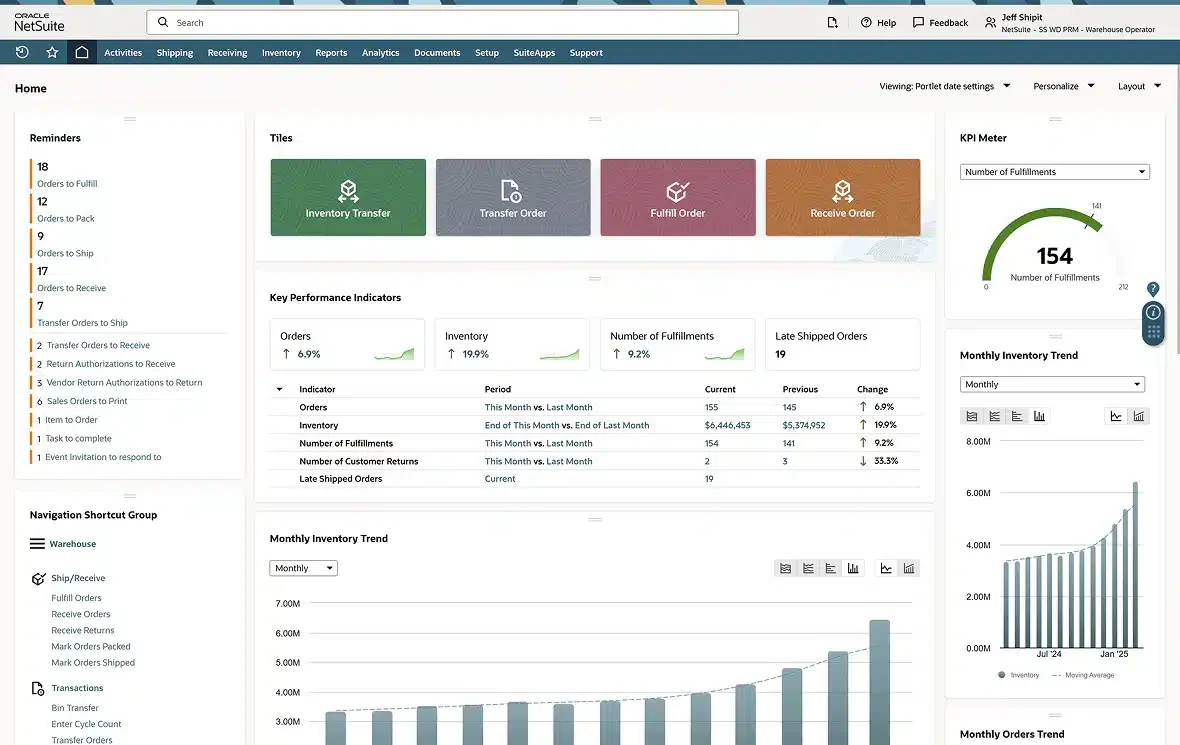
Oracle NetSuite is a cloud-native ERP that includes a robust procurement module. It is designed to streamline the entire purchasing process and is highly scalable, making it a favorite among growing Australian mid-market companies.
Key Features:
- Automated Requisition-to-Pay
- Vendor portal
- Spend management
| Pros | Cons |
|
|
Pricing: Oracle NetSuite Procurement follows a subscription model with a base platform fee starting at around AUD 999/month, plus user licenses ranging from AUD 99–199 per user/month and additional module costs. Total pricing varies based on business needs, with implementation quoted separately.
Suitable for: Growing to mid-sized businesses needing integrated procurement within a unified ERP system.
3. HashMicro
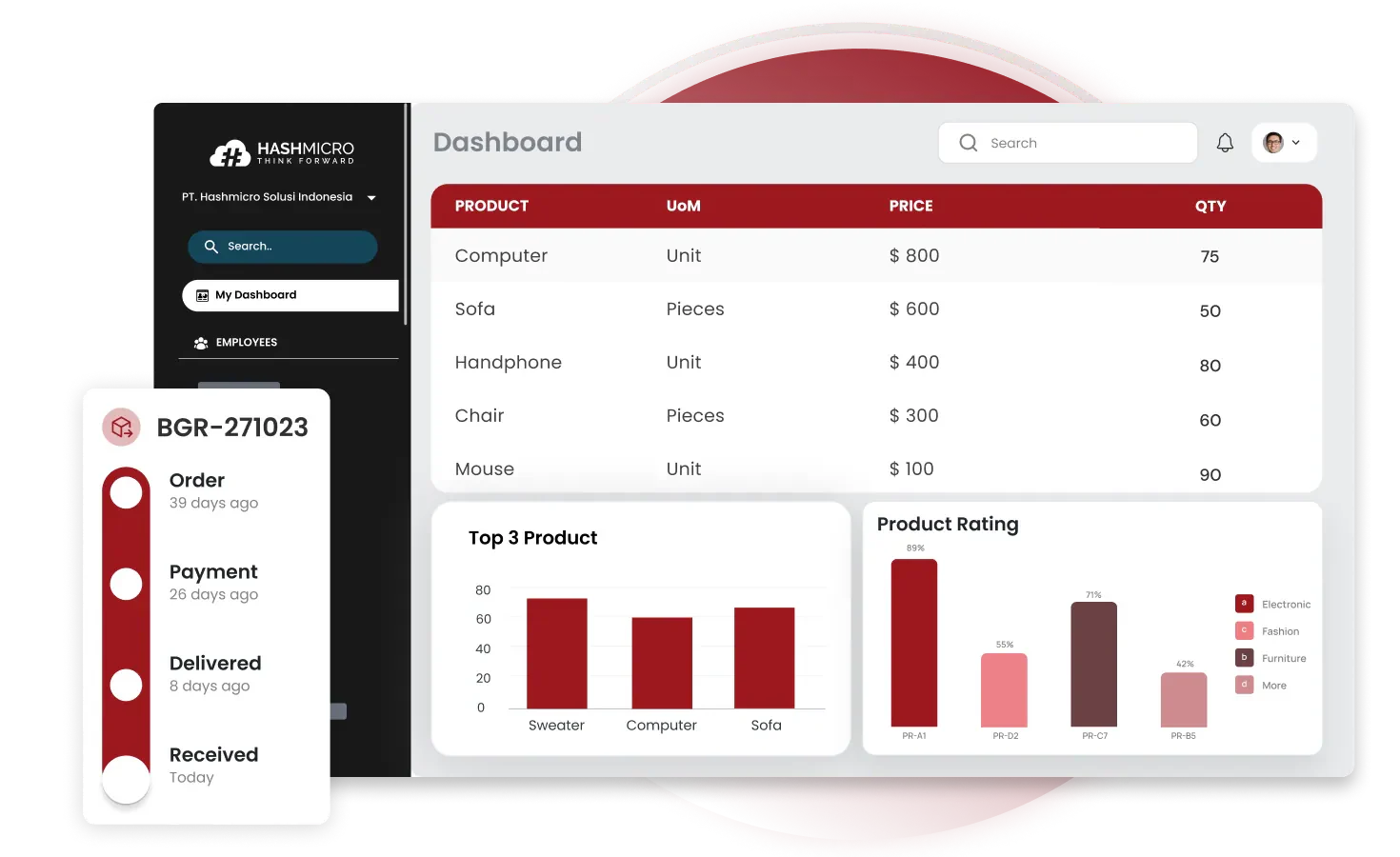
HashMicro has established itself as a leading provider of ERP solutions in the Asia-Pacific region. It offers a highly customisable procurement software that integrates natively with inventory, accounting, and finance modules.
Key Features:
- End-to-end procurement automation
- Purchase Request (PR) management
- Invoicing processing
- Supplier online portal
- AI supplier recommendation based on pricing and lead time history
- Automated purchase order generation from demand forecasts
- AI-powered spend anomaly alerts
Procurement teams can overlook supplier risks when purchasing data is spread across separate records. Hashy, HashMicro’s AI assistant, analyses live procurement data and highlights spend anomalies and purchasing priorities below.






| Pros | Cons |
|
|
Pricing: HashMicro offers both perpetual licensing and subscription-based options with unlimited user access, helping larger businesses optimise the total cost of ownership. Pricing is available upon consultation, depending on the modules selected.
Suitable for: Companies seeking customizable procurement workflows with strong local compliance support.
If you’re considering in implementing HashMicro for your business, you can click the banner below to discover the pricing plan.
4. Coupa
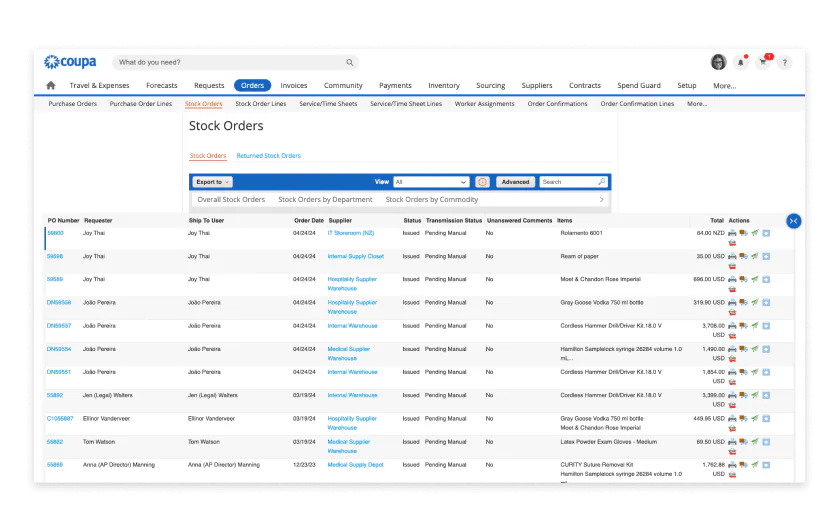
Coupa is widely recognized as a source-to-pay platform leader in Business Spend Management (BSM). It differentiates itself with a user-centric design that mimics consumer e-commerce experiences, which drives high user adoption rates within organizations.
Key Features:
- Invoicing integration
- Supplier risk management
- Price benchmarking analytics
| Pros | Cons |
|
|
Pricing: Coupa follows a SaaS subscription model, typically starting from around AUD 2,500/month, with costs based on transaction volume, user access, and selected modules. Multi-year contracts are common, and implementation fees may add 50–150% of the first-year subscription cost.
Suitable for: Organizations focused on AI-driven spend management and real-time cost visibility.
5. Precoro
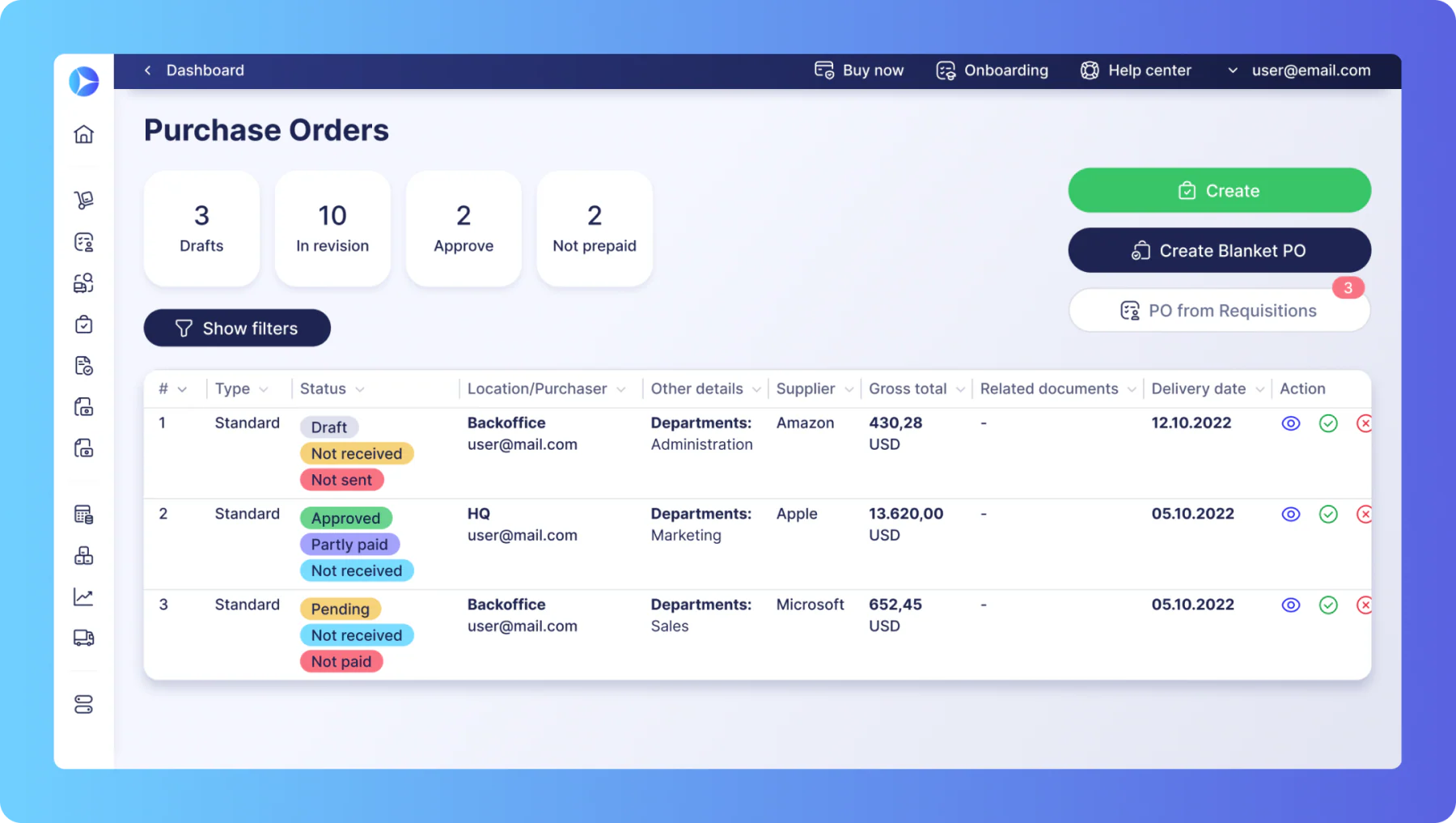
Precoro is a streamlined, user-friendly procurement solution aimed primarily at small to mid-sized businesses (SMBs). It strips away the complexity of enterprise systems to focus on core purchasing workflows.
Key Features:
- Visual approval workflows
- Purchase requisition
- Vendor performance tracking
| Pros | Cons |
|
|
Pricing: Precoro offers a subscription-based model with plans typically starting from around AUD 499/month, depending on the number of users and features required. Costs scale with business size, and a free trial is available, but no permanent free plan.
Suitable for: Australian SMBs that have outgrown manual processes but aren’t ready for a full ERP.
6. JAGGAER
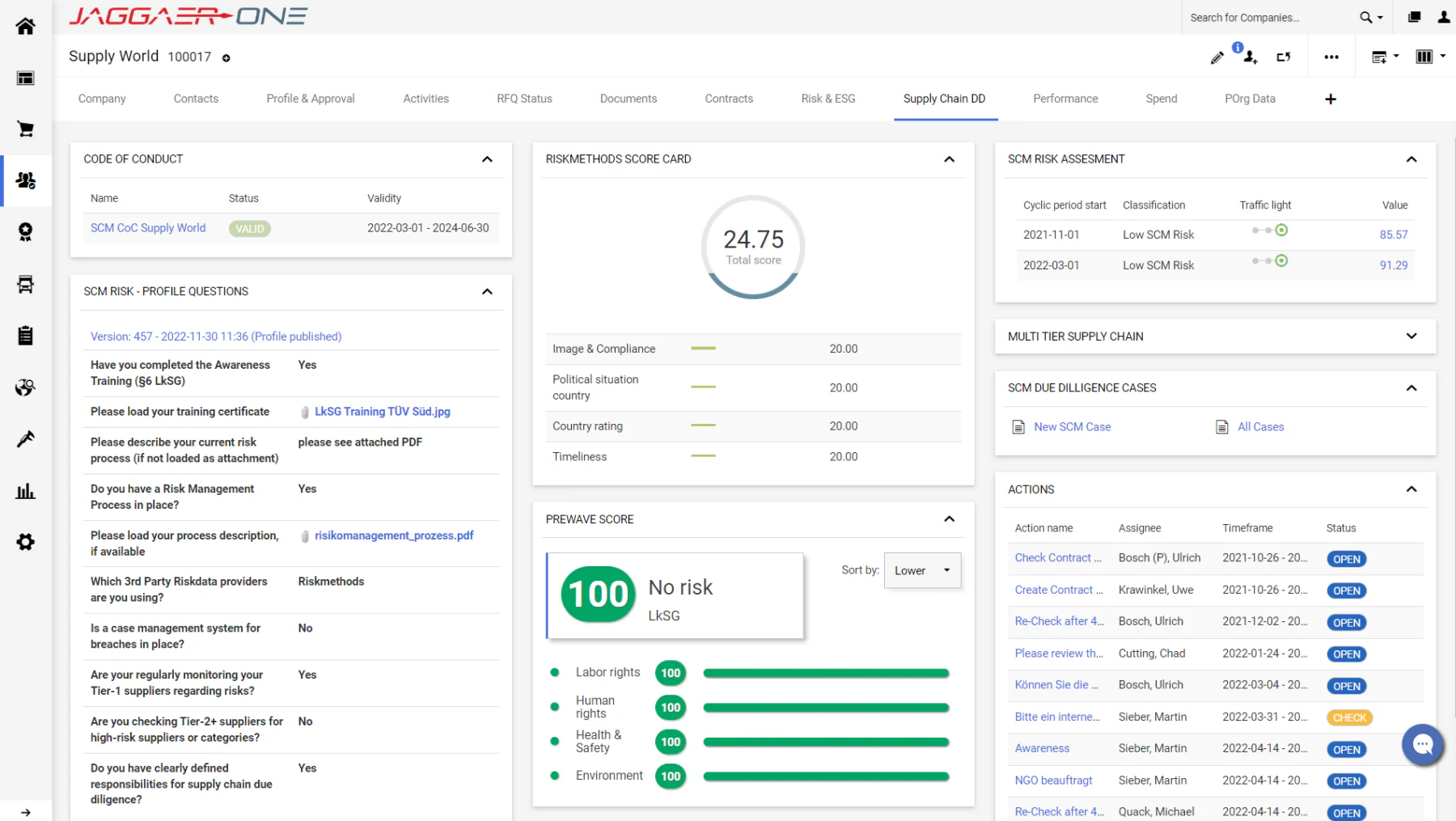
Formerly known as SciQuest, JAGGAER specializes in direct procurement and spend management. It is particularly strong in industries like manufacturing, higher education, and life sciences where sourcing is complex.
Key Features:
- Catalog management
- Supplier management and collaboration
- Automated invoicing
- Contract lifecycle management
| Pros | Cons |
|
|
Pricing: JAGGAER uses a quote-based subscription model, with costs depending on company size, selected modules, and transaction volume. Pricing is typically tailored for mid-sized to large enterprises. No free plan is available, but a demo may be offered upon request.
Suitable for: Enterprises with complex sourcing needs, including direct materials and advanced supplier management.
7. Workday Procurement
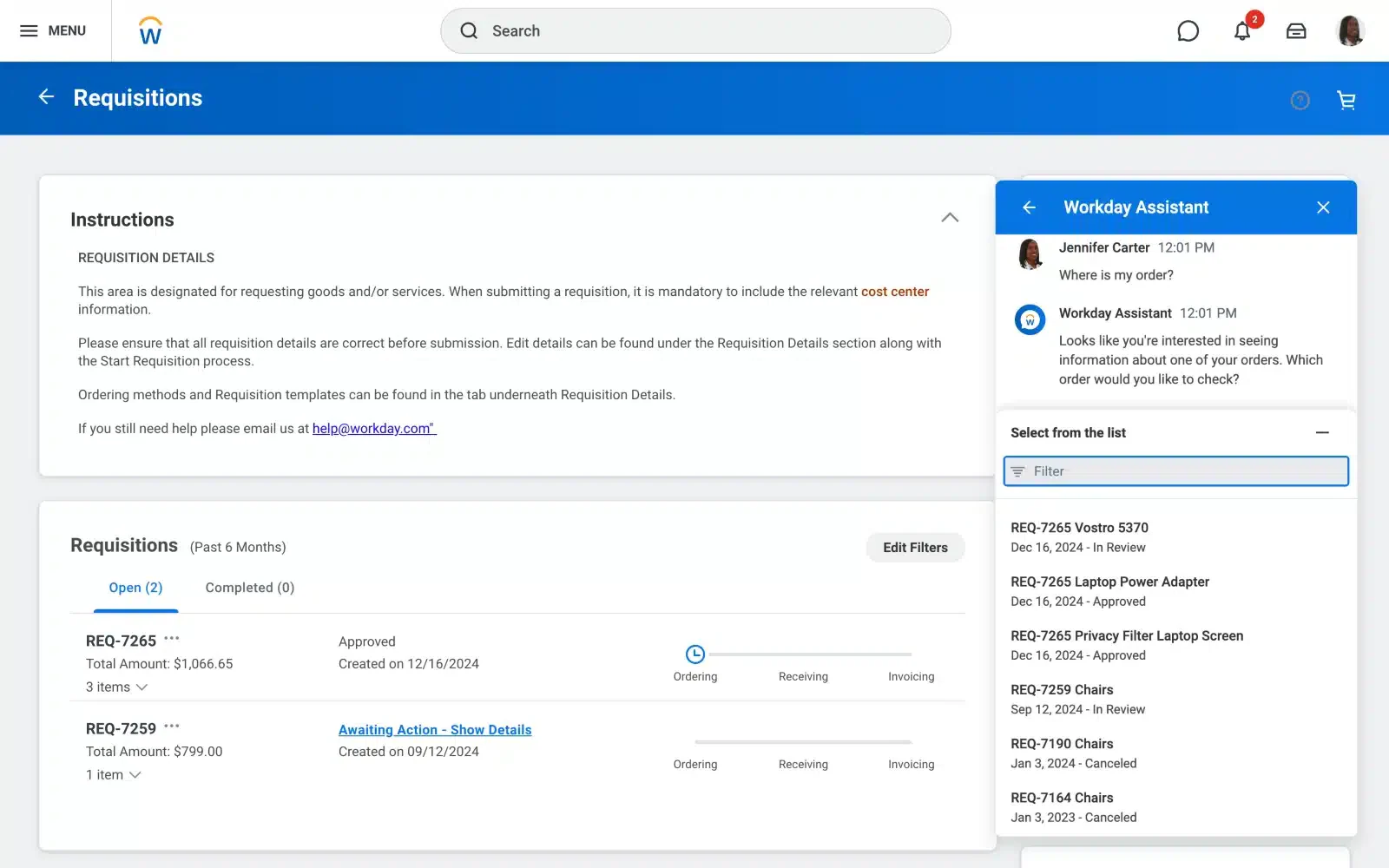
Workday is primarily known for its Human Capital Management (HCM) and Financial Management systems. Its procurement module is an extension of this unified system, ideal for service-based organizations.
Key Features:
- Supplier portal and self-service supplier management
- RFQ support
- Contract management
| Pros | Cons |
|
|
Pricing: Workday typically ranges from AUD 34–150 per employee per month, depending on organisation size and selected modules, with pricing applied to all employees. It follows a subscription model, and implementation costs can be comparable to the first-year fees. No free plan is available.
Suitable for: Companies already using Workday HR and Finance that want fully integrated spend management.
8. Xero
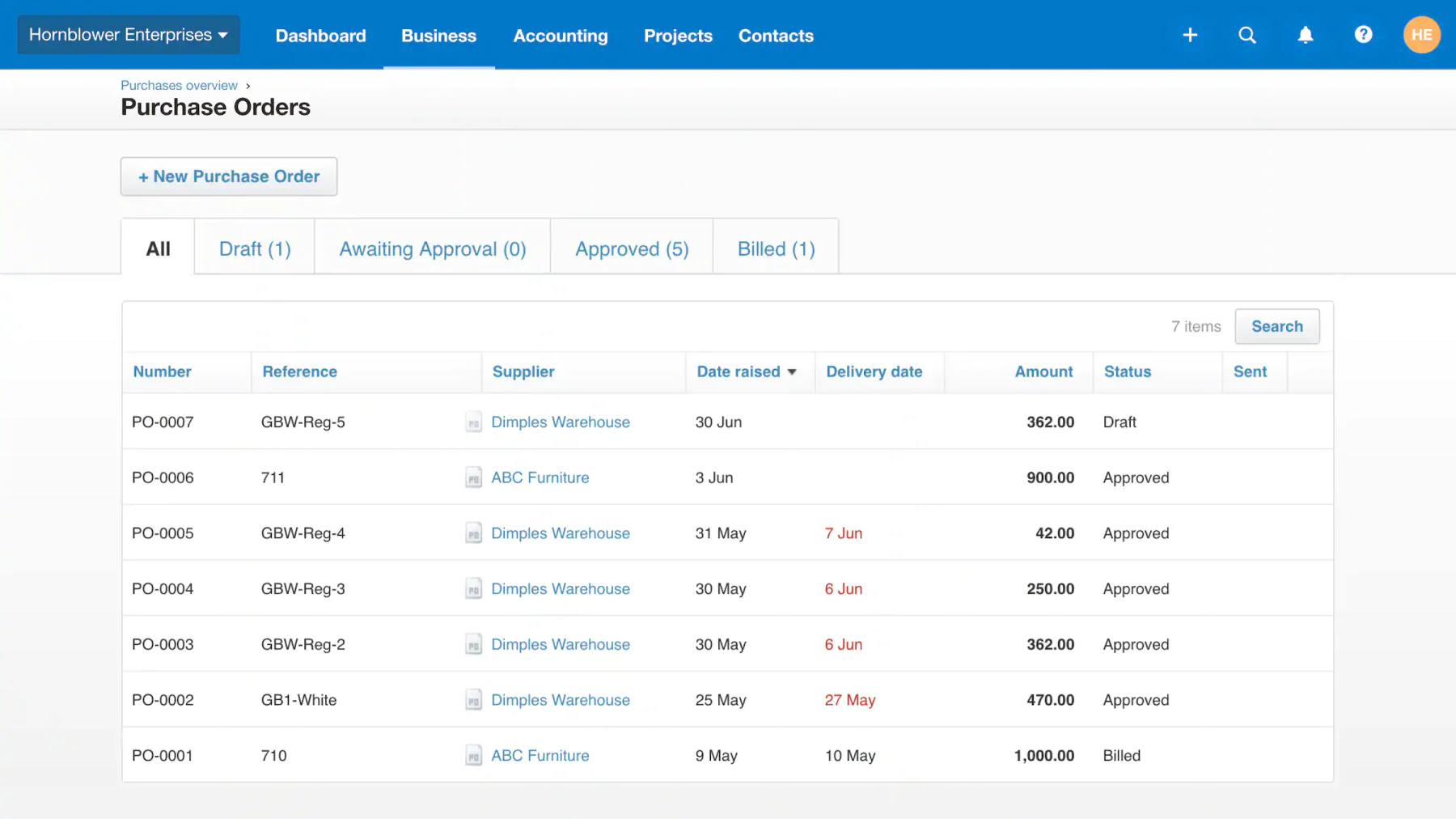
While Xero is fundamentally accounting software, its ecosystem and built-in “Expenses” and “Bills” features serve as the de facto procurement system for micro and small businesses across Australia.
Key Features:
- Purchasing order creation
- Bill tracking
- Vendor management
| Pros | Cons |
|
|
Pricing: Xero offers tiered subscription plans starting from around AUD 35–130 per month, depending on features and business needs. Pricing may increase with add-ons such as payroll or additional users. A 30-day free trial is available, but there is no permanent free plan.
Suitable for: Small trades and services, the native PO function is often sufficient and requires no additional software subscription.
9. Volopay
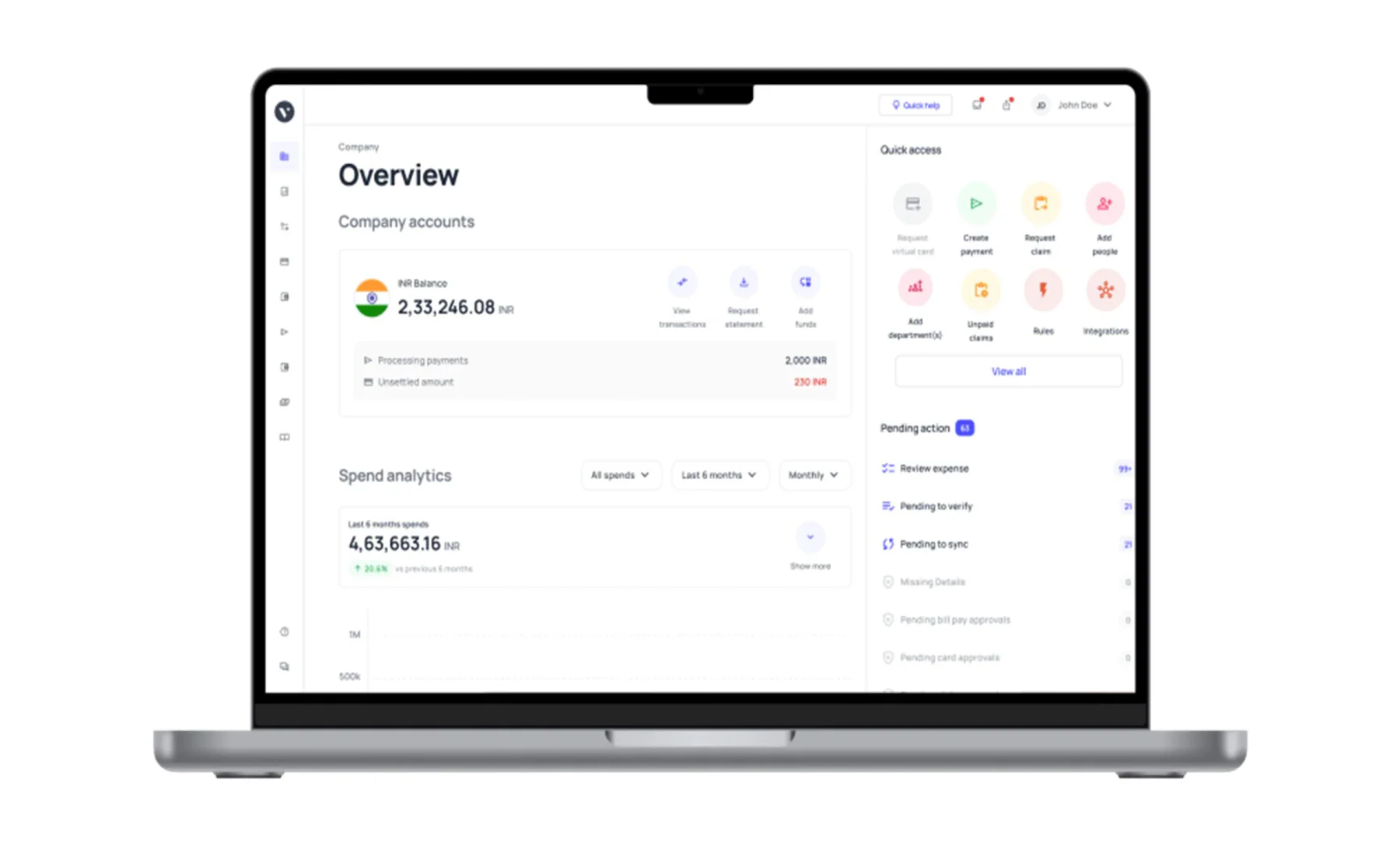
Volopay is a modern spend management platform that combines corporate cards, expense reimbursements, and bill payments into one automated system. It is disrupting the traditional procurement model by focusing on the payment aspect.
Key Features:
- Pre-set budget controls
- Accounting software integration
- Source-level spend control
| Pros | Cons |
|
|
Pricing: Volopay offers a subscription-based model starting from around AUD 25/month, with costs depending on features and usage. Enterprise plans are typically quote-based and tailored to business needs. No free plan or free trial is available.
Suitable for: Australian startups and tech companies favor Volopay for its agility and its ability to issue cards in AUD and handle international FX fees competitively.
10. SYSPRO
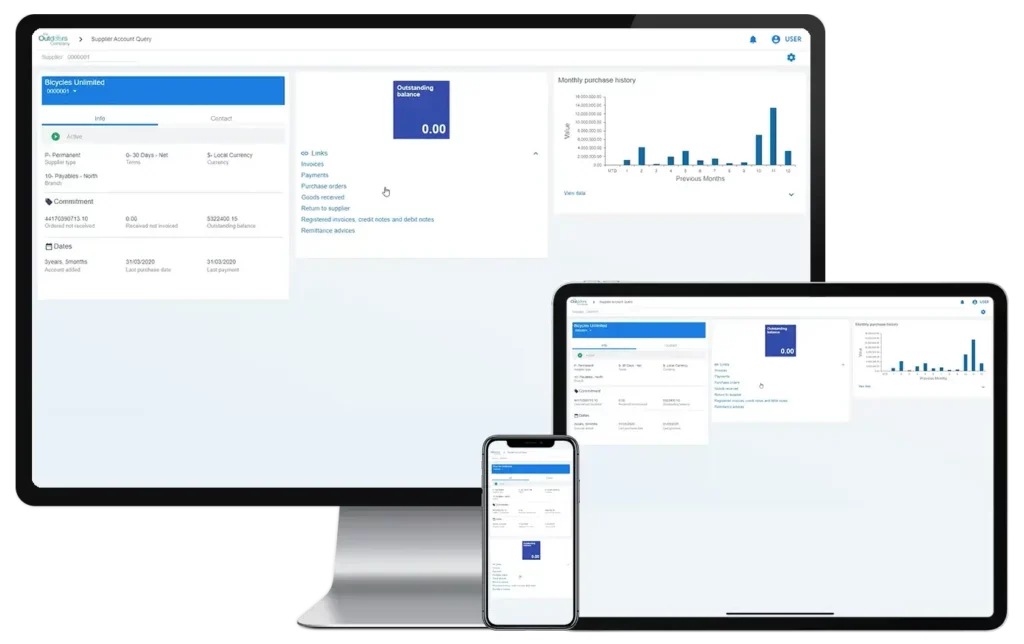
SYSPRO is an ERP solution specifically built for manufacturers and distributors. Its procurement module is deeply intertwined with inventory management and production planning.
Key Features:
- Demand-based purchasing
- Landed cost tracking
- Purchase timing optimization
| Pros | Cons |
|
|
Pricing: SYSPRO ERP typically starts at around AUD 150 per user per month, often with a minimum user requirement. Total costs vary by deployment type, with first-year investments commonly ranging from AUD 60,000 to 250,000 including implementation. No free plan is available.
Suitable for: Australian businesses involved in heavy industry, distribution, or manufacturing, SYSPRO’s ability to handle complex inventory metrics and landed costs is superior to generic procurement tools.
11. Medius
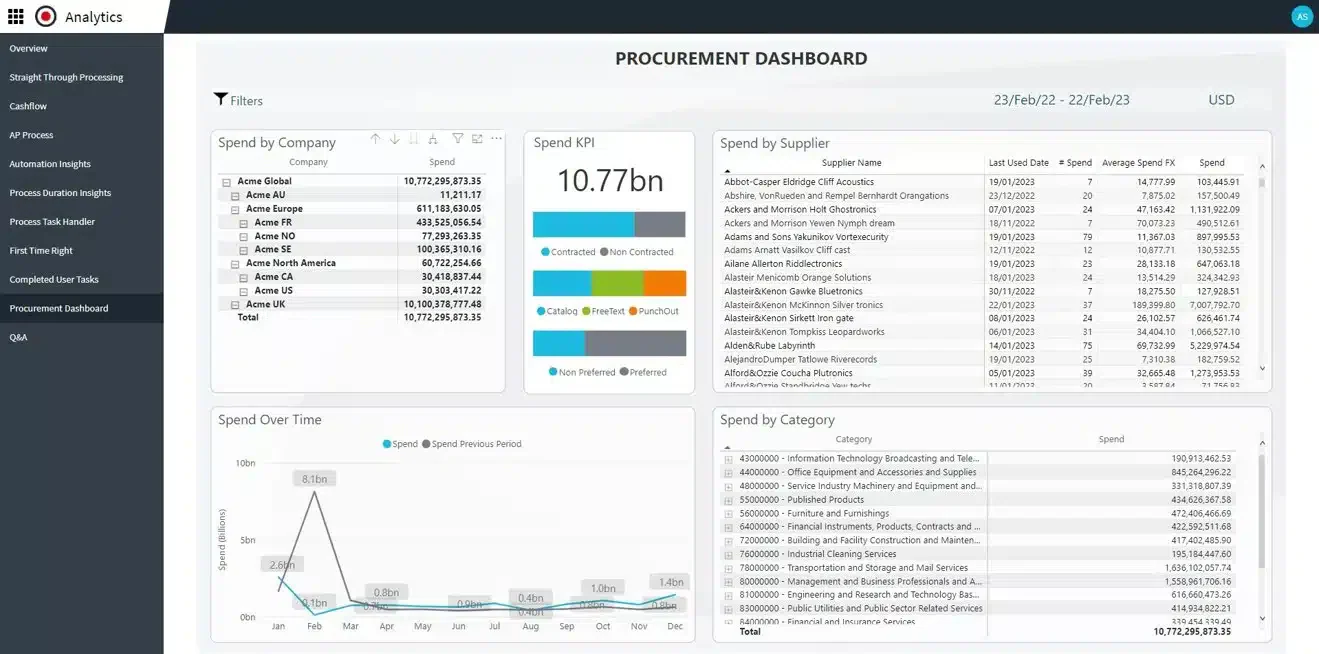
Medius focuses heavily on Accounts Payable (AP) automation but has expanded into a broader spend management suite. It is best known for its “touchless” invoice processing capabilities.
Key Features:
- Procure-to-AP integration
- Contract management
- Fraud prevention controls
- Invoice matching
| Pros | Cons |
|
|
Pricing: Medius offers a subscription-based, quote-driven model with packages such as AP Essentials and AP 360, tailored to business size, invoice volume, and feature requirements. Costs vary depending on modules and integrations, with pricing provided upon consultation. No free plan is available.
Suitable for: Australian finance teams looking to reduce the manual labor of invoice data entry often choose Medius.
12. Tradogram
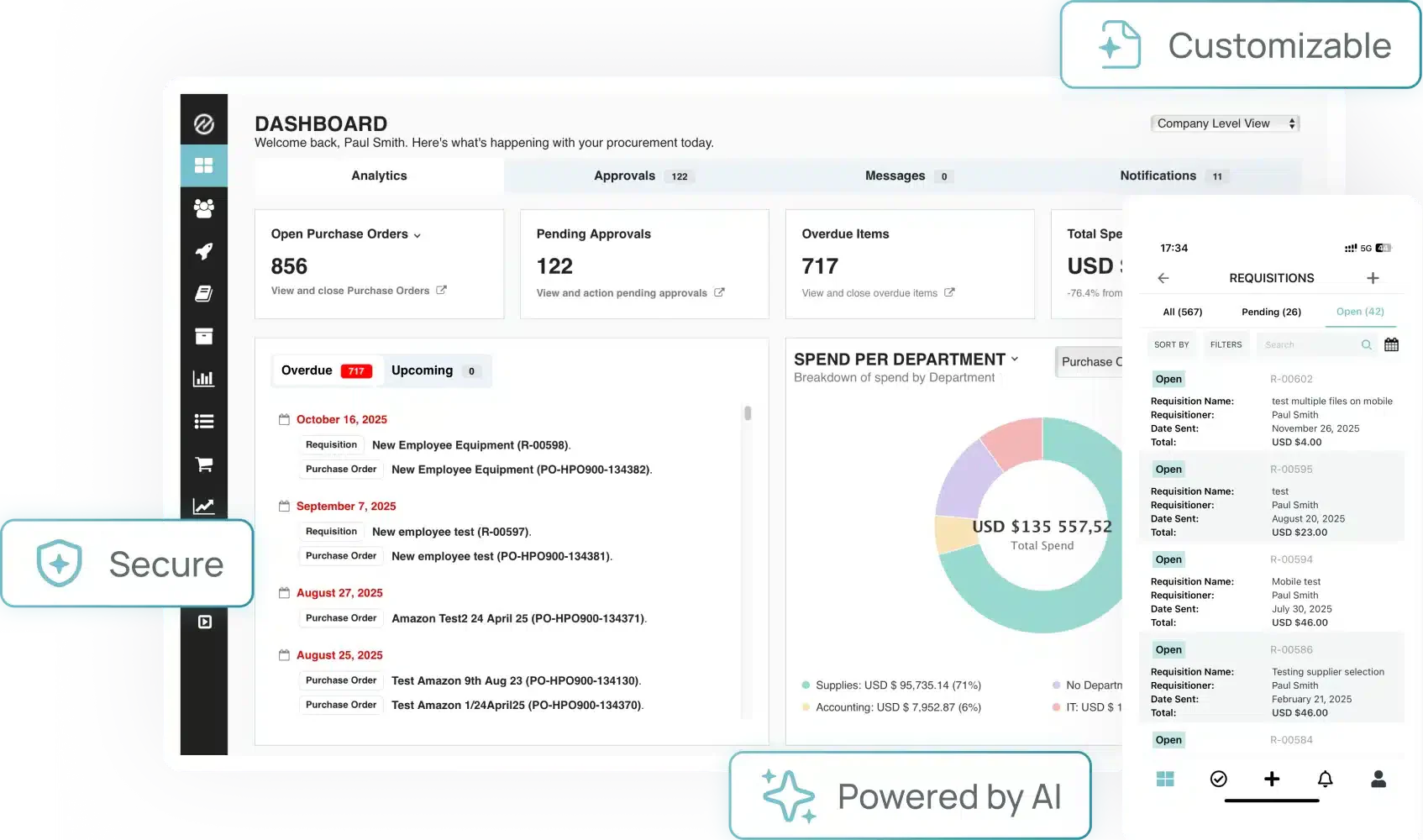
Tradogram is a cloud-based procurement management software designed to be affordable and accessible. It provides a straightforward interface for managing the purchasing process from end to end.
Key Features:
- Multi-level approvals
- RFQ creation
- Supplier management
- Bid comparison
- 3-way matching
| Pros | Cons |
|
|
Pricing: Tradogram offers a free plan and free trial, with paid subscriptions starting from around AUD 10–15 per user/month, depending on billing. It also provides higher-tier plans starting at approximately AUD 225/month, scaling based on users and features, with enterprise pricing available.
Suitable for: Australian SMEs that need a dedicated procurement tool without the price tag of enterprise software.
13. Procurify
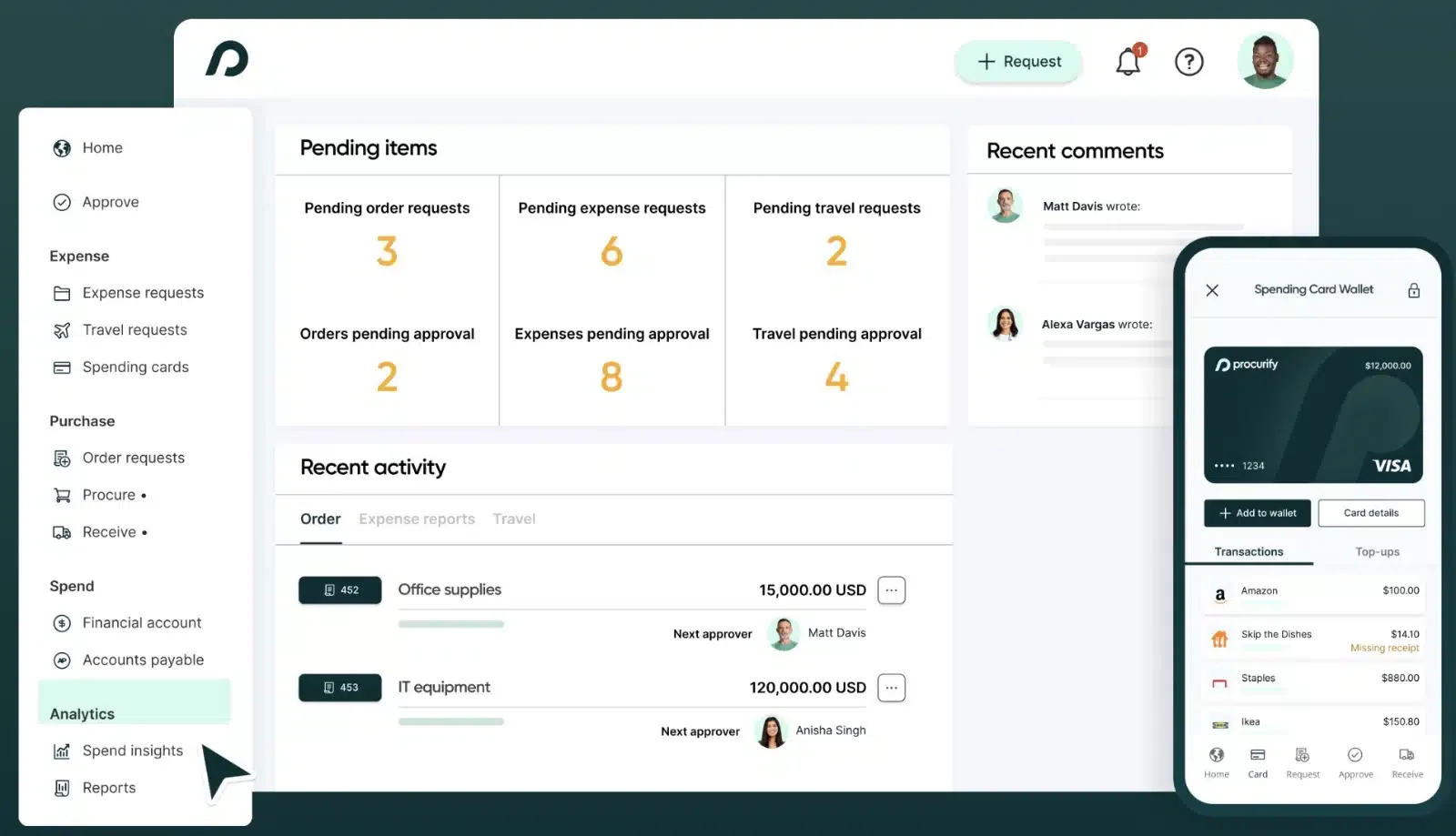
Procurify is a dedicated purchasing software that emphasizes proactive spend control. It is designed to be the “eyes and ears” of the finance department regarding company spending.
Key Features:
- Mobile purchase requests
- Custom approval routing
- ERP & accounting integration
| Pros | Cons |
|
|
Pricing: Procurify uses a quote-based subscription model, with costs typically starting from around AUD 500 per user/year and scaling based on users, features, and transaction volume. Total annual costs can range widely depending on business size, with implementation fees charged separately. A free trial is available, but no free plan.
Suitable for: Modern Australian companies with remote or hybrid workforces who need to approve spend from anywhere.
14. Zoho Procurement
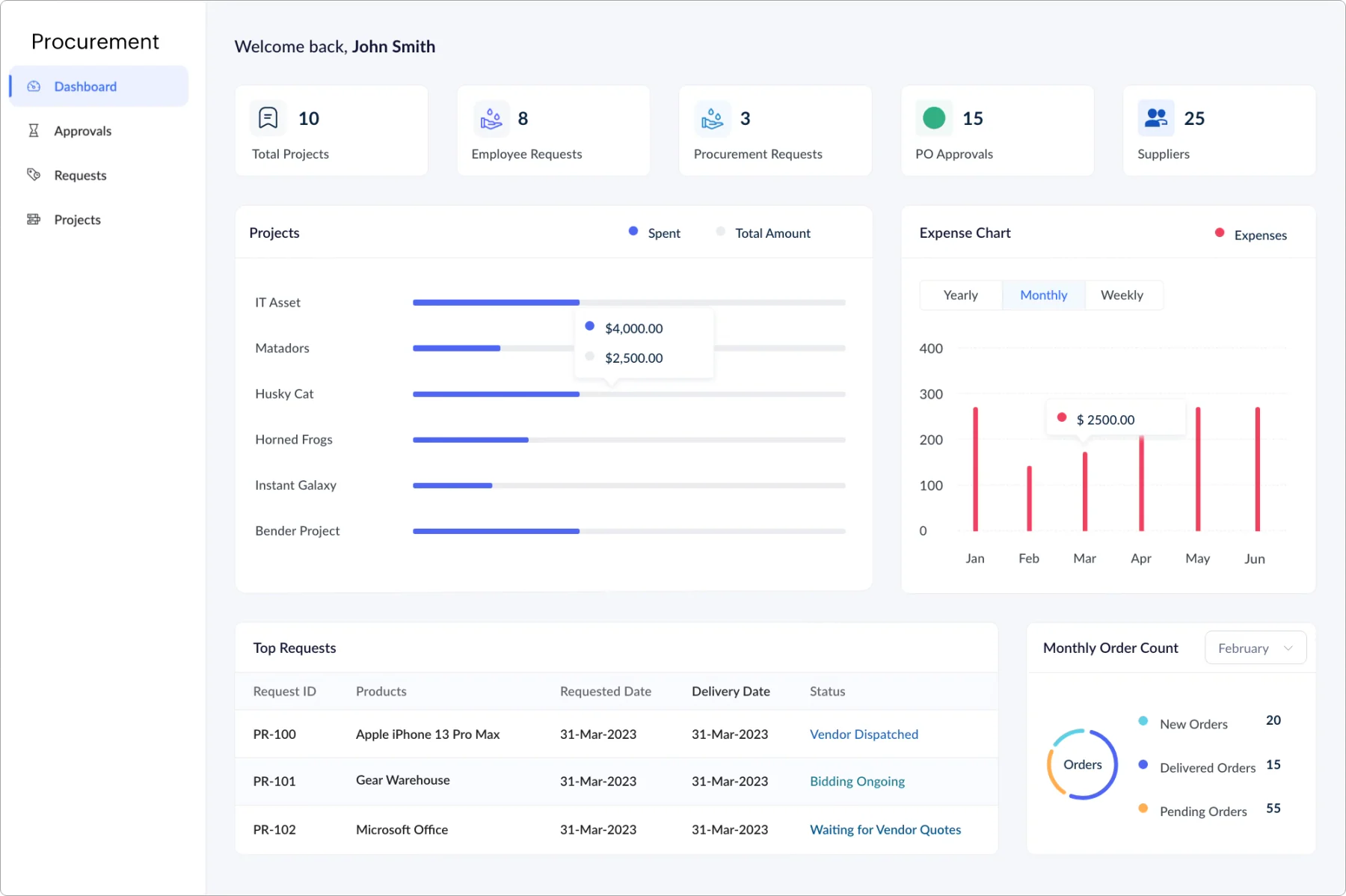
Part of the massive Zoho One suite, Zoho’s procurement capabilities (often handled via Zoho Books, Inventory, or Creator apps) offer a highly customizable and low-cost entry point.
Key Features:
- Custom procurement processes
- Accounting integration
- Purchase requisition & purchase order
| Pros | Cons |
|
|
Pricing: Zoho Procurement offers a subscription-based model starting from around AUD 75 per user/month, with costs scaling by users and features. A 14-day free trial is available, but there is no permanent free plan.
Suitable for: Businesses already invested in the Zoho ecosystem, using their procurement tools is cost-effective and ensures seamless data flow.
15. Kissflow Procurement
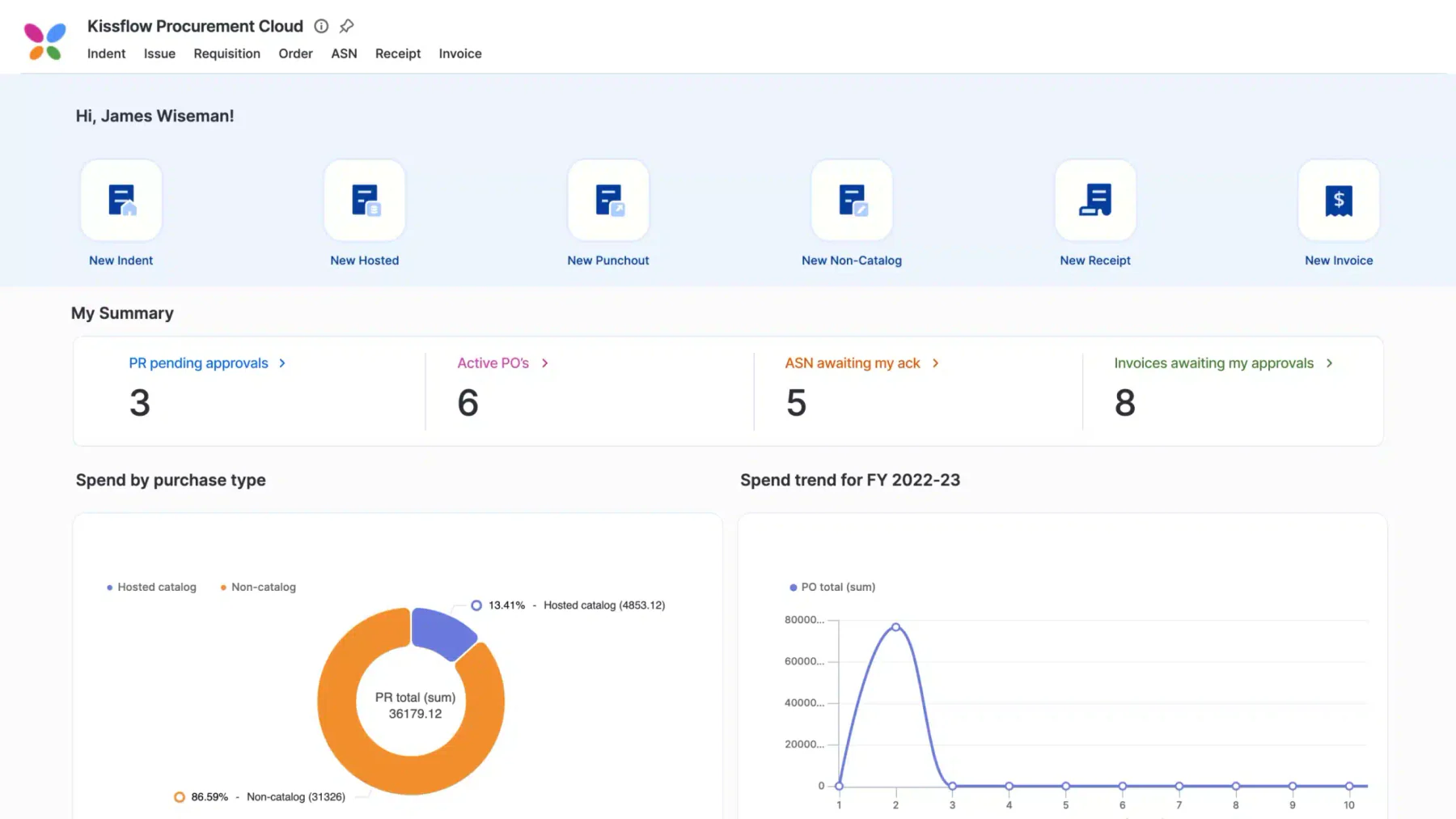
Kissflow is a low-code work platform that offers a specific solution for procurement Cloud. It is designed for agility and ease of modification.
Key Features:
- Purchase requisitions
- Purchase orders
- Vendor management
| Pros | Cons |
|
|
Pricing: Kissflow Procurement follows a subscription-based model, with plans typically starting from around AUD 1,500–2,500 per month depending on features and scale. Pricing is primarily user-based with custom enterprise plans available. A free trial is offered, but there is no permanent free plan.
Suitable for: Dynamic Australian mid-market companies that need a system that can evolve rapidly without expensive consultant fees.
16. Vroozi
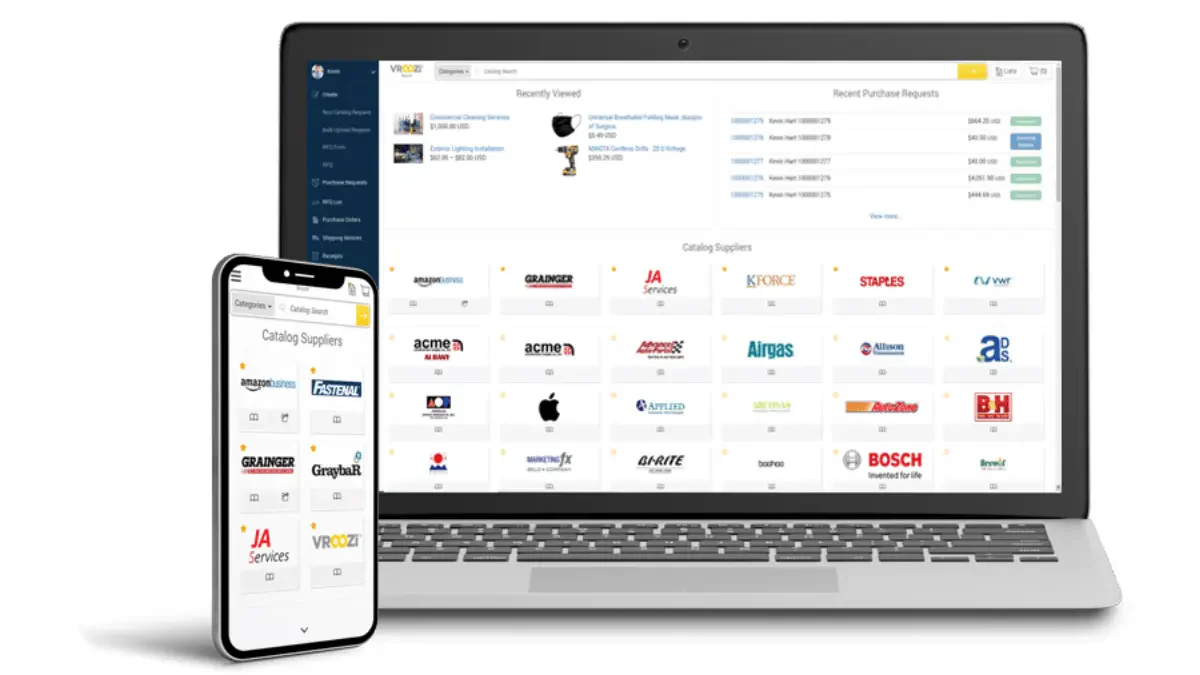
Vroozi is an AI-powered procure-to-pay platform designed to help businesses streamline purchasing, accounts payable, and supplier management in one cloud-based system. It is especially suitable for organisations that want stronger invoice automation, catalog-based buying, and real-time spend visibility without relying on manual processes.
Key Features:
- Supplier marketplace and unified catalog browsing
- Purchase request and purchase order management
- AI-powered invoice automation and real-time spend analytics
| Pros | Cons |
|
|
Pricing: Vroozi follows a subscription-based, quote-driven model with tiered plans (Professional, Premium, Enterprise) based on users, invoice volume, and features. Pricing is not publicly listed and is tailored to business needs, with implementation costs typically charged separately.
Suitable for: Australian businesses that want scalable procure-to-pay software with strong spend visibility, supplier management, and AP automation.
17. Tipalti
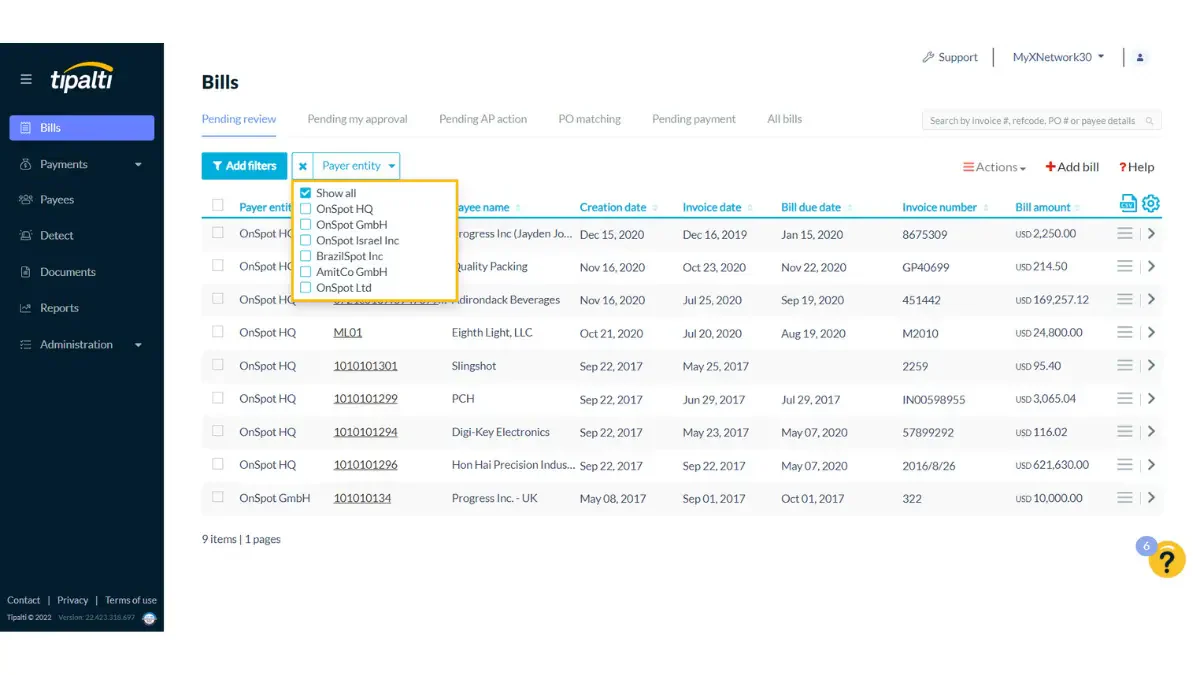
Tipalti is a global accounts payable and procurement automation platform built for companies that manage large supplier networks and cross-border payments. It combines procurement, invoice automation, payment processing, and tax compliance in one system, making it a strong choice for fast-growing and international organisations.
Key Features:
- AP invoice automation and procurement workflow management
- Global payments across 196 countries and 120+ currencies
- Tax compliance and ERP integration support
| Pros | Cons |
|
|
Pricing: Tipalti offers a subscription-based model starting from around AUD 99–199 per month for entry-level plans, with costs scaling based on transaction volume, modules, and business complexity. Pricing may include additional transaction-based fees, and enterprise plans are custom-quoted. No free plan is available.
Suitable for: Mid-sized and enterprise Australian companies with international vendors, complex approvals, and high-volume payment operations.
18. Ivalua
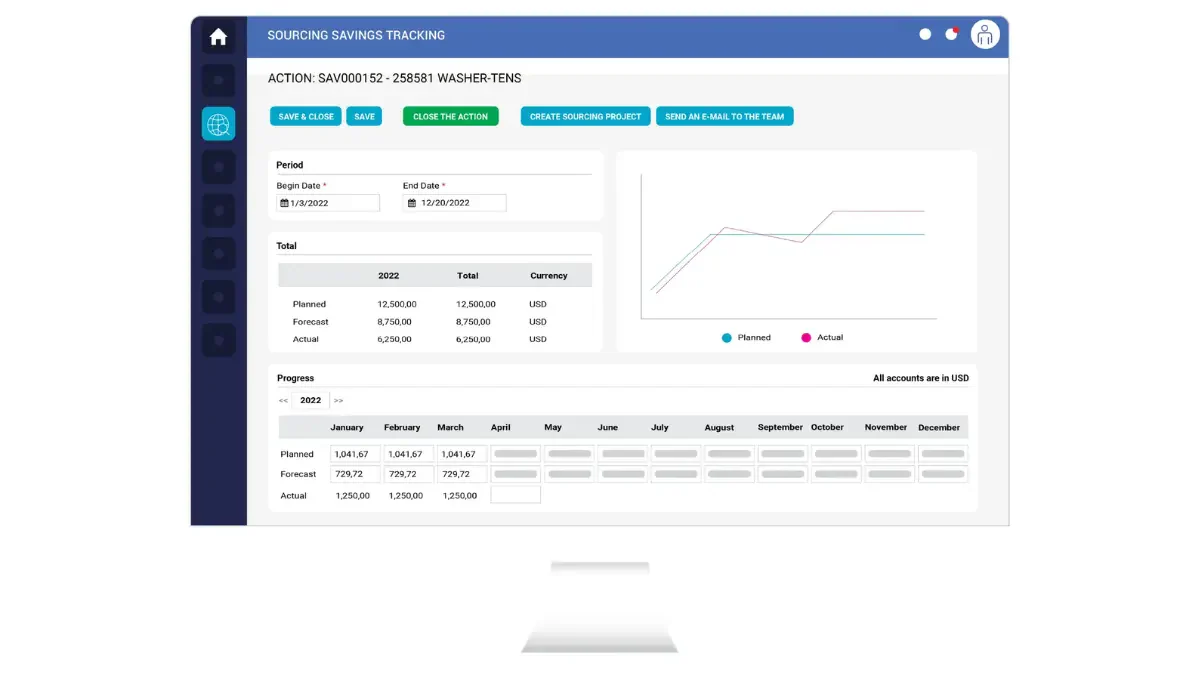
Ivalua is an AI-powered source-to-pay platform known for its flexibility and deep configurability for complex enterprise procurement needs. It offers end-to-end procurement capabilities across sourcing, supplier management, contracting, and spend control, making it suitable for large organisations with sophisticated requirements.
Key Features:
- End-to-end source-to-pay suite
- AI-powered automation across procurement processes
- Supplier risk and performance management
| Pros | Cons |
|
|
Pricing: Ivalua uses a quote-based subscription model tailored to enterprise needs, with costs starting from around AUD 220+ per user per month and scaling based on modules, users, and complexity. No free plan is available.
Suitable for: Large Australian enterprises that need a highly configurable procurement platform for complex sourcing, supplier governance, and enterprise-wide spend control.
19. Felix
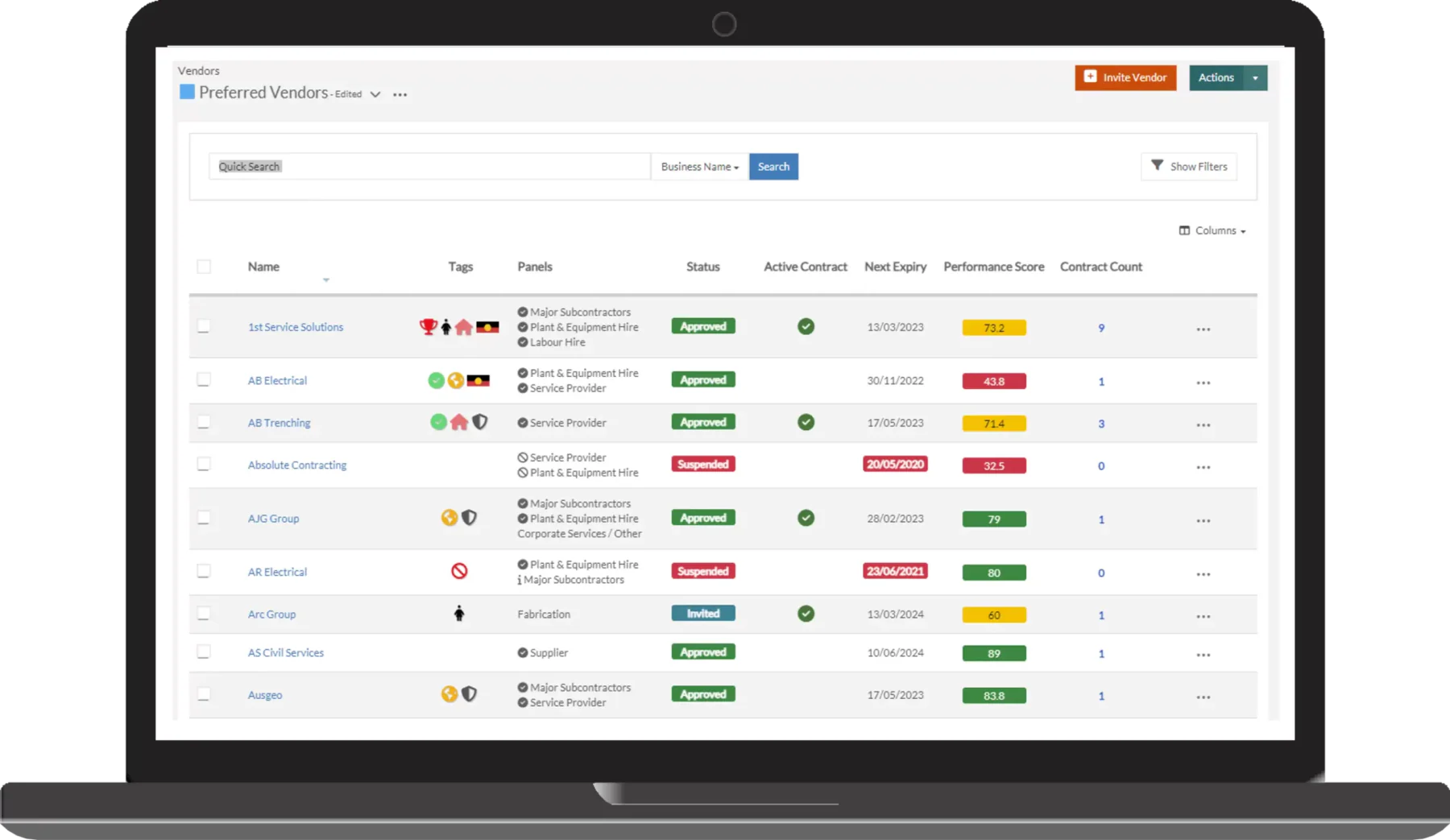
Felix is a cloud-based procurement and vendor management platform designed for industries such as construction and infrastructure. It helps organisations streamline supplier prequalification, compliance, and sourcing processes while improving visibility across vendor networks.
Key Features:
- Supplier onboarding and prequalification
- Vendor compliance and risk management
- Centralised supplier database and sourcing tools
| Pros | Cons |
|
|
Pricing: Felix uses a quote-based subscription model tailored to business size and requirements. No free plan is available.
Suitable for: Australian businesses, especially in construction and infrastructure, that need strong supplier management, compliance tracking, and vendor prequalification capabilities.
20. Lightyear
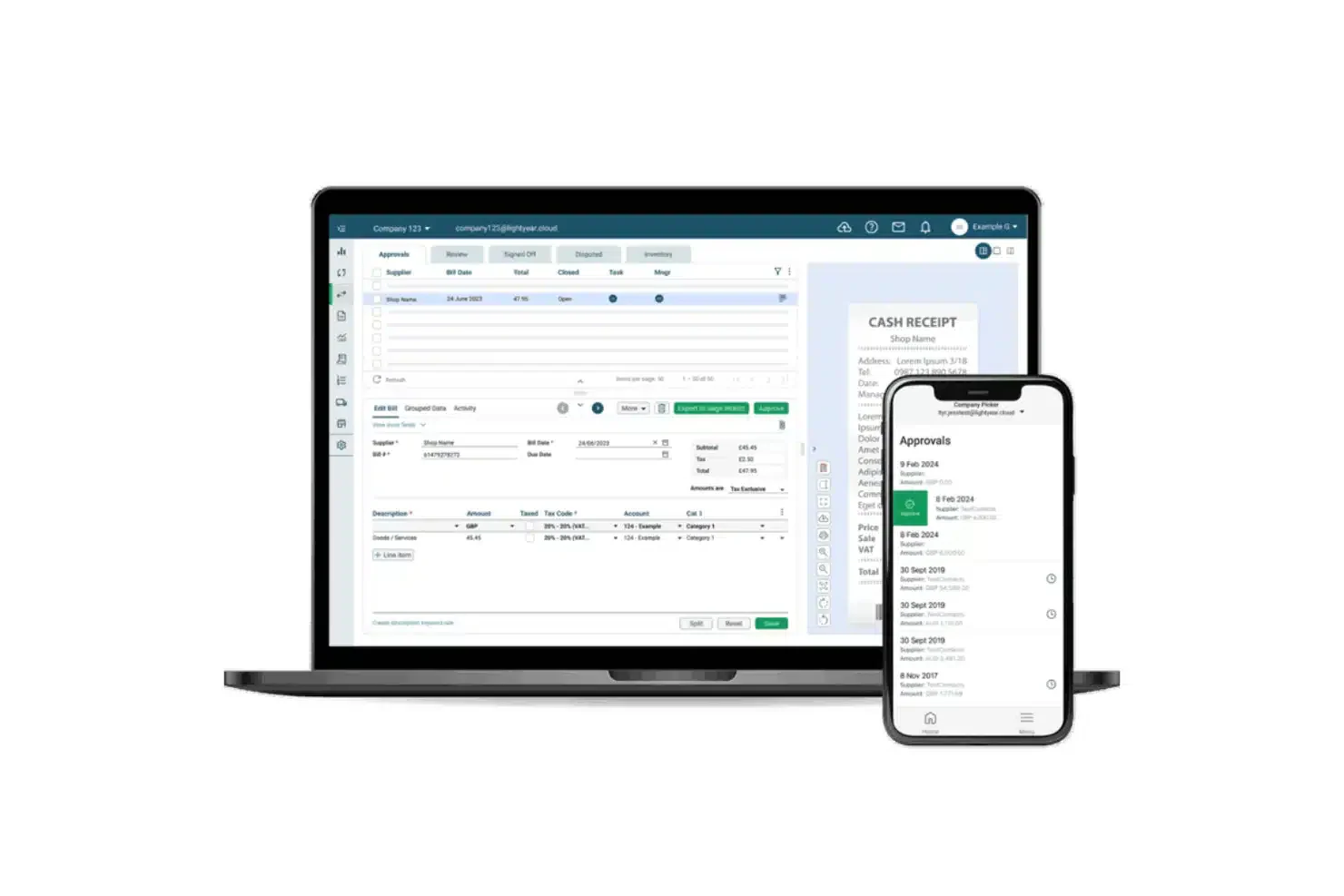
Lightyear is a procurement and accounts payable automation platform that simplifies purchasing workflows, invoice processing, and approvals using AI-driven data extraction. It is designed to improve efficiency and accuracy in procurement and finance operations.
Key Features:
- AI-powered invoice data capture
- Automated approval workflows
- Purchase order and expense management
| Pros | Cons |
|
|
Pricing: Lightyear offers a subscription-based model starting from approximately AUD 290/month, with plans scaling based on usage (credits) and features, reaching over AUD 1,200/month for higher tiers. A free trial is available, but there is no permanent free plan.
Suitable for: Small to mid-sized Australian businesses looking to automate procurement and accounts payable processes with a focus on efficiency and accuracy.
Types of Procurement Software
Procurement software includes tools that streamline purchasing, from supplier sourcing to invoice processing. Each type supports a different stage of the procurement cycle, especially for businesses handling complex procurement processes in industries like construction, where coordination and cost control are critical.
- Sourcing and supplier discovery: Procurement teams use these tools to identify, compare, and evaluate potential suppliers before making a purchase decision. Better supplier selection at this stage helps improve pricing, quality, and long-term supply stability.
- Supplier management: Supplier-related platforms keep important records organised, including contact details, certifications, performance history, and risk indicators. Stronger supplier relationship management makes it easier to manage relationships and maintain compliance over time.
- Contract management: Contract tools provide greater structure for how businesses create, approve, and monitor supplier agreements. Clearer control over terms and obligations helps reduce risk and improve purchasing consistency.
- Catalog management (e-Procurement): Employees can use these systems to buy approved products and services from negotiated supplier catalogs. Easier guided purchasing helps control maverick spend while speeding up procurement for internal users.
- Procure-to-Pay (P2P): P2P platforms connect purchasing transactions from order creation through invoicing and payment. A more connected process reduces manual work, improves accuracy, and strengthens coordination between procurement and finance.
- Source-to-Pay (S2P): Broader than P2P, this category combines sourcing with the full purchasing and payment workflow. End-to-end visibility gives businesses better control over suppliers, contracts, procurement activity, and spend, while improving real-time visibility across the supply chain.
- Accounts payable automation: Finance teams rely on these tools to streamline invoice handling, payment processing, and payable controls. Faster approvals and cleaner workflows help reduce delays, minimise errors, and support compliance.
- Spend analysis: Spend analysis tools organise purchasing data by supplier, category, and transaction type, making patterns easier to understand. Better visibility into spending helps businesses uncover savings opportunities and make more strategic procurement decisions.
Standalone vs ERP-Integrated Procurement Software: Which One Suits Best?
When digitising procurement, businesses must choose between standalone tools and ERP-integrated solutions. To make this decision clearer, the table below compares both approaches, including examples from the software listed above.
| Category | Standalone Procurement Software | ERP-Integrated Procurement Software |
| Description | Focused tools designed specifically for procurement functions | Procurement features embedded within a full ERP system |
| Software Examples | Coupa, Precoro, Tradogram, Procurify, Lightyear, Felix, Vroozi | HashMicro, SAP Ariba, Oracle NetSuite, Workday, SYSPRO |
| Integration | Requires integration with accounting or inventory systems | Fully integrated with finance, inventory, and other modules |
| Implementation | Faster and easier to deploy | More complex but offers a unified system |
| Cost | Lower upfront cost | Higher initial investment but broader value |
| Best For | SMEs or businesses with specific procurement needs | Mid-sized to large enterprises needing full operational integration |
How to Choose the Right Procurement Management Software for Your Business
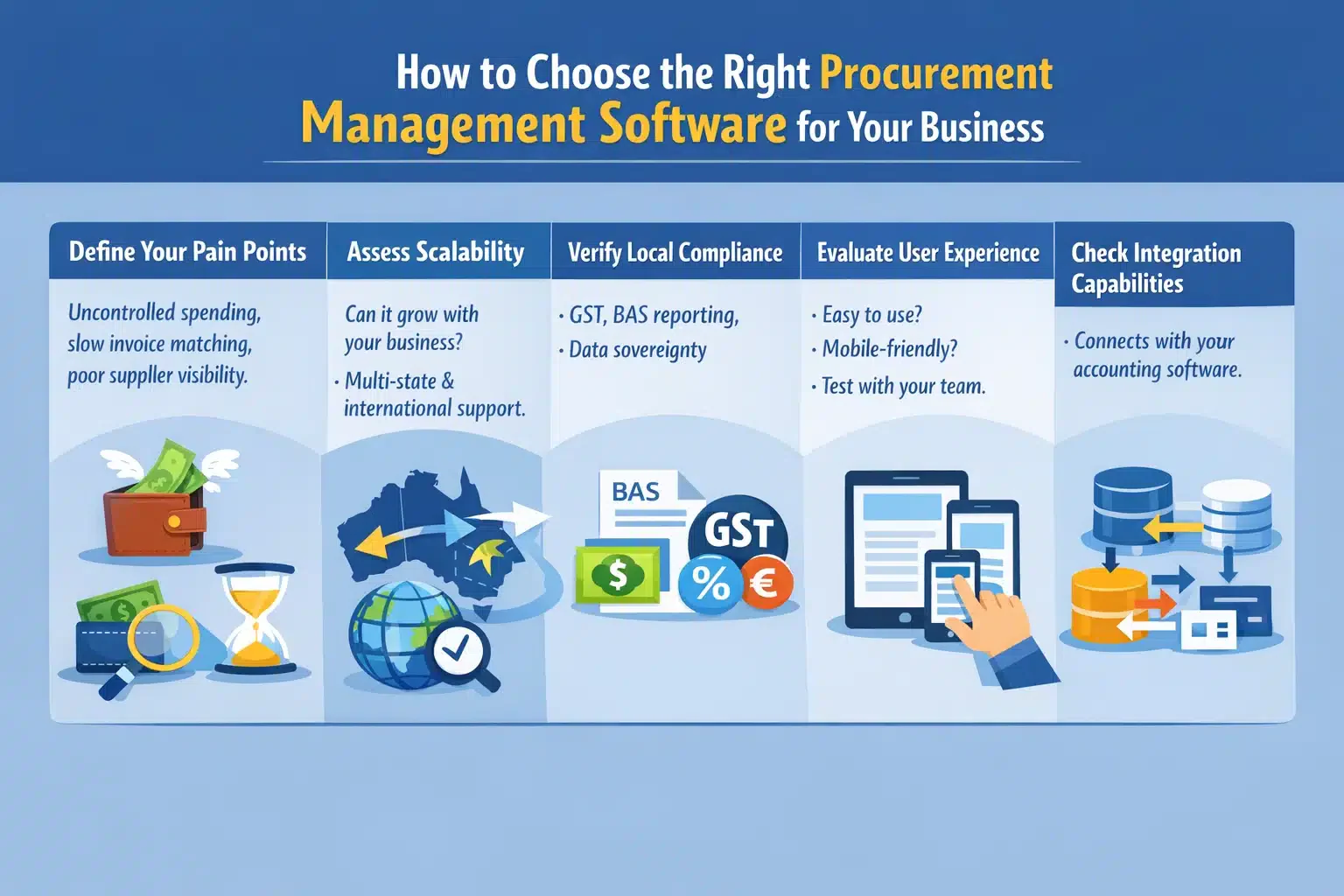
Selecting the right software is a significant investment. Businesses should carefully evaluate their requirements, scalability needs, and integration capabilities before choosing a contract lifecycle management software solution. To ensure a return on investment (ROI), follow these steps:
1. Define Your Pain Points: Define pain points such as uncontrolled spending, slow invoice matching, or poor supplier visibility to determine the needed features.
2. Assess Scalability: Ensure the software can handle your projected growth. An Australian business expanding interstate or internationally needs a system that handles multiple tax jurisdictions and currencies.
3. Verify Local Compliance: As mentioned, check for GST handling, BAS reporting support, and data sovereignty (where is the data hosted?).
4. Evaluate User Experience (UX): The best software is useless if your team refuses to use it. Look for intuitive interfaces and mobile capabilities. Request a demo and let your actual procurement staff test it, not just the IT team.
5. Check Integration Capabilities: If you are not buying a full ERP, ensure the standalone tool has a pre-built, reliable connector to your existing accounting software.
Conclusion
Procurement software strengthens purchasing control by standardizing approvals, improving spend visibility, and reducing manual processing. It helps teams move faster from request to purchase order to payment with fewer errors.
A structured system maintains consistent records and reduces compliance and audit risk. Procurement becomes a source of efficiency and stronger supplier relationships rather than an administrative bottleneck.
Long-term value depends on scalability, integration with finance systems, and support for local regulatory requirements. To evaluate procurement software options and identify the best fit for your workflows, you can consult our expert for more tailored guidance.
Frequently Asked Questions About Procurement Software
Yes, procurement software can suit small businesses, especially those managing multiple suppliers, approvals, or purchase orders. Even lightweight systems help control spending, reduce manual errors, and improve visibility over purchasing.
Procurement software is not automatically an ERP, but it can be a module within a broader ERP system. Standalone procurement tools focus on purchasing workflows, while ERP platforms connect procurement with finance, inventory, and reporting.
Costs vary based on features and scale, but cloud-based procurement tools typically start from low monthly subscriptions per user, while mid-market or ERP-integrated solutions can range into higher monthly or custom enterprise pricing depending on complexity and integrations.
Procurement tools help finance teams manage purchasing, approvals, and supplier spend in one system. They improve visibility, reduce manual processing, and support better budget control through automated workflows.
The four main types include direct procurement, indirect procurement, goods procurement, and services procurement. Each type supports different business needs, from production materials to operational services.
Mobile procurement allows employees to raise requests, approve purchases, and track orders from any device. This helps distributed teams maintain control and speed up approvals without being tied to office systems.
It depends on your business size and needs. Large enterprises with complex supply chains often use SAP Ariba or Coupa. Mid-sized Australian businesses may prefer Precoro or Procurify because they are easier to implement. Businesses that need procurement linked with inventory, accounting, and finance can use an ERP-integrated system like HashMicro to manage everything in one platform.