






Last mile delivery is the final stage of the fulfilment process, where goods are transported from a warehouse, distribution centre, or local hub to the end customer.
This process involves route planning, dispatching drivers, providing tracking updates, recording proof of delivery, and keeping customers informed throughout the delivery journey.
Key Takeaways
Last mile delivery refers to the final movement of goods from a distribution centre to the customer.
What Is Last Mile Delivery?
Last mile delivery refers to the final movement of goods from a warehouse, distribution centre, or local hub to the customer. It is often the most visible stage of the delivery process.
The term “last mile” describes the final leg of a product’s journey before it reaches the end customer. While usually the shortest part of the supply chain, it can also be one of the most costly and complex.
Because it directly affects delivery speed, order accuracy, and customer satisfaction, last mile delivery plays an important role in logistics performance.
Last Mile Delivery vs Final Mile Delivery
Although the terms are often used interchangeably, some businesses use them to describe slightly different types of delivery services.
The difference often comes down to delivery complexity. Last mile delivery is typically associated with parcels, while final mile delivery may involve larger items that require additional services.
How Last Mile Delivery Works
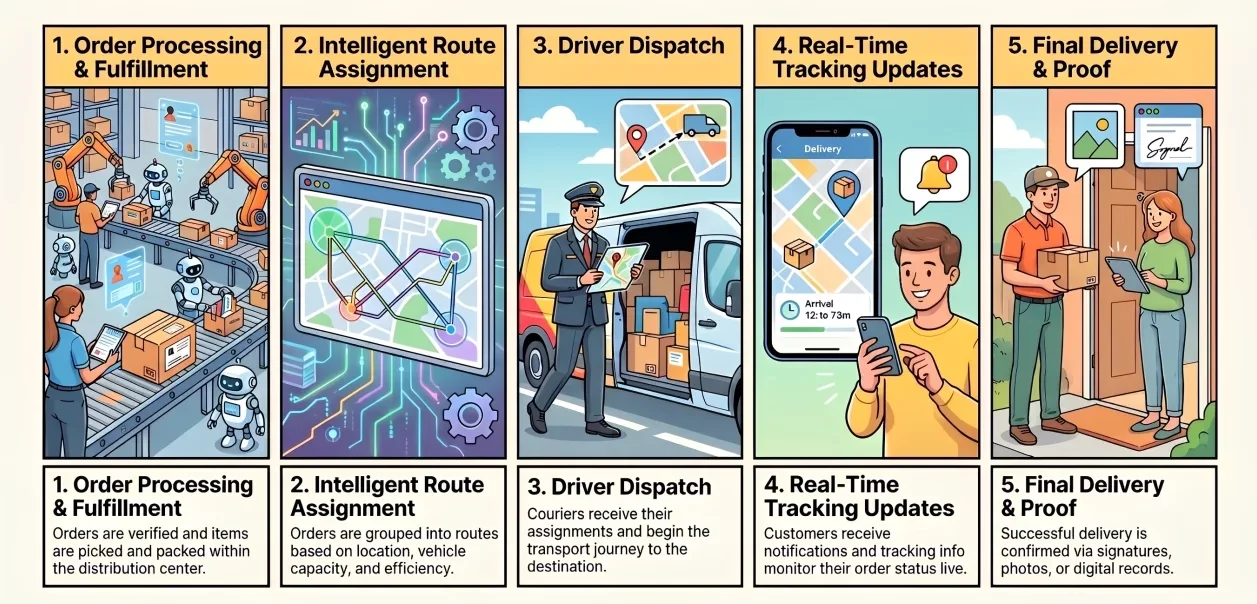
Last mile delivery follows a series of steps designed to move orders efficiently from a warehouse or distribution centre to the customer.
1. Order Received and Processed
Once an order is placed, delivery details are verified and prepared for fulfilment within a system for centralising logistics processes across the warehouse or distribution network.
2. Goods Picked and Packed
Warehouse staff collect the required items, verify order accuracy, and prepare packages for dispatch.
3. Delivery Route Assigned
Orders are allocated to delivery routes based on factors such as location, delivery windows, vehicle capacity, and route efficiency.
4. Driver or Courier Dispatched
Drivers or courier partners receive delivery assignments and begin transporting orders to their destinations.
5. Customer Receives Tracking Updates
Customers are provided with delivery notifications and tracking information so they can monitor the status of their orders.
6. Proof of Delivery Recorded
Upon successful delivery, proof of delivery is captured through signatures, photos, or digital confirmation records, supporting managing timely order completion.
Why Last Mile Delivery Matters for Australian Businesses
Last mile delivery has a direct impact on customer satisfaction. Fast, reliable deliveries help businesses meet expectations and build customer trust.
It also affects operational efficiency. Effective delivery planning can reduce transport costs, improve resource utilisation, and minimise delays.
For Australian businesses, long travel distances and regional service areas can make last mile delivery more challenging, leading many organisations to adopt SCM software in Australia to improve coordination.
"Efficient last mile delivery depends on visibility, route optimisation, and timely communication. Businesses that connect delivery operations with real-time data are often better equipped to control costs and meet customer expectations."
Common Last Mile Delivery Challenges
Last mile delivery can be difficult to manage due to cost pressures, customer expectations, and operational complexity.
1. Failed Delivery Attempts
Missed deliveries can increase transport costs and require additional scheduling, redelivery, and customer service effort.
2. High Delivery Cost
Fuel, labour, vehicle maintenance, delivery density, and specialised requirements in cold chain logistics all contribute to rising last mile delivery expenses.
3. Poor Route Planning
Inefficient routes can lead to longer delivery times, higher fuel consumption, and reduced driver productivity.
4. Limited Delivery Visibility
Without real-time tracking, businesses may struggle to monitor delivery progress and respond to issues quickly without software for improving logistics visibility.
5. Customer Availability Issues
Customers may not be available during delivery windows, resulting in delays and additional delivery attempts.
6. Driver Delays and Traffic
Traffic congestion, road closures, and unexpected disruptions can affect delivery schedules and service reliability.
7. Manual Proof of Delivery
Paper-based delivery records can be slow to process and increase the risk of missing or inaccurate information.
8. Returns and Reverse Logistics
Managing returns often adds extra transport, handling, and administrative costs to delivery operations.
What Drives Last Mile Delivery Costs?
Several factors influence the cost of delivering goods to customers. Understanding these cost drivers can help businesses improve efficiency and control delivery expenses.
Balancing delivery costs with customer expectations can be challenging. Faster delivery services often improve customer satisfaction but may increase operating costs.
Many businesses reduce hidden delivery expenses by improving route planning, automating administrative tasks, and increasing visibility across delivery activities.
How to Improve Last Mile Delivery
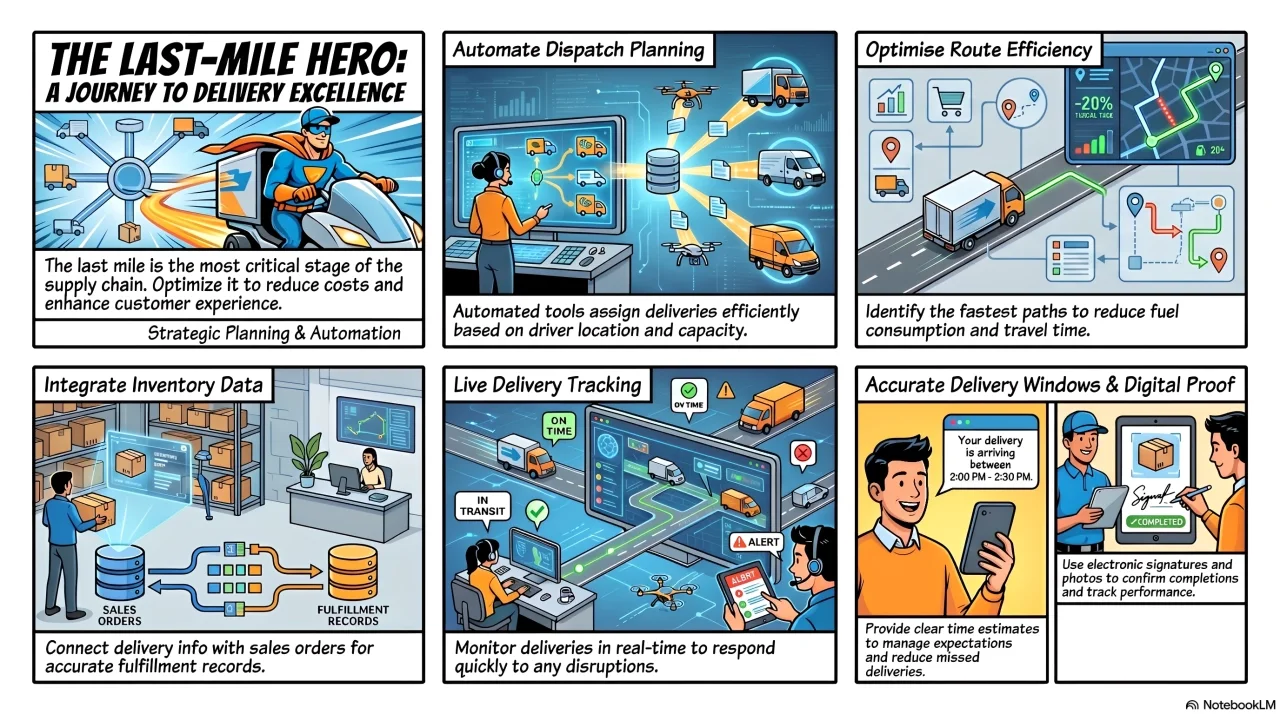
Improving last mile delivery requires a combination of better planning, technology, and operational visibility.
1. Optimise Delivery Routes
Route optimisation helps reduce travel time, fuel consumption, and delivery delays by identifying the most efficient delivery paths.
2. Use Real-Time Delivery Tracking
Live tracking allows businesses and customers to monitor deliveries as they happen and respond more quickly to disruptions.
3. Automate Dispatch Planning
Automated dispatch tools can assign deliveries more efficiently based on location, capacity, and delivery schedules.
4. Provide Accurate Delivery Windows
Clear delivery time estimates help manage customer expectations and reduce missed deliveries.
5. Use Electronic Proof of Delivery
Digital signatures, photos, and mobile confirmations provide faster and more reliable proof of completed deliveries.
6. Monitor Driver and Fleet Performance
Tracking delivery performance is essential for managing delivery performance, identifying inefficiencies, and improving service levels.
7. Connect Delivery Data with Inventory and Sales Orders
Integrating delivery information with inventory and order data improves visibility and helps maintain accurate fulfilment records.
How Delivery Management Software Supports Last Mile Operations
Delivery management software helps businesses improve route planning, dispatching, tracking, and proof of delivery, providing better visibility across last mile operations.
By centralising delivery data, businesses can monitor performance more effectively. Many also integrate delivery tools with a fleet management system to improve visibility across vehicles and drivers.
Benefits of Last Mile Delivery Software
- Better route optimisation: Reduce travel time and improve delivery efficiency.
- Faster dispatch planning: Assign deliveries more effectively based on routes and capacity.
- Real-time delivery visibility: Monitor deliveries and respond quickly to operational issues.
- Improved proof of delivery tracking: Capture digital confirmations and maintain accurate delivery records.
- Lower operational costs: Reduce manual work and improve overall delivery performance.
Many businesses use a delivery management software solution to improve delivery visibility, automate workflows, and support more efficient last mile operations.
Conclusion
Last mile delivery plays a critical role in customer satisfaction, delivery performance, and logistics efficiency. Businesses that optimise delivery processes can reduce costs while improving service quality.
By improving route planning, delivery visibility, and operational control, organisations can build more efficient and scalable delivery operations.
If you’re looking to streamline last mile operations, you can schedule a free consultation to see how delivery management software can support your business.
Frequently Asked Question
Last mile delivery is the final stage of moving goods from a warehouse or distribution centre to the customer.
Last mile delivery can be expensive due to labour costs, fuel expenses, failed deliveries, route inefficiencies, and low delivery density.
Common challenges include failed delivery attempts, high delivery costs, poor route planning, limited visibility, and returns management.
Businesses can reduce delivery costs by optimising routes, improving delivery visibility, automating workflows, and reducing failed deliveries.
Last mile delivery software helps businesses manage route planning, dispatching, tracking, proof of delivery, and operational reporting.