









 Limited to 100 registrants

Month-end reporting can stall when ledger balances do not look right. Before finalising reports, finance teams need a clear way to confirm that total debits and credits agree.
A trial balance lists each general ledger account at a specific date. It helps teams catch posting errors and confirm that balances are ready before financial statements are finalised.
Key Takeaways
A trial balance is a summary of account balances taken from the general ledger.
A trial balance gives finance teams a clear checkpoint before reports are prepared.
A simple trial balance lists each general ledger account and places the balance in either the debit or credit column.
Accounting software can generate this report automatically by pulling balances from the general ledger.

A trial balance is a summary of account balances taken from the general ledger. It includes accounts such as cash, accounts receivable, inventory, accounts payable, loans, equity, revenue, and expenses.
A transaction recording framework built on double-entry accounting means each entry affects at least two accounts. A trial balance places each account balance in the debit or credit column, then checks whether both totals are equal.
A balanced trial balance does not always mean every transaction is correct. Errors such as wrong account postings, incorrect amounts, or missing entries can still happen, even when both columns match.
Why Is a Trial Balance Important in Accounting?
Organising financial information into a clear checkpoint is one of the main reasons finance teams prepare a trial balance. It shows whether ledger balances are aligned and whether anything needs review.1. Checks debit and credit balances
In double-entry accounting, total debits should match total credits. When the figures do not balance, the finance team can review the ledger before moving into reporting.2. Helps detect bookkeeping errors
It can highlight issues such as missing journals, duplicated entries, or amounts posted to the wrong side. It will not catch every error, but it gives teams a useful starting point.3. Supports financial statement preparation
Financial statements rely on accurate ledger balances. A trial balance brings those balances together before they are used in the balance sheet or profit and loss statement.4. Improves month-end review
At month-end, finance teams use it to review account movements, check unusual balances, and make adjustments before closing the period. For that reason, a trial balance is a practical review tool before financial reports are finalised.What Is Included in a Trial Balance?
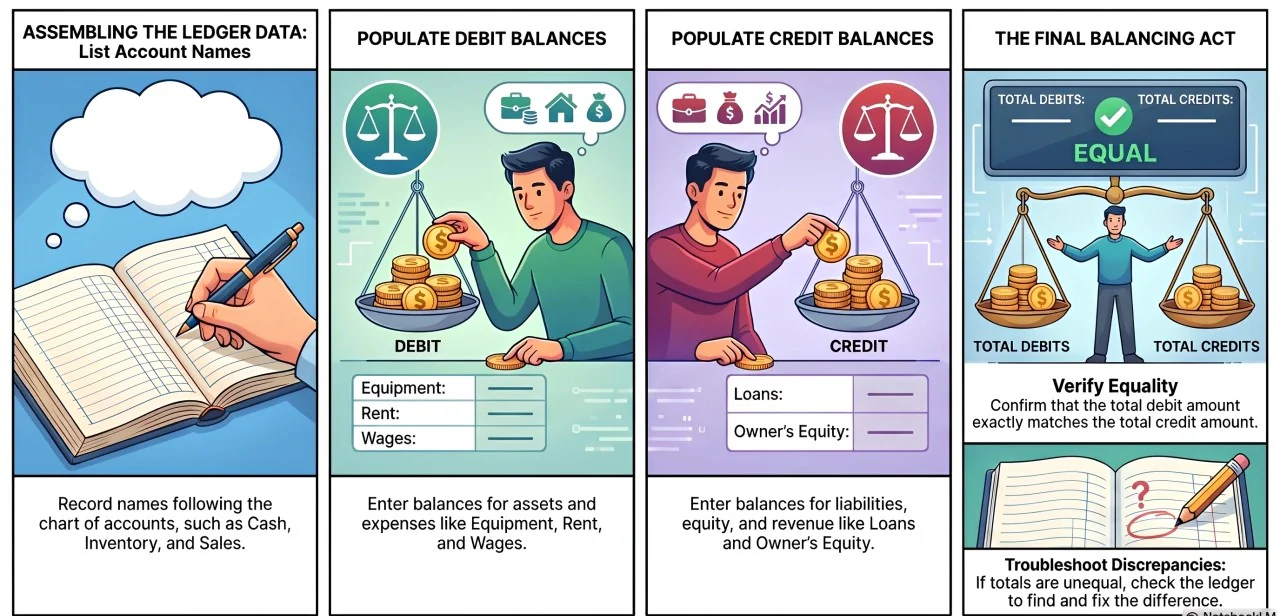
1. Account names
Account names usually follow the chart of accounts. Common examples include cash at bank, accounts receivable, inventory, accounts payable, sales revenue, wages expense, and GST payable.2. Debit balances
Debit balances usually come from asset and expense accounts, such as cash, inventory, equipment, rent expense, wages expense, and cost of goods sold.3. Credit balances
Credit balances usually come from liability, equity, and revenue accounts, such as accounts payable, loans payable, GST payable, owner's equity, retained earnings, and sales revenue.4. Total debit and credit columns
The final row shows total debits and total credits. If the totals are not equal, the business needs to check the ledger and find the source of the difference.Trial Balance Example
A trial balance example shows how account balances from the general ledger are placed into debit and credit columns before financial reports are prepared.1. Simple Trial Balance Format
A simple trial balance lists each general ledger account and places the balance in either the debit or credit column. The totals should match before the business prepares financial reports.2. Understanding the Example
- Asset and expense accounts appear in the debit column.
- Liability, equity, and revenue accounts appear in the credit column.
- Total debits and credits both equal $128,000.
- The ledger is balanced because both sides have the same total.
3. How to Read the Debit and Credit Columns
A debit or credit balance depends on the account type. Assets and expenses usually carry debit balances, while liabilities, equity, and revenue usually carry credit balances.Types of Trial Balance
Trial balances can be prepared at different points in the accounting cycle. Each version supports a different review, from early ledger checks to post-closing confirmation.1. Unadjusted trial balance
This version is prepared after transactions are posted but before month-end adjustments. It gives finance teams an early view of whether debit and credit totals match.2. Adjusted trial balance
This version includes adjustments such as depreciation, accruals, prepaid expenses, or inventory corrections. Finance teams usually use it when preparing financial statements.3. Post-closing trial balance
This version is prepared after closing entries are completed. It only includes permanent accounts, such as assets, liabilities, and equity, because revenue and expense accounts are reset for the next period."A trial balance helps finance teams review ledger accuracy before reports are finalised, making it easier to identify unusual balances and maintain better control over month-end reporting."
How to Prepare a Trial Balance
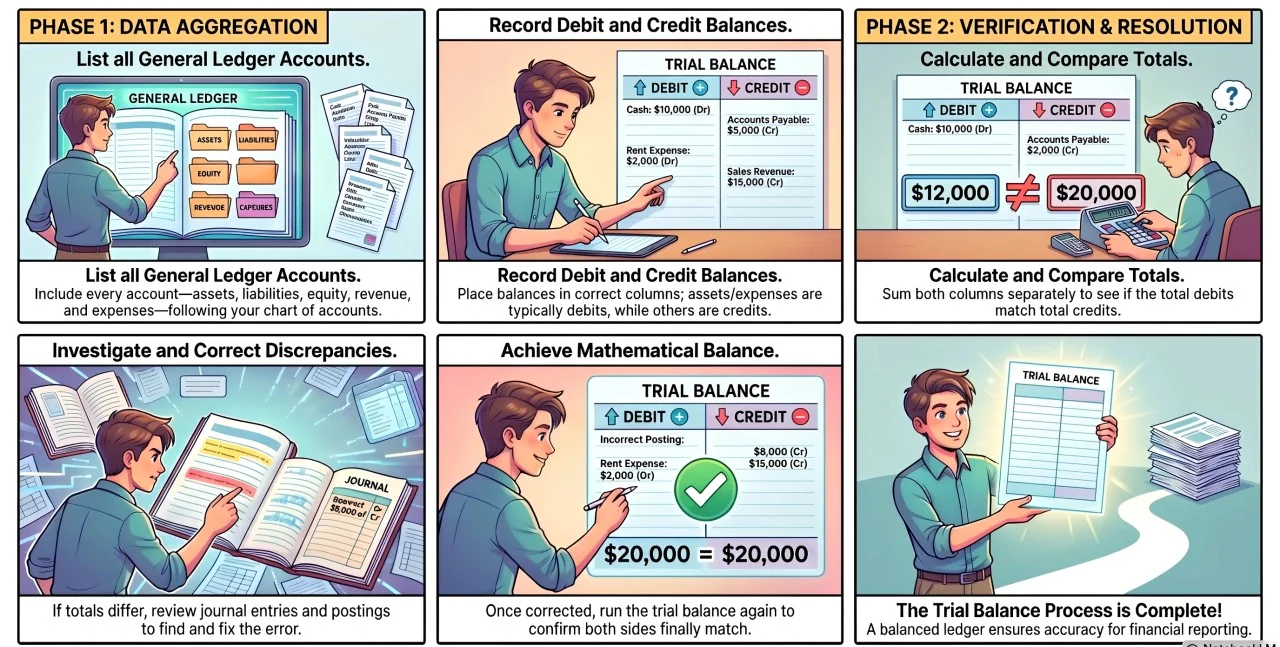
1. List All General Ledger Accounts
Start by listing every account from the general ledger, including assets, liabilities, equity, revenue, and expenses. The list should follow the business's chart of accounts.2. Record Debit and Credit Balances
Place each account balance in the correct column. Assets and expenses usually go under debit, while liabilities, equity, and revenue usually go under credit.3. Calculate Total Debits and Credits
Add all debit balances and all credit balances separately. These totals show whether both sides of the ledger are equal.4. Check Whether Both Sides Balance
If total debits and credits match, the trial balance is mathematically balanced. If they do not match, the finance team needs to review the ledger before preparing reports.5. Investigate and Correct Errors
Check journal entries, account postings, and recent adjustments to find the source of the difference. Once corrected, run the trial balance again to confirm both sides match.Trial Balance vs Balance Sheet
A trial balance and balance sheet both use accounting data, but they are prepared for different purposes.Common Trial Balance Errors to Check
If a trial balance does not balance, the finance team should review the ledger for common posting and data entry errors.1. Missing Transactions
A transaction may have been recorded on one side of the ledger but not the other. This can cause total debits and credits to differ.2. Wrong Debit or Credit Column
An amount may be posted to the debit column instead of the credit column, or the other way around. This often creates a clear difference between both totals.3. Duplicate Entries
A transaction entered twice can distort account balances. Reviewing journal references, dates, and source documents can help identify duplicate postings.4. Incorrect Account Balance
An account may show the wrong amount because of a typing error, incorrect invoice value, or missed adjustment. Comparing balances against source documents can help confirm accuracy.5. Unposted Journal Entries
Some journal entries may still be saved as drafts. If they are not posted, the ledger may not reflect all transactions for the period.Trial Balance in Accounting Software
Centralised finance operations allow accounting software to generate this report automatically by pulling balances from the general ledger. This reduces manual data transfer and makes account review easier for finance teams.
It also keeps transaction records, journal entries, and ledger balances connected in one system. This supports reconciliation, reporting accuracy, and smoother period-end review.
Reviewing a trial balance is easier when unusual balances can be checked without searching through separate files. The banner below shows how Hashy OS helps finance teams find supporting records faster.
Reviewing a trial balance is easier when unusual figures can be traced without searching through separate files. The banner below shows how Hashy OS helps finance teams find supporting records faster.






1. Benefits of Using Accounting Software for Trial Balance Reporting
- Faster report generation from updated ledger data
- Reduced manual errors from spreadsheet handling
- Easier reconciliation across accounts and periods
- Better audit readiness through clearer records
- Improved financial visibility across the business
2. How ERP Supports Multi-Entity Trial Balance Review
An ERP system helps businesses review balances across branches, departments, or entities. Finance teams can prepare separate or consolidated views without managing multiple spreadsheet files.3. When to Move Beyond Spreadsheets
Spreadsheets can work for small teams, but they become harder to manage as reporting needs grow. Businesses can use accounting software to keep the process faster and more reliable.Conclusion
A trial balance gives finance teams a clear checkpoint before financial statements are prepared. It confirms whether debit and credit totals agree while highlighting balances that need further review.
Accounting software can generate the report directly from the general ledger, reducing manual work and keeping reviews traceable. Book a free consultation to assess the right accounting setup for your business.

FAQ
A trial balance is usually prepared by accountants, bookkeepers, or finance teams as part of the accounting review and reporting process.
Many businesses review a trial balance monthly, quarterly, or at the end of each accounting period before financial statements are prepared.
After a trial balance is completed, finance teams usually review the balances, record any required adjustments, and use the final figures to prepare financial statements.
Yes. Small businesses can use a trial balance to check whether ledger balances are accurate and ready for reporting, even if their account structure is simple.
No. A ledger report shows detailed account activity, while a trial balance summarises the ending debit and credit balances from those accounts.