




An accounting system is the combination of processes, controls, and software used to record, classify, and report a business’s financial transactions. In Australia, it should support GST and BAS reporting, audit trails, and STP and Payday Super obligations.
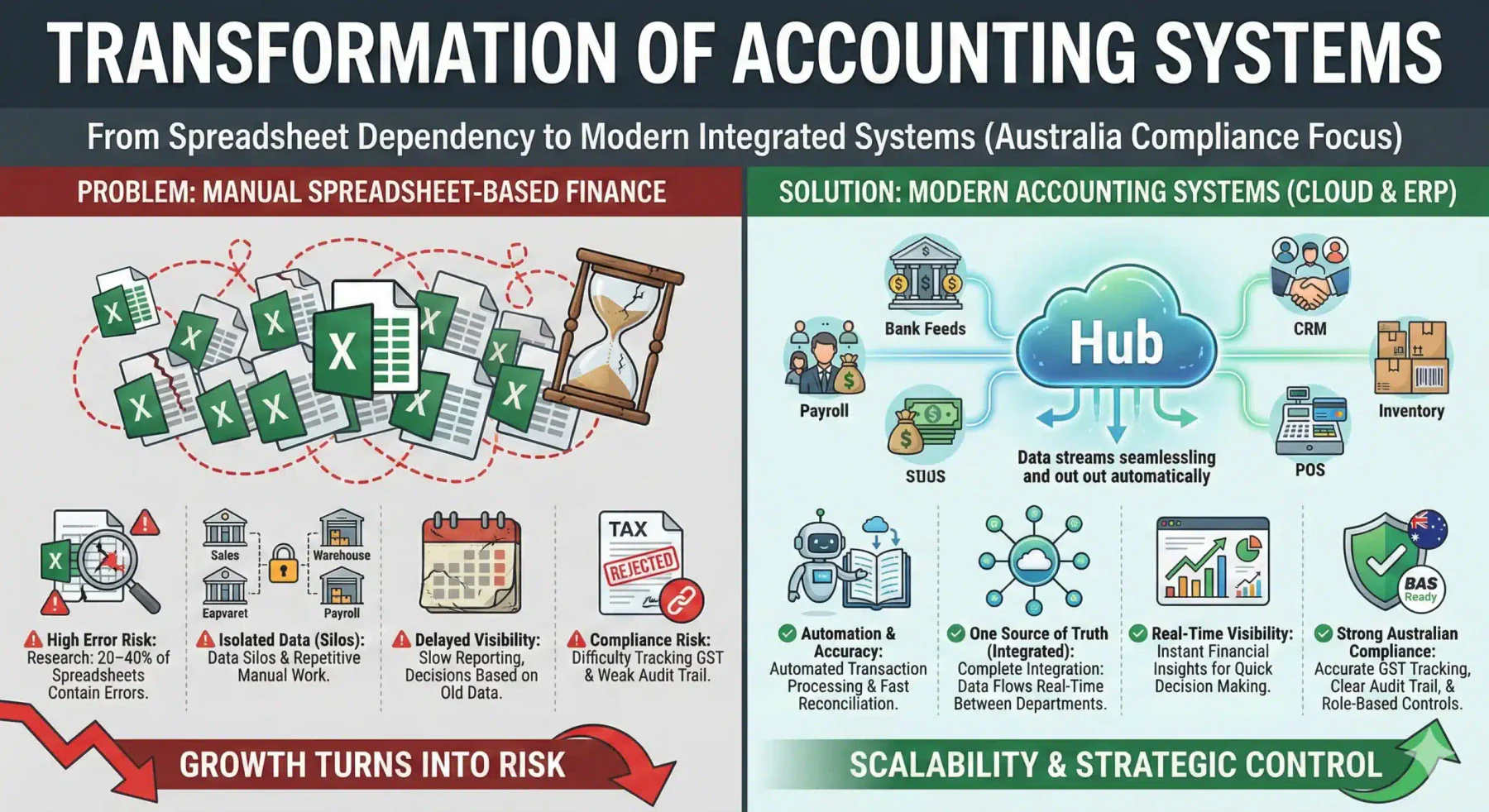
When finance in Australian businesses still runs on spreadsheets, growth quietly turns into risk. Research has found that 20–40% of spreadsheets contain errors, and those mistakes often show up only after cash, tax, or reporting decisions have already been made.
A modern accounting system reduces this risk by centralising transactions, automating reporting, and giving decision-makers real-time financial visibility, which is why many organisations adopt a business financial solution to keep financial data structured and decision-ready.
Key Takeaways
An accounting system records, classifies, and reports transactions so financial data stays accurate and decision-ready.
Strong accounting helps protect cash flow, support compliance, and give leaders clearer visibility for budgeting and planning.
Reliable accounting solutions depend on accurate GST treatment, clear approvals, audit trails, and reporting that scales with business growth.
What is an Accounting System?
An accounting system is a structured set of processes and software solutions that records, classifies, and summarises financial transactions to produce accurate, timely financial reports.
It uses double-entry bookkeeping to keep accounts balanced, then turns day-to-day activity into clear visibility over profit, cash flow, and financial position across the business.
An accounting system is broader than accounting software. The system includes financial policies, approval controls, reporting procedures, and the software used to run them. Meanwhile, Australia's top accounting software is the technology component in Australia within that wider system.
In Australia, a compliant accounting system must also handle Single Touch Payroll Phase 2 reporting, the Payday Super reforms since 1 July 2026, and Fair Work record-keeping obligations that every employer must meet.
Single Entry Systems vs Double Entry Systems
Accounting systems follow one of two fundamental recording methods: single entry and double entry. The choice shapes how accurate, auditable, and scalable your financial records become over time.
Single entry is the simpler option, suited to very small businesses and sole traders with low transaction volumes and minimal reporting complexity.
Double entry is the standard for most commercial operations, because it captures each transaction twice and balances every debit against a corresponding credit.
A single entry system records each transaction once, usually as a simple income or expense line in a journal or cashbook, mirroring the way a personal chequebook works.
The approach is fast and cheap to run, but it lacks the structural checks to catch errors, so discrepancies can accumulate quietly until reconciliation forces a review.
A double entry system records every transaction in two accounts at once, one as a debit and the other as a credit, keeping the accounting equation in balance at all times.
This structure makes errors easier to detect, supports audit-ready reporting, and underpins Australian Accounting Standards, which is why most established businesses rely on it.
| Aspect | Single Entry | Double Entry |
| Recording method | Each transaction recorded once | Each transaction recorded twice, as a debit and credit |
| Best for | Sole traders and micro-businesses | SMEs, mid-market, and enterprise |
| Error detection | Limited, often found late | Strong, errors surface through unbalanced entries |
| Compliance readiness | Basic, not suited to GST or BAS reporting | Full, aligned with Australian Accounting Standards |
| Reporting depth | Cash in and cash out summaries | Full profit and loss, balance sheet, and cash flow |
Types of Accounting Systems

There are four main types of accounting systems, namely manual, computerised, cloud-based, and ERP systems. Each supports different levels of operational complexity and business growth, making the right choice essential for reporting accuracy, internal controls, scalability, and long-term efficiency.
1. Manual accounting system
A manual accounting system records transactions by hand in physical ledgers using paper invoices and receipts as source documents. It is simple to understand and inexpensive to set up, which makes it viable for very small businesses with minimal monthly transactions.
However, it relies entirely on human accuracy, so errors in posting, calculation, or duplication are common and difficult to detect early. As transaction volume grows, manual processes slow down reporting cycles, limit visibility, and create compliance risks.
2. Computerised accounting system
A computerised accounting system uses installed accounting software to automate journal entries, calculations, and financial reporting. It improves speed and consistency by reducing manual data entry and generating structured reports such as profit and loss statements or balance sheets instantly.
Most business accounting software in this category includes modules for invoicing, accounts payable, accounts receivable, payroll, and basic inventory tracking. While more efficient than manual systems, standalone desktop tools may still create silos if they do not integrate smoothly with other operational systems.
3. Cloud-based accounting system
Cloud accounting, supported by modern cloud accounting software, stores financial data on secure remote servers that users access via the internet rather than local hardware. This structure enables real-time collaboration between finance teams, managers, and external accountants without sending files back and forth.
Modern cloud accounting software often connects directly to bank feeds, payment gateways, and other applications, reducing reconciliation time and improving cash flow visibility. It is especially effective for growing businesses with multiple locations or remote teams that need centralised, live financial data.
4. Enterprise Resource Planning (ERP) System
An ERP system integrates accounting, procurement, inventory, project management, HR, and other operational workflows into a single, unified platform. Instead of financial data sitting in isolation, every transaction updates across departments in real time, which strengthens reporting accuracy and internal controls.
This type of accounting system supports multi-entity consolidation, advanced costing methods, and complex approval workflows required by medium to large organisations. Although implementation requires more planning and investment, ERP delivers long-term scalability and strategic visibility that standalone systems cannot provide.
Because business complexity and reporting needs vary widely, many organisations evaluate modern business accounting software before selecting a platform that aligns with their operational scale and compliance requirements.
| Type of Accounting System | Best For | Advantages | Limitations |
| Manual Accounting System | Micro-businesses with very low transaction volume | ✓ Low setup cost ✓ Easy to understand for simple recordkeeping |
× High risk of manual errors × Slow reporting and poor scalability |
| Computerised Accounting System | Small to medium businesses needing faster processing | ✓ Automates calculations and reports ✓ Improves speed and consistency |
× May create data silos × Limited if not well integrated with other systems |
| Cloud-Based Accounting System | Growing businesses with multiple users or locations | ✓ Real-time access from anywhere ✓ Better collaboration and easier integrations |
× Depends on internet access × Advanced needs may still require broader systems |
| ERP System | Medium to large businesses with complex operations | ✓ Unifies finance and operations in one platform ✓ Strong scalability, controls, and multi-entity reporting |
× Higher implementation effort × Requires more planning and investment upfront |
Cash vs Accrual Accounting: Which Method Does Your Accounting System Use?
The accounting method your system uses determines when revenue and expenses appear in financial statements, and that timing shapes reported profit, tax obligations, and cash flow visibility.
Cash and accrual are the two recognised methods, and most Australian accounting software supports both, though the right choice depends on business size, industry, and ATO reporting requirements.
1. Cash accounting
Cash accounting records revenue when payment is received and expenses when bills are paid, giving a direct view of how money moves through the business in real time.
It is straightforward to run and often chosen by sole traders, contractors, and small businesses with GST turnover below $10 million, where ATO rules allow cash-basis reporting.
2. Accrual accounting
Accrual accounting records revenue when earned and expenses when incurred, regardless of when cash changes hands, so statements reflect economic activity rather than bank balances.
It is the standard under Australian Accounting Standards and required for most medium and large businesses, since it gives a more accurate picture of profitability and long-term obligations.
| Aspect | Cash Accounting | Accrual Accounting |
| Revenue timing | When payment is received | When revenue is earned |
| Expense timing | When the bill is paid | When the expense is incurred |
| Best for | Sole traders and small businesses under $10 million turnover | Medium to large businesses and GST reporters above $10 million |
| Reporting complexity | Simple, mirrors cash flow | More complex, matches economic reality |
| ATO and standards fit | Allowed for GST under the threshold | Required under Australian Accounting Standards |
Key Features of a Modern Accounting System
A modern accounting system is not just a bookkeeping tool, it is a financial control hub that supports accuracy, visibility, and structured decision-making. The right accounting software or cloud accounting solution should reduce manual work, strengthen governance, and provide reliable data that scales with business growth.
- Automated transaction processing: Strong business accounting software captures transactions automatically through bank feeds, invoice matching, or system integrations. This reduces manual entry errors and keeps financial data consistent across the organisation.
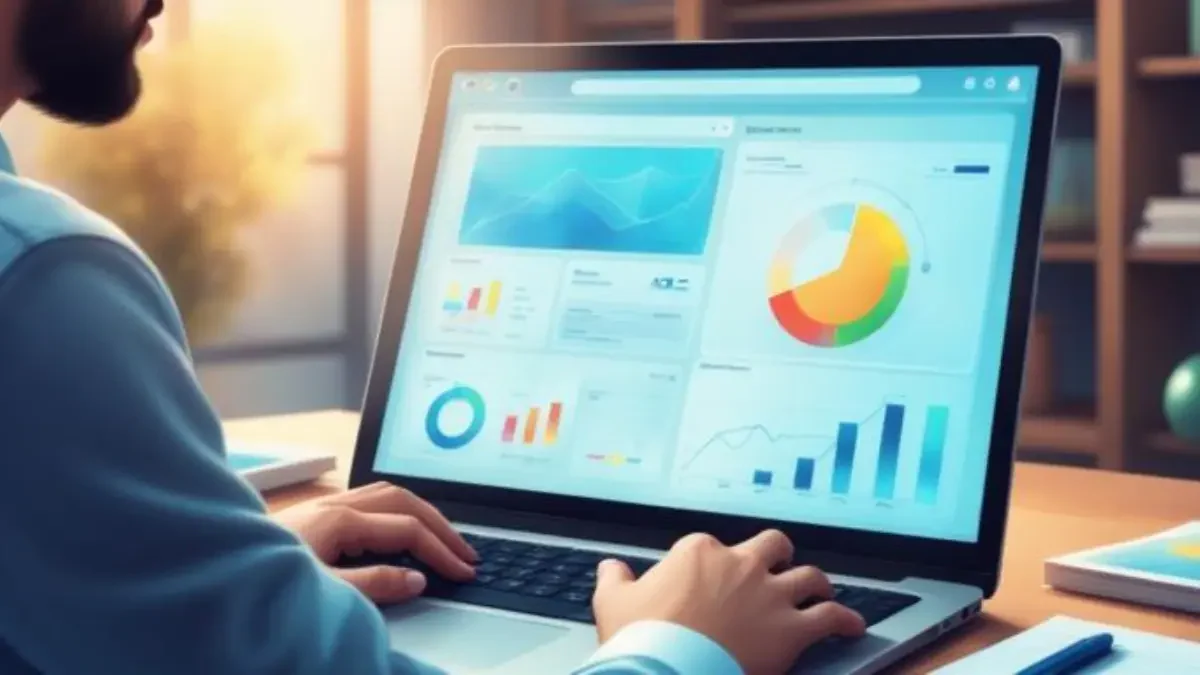
- Real-time financial reporting: Modern systems provide dashboards and live reports that reflect current cash flow, receivables, payables, and profitability. With cloud accounting systems, decision-makers can review updated figures without waiting for month-end consolidation.
- Integrated AP (Accounts Payable) and accounts receivable: An effective accounting system connects AP and AR workflows directly to the general ledger, ensuring accurate financial tracking. This integration supports faster invoice processing, automated reminders, and improved cash-flow discipline.
- Multi-entity and multi-currency support: For growing organisations, cloud accounting software should handle multiple entities and currencies within a unified reporting structure. This enables consolidated reporting and clearer financial visibility across subsidiaries or regions.
- Role-based access and audit trail: Modern accounting software enforces governance through role-based permissions and detailed activity logs. These controls protect sensitive data while ensuring every financial change remains traceable.
- Integration capabilities: A scalable accounting system integrates with payroll, procurement, POS, CRM, and banking platforms to avoid data silos. Seamless integrations reduce reconciliation work and keep operational and financial data aligned.
- Compliance and tax management: Reliable business accounting software supports accurate tax coding, structured reporting, and exportable compliance reports. This helps finance teams prepare regulatory submissions efficiently while maintaining internal control.
- Scalability and performance: Modern cloud accounting platforms and accounting software solutions are built to handle higher transaction volumes without slowing down performance. As the business grows, the system adapts without requiring disruptive migrations.
How an Accounting System Works for an Australian SME
For an Australian SME, an accounting system connects daily financial activity in one place. Sales invoices, supplier bills, payroll, bank transactions, and approvals can flow through the same system.
When a transaction is created, the system records it against the relevant customer, supplier, account, and tax code. Once approved, the data flows into the general ledger and financial reports.
HashMicro Accounting supports this workflow by keeping financial transactions, reports, sales invoices, and inventory costs connected.
This gives SMEs cleaner financial data and clearer visibility into cash flow, costs, and overall business performance.
Cloud Accounting vs Traditional Accounting: Which Is Right for You?
This decision comes down to how you want your accounting system to run, who maintains it, and how quickly your finance data needs to move across teams and tools. Both models can work well, but the best fit depends on governance requirements, IT capacity, integration needs, and the complexity of growth. Use the two options below as a practical decision guide.
Cloud Accounting
Cloud accounting uses cloud accounting software hosted on remote servers and accessed through the internet, so teams can work from anywhere with consistent, live data. Providers typically manage updates, backups, and security controls, which reduces internal IT workload and keeps the accounting software current.
This model suits organisations that depend on integrations, bank feeds, payroll, procurement, POS, or CRM, as connectivity reduces manual reconciliations and improves financial visibility. Cloud is often the stronger choice when your business accounting software must support multiple locations, fast decision cycles, and scalable reporting as the business grows.
This makes cloud accounting a preferred model for modern finance teams.
Traditional Accounting (On-Premise)
Traditional systems run your accounting system on company-owned servers and are maintained by your internal IT team, which gives you direct control over infrastructure and custom environments. This approach can fit organisations with strict internal policies, legacy integrations that work best on local networks, or requirements that favour keeping systems fully in-house.
However, the trade-off is that responsibility for updates, patches, backups, disaster recovery, and security monitoring sits with your team, not the vendor. Traditional accounting software can still scale, but expansion typically requires more planning and investment, especially when you add entities, users, or integrations.
Practical Steps to Move to Cloud Accounting
Switching from manual records or desktop software to cloud accounting works best with a clear plan. A structured approach cuts disruption, protects data integrity, and gets your team productive faster.
- Define your requirements. Map your transaction volume, reporting needs, compliance obligations, and integration points. Choose a platform that handles GST reporting and connects with your existing payroll or inventory tools.
- Prepare and clean your data. Export your chart of accounts, opening balances, customer and supplier records, and historical transactions. Archive inactive accounts and verify opening balances match your last bank reconciliation.
- Migrate and connect. Import your data, connect bank feeds, and assign user roles before switching over. Run both systems in parallel for at least one full period to confirm balances match before decommissioning the old one.
- Train your team. Walk staff through new workflows before go-live and identify a power user in each department. Early training reduces errors in the first month and cuts reliance on vendor support.
- Reconcile and close. Run a final reconciliation and confirm your BAS and GST figures are consistent across both systems. Once matched, formally close the old system and archive records as required under Australian tax law.
What Your Accounting System Must Handle Regarding Australian Compliance
Australian compliance goes beyond recording transactions, it requires accurate GST treatment, BAS-ready reporting, and strong internal controls that hold up under review. Strong accounting software ensures compliance processes remain consistent and auditable.
- Single Touch Payroll Phase 2: If your system includes payroll, it should support STP Phase 2 reporting so payroll and tax data can be sent correctly to the ATO. It should also help teams complete year-end finalisation more accurately.
- Superannuation and SuperStream: Your system should support SuperStream so super data and payments can be sent electronically in the required format. It should also be ready for Payday Super, which is effective from 1 July 2026.
- GST tracking and BAS readiness: Your accounting software should apply GST codes correctly at the transaction level and produce clear, structured summaries for BAS preparation. Finance teams must be able to export detailed GST reports, reconciliation data, and supporting transaction listings without relying on manual spreadsheet adjustments.
- SBR (Standard Business Reporting): SBR is the government-mandated framework that allows compliant accounting software to exchange financial reports, lodgements, and declarations directly with the ATO and other agencies without using online portals.
Choosing a platform on the ATO’s digital service provider register ensures your system can submit BAS, STP, and TPAR through SBR-enabled channels, reducing manual intervention and improving lodgement reliability. - Audit trail and role-based access: A compliant accounting system maintains a complete audit trail that records who created, edited, or approved each transaction. Role-based permissions then reinforce governance by restricting sensitive actions, such as posting journals or modifying tax settings, to authorised users only.
- Multi-entity consolidation for group companies: For businesses operating across multiple entities, business accounting software should support consolidated reporting and a consistent chart of accounts. Built-in intercompany visibility reduces reconciliation gaps and shortens the group-level reporting cycle.
- Document retention and approval controls: Every financial entry should link to its supporting documents, such as invoices, contracts, or purchase orders, stored directly within the system. With structured approval workflows inside cloud accounting software, organisations strengthen internal control while keeping compliance processes efficient and traceable.
ERP Benefits When You Outgrow Standalone Business Accounting Software
An ERP is an integrated accounting system that connects finance with operational workflows, such as procurement, inventory, projects, and HR, on a single platform. When standalone business accounting software creates silos, an ERP helps teams run on a single set of numbers with greater control and faster decision cycles.
- One source of truth across departments: ERP links operational activity directly to your accounting software, so finance reports reflect what is actually happening in purchasing, inventory, and project delivery. This reduces reconciliation work and prevents teams from operating on conflicting spreadsheets.
- Stronger controls and approval workflows: ERP embeds approvals and segregation of duties into the workflow, so spending and postings follow policy by default. This improves governance compared to standalone tools, where approvals often live in email threads and are hard to audit.
- Deeper costing and profitability visibility: ERP supports more granular costing, by project, site, department, product line, or customer, so leaders can see true profitability, not just top-line revenue. This level of detail helps finance teams explain margin drivers and tighten budget accountability.
- Multi-entity and intercompany accounting: ERP makes multi-entity reporting and intercompany transactions easier to manage within a single structure, improving consolidation accuracy. Instead of manual eliminations, finance teams can run cleaner group reporting with fewer close-cycle bottlenecks.
- Operational automation that reduces rework: Operational automation reduces rework by automating workflows like purchase requests, POs, goods receipts, and supplier bills. Approved purchase orders automatically update committed costs, while other functions, such as payroll, also sync directly with the general ledger without manual journal entries. By connecting procurement, inventory, HR, and finance in real time, ERP systems reduce duplicate work, minimize errors, and speed up processing for high-volume teams
- Better integration without patchwork tools: Standalone systems often rely on many add-ons, creating fragile integrations and inconsistent data definitions. An ERP reduces dependence on patchwork stacks by keeping core workflows on a single platform, while still supporting APIs when needed.
- Scalable reporting and real-time visibility: When ERP is delivered through cloud accounting or cloud accounting software models, teams can access consistent reporting with controlled permissions across locations. This supports faster decision-making because reporting updates as transactions happen, not after manual consolidation.
What a “Good” Accounting System Looks Like in Daily Operations
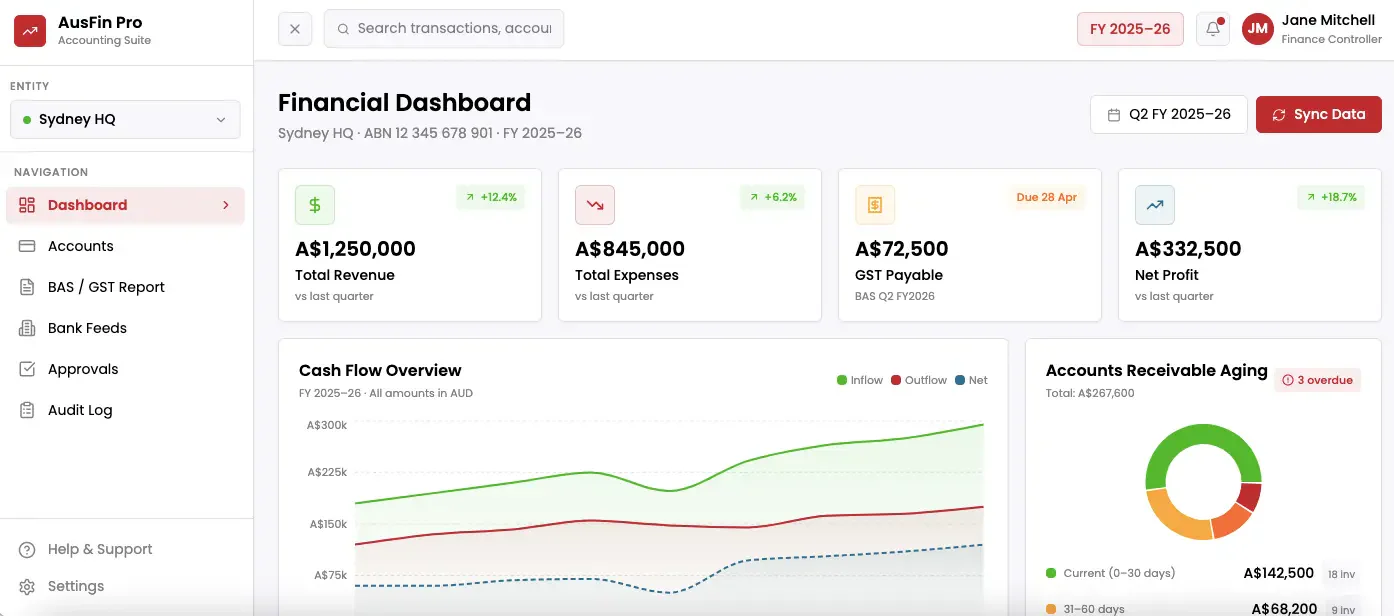
A “good” accounting system feels invisible in daily work because it removes small frictions that quietly drain time, rekeying invoices, chasing approvals, and fixing mismatched numbers. Instead of waiting for month-end to discover issues, teams see clean, current data that supports decisions while keeping controls in place.
In practice, strong business accounting software connects finance with operational reality, so invoicing, payables, inventory, and projects feed the same source of truth. With cloud accounting software, finance leaders can review performance across entities, locations, and departments without stitching reports together from spreadsheets.
At a larger scale, the right setup also supports governance, clear approvals, audit trails, and role-based access, without slowing the team down. For organisations that need deeper integration beyond standalone accounting software, the HashMicro Accounting solution can support unified workflows across finance and operational modules while maintaining consistent reporting.
Key features to expect in daily operations:
- Real-time general ledger with automated journal entries
- Accounts payable and receivable with approval workflows
- Invoice and billing automation with configurable templates
- Bank feeds and faster reconciliation with matching rules
- Inventory and COGS tracking that updates financials automatically
- Multi-entity and intercompany consolidation with configurable dimensions
- Project/job costing with profitability by project, client, or department
- Budgeting, forecasting, and dashboard reporting for leadership
- Audit trail, role-based access, and segregation of duties controls
- API integrations with payroll, POS, CRM, and payment gateways






How to Choose the Right Accounting System for Your Australian Business
Choosing the right accounting system means selecting a setup that matches your transaction volume, control requirements, and reporting expectations—while keeping GST/BAS processes clean and scalable. The best accounting software solution is the one your team can run consistently, with minimal manual work and strong governance built in.
Accounting system selection checklist:
- Transaction volume and workflow complexity are mapped.
- GST treatment and BAS-ready reports are supported.
- Role-based access, approval controls, and audit trails are available.
- Cloud or on-premise fit matches your governance and IT capacity.
- Reports can be filtered by entity, department, site, project, or product line.
- Banking, payroll, POS, procurement, CRM, and inventory integrations are reviewed.
- Subscription, implementation, training, support, add-ons, and scaling costs are clear.
Each point below explains what to check and why it matters when you compare options.
- Start with transaction volume and workflow complexity: Estimate how many invoices, bills, bank transactions, and adjustments your team processes each month, then map the workflows behind them. When complexity includes inventory, projects, or multi-step approvals, basic business accounting software can become a bottleneck quickly.
- Check Australian compliance fit early: Confirm the system supports GST treatment and produces BAS-ready reports that are easy to review and export for advisers or internal controls. A compliant accounting system reduces end-of-period clean-up because tax coding and reporting structure are built into daily work.
- Validate controls: Choose accounting software with role-based access so tasks like posting journals, changing tax codes, and approving payments sit with the right people. A strong audit trail should show who changed what and when, which protects governance as the team grows.
- Decide on cloud vs on-prem based on Governance and IT capacity: If you want faster rollout, easier collaboration, and fewer infrastructure responsibilities, cloud accounting is usually the most practical choice. If your organisation requires tight in-house infrastructure control and can support patching, backups, and security internally, traditional setups may fit better than cloud accounting software.
- Prioritise reporting that answers leadership questions: Look beyond standard financial statements and confirm you can report by entity, department, site, project, or product line as needed. A modern accounting system should turn operational activity into decision-ready reporting without heavy spreadsheet work.
- Review integration needs before you commit: List the systems that must connect, banking, payroll, POS, procurement, CRM, and inventory, and test how reliably data moves between them. The best business accounting software reduces reconciliation workload by keeping integrations stable and definitions consistent.
- Plan for scale and total cost of ownership: Compare not only subscription price, but also implementation effort, training, support, add-ons, and the cost of switching later. An accounting system that scales cleanly often costs less over time because it prevents repeated migrations and manual workarounds.
How AI Is Changing Modern Accounting Systems
Accounting software is moving beyond automation into real-time collaboration, where finance teams work alongside an AI assistant that understands live financial data rather than static spreadsheets.
- Real-time financial queries: An AI coworker connects directly to the general ledger, invoicing, and payroll data, so finance teams can ask about cash position, outstanding invoices, or profit margins and get instant answers instead of running manual reports.
- Automated month-end closing: AI can consolidate transactions and generate profit and loss, balance sheet, and cash flow reports automatically, cutting the time it takes to close the books each month.
- Anomaly detection: AI continuously reviews transactions and flags unusual entries, duplicate payments, or unexpected variances before they distort financial statements.
- Natural language reporting: Instead of building custom reports manually, finance teams can ask a conversational assistant for a specific breakdown by project, department, or entity, and get results without spreadsheet formulas.
- Faster compliance checks: AI-supported systems can help verify GST coding and BAS readiness, flagging potential compliance gaps before lodgement and reducing end-of-period clean-up.
As accounting systems take on more of this AI-assisted work, finance teams spend less time reconciling numbers and more time acting on them.
Conclusion
A modern accounting system helps businesses move beyond basic record-keeping by turning daily transactions into reliable, decision-ready financial insight. With the right setup, teams reduce manual rework, strengthen controls, and gain clearer visibility over cash flow, compliance, and performance.
Cloud-based platforms add flexibility and speed by enabling real-time collaboration, secure access controls, and seamless integrations with tools such as payroll, POS, and inventory systems. When paired with automation and AI features, finance teams can process invoices faster, spot anomalies earlier, and forecast with more confidence.
If you want a clearer recommendation based on your transaction volume, reporting needs, and compliance priorities, you can free consultation with our expert to map the right accounting system approach and rollout plan for your finance operations.

Frequently Asked Questions
Bookkeeping focuses on recording daily transactions such as receipts, invoices, and payments. An accounting system goes further by automating posting, reporting, controls, and compliance so leaders can rely on structured financial insight.
Yes, reputable cloud accounting platforms use controls such as encryption, multi-factor authentication, access permissions, and regular backups. Security still depends on strong internal governance, especially role-based access and approval workflows.
Upgrade when spreadsheets start creating rework, including frequent errors, slow month-end close, limited reporting, or poor visibility over cash flow and receivables. Higher transaction volume, inventory tracking, or multi-entity reporting are also clear signs you need accounting software.
Compliant accounting software applies GST codes to transactions, produces BAS-ready reports, and helps finance teams review GST data before lodgement. SBR-enabled platforms may also support direct reporting to the ATO through approved channels.
From 1 July 2026, Australian employers need to pay superannuation at the same time as wages. A ready accounting system should calculate super per pay run, support SuperStream payments, and help reconcile contribution records clearly.
The four main types of accounting systems are manual, computerised, cloud-based, and ERP systems. Manual systems suit very small operations, while cloud and ERP systems are better for businesses that need real-time reporting, controls, integrations, and scalability.
An accounting system is used to record transactions, manage invoices and bills, reconcile bank activity, track tax obligations, process payroll data, and produce financial reports. It helps business owners and finance teams understand cash flow, profit, expenses, and financial position.
Australian businesses commonly use computerised, cloud-based, or ERP accounting systems that support GST, BAS reporting, STP Phase 2, SuperStream, audit trails, and ATO record-keeping. Larger businesses often use ERP-based accounting to connect finance with inventory, procurement, payroll, and sales.
For a small business with simple finances, cloud accounting software is usually the practical choice because it is easier to access, update, and share with accountants. If the business also manages inventory, approvals, payroll, or multiple locations, an ERP-connected accounting system is often a better long-term fit.
Accounting software costs vary depending on users, modules, integrations, support, and implementation needs. Simple bookkeeping tools may use fixed monthly plans, while ERP accounting systems usually require a tailored quote based on business size and workflow complexity.