






Australian retailers face rising costs, changing customer expectations, and tighter margins. As a result, many businesses are adopting AI to improve efficiency and stay competitive.
AI is now used by retailers of all sizes to forecast demand, manage inventory, personalise customer experiences, and automate everyday tasks. It has become more accessible and practical than ever.
This guide explains what AI in retail is, how it works, its key benefits, common use cases, and how Australian retailers can implement it successfully.
Key Takeaways
Learn how AI in retail helps businesses automate operations, improve decision-making, and enhance customer experiences across sales, inventory, and customer service.
Explore the most common AI applications in retail, including demand forecasting, personalised recommendations, dynamic pricing, and workforce scheduling.
Discover how AI helps retailers reduce costs, optimise inventory, improve customer experiences, and make smarter business decisions.
See how HashMicro and Hashy OS help Australian retailers adopt AI through integrated ERP, POS, inventory, procurement, and real-time analytics.
What Is AI in Retail?
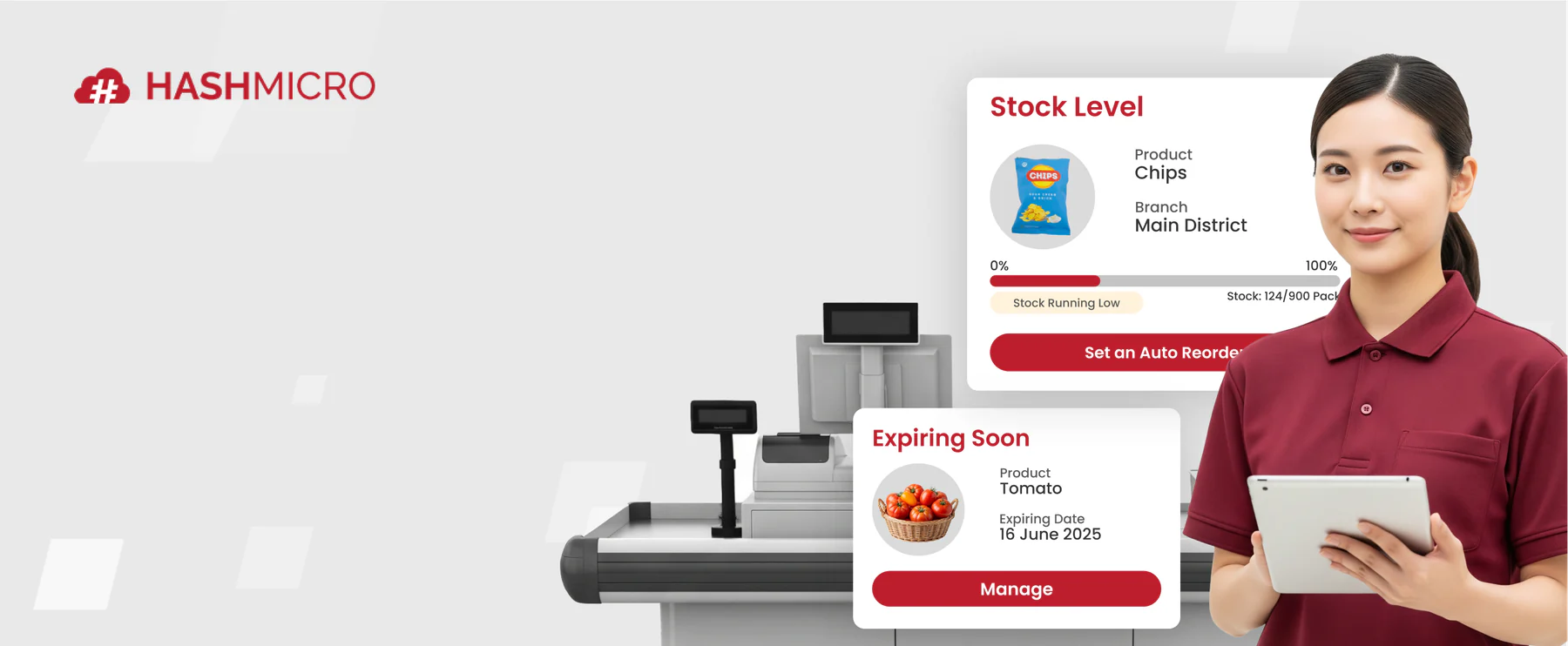
AI in retail is the use of artificial intelligence to automate tasks, analyse data, and improve business decisions. It supports areas such as inventory, sales, marketing, customer service, and supply chain management.
By identifying patterns and predicting demand, AI helps retailers make faster, more informed decisions. It works alongside employees to improve accuracy and efficiency, rather than replace them.
For Australian retailers, AI can reduce costs, improve customer experiences, and optimise daily operations. It is becoming an important tool for businesses looking to grow and remain competitive.
8 Ways AI Is Used in Retail
AI supports many areas of retail, from inventory planning to customer service. Here are some of the most common ways Australian retailers are using AI to improve efficiency and customer experiences.
1. Demand Forecasting and Inventory Management
AI analyses sales history, seasonal trends, and customer demand to predict future inventory needs. This helps retailers reduce stock shortages, avoid overstocking, and keep the right products available across stores.
2. Personalised Product Recommendations
AI recommends products based on customer browsing, purchase history, and shopping behaviour. Personalised suggestions can increase sales, improve customer engagement, and encourage repeat purchases.
3. Dynamic Pricing
AI adjusts prices based on demand, competitor pricing, inventory levels, and market conditions. This helps retailers stay competitive while protecting profit margins.
4. AI-Powered POS and Checkout Automation
AI speeds up checkout in retail POS systems for faster transactions, adding self-service technology, fraud detection, and real-time inventory updates. This improves customer experiences while reducing manual work for staff.
5. Customer Service Chatbots and Virtual Assistants
AI chatbots answer common customer questions, provide order updates, and assist with returns at any time of day. This reduces response times and allows support teams to focus on more complex enquiries.
6. Supply Chain and Vendor Optimisation
AI monitors supplier performance, predicts delivery delays, and helps businesses manage inventory more effectively. This improves supply chain planning and reduces the risk of stock disruptions.
7. Loss Prevention and Fraud Detection
AI identifies unusual transactions, suspicious behaviour, and potential fraud in both physical and online stores. This helps retailers reduce losses while improving security.
8. Workforce and Shift Scheduling
AI predicts customer traffic and recommends staffing levels based on demand. This helps retailers create more efficient schedules, reduce labour costs, and maintain good customer service."AI delivers the greatest value when it helps retailers make faster, smarter decisions using real-time data across the business."
Key Benefits of AI for Australian Retailers
AI can help retailers improve efficiency, reduce costs, and deliver better customer experiences. Here are some of the key benefits businesses can expect from adopting AI.
- Improve profit margins: AI optimises pricing, demand forecasting, and inventory management to reduce excess stock, markdowns, and carrying costs.
- Enhance customer experience: Personalised recommendations and targeted promotions help increase customer engagement, conversions, and repeat purchases.
- Increase operational efficiency: AI automates routine tasks such as checkout, customer support, scheduling, and reporting, allowing employees to focus on higher-value work.
- Reduce fraud and shrinkage: AI identifies suspicious transactions and unusual shopping behaviour, strengthening retail loss prevention strategies and minimising theft, fraud, and financial losses.
- Support better decision-making: AI provides real-time insights into sales, inventory, and customer behaviour, enabling faster and more informed business decisions.
As AI technology becomes more accessible, retailers of all sizes can use these capabilities to improve performance, streamline operations, and stay competitive in a rapidly changing market.
Challenges of Adopting AI in Australian Retail
While AI offers many benefits, retailers should also consider the challenges before implementation. Addressing these early can help ensure a smoother and more successful adoption.
- Data quality: AI relies on accurate and consistent data. Outdated or incomplete information can reduce the accuracy of forecasts and recommendations.
- System integration: AI tools need to connect with existing POS, inventory, e-commerce, and accounting systems. Integrating multiple platforms can be complex without a unified solution.
- Implementation costs: Although AI has become more affordable, businesses still need to consider software, setup, training, and ongoing support costs.
- Staff adoption: Employees may need time and training to trust AI-driven recommendations and incorporate them into their daily workflows.
- Privacy and compliance: Retailers must ensure AI systems comply with Australian privacy regulations when handling customer data and analytics.
With the right planning and technology partner, these challenges can be managed effectively, allowing retailers to maximise the long-term value of AI.
How to Start Implementing AI in Your Retail Business
A structured approach can help retailers adopt AI more effectively while reducing implementation risks. Here are five practical steps to get started.
1. Build a Strong Data Foundation
Start by organising your business data. Clean and centralise information from your POS, inventory, and customer systems so AI can deliver accurate insights and recommendations.
2. Identify Your Highest-Priority Use Case
Focus on one area where AI can deliver the greatest value, such as demand forecasting, inventory management, or customer service. Starting small makes it easier to measure results before expanding.
3. Choose Integrated AI Solutions
Select AI tools that work with your existing ERP software for integrated retail management, POS, or e-commerce platform.Integrated solutions reduce manual work, simplify implementation, and improve data consistency.
4. Pilot and Measure Results
Test AI in one store, department, or product category before rolling it out across the business. Track key metrics such as stock availability, sales, or inventory turnover to evaluate its effectiveness.
5. Train Your Team
Provide employees with the training they need to understand and use AI tools confidently. When staff know how AI supports their work, adoption is smoother and businesses achieve better results.
AI in Retail in Australia: Current Trends
AI adoption continues to grow across the Australian retail industry as businesses look for new ways to improve efficiency and customer experiences. Here are some of the key trends shaping retail AI in 2026.
- Embedded AI in ERP and POS systems: More retailers are using AI features built into their retail software for smarter store management, making adoption easier without investing in separate AI tools.
- AI-powered loyalty and CRM: Retailers use AI to personalise promotions, segment customers, predict customer behaviour, and improve loyalty programmes.
- Computer vision in physical stores: AI-powered cameras help monitor shelves, reduce theft, manage queues, and improve in-store operations.
- AI-assisted buying and merchandising: AI analyses sales and inventory data to support product selection, purchasing decisions, and markdown planning. Retailers can also use retail merchandising software to organise product assortments, monitor inventory performance, and improve merchandising decisions.
- Generative AI for marketing and customer service: Retailers use generative AI to create product descriptions, personalise marketing campaigns, and respond to customer enquiries more efficiently.
As AI technology becomes more accessible, these trends are expected to play a larger role in helping Australian retailers improve operations and remain competitive.
How AI Agents Help Retail Businesses Work Smarter
Many retailers collect valuable data across sales, inventory, purchasing, and customer interactions, but turning that information into actionable insights can be challenging. An AI Agent for Retail helps automate routine tasks, analyse business data, and provide real-time recommendations to support faster decision-making.
AI-powered demand forecasting: Predict future demand using sales trends and historical data to reduce stock shortages and overstocking.
Smarter inventory management: Monitor inventory levels and recommend replenishment based on stock availability, supplier lead times, and expected demand.
Real-time retail insights: Generate instant reports and analytics on sales performance, inventory movement, and store operations.
Intelligent workforce support: Recommend staffing schedules based on customer traffic and operational demand to improve productivity and manage labour costs.
As retailers grow, AI becomes more valuable when it works alongside everyday operations. Learn how HashMicro's AI Agent for Retail helps businesses automate workflows, improve visibility, and make faster, data-driven decisions.






Conclusion
AI is becoming an essential tool for Australian retailers looking to improve efficiency, reduce costs, and deliver better customer experiences. From inventory management and demand forecasting to customer service and workforce planning, AI can create measurable value across the business.
The best results come from starting with a strong data foundation, focusing on high-impact use cases, and choosing an integrated platform that supports long-term growth. A practical, step-by-step approach makes AI adoption easier and more effective. If you're exploring AI for your retail business, get a free consultation with our experts anytime.
Our team can help you identify the right AI-powered retail solution based on your business needs and show you how Hashy OS can streamline your operations and accelerate growth.
FAQ
AI is commonly used for demand forecasting, inventory management, personalised recommendations, dynamic pricing, customer service chatbots, POS automation, and workforce scheduling.
Not necessarily. Many ERP, POS, and e-commerce platforms already include AI features, while cloud-based AI tools offer affordable pricing for small and growing retailers.
AI predicts demand, automates stock replenishment, identifies slow-moving inventory, and helps maintain optimal stock levels across multiple locations.
Yes. AI improves staff scheduling, automates routine tasks, and helps businesses allocate employees more efficiently, reducing unnecessary labour costs.
Traditional software follows fixed rules, while AI learns from data and continuously improves its predictions and recommendations over time.