








 Limited to 100 registrants
Businesses use purchase orders and invoices throughout procurement and payment workflows. Although both documents support transactions, they serve different purposes at different stages of the process.
A purchase order is used before goods or services are delivered to authorise and document a purchase request. An invoice is issued after fulfilment to request payment for completed transactions.
Understanding the difference between purchase orders and invoices helps businesses improve procurement control, payment accuracy, and financial record management across daily operations.
Key Takeaways
Learn how purchase orders help businesses control procurement and approve purchases before fulfilment begins.
Understand how invoices support payment collection, financial reporting, and transaction verification.
Explore the main differences between purchase orders and invoices across procurement and payment workflows.
Discover how three-way matching improves payment accuracy and procurement control.

What Is a Purchase Order?
A purchase order (PO) is a formal document issued by a buyer to request goods or services from a supplier. It confirms quantities, pricing, delivery details, and purchasing terms before the transaction begins.
Businesses use purchase orders to approve purchases before company funds are committed. This helps reduce unauthorised spending and improve purchasing visibility.
Supplier order documents like purchase orders create a documented agreement between buyers and suppliers before fulfilment or delivery takes place. Many businesses manage PO workflows through procurement or ERP systems.
What Is an Invoice?
An invoice is a billing document issued by a seller to request payment for goods delivered or services completed. It outlines transaction details such as products, quantities, pricing, taxes, and payment terms.
Businesses use invoices to record accounts receivable and manage payment collection after fulfilment is completed. Buyers also rely on invoices for payment approval, accounting records, and tax reporting purposes.
Invoices are important financial documents within accounts payable and bookkeeping workflows. Accurate invoices help businesses maintain clearer transaction records and reduce payment disputes.
Purchase Order vs Invoice: Key Differences
Purchase orders and invoices support different stages of the purchasing cycle. Businesses use both documents together to improve procurement control and payment accuracy.
1. How they work in the transaction cycle
- A buyer creates a purchase order to approve and confirm a purchase before goods or services are delivered.
- The supplier fulfils the order based on the agreed quantities, pricing, and delivery terms listed in the purchase order.
- After delivery or service completion, the supplier issues an invoice to request payment from the buyer.
2. Purpose, issuer, and timing
The table below highlights the main differences between purchase orders and invoices based on their purpose, issuer, and role within the transaction process.
| Category | Purchase order | Invoice |
|---|---|---|
| Purpose | Authorises and confirms a purchase request | Requests payment after fulfilment |
| Issued by | Buyer | Seller or supplier |
| Issued when | Before delivery or service completion | After delivery or service completion |
| Main function | Supports procurement approval and purchasing control | Supports billing, payment collection, and accounting records |
3. Legal and financial differences
A purchase order acts as a formal purchasing commitment once accepted by the supplier, while an invoice functions mainly as a payment request after fulfilment is completed.
Purchase orders are linked to procurement approvals, while invoices support accounts payable, accounts receivable, and financial reporting workflows.
Key Elements of a Purchase Order
Purchase orders should contain clear transaction details so buyers and suppliers can verify purchasing terms before fulfilment begins.
1. PO number and delivery details
- Unique purchase order number for transaction tracking.
- PO issue date and requested delivery timeline.
- Delivery location and shipping instructions where required.
2. Item descriptions and agreed pricing
- Product or service descriptions with quantities.
- Agreed unit pricing and total purchase value.
- Specifications or project references linked to the order.
3. Payment terms and supplier information
- Supplier business name and contact information.
- Agreed payment terms and billing conditions.
- Purchasing department or authorised buyer details.
4. Types of purchase orders
- Standard purchase orders for one-time purchases.
- Blanket purchase orders for recurring purchases over a period.
- Contract purchase orders for long-term supplier agreements.
Key Elements of an Invoice
Supplier payment requests should contain complete billing and payment information to support.
1. Invoice number and payment due date
- Unique invoice number for payment tracking and record management.
- Invoice issue date and payment due date.
- Reference numbers linked to purchase orders or projects where applicable.
2. Itemised products or services
- Clear descriptions of delivered products or completed services.
- Quantities, unit pricing, and subtotal amounts.
- Additional charges, discounts, or service fees where relevant.
3. Payment instructions and totals
- Total payable amount including taxes or adjustments.
- Accepted payment methods and bank transfer details.
- Payment terms and late payment conditions if applicable.
4. Australian tax invoice requirements
- Supplier ABN and business details for GST reporting.
- GST amount clearly separated from the total invoice value.
- “Tax Invoice” wording required for GST-registered businesses.
How Purchase Orders and Invoices Work Together

Purchase orders and invoices work together to help businesses verify transactions, control purchasing activities, and manage payment approvals more accurately.
1. Three-way matching process
Many businesses use three-way matching to compare the purchase order, supplier invoice, and goods receipt before approving payment. This helps verify that delivered goods or services match the original request.
Three-way matching also improves procurement workflow visibility by linking purchasing decisions directly to delivery verification and payment approvals.
2. Handling mismatched documents
If invoice details differ from the purchase order, businesses may pause payment processing until discrepancies are resolved. Common issues include incorrect quantities, pricing differences, or missing PO references.
Structured approval workflows help finance and procurement teams investigate mismatches before releasing payments.
3. When invoices can be issued without a PO
Some businesses allow invoices without purchase orders for smaller expenses, recurring utilities, emergency purchases, or service-based work. These transactions often follow separate approval workflows.
However, businesses still require supporting documents and payment verification to maintain financial control and audit visibility.
GST and Tax Invoice Compliance
Businesses should maintain accurate purchase and invoice records to support GST reporting, payment verification, and financial compliance processes.
1. When tax invoices are required
GST-registered businesses generally need to issue tax invoices for taxable sales. Buyers also require valid tax invoices to claim input tax credits for eligible business purchases.
2. Required information under ATO rules
A valid Australian tax invoice should include the supplier’s ABN, invoice date, GST amount, business details, and a description of goods or services provided.
Invoices above certain thresholds may also require additional information to satisfy ATO documentation requirements.
3. BAS and record retention obligations
Businesses use invoices and purchase records to support BAS reporting, GST reconciliation, and financial audits. Accurate document management helps reduce reporting errors and compliance risks.
Australian businesses should also retain purchase orders, invoices, and related financial records for the required record-keeping period.
Purchase Orders and Invoices Across Industries
Different industries use purchase orders and invoices to manage procurement approvals, supplier coordination, and payment processing across operational workflows.
1. Construction and trade services
Construction and trade businesses use purchase orders to approve subcontractor work, materials, equipment rentals, and project purchases before work begins. This helps improve project cost visibility and purchasing control.
Invoices are commonly linked to progress claims or project milestones. A solution for streamlined purchasing documentation helps construction businesses match invoices to purchase records accurately and reduce disputes.
2. Retail and wholesale distribution
Retail and wholesale businesses use purchase orders to manage inventory purchases, stock replenishment, and bulk supplier orders across multiple locations. Structured PO workflows also improve purchasing control.
Invoices support payment processing after delivered goods are verified against ordered quantities. Businesses also use invoice records for stock costing and GST reporting.
3. SaaS and professional services
SaaS providers and professional service businesses commonly use invoices for subscriptions, consulting services, recurring billing, or project-based work. Some service transactions may not require formal purchase orders.
Larger businesses may still use purchase orders to approve software subscriptions, consulting projects, or recurring vendor agreements before invoicing occurs.
Common Mistakes with Purchase Orders and Invoices
Poor purchasing and invoicing practices can create payment delays, procurement issues, and compliance risks across business operations.
1. Invoicing before PO approval
Issuing invoices before a purchase order is approved can create disputes during payment verification and procurement reviews. Many businesses require approved purchasing records before processing payments.
2. Missing ABN or tax invoice details
Invoices missing ABN information, GST details, or required tax invoice wording may create compliance and payment processing issues. Incomplete invoices can also delay GST reconciliation and reporting.
3. Failing to match invoices before payment
Processing invoices without comparing them against purchase orders and delivery records increases the risk of duplicate payments, pricing errors, or unauthorised purchases.
4. Poor document record management
Disorganised purchase and invoice records make it harder to track approvals, resolve disputes, and support audits. Centralised document management improves financial visibility.
Best Practices for Managing Purchase Orders and Invoices
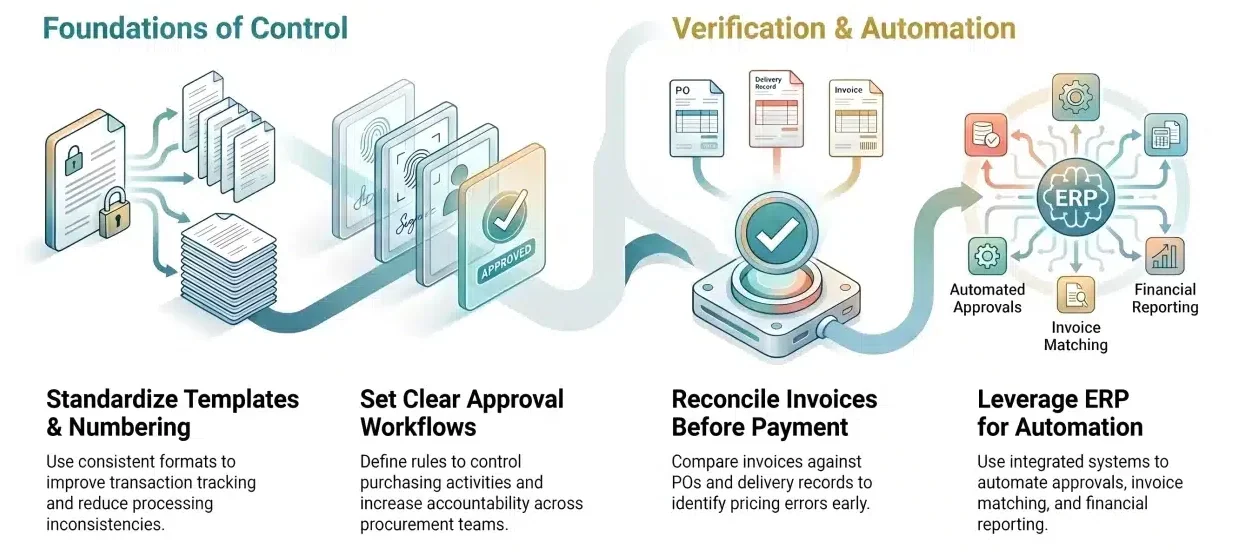
Structured purchasing and invoicing processes help businesses improve payment accuracy, procurement visibility, and financial control across daily operations.
1. Standardise templates and numbering
Businesses should use consistent document formats and numbering structures to improve transaction tracking and reduce processing inconsistencies across departments.
2. Set clear approval workflows
Approval rules help businesses control purchasing activities before invoices are processed or supplier payments are released. Defined workflows also improve accountability across procurement teams.
3. Reconcile invoices before payment
Businesses should compare invoices against purchase orders and delivery records before approving payments. This helps identify pricing differences, missing items, or incorrect charges earlier.
4. Use ERP software for automation
Tools for order management such as ERP and procurement systems help businesses automate purchase approvals, invoice matching, GST tracking, and financial reporting. Integrated systems also improve transaction visibility and reduce manual work.
"Integrated procurement systems help businesses reduce invoice mismatches, improve payment accuracy, and maintain better financial visibility."
Modern Trends in Procurement and Invoice Management
Businesses increasingly use digital procurement and invoicing technologies to improve transaction speed, financial visibility, and operational efficiency.
1. Automated three-way matching
Automated matching tools compare purchase orders, invoices, and delivery records in real time to reduce manual verification work and improve payment accuracy.
2. AI and OCR invoice processing
AI and OCR technologies help businesses capture invoice data automatically from digital documents, reducing manual data entry and processing delays.
3. PEPPOL and e-invoicing
Many businesses are adopting PEPPOL and electronic invoicing systems to standardise invoice exchange, improve transaction security, and support faster document processing.
4. Dynamic discounting and faster payments
Digital procurement platforms allow businesses to negotiate early payment discounts and automate supplier payment scheduling based on agreed transaction terms.
Conclusion
Purchase orders and invoices support different stages of the purchasing cycle, but both are essential for maintaining procurement control, payment accuracy, and financial visibility.
As transaction volumes grow, many businesses rely on automated systems to streamline approvals, invoice matching, GST tracking, and financial reporting workflows.
If you are interested in improving procurement and invoice management processes, you can book a free consultation to explore automation and workflow solutions.
Frequently Asked Question
Yes. Some businesses allow invoicing without a purchase order for smaller operational expenses, recurring services, emergency purchases, or specific service-based transactions. However, supporting documentation and approval processes are still typically required.
A valid Australian tax invoice should include the supplier’s ABN, invoice date, GST amount, business details, item descriptions, and total payable amount. GST-registered businesses must also clearly state ‘Tax Invoice’ on the document.
Three-way matching is a procurement control process that compares the purchase order, supplier invoice, and goods receipt before payment is approved. This helps businesses reduce payment errors, duplicate invoices, and unauthorised purchases.
Australian businesses should generally retain purchase orders, invoices, and supporting financial records for at least five years to meet tax, audit, and compliance requirements.
A purchase order is issued by a buyer to approve and confirm a purchase before goods or services are delivered. A quotation is provided by a supplier to outline proposed pricing, quantities, and terms before the buyer commits to the purchase.