






Production reporting is the process of recording manufacturing activities to reflect actual operational performance. It captures key data such as output, downtime, and efficiency to provide a clear view of production results.
It works by collecting production data during operations and organising it into structured reports. These reports help teams monitor performance, identify issues, and support day-to-day decision making.
Key Takeaways
Understand how production reporting reflects real manufacturing conditions, including output, efficiency, and operational disruptions.
Learn the difference between production schedules and reports to better manage planning accuracy and operational execution.
See why production reporting is essential for tracking efficiency, reducing downtime, and improving overall productivity.
Explore daily, weekly, and performance-based production reports that help monitor operations and support decision making

What Production Reporting Means for Manufacturing Operations
Production reporting is the process of tracking, recording, and visualising manufacturing operations over a given period. It captures data such as output volumes, quality statuses, and material usage to help managers identify inefficiencies and measure performance against production schedules.
Production reporting reflects the actual conditions of manufacturing operations. It shows how production runs in practice, including output levels, efficiency, and operational disruptions.
This visibility helps teams compare targets with real results and identify gaps in performance. It also supports better control over resources and daily operations.
Production Report vs Production Schedule
Production reports and production schedules serve different purposes in manufacturing operations. Understanding the distinction helps teams manage planning and execution more effectively.
A production schedule is a forward-looking plan. It outlines what needs to be produced, when production should occur, and how resources are allocated.
A production report records actual results after production takes place. It captures output, downtime, and any deviations from the original plan.
Comparing both allows teams to identify gaps between expected and actual performance. This helps improve planning accuracy and operational control.
Why Production Reporting Matters for Operational Performance
Production reporting plays a key role in maintaining operational control and performance consistency. It provides the visibility needed through production reporting software to monitor production outcomes and respond to issues quickly.
By tracking actual performance, businesses can identify inefficiencies and reduce downtime. This also helps optimise resource usage and improve overall productivity.
Consistent reporting supports better decision making across teams. It ensures production targets are aligned with real operational capabilities.
Types of Production Reports Used in Practice
Manufacturing operations use different types of production reports depending on timeframes and operational focus. Each report provides specific insights to support monitoring, decision making, and automated manufacturing reports.
- Daily production report
Summarises total output, resource usage, and major issues within a single day. It provides a quick overview of whether daily targets are met. - Shift production report
Focuses on performance within a specific shift. It captures detailed data on output, downtime, and issues for better handover between teams. - Weekly production report
Aggregates data across several days to identify patterns and recurring issues. It helps evaluate performance against short-term targets. - Monthly production report
Provides a higher-level view of production performance over a longer period. It supports planning, budgeting, and strategic evaluation. - Efficiency and downtime reports
Measure machine performance and track production interruptions. These reports help identify bottlenecks and improve operational efficiency. - Quality reports
Track defects, rework, and product quality outcomes. They help maintain standards and reduce production losses.
Key Production Metrics for Performance Tracking
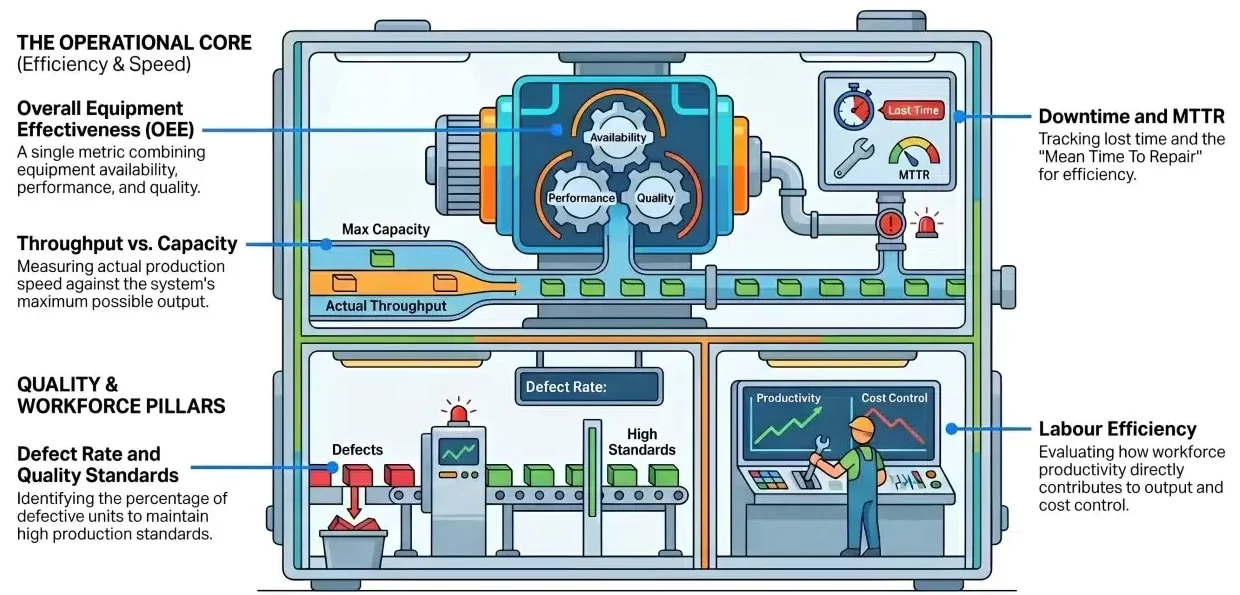
Production reporting relies on key metrics to evaluate performance and identify areas for improvement. These indicators provide measurable insights into efficiency, quality, and overall output.
Overall equipment effectiveness
Measures how effectively equipment is used in production. It combines availability, performance, and quality into a single metric.
Throughput and capacity
Throughput measures production speed, while capacity shows maximum output potential. Together, they indicate how efficiently resources are utilised.
Defect rate and quality
Tracks the percentage of defective units and overall product quality. It helps identify issues in the production process and maintain standards.
Downtime and mttr
Downtime measures lost production time, while mean time to repair reflects how quickly issues are resolved. Both are critical for maintaining efficiency.
Labour efficiency
Evaluates how effectively labour contributes to production output. It helps control costs and improve workforce productivity.
What to Include in a Production Report
A production report should capture key operational data in a structured and consistent format. This ensures reports are easy to review and support accurate decision making through a system for production reports.
Output vs target
Shows planned production compared to actual results. This helps identify gaps and measure performance.
Efficiency metrics
Includes key indicators such as equipment performance and utilisation. These metrics provide insight into operational efficiency.
Downtime log
Records when production stops and why it happens. This helps identify recurring issues and reduce disruptions.
Quality data
Tracks defects, scrap rates, material waste, rework, and overall product quality. It ensures production meets required standards.
Labour summary
Summarises workforce involvement, including hours worked and shift performance. This helps evaluate productivity and provides a basis for reviewing labour costs alongside material usage and production overheads.
Issues and action items
Highlights operational problems and required follow up actions. It ensures continuous improvement is maintained.
"Clear and structured production reporting enables manufacturers to maintain operational visibility, reduce inefficiencies, and make faster data driven decisions on the shop floor."
What the Sheet Misses
A production template captures the shift total. Someone writes down units produced, scrap, and downtime at the end of the run, then types it into a workbook the next morning.
The numbers are usually close enough. The problem is that they arrive after the shift they describe has finished, so nobody can act on them until the next one is already underway.
- Which machine lost the time? A shift sheet records 90 minutes of downtime. It rarely records that 70 of those minutes came from one line, on one changeover, for the third week running.
- What did the batch actually cost? Output and materials sit in different files, so working out the cost per unit means matching a production log against purchase records by hand.
- Was the scrap a one-off? A single figure looks manageable. The same figure repeating on the same product every Tuesday is a process problem, and a monthly spreadsheet hides that pattern well.
Production software answers all three by recording each run as it happens and keeping output, materials, and downtime in one place. Supervisors then spend the morning fixing the line instead of typing up last night.
For manufacturers tracking output across several lines or sites, connected reporting removes the retyping entirely.
Download Free Production Report Templates
Production report templates help standardise reporting and make it easier to record operational data consistently. They provide a clear structure for tracking output, efficiency, and production issues.
The templates below are based on common manufacturing practices and have been adjusted to align with applicable requirements in Australia. This ensures they remain relevant for both operational use and compliance needs.
Daily production report template
Summarises total output, efficiency, and key issues within a day to track performance against targets.
DAILY PRODUCTION REPORT TEMPLATE
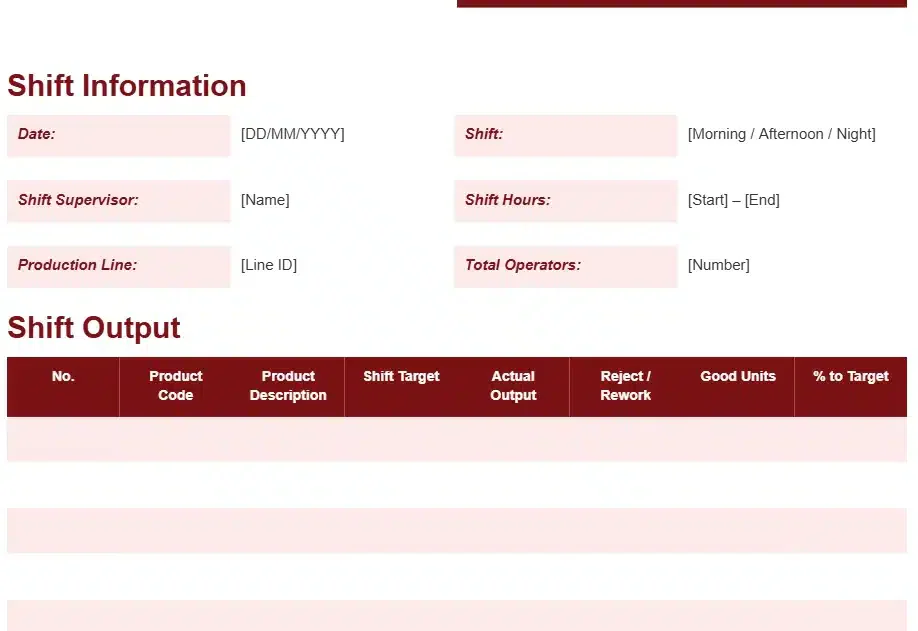
Shift production report template
Captures detailed data for each shift, including output, downtime, and operational issues for better handover.
SHIFT PRODUCTION REPORT TEMPLATE
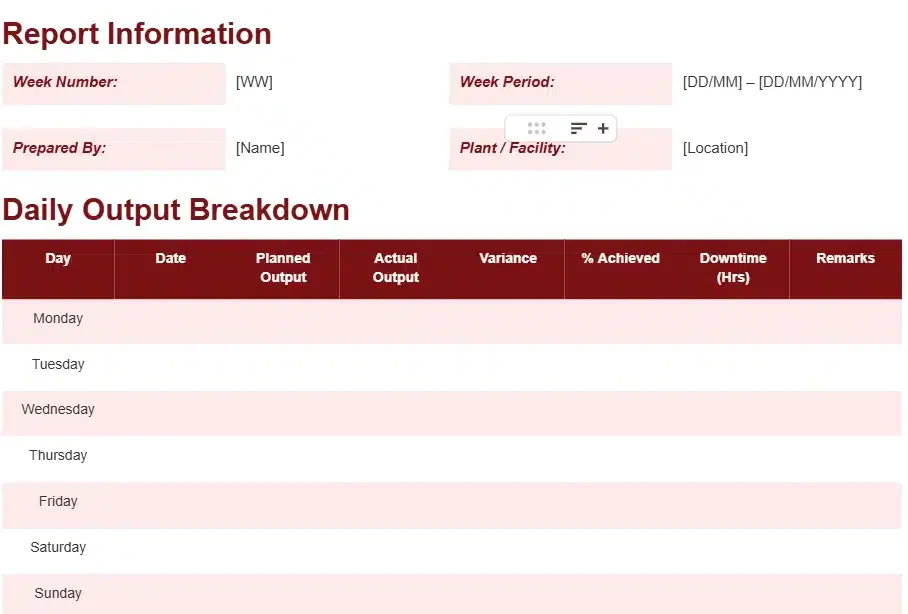
Weekly production summary template
Aggregates production data to identify trends and recurring performance gaps across multiple days.
WEEKLY PRODUCTION SUMMARY TEMPLATE
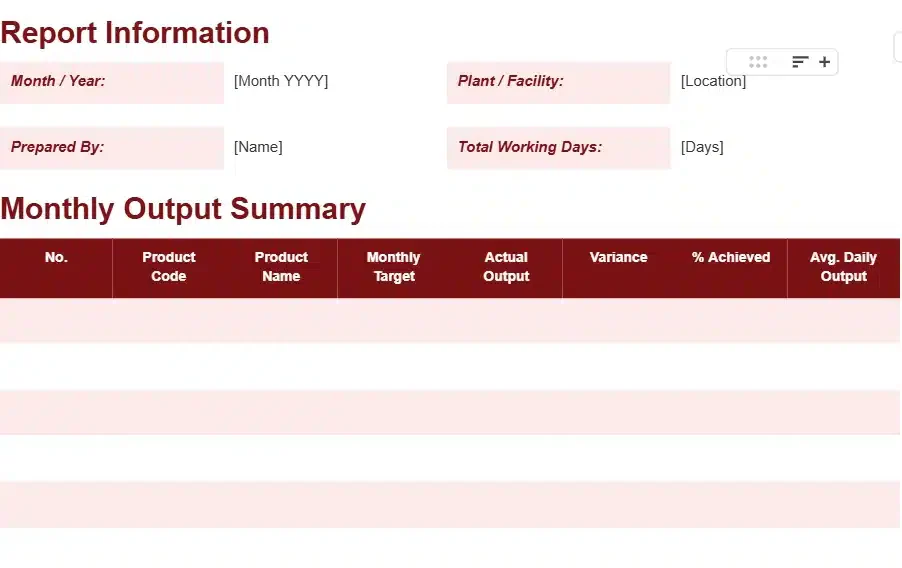
Monthly production report template
Provides a high-level view of production performance for planning and strategic evaluation.
MONTHLY PRODUCTION SUMMARY TEMPLATE
OEE or production efficiency report template
Tracks equipment performance based on availability, performance, and quality metrics.
OEE/PRODUCTION EFFICIENCY REPORT TEMPLATE
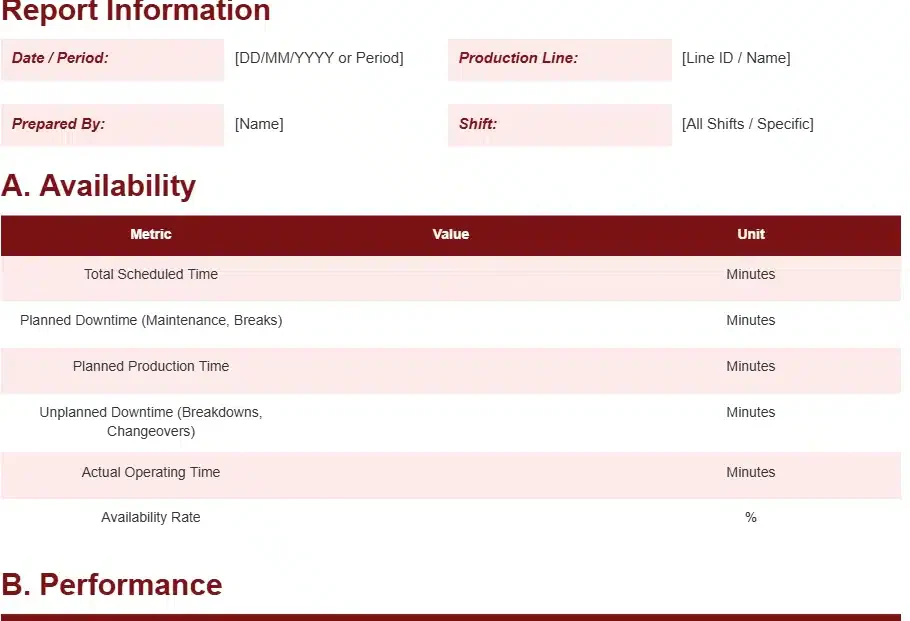
Downtime tracking report template
Records production interruptions and identifies root causes of operational delays.
DOWNTIME TARCKING REPORT TEMPLATE
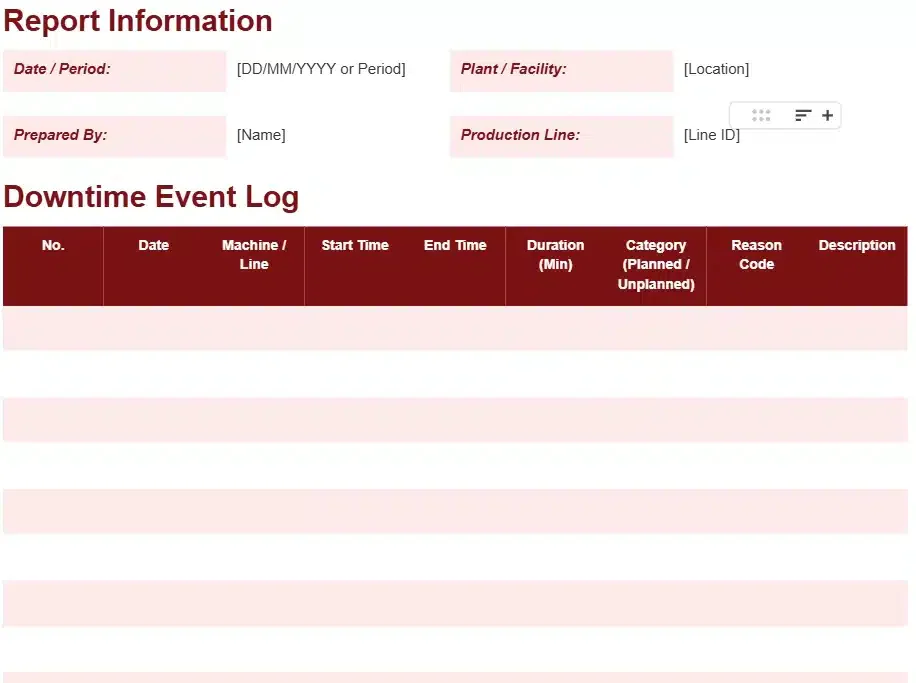
Quality control or defect report template
Tracks defects and rework to maintain product quality and reduce production losses.
QUALITY CONTROL/DEFECT REPORT TEMPLATE
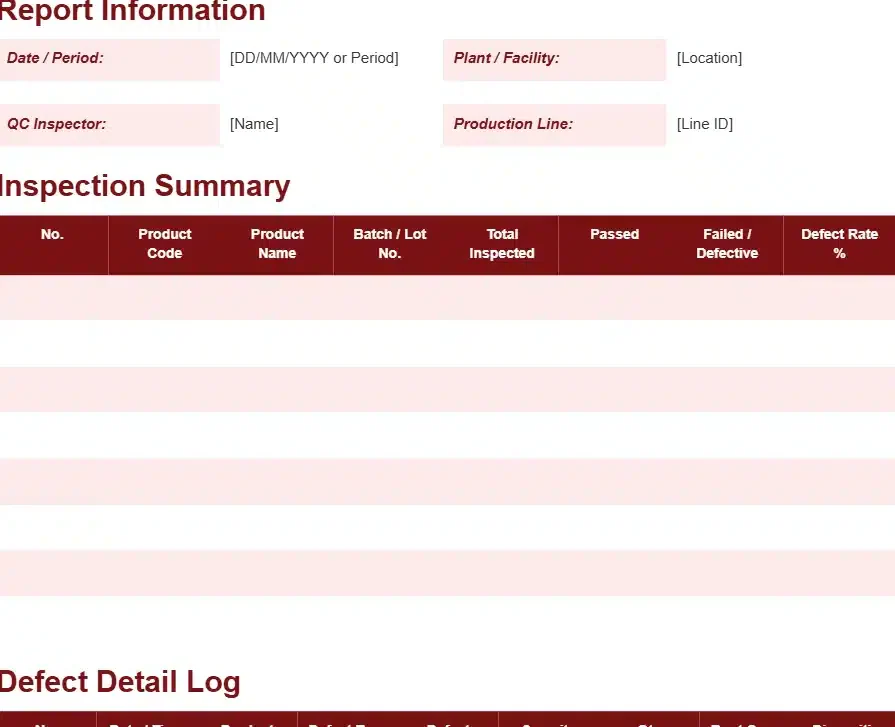
Work in progress report template
Monitors unfinished goods within the production process to manage production flow and inventory levels.
WORK-IN-PROGRESS (WIP) REPORT TEMPLATE
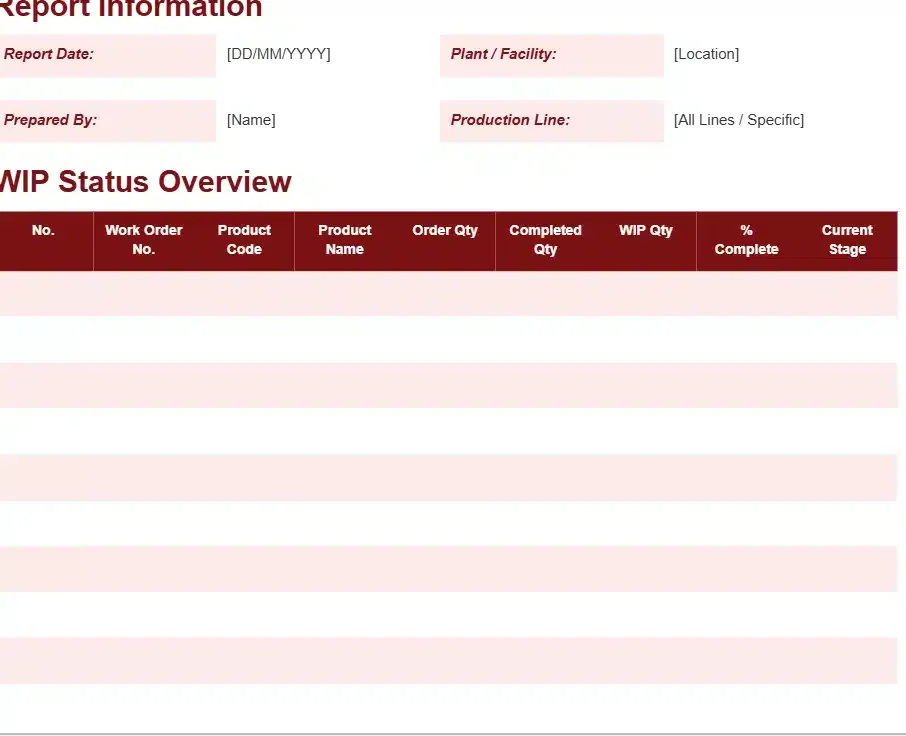
How Production Reporting Works in Daily Operations
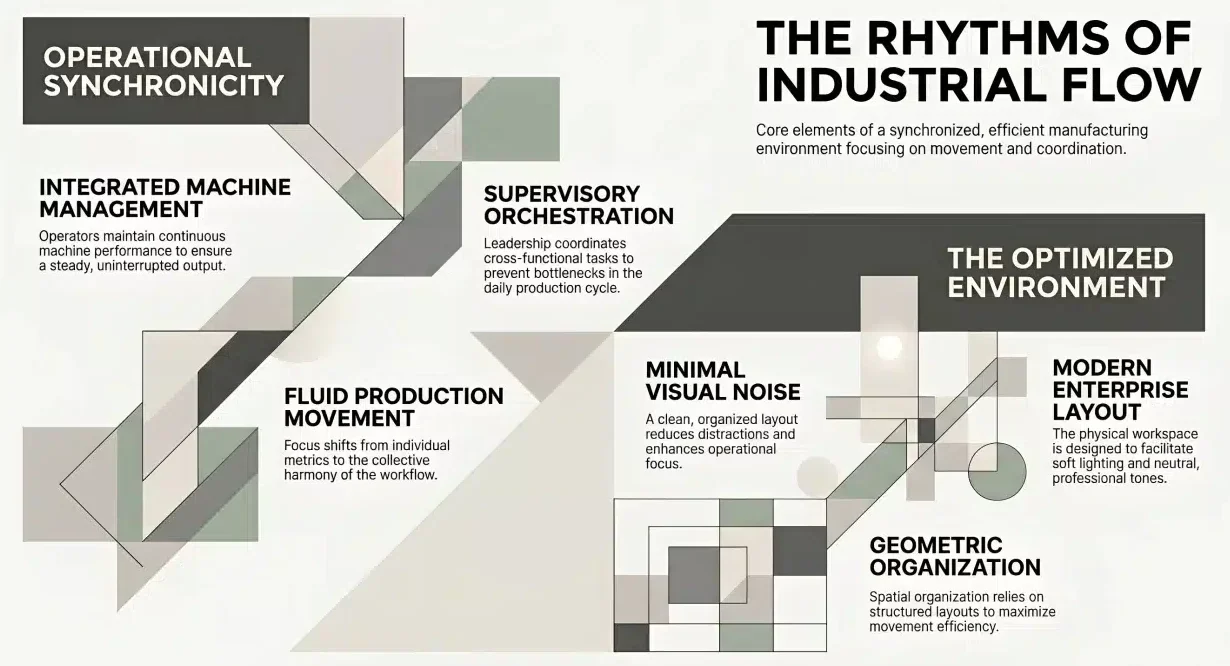
Production reporting works by capturing operational data and turning it into structured information. This process ensures production planning performance can be monitored consistently.
Data collection: Production data is recorded during operations, including output, downtime, and quality results. This ensures reports reflect actual conditions.
Reporting flow: Data is compiled into reports at defined intervals such as per shift or daily. This keeps reporting consistent and easy to review.
System integration: Integrated systems allow data to flow automatically across departments. This improves accuracy and reduces manual work.
Common Challenges and Advanced Production Reporting Practices
Production reporting challenges often come from inconsistent processes and delayed data. At the same time, advanced practices such as BOM for production tracking help improve accuracy and operational insight.
- Manual errors: Manual data entry increases the risk of inaccuracies. It also slows down reporting and reduces reliability.
- Delayed reporting: Late data entry limits real-time visibility. This makes it harder to respond quickly to operational issues.
- Lack of action: Collecting data without follow up reduces its value. Reports should always support decision making and improvement.
- Multi-site consolidation: Businesses operating across multiple factory locations often struggle to consolidate production data into a single, accurate view. Without a centralised system, reports from different sites arrive at different times, use different formats, and require manual merging.
Advanced Production Reporting Practices
1. Predictive analytics
Uses historical data to identify trends and anticipate issues. This helps improve planning and reduce disruptions.
2. Dashboards
Provide real-time visibility into production performance. This allows faster monitoring and decision making.
3. IoT integration
Sensors automatically capture machine data during operations. This improves accuracy and reduces manual input.
4. Manufacturing ERP software
In an integrated ERP platform, production reports typically appear as dashboards showing real-time output charts, downtime logs, and efficiency gauges, with drill-down views by production line, shift, or machine, replacing the need for manual spreadsheet compilation.
Conclusion
Production reporting helps manufacturers maintain visibility and keep performance aligned with targets. With structured reporting, businesses can track output, identify inefficiencies, and improve operational control.
As operations grow, manual processes can reduce accuracy and slow response time. A consistent reporting approach supported by the right system helps teams maintain control and act faster.
If your manufacturing operations want to improve production reporting and gain better control over daily performance, you can request a free consultation and get advice from experts to find the right approach for your needs.

FAQ About Production Reporting
A production report helps track actual manufacturing performance, including output, downtime, and efficiency, to support better operational decisions.
Production reports are typically created per shift, daily, or weekly depending on operational needs and reporting requirements.
Production reporting can be managed using spreadsheets, ERP systems, or specialised manufacturing software that automates data collection and reporting.
Production reporting identifies inefficiencies such as downtime and defects, allowing businesses to take corrective actions and improve overall productivity.