







An attendance system is used to track and manage employee working hours accurately. It works by capturing time data through digital tools, then processing it into records that support payroll, compliance, and workforce management.
Accurate attendance tracking helps businesses reduce errors, control labour costs, and maintain consistent operations. With structured data and automated processes, businesses can improve visibility and make better decisions. Many companies rely on a system for attendance record to ensure data stays consistent across payroll and reporting.
Key Takeaways
Understand how an attendance system records employee time and supports payroll and compliance processes.
Learn why accurate attendance tracking is essential for controlling labour costs and improving workforce performance.
Explore essential features such as clock-in methods, leave management, and payroll integration.
Discover how to set up an attendance system by assessing needs, configuring rules, and ensuring smooth adoption.
What an Attendance System Does and How It Works
An attendance system is a tool that records when employees start, finish, and take breaks, then processes those entries into structured data using set attendance policies. This keeps working hours tracked consistently and aligned with business rules, ready for payroll and compliance.
By capturing time entries automatically and generating reports, it gives businesses clear visibility over workforce activity and labour use, helping control costs, spot inefficiencies, and keep accurate records without manual tracking.
Better tracking also helps control labour costs. It allows businesses to identify inefficiencies and manage staffing more effectively. Many companies adopt workforce tracking tools to gain clearer visibility into daily attendance and labour use.
How attendance data is captured and processed
Attendance data is captured through methods such as biometric devices, mobile apps, or web-based systems. These tools record time entries automatically and store them in a central system.
The data is then processed based on attendance rules and policies. This ensures working hours, overtime, and absences are calculated correctly.
How Attendance Records Support Fair Work Compliance in Australia
Attendance records help businesses meet Fair Work Act record-keeping requirements by accurately tracking employee hours. Since wage theft became a criminal offence on 1 January 2025, reliable attendance data also provides important legal protection for employers.
1. Fair Work record-keeping obligations
Employers must keep accurate records of hours worked, overtime, leave, and pay entitlements for seven years. An attendance system automates this process, ensuring records are complete and audit-ready. You can review the full Fair Work record-keeping requirements on the Fair Work Ombudsman website.
2. Wage theft laws
Since 1 January 2025, intentional underpayment of wages can be prosecuted as a criminal offence. Accurate attendance records capture exact start, finish, and break times, helping businesses comply with the law and defend against disputes.
3. Penalty rates and overtime
Correct penalty rates and overtime calculations rely on precise work hours. Attendance data supports accurate payroll and reduces errors that can lead to back-pay claims and Fair Work disputes.
4. Audit readiness
Centralised attendance records make it easy to provide accurate time-and-wages data during Fair Work audits. This speeds up compliance and demonstrates strong record-keeping practices. With Australian workforce participation tracked in ABS labour statistics, consistent record-keeping also keeps reporting aligned across the business.
Types of attendance tracking methods
Attendance systems offer different methods depending on business needs and work environments. Common options include biometric scanning, mobile tracking, and web-based clocking.
Each method provides different levels of flexibility and control. Choosing the right approach helps improve accuracy and usability.
| Method | How it works | Best for |
| Biometric | Uses fingerprint or facial recognition | High security workplaces |
| Mobile app | Employees clock in via smartphone with GPS validation | Remote or field teams |
| Web-based | Clock in through browser system | Office-based staff |
| Proximity/RFID | Employee tap a card or key fob to register arrival | Fixed-location workplaces |
Why Attendance Tracking Matters for Business Operations
Attendance tracking plays a direct role in how businesses manage costs, compliance, and workforce performance. Without accurate data, small errors can quickly affect operations and financial outcomes.
1. Payroll accuracy and cost control
Accurate attendance data ensures employees are paid based on actual working hours. This reduces payroll errors and prevents unnecessary overpayments.
Better tracking also helps control labour costs. It allows businesses to identify inefficiencies and manage staffing more effectively.
2. Compliance with labour regulations
In Australia, this includes meeting requirements under the Fair Work Act and applicable Modern Awards, such as correctly applying penalty rates, overtime thresholds, and minimum break entitlements.
Attendance records are essential for meeting labour and payroll regulations. Inaccurate or missing data can increase the risk of compliance issues.
A reliable system helps ensure working hours, breaks, and overtime are recorded correctly. This supports consistent compliance and reduces risk.
3. Workforce accountability and productivity
Clear attendance tracking improves accountability across the workforce. Employees are more likely to follow schedules when records are accurate and transparent.
This also helps managers monitor performance and address issues early. As a result, productivity becomes more consistent.
Key Features of a Modern Attendance System
Modern attendance systems provide more than basic time tracking. They combine multiple features to improve accuracy, efficiency, and workforce visibility.
1. Clock in and clock out methods
Attendance systems offer different ways for employees to record their time. These include biometric devices, mobile apps, and web-based platforms.
Flexible methods make it easier to track attendance across different work environments. This improves both accuracy and convenience.
2. Leave and absence management
Managing leave and absences is an important part of attendance tracking. A system helps record requests, approvals, and balances in one place.
This reduces manual work and improves visibility. It also ensures leave data is reflected accurately in reports.
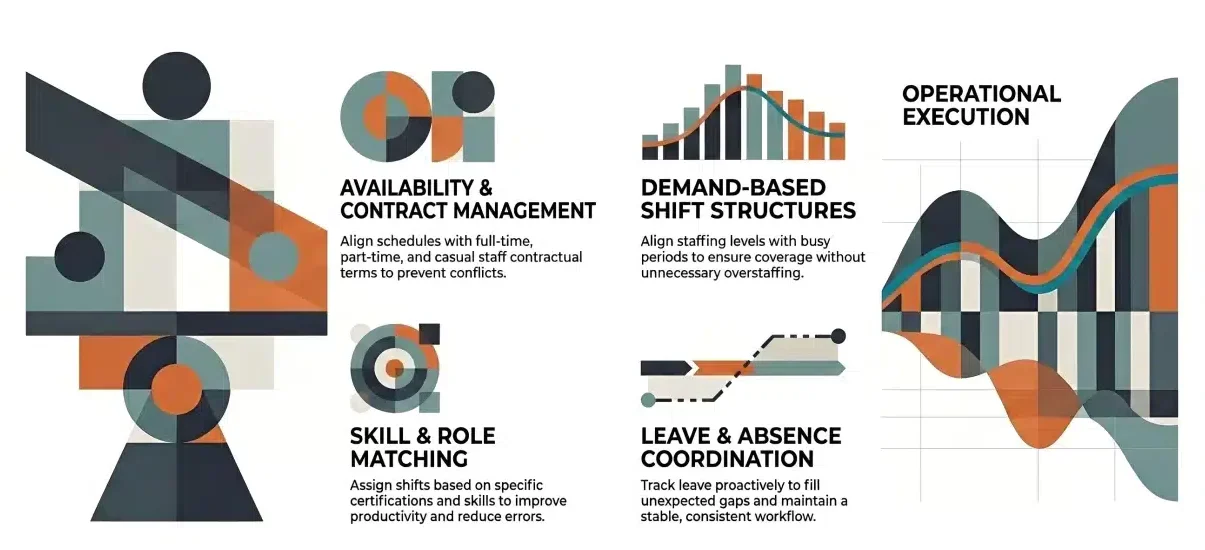
3. Rostering & Scheduling
Rostering and scheduling tools allow managers to plan shifts in advance and align staffing levels with operational demand.
A good attendance system makes it straightforward to assign shifts, manage availability, and notify employees of upcoming schedules.
This reduces last-minute resourcing issues and ensures teams are prepared. It also gives businesses a clearer view of labour costs before each pay period.
4. Payroll integration and reporting
Attendance systems often integrate directly with payroll and HR software. This allows time data to be transferred without manual input.
Accurate integration reduces errors and speeds up payroll processing. It also provides better reporting for decision-making. Clear reporting also supports structured employee attendance workflows across departments.
Beyond scheduling and reporting, an AI-driven layer can read attendance patterns in real time and flag exceptions before they reach payroll, turning raw clock-in data into decisions managers can act on the same day.
Beyond scheduling and reporting, an AI-driven layer can read attendance patterns in real time and flag exceptions before they reach payroll — turning raw clock-in data into decisions managers can act on the same day.
Beyond scheduling and reporting, an AI-driven layer can read attendance patterns in real time and flag exceptions before they reach payroll — turning raw clock-in data into decisions managers can act on the same day.
Beyond scheduling and reporting, an AI-driven layer can read attendance patterns in real time and flag exceptions before they reach payroll — turning raw clock-in data into decisions managers can act on the same day.
Beyond scheduling and reporting, an AI-driven layer can read attendance patterns in real time and flag exceptions before they reach payroll — turning raw clock-in data into decisions managers can act on the same day.
Beyond scheduling and reporting, an AI-driven layer can read attendance patterns in real time and flag exceptions before they reach payroll — turning raw clock-in data into decisions managers can act on the same day.
Beyond scheduling and reporting, an AI-driven layer can read attendance patterns in real time and flag exceptions before they reach payroll — turning raw clock-in data into decisions managers can act on the same day.






How Attendance Systems Are Used Across Industries
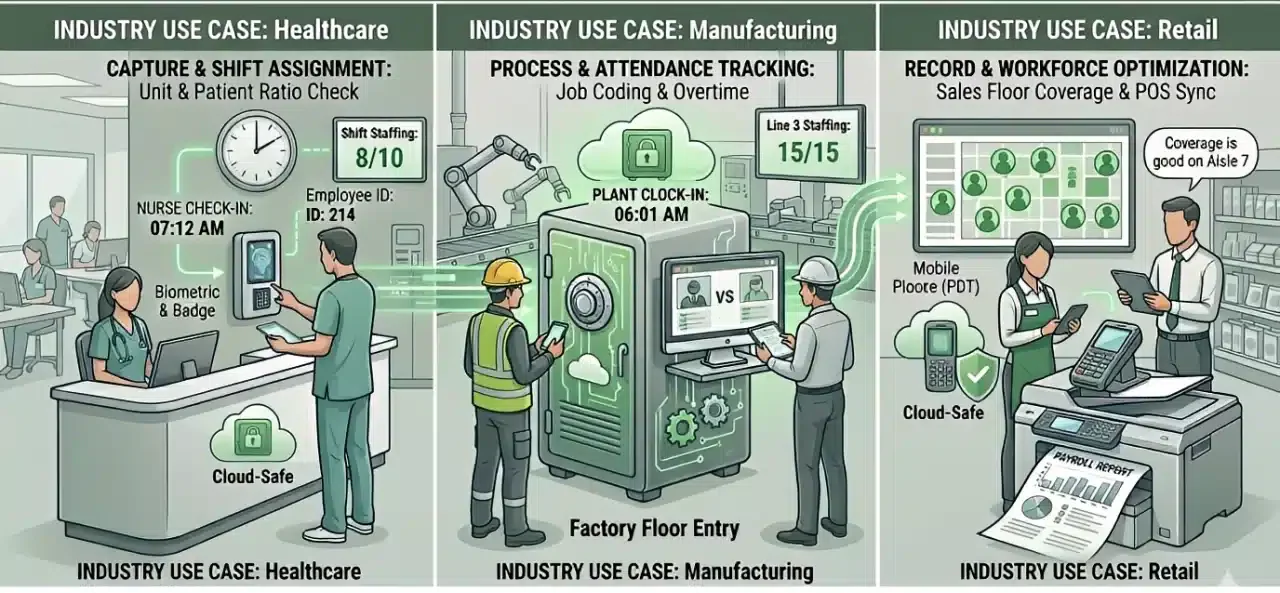
Attendance systems are used differently across industries depending on workforce structure and operational needs. Each sector applies attendance tracking to solve specific challenges and improve efficiency.
1. Healthcare and medical services
Healthcare environments require accurate scheduling and continuous workforce coverage. Attendance systems help ensure staff availability and reduce risks related to fatigue.
They also support compliance with strict labour and safety regulations. This ensures consistent service and patient care.
2. Manufacturing and logistics
Manufacturing and logistics rely on structured shifts and high workforce coordination. Attendance systems help track working hours and prevent time-related errors.
They also reduce issues such as buddy punching and inaccurate reporting. This improves operational efficiency and cost control.
3. Retail and field workforce
Retail and field teams often work across multiple locations and flexible schedules. Attendance systems help track time through mobile and location-based tools.
This improves visibility and ensures accurate reporting. It also helps manage workforce distribution more effectively. Businesses often combine this with attendance-ready scheduling to align shifts with real attendance data.
Common Challenges in Attendance Management
Attendance management can become complex when systems and processes are not properly aligned. These challenges often affect accuracy, efficiency, and compliance.
1. Manual tracking errors
Manual attendance tracking increases the risk of incorrect data entry. Even small mistakes can affect payroll and reporting accuracy.
Automated systems help reduce these errors. They also improve consistency across records.
2. Buddy punching and time theft
Buddy punching occurs when one employee records time for another. This leads to inaccurate attendance data and unnecessary labour costs.
Secure tracking methods help prevent this issue. This ensures time records reflect actual work.
3. Lack of system integration
Using separate systems for attendance and payroll creates data gaps. This makes it harder to maintain accurate and consistent records.
Integrated systems improve data flow and reduce duplication. This supports better reporting and efficiency.
4. Inconsistent attendance policies
Unclear or inconsistent attendance rules can create confusion among employees. This often leads to disputes and irregular tracking.
Clear policies supported by a system help standardise processes. This improves compliance and workforce management.
How to Set Up an Attendance System That Works
Setting up an attendance system requires a structured approach to ensure accuracy and smooth adoption. A clear setup process helps reduce errors and improve long-term efficiency.
1. Assessing business requirements
- Identify how attendance is currently tracked and where issues occur. This helps define what the new system needs to improve.
- Consider workforce size, work locations, and scheduling complexity. These factors influence the type of system required.
2. Selecting the right system
- Choose a system that matches business needs and supports future growth. It should be flexible and easy to use.
- Ensure the system can integrate with payroll and other tools. This improves data accuracy and efficiency.
3. Configuring attendance rules
- Set up attendance policies such as working hours, overtime, and break rules. This ensures consistency across the system.
- Test configurations before full use to avoid errors. Proper setup helps ensure accurate calculations.
4. Training employees and rollout
- Train employees on how to use the system correctly. Clear guidance improves adoption and reduces mistakes.
- Roll out the system gradually to identify issues early. This helps ensure a smooth transition.
Smarter Ways to Optimise Attendance Tracking
Optimising attendance tracking helps businesses move beyond basic recording into better workforce management. With the right approach, systems can improve efficiency and decision-making.
1. Using automation and real time data
Automation reduces manual work by handling calculations and data updates. Real-time data helps businesses monitor attendance as it happens.
A connected HRM system pushes live clock-in data straight into rostering and payroll, so automation and real-time records work from one source of truth instead of separate spreadsheets.
This improves accuracy and allows faster responses to issues. It also reduces administrative workload. Businesses can also follow an overtime tracking guide to manage extra hours more effectively.
2. Employee self service features
Self service tools allow employees to check attendance records and manage requests. This improves transparency and reduces dependency on HR teams.
Employees can correct minor issues quickly. This helps maintain accurate data.
3. Data insights for workforce planning
Attendance data can be used to identify patterns and trends. This helps businesses plan staffing and improve scheduling.
Better insights support informed decisions. This leads to improved productivity and cost control.“
"A well-implemented attendance system helps businesses maintain accurate records, reduce payroll errors, and improve workforce accountability across daily operations."
Common Mistakes to Avoid in Attendance Systems
Even with the right system in place, poor implementation and management can reduce its effectiveness. Avoiding common mistakes helps ensure accurate tracking and long-term value.
1. Overcomplicating system setup
Setting up too many rules or unnecessary features can make the system difficult to use. This often leads to confusion and errors during daily operations.
Keeping the setup simple and aligned with actual needs improves usability. It also helps ensure consistent data across the system.
2. Ignoring employee adoption
A system will not work effectively if employees do not use it properly. Lack of training or unclear processes often leads to resistance and mistakes.
Providing clear guidance and support improves adoption. This helps ensure accurate and reliable attendance data.
3. Lack of regular system updates
Attendance systems require ongoing updates to stay accurate and relevant. Changes in policies or regulations can affect how data should be recorded.
Regular reviews help ensure the system remains aligned with business needs. This also supports long-term efficiency and compliance.
Conclusion
An attendance system helps businesses improve accuracy, control labour costs, and maintain consistent workforce management. With the right setup and processes, businesses can reduce errors and gain better visibility over daily operations.
Relying on manual tracking or disconnected systems often leads to inefficiencies and compliance risks. A structured and well-integrated system allows businesses to manage attendance more effectively and support long-term growth.
If your business wants to improve attendance tracking and reduce operational issues, you can request a free consultation to find the right solution for your needs.

FAQ About Attendance Systems
An attendance system is used to track employee working hours, manage attendance records, and support payroll and compliance processes.
It records working hours automatically and reduces manual errors, ensuring employees are paid based on accurate time data.
Common issues include manual errors, buddy punching, lack of integration, and inconsistent attendance policies.
Key features include time tracking, leave management, payroll integration, and real-time reporting.