










 Limited to 100 registrants
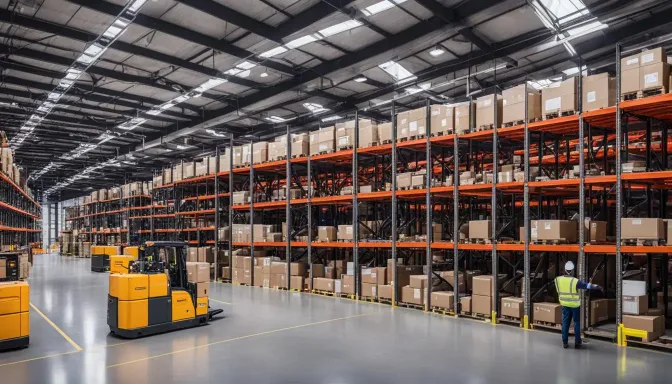
Before any goods get on a store shelf, they must first be manufactured and then stored at a warehouse. It may sound simple, but storing and managing manufactured inventory cannot be done by just storing stock in a building and calling it a day. Poor warehouse management will cause compounding problems, resulting in slower production and major delays.
Optimizing warehouse operations is crucial for success in the Philippines’ competitive manufacturing sector. Businesses must streamline processes, reduce costs, and enhance customer satisfaction while improving productivity and ensuring employee safety. Our guide offers valuable insights and practical strategies to help both small-scale manufacturers and large enterprises optimize their warehouse operations in the Philippines.
Key Takeaways
Businesses can optimize warehouse operations by implementing smart layouts, proactive inventory strategies, and robust safety protocols to reduce costs effectively.
Manufacturing warehouses must adopt sustainable practices such as energy-efficient systems and waste reduction programs to improve efficiency and brand reputation.
Companies can automate warehouse processes using a Warehouse Management System to boost accuracy, streamline workflows, and gain a competitive advantage.
Manufacturing Warehouses in the Philippines
To understand the manufacturing warehouse landscape in the Philippines, it’s essential to explore the different warehouse types available. These include centralized, decentralized, public, private, and specialized warehouses. Each type of warehouse offers unique benefits.
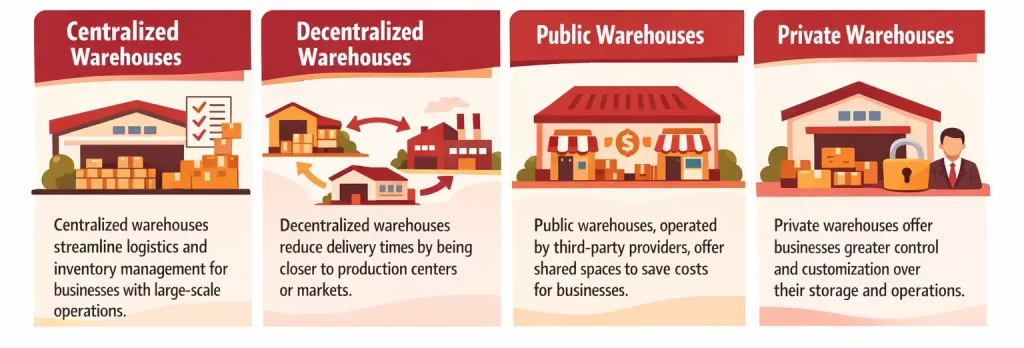
Specialized warehouses cater to specific industries with tailored facilities like temperature control or hazardous material storage. Choosing the right warehouse type depends on business needs, location, and inventory requirements.
The Pros and Cons of Different Types of Warehouses
As said above, each warehouse has its own unique benefits. However, its benefits also come with its own drawbacks. For that reason, you need to know what a warehouse excels in and where it is limited:
| Warehouse Type | Pros | Cons |
| Centralized Warehouses |
|
|
| Decentralized Warehouses |
|
|
| Public Warehouses |
|
|
| Private Warehouses |
|
|

Optimizing Warehouse Operations Through Smart Design and Layout
Optimizing warehouse operations is essential for enhancing efficiency and reducing costs in manufacturing solutions. One of the most effective ways to achieve this is through smart design and layout. Intelligent warehouse design helps businesses improve productivity by ensuring that goods and personnel move efficiently, minimizing bottlenecks and delays across various areas like receiving, storage, and shipping.
Key ways to achieve smart design and layout include:
- Maximizing space utilization through strategic placement of racking and shelving systems.
- Implementing appropriate storage solutions such as pallet racks, mezzanine floors, or automated vertical carousels.
- Streamlining workflows by analyzing operational processes and eliminating inefficiencies.
- Employing technology-driven solutions like barcode scanning and efficient order picking strategies.
By optimizing both space and workflow, businesses can create a more efficient and productive warehouse environment. This approach leads to better resource management, enhanced inventory control, and a significant competitive edge, ultimately boosting performance in the manufacturing sector.
Proactive Inventory Management Strategies for Manufacturing Success

Those who take the initiative tend to win. Thus, a proactive management style is needed to optimise inventory levels and gain manufacturing success. Below, we will explore key strategies that can help you streamline inventory management, improve overall operational efficiencies, and ensure efficient supply chain management.
- Stock Keeping Unit (SKU) Management: Proper SKU management is crucial for accurate inventory tracking and control. By assigning unique identifiers to each product variant, you can efficiently manage inventory levels, track sales performance, and make informed restocking decisions.
- Just-in-Time Inventory (JIT): Adopting a just-in-time inventory approach can minimize excess inventory and reduce storage costs. With JIT, you receive inventory as needed, reducing the risk of dead stock and optimizing cash flow.
- Cycle Counting: Regular cycle counting involves physically counting a subset of inventory items on a predetermined schedule. This method helps identify and rectify any discrepancies between actual stock levels and recorded inventory data. By implementing cycle counting, you can maintain accurate inventory records and improve forecasting accuracy.
- Dealing with Dead Stock: Dead stock refers to items that are no longer in demand and occupy valuable warehouse space. To avoid dead stock, regularly analyze sales data, identify slow-moving items, and take proactive measures such as sales promotions or liquidation to clear inventory.
- Forecasting and Demand Planning: Accurate forecasting and demand planning are critical for effective inventory management. Utilize historical sales data, market trends, and customer insights to forecast future demand, which can be done with a robust manufacturing execution system, such as a manufacturing accounting system.
These strategies will turn that red expense into green profits. Apart from reducing cost, it will also make order processing better, minimize stockouts, and ensure the supply chain is running smoothly.
Training and Safety Protocols for Manufacturing Warehouse Personnel
Ensuring the safety and well-being of your manufacturing warehouse personnel is crucial, especially if it involves chemicals, where hazardous materials require stricter handling and compliance measures. By implementing comprehensive training and effective safety protocols, you can create a safe working environment that minimizes workplace accidents and promotes employee well-being:
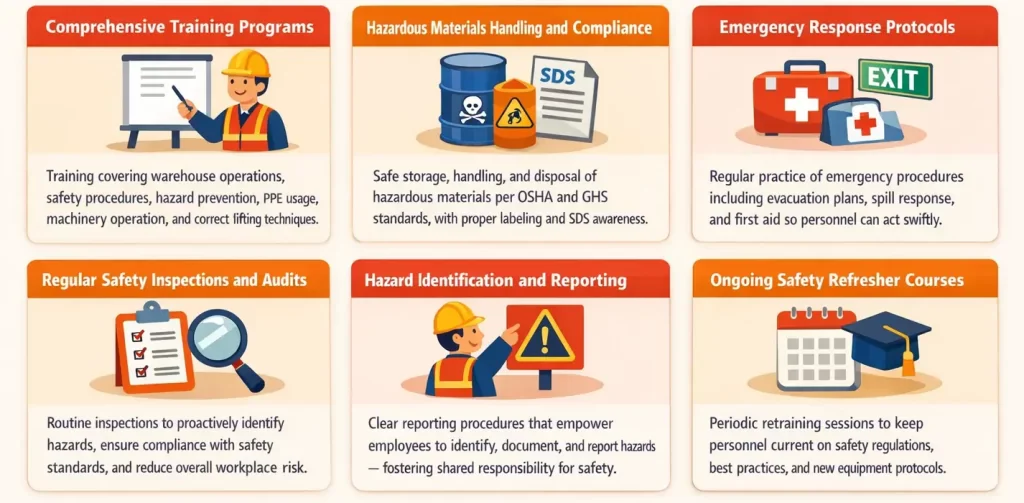
By prioritizing workplace safety, you not only protect your employees but also reduce the risk of accidents and potential downtime. Demonstrating your commitment to employee well-being can enhance morale, foster a culture of safety, and ultimately improve overall productivity in your manufacturing warehouse.
Automate your warehousing with a Warehouse Management System (WMS)
Automation plays a crucial role in enhancing the efficiency of manufacturing warehouses. By implementing cutting-edge technologies and automation solutions, businesses can streamline their operations, reduce errors, and improve overall efficiency.
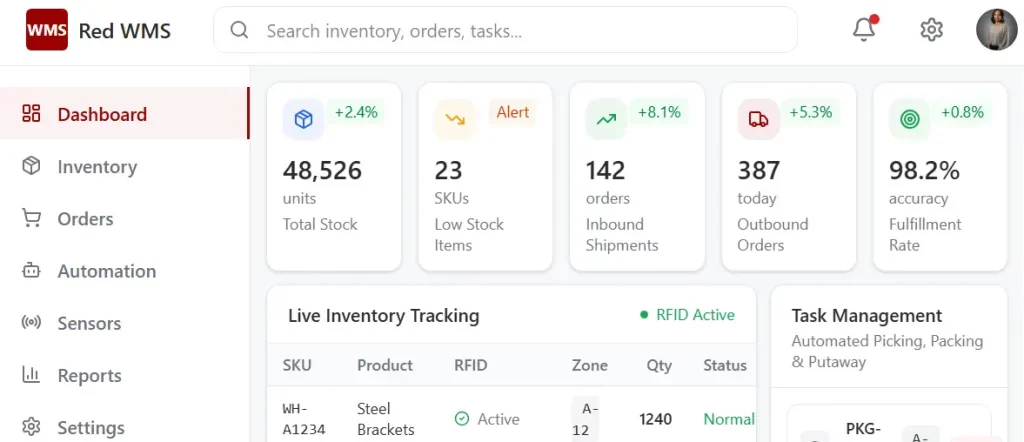
One of the key technologies used in warehouse automation is the Warehouse Management System (WMS). WMS software enables businesses to automate various aspects of warehouse management, including:
- Real-time inventory visibility through integrated barcode and RFID tracking within the WMS platform.
- Automated picking, packing, and putaway workflows driven by WMS-directed task management.
- System-integrated robotics and automation control, allowing WMS to coordinate with conveyors, AMRs, and picking systems.
- IoT and sensor integration for monitoring storage conditions and triggering alerts directly within the WMS dashboard.
- Advanced reporting and analytics generated by the WMS to optimize stock levels, space utilization, and labor efficiency.
- Order management and fulfillment optimization, enabling faster, more accurate processing aligned with customer demand.
Automation technologies are revolutionizing the warehousing industry. By implementing these solutions, you can stay ahead of your peers and be at the top. From cost reduction to productivity boost
Conclusion
Optimizing warehouse operations in the Philippines requires a strategic combination of efficient layout, proactive inventory management, and strong safety practices. By adopting these approaches, businesses can reduce operational costs, improve accuracy, and enhance overall productivity while maintaining a safe and compliant working environment.
Implementing an excellent Warehouse Management System (WMS) further accelerates these improvements by automating core processes and delivering real-time insights. With the right technology and strategy in place, manufacturers can streamline operations, meet customer demands faster, and secure a sustainable competitive advantage in a rapidly evolving market.
FAQ for Efficient Manufacturing Warehouse
An efficient warehouse needs a smart layout, accurate inventory tracking, trained staff, clear safety rules, and fast picking and packing workflows. It also needs the right system to monitor stock in real time, reduce errors, and keep goods moving without delays.>
A manufacturing warehouse usually needs a business permit and fire safety compliance before full operations. Many local processes also require a Fire Safety Inspection Certificate from the BFP for business permit issuance or renewal.>
Warehouse managers measure efficiency by tracking key metrics such as order accuracy rate, inventory turnover, picking speed, storage utilization, and on-time shipment rates to identify performance gaps and drive continuous operational improvements.>
Start with the basics: real-time inventory tracking, barcode or RFID support, task automation, reporting, and system integration. The right WMS should match your warehouse size, process complexity, and growth plans.>