









 Limited to 100 registrants

Global conflicts, extreme weather events, and shifting market demands have forced Philippine companies to rethink how they manage suppliers. When supply chains are disrupted, relying on manual processes or scattered spreadsheets is a high-stakes risk that leads to expensive mistakes.
So, what is the solution? To minimize errors and maintain operational resilience, you can try a procurement system. With 94% of companies in the Philippines now considering cloud-based IT solutions, adopting a digital procurement system has become a necessary step to cut costs and secure your supply line.
Read on for a comprehensive insight into how the best procurement system can help your company successfully operate in today’s market.
Key Takeaways
A procurement system is a technology that automates the purchasing process, reducing errors and costs and improving efficiency.
Features in a modern procurement system are mapped across direct, indirect, and services procurement so buyers know what to require.
Ways to improve procurement efficiency, covering automation, vendor management, spend control, compliance, and reporting in one system.
HashMicro’s procurement system helps to enhance and streamline your procurement process effectively and effectively in real-time.
What is a Procurement Management System?
A procurement management system automates how a company acquires goods, materials, and services across the source-to-pay lifecycle. It replaces siloed tools with one unified framework. That framework connects people, processes, and documentation, so purchase orders, deliveries, and supplier records stay accurate and controlled.
The procurement process runs on three foundations:
- Process: The system guides planning, purchasing, and payment in one sequence, so every transaction follows company policy.
- People: Procurement teams work from defined roles, so buyers, approvers, and stakeholders act on the same request without confusion.
- Paper: Digital records store every quote, order, and receipt, so finance teams can trace any transaction during an audit.
Key advantages:
- Cost reduction: Teams consolidate spend, compare supplier quotes, and cut maverick buying, which can lower procurement costs by up to 30%.
- Data-driven decisions: Real-time analytics expose spend patterns and supplier performance, so buyers negotiate contracts from evidence instead of guesswork.
- Operational resilience: Automated approvals and delivery tracking keep purchasing transparent, even when prices shift or suppliers miss lead times.
A study by Procurement Magazine found that 63% of businesses lose efficiency to manual procurement. Teams can now close that gap with AI in procurement software, which predicts demand and flags supplier risk early.
Benefits of Procurement Software for Philippine Businesses
A procurement management system gives Philippine businesses control over purchasing, supplier selection, price negotiation, and connected finance workflows. The right e-procurement software keeps spending inside budgets and cost centers, so teams prevent overruns before they reach approval. In summary, here are the top ten benefits:
- Reduced procurement cost overruns: The procurement management system ties every request to a budget and cost center, so spending stays inside approved limits.
- On-time supplier payments: Automated reminders flag unpaid invoices and upcoming due dates, so finance teams protect cash flow and supplier relationships.
- Supplier risk management: Continuous vendor scoring exposes late deliveries, quality issues, and contract breaches early, so buyers act before operations stall.
- Optimized S2P and S2C: The system extends Procure-to-Pay (P2P) into sourcing and contracting, so teams raise RFQs, purchase orders, and contracts in one flow.
- Easy backorder management: Buyers adjust delivery schedules and payment terms when stock arrives late, so cash flow and inventory levels stay balanced.
- Full goods traceability: Real-time alerts track each shipment from warehouse arrival to customer receipt, so teams spot delays and quality gaps immediately.
- Optimized approval processes: Automated workflows route requests to the right approver across any department or branch, so unauthorized purchases never pass through.
- Increased resource availability: The system maintains stock levels and formalizes supplier contracts, so production teams receive the materials and services they need.
- Improved spend analysis: Spend dashboards reveal category trends and savings opportunities, so managers redirect budgets toward the suppliers and items that perform.
- Procedural transparency: Every request, approval, and price change leaves an audit trail, so managers review each procurement step without chasing emails.
These ten benefits show how a procurement management system tightens control over the suppliers' contracts and the supply chain. Philippine businesses that adopt one cut costs, shorten approval cycles, and build steadier supplier partnerships.
Features in Modern Procurement System
An ideal procurement system combines request, approval, ordering, receiving, and payment features inside one system. Knowing these features matters because the wrong choice leaves gaps that your team must fill manually. The features you prioritize depend on what your business actually buys.
Direct procurement buys the raw materials inside your products, so it involves high-value orders and long-term supplier partnerships. Indirect procurement covers office supplies and utilities that keep daily operations running. Services procurement engages consultants and specialists on a project basis. Philippine businesses run all three, so the table below maps the features each type needs.
| Features to look for | Direct Procurement | Indirect Procurement | Services Procurement |
|---|---|---|---|
| PR management | Raises material requests from production schedules | Lets each department request its own supplies | Logs engagement requests with scope notes |
| PR to RFQ | Compares bulk material quotes before committing | Handles larger one-off operational purchases | Compares consultant proposals and rate cards |
| PO management | Tracks high-value orders through to fulfillment | Handles frequent low-value orders at scale | Turns an agreed scope into a formal order |
| Work order receiving | Checks incoming goods against quantity and spec | Confirms supply deliveries at each site | Records milestone and deliverable acceptance |
| Supplier invoices | Matches each invoice to its receipt and order | Processes high volumes of small bills | Tracks retainer and milestone billing |
| Blanket order management | Locks pricing on repeat raw material orders | Automates utilities and consumable reorders | Covers ongoing retainer agreements |
| Vendor price list management | Keeps commodity pricing current electronically | Standardizes rates across many small suppliers | Maintains consultant and agency rate cards |
| PR approval management | Enforces budget checks on large commitments | Blocks unauthorized departmental spending | Routes engagements to legal and finance review |
| Automate stock reordering | Triggers orders when material levels drop | Replenishes office and pantry stock | Not applicable, since services carry no stock |
| Online portal for suppliers | Lets suppliers confirm deliveries and lead times | Gives many small vendors self-service access | Supports negotiation and progress updates |
| Landed cost calculation | Adds freight, insurance, and duties to unit cost | Applies to imported equipment and supplies | Rarely applicable, since costs are fee-based |
How Does a Procurement System Work?
A procurement system works by automating every step of buying goods and services, from budgeting to supplier payment. It stores supplier records, purchase orders, and delivery status in one place. Much of that daily execution runs through a purchasing system, which handles ordering, approval, and receiving inside the wider procurement cycle.
Supply chain disruption raises the stakes in the Philippines, where port delays and weather events break delivery schedules. Procurement software replaces reactive habits with data-driven decisions. Each step below shows how the system builds resilience into daily buying.
Here is how a procurement management system works, step by step:
- Budgeting and planning: The system forecasts demand, sets a budget per department, and defines the sourcing approach before anyone raises a request.
- Vendor selection: Buyers issue RFQs and compare suppliers on cost, quality, and past performance. A central database of approved and backup vendors lets teams switch suppliers instantly when a primary one fails.
- Negotiation and contracting: Digital tendering and contract automation remove administrative lag. Finance, operations, and purchasing then agree on terms, pricing, and schedules from one shared record.
- Purchase order processing: The system issues POs with agreed quantities and delivery terms. Real-time tracking inside the purchase order software shows each stage, so teams chase suppliers before delays turn costly.
- Performance monitoring: The system rates every supplier on punctuality, quality, and pricing consistency using real transaction data. Buyers rely on proven partners during a crisis instead of familiar ones.
- Supplier management: Shared records, message history, and audit trails keep communication in one thread. Buyers and suppliers then resolve problems without rebuilding context each time.
Together, these steps give Philippine businesses a controlled response when the market shifts. Every decision leaves a record, every supplier carries a score, and every order stays visible. Teams act on evidence instead of guesswork during a disruption.
Ways to Improve Efficiency in Procurement Management

While organizations can benefit significantly by understanding the purpose of their procurement management processes and streamlining them, many organizations delay taking action because they don’t know where to start. The following are the key areas that procurement teams can digitize to improve the efficiency of their procurement processes:
- Leverage the latest automation technologies: A purchasing system helps automate procurement activities, improving efficiency and enabling paperless approvals for faster processing. It also allows real-time communication with vendors, helping to resolve issues quickly and prevent delays.
- Improved vendor management: Imagine handling all supplier-related issues in one centralized platform, from screening and onboarding new vendors to monitoring performance and addressing payment or delivery concerns. An e-procurement solution allows users to manage all vendor interactions efficiently on a single digital platform.
- Better control over business expenses: An online procurement management system simplifies budgeting, eliminating the need for complex spreadsheets and manual data transfers. It allows users to set and monitor budget limits, access detailed reports, and keep product catalogs updated, improving accuracy and reducing employee workload.
- Improved compliance: Procurement software consolidates key data into an easy-to-use dashboard, ensuring compliance with deadlines, quality standards, and regulations. It also helps prevent fraud and off-contract purchases, improving accuracy and reducing financial risks.
- Essential reporting features: Procurement management software allows users to access valuable data to evaluate and compare vendor performance. It also helps identify risks in purchasing processes and highlights areas for improvement.
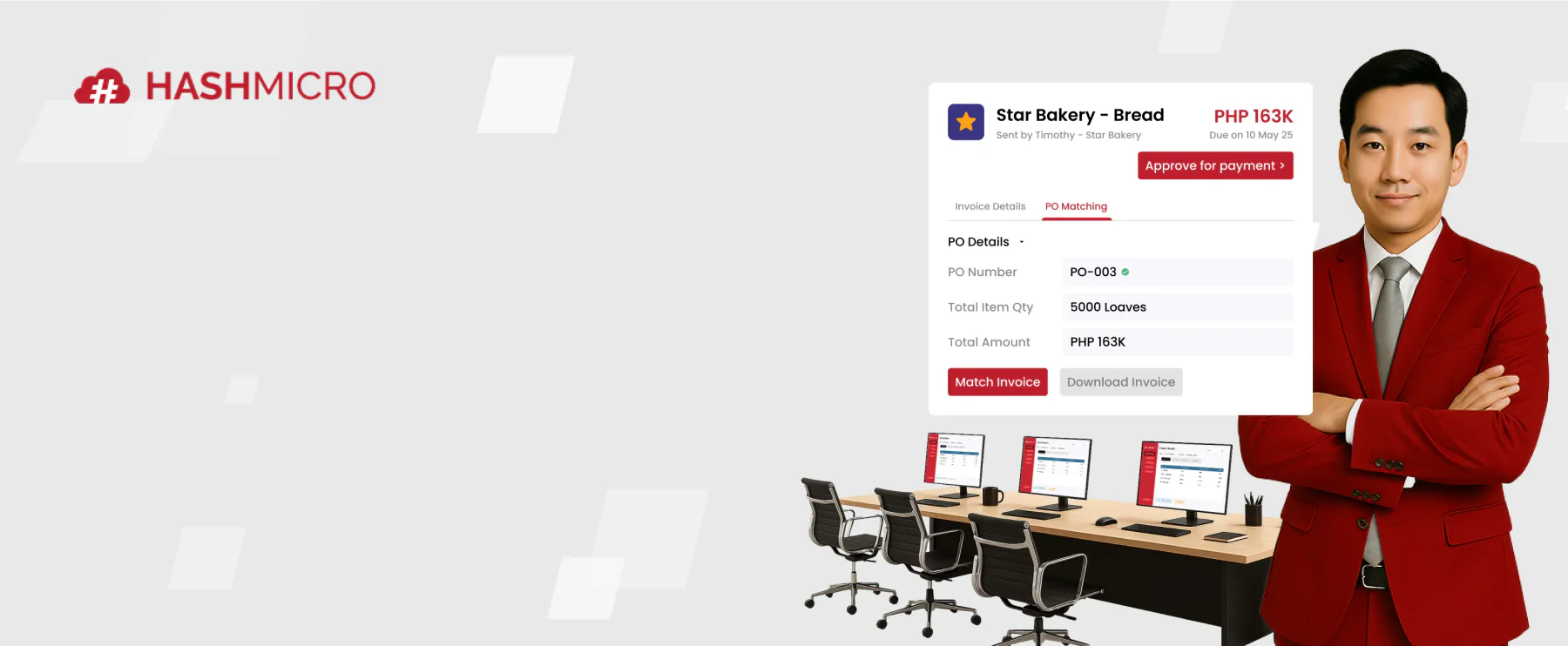
Digitizing these five areas works best when one system handles all of them. HashMicro's procurement software covers requests, approvals, vendors, budgets, and reporting in a single platform. See how it fits your workflow below.
How to Choose the Right Procurement System for Your Business
Buying the wrong system costs more than delaying the decision. Use this checklist of non-negotiables when you evaluate vendors. Each point answers a warning sign that pushes Philippine businesses toward procurement software. Those signs range from rising expenses to approvals that stall for days:
- Surfaces cost-saving opportunities through spend analytics, so you can hit reduction targets with evidence instead of across-the-board budget cuts.
- Enforces budget limits by department, branch, and cost center. Rising expenses then trigger an alert before the order goes out.
- Tracks negotiated savings against contract terms, so your procurement team can prove its return instead of estimating it.
- Scales with transaction volume without extra headcount, so a busier purchasing month does not become a hiring decision.
- Centralizes control across every branch and department, so a warehouse in Cebu follows the same purchasing policy as head office.
- Validates entries automatically and integrates with your accounting and inventory systems, so procurement data stays consistent across every report.
- Lets you configure approval rules by amount and category without custom code, so requests stop waiting on one person's inbox.
- Stores every supplier contract in one repository with renewal reminders, so no agreement lapses and no purchase happens off-contract.
Score each vendor against all eight points before you sit through a demo. A system that misses three or more will hand the gap back to your team as manual work. Philippine buyers should weigh branch coverage and contract control most heavily.
HashMicro Procurement System as a Comprehensive Solution for Your Business
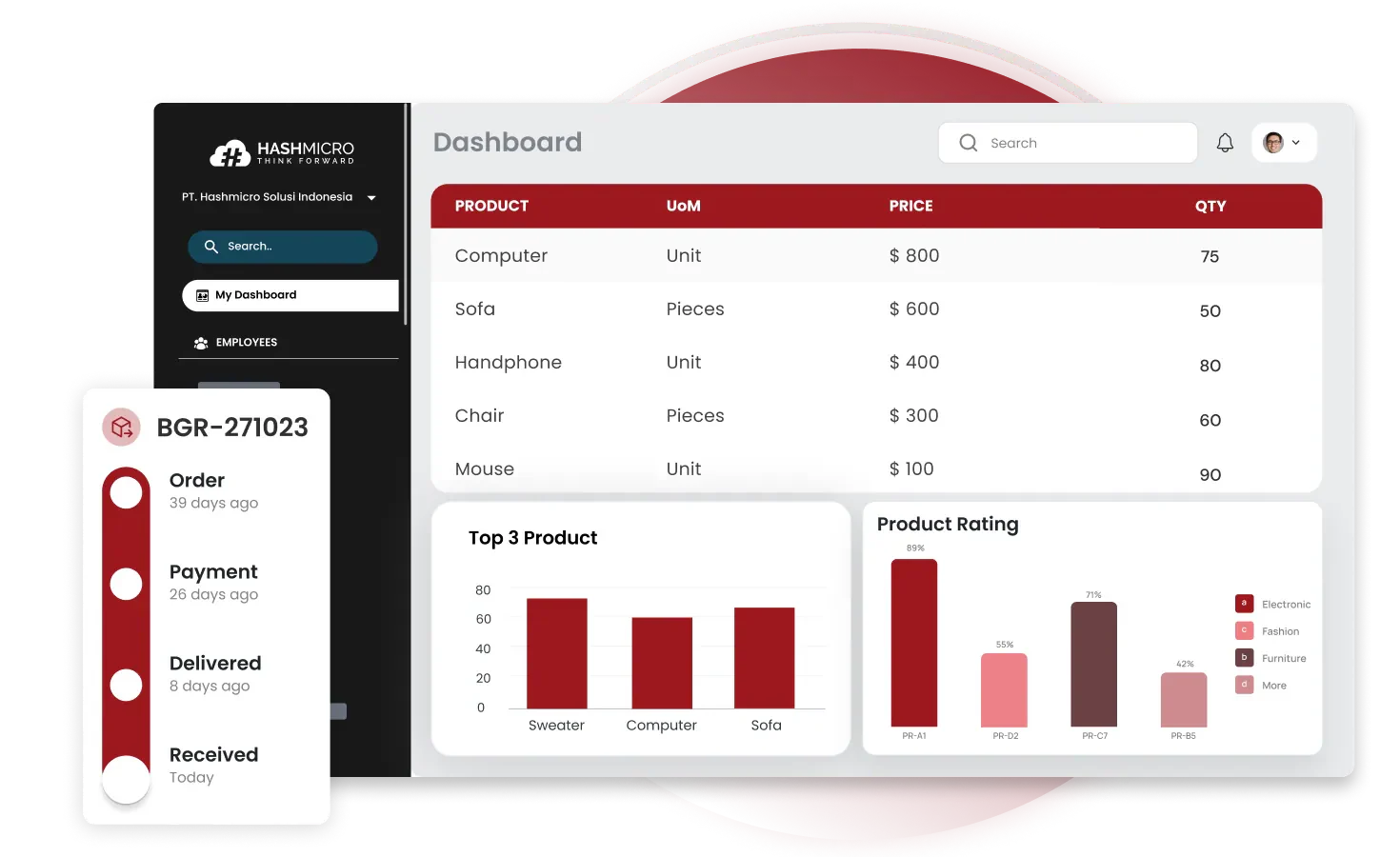
HashMicro’s Procurement System is the best procurement management solution for businesses in the Philippines. The system helps companies streamline purchasing processes, reduces errors, and provides real-time data, ensuring efficient and cost-effective procurement operations.
Other than the features mentioned in the previous section, HashMicro’s AI procurement software also provides several more advanced features, such as:
- E-procurement: This feature allows businesses to conduct tenders and request quotations online, simplifying and speeding up the procurement process.
- OCR for RFQ: OCR technology quickly scans and processes RFQ documents, reducing manual entry errors and saving time.
- Automatic vendor rating: This feature automatically evaluates vendors based on punctuality, pricing, and completeness, helping businesses choose the best suppliers.
- Periodic vendor rating review: Regular reviews of vendor ratings ensure continuous improvement and maintain high standards in supplier performance.
- KPI target per purchaser: Setting KPI targets for each purchaser helps track performance and ensures procurement goals are met efficiently.
- Cost savings tracking and reporting: This feature monitors and reports cost savings, enabling businesses to measure the financial benefits of their procurement activities.
- Vendor promotion program management: Managing vendor promotions through the system helps strengthen supplier relationships and can lead to better deals.
- Custom printout in RFQ: Customizable RFQ printouts allow for tailored requests based on different purchase types, improving clarity and specificity.
- Budget tracking & limit per purchase: This procurement application tracks budgets and sets purchase limits within the system, helping businesses control spending and avoid overspending.
By utilizing HashMicro’s advanced procurement tools, including e-procurement, businesses can simplify tender processes and manage vendor relationships more effectively. Moreover, features like periodic vendor rating reviews and KPI tracking ensure a smoother, more controlled procurement process.
Conclusion
Procurement Management Systems are designed to drive business efficiency by ensuring that every procurement process facilitates well-informed decisions. Furthermore, good procurement software must include a comprehensive set of features, such as a purchasing system, supplier or vendor management, and financial reporting.
In the Philippines, HashMicro stands out as one of the best Procurement Software providers. Not only does it offer fully customizable features tailored to your business needs, but it also enables your company to streamline procurement processes, gain actionable insights, and confidently drive growth.
Explore how HashMicro’s software solutions can transform your procurement management processes, and try a free consultation today.
FAQ About Procurement System
A procurement system streamlines the purchasing process, reduces errors, and manages supplier relationships. Additionally, this help control costs, improve efficiency, and ensure compliance with company policies.
An example of a procurement system is HashMicro’s Procurement Software, which automates supplier management, purchase orders, and vendor ratings, enhancing procurement efficiency.
Procurement management involves sourcing suppliers, negotiating contracts, managing purchase orders, and ensuring timely delivery of goods and services, all while optimizing costs.
A procurement management system is a software solution that helps businesses manage the entire procurement process, from sourcing suppliers to purchasing goods and services. It automates tasks, tracks orders, ensures compliance, and improves efficiency in procurement activities.
An example of a procurement system is HashMicro, a cloud-based solution that helps businesses automate procurement tasks, manage supplier relationships, track purchases, and ensure compliance with company policies. It simplifies the entire procurement process from request to payment.