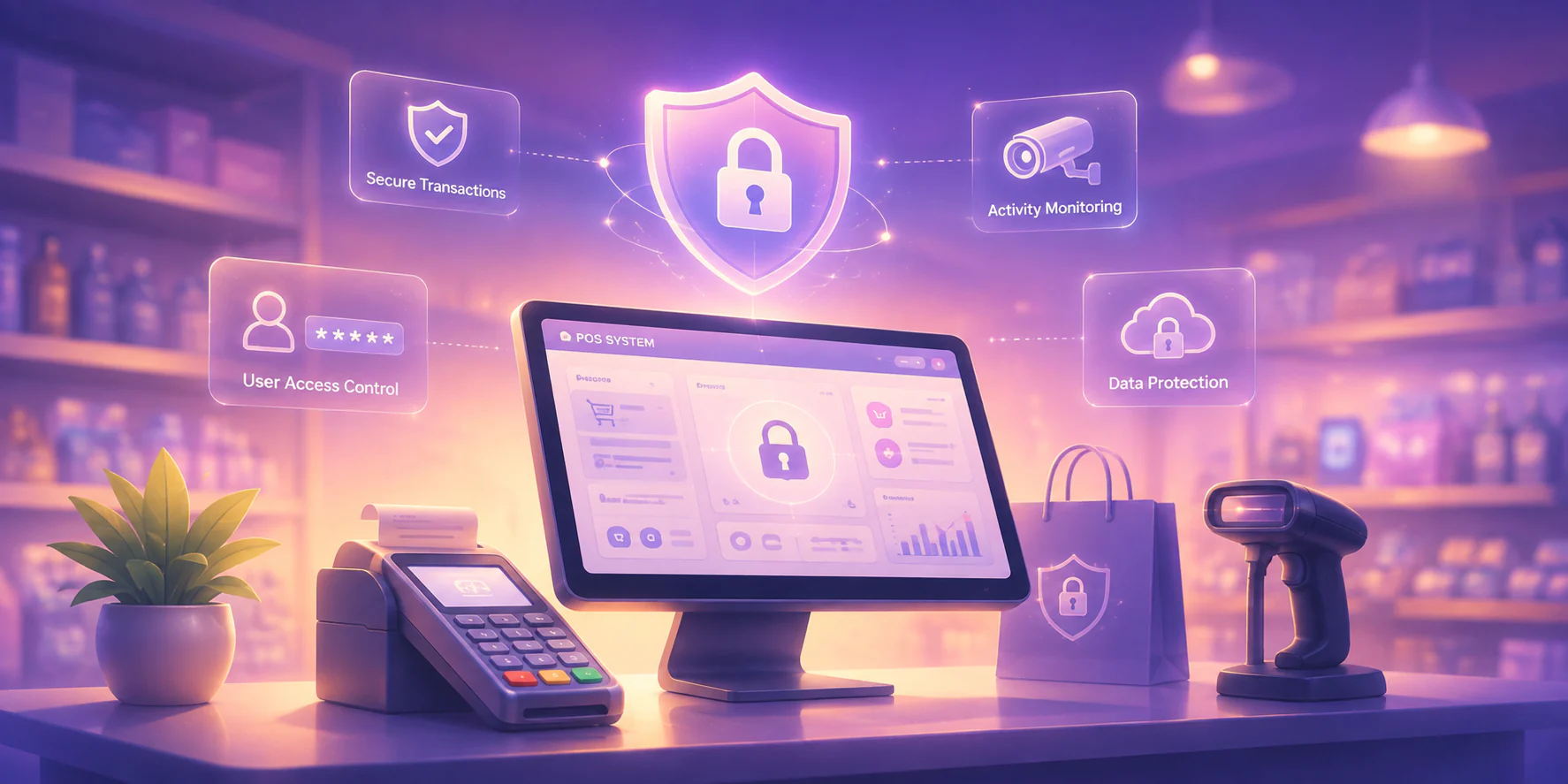






Your counter accepts cards and e-wallets alongside QR Ph, yet every closing shift ends with settlement reports that refuse to match. That is where a cashless transaction stops feeling modern. Refunds go untracked, failed payments get re-rung at the till, and the cash drawer becomes the only number anyone still trusts.
Customers have already moved. According to the Bangko Sentral ng Pilipinas 2024 Report on the Status of Digital Payments, digital payments accounted for 57.4 percent of monthly retail payment volume in 2024, up from 52.8 percent in 2023. The same report recorded QR Ph merchant sign-ups growing 148.7 percent year on year. A messy payment setup is no longer a back-office annoyance. It becomes slower queues and disputed refunds that nobody can reconcile at closing.
This guide explains what a cashless transaction is and how the money actually moves. It then walks through the payment methods Philippine businesses use, the fees and risks worth planning for, and a practical way to roll out a cashless payment system without breaking your books.
Key Takeaways
A cashless transaction is the transfer of money between parties using digital or electronic payment methods instead of physical cash.
Key cashless transaction methods include credit and debit cards, digital wallets, QR code payments, contactless NFC payments, and bank transfers or direct debit.
Implementing cashless payments starts by matching methods to how customers already pay. Compare provider fees next, then connect the terminal to your POS so every approved payment lands in your sales and accounting records automatically.
What Is a Cashless Transaction?

A cashless transaction is the transfer of money without physical cash, using digital or electronic payment methods instead. It works through payer authorization, verification by financial institutions, and a secure network transfer, which automatically records each payment.
Unlike cash payments, which settle instantly and anonymously, cashless transactions involve parties such as issuing banks, acquiring banks, and payment gateways. While the process is more complex behind the scenes, it is usually faster for users and gives businesses real-time data to analyze customer behavior and improve sales.
Types of Cashless Transaction Methods
The cashless payment ecosystem is incredibly diverse, offering a range of methods tailored to specific business needs and customer preferences. Here are some of the most common cashless payment methods used in today’s business world.
Here are some of the most common cashless payment methods used in today’s business world.
| Method | Best for | Settlement speed | Cost profile |
|---|---|---|---|
| Credit and debit cards | High-ticket retail and travel | 1–3 banking days | Highest MDR |
| Digital wallets | Everyday retail and food service | Same day to next day | Moderate |
| QR code payments (QR Ph) | Small merchants and market stalls | Near real time | Lowest |
| Contactless (NFC) | High-traffic queues and transport | Follows the card rail | Same as cards |
| Bank transfer and direct debit | Invoices and recurring billing | Instapay instant, PESONet same day | Flat fee per transfer |
- Credit and debit cards
Credit and debit cards let customers pay using a credit line or funds from their bank account through an EDC terminal or online gateway. Common examples in the Philippines include Visa and Mastercard cards issued by BDO, BPI, Metrobank, and UnionBank. If you want to understand the operational side, see this guide to credit card processing for businesses. - Digital wallets (e-wallets)
Digital wallets are mobile apps that store a balance or link to cards and bank accounts for fast phone-based payments. Popular examples in the Philippines include GCash and Maya for in-store payments, online checkout, and bills. To explore how this payment method can drive revenue, read this digital wallet guide for business growth - QR code payments
QR payments work by scanning a merchant’s QR code in an app, then confirming the transaction instantly. A common example in the Philippines is QR Ph, which lets customers pay via participating apps like GCash and Maya. - Contactless payments (NFC)
Contactless payments use NFC to complete transactions by tapping a card or phone on a compatible terminal. Examples in the Philippines include tap-to-pay Visa or Mastercard cards from local banks, plus Apple Pay and Google Pay, where supported. The same chip standard also powers loyalty cards and access badges, so it helps to know how NFC works in a business setting before you buy terminals. - Bank transfers and direct debit
Bank transfers move money between accounts for personal payments, invoices, and business transactions, while direct debit automates recurring collections. Examples in the Philippines include Instapay and PESONet transfers, as well as auto-debit arrangements for utilities, loans, or subscriptions offered by banks.
Why Should Your Business Embrace Cashless Transactions?

Adopting cashless transactions is more than just keeping up with technology; it is a strategic business decision that delivers tangible and measurable benefits. Let’s explore in more detail the various strategic advantages that businesses can gain by switching to a cashless payment system.
- Increased operational efficiency
Cashless payments remove the slowest parts of closing. Staff stop counting drawers and chasing short change, because each approved transaction is already logged with its amount and timestamp. Shift handovers get shorter and cash variance stops being a nightly investigation. - Enhanced security and reduced risk
Cashless transactions lower the risk of theft, robbery, and counterfeit money by reducing the amount of physical cash stored on-site. Each payment is protected by secure authentication and creates a digital trail, making fraud monitoring and dispute checks easier. - Improved customer experience
Cashless transactions make checkout faster and more convenient by giving customers multiple ways to pay, such as cards, e-wallets, or QR codes. Shorter queues and smoother payments improve satisfaction and can increase repeat visits. - Access to valuable sales data and analytics
Every cashless transaction generates usable data, such as purchase history, peak hours, and product trends, that you can analyze to make smarter decisions. This insight helps businesses improve inventory planning, refine promotions, and optimize pricing based on real demand, while also streamlining the customer billing cycle from end to end. - Broader market reach
Cashless transactions help businesses serve more customers, including those who rarely carry cash and shoppers who prefer digital payments. By enabling online payment options, businesses can also expand into e-commerce and sell beyond their physical location.
Navigating the Challenges of a Cashless System
While the benefits of cashless transactions are immense, it is crucial for business leaders to be aware of and prepare for the challenges that may accompany them. Here are some of the main challenges to anticipate when switching to a cashless payment system.
- Transaction fees and processing costs
Cashless transactions incur processing fees such as MDR, and these costs can pile up, reducing profit margins, especially for high-volume or low-margin businesses. The solution is to compare providers, negotiate rates based on volume, and optimize your payment mix by steering customers to lower-fee options where possible. Understanding the broader tax landscape through the TRAIN Law guide for business owners can also help you manage overall transaction-related costs more effectively. - Security risks and data breaches
Cashless transactions are vulnerable to phishing, malware, and data breaches, compromising customer information and eroding trust. The solution is to work with secure, compliant providers and to strengthen internal controls, such as access management, staff training, and regular security reviews. - Technological dependence and downtime
Cashless transactions rely on the internet, power, and working terminals, so outages can stop payments and disrupt sales. The solution is to use a POS setup with offline mode, keep backup connectivity and power options, and provide alternative payment methods during downtime. - Digital literacy and financial inclusion gaps
Cashless transactions may exclude customers who are unbanked or less comfortable with digital tools, which can hurt sales and brand perception. The solution is to keep flexible payment options during the transition and educate customers with clear, simple guidance at checkout.
The Integration of Cashless Payments to Your Business Ecosystem
The true benefit of a cashless payment system lies not just in its ability to process transactions, but in its potential to integrate seamlessly with other core business systems. Let’s look at how this integration works with various key systems.
- Syncing with Point of Sale (POS) systems
Integrating cashless transactions with a POS system automatically sends the total bill to the payment terminal, reducing manual input and cashier errors. Once payment is approved, the POS updates the transaction status in real time, so sales records match the funds received. To find the right platform for your business, compare the best POS systems in the Philippines. - Integrating with Accounting and ERP software
Connecting cashless transactions to accounting and ERP software automates reconciliation by recording sales, refunds, and processing fees directly into the financial system. This keeps your general ledger up to date, improves audit readiness, and supports faster decision-making based on accurate data. - Connecting to CRM for customer insights
Linking cashless transaction data to a CRM turns payment history into actionable customer insights such as purchase frequency, average spend, and product preferences. This enables smarter segmentation, personalized campaigns, and loyalty programs that target customers with the right offers at the right time.
How to Implement a Cashless Payment System in Your Business
Implementing a cashless payment system is a critical step that requires careful planning and execution. Here is a step-by-step guide to help you through the implementation process.
1. Assess your business needs and customer preferences
Start by reviewing your transaction volume, average order value, and where customers pay most often, whether in-store, online, or both. Use simple data checks or quick surveys to prioritize the cashless methods your customers already prefer, such as cards, e-wallets, or QR.
2. Research and compare payment gateway providers
Compare providers based on total costs, including MDR, setup fees, monthly charges, and any terminal or hardware requirements. Make sure they support your preferred payment methods, integrate smoothly with your POS or accounting tools, and offer reliable customer support.
3. Ensure security and compliance (PCI DSS)
Choose a provider that complies with PCI DSS standards and offers protections such as encryption, tokenization, and fraud monitoring. This reduces the risk of data breaches and maintains customer trust as you scale cashless transactions. For businesses in the Philippines, it is equally important to understand the requirements for BIR POS registration and accreditation to stay fully compliant.
4. Train your staff and inform your customers
Train staff on daily operations, refunds, troubleshooting, and what to do during downtime to keep checkout smooth. Promote the new payment options through signage and online channels so customers know what is available and adopt it quickly.
The four steps above are the easy part. What usually stalls a rollout is making the approved payment show up correctly in your sales report, your stock count, and your books on the same day it happened. A POS system that posts each settled transaction straight into inventory and accounting is what keeps a cashless setup from becoming three spreadsheets.
The Future of Cashless Transactions
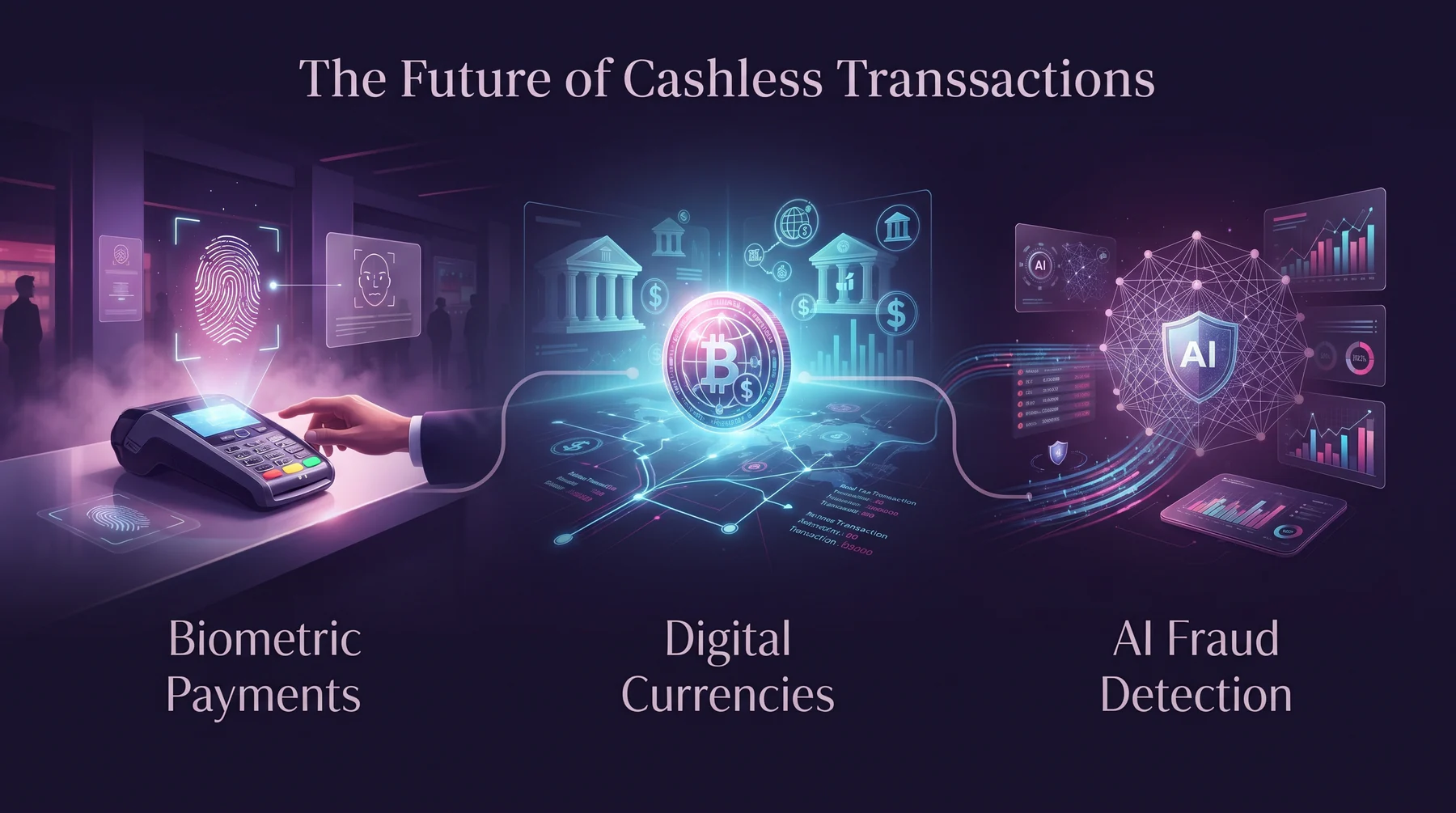
The digital payment landscape is continuously evolving at a remarkable pace, driven by technological innovation and shifting consumer expectations. Let’s look at some of the most promising trends shaping the future of payments. Three shifts are shaping where cashless payments go next.
Biometric approval through fingerprint or face scanning is replacing the card tap, which moves checkout toward "invisible payments" where the customer walks out without opening an app. Alongside it, central bank digital currencies offer a government-backed digital version of national currency that could make high-volume and cross-border settlement faster than current rails.
The third shift is defensive. Machine learning models now score payment behaviour in real time across enormous transaction volumes, catching fraud patterns that rule-based checks miss. For merchants the practical effect is fewer chargebacks and suspicious activity blocked before settlement, which protects both margin and customer trust.
Conclusion
Cashless transactions have moved well beyond convenience. They are now a fundamental part of running a competitive, data-driven business. From faster checkout to more accurate financial records, the shift to digital payments allows businesses to serve customers better while gaining real-time visibility into sales performance.
Successful adoption depends on choosing the right payment methods, securing compliance with standards like PCI DSS, and integrating payment data across your core business systems. When these elements work together, you reduce manual effort, minimize errors, and position your operations for sustainable growth.
To put this into practice, finding the right POS platform is a critical first step. Explore this comparison of the best POS systems in the Philippines to evaluate which solution fits your business needs and supports cashless transactions effectively.
FAQ About Cashless Transactions
A payment gateway is the customer-facing technology that securely captures and transmits payment information. A payment processor is the entity that executes the transaction by communicating between the banks to facilitate the fund transfer.
Yes, in many aspects. Cashless transactions are protected by encryption and fraud monitoring, reducing risks like physical theft and counterfeit money. However, cybersecurity remains a crucial aspect to manage.
Absolutely. Small businesses often see significant benefits, such as a more professional image, faster service, reduced cash-handling risks, and access to valuable sales data that can help them grow.
PCI DSS is a set of security standards for companies that handle credit card information. Compliance is crucial to protect sensitive customer data from fraud and breaches, and to avoid significant fines.
Fees are charged as a Merchant Discount Rate, or MDR, deducted from each approved sale. Card payments in the Philippines generally sit in the low single-digit percentage range, while QR Ph P2M rates are typically lower. Exact rates depend on your acquirer and monthly volume, so always ask for a written schedule before signing.