







Running a salon means balancing great service with smooth daily operations. Beyond styling and treatments, salon owners in the Philippines manage appointments, coordinate stylists, track product inventory, and keep detailed client records.
Handling these tasks manually invites errors, missed bookings, and stock shortages. As the business grows, the complexity only increases and the losses become harder to see.
A salon POS system organizes these moving parts into one platform, so operations run efficiently and owners can focus on the client experience instead of paperwork.
Key Takeaways
Philippine salons need a dedicated salon POS to reduce no-shows, manage schedules efficiently, and support personalized service across branches.
The top salon POS solutions help streamline appointments and improve client retention through automated salon management features.
A comprehensive POS management systems help track product usage and store detailed client histories in one centralized platform.
What is Salon POS?
A Salon POS (Point of Sale) system is more than just a cash register, it’s a complete business management hub built specifically for the beauty industry.
Think of it as your salon’s digital brain. It remembers every client’s color formula, flags the toner that is about to run out, blocks the right amount of time for a rebond treatment, and sends the reminder that keeps Tuesday’s 11 a.m. slot from going empty.
If you are still weighing what a point of sale system is before comparing vendors, start with understanding what a point of sale system is.
What makes a Salon POS different from a regular retail POS? Here’s the key distinction:
| Regular Retail POS | Salon-Specific POS |
|---|---|
| Processes product sales | Manages service bookings + product sales |
| Basic inventory count | Tracks product usage per service (e.g., hair color tubes per client) |
| Single transaction type | Handles packages, memberships, and service bundles |
| No scheduling feature | Built-in appointment calendar with automated reminders |
| Generic customer database | Client profiles with treatment history, preferences, and allergies |
What Benefits Does a Salon POS Give Philippine Salons?
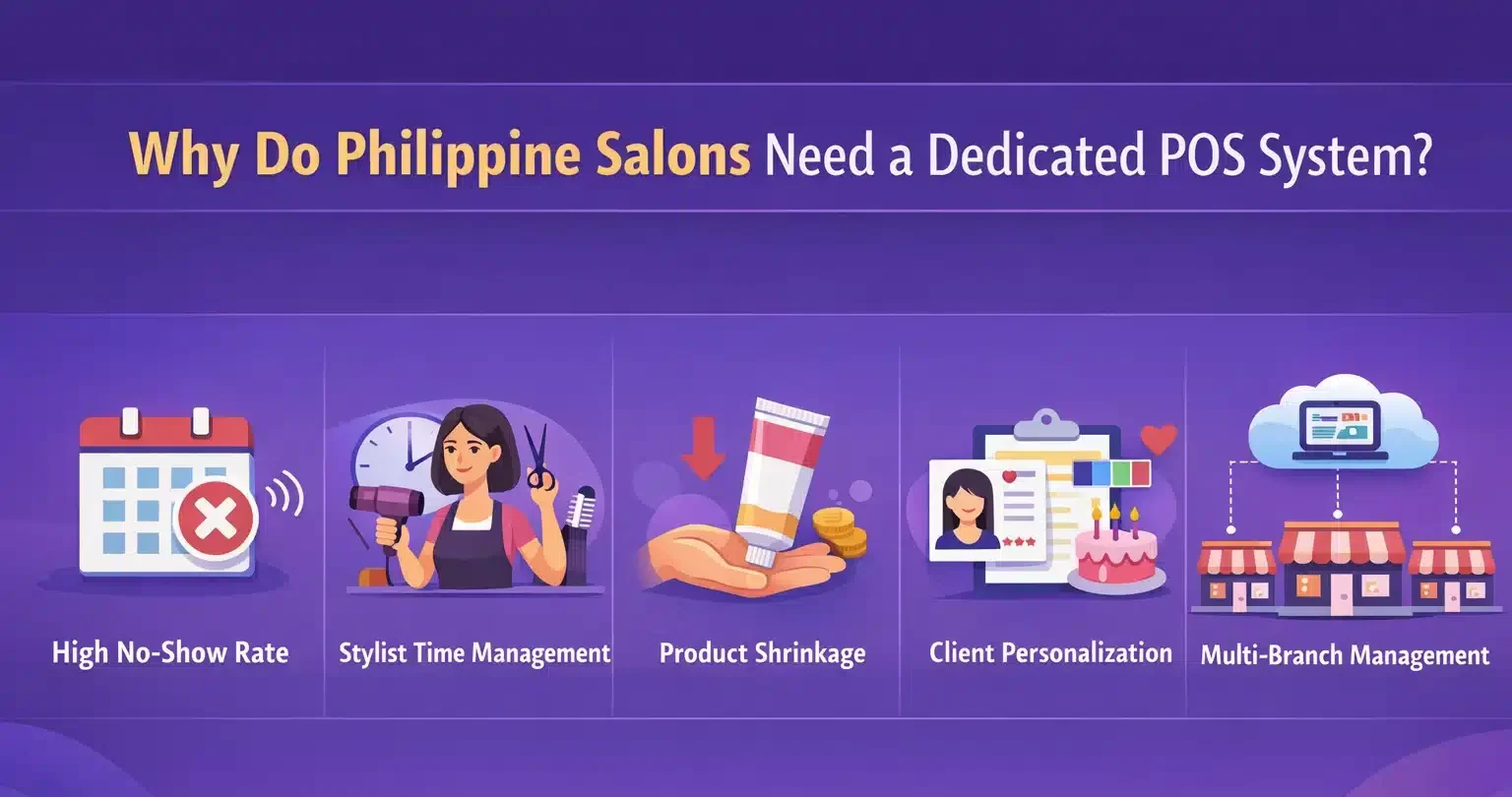
Running a salon in the Philippines comes with operational pressures that generic business tools do not address. Here is what a dedicated salon POS changes.
1. Fewer no-shows
Salons without automated reminders report no-show rates of 20–30%, and every empty chair is revenue you already paid staff to wait for.
- SMS and Viber reminders sent automatically before each appointment
- Deposits or card-on-file rules to discourage last-minute cancellations
- Waitlist fill when a client cancels, so the slot is not left empty
- Repeat-offender flags for clients who cancel often
2. Better use of stylist time
In a salon, your most expensive inventory is the hour you already sold to a client.
- Visual boards show every stylist’s availability in one screen
- Service duration presets block realistic time for cuts, color, and treatments
- Walk-ins are slotted without double-booking an existing client
- Commissions calculate themselves from services and retail sold
3. Less product shrinkage
Salons commonly lose 15–20% of back-bar stock to habits nobody is tracking.
- Product usage recorded per service, so over-portioning becomes visible
- Expiry alerts before color tubes and treatments go bad
- Retail sales ring through the same stock ledger, leaving no blind spot
- Branch transfers logged, so stock movement is always traceable
4. Stronger client retention
Clients stay where the staff already know their hair. Retention programs for customers only work when the data behind them exists.
- Full treatment history with color formulas and products used
- Preferences saved, from water temperature to the stylist they request
- Allergy warnings shown before the service starts
- Birthday and anniversary campaigns from stored client dates
5. Safer multi-branch control
Owners opening a second or third outlet usually inherit scattered reporting and duplicated clients.
- One dashboard comparing revenue, staff utilization, and stock per branch
- One client profile usable at every location
- Prices and promotions standardized across outlets
- Stock transfers handled in the system instead of over chat groups
Comparison of the Best Salon POS Software
Every tool on this list takes payments and holds client records, but they are not interchangeable. Some are built around the salon chair with booking and commissions as the core, while others start as retail POS and add scheduling through apps. The table below shows what each system is strongest at and what kind of salon it usually suits; subscription prices are listed inside each review.
| Software | Key Features | Best For |
|---|---|---|
| Mangomint | Integrated payments with instant deposits, staff time clock and commissions, client communication, advanced reporting | Boutique salons and day spas with 5–20 staff |
| HashMicro | Smart appointment system with Viber/SMS reminders, stylist commission tracking, product usage monitoring, POS integration with accounting and CRM, BIR-ready reports | Philippine salons, spa chains, and clinics needing BIR-compliant reporting |
| GlossGenius | Branded online booking, card-on-file payments and deposits, memberships and gift cards, retail inventory | Independent stylists and small studios |
| Shopify | Omnichannel selling, unified retail inventory, multi-location management, customer profiles shared online and in-store | Salons earning most revenue from retail and online product sales |
| ZenSoft | Appointment scheduling, customer database, sales and expense tracking, cloud access from any device | Small Philippine salons going paperless for the first time |
| Salonkee | Online booking portal, POS payments, inventory control, staff schedules and commissions, automated reminders | Single-branch salons and barbershops |
| Square | Free POS app with tap-to-pay, appointment booking, automated confirmations, sales analytics, flexible low-cost hardware | Cost-conscious walk-in salons that sell mostly retail |
| Fresha | Free booking and client management, packages and memberships, loyalty tools, mobile app marketplace, in-app payments | Studios that want free software and new-client discovery |
| TimeTailor | Online booking, simple checkout and payments, client records, staff calendar management | Solo stylists and mobile beauty professionals |
| Zenoti | Centralized multi-location appointments, inventory and retail management, business analytics, ticketing and marketing automation | Multi-branch salon, spa, and wellness chains |
Top 10 Salon POS Solutions in the Philippines
Here are ten of the best salon POS solutions in the Philippines that can help streamline your operations and support business growth.
1. Mangomint Salon POS
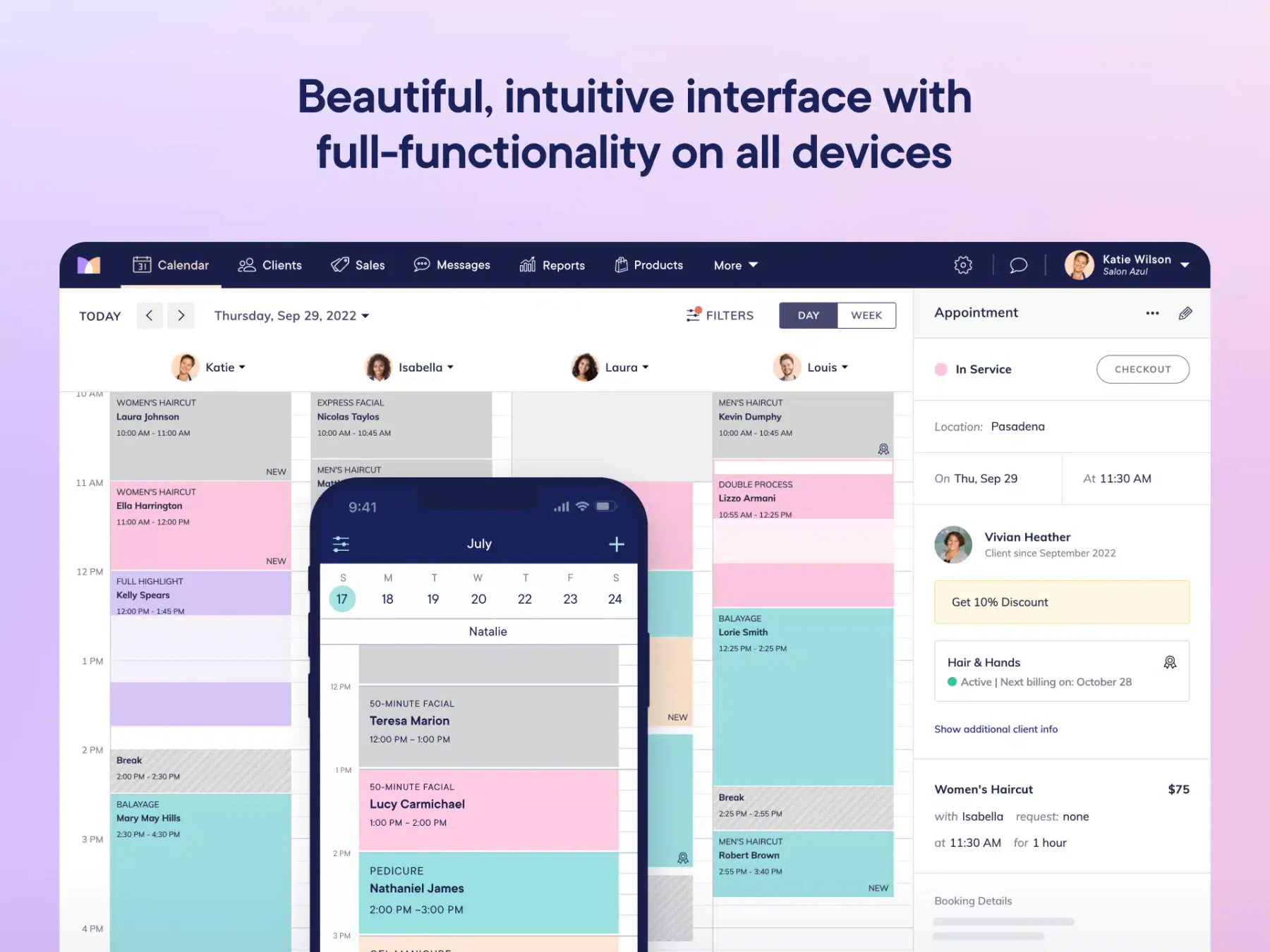
Mangomint is a modern salon management platform designed to streamline daily operations for salons and spas. Its intuitive interface and automation capabilities make it a valuable tool for businesses aiming to enhance efficiency and client satisfaction.
Key features:
- Integrated payments let clients pay at the counter or from their phone, with card details stored for faster repeat checkout.
- Staff management covers time clock, payroll-ready hours, commissions, and performance by service category.
- Client communication automates reminders, review requests, and rebooking messages without manual sending.
- Reporting and analytics break down revenue by stylist, service, and retail, including no-show and cancellation trends.
- Online booking with deposits and a waitlist feature fills cancelled slots automatically.
Best for: boutique salons and day spas with 5–20 staff that want heavy automation instead of a basic register.
Price: from about ₱11,200 a month for the base plan plus ₱1,800 per additional user; no free tier.
|
Pros |
Cons |
|
|
2. HashMicro Salon POS
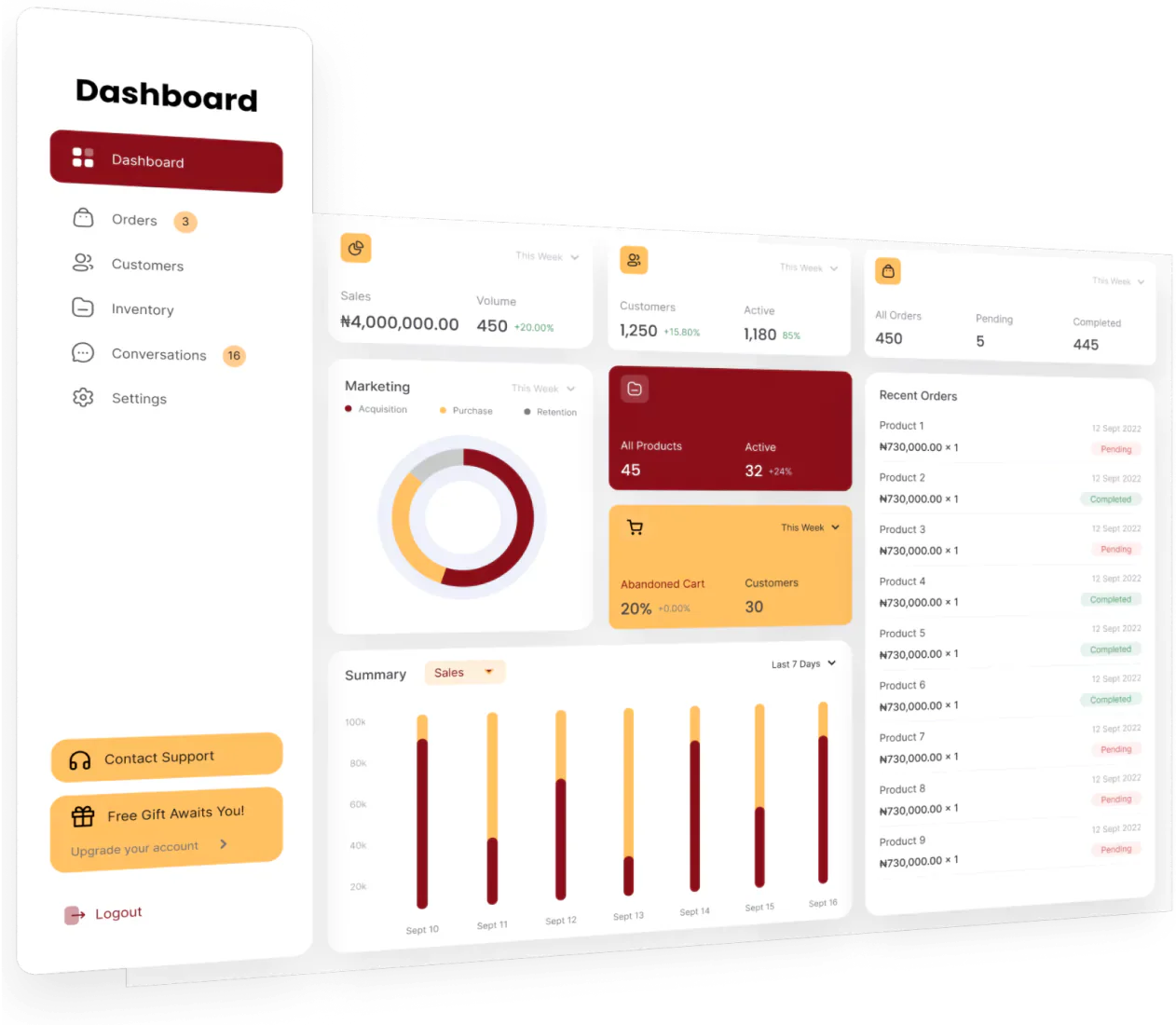
HashMicro was designed with beauty-industry workflows in mind. The system handles everything from appointment booking with automated SMS reminders to detailed product usage tracking per service.
What makes HashMicro POS Software particularly relevant for Philippine salons is its BIR-compliant reporting and local payment integration. For salon owners tired of juggling multiple systems, HashMicro consolidates everything into one dashboard, making it easier to improve customer service at every touchpoint.
Key Features:
- Smart Appointment System: Drag-and-drop scheduling with conflict detection, service duration presets, and automated Viber/SMS reminders to reduce no-shows by up to 70%
- Client Treatment History: Store hair color formulas, previous services, product allergies, and personal preferences for each client
- Stylist Commission Tracking: Automatically calculate commissions based on services rendered, product sales, or custom formulas
- Product Usage Monitoring: Track how much product (hair color, treatments, etc.) is used per service to prevent waste and shrinkage
- BIR-Ready Reports: Generate compliant sales reports for hassle-free tax filing
Best for: Philippine salons, spa chains, and beauty clinics that need auditable BIR reporting plus POS integration with the rest of the business.
Price: subscription is quote-based and modular, typically starting near ₱3,000 per user a month depending on modules and branch count, request a quote for an exact figure.
|
Pros |
Cons |
|
|
If your salon needs more than a checkout screen, HashMicro POS software brings bookings, commissions, inventory, and BIR-ready reports into one system your accountants will also accept. The next step is a 30-minute product tour using your own service menu and price list.

3. GlossGenius Salon POS software
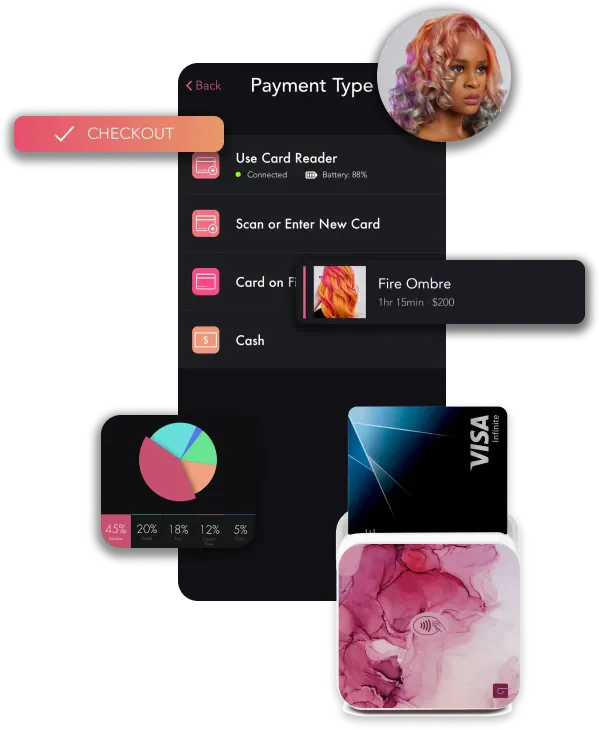
GlossGenius provides a modern solution designed to support salon professionals in managing and growing their businesses with greater ease. Widely adopted by beauty entrepreneurs, it provides an all-in-one approach that aligns well with the operational needs of salons.
Key Features:- Branded booking site gives each studio a polished page for online appointments, so clients book outside walk-in hours.
- Card-on-file payments and deposits reduce no-shows and settle the balance without a second terminal.
- Memberships, packages, and gift cards are managed natively, with automatic renewal tracking.
- Retail inventory and point-of-sale tools keep product sales and back-bar stock on the same ledger.
- Client messaging and forms capture consent notes and preferences before the appointment starts.
Best for: independent stylists, nail artists, and small studios that care most about brand presentation.
Price: from about ₱1,760 a month on the Starter plan; Pro and Elite are roughly ₱2,900 and ₱3,590.
|
Pros |
Cons |
|
|
4. Shopify Salon POS System
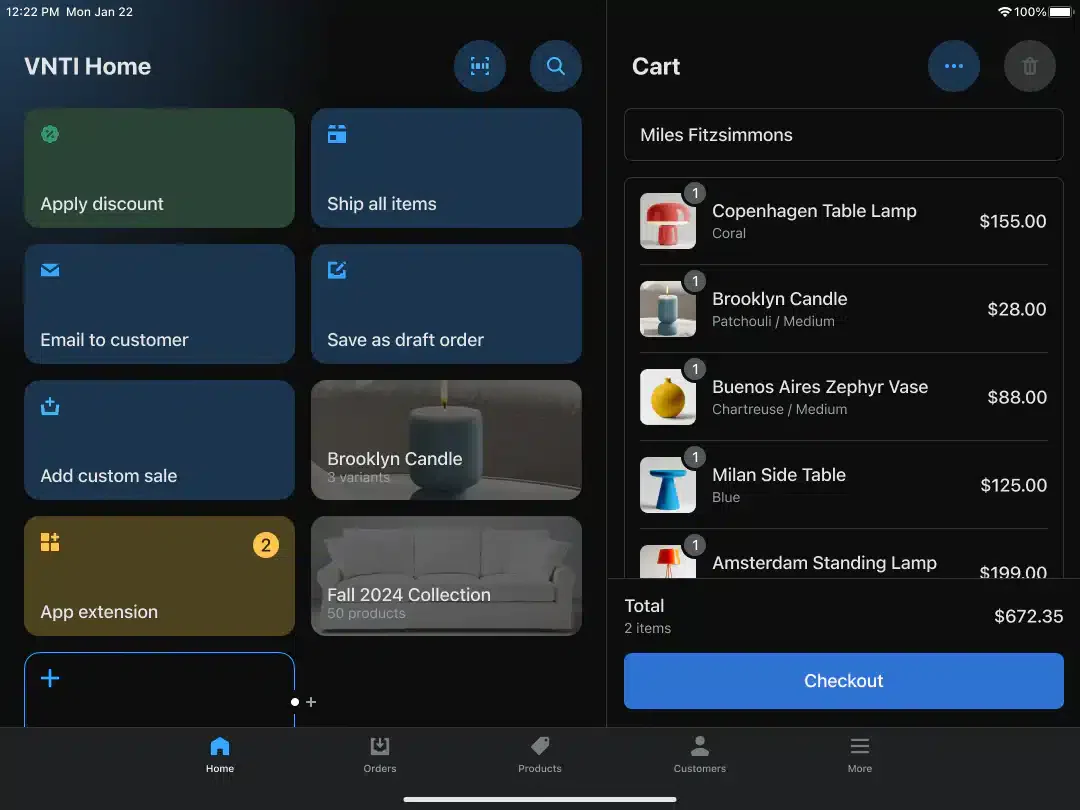
Shopify’s POS system is designed to help salon owners manage both in-person and online sales through a unified platform. It streamlines daily operations, making it easier to manage appointments, sales, and customer interactions from a single platform.
Key features:
- Omnichannel selling syncs your storefront, social channels, and counter sales so stock counts never split into two versions.
- Unified inventory management tracks retail products with variants, suppliers, low-stock alerts, and cycle counts.
- Multi-location management lets owners run several outlets with separate stock, staff permissions, and consolidated reporting.
- Shared customer profiles carry purchase history, marketing consent, and loyalty data between online and in-store.
- POS integration with accounting and shipping apps extends the system as the business grows.
Best for: salons earning a large share of revenue from retail and online product sales rather than chair time.
Price: POS Lite is bundled free with any Shopify plan; Basic starts near ₱6,900 a month billed annually, and salon scheduling requires a booking app from roughly ₱1,070 a month.
|
Pros |
Cons |
|
|
5. ZenSoft’s Salon POS
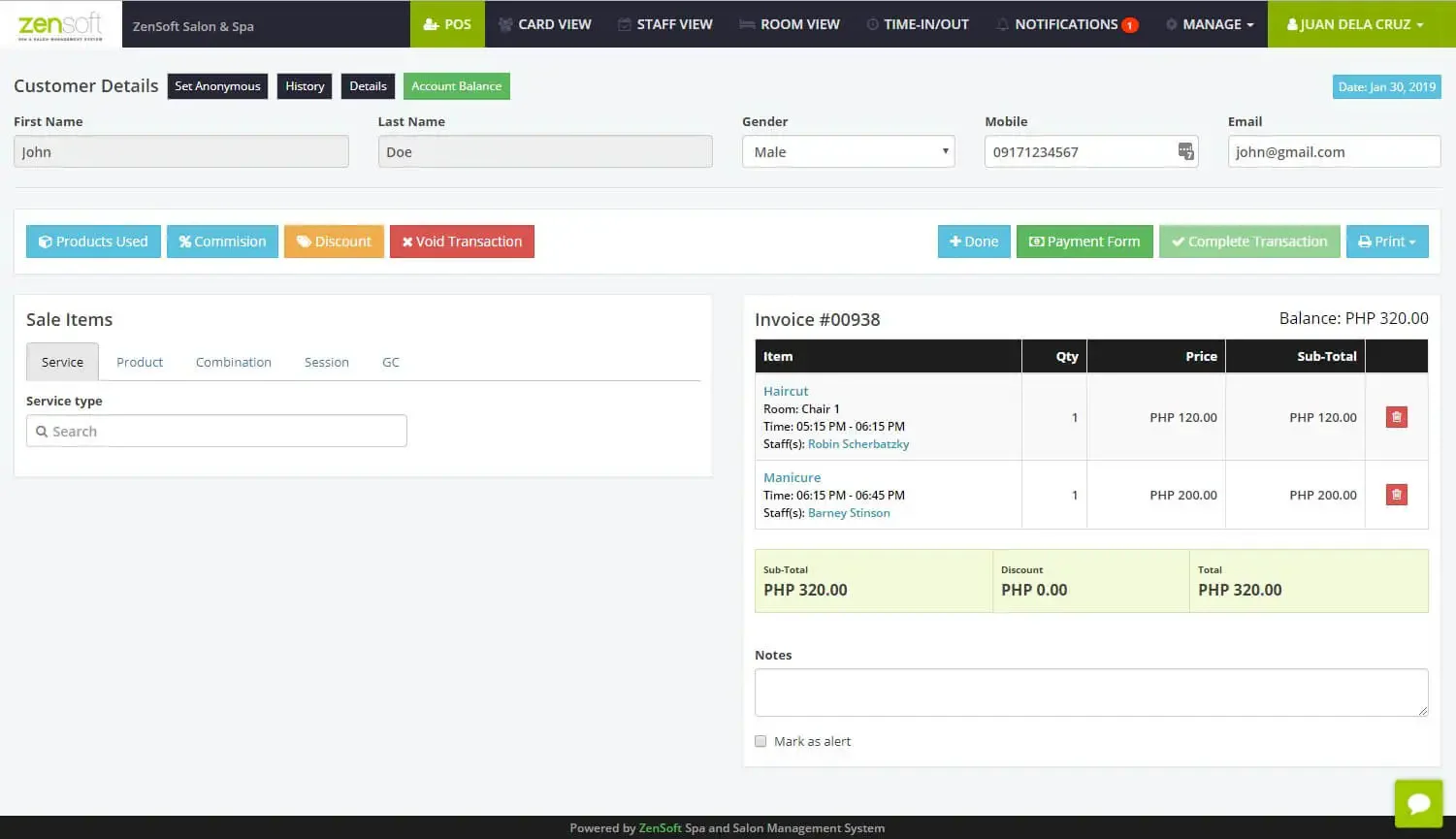
ZenSoft is a cloud-based salon management platform tailored for beauty and wellness businesses in the Philippines. It offers tools to streamline daily store activity operations, from appointment scheduling to sales tracking, all accessible through a centralized system.
Key features:
- Appointment management organizes bookings, reschedules, and cancellations by stylist and service.
- Customer database stores contact details, service history, and notes for repeat visits.
- Sales and expense tracking records daily revenue against petty cash and operating costs.
- Cloud access lets owners review branch performance from any device without on-site servers.
Best for: small Philippine salons moving from pen-and-paper logs to a first digital system.
Price: quote-based per outlet.
|
Pros |
Cons |
|
|
6. Salonkee POS Software
Salonkee is a salon management platform designed to streamline daily operations for beauty and wellness businesses. It offers tools to handle appointments, client interactions, and sales processes, aiming to enhance efficiency and client satisfaction.
Key features:
- Online booking portal lets clients reserve services outside business hours from your website or social links.
- Automated reminders cut no-shows by confirming appointments before the client changes their mind.
- POS payments accept cards, packages, and gift vouchers at the counter in the same screen.
- Inventory management tracks retail products and back-bar stock across services.
- Staff schedule and commission tools keep payroll data tied to actual logged services.
Best for: single-branch salons and barbershops that want booking plus a counter app without enterprise complexity.
Price: a free plan covers a single workstation; paid plans for growing teams start near ₱1,760 a month, billed per user.
|
Pros |
Cons |
|
|
7. Square POS System
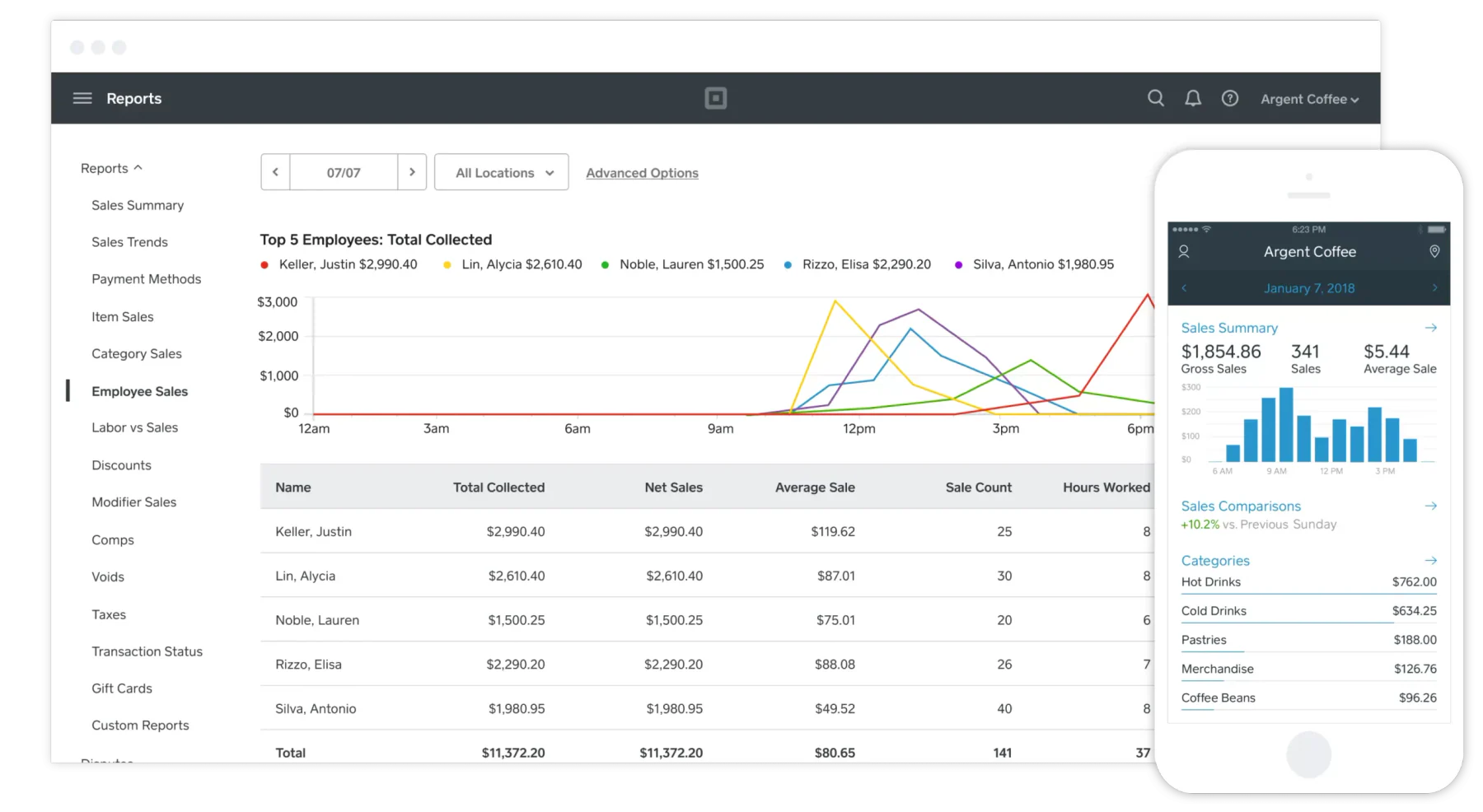
Square offers a comprehensive POS solution designed to simplify daily operations for salons. It integrates appointment scheduling, payment processing, and client management into a single platform that enables salon owners to manage their businesses more efficiently.
Key features:
- Square Appointments adds a booking calendar, staff schedules, and buffer time to the free POS app.
- Reminder and confirmation messages go to clients by text or email without extra software.
- Tap to Pay turns an iPhone or Android device into a contactless terminal, so no hardware purchase is needed to begin.
- Reporting and analytics show hourly traffic, top services, and staff performance in one dashboard.
- Inventory and customer profiles keep retail sales and client notes attached to the same transaction record.
Best for: new or cost-conscious salons that mostly take walk-ins and value hardware flexibility. If you are comparing it with other local options, read our breakdown of Square POS in the Philippines.
Price: the POS and booking app are free at the entry tier; card-present processing runs about 2.6% + ₱5 and online bookings about 2.9% + ₱5. Card-present rates are only available where Square
|
Pros |
Cons |
|
|
8. Fresha POS
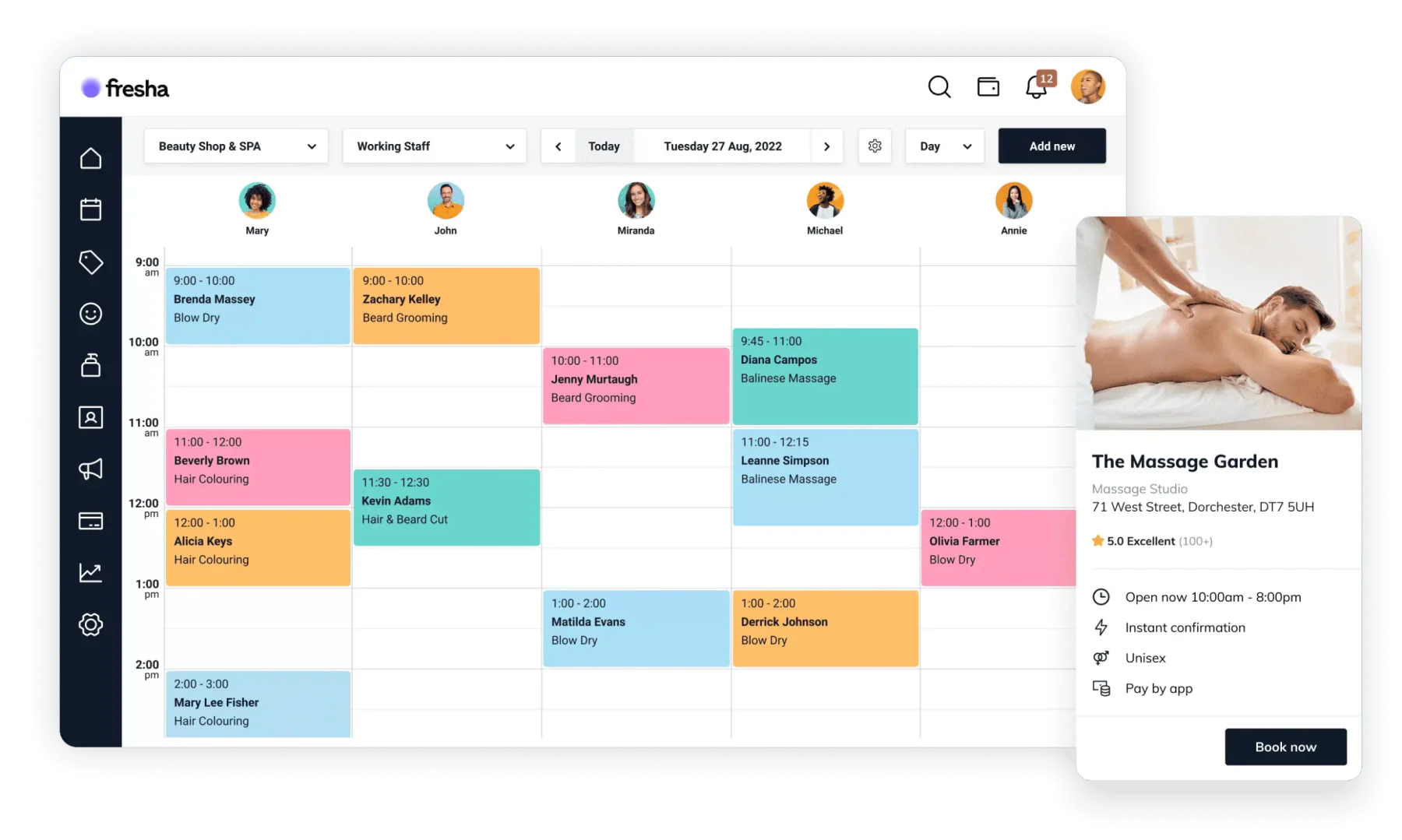
Fresha POS provides a streamlined way for salons and spas to handle day-to-day tasks, offering a centralized system to manage bookings, payment authorization process, and client records with minimal hassle.
Key features:
- Built-in online booking and appointment scheduling covers staff calendars, breaks, and service durations.
- Centralized management of clients, sales, and inventory keeps the salon floor and back office consistent.
- Loyalty points, packages, and memberships encourage repeat visits without a separate app.
- The Fresha marketplace lists your salon to new clients searching for services nearby.
- Payment links and card-on-file let you collect deposits that protect booked chair time.
Best for: studios that want free software and are happy to trade marketplace exposure for new-client discovery.
Price: the core app is free; Pro add-ons start near ₱3,470 a month, plus 20% of the service price as a one-time fee for each new marketplace client. In-person payment processing is not available for Philippine merchant accounts, so checkout runs on links, cash, or local QR rails.
|
Pros |
Cons |
|
|
9. TimeTailor Salon POS
TimeTailor Salon POS is designed to support the daily operational needs of salons by helping manage appointments, sales, and customer interactions in an organized and reliable way.
Key features:
- Online booking lets clients choose a stylist and a time slot without calling the shop.
- Payment handling records settled and pending balances against each appointment.
- Client records keep contact details and visit history available at the counter.
- Staff calendar management shows who is booked, idle, or overbooked at a glance.
Best for: solo stylists and mobile beauty professionals who need scheduling and a simple receipt, not a full operations suite.
Price: subscription-based with entry plans near ₱780 a month and quote-based bundles for small teams; feature availability varies by tier.
Pros | Cons |
|
|
subscription-based with entry plans near ₱780 a month and quote-based bundles for small teams; feature availability varies by tier.
10. Zenoti Salon POS
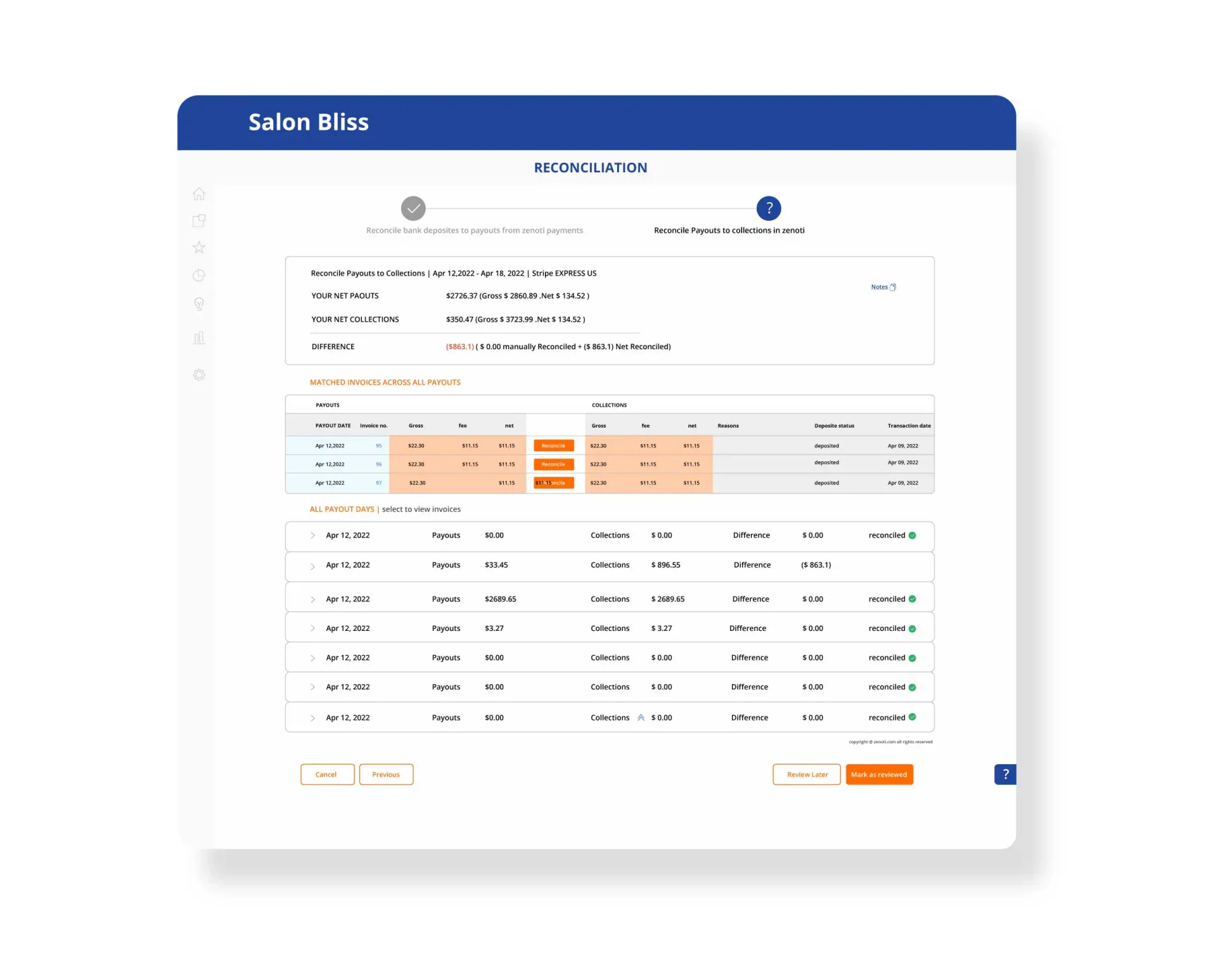
Zenoti Salon POS is a cloud-based solution designed specifically for salons and wellness businesses, helping them manage various aspects of daily operations. It supports both single-location salons, multi-branch enterprises in maintaining smooth and consistent business processes.
Key features:
- Centralized appointment management handles reservations, walk-ins, and resource scheduling across every branch.
- Inventory and retail management tracks product consumption, purchase orders, and inter-branch transfers.
- Analytics and business insights compare stylist productivity, retail mix, and utilization between outlets.
- Marketing automation runs campaigns on client segments, birthdays, and lapsed visits.
- Mobile check-in and ticketing keep queues moving during peak weekend hours.
Best for: growing chains and large wellness groups that need standardized reporting across many outlets.
Price: subscription is quote-based and sold on annual contracts; published starting rates run from about ₱22,000 to ₱34,000 per location a month.
|
Pros |
Cons |
|
|

How to Choose the Best Salon POS Software
Shortlists are easy to make and hard to judge. These five criteria are the ones that decide whether a salon POS pays for itself within the first quarter.
1. Salon Scheduling, Not Just Checkout
Start by testing the scheduler against your actual service menu. A fit-for-salon system should hold service durations, stylist permissions, double-book guards, deposits, and a waitlist in one calendar.
If booking needs a third-party app bolted onto a retail register, add that cost and the sync failures to your comparison. Before you shortlist, it helps to know which POS system type fits your operation.
2. Payment Methods Your Clients Actually Use
Philippine salon clients pay by cash, GCash, Maya, cards, and QR Ph. Understanding how a POS transaction works across each method helps you confirm the system records all of them against the same invoice, and that split payments and refunds are supported. Ask how deposits are held and released, since card rails available in the US are often missing locally.
3. Inventory, Commission, and Client History Tracking
Back-bar usage, stylist commission rules, and client treatment notes are where a salon POS earns its keep. Check that product consumption posts per service, that commission formulas match how you actually pay staff, and that allergy or color-formula notes appear on the appointment card.
4. Total Cost of Ownership
Compare the subscription against hardware, payment rates, implementation, and support. Some “free” platforms charge a percentage for every new client they send you. Ask each vendor for a written quote covering branch count, user seats, training, and what happens when you exceed them.
5. Philippine Compliance Support
Registered salons issue BIR-acknowledged receipts and invoices. Ask for proof of local invoicing or report support, BIR-format sales reporting, and support hours in Philippine time. A vendor with local implementation partners resolves issues far faster than overseas ticket queues.
Conclusion
A Salon POS system is more than just a payment tool, it helps manage appointments, track product usage, calculate commissions, and store detailed client histories in one centralized platform.
For salons in the Philippines, where scheduling issues, no-shows, and inventory losses can affect revenue, a dedicated Salon POS provides the structure needed to improve efficiency and client retention.
If you’re ready to optimize your salon operations and boost profitability, consider scheduling a free consultation to explore the best solution tailored to your business goals. A professional consultation can help you identify the right features.

FAQ Around Salon POS
A Salon POS system is a specialized point-of-sale solution designed for beauty businesses. It manages appointments, client records, inventory, payments, and staff commissions in one centralized platform.
Unlike generic retail POS systems, a Salon POS includes features like appointment scheduling, treatment history tracking, stylist commission calculation, and package or membership management tailored specifically for service-based businesses.
Yes. By reducing no-shows with automated reminders, improving scheduling efficiency, tracking product usage, and supporting personalized client experiences, a Salon POS helps salons operate more efficiently and maximize profitability.