





According to the U.S. Bureau of Labor Statistics, employee benefits accounted for 30.1% of private-sector compensation costs in March 2026. When businesses overlook costs beyond wages, they may misprice products, underestimate operating expenses, and make decisions without a complete view of profitability. This challenge makes accurate cost tracking essential for effective financial management.
Cost accounting helps businesses identify, classify, and allocate direct and indirect expenses across products, services, and operations. By revealing the actual cost of each business activity, it supports better pricing, budget control, resource allocation, and profit analysis. This information also helps managers detect waste and respond before rising costs reduce financial performance.
This guide explains the main cost components, methods, and formulas used in cost accounting. It also covers practical examples, key principles, differences from financial and traditional accounting, and how accounting software can improve cost tracking and reporting.
Key Takeaways
Cost Accounting Focuses on Internal Expense Management. Unlike financial accounting, which is for external reporting, cost accounting helps businesses manage expenses and make data-driven decisions.
Cost accounting helps businesses track expenses and maximize profits. Identifying inefficiencies and reducing waste leads to better financial management.
Different Cost Accounting Methods Serve Different Business Needs. Businesses use methods like standard costing, activity-based costing, and job order costing to track spending and allocate resources effectively.
Despite its advantages, cost accounting can be complex and time-consuming. Without automation, businesses may struggle with detailed cost tracking, which can lead to errors and inefficiencies.
What Is the Meaning of Cost Accounting?
Cost accounting is a financial tracking system that helps businesses monitor, allocate, and analyze expenses efficiently. It provides insights that help companies control spending and maximize efficiency to maintain profitability while ensuring that resources are used effectively.
Unlike financial accounting, which focuses on external reports, cost accounting is used for internal decision-making. It helps businesses analyze costs, refine pricing, and reduce waste, improving overall financial control and efficiency.
To fully understand cost accounting, it’s important to recognize its relationship with other financial processes. Cost accounting is just one aspect of a broader financial management system that includes various types of accounting such as financial accounting, tax accounting, and managerial accounting.
How Does Cost Accounting Differ from Financial Accounting and Traditional Accounting?

Cost accounting, financial accounting, and traditional accounting all support financial management, but they serve different purposes. Cost accounting focuses on internal cost analysis and operational decisions, while financial accounting prepares standardized reports for external stakeholders. Traditional accounting generally refers to conventional recordkeeping that tracks transactions, maintains ledgers, and summarizes financial activity.
| Aspect | Cost Accounting | Financial Accounting | Traditional Accounting |
|---|---|---|---|
| Primary purpose | Analyzes business costs to support internal decisions | Reports financial performance to external stakeholders | Records and summarizes routine financial transactions |
| Main focus | Product costs, operating expenses, budgets, and profitability | Revenue, expenses, assets, liabilities, and equity | Sales, purchases, receipts, payments, and account balances |
| Main users | Managers, department heads, and business owners | Investors, lenders, regulators, and tax authorities | Business owners, bookkeepers, and accountants |
| Reporting frequency | As needed for planning and decision-making | Usually monthly, quarterly, or annually | Based on the business’s reporting schedule |
| Level of detail | Detailed analysis by product, service, project, or department | Aggregated information for the whole business | Transaction-level records and general account summaries |
| Rules and standards | Flexible and adapted to internal business needs | Must follow applicable accounting standards | Usually follows established bookkeeping and accounting procedures |
| Typical decisions supported | Pricing, budgeting, cost control, and resource allocation | Investment, lending, compliance, and financial reporting | Cash monitoring, reconciliation, and routine financial administration |
Types of Costs in Cost Accounting

Understanding different types of costs is essential for effective cost accounting. Here are the types:
1. Direct costs
Direct costs are expenses that are directly tied to the production of goods or services. These costs can be easily traced to specific business activities, such as manufacturing, retail, or service delivery.
Examples of direct costs include raw materials, direct labor costs, and packaging costs. In a manufacturing business, the cost of steel used to produce machines would be considered a direct cost.
2. Indirect costs
Indirect costs, also known as overhead costs, are expenses that cannot be directly attributed to a specific product or service. These costs are necessary for running a business but are not directly linked to production.
Examples of indirect costs include utilities, rent, administrative salaries, and equipment maintenance. A company may incur electricity bills for its office and manufacturing plant, but these expenses are not tied to a single product.
3. Fixed costs
Fixed costs stay the same no matter how much a company produces. These expenses, such as rent, insurance, and salaries, must be paid whether one unit or a thousand is made. Since they do not change with production, businesses need to factor them into pricing to ensure profitability.
4. Variable costs
Variable costs fluctuate with production levels. These costs increase as production increases and decrease as production decreases. Examples of variable costs include raw materials, direct labor, sales commissions, and shipping costs.
A company that produces more products will have higher raw material costs, while a business experiencing lower sales will see a decrease in commission expenses.
Proper cost categorization helps businesses analyze profitability, control expenses, and adjust financial plans accordingly
Cost Accounting Methods
Different businesses use various cost accounting methods to measure and analyze expenses. The choice of cost accounting system depends on the nature of the business and its financial goals.
1. Standard cost accounting
Standard cost accounting involves assigning predetermined costs to products or services, which businesses later compare with actual costs. This approach helps in identifying cost variances and evaluating financial performance.
Businesses establish standard costs using historical data and industry benchmarks. Any deviations from these expected costs highlight inefficiencies. For example, a consulting firm using ABC can allocate costs based on employee hours, software usage, and administrative expenses to ensure accurate pricing.
Best for: Businesses that require cost control and efficiency evaluation, such as manufacturing and retail companies.
2. Activity-Based Costing (ABC)
Activity-Based Costing (ABC) allocates costs based on specific business activities rather than grouping them under general overhead. This approach is particularly beneficial for companies where indirect costs, such as administrative expenses, play a major role in overall spending.
Instead of distributing costs evenly, ABC assigns them based on factors like labor hours, machine usage, or service complexity. As a result, businesses gain a more precise understanding of their expenses, allowing them to optimize resources and improve financial planning.
Best for: Service-based industries, such as IT firms, healthcare providers, and financial services.
3. Job order costing
Job order costing tracks expenses for customized, project-based work. It is commonly used in industries like construction, consulting, and custom manufacturing, where costs vary significantly from one project to another. This approach is also known as job costing, which helps businesses monitor expenses for each project or customer order.
This method records materials, labor, and overhead costs separately for each job, ensuring accurate cost assessment. By using job order costing, businesses can price their services more effectively and manage project budgets with greater control.
Best for: Construction, consulting, custom manufacturing, and event management companies.
4. Process costing
Process costing works best for businesses that manufacture large quantities of identical products. It helps companies track costs at each stage of production, from raw material processing to assembly and packaging.
Each process is assigned a specific cost, making it easier to calculate total production expenses. For example, a beverage company determines the cost of producing a bottle of juice by factoring in ingredient costs, packaging, and distribution.
Best for: Food manufacturing, chemical production, and textile industries.
5. Marginal costing
Marginal costing analyzes how producing one additional unit affects total costs and profits. This method helps businesses understand how fixed and variable costs influence production and pricing decisions.
Unlike other costing methods, it only considers variable costs, while fixed costs remain unchanged. By focusing on value-driven cost management, marginal costing allows companies to eliminate unnecessary expenses and optimize profitability.
Best for: Businesses evaluating cost-volume-profit relationships.
6. Lean accounting
Lean accounting focuses on reducing costs and improving efficiency by eliminating waste and enhancing productivity. This approach helps businesses streamline their accounting processes, making financial management more effective. By identifying and removing unnecessary expenses, companies can allocate resources more efficiently and boost profitability.
Best for: Manufacturing, retail, and logistics businesses aiming to optimize costs.
Cost Components In Cost Accounting

Businesses use different cost accounting methods based on their industry and financial goals. Each method helps track expenses, improve efficiency, and maximize profitability. Understanding these approaches is important, but knowing the types of costs involved is just as essential.
1. Direct materials
Direct materials are the raw materials used in the production of goods or services. These costs fluctuate based on production volume and are essential in determining product pricing. For example, a furniture manufacturer needs wood, screws, and varnish, while a bakery requires flour, sugar, and eggs.
Tracking direct materials helps businesses estimate production costs, manage inventory efficiently, and negotiate better supplier contracts to minimize expenses without compromising quality.
2. Direct labor
Direct labor includes wages paid to employees directly involved in manufacturing or service delivery. These costs vary with production levels and significantly impact overall expenses. Factory workers assembling products, bakers making bread, or carpenters crafting furniture all fall under this category.
By closely monitoring labor costs, businesses can assess workforce efficiency, determine labor-intensive production expenses, and decide whether automation or process improvements could reduce costs and enhance productivity.
3. Factory overhead (indirect costs)
Factory overhead consists of indirect costs necessary for production but not directly tied to a specific product. These may include electricity for machines, rent for manufacturing facilities, equipment depreciation, and maintenance costs.
Since these expenses do not fluctuate with production levels in the short term, businesses must allocate them strategically to maintain cost efficiency. Proper tracking of overhead expenses allows companies to identify areas where costs can be reduced, such as improving energy efficiency or optimizing factory operations.
4. Selling and administrative expenses
Beyond production costs, businesses also face selling and administrative expenses, which cover daily operations and marketing efforts. These include office rent, staff salaries, advertising, legal fees, and customer service costs. While they do not directly impact production, they are essential for running and growing a business.
Formulas for Cost Accounting (With Examples)
Cost accounting relies on key formulas to analyze expenses, track profitability, and set accurate prices. Below are essential formulas with practical examples.
1. Total cost formula
Formula:
Total Cost = Fixed Costs + (Variable Cost per Unit x Quantity Produced)
Example:
A bakery in Makati has fixed costs of PHP 50,000 and variable costs of PHP 20 per loaf. If it produces 5,000 loaves, the total cost is:
PHP 50,000 + (PHP 20 X 5,000) = PHP 150,000
This formula helps businesses calculate total production costs, ensuring accurate budgeting and pricing.
2. Cost per unit formula
Formula:
Cost Per Unit = Total Cost / Total Output
Example:
A T-shirt printing business spends PHP 80,000 to produce 4,000 shirts. The cost per shirt is:
PHP 80,000 / 4,000 = PHP 20 per shirt
PHP 80,000 ÷ 4,000 = PHP 20 per shirt
Knowing the cost per unit helps businesses set competitive prices while maintaining profitability.
3. Break-even point formula
Formula:
Break-Even Point = Fixed Costs / ( Selling Price - Variable Cost per Unit)
Example:
A coffee shop has fixed costs of PHP 100,000, sells a cup of coffee for PHP 150, and has a PHP 50 variable cost per cup. The break-even point is:
PHP 100,000 / (PHP 150 - PHP 50) = 1,000 cups
This formula determines how many units a business must sell to cover its costs.
4. Contribution margin formula
Formula:
Contribution Margin = (Sales Revenue - Variable Costs) / Sales Revenue
Example:
A restaurant sells a meal for PHP 250, with PHP 150 in variable costs. The contribution margin is:
(PHP 250 - PHP 150) / PHP 250 = 40%
This helps businesses evaluate how much revenue contributes to covering fixed costs and profit.
5. Target net income formula
Formula:
(Fixed Costs + Target Net Income) / Contribution Margin Ratio
Example:
A café wants to earn PHP 50,000 in profit and has PHP 100,000 in fixed costs. With a 40% contribution margin, it needs:
(PHP 100,000 + PHP 50,000) / 0.40 = PHP 375,000 in sales
Businesses use this formula to set revenue targets based on profit goals.
6. Gross margin formula
Formula:
Gross Margin = (Revenue - Cost of Goods Sold) / Revenue
Example:
A hardware store generates PHP 500,000 in sales and has PHP 300,000 in cost of goods sold (COGS). The gross margin is:
(PHP 500,000 - PHP 300,000) / PHP 500,000 = 40%
This formula helps businesses assess profitability before accounting for operational costs.
7. Price variance formula
Formula:
Price Variance = (Actual Price - Standard Price) x Actual Quantity
Example:
A garment manufacturer expects fabric to cost PHP 200 per roll but pays PHP 220 per roll for 500 rolls. The price variance is:
(PHP 220 - PHP 200) X 500 = PHP 10,000 unfavorable variance
Tracking price variance helps businesses monitor cost fluctuations and manage supplier contracts.
8. Efficiency variance formula
Formula:
Efficiency Variance = (Actual Hours - Standard Hours) X Standard Rate
Example:
A furniture company expects to assemble a table in 2 hours but takes 2.5 hours. With a labor rate of PHP 300 per hour, the efficiency variance is:
(2.5 - 2) X PHP 300 = PHP 150 unfavorable variance
This formula helps businesses measure labor productivity and identify inefficiencies.
Examples of Cost Accounting

Cost accounting, financial accounting, and traditional accounting all support financial management, but they serve different purposes. Cost accounting focuses on internal cost analysis and operational decisions, while financial accounting prepares standardized reports for external stakeholders. Traditional accounting generally refers to conventional recordkeeping that tracks transactions, maintains ledgers, and summarizes financial activity.
1. Basic cost structure
Luxe Furniture tracks all costs involved in production and operations. Below is their cost breakdown:
| Cost Category | Amount (PHP) |
| Direct materials (wood, metal) | 150,000 |
| Direct labor | 100,000 |
| Overhead (factory rent, utilities) | 75,000 |
| Machine maintenance | 20,000 |
| Packaging | 15,000 |
| Shipping & logistics | 30,000 |
| Sales & marketing | 50,000 |
| Administrative expenses | 40,000 |
| Total Cost | 480,000 |
Key Insight: Tracking costs accurately ensures that Luxe Furniture can set the right pricing, maintain profitability, and prevent unexpected expenses.
2. Budgeted vs. actual costs
To maintain financial efficiency, Luxe Furniture compares its budgeted costs with actual expenses to track variances and identify cost overruns.
| Cost Category | Budget (PHP) | Actual (PHP) | Variance (%) |
| Direct materials (wood, metal) | 150,000 | 160,000 | +6.7% |
| Direct labor | 100,000 | 95,000 | -5.0% |
| Overhead costs | 75,000 | 80,000 | +6.7% |
| Machine maintenance | 20,000 | 18,000 | -10.0% |
| Packaging | 15,000 | 14,000 | -6.7% |
| Shipping & logistics | 30,000 | 32,000 | +6.7% |
| Sales & marketing | 50,000 | 55,000 | +10.0% |
| Administrative expenses | 40,000 | 42,000 | +5.0% |
| Total Cost | 480,000 | 496,000 | +3.3% |
Key insight: Material costs increased by 6.7%, highlighting the need to negotiate bulk discounts or explore alternative suppliers to reduce expenses. Meanwhile, marketing expenses exceeded the budget by 10%, requiring a closer analysis to determine if the additional spending resulted in higher sales.
On the other hand, labor and machine maintenance costs were lower than expected, suggesting improved efficiency and cost savings. By analyzing these cost variances, Luxe Furniture can adjust its spending strategies and optimize cost control measures.
3. Product profitability analysis
Beyond tracking expenses, Luxe Furniture evaluates which products contribute most to revenue and profit margins.
| Product | Units Sold | Price per Unit (PHP) | Total Revenue (PHP) | Production Cost (PHP) | Profit Margin (%) |
|---|---|---|---|---|---|
| Executive Desk | 500 | 15,000 | 7,500,000 | 5,000,000 | 33.3% |
| Standard Desk | 1,000 | 8,000 | 8,000,000 | 6,000,000 | 25.0% |
| Total | 1,500 | - | 15,500,000 | 11,000,000 | 29.0% |
Key insight: Executive Desks have a 33.3% profit margin, making them suitable for premium pricing and targeted marketing. Standard Desks generate more revenue (PHP 8M) but have a lower 25% margin, requiring cost-saving measures.
With an overall profit margin of 29%, improving production efficiency can further boost profitability. By using cost accounting insights, Luxe Furniture can prioritize high-margin products and refine its production strategy.
Tracking profitability by product category helps businesses prioritize high-margin items and evaluate [gross margin return on investment] for better inventory decisions.
Cost Accounting Principles to Know

Cost accounting is based on key principles that help businesses track costs accurately and make informed financial decisions. These principles guide cost allocation, ensure consistency in reporting, and improve profitability. Understanding them allows companies to maintain financial accuracy and optimize pricing strategies.
1. Causality principle
The causality principle states that costs should be assigned based on their direct link to revenue generation. Businesses must trace expenses to specific products, services, or departments to maintain accuracy.
This principle helps companies determine the real cost of production and service delivery, ensuring that expenses are correctly allocated. It also prevents cost misallocation, which could lead to incorrect pricing. By applying this approach, businesses can create more effective pricing strategies based on actual costs.
Example: A furniture manufacturer tracks the cost of wood, labor, and factory overhead to calculate the exact cost of making each chair. Using the causality principle, the company ensures that its pricing covers all related costs, maintaining profitability.
2. Matching principle
The matching principle requires that expenses be recorded in the same accounting period as the revenue they generate. This ensures that financial statements accurately reflect profitability within the correct timeframe.
Applying this principle allows businesses to present a more precise financial picture, helping with budgeting and forecasting. It also prevents misleading reports caused by recording expenses too early or too late. When costs and revenue are matched correctly, businesses can plan cash flow more efficiently.
Example: A marketing agency runs an ad campaign in December, but clients are billed and revenue is received in January. Under this principle, marketing costs should be recorded in January, aligning expenses with the revenue they helped generate.
3. Consistency principle
The consistency principle requires businesses to use the same accounting methods over time. This approach keeps financial reports comparable and helps companies identify genuine changes in costs and performance.
Consistent cost allocation also improves the reliability of budgets, profitability analysis, and financial decisions. Frequent changes in accounting methods can distort comparisons and make business trends harder to evaluate.
For example, a manufacturing company that uses activity-based costing (ABC) to allocate overhead should continue using the same method in future periods. This practice ensures that cost reports remain accurate and comparable.
What Are Some Advantages of Cost Accounting?
Cost accounting goes beyond tracking expenses; it helps businesses improve pricing, reduce inefficiencies, and maximize profitability. By understanding costs, companies can make smarter financial decisions, optimize resource allocation, and strengthen long-term stability. Here are its key benefits:
1. Improves pricing strategies
Accurate pricing is crucial for maintaining profitability and staying competitive. Cost accounting ensures that businesses set prices based on actual expenses, rather than estimations or industry averages.
- Prevents Underpricing: If a business underestimates production or service costs, it may set prices too low, leading to losses. Cost accounting helps calculate the true cost per unit or service, ensuring that prices cover all expenses.
- Prevents Overpricing: Overpricing products or services may drive customers away, reducing sales. Cost accounting helps businesses find a balanced pricing strategy that remains competitive while ensuring profitability.
- Example: A bakery that tracks ingredient costs, labor, and overhead accurately can price its products correctly, avoiding losses due to underpricing or losing customers due to overpricing.
2. Enhances cost control
By tracking costs in detail, businesses can identify inefficiencies and eliminate unnecessary expenses, ultimately leading to better cost control.
- Pinpoints Areas of Waste: Cost accounting highlights excess spending in materials, labor, and production, allowing businesses to streamline processes.
- Reduces Overhead Costs: By categorizing direct and indirect expenses, businesses can adjust resource allocation to reduce operational costs.
- Improves Resource Utilization: Helps managers decide whether to invest in automation, renegotiate supplier contracts, or optimize staff allocation.
- Example: A manufacturing company may discover that a significant portion of production costs comes from machine downtime and maintenance. By addressing this issue, it can reduce expenses and improve efficiency.
3. Boosts profitability
Cost accounting plays a significant role in maximizing profits by helping businesses understand their cost structure and improve financial decision-making.
- Increases Gross Margins: Businesses can increase their profit margins by eliminating unnecessary costs and improving efficiency.
- Helps in Cost-Volume-Profit (CVP) Analysis: Businesses can analyze how changes in costs, sales volume, and pricing affect profitability, allowing them to set realistic sales goals.
- Supports Long-Term Financial Planning: A clear understanding of costs allows businesses to forecast profitability and make informed investment decisions.
- Example: A furniture company analyzing production costs realizes that switching to a different wood supplier can save 10% on material costs, leading to higher profit margins.
4. Supports Decision-making
Cost accounting provides detailed financial insights, helping businesses make informed decisions regarding budgeting, expansion, and cost optimization.
- Budgeting and Forecasting: Accurate cost data helps businesses predict future expenses and revenues, leading to better financial planning.
- Investment Decisions: Businesses can evaluate whether investing in new machinery, expanding operations, or hiring more employees is financially viable.
- Cost Reduction Strategies: Helps identify which expenses can be cut without compromising quality or efficiency, including strategies to cut procurement cost.
- Example: A logistics company uses cost accounting to determine whether purchasing new delivery trucks is more cost-effective than leasing them in the long run.
Cost accounting provides businesses with critical insights that improve pricing, cost control, and profitability. By tracking expenses accurately, companies can make better financial decisions and optimize their operations. However, despite its many benefits, cost accounting also comes with challenges that businesses must navigate.
A well-structured accounting system can further organize cost data and connect it with financial reporting, budgeting, and daily transactions.
What Are Some Drawbacks of Cost Accounting?

From complexity to time-intensive processes, some drawbacks can make cost accounting difficult without the right financial management tools. Let’s take a closer look at the potential limitations and how they impact businesses.
1. Complexity
Implementing a cost accounting system requires a deep understanding of financial principles and meticulous data tracking.
- Data collection challenges: Businesses must consistently collect and analyze data on materials, labor, overhead, and other expenses.
- Industry-Specific Complexity: Certain industries, such as manufacturing and healthcare, have highly complex cost structures that require specialized cost accounting methods.
- Need for Skilled Professionals: Businesses may need to hire experienced accountants or invest in financial training for their staff.
- Example: A hospital must track costs for each department, including medical supplies, staff wages, equipment maintenance, and patient services, making cost accounting highly intricate.
2. Time consuming
Without the right tools, cost accounting can be time-consuming and resource-intensive, especially for large businesses with multiple cost centers.
- Manual data entry issues: Recording every expense manually can lead to errors and inefficiencies.
- Time-intensive cost allocation: Allocating costs to different departments, projects, or products requires significant effort.
- Risk of outdated information: If cost data is not updated in real-time, businesses may make decisions based on outdated financial information.
- Solution: Implementing cost accounting software or ERP systems can automate tracking, reduce manual errors, and save time.
- Example: A retail company with multiple store locations may struggle to track costs manually, but an automated accounting system can integrate sales, inventory, and operational costs in real-time.

How HashMicro’s Accounting Software Optimizes Cost Accounting
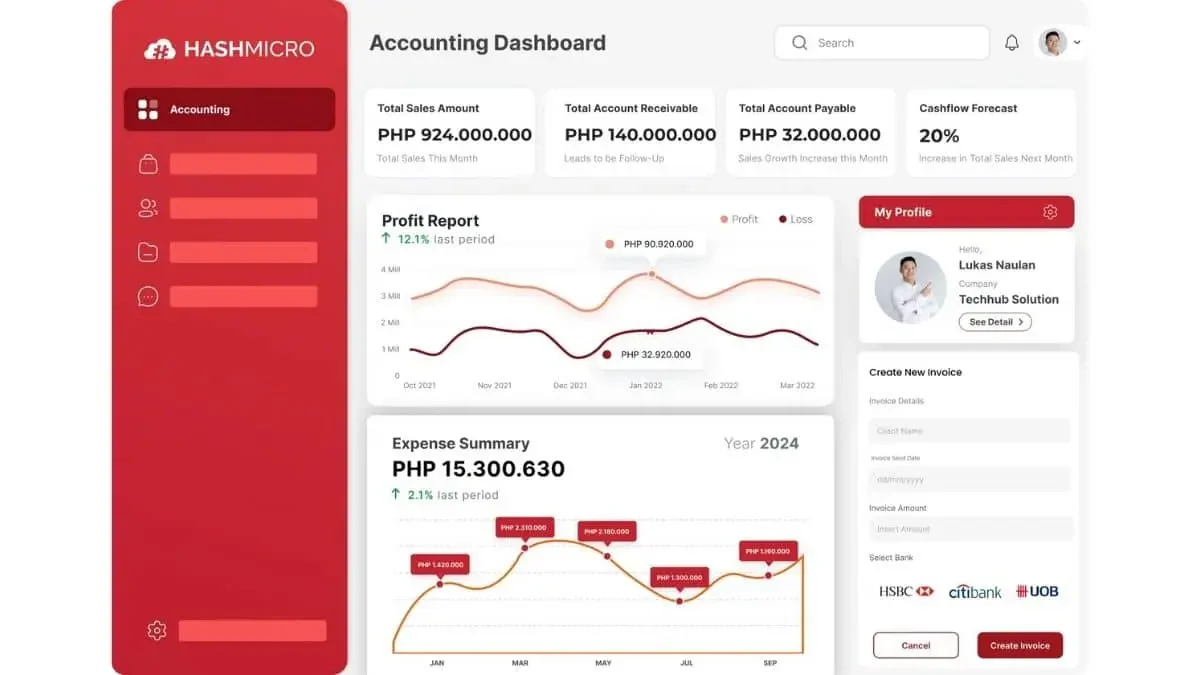
With accounting software, businesses can automate cost tracking, simplify calculations, and reduce the time spent on repetitive accounting tasks. The right solution also supports better decision-making by organizing financial data and providing a clearer view of business costs.
HashMicro’s Accounting Software simplifies cost accounting by automating calculations, generating accurate financial reports, and integrating financial data in real time. Businesses can track direct and indirect costs more efficiently, improve budgeting accuracy, and gain deeper insights into their financial health.
Key Features for Cost Accounting Optimization
Multi-Currency Management: Automates exchange rate updates to support accurate cost tracking for businesses that handle multiple currencies.
Comprehensive Financial Statements: Generates profit and loss statements, balance sheets, and cash flow reports to help businesses review financial performance and evaluate costs.
Bank Integration and Reconciliation: Connects financial data with bank transactions and supports bank reconciliation for more accurate and up-to-date financial records.
Debt Collection Management: Automates accounts receivable tracking and payment follow-ups, helping businesses monitor outstanding balances and maintain healthier cash flow.
Online Invoicing and E-Payments: Reduces manual work through digital invoicing and automated payment processes, making transaction recording more efficient.
By combining automated cost tracking, real-time financial data, and organized reporting, HashMicro’s Accounting Software helps businesses reduce accounting errors and make more informed financial decisions.
Conclusion
Tracking business costs is crucial for financial success. Companies that understand cost allocation, budgeting, and pricing strategies gain a competitive advantage. Without structured cost accounting, businesses risk inefficiencies and financial losses.
Manual accounting processes are time-consuming and prone to errors. HashMicro’s Accounting Software automates cost tracking, invoicing, and financial reporting, ensuring accuracy and efficiency. Advanced features streamline bookkeeping, budget planning, and tax compliance.
Ready to optimize your cost accounting? Get a free demo of HashMicro’s AI Accounting Softwaretoday and improve your financial management!
rect cos
FAQ About Cost Accounting
It provides a clear view of expenses, helping businesses set prices, cut costs, and allocate resources wisely. With accurate cost data, companies can improve profitability and make better financial plans.
Cost accounting focuses on tracking and analyzing expenses, while managerial accounting covers budgeting, forecasting, and overall business performance. Cost accounting is more detail-oriented, whereas managerial accounting supports broader decision-making
Small businesses can use cost accounting to track spending, improve pricing, and manage budgets efficiently. It helps businesses of any size control costs and stay profitable.
One of the biggest mistakes is failing to track all costs accurately, leading to incorrect pricing and budget miscalculations. Another common issue is relying on outdated cost data, which can result in financial losses. Businesses also sometimes misallocate overhead costs, making it difficult to assess the true cost of a product or service. Regular cost analysis and accurate record-keeping are key to avoiding these mistakes.
Using accounting software helps automate expense tracking, reduce errors, and provide real-time cost insights. Features like automated cost allocation and AI-driven reporting streamline the process.