







Logistics costs take up around 27% of sales revenues for businesses in the Philippines, and about 27.5% of national GDP, which is the highest share in ASEAN, according to the Management Association of the Philippines. Rising fuel prices make that burden even harder to control, especially for companies that depend on frequent deliveries, scattered inventory, and tight replenishment schedules. When transport spending becomes unpredictable, weak control over purchasing and stock movement turns directly into lost margin.
Supply chain management software pulls sourcing, inventory, warehousing, and distribution into one system, so teams stop stitching data together from separate tools. The result is more accurate replenishment, fewer unnecessary trips and stockouts, and faster recovery when a supplier or shipment falls behind. Statista Market Insights projects the Philippine supply chain management software market to grow at an annual rate of 8.36% from 2024 to 2029.
This article compares 10 supply chain management software options for businesses in the Philippines, covering their features, strengths, and limitations. You will also find the selection criteria that matter most when fuel costs are squeezing margins, so you can shortlist a system that fits your operations instead of finding out by trial and error.
Key Takeaways
Supply chain management software is a system that helps businesses efficiently manage their supply chains, reducing costs and enhancing customer satisfaction.
SCM software can benefit businesses by simplifying processes, enhancing visibility, and tackling challenges, leading to a more efficient and resilient supply chain.
HashMicro SCM system offers a comprehensive solution tailored for businesses in the Philippines. It helps you optimize every aspect of your supply chain. With its user-friendly interface and powerful features, HashMicro SCM is the key to transforming your supply chain management system.
Quick Overview of Supply Chain Management System


Best Because
Best for large enterprises requiring a comprehensive, enterprise-grade SCM system.

Best Because
Best for companies seeking a cloud-based solution that integrates SCM with ERP.

Best Because
Best for multi-channel retailers and eCommerce brands requiring efficient inventory and order management.

Full Comparison of Supply Chain Management Software
Before exploring each solution in detail, compare the top supply chain management software options below based on their best use cases, strengths, and limitations.
| Brand | Best for | Pros | Cons |
|---|---|---|---|
| 1) HashMicro | Best for businesses needing localized, scalable end-to-end SCM automation | 1) Easy-to-use interface 2) Strong integrations 3) Highly customizable 4) Unlimited users 5) Lifetime support | 1) Implementation time varies 2) Long demo wait times |
| 2) SAP | Best for large enterprises with complex global supply chains | 1) Highly customizable 2) Powerful analytics via SAP HANA 3) Strong reporting tools 4) Multi-currency support 5) Excellent documentation | 1) Expensive setup 2) Requires extensive customization 3) Steep learning curve |
| 3) Oracle NetSuite | Best for companies wanting a scalable cloud-based SCM with strong integrations | 1) Supports business efficiency 2) Multi-currency and global payment options 3) Customizable features 4) Easy integrations | 1) High cost for smaller businesses 2) Too complex for startups |
| 4) Shippabo | Best for businesses focused on international shipping and logistics | 1) Simplifies international shipping 2) User-friendly interface 3) Competitive pricing 4) End-to-end shipment tracking | 1) Limited inventory features 2) Less suitable for complex logistics 3) Limited ERP integrations 4) Customer service needs improvement |
| 5) Netstock | Best for companies needing advanced inventory planning and forecasting | 1) Simplifies inventory with real-time data 2) Reduces overstock and stockouts 3) Easy to implement 4) Clear inventory visibility | 1) Limited full SCM features 2) Not suited for complex manufacturing 3) ERP integration may take time |
| 6) Logiwa | Best for e-commerce brands needing fast fulfillment and warehouse optimization | 1) Ideal for e-commerce/retail 2) Strong platform integrations 3) Fast and accurate processing 4) User-friendly | 1) Limited SCM depth 2) Not suited for large-scale manufacturing 3) Reporting could improve 4) May not scale for multi-location enterprises |
| 7) Magaya | Best for logistics-heavy businesses needing deep reporting and transportation tools | 1) Full supply chain visibility 2) Supports complex logistics 3) Strong transportation/customs integration 4) Deep reporting | 1) Time-consuming implementation 2) Steep learning curve 3) Not ideal for basic needs |
| 8) Epicor Kinetic | Best for manufacturers needing ERP-driven supply chain and production control | 1) Comprehensive ERP functionality 2) Extensive documentation and training | 1) Non-standard process flows 2) Too complex for smaller businesses |
| 9) Blue Yonder | Best for enterprises needing AI-driven planning and global supply chain visibility | 1) Advanced AI-driven planning 2) Supports complex global chains 3) Strong system integrations 4) Real-time visibility | 1) High licensing/implementation cost 2) Requires technical expertise 3) Steep learning curve |
| 10) Precoro | Best for businesses wanting efficient, automated procurement and budget control | 1) Open-source flexibility 2) Automates procurement 3) Strong budget visibility 4) Scalable for growth | 1) Limited inventory features 2) No complex logistics support 3) ERP integrations may take time 4) Slow customer support |
What is Supply Chain Management Software?
Supply chain management software is a digital solution that helps businesses plan, coordinate, and control the flow of goods, information, and finances across the entire supply chain from procurement and production to warehousing and distribution. By centralizing supply chain activities, the software reduces manual processes, improves data accuracy, and gives businesses better visibility into daily operations.
Beyond basic coordination, supply chain management system also supports demand planning, inventory optimization, supplier management, and real-time tracking.
Benefits of Supply Chain Management Software
In today’s fast-paced business environment, Supply Chain Management (SCM) software has become essential for staying ahead of the competition. Let’s explore why integrating SCM software is a game-changer for optimizing your business operations:
Supply chain management software gives Philippine businesses tighter control over procurement, stock movement, and fulfillment, so cost and delay problems surface before they reach the customer. Below are the benefits that matter most when fuel and logistics costs are already squeezing margins.
- Optimized inventory management: SCM software helps businesses maintain optimal inventory levels, preventing overstock and stockouts. This leads to better inventory turnover rates and reduced carrying costs.
- Enhanced demand forecasting: With advanced analytics and forecasting tools, SCM software allows businesses to predict demand more accurately, ensuring they can meet customer needs without excessive surplus or shortages.
- Improved supplier collaboration: SCM inventory software facilitates better supplier communication and cooperation. This ensures timely deliveries, consistent product quality, and the ability to quickly address any supply chain ai software disruptions.
- Streamlined operations: SCM software automates routine tasks such as order processing, shipment tracking, and inventory updates, reducing manual errors and freeing staff to focus on more strategic activities.
- Cost reduction: Effective supply chain software through SCM inventory software helps businesses identify and eliminate inefficiencies, reducing operational costs across procurement, production, and distribution.
- Real-time visibility and analytics: SCM software provides real-time data and analytics on the entire supply chain, enabling businesses to monitor performance, track shipments, and make informed decisions quickly. This visibility helps proactively manage potential issues and improve overall supply chain agility.
Key Features of Supply Chain Management Software
The most useful supply chain management tools share a core set of capabilities that keep procurement, inventory, and delivery running on the same data. Knowing which features matter first makes it easier to compare options without getting lost in long vendor feature lists.
Here are the features you should consider when selecting the ideal supply chain management services:
- Automated ordering: Supply chain inventory management software should include features that automate the ordering process. This ensures orders are placed at the right time and in the right quantities, reducing the risk of human error.
- Strategic sourcing: The software should support strategic sourcing capabilities to identify and evaluate potential suppliers. This helps businesses secure the best quality, price, and delivery terms and builds strong supplier relationships.
- Transportation management: Efficient transportation management tools are crucial for timely delivery and cost control. SCM inventory software should offer route planning, carrier selection, shipment tracking, and freight cost management.
- Inventory management: Effective inventory management features are essential for maintaining optimal stock levels and minimizing holding costs. The software should provide real-time visibility into inventory and support automated reordering.
- Supply planning: SCM software should assist in supply planning by aligning supply with demand forecasts. This includes production, material requirements, and capacity planning to meet customer demand.
- Supply chain analytics: Advanced analytics capabilities help gain insights into supply chain performance. The software should offer tools for analyzing production, inventory, transportation, and supplier performance data.
- Cloud connectivity: Cloud-based SCM inventory software offers scalability and accessibility from anywhere. It ensures all stakeholders have real-time access to supply chain data, enhancing collaboration.
- App integration: It is crucial to integrate with other business applications, such as ERP, CRM, and financial systems. Supply chain operation systems should provide robust integration capabilities to streamline workflows and ensure data consistency across departments.
Top 10 Supply Chain Management Software
Before exploring the top SCM software options, it’s essential to understand how the right solution can transform your business operations. In the fast-paced Philippine market, having an efficient supply chain management system is crucial for staying competitive.
Here, we’ll explore the top supply chain management system choices tailored for businesses in the Philippines.
1. HashMicro Supply Chain Management Software
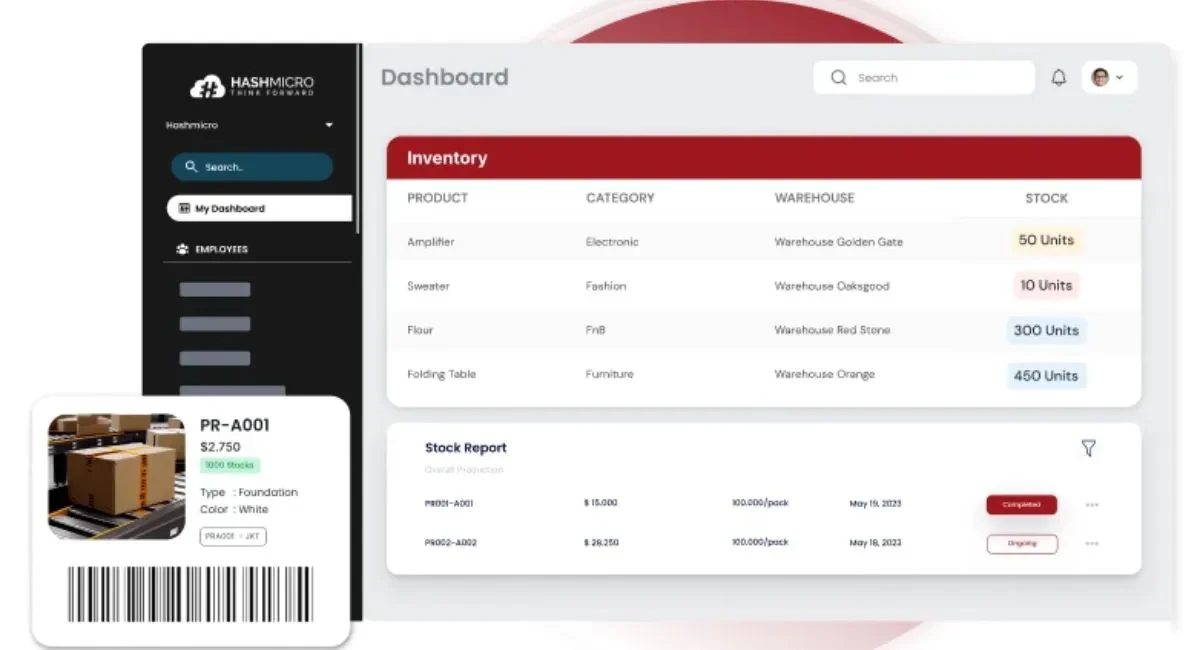
HashMicro is a supply chain management software provider used by businesses in the Philippines to manage procurement, inventory, warehousing, and distribution in a more integrated way. The system is designed to give teams better visibility across day-to-day operations while reducing manual coordination between departments.
Its supply chain solution supports end to end process management, making it suitable for companies that need tighter control over stock movement, purchasing workflows, and order fulfillment. Businesses that operate across multiple locations may also benefit from its centralized data and real-time monitoring features.
Here are some of the comprehensive features that HashMicro supply chain management services offers:
- Inventory Management: This feature allows businesses to manage their inventory levels efficiently, ensuring stock availability when needed. By leveraging this capability, you can minimize the risks of stockouts and overstocking, thereby enhancing operational efficiency.
- Shipment Tracking: This functionality allows for real-time tracking of shipments, giving clear visibility into the status and location of goods in transit. This feature allows businesses to ensure timely deliveries and keep customers informed, boosting satisfaction.
- Return Management: This feature streamlines and efficiently manages product returns. Businesses can use this feature to enhance customer service and maintain precise inventory records.
- Order Management: This feature simplifies and automates the entire order processing workflow, from creation to fulfillment. Employing this functionality ensures accurate order processing and quicker delivery times, ultimately leading to higher customer satisfaction.
- Procurement Management: This tool optimizes the procurement process by automating purchasing activities and managing supplier relationships. This feature allows businesses to secure timely procurement while maintaining cost efficiency.
- Manufacturing Production Scheduling: This feature facilitates efficient planning and scheduling of production activities, including resource allocation, timing, and capacity management. This tool allows businesses to optimize production processes and effectively meet delivery deadlines.
- Stock Optimizer: This feature is designed to help businesses optimize inventory management by closely monitoring market demand, predicting necessary stock levels, and minimizing the risks of overstock or stockouts. Implementing this feature ensures optimal inventory levels and improved cash flow.
- Planning & Forecasting Management: This feature provides powerful tools for accurate planning and forecasting, enabling businesses to predict future demand and align their operations accordingly. Companies can use this feature to make more informed decisions and better prepare for market fluctuations.
| Pros | Cons |
|
|
Why it stands out: HashMicro offers tools for demand planning, order management, inventory monitoring, and real time tracking. These features can help businesses improve coordination across the supply chain while reducing delays and unnecessary manual work.

2. SAP SCM Software
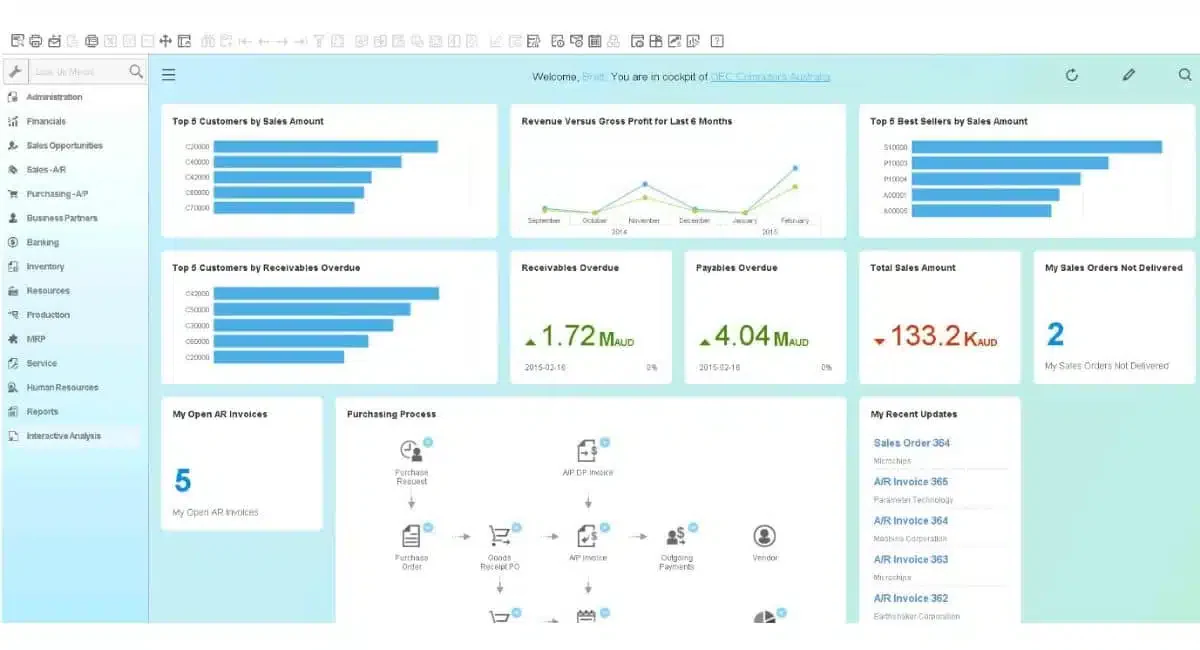
SAP SCM is part of the SAP ecosystem and is a global technology company that provides enterprise software solutions. This software offers end-to-end visibility and management of the entire supply chain process, from planning to execution, to enhance operational efficiency.
SAP SCM offers these supply chain software features:
- Warehouse management: Controls storage locations, put-away, and picking activities so stock movement inside the warehouse stays accurate and traceable.
- Transportation management: Plans shipping routes, carriers, and freight costs to keep delivery schedules and logistics spending under control.
- Supplier management: Centralises supplier records, contracts, and performance data so procurement teams can evaluate vendors consistently.
- Demand planning: Uses historical sales and forecasting models to estimate future demand and align purchasing with actual requirements.
| Pros | Cons |
|
|
Why we chose this software: SAP SCM is the best choice for large companies with complex global supply chains. It offers comprehensive integration and advanced features that enable optimal supply chain management system.
3. Oracle NetSuite SCM System
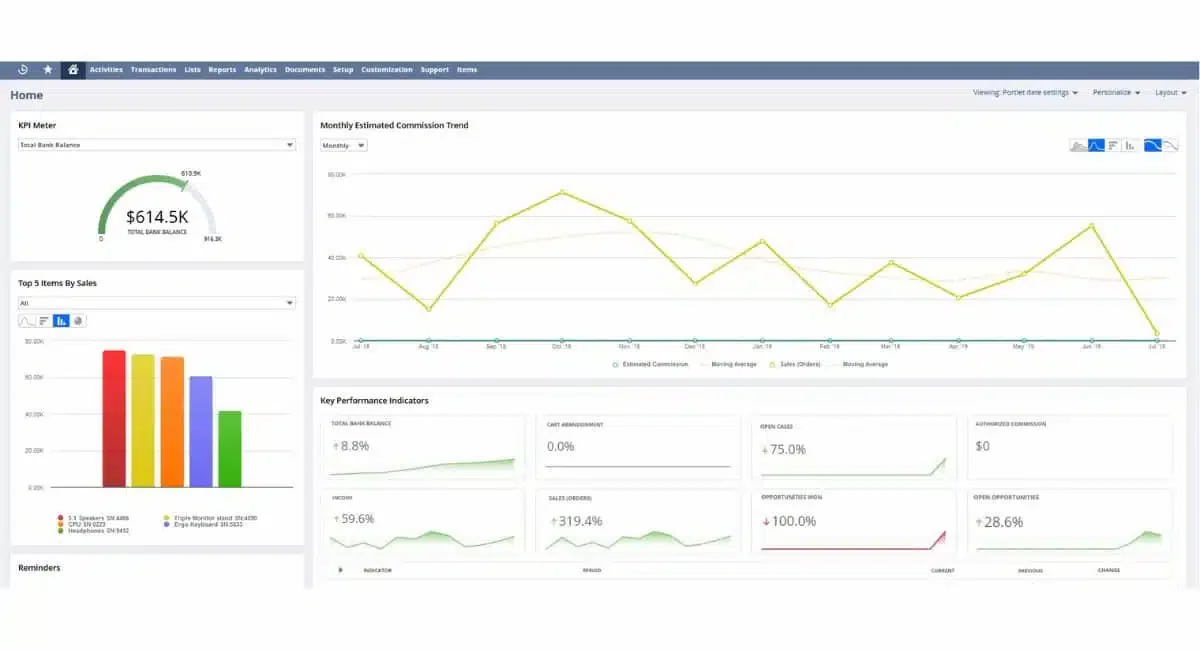
Oracle NetSuite is a cloud-based ERP software provider that includes supply chain management software modules to help businesses streamline their supply chain operations. The software features inventory management, demand planning, and supplier management to ensure a smooth flow of goods and information.
Oracle NetSuite supply chain inventory management software provides the following features:
- Inventory management: Tracks stock levels across warehouses and channels in one record so teams avoid duplicate counts and stock discrepancies.
- Warehouse management: Manages receiving, bin locations, and fulfilment tasks to speed up daily warehouse operations.
- Maintenance: Schedules asset and equipment servicing so operational downtime is planned instead of unexpected.
- Order management: Handles orders from entry to fulfilment across multiple sales channels within a single workflow.
| Pros | Cons |
|
|
Why we choose this solution: Oracle NetSuite is excellent for businesses seeking a scalable cloud-based SCM solution. Multi-channel integration supports sustainable business growth.
For a broader look at its ERP capabilities beyond supply chain functions, you can also read this Oracle NetSuite ERP review.
4. Shippabo
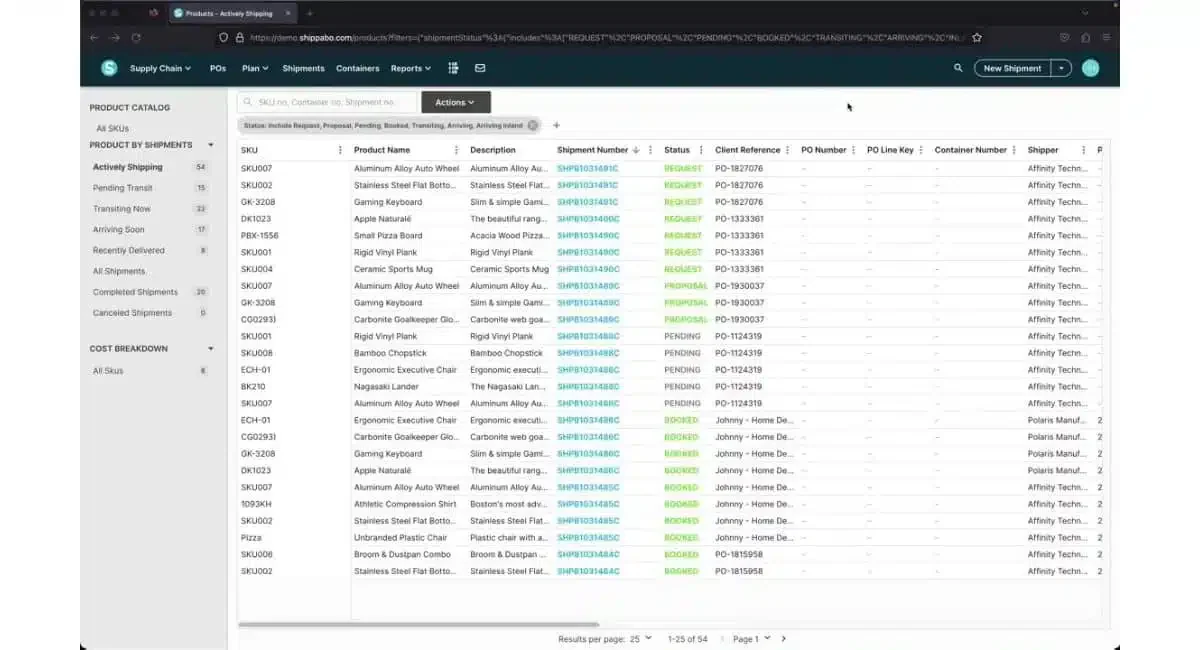
Shippabo is a cloud-based SCM platform focused on managing international shipping and logistics. This software simplifies shipment tracking, document management, and coordination with suppliers and customers to improve logistics efficiency.
Supply chain operation software by Shippabo offers the following features:
- Import/Export Management: Organises shipping documents and customs requirements so international consignments move without paperwork delays.
- Inventory Optimization: Aligns incoming shipments with stock needs to reduce excess inventory sitting in transit or storage.
- Real-Time Data: Displays live shipment status and milestones so teams can respond to delays before they affect customers.
- Shipping Management: Coordinates bookings, carriers, and container details in one place for end-to-end shipment control.
| Pros | Cons |
|
|
Why we choose this solution: Shippabo is ideal for businesses focused on international shipping that need a simple, easy-to-use system. With real-time tracking, Shippabo ensures smooth and efficient shipping operations.
5. Netstock
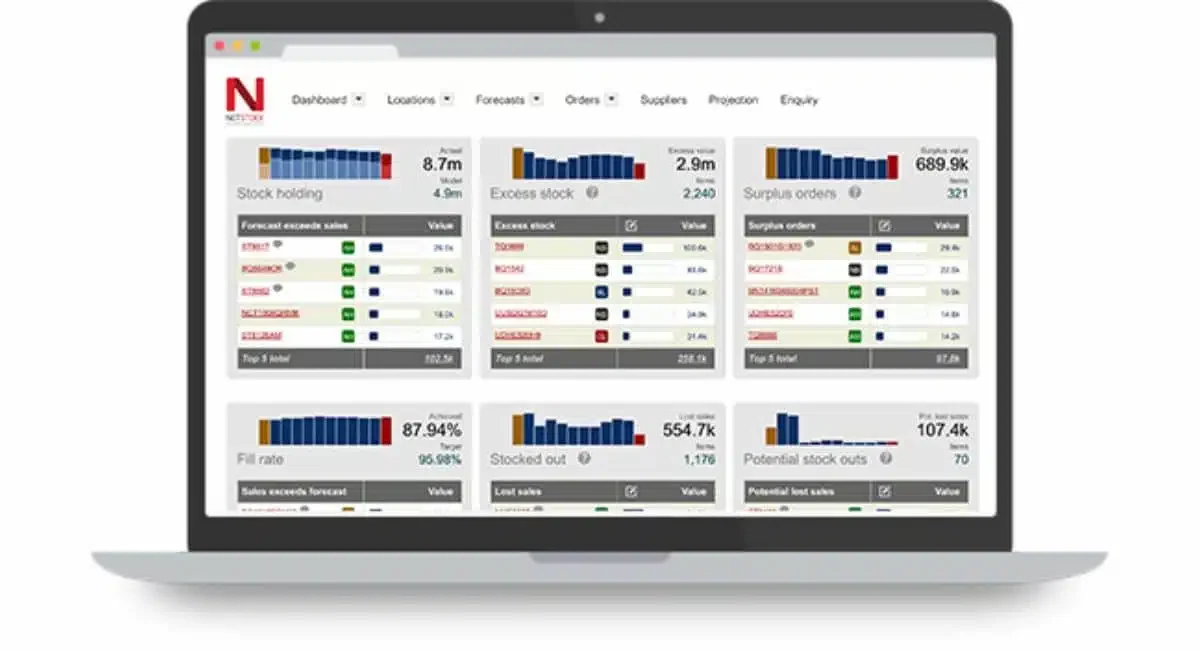
Netstock offers cloud-based inventory planning solutions as part of its supply chain inventory management software. This software helps businesses optimize inventory levels, reduce storage costs, and improve product availability with advanced forecasting features.
Supply chain management system Netstock provides features such as:
- Measure suppliers’ performance: Scores vendors on delivery reliability and fulfilment accuracy so buyers can prioritise dependable supplier
- Monitor and improve lead times: Tracks how long each supplier actually takes to deliver, helping teams set realistic reorder points.
- Automatically adjust safety stock levels: Recalculates buffer stock based on demand variability so businesses avoid both shortages and excess holdings.
- Optimize and improve supplier network: Compares supplier data side by side to identify where sourcing can be consolidated or diversified.
| Pros | Cons |
|
|
Why we chose this software: Netstock is perfect for businesses looking to improve inventory management with a cloud-based solution. Its focus on analytics and automation helps maintain optimal inventory levels.
6. Logiwa SCM Inventory Software
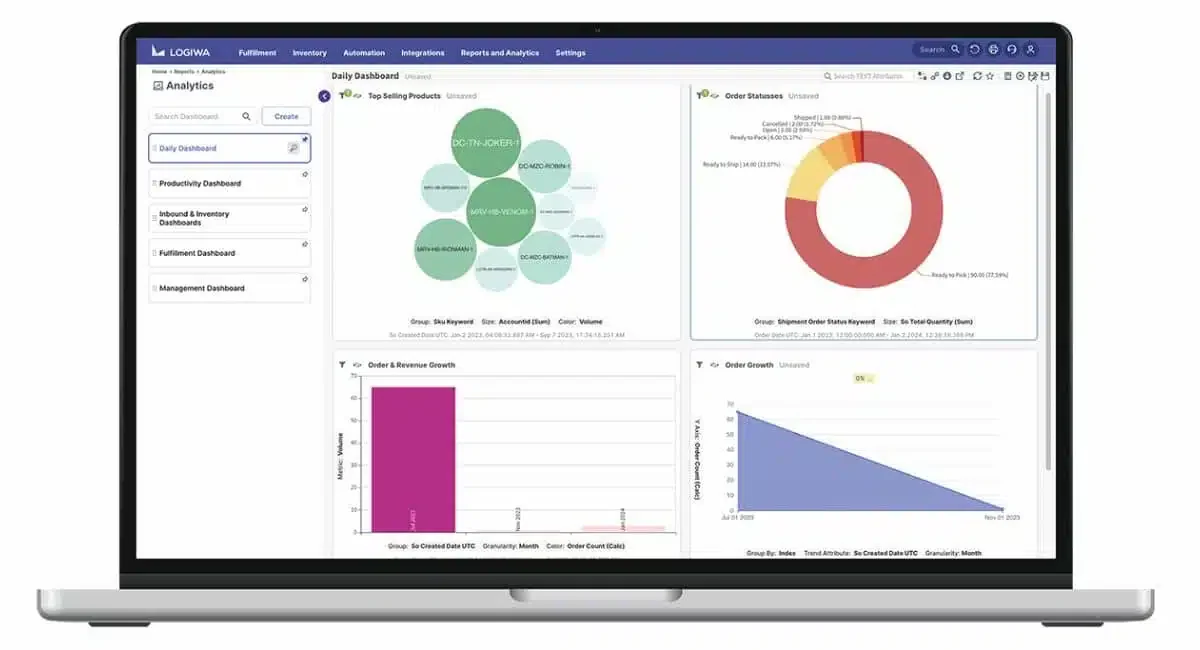
Logiwa is a warehouse management and fulfillment software provider designed for e-commerce businesses. The software offers features like inventory management, automated order processing, and integration with various e-commerce platforms to speed up the shipping process across the retail supply chain.
Features SCM Inventory Logiwa:
- Planning: Organises fulfilment workload and resource allocation so warehouse teams can handle order volume without bottlenecks.
- Inventory: Maintains real-time stock counts across locations to keep online listings and available quantities aligned.
- Transportation: Manages carrier selection and shipping labels so outbound orders leave the warehouse on schedule.
- Return of Goods: Processes returned items back into stock with proper condition checks and updated inventory records.
| Pros | Cons |
|
|
Why we chose this tool: Logiwa is the best solution for e-commerce businesses needing fast and efficient warehouse and fulfillment management. Its integration with e-commerce platforms streamlines order fulfillment processes and suit for small business.
7. Magaya Supply Chain System Software
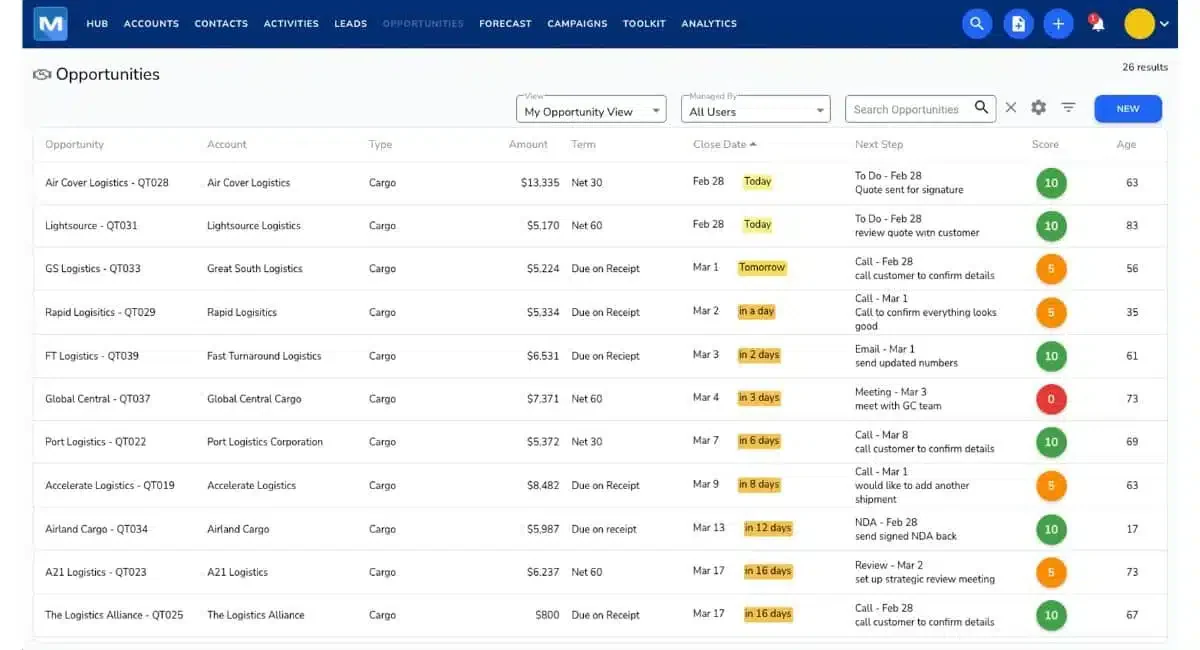
Magaya Supply Chain provides comprehensive SCM solutions, including logistics, warehouse, procurement management, and transportation management. This software helps businesses efficiently manage the flow of goods from receiving to final delivery with real-time tracking and in-depth analytics.
Magaya Supply Chain Management Software Philippines provides the following features:
- Purchase Order Management: Creates and tracks purchase orders through approval and receiving so buying activity stays documented.
- Order Management: Monitors customer orders from confirmation to delivery to keep fulfilment status visible at every stage.
- Shipping Management: Handles booking, documentation, and consignment details for both domestic and cross-border shipments.
- Transportation Management: Plans freight movement and carrier assignments while tracking transport costs against each shipment.
- Multi-Location: Consolidates stock and operational data from several warehouses or branches into one reporting view.
| Pros | Cons |
|
|
Why we choose this software: Magaya Supply Chain is the right choice for businesses requiring a comprehensive logistics and supply chain solution. With powerful reporting tools and deep integration, Magaya ensures efficient operations.
8. Epicor Kinetic
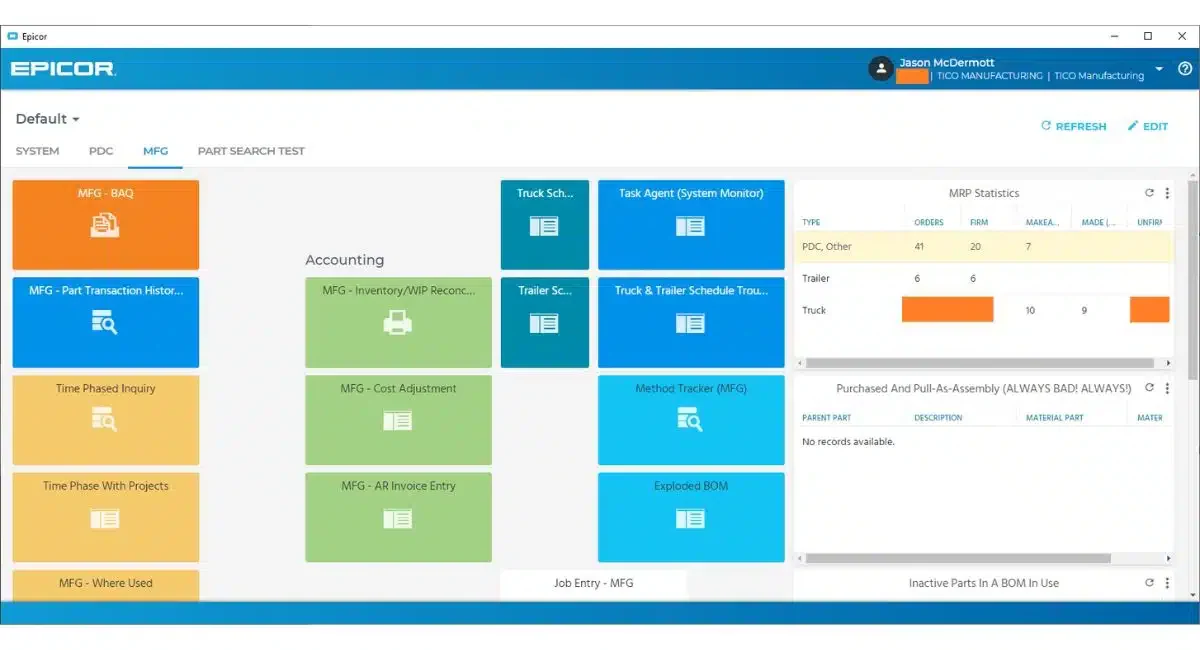
Epicor Kinetic is an ERP solution that includes supply chain management software modules, designed for manufacturing and distribution companies. The software offers features like inventory management, production planning, and order management to enhance supply chain efficiency and productivity. To compare its broader ERP capabilities, features, and limitations, you can also check this Epicor ERP review.
Supply chain management services offered by Epicor has the following features:
- Epicor’s B2B eCommerce software: Gives business buyers a self-service ordering portal that connects directly to product and pricing data.
- Kinetic warehouse management: Directs receiving, storage, and picking tasks so warehouse movement matches recorded inventory.
- Epicor Quick Ship: Streamlines carrier selection, label printing, and shipment documentation to shorten outbound processing time.
| Pros | Cons |
|
|
Why we choose this solution: Epicor Kinetic is ideal for manufacturing companies needing an ERP solution focused on production and financial management. With full integration, this solution helps boost operational efficiency.
9. Blue Yonder
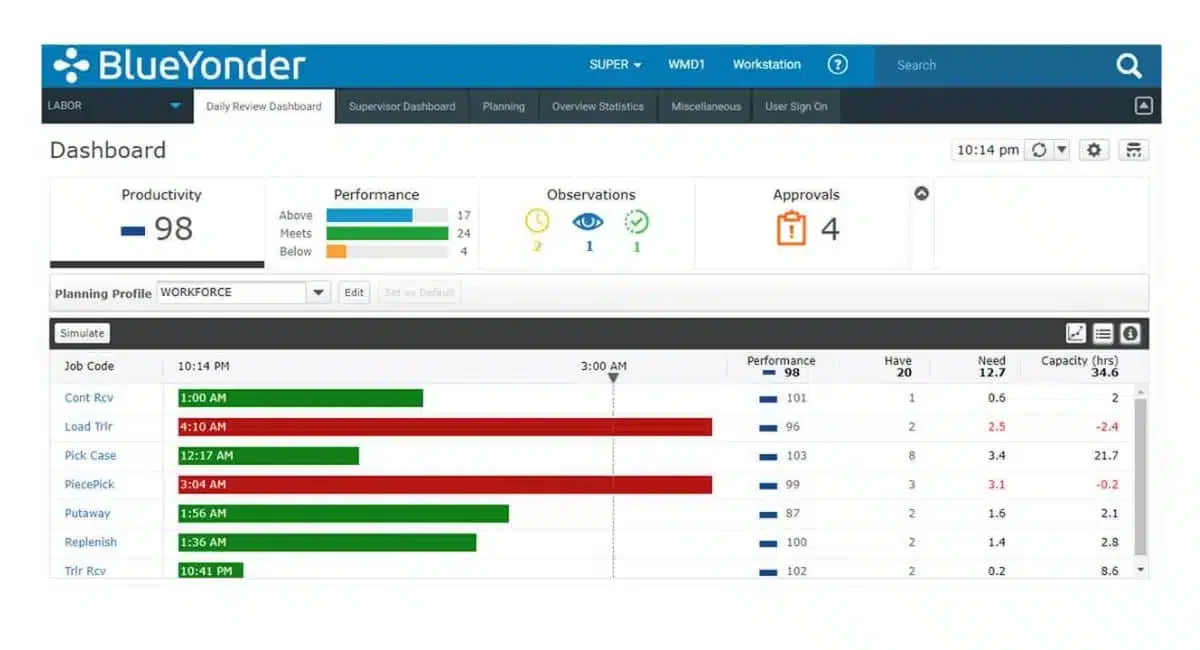
Blue Yonder is an SCM solutions provider offering AI-based software to improve supply chain planning and execution. The software helps businesses optimize inventory, plan demand, and enhance overall supply chain visibility.
Below are the SCM System Blue Yonder features:
- Supply Chain Planning: Models demand and supply scenarios so teams can adjust sourcing and production plans before disruptions hit.
- Merchandising & Space Planning: Guides product assortment and shelf allocation decisions based on sales performance data.
- Order Management: Coordinates order capture and fulfilment across channels to keep promised delivery dates accurate.
- Resource Management: Allocates labour and equipment across operations so capacity matches the planned workload.
- Warehouse Management: Manages inbound, storage, and outbound activity to keep warehouse throughput consistent.
- Transportation Management: Optimises routing and carrier decisions to control freight costs across the distribution network.
| Pros | Cons |
|
|
Why we choose this software: Blue Yonder is the best choice for large companies with complex global supply chains. Its AI technology and real-time analytics offer a significant supply chain planning and optimization advantage.
10. Precoro
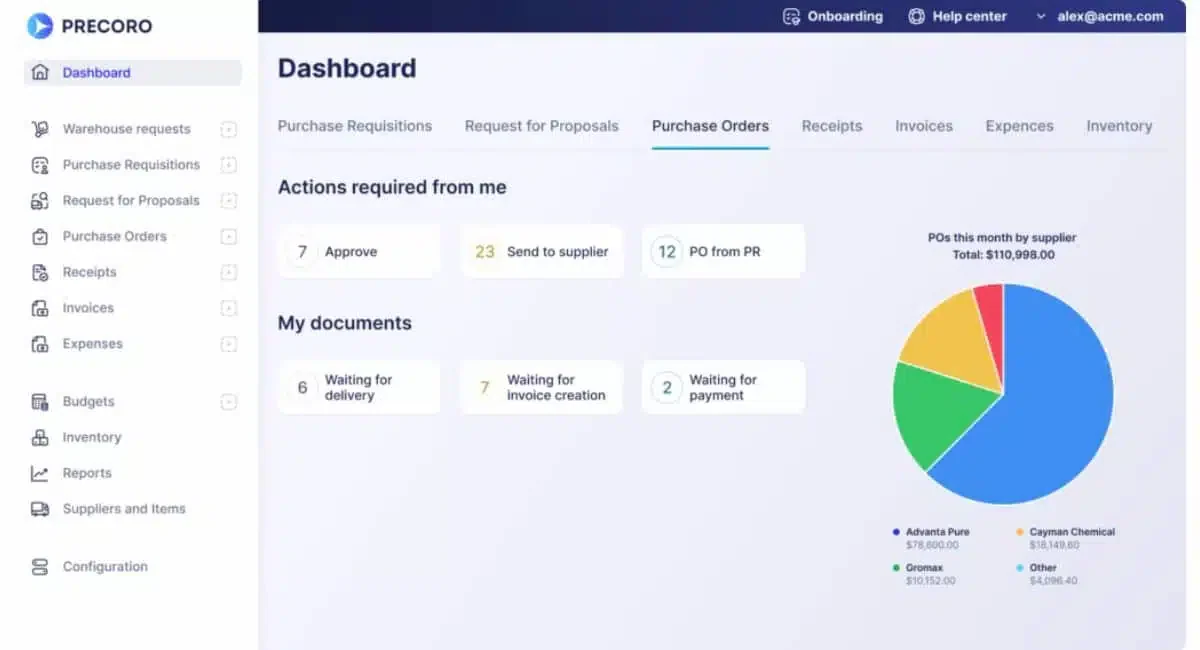
Precoro is a supply chain software philippines that helps businesses better manage their purchasing and spending processes. The software offers automated ordering, purchase approvals, and budget tracking to improve procurement efficiency and transparency.
Precoro Supply Chain Management Services provides the following features:
- Purchase Order Management: Automates purchase order creation and approval routing so spending follows an agreed authorisation path.
- Invoice Management: Matches supplier invoices against orders and receipts to catch billing discrepancies before payment.
- Supplier Management: Stores vendor details, contracts, and communication history in one shared procurement record.
- Reporting And Analytics: Breaks down spending by department, category, or supplier so budget owners can see where money goes.
- Document Storage: Keeps procurement documents attached to their related transactions for easier audit and reference.
| Pros | Cons |
|
|
Why we choose this system: Precoro is the ideal solution for businesses looking to improve efficiency in procurement management. With automation features and budget tracking, Precoro helps control expenses more effectively.
How to Choose the Right Supply Chain Management System

Choosing the right supply chain software is crucial for optimizing your business operations. With so many options available, it can be challenging to find the perfect fit. Here are key factors to consider when making your decision:
- Scalability: Choose software that can grow with your business, accommodating increased demand and expanding operations. Scalability ensures the software remains effective as your business evolves.
- Services: Evaluate the range of services the SCM software offers, including inventory management, order processing, and supplier coordination. Ensure these services align with your business needs and processes.
- Transportation and fuel-cost visibility: During fuel cost pressure, businesses need SCM software that can do more than manage inventory and orders. Features such as route planning, fuel tracking, and transportation management help reduce unnecessary travel, improve delivery efficiency, and control rising logistics costs.
- Support: Assess the level of customer support provided, including availability, response time, and expertise. Reliable support is crucial for resolving issues quickly and minimizing downtime.
- Reviews: Review other businesses’ testimonials to gauge the software’s Performance and reliability. User feedback provides insights into potential issues and the overall satisfaction of current users.
Conclusion
Choosing the right supply chain management software is not only about feature depth but also about operational fit. Businesses in the Philippines need a system that supports inventory visibility, purchasing control, supplier coordination, and more resilient logistics planning, especially when fuel-related cost pressure affects day-to-day decisions.
If you are comparing options for a more integrated supply chain system, reviewing a live product walkthrough can make the evaluation process easier. This helps your team see how the platform works in practice before moving further into implementation.
For businesses that want to explore a localized SCM platform further, HashMicro offers a free consultation to help teams evaluate the system more closely.
FAQ about Supply Chain Management Software
The four main types of SCM software are:
1. Lean Inventory Tools
2. Supplier Management
3. Order Processing Tools
4. Demand Forecasting
The cost of supply chain management software in the Philippines depends on the number of users, selected modules, deployment type, integrations, and customization needs. Businesses should request a quotation based on their warehouse, inventory, procurement, and distribution processes to get a more accurate estimate.
SCM software focuses specifically on managing processes from receiving raw materials to delivering finished products, while ERP software manages a broader range of processes across the entire company. ERP systems enhance collaboration within teams and streamline internal operations.
Supply chain management software implementation can take several weeks to several months, depending on business size, data readiness, workflow complexity, and the number of modules involved. A smoother rollout usually starts with process mapping, data preparation, user training, and phased implementation across departments.
Effective SCM involves five key stages: Plan, Source, Make, Deliver, and Return. These stages, primarily when implemented through platforms like HashMicro’s Supply Chain Management System, help reduce costs, increase efficiency, and enhance customer satisfaction.