







Philippine supply chain teams often coordinate purchasing, inventory, forecasting, warehousing, and delivery across separate processes. A 2024 study by Moraga, M. V., et al., of 66 middle managers across nationwide depots found that collaboration, visibility, and flexibility significantly shape supply chain resilience. Fragmented information can weaken each capability and delay responses to operational changes.
AI supply chain management software can connect data across core workflows. It can help teams forecast demand, flag disruptions, process documents, and automate routine tasks. These tools support faster decisions, but results still depend on data quality, integration coverage, process design, and human oversight.
This guide reviews 10 AI supply chain management platforms for Philippine businesses. It examines each option through its use cases, key requirements, and trade-offs. Use the comparison to identify software that fits your operating model, growth plans, and resilience priorities.
Key Takeaways
Understanding what AI supply chain software is shows how it automates tasks and predicts outcomes across sourcing, production, and delivery.
The benefits of AI supply chain software include sharper forecasts, faster decisions, lower costs, and better risk management.
Use the factors for choosing AI supply chain planning software to match tools to your needs, integrations, scale, and ROI.
With those criteria set, compare the top 10 AI supply chain management software options by features, fit, and pricing.
What is AI Supply Chain Software?
AI supply chain management software is a digital tool that uses artificial intelligence to manage, analyze, and improve supply chain operations. It automates tasks, predicts outcomes, and supports faster decisions across sourcing, production, inventory, and delivery. Teams new to the topic can start with this overview of supply chain management processes and benefits in the Philippines.
This software often includes features like demand forecasting, route optimization, real-time inventory tracking, and supplier risk analysis. It can also integrate with other systems, such as ERP or CRM, to provide a comprehensive view of the supply chain.
Companies use AI supply chain management software to improve efficiency, reduce costs, and respond faster to disruptions or demand changes. Teams that need stronger delivery control can also compare order fulfillment software in the Philippines to align inventory, picking, packing, and shipping workflows.
Benefits of AI Supply Chain Software
AI supply chain management software offers a range of advantages that go beyond simple automation. By leveraging data and intelligent algorithms, artificial intelligence supply chain software transforms how businesses plan, operate, and deliver. Here are key benefits that show AI's role in business transformation across the supply chain:
- Improved forecast accuracy: AI analyzes past data and trends to more accurately predict demand. It helps businesses avoid overproduction or running out of stock.
- Faster decision-making: Real-time data and AI insights enable quick responses to supply chain changes. Teams can act instantly on delays or disruptions.
- Cost reduction: By automating manual tasks and optimizing routes and inventory, supply chain automation software helps lower labor, storage, and transportation expenses.
- Enhanced efficiency: AI streamlines processes like warehouse operations, inventory tracking, and order fulfillment. It reduces errors and speeds up workflows.
- Better risk management: AI detects early warning signs of problems, such as supplier delays or equipment issues. Businesses can then take proactive steps to reduce the impact.
- Greater customer satisfaction: Faster deliveries, accurate orders, and better tracking lead to happier customers and fewer complaints.
- Sustainability gains: Optimized routes and smarter inventory planning reduce energy use, waste, and emissions, supporting eco-friendly practices.
Comparison of the Best AI Supply Chain Management Software
Choosing AI supply chain management software depends on your company size, IT resources, and supply chain complexity. Distributors with high-volume stock can also review the best wholesale distribution software in the Philippines for related options. The table below compares all 10 platforms by key features, ideal users, and pricing.
| Software | Key Features | Best For | Pricing |
|---|---|---|---|
| HashMicro | Return management, shipment tracking, low stock alerts with AI suggestions, automated planning and forecasting, AI chat stock updates | Medium to large companies that want customizable, AI-driven control | Customizable pricing based on business model and quote |
| Kinaxis | RapidResponse, AI demand and supply forecasting, scenario planning, instant decision-making, ERP integration | Large enterprises that need agile scenario planning | Custom quote |
| C3 AI | Proactive risk assessment, supplier performance monitoring, machine learning forecasting, data analytics, clear visualizations | Large tech and manufacturing companies with strong IT teams | Base costs: ₱34.66/vCPU-hour (Production Scaling), ₱15,755,259 (Generative AI Pilot), ₱31,510,517 (Agentic AI Platform) |
| Oracle | Machine learning forecasting, automated order and logistics management, end-to-end visibility, risk analytics, modular structure | Large enterprises with complex global supply chains | Custom quote |
| Blue Yonder | Optimized shipping and distribution, automated inventory management, real-time demand tracking, AI planning, data-driven optimization | Large companies running multi-site supply chains | Custom quote, with a typical Philippine cost of ₱250K per month |
| Infor | Scalable supply chain management, AI-enhanced CloudSuite, real-time analytics dashboard, predictive production scheduling, cloud-based planning | Companies with complex operations that want scalable cloud technology | Custom quote |
| FourKites | AI delay predictions, ERP and logistics integration, visualization dashboard, real-time shipment monitoring, proactive alerts | Businesses that need live shipment visibility and delay prediction | Custom quote based on record volume, transit modes, geographic scope, and system integrations |
| HAVI | Predictive distribution, AI performance insights, live shipment tracking, unified procurement management, integrated logistics | Larger businesses that need integrated logistics and procurement analytics | Custom pricing |
| IBM Watson Supply Chain | Automated procurement and distribution, data visualization, real-time risk analytics, AI demand forecasting, advanced data analytics | Large enterprises with skilled data analysts | Plus from ₱31,511, Enterprise from ₱315,105. Premium and Cloud Pak cartridge: consult IBM |
| Epicor | AI quality monitoring, production system integration, inventory optimization, automated production scheduling, industry-specific functionality | Manufacturers and distributors that need purpose-built ERP features | Custom quote |
How to Choose the Best AI Supply Chain Planning Software
Choosing the right AI supply chain software helps your team improve efficiency and stay competitive. Focus on features that match your business goals. Use the factors below to compare options and select the solution that fits your supply chain needs best.
Key steps:
- Define your business needs: Identify your key pain points, such as demand forecasting, inventory management, or logistics. Choose software that directly addresses these needs, so your team solves the problems that slow your operations the most.
- Evaluate AI capabilities: Look for advanced features such as predictive analytics, real-time supply chain optimization, and machine learning adaptability. The software should evolve with your data and keep improving its recommendations over time.
- Ensure integration compatibility: Make sure the software integrates smoothly with your existing systems, such as ERP, CRM, and WMS. This step helps you avoid data silos and keeps your workflows unified across teams.
- Consider scalability: Select a solution that can scale with your business. It should accommodate more data, users, and complexity as your operations expand, so you avoid costly replacements down the road.
- Review user experience: Look for a clean, intuitive interface. Your team should learn and use the system easily without excessive training, which speeds up adoption and reduces errors during daily work.
- Check vendor support and reputation: Choose a provider with strong customer support, ongoing updates, and positive client reviews. Reliability and responsiveness matter in fast-moving supply chains, where delays can quickly become costly.
- Evaluate ROI potential: Analyze how the software can reduce costs, improve efficiency, or increase customer satisfaction. A good solution should deliver measurable business value that justifies the investment within a reasonable timeframe.
Top 10 AI Supply Chain Management Software
As businesses continue to face challenges in managing complex supply chain operations, AI-powered software solutions have emerged as a game-changer. Let’s explore the top 10 examples of AI supply chain management software solutions that are revolutionising the industry and enabling businesses to enhance efficiency and reduce costs.
1. HashMicro
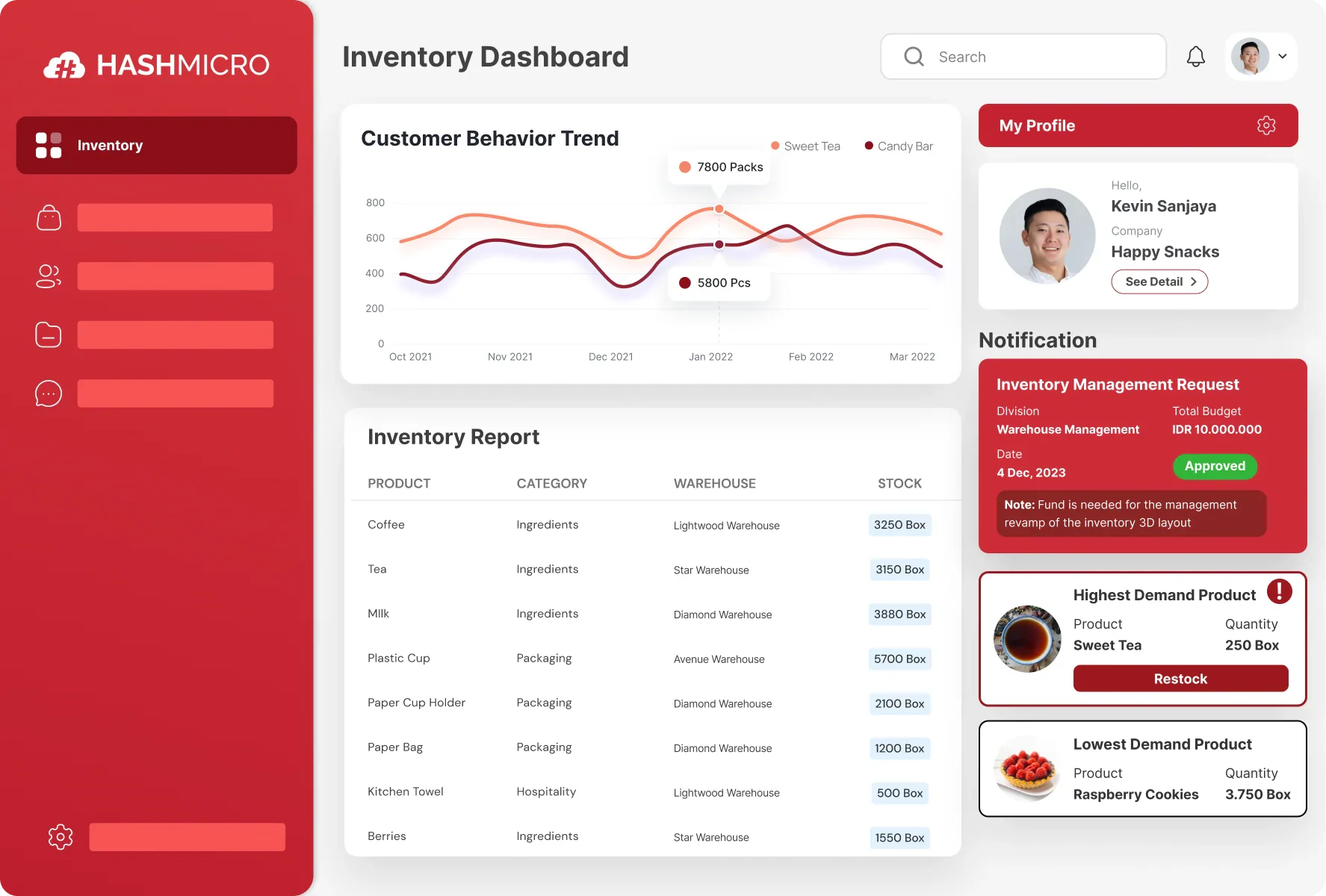
Founded in 2015, HashMicro serves over 2,000 clients across Southeast Asia. HashMicro AI Supply Chain Management Software is an automated supply chain software that covers returns, tracking, restocking, and planning. It suits medium to large companies that want customizable, AI-driven control.
Key features:
- Return management: Tracks customer returns and updates stock levels in real time.
- Shipment tracking: Monitors courier locations in real time so orders reach customers promptly and accurately.
- Low stock alerts with AI suggestions: Sends automatic alerts below set thresholds, plus AI-powered restock recommendations for the right products.
- Automated planning and forecasting: Generates production, procurement, and inventory plans from historical data to meet future demand.
- Real-time stock updates via AI chat: Checks detailed warehouse inventory instantly through the built-in AI chat feature.
| Pros | Cons |
|
× Free demo queue due to high demand
× Better suited to medium and large companies × Pricing requires a custom quote × Customization needs clear requirements upfront |
Pricing: HashMicro offers customizable pricing based on your business model and a custom quote.
Best for: Medium to large companies in the Philippines that want customizable, AI-driven supply chain control. It also fits teams that need local support and ERP integration.
If you are interested in implementing the HashMicro system, take your first step by downloading the pricing scheme. Click the banner below to find out.

2. Kinaxis
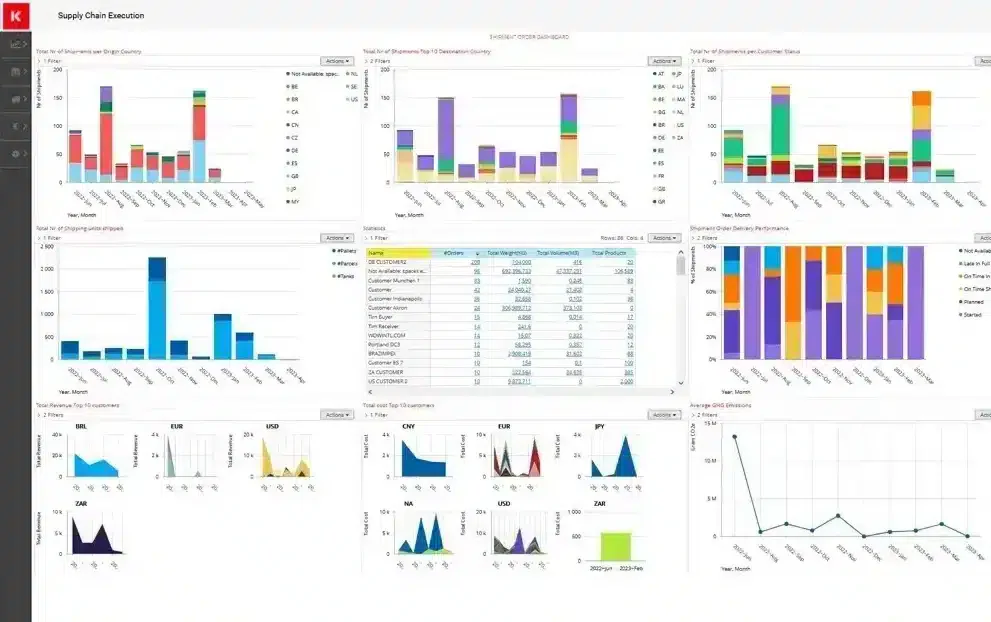
Kinaxis delivers fast, accurate supply chain insights through its RapidResponse platform. As artificial intelligence supply chain software, it helps businesses adapt quickly to market shifts and run what-if scenarios. It works best for large enterprises that need agile planning.
Key features:
- RapidResponse: Helps businesses adapt quickly to market shifts with precision and agility.
- AI-powered demand and supply forecasting: Predicts fluctuations and aligns supply with demand using artificial intelligence.
- Scenario-based planning: Simulates market conditions so teams can prepare in advance.
- Instant decision-making: Delivers quick, informed responses through real-time data analysis.
- ERP system integration: Connects with leading ERP platforms to keep operations cohesive and efficient.
| Pros | Cons |
|
× High implementation costs and time
× Extensive training needed × Best for larger enterprises × Relies on robust IT infrastructure |
Pricing: Kinaxis prices through a custom quote.
Best for: Large enterprises with complex, fast-changing supply networks. It also suits teams that rely on scenario planning and have strong IT support.
3. C3 AI
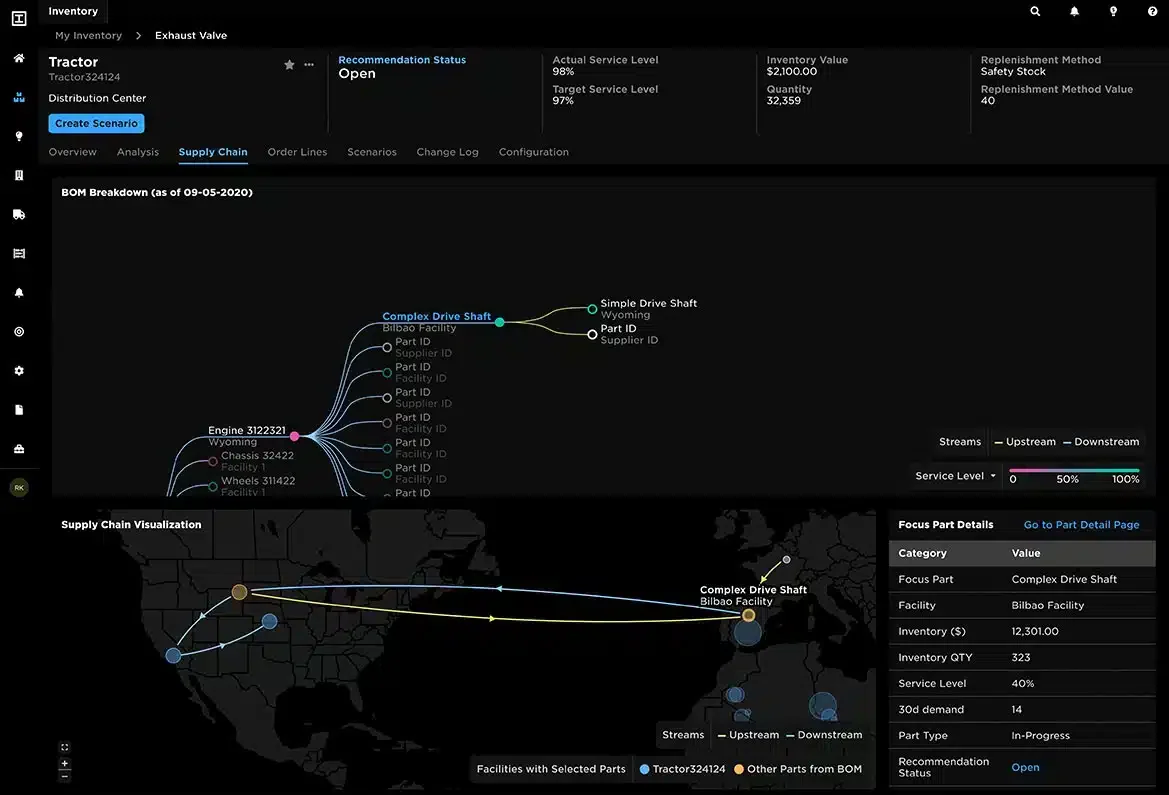
C3 AI combines machine learning and big data to deliver data-driven supply chain insights. As AI supply chain management software, it suits tech and manufacturing industries that need proactive risk control. It works best for large enterprises with skilled IT teams.
Key features:
- Proactive risk assessment: Identifies potential disruptions before they affect operations, enabling timely mitigation.
- Supplier performance monitoring: Tracks supplier activities continuously to ensure reliability and quality.
- Machine learning demand forecasting: Predicts customer needs to optimize inventory planning accurately.
- Robust data analytics: Turns large data sets into data-driven insights for planning decisions.
- Clear visualizations: Present supply chain data in user-friendly visuals that support faster understanding.
| Pros | Cons |
|
× High initial investment
× Steep learning curve × Limited relevance for small businesses × Requires skilled IT support |
Pricing: Base costs: ₱34.66/vCPU-hour (Production Scaling), ₱15,755,259 (Generative AI Pilot), ₱31,510,517 (Agentic AI Platform).
Best for: Large manufacturing and tech companies with strong data and IT resources. It fits teams that want machine learning to anticipate supply chain risks.
4. Oracle
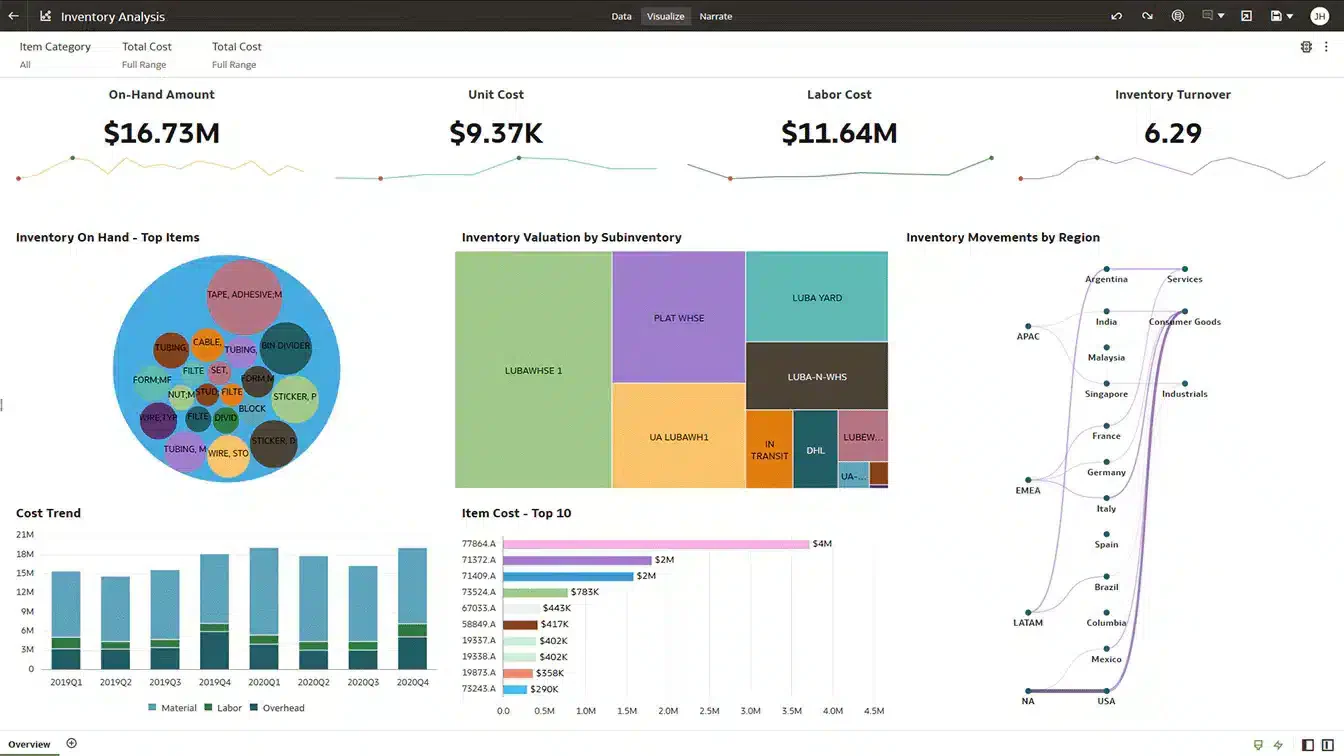
Oracle provides flexible, scalable supply chain management solutions for enterprises. As AI supply chain software, it uses predictive tools, automation, and deep analytics to improve efficiency and accuracy. It suits large enterprises, though smaller teams may prefer a more flexible alternative to Oracle.
Key features:
- Machine learning demand forecasting: Predicts customer demand to optimize inventory and production plans accurately.
- Automated order and logistics management: Streamlines order processing and shipping to speed delivery and reduce manual effort.
- End-to-end supply chain visibility: Provides real-time tracking and monitoring for better control over operations.
- Proactive risk and performance analytics: Identifies potential disruptions and performance issues early with advanced analytics.
- Customizable modular structure: Lets businesses customize and scale modules as enterprise needs grow.
| Pros | Cons |
|
× Best suited for large enterprises
× High system complexity × Demands a strong IT infrastructure × Pricing requires a custom quote |
Pricing: Oracle prices through a custom quote.
Best for: Large enterprises that need scalable, modular supply chain operations. It suits teams with strong IT infrastructure and complex global needs.
5. Blue Yonder
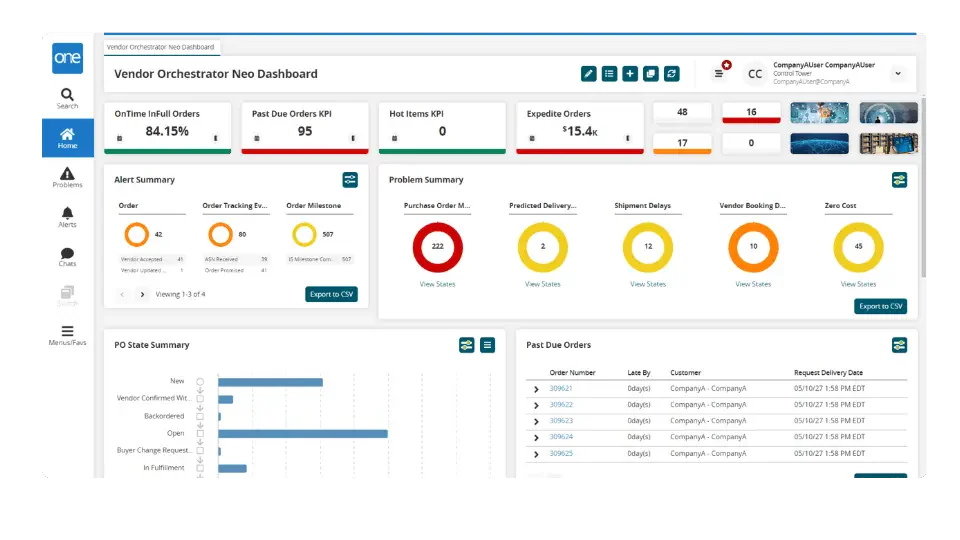
Blue Yonder helps businesses improve operational efficiency and make smarter, data-driven decisions. As AI supply chain software, it manages complex supply chain processes and supports digital transformation. It suits large companies that need precise optimization at scale.
Key features:
- Optimized shipping and distribution: Streamlines delivery routes and distribution for faster, more cost-effective shipments.
- Automated inventory management: Updates stock levels automatically to reduce overstocking and shortage risks.
- Real-time demand tracking: Monitors changes in customer demand instantly to keep supply levels accurate.
- AI-driven supply chain planning: Generates data-based strategies for procurement, production, and inventory with greater precision.
- Data-driven optimization: Applies advanced AI to refine supply chain decisions with greater precision.
| Pros | Cons |
|
× May be too complex for smaller businesses
× High initial implementation cost × Lengthy adaptation period × Customer support can be slow |
Pricing: Custom quote, with a typical Philippine cost of ₱250K per month.
Best for: Large companies running complex, multi-site supply chains. It suits teams ready for a longer adaptation period.
6. Infor
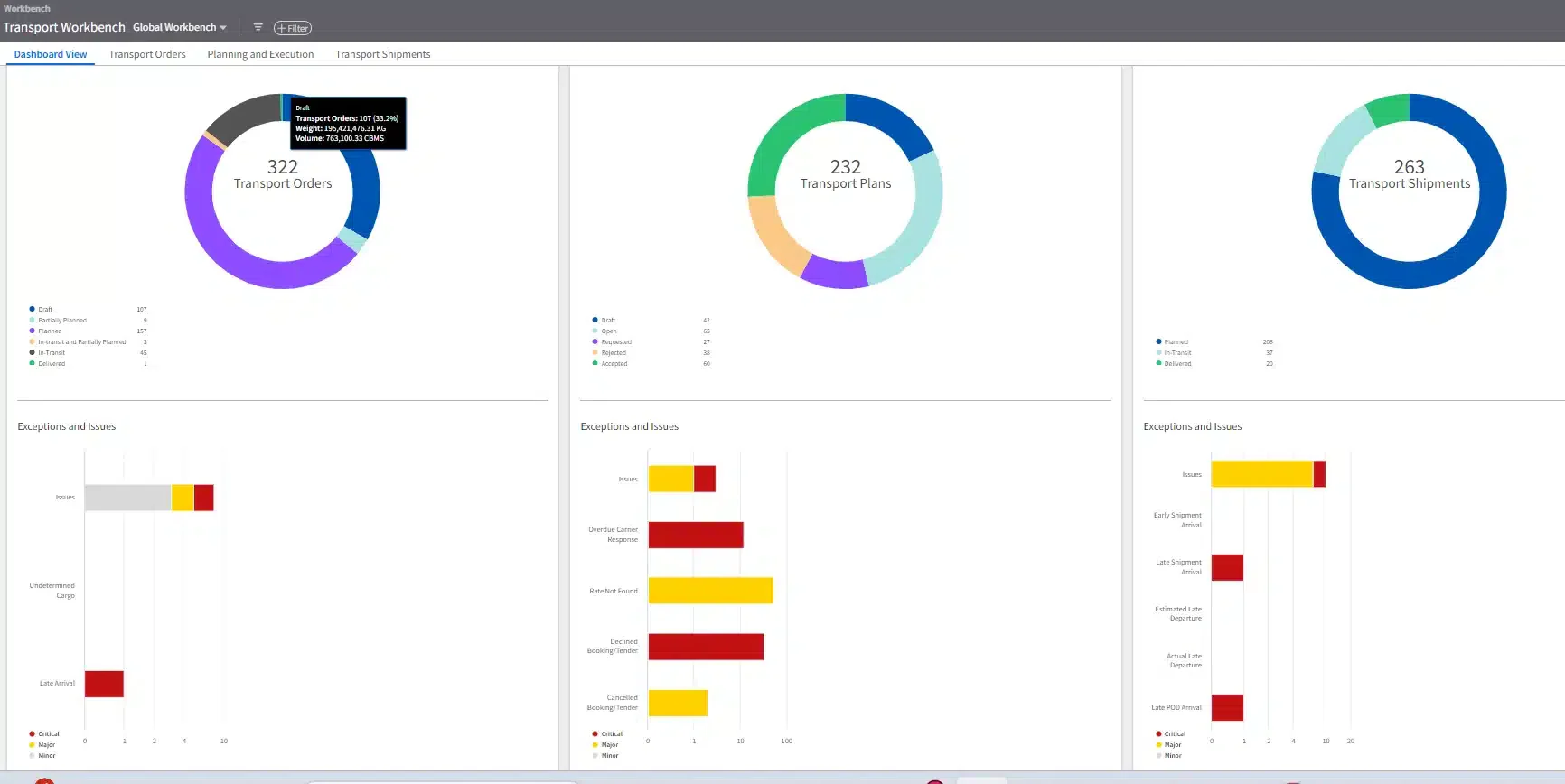
Infor is a recognized ERP provider that offers cloud-based tools for inventory, distribution, and demand planning. Its CloudSuite works as AI supply chain management software that improves accuracy, speed, and decision-making. It suits companies with complex operations, and this Infor ERP review explains its wider ERP strengths.
Key features:
- Scalable and flexible supply chain management: Adapts to changing business needs and supports growth across various industries.
- AI-enhanced CloudSuite Supply Chain: Uses artificial intelligence to improve accuracy, speed, and decision-making in supply chain operations.
- Real-time analytics dashboard: Delivers instant insights through data-driven visuals to support strategic planning.
- Predictive production scheduling: Forecasts demand with advanced algorithms and optimizes production plans efficiently.
- Cloud-based planning: Streamlines inventory management, distribution, and demand planning in one cloud system.
| Pros | Cons |
|
× Lengthy setup process
× Steep learning curve × Extensive initial configuration required × Pricing requires a custom quote |
Pricing: Infor prices through a custom quote.
Best for: Companies with complex supply chain operations that want scalable cloud technology. It suits teams that can invest in a longer setup.
7. FourKites
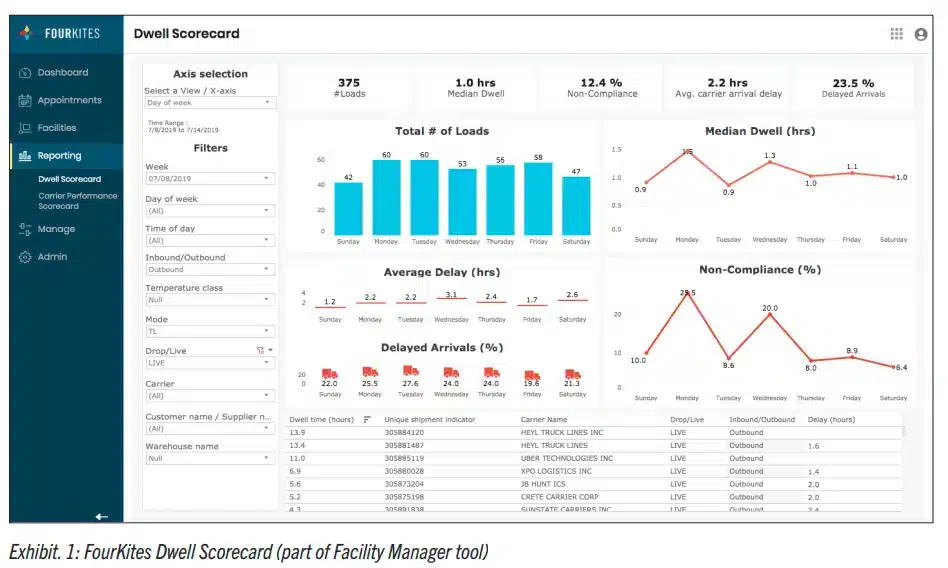
FourKites focuses on complete supply chain visibility with real-time shipment tracking. As supply chain automation software, it monitors goods in transit and predicts shipment delays accurately. It suits businesses that need proactive, transparent delivery management.
Key features:
- AI-driven delay predictions: Forecasts shipment delays accurately to enable proactive decision-making.
- ERP and logistics integration: Connects smoothly with ERP and logistics platforms for streamlined operations.
- Visualization dashboard: Presents supply chain data in a clear, interactive format.
- Real-time shipment monitoring: Offers live tracking for complete visibility of goods in transit.
- Proactive alerts: Sends timely notifications so teams can act before delays disrupt deliveries.
| Pros | Cons |
|
× Time-consuming implementation
× Limited features in the basic plan × Dependence on stable internet × Pricing depends on a custom quote |
Pricing: Custom quote based on record volume, transit modes, geographic scope, and system integrations.
Best for: Businesses that need live shipment visibility and delay prediction. It suits logistics teams with stable internet and ERP integrations.
8. HAVI
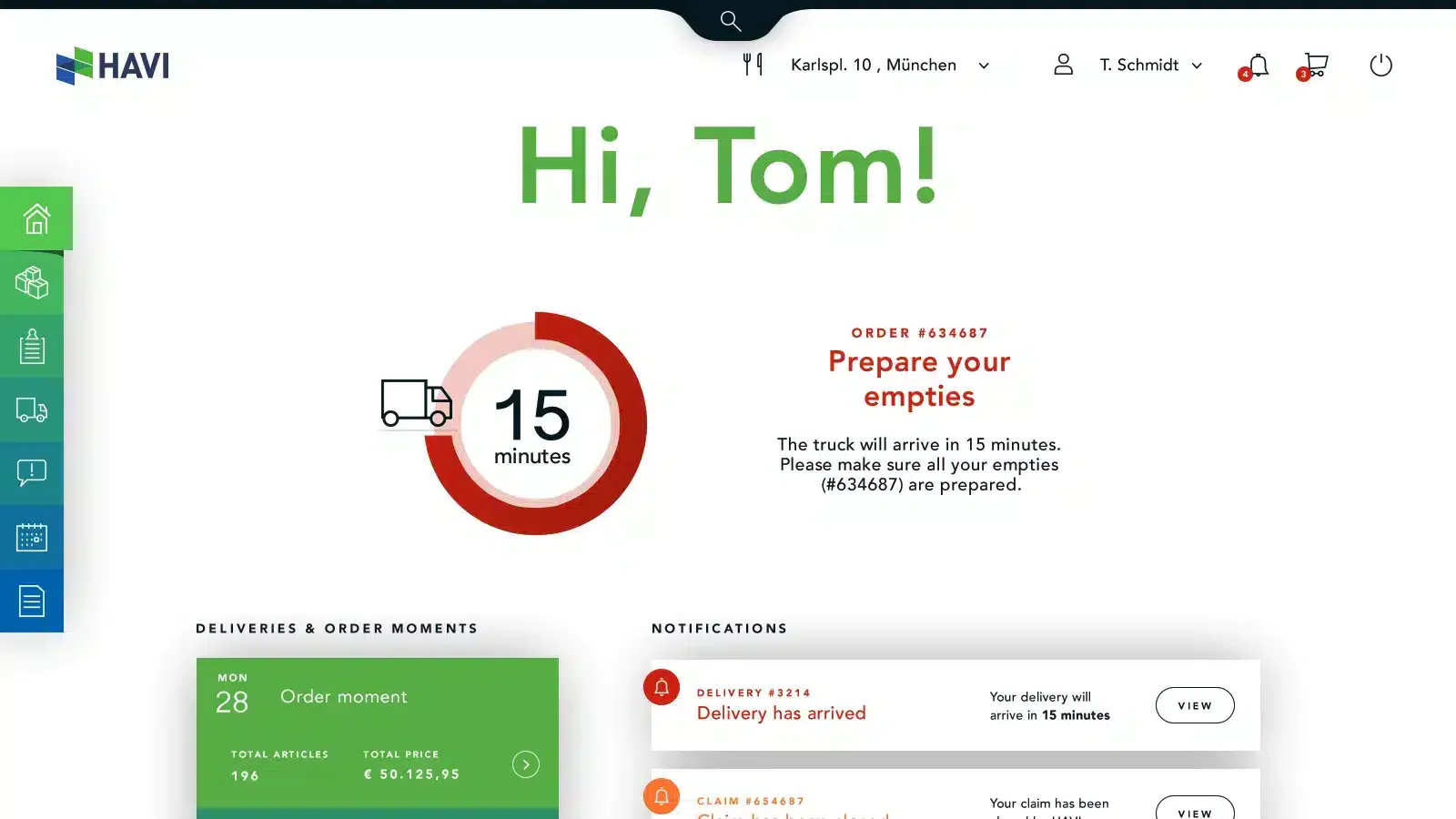
HAVI partners with businesses to optimize supply chains through integrated logistics for procurement, distribution, and performance analysis. As an artificial intelligence supply chain software, it improves data accuracy and visibility. It suits larger operations that want connected, data-driven logistics.
Key features:
- Predictive distribution: Uses predictive data to streamline delivery routes and improve distribution efficiency.
- AI-driven performance insights: Offers intelligent analytics to evaluate and enhance supply chain performance.
- Live shipment tracking: Enables real-time monitoring to ensure timely and accurate deliveries.
- Unified procurement management: Integrates purchasing processes to boost coordination and reduce delays.
- Integrated logistics: Combines procurement, distribution, and performance analysis into one connected logistics solution.
| Pros | Cons |
|
× Long implementation process may delay deployment
× Limited customization for specific business needs × Higher service costs × Less ideal for small-scale businesses |
Pricing: HAVI offers custom pricing.
Best for: Larger businesses that need integrated logistics and procurement analytics. It suits teams that value distribution efficiency over heavy customization.
9. IBM Watson Supply Chain
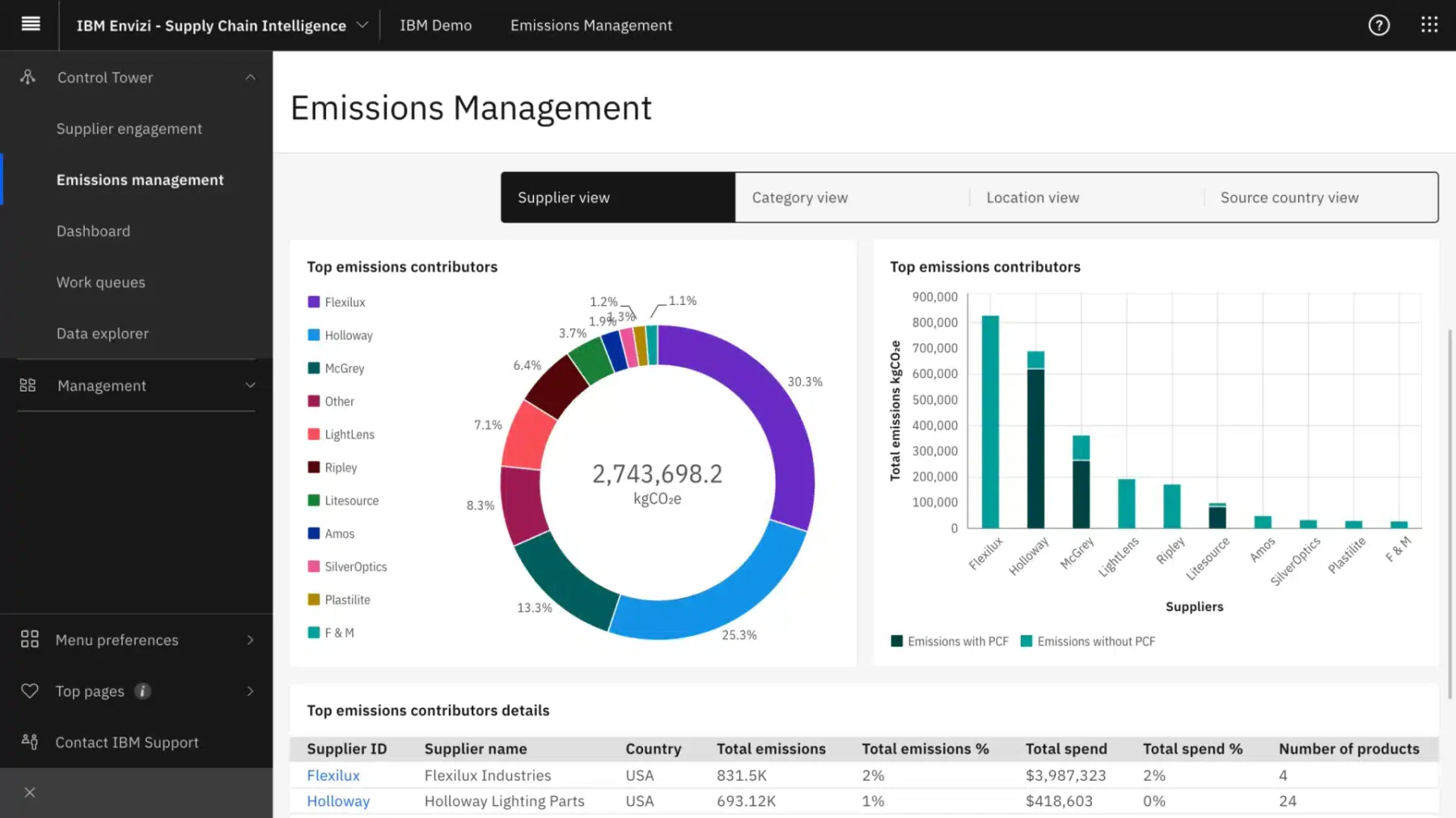
IBM Watson is a pioneer in AI technology with a strong reputation in the supply chain sector. This AI supply chain management software supports precise, fast decision-making across operations. It suits large enterprises with skilled data analysts.
Key features:
- Automated procurement and distribution: Streamlines procurement and distribution operations across the supply chain through intelligent automation.
- Data visualization: Presents insights in a clear, accessible format to support strategic decisions.
- Real-time risk analytics: Analyzes supply chain data continuously to detect and mitigate potential risks.
- AI-driven demand forecasting: Predicts customer demand with advanced algorithms and high accuracy.
- Advanced data analytics: Turns supply chain data into insights that simplify strategic decisions.
| Pros | Cons |
|
× High subscription costs
× Lengthy implementation process × Requires skilled data analysts × Less ideal for small enterprises |
Pricing: Plus from ₱31,511, Enterprise from ₱315,105. Premium and Cloud Pak cartridge: consult IBM.
Best for: Large enterprises that need fast, precise decisions backed by AI and analytics. It suits organizations with skilled data analysts and room for a long implementation.
10. Epicor
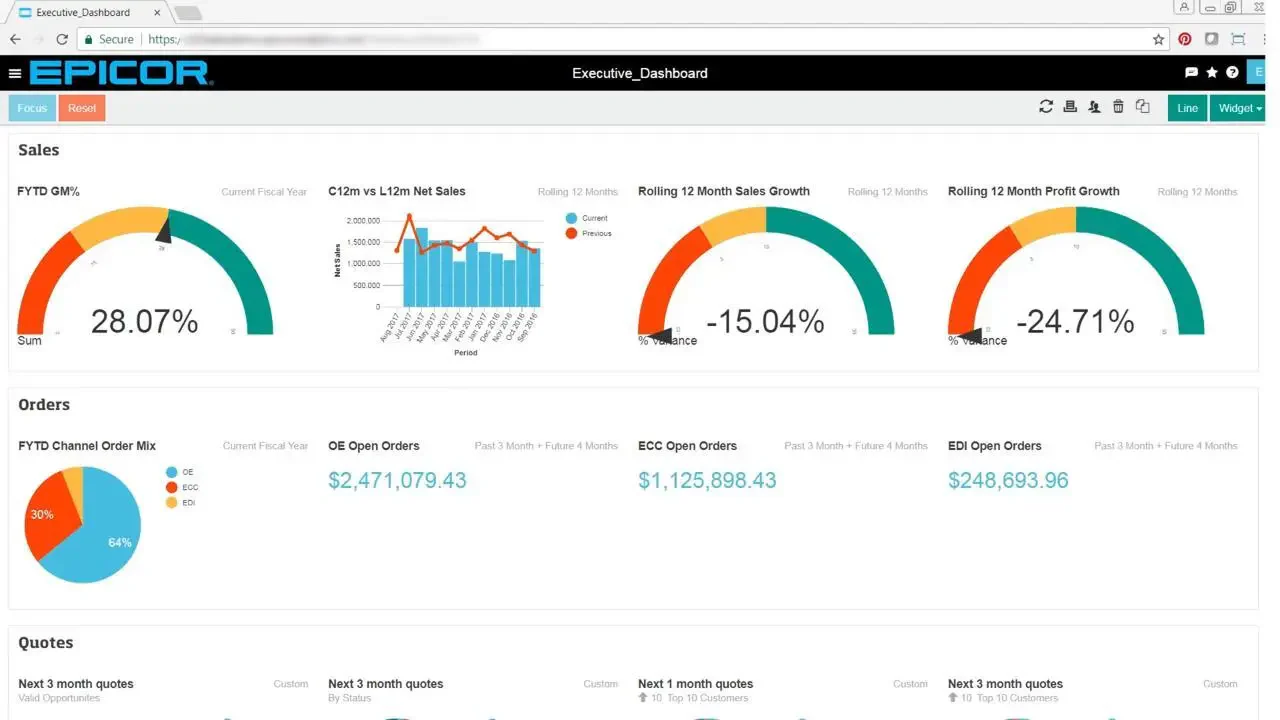
Epicor is an ERP provider specializing in manufacturing and distribution. Its AI supply chain software adds quality monitoring and production scheduling backed by decades of expertise. This Epicor ERP review covers its wider features, pros, and cons. It suits manufacturers that need industry-specific tools.
Key features:
- AI-powered quality monitoring: Detects defects and anomalies automatically during production to keep product standards consistent.
- Production system integration: Connects with manufacturing processes to improve coordination and workflow efficiency.
- Optimized inventory management: Predicts needs to maintain ideal stock levels and reduce excess or shortages.
- Automated production scheduling: Generates efficient production plans using real-time data and demand.
- Industry-specific functionality: Provides tailored features built for manufacturing and distribution needs.
| Pros | Cons |
|
× Extended implementation timeline
× Outdated user interface × Limited customization options × Requires extensive training |
Pricing: Epicor prices through a custom quote.
Best for: Manufacturers and distributors that need purpose-built, industry-specific ERP features. It suits teams ready for extended implementation and training.
Conclusion
AI supply chain management software improves supply chain management by increasing accuracy, boosting efficiency, and enabling real-time decisions. It helps businesses reduce operational costs and respond quickly to market fluctuations. Choosing the right platform gives your team a stronger base for long-term growth.
HashMicro’s AI Supply Chain Management Software offers comprehensive features for the diverse needs of various industries. From demand forecasting to warehouse automation, it integrates seamlessly with your existing systems and streamlines operations effectively.
If you’re curious about how HashMicro can enhance your supply chain, experience our free demo. See how intelligent automation can make a positive impact on your overall business performance and daily operations.
FAQ About AI Supply Chain Software
AI tools, such as digital assistants or AI copilots, are used to enhance routine communication and collaboration. They automatically handle supplier inquiries, confirm orders, and update delivery statuses, making the communication process more efficient and minimizing delays.
In short, no. While AI adoption in logistics and supply chain management is growing, it won’t replace all processes anytime soon. Many areas will still rely on human involvement, and not every environment requires AI-driven solutions.
AI-driven technologies will enable supply chain managers to forecast needs more accurately, manage inventory more effectively, optimize transportation, and plan more efficiently based on demand. These advancements allow companies to reduce costs, increase agility, and enhance customer satisfaction.