




Semiconductor manufacturing creates the tiny brains of our devices, but it faces immense complexity and high costs. This intricate process demands absolute precision to ensure that modern electronics function correctly and reliability is maintained.
Failure to manage these variables leads to costly downtime, which is why advanced manufacturing software is essential. This technology bridges the gap between raw materials and finished chips by streamlining operations and ensuring rigorous quality control.
In this guide, I will explore the critical stages of chip production and how to optimize them for better results. Read on to discover the strategies that are shaping the future of this vital industry and driving global innovation.
Key Takeaways
|

What Is Semiconductor Manufacturing?
Semiconductor manufacturing is the complex process of creating integrated circuits from raw materials like silicon for electronic devices. It involves hundreds of precise steps performed in highly controlled environments to produce functional microchips.
This sector includes Integrated Device Manufacturers (IDMs) that design and build chips, as well as foundries that manufacture chips for others using advanced manufacturing equipment. Fabless companies also play a role by designing chips while outsourcing the actual production to specialized plants.
Crucial Stages in the Semiconductor Manufacturing Process
Transforming a silicon wafer into a functional chip involves a specific sequence of intricate chemical and physical steps. These stages must be executed with nanometer precision to ensure the final integrated circuit performs reliably.
- Wafer fabrication: High-purity silicon ingots are grown and sliced into thin, mirror-polished wafers to serve as the foundation.
- Oxidation: A thin layer of silicon dioxide is grown on the wafer surface to act as an insulator and protective barrier.
- Photolithography: Light is projected through a mask onto a photosensitive coating to define the complex circuit patterns on the wafer.
- Etching: Chemicals or plasma remove specific material layers not protected by the photoresist to carve out the circuit structure.
- Deposition and ion implantation: Thin films of material are added, and dopants are introduced to alter the electrical properties of the silicon.
- Metal interconnects: Layers of metal are deposited and etched to create the microscopic wiring that connects the transistors.
- Electrical testing: Probes test individual chips on the wafer to identify defects before they are separated from the main substrate.
- Packaging: Functional chips are cut, mounted, bonded to leads, and encased in protective housing for integration into devices.
Biggest Challenges in the Semiconductor Manufacturing Industry
Manufacturers face relentless pressure to reduce costs while maintaining high yields in an increasingly complex global market. Successfully navigating these hurdles requires strategic foresight and the adoption of advanced technological solutions.
- Global supply chain complexity
Global disruptions can halt production, so companies must diversify suppliers and use software for better tracking. Real-time monitoring helps mitigate risks by identifying bottlenecks before they impact the broader supply network. - Soaring production costs
Building fabs is expensive, requiring firms to optimize resource allocation and reduce waste to maintain profitability. Efficient inventory management systems help control expenses by ensuring raw materials are used effectively. - Strict yield management
Microscopic defects can ruin batches, making strict quality control and automated inspection systems absolutely vital. Continuous monitoring allows engineers to detect process deviations early and correct them to preserve yield. - Demands for continuous innovation
The race for smaller chips requires constant R&D, forcing manufacturers to adopt flexible processes that scale quickly. Upgrading production lines with adaptable software ensures that factories can handle new technology nodes efficiently. - Need for a highly skilled workforce
Finding specialized talent is difficult, so companies are turning to automation to bridge the skills gap. Automated workflows reduce the reliance on manual intervention, allowing existing staff to focus on high-value tasks.
Strategies for Optimizing Semiconductor Manufacturing Operations
Optimizing operations in this high-stakes industry is essential for maintaining profitability and ensuring consistent product quality. Implementing digital strategies allows manufacturers to move from reactive fixes to proactive process management.
- Implement an integrated ERP to unify supply chain data, production schedules, and inventory management into a single platform.
- Adopt process automation to execute repetitive tasks with high precision and reduce the risk of human error.
- Utilize real-time data analytics to monitor equipment performance and identify potential yield issues immediately.
- Apply predictive maintenance strategies to detect machine anomalies early and prevent costly unplanned downtime.
Optimize Your Semiconductor Manufacturing with HashMicro’s Solution
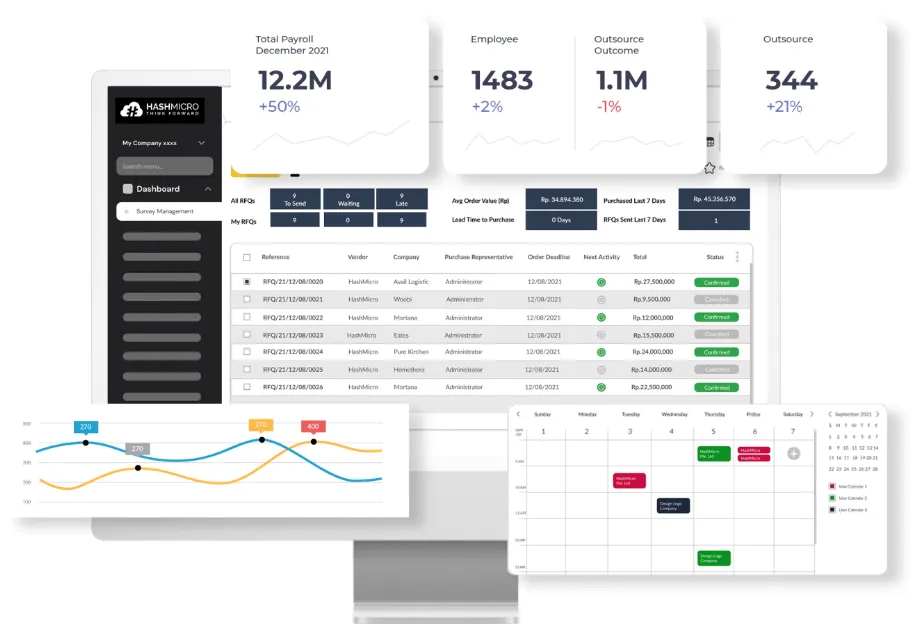
HashMicro Manufacturing Software streamlines complex fab operations by integrating production data with inventory and maintenance workflows. This solution automates critical tracking tasks to ensure that every stage of the manufacturing process aligns with schedules.
- Manufacturing Production Scheduling: This feature automatically generates production timelines by analyzing capacity data and current demand forecasts.
- Bill of Materials (BoM) Management: The system stores and organizes complex recipe structures to ensure accurate material allocation for every batch.
- Manufacturing Quality Control: Digital inspection checklists trigger automated alerts when product parameters deviate from set standards during testing.
- Machine Maintenance Management: This module tracks equipment usage hours to automatically trigger service requests before breakdowns occur.
- Real-Time Production Dashboard: The interface aggregates live data from the shop floor to display current operational metrics on a centralized screen.
Transform your facility’s efficiency today by exploring how our integrated tools can streamline your specific workflows. Click here to try a free demo and experience the system’s capabilities firsthand.
Conclusion
Semiconductor manufacturing is a precise discipline that powers the modern world but requires overcoming significant operational hurdles. Success depends on mastering complex stages while managing costs through strategic process optimization.
HashMicro Manufacturing Software supports this by integrating disparate factory processes into a cohesive digital ecosystem. It connects production, quality, and maintenance data to provide the control needed for high-yield operations.
Take the next step in modernizing your production capabilities and ensuring your business stays competitive in 2025. I invite you to try our free demo to see these powerful features in action.

FAQ About Semiconductor Manufacturing
-
What are the main stages of semiconductor manufacturing?
The main stages include wafer fabrication, oxidation, photolithography, etching, deposition and ion implantation, metal interconnects, electrical testing, and packaging. Each stage is repeated multiple times to build the complex layers of a microchip.
-
Why is semiconductor manufacturing so difficult?
It is difficult due to the need for nanometer-scale precision, extremely clean environments to avoid contamination, high capital investment in equipment, and a complex global supply chain. Even minor errors can lead to massive losses in product yield.
-
How does ERP software help in semiconductor manufacturing?
ERP software integrates all factory operations, including production scheduling, inventory, quality control, and maintenance, into one system. This provides real-time visibility, improves efficiency, automates processes, and enables data-driven decisions to increase yield and reduce costs.