







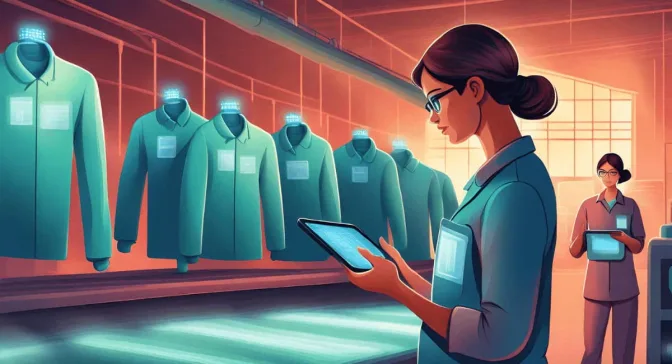
Did you know that the textile industry in Singapore contributes more than $7 billion in annual exports? With such large-scale production and intense global competition, I’ve realized how important it is for textile businesses to optimize operations and boost efficiency to stay ahead.
For me, one of the most effective ways to achieve this is by implementing an Enterprise Resource Planning (ERP) solution tailored for the textile industry. With ERP, I can streamline processes, minimize errors, make smarter decisions, and maximize profitability. To see the difference it can make, try a free demo today.

Key Takeaways
Textile industry in Singapore is a significant contributor to the economy, with over $7 billion in annual exports.
Optimizing operations and driving efficiency is crucial for textile businesses to stay competitive in the global market.
ERP software tailored for the textile industry can help streamline operations, reduce manual errors, and improve decision-making.
The implementation of ERP software in the textile industry ultimately leads to increased profitability.
What is ERP Textile Industry
In the textile industry, ERP is an integrated software system that helps manage the various operations within textile mills. It brings together procurement, production, inventory, finance, compliance, and customer management into one unified platform.
I use this kind of solution to streamline workflows in textile manufacturing and apparel production. It allows me to manage supply chains more effectively, improve efficiency, and stay competitive in a challenging market.
Challenges Faced by the Textile Industry
I encounter several challenges in the textile industry that can heavily affect both operations and profitability.
- Supply Chain Management: I need to manage a complex supply chain that involves procuring raw materials, collaborating with multiple suppliers, and ensuring timely delivery. This demands efficient inventory management and strong collaboration with my supply chain partners.
- Demand Volatility: I often struggle with demand volatility, making it challenging to forecast production accurately. When market demand shifts, I risk overstocking or understocking, which disrupts supply chain efficiency and textile logistics management.
- Product Quality and Consistency: Maintaining consistent quality is essential to me. I rely on well-defined quality control processes to minimise defects and ensure customer satisfaction.
- Machinery Downtime: Unplanned downtime is another hurdle I face, as it disrupts production schedules and causes delays. To overcome this, I focus on proactive maintenance and better asset management.
- Cost Management: Keeping costs under control is a constant challenge. Rising raw material prices, overheads, and labour costs prompt me to adopt careful cost management strategies to remain profitable.

| Challenges | Description |
|---|---|
| Supply Chain Management | Procuring raw materials, coordinating with multiple suppliers, and ensuring timely delivery |
| Demand Volatility | Challenges in accurately forecasting production requirements due to market demand fluctuations |
| Product Quality and Consistency | Maintaining consistent high-quality products and implementing effective quality control processes |
| Machinery Downtime | Minimizing unplanned machinery downtime through proactive maintenance and asset management |
| Cost Management | Managing rising raw material prices, overhead expenses, and fluctuating labor costs to maintain profitability |
Benefits of ERP for the Textile Industry
ERP software gives me a wide range of benefits that help drive operational excellence and improve customer satisfaction.
- Better Inventory Management: With ERP, I can monitor stock levels in real-time, optimize procurement, and reduce carrying costs.
- Quality Management: I utilize ERP to streamline quality control, conduct inspections efficiently, and ensure that every product meets the proper standards.
- Reduction in Machinery Downtime: ERP helps me minimize downtime through preventive maintenance schedules, automated alerts, and timely repairs.
- Cost Savings: By optimizing resources, reducing waste, and improving production efficiency, ERP allows me to achieve significant cost savings.
- Customer Satisfaction: ERP also enables me to fulfill orders on time, improve delivery accuracy, and deliver the kind of service that keeps customers satisfied.
- Automated WIP Calculation: ERP calculates the overall cost of Work in Progress (WIP) automatically and integrates it with other systems, so I can see production costs such as raw materials, direct labour, and overhead expenses.
Automation in the Textile Industry: Benefits and Types
Automation reaches beyond the ERP system itself and shapes how textile mills run daily production. This section covers the further benefits of automation, then the main types textile businesses can use.
Benefits of Automation in Textile
Beyond the ERP benefits above, automation brings further advantages to textile businesses, including enhanced flexibility, greater competitiveness, and improved safety.
- Enhanced flexibility: Automation helps textile businesses adapt to fluctuations in demand or production needs, while a manual system needs more time and effort to change.
- Greater competitiveness: By automating certain tasks, companies can reduce costs and offer more competitive prices to customers while keeping pace with competitors.
- Improved safety: Machines can carry out tasks that are potentially dangerous for people, which reduces accidents and injuries on the job.
Types of Automation in Textile
The type of automation a textile business uses depends on its needs, its goals, and the products it makes. The main types are:
- Manufacturing automation: Machines and equipment perform tasks typically done by humans, such as cutting, sewing, and assembling textiles. This includes robots, automated sewing machines, and other specialised equipment.
- Process automation: Technology and software automate textile company tasks such as inventory management, quality control, and supply chain management.
- Product automation: Machines and software streamline textile manufacturing, for example computer-controlled looms and other specialised machinery.
How Can HashMicro Help Your Textile Business
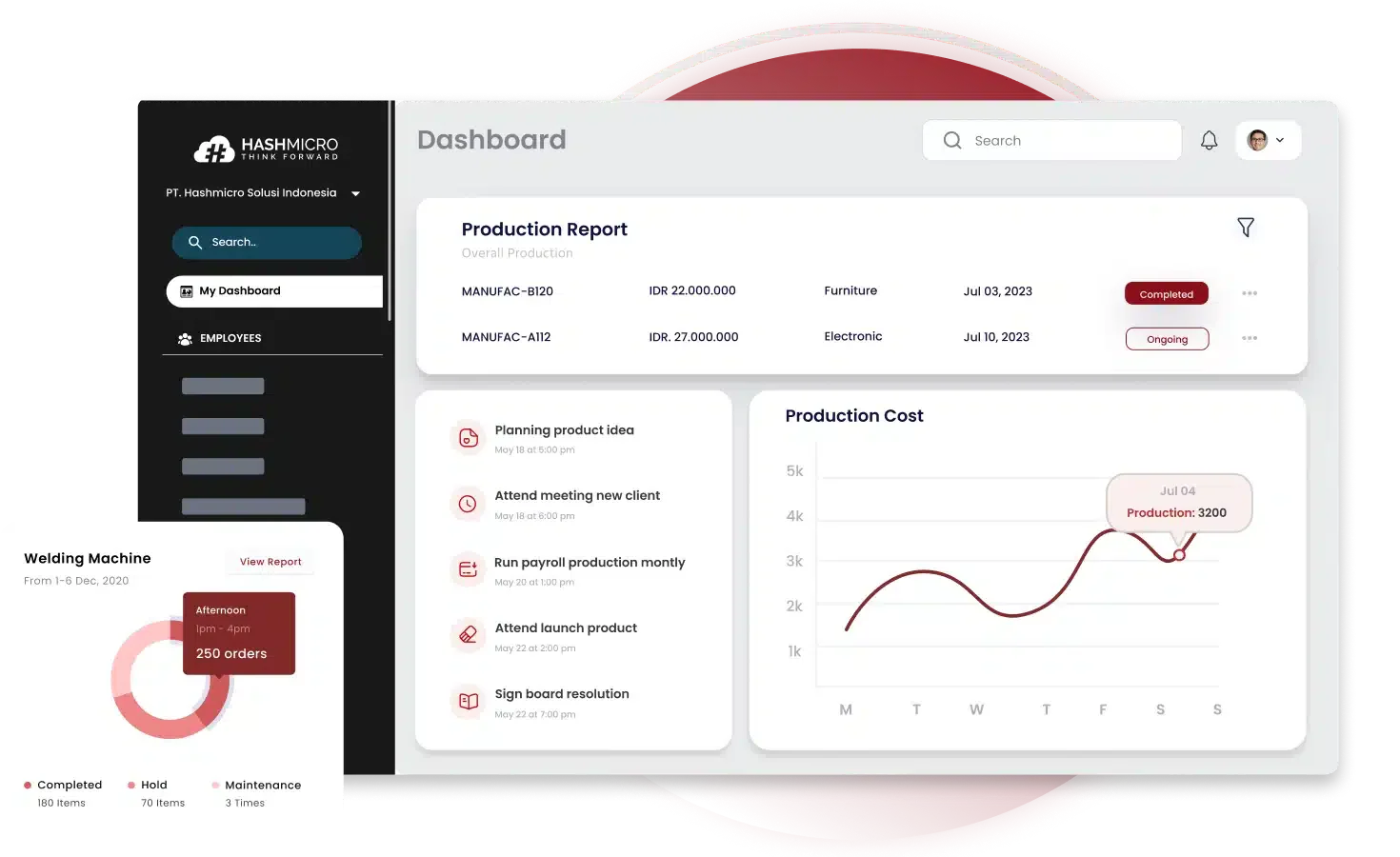
I use HashMicro to help me manage my textile business’s operations. HashMicro understands the unique needs of the textile industry in Singapore and provides tailored ERP solutions to address these challenges. Their comprehensive software offers various modules and features designed specifically for textile businesses, empowering them to streamline operations and maximize efficiency. A few of these systems include manufacturing, procurement, sales & CRM, and accounting.
Production Scheduling
With HashMicro’s ERP software, I can optimize your production scheduling to ensure smooth operations and meet customer demands efficiently. The system allows me to create realistic production plans, allocate resources effectively, and monitor progress in real-time.
Manufacturing Requisition Planning
Effectively managing and planning manufacturing requisitions is vital for textile businesses. HashMicro’s ERP solution helps me streamline my requisition processes, ensuring the timely procurement of raw materials and reducing production delays.
Made to Order Completion Forecast
Accurate completion forecasts are crucial for businesses that produce made-to-order textiles. HashMicro’s ERP software incorporates advanced forecasting algorithms to help me estimate completion dates more accurately, enabling me to provide customers with reliable delivery timelines.
Demand Forecasting
HashMicro’s ERP software is updated continuously in response to market and technological changes. Its demand forecasting function helps me prevent overproduction and underproduction of goods.
Data stays integrated across every component and updates seamlessly. I can also manage and monitor repairs quickly and thoroughly from the same system.
Finished Goods Production Simulation
The simulation capabilities offered by HashMicro’s ERP solution enable me to simulate various production scenarios and assess their impact on output, costs, and resources. This allows me to optimize your production processes and forecast outcomes more accurately.
Material, Labor & Overhead Costs Management
Effectively managing costs is essential for profitability in the textile industry. HashMicro’s ERP software provides robust cost management functionalities, allowing me to track material, labor, and overhead costs in real-time, identify areas of improvement, and optimize resource utilization.

OEE Tracking
Overall Equipment Effectiveness (OEE) is a critical metric for measuring productivity in the textile industry. HashMicro’s ERP solution enables me to track OEE in real-time, identify bottlenecks, and implement measures to improve machine efficiency and reduce downtime.
Multi-Level BoM
A Multi-Level Bill of Materials (BoM) is a crucial component of efficient production planning. HashMicro’s ERP software allows me to create comprehensive and dynamic BoMs, ensuring accurate material requirements planning and optimized resource allocation.
Production Order & Work Order Tracking
Efficiently tracking production and work orders is essential for managing operations and meeting customer demands. HashMicro’s ERP solution provides centralized tracking capabilities, enabling me to monitor order status, progress, and timelines, ensuring timely order fulfillment.
In-Depth Reporting and Analytics
Access to comprehensive reporting and analytics is paramount for making informed decisions in the textile industry. HashMicro’s ERP software provides robust reporting capabilities, offering in-depth insights into production, inventory, costs, and other key performance indicators.
Quality Management
HashMicro’s ERP solution lets me track and analyse quality data from production. This helps me spot quality trends and find opportunities for improvement.
Supply Chain Management
HashMicro’s ERP solution helps me manage the movement of materials and products through the supply chain, from raw materials to finished goods. I can then keep procurement, production, and delivery aligned.
With HashMicro’s tailored ERP solution for the textile industry, I can optimize production processes, improve resource utilization, and gain a competitive edge in the market. Contact HashMicro today to learn more about how their textile business solutions can empower your business.
Hash Core ERP Integrated Modules
Textile factories need a system that manages production from upstream to downstream, from planning to scheduling. The table below shows the modules HashMicro integrates for this purpose.
| Module | Function |
|---|---|
| Accounting | Tracks company finances in real time, from cash flow to income and costs |
| Procurement | Buys raw materials efficiently and tracks purchase orders across departments and locations |
| Sales & CRM | Creates quotations, sales orders, and invoices automatically and produces sales reports |
| Inventory management | Tracks SKUs, stock availability, and stock movements with FIFO, FEFO, and other methods |
| Human resource | Manages salary, insurance, leave, and reimbursement automatically |
| Asset management | Records asset condition and value and automates maintenance schedules to reduce downtime |
Conclusion
For me, implementing ERP software is crucial in the textile industry to enhance operational efficiency and remain competitive in Singapore’s market. With the right ERP solution, I can unlock benefits that directly influence the success of my business.
One of the most significant advantages I experience is improved inventory management. By gaining real-time visibility of stock levels and optimizing procurement, I can cut carrying costs and fulfill orders on time.
By choosing a comprehensive ERP solution like HashMicro, I’m able to elevate my operations, optimize resources, and thrive in today’s competitive market. I highly recommend taking the opportunity to try the free demo now!

FAQ About ERP Textile Industry
ERP in the textile industry is a comprehensive system that integrates core functions within textile mills. Its modules cover procurement, production, inventory, accounting, financials, compliance, maintenance, supply chain, warehouse, and customer management.
Manufacturing companies are the leading adopters of ERP systems. Their complex supply chains, inventory processes, and workflow requirements make ERP essential for efficiency and coordination.
Apparel ERP, also known as fashion ERP or textile ERP, is a specialized enterprise solution designed specifically for the apparel sector. It streamlines the entire workflow, from design and production to sales and distribution, enabling businesses to manage operations more effectively.