










 Limited to 100 registrants

Running a school have to deal with scattered records, manual fee tracking, timetable conflicts, and disconnected processes that slow daily operations. A School Management System helps centralize information, automate routine tasks, and improve coordination across departments.
As schools in Malaysia continue to adopt digital technology, the demand for integrated management solutions is increasing. Malaysia’s education technology sector continues to grow as institutions invest in digital tools for learning and administration. These systems help schools improve coordination, reduce manual work, and manage operations more effectively.
With that in mind, reviewing the software options available today can give a clearer picture of which systems are actually built to support modern school operations. This article explores 15 school management software solutions in Malaysia for 2026, along with the key features and considerations that make each one worth paying attention to.
Key Takeaways
School management software brings academic and administrative tasks into one system.
A School Management System helps schools manage daily operations more effectively while supporting their digital transformation efforts.
Malaysian schools need it to support smoother coordination and long term digital growth.
It also improves data security through better access control and record management.
Now that the key considerations are clearer, it may help to look at how a school management system can bring those needs together in one platform.
What is School Management Software?
School management software is a digital system that helps schools handle academic and administrative work more efficiently through one connected platform. In practice, it is often used to manage student records, class schedules, attendance, reporting, and communication without relying on scattered tools across different departments.
In Malaysia, this kind of system is becoming more relevant as schools look for more structured ways to manage daily operations while keeping information easier to access and monitor. Instead of depending on manual files or disconnected processes, many institutions now look at integrated ERP solutions to support better coordination across finance, administration, and academic functions.
Depending on the system, the features can include fee management, examination records, transport coordination, and parent communication tools. Overall, school management software helps schools run day to day processes with better clarity, while making important data easier to track when needed.
School Management System vs Student Information System
A school management system is the wider platform that runs the entire institution, while a student information system concentrates on managing student data. Many schools use the two together, with the SIS acting as the academic record core inside a broader school management setup.
| Comparison Point | School Management System | Student Information System |
|---|---|---|
| Primary focus | Whole-school administration and daily operations | Student academic and personal records |
| Main function | Runs the full institution, covering finance, HR, admissions, library, and transport | Tracks enrolment, attendance, grades, and student profiles |
| Core users | Principals, administrators, finance and operations staff | Registrars, teachers, academic administrators, and students |
| Data managed | Operational, financial, staff, and student data across departments | Student-centred data such as enrolment, results, and attendance |
| Scope | Broad and institution-wide | Focused on the student lifecycle |
| Common features | Fee management, payroll, inventory, timetabling, and parent communication | Admissions, grade books, transcripts, and attendance reporting |
| Best suited for | Schools that want one system to run academic and non-academic operations | Schools that need accurate, centralised student data and reporting |
Shortlist of School Management Software for Optimize Your Operations
Start with your school’s needs, not just the software’s popularity. A system that works well for a small campus may struggle with multi-campus operations. Choosing the right school management software ensures smooth administration, better communication, and a more effective learning environment.

Best Because
Best for large K-12 schools needing a comprehensive, scalable student information system.


Best Because
Best for small to mid-sized schools looking for an easy-to-use, all-in-one SIS.

Best Because
Best for private and international schools requiring advanced integration and reporting capabilities.

Best Because
Best for schools seeking customizable workflows and multi-campus management features.
To help you quickly evaluate which school management system fits your institution best, here’s a side-by-side comparison of key features, ease of use, and integration capabilities across all four products.
| Software | Strength | Why we choose this software | Pricing Model |
|---|---|---|---|
PowerSchool SIS |
Comprehensive SIS with powerful reporting and analytics | Ideal for K–12 schools in Malaysia seeking flexible, data-driven solutions | Based on implementation |
HashMicro School Management Software |
All-in-one school management system with attendance, gradebook, scheduling, and communication tools | Built for Malaysian schools needing centralized management, automation, and local support | Custom Pricing |
Gradelink SIS |
User-friendly school management software for small to medium institutions | Great for schools looking for simple grading, scheduling, and student data management | Subscription / Custom Quote |
Veracross |
All-in-one system for private and international schools with strong communication tools | Perfect for schools needing centralized portals and collaboration across students, parents, and staff | Based on implementation |
Fedena |
Reliable and scalable school management system with modular features | Suitable for multi-campus schools needing adaptable solutions | Subscription / Custom Quote |
Synergy Education Platform |
Unified platform for academic, administrative, and reporting tasks | Ideal for large districts or institutions seeking centralized control and analytics | Custom Quote |
Classe365 |
Flexible platform unifying academic, administrative, and CRM functions | Good for higher education and vocational institutions requiring a customizable solution | $100-$500/month |
Pisara Solution |
Locally developed system tailored for Southeast Asian schools | Great for institutions needing simple, regional-compliant management software | Subscription / Custom Quote |
Thinkwave |
Cloud-based SIS for independent and private schools | Suitable for schools wanting simple, accessible grading, attendance, and reporting tools | Free / Subscription |
Anak2U |
Digital platform for preschools and kindergartens in Malaysia | Perfect for early education centres needing student/staff management and billing in one system | Subscription / Custom Quote |
Aeries SIS |
Student information system for K–12 schools with attendance, grading, and parent portals | Best for schools seeking organized SIS workflows with parent engagement | Custom Quote |
Alma SIS |
Cloud-based SIS with attendance, scheduling, grading, and parent portals | Good for schools wanting easy access to student records and communication tools | Based on implementation |
Skyward Student Management Suite |
Comprehensive platform for administrative processes and parent engagement | Ideal for schools looking to streamline attendance, scheduling, and reporting | Based on implementation |
School Diary |
Mobile-first communication-centric school management system | Best for schools focusing on teacher-student-parent interaction and messaging | Subscription / Custom Quote |
Quick Campus |
Integrated education platform with academic, administrative, and e-learning tools | Suitable for schools seeking scalable, collaborative solutions | Subscription / Custom Quote |
Benefits of School Management Software

Implementing a reliable school management software is now part of how schools respond to growing operational demands and digital expectations. With modules that support day to day coordination, this system can help schools work more efficiently across academic and administrative functions.
- Automates routine administrative tasks: A school management software helps handle routine tasks such as digital attendance tools for schools, grading, and timetable management, reducing manual work and lowering the risk of errors. By centralising these processes in one system, school teams can spend less time on repetitive admin and focus more on improving daily operations.
- Saves time and reduces operational costs: Schools can reduce admin workload through faster processes and less dependence on paper based documentation. This also helps minimise delays and improve coordination between departments.
- Simplifies online fee management: Parents can receive payment reminders and complete transactions more conveniently through secure digital channels. This helps schools manage billing more efficiently while reducing paperwork and follow up delays.
- Improves communication among stakeholders: Features such as messaging portals and real time notifications make it easier for teachers, parents, and staff to stay aligned. This supports faster communication and reduces the risk of missed updates.
- Boosts overall efficiency and productivity: When repetitive admin tasks are handled more efficiently, school staff can focus more on teaching, planning, and student support. This also helps daily operations run with better consistency across teams.
- Enhances exam and assessment processes: Schools can manage assessments more efficiently with features such as result publishing, exam scheduling, and digital marking tools. This makes the process more organised while improving access to academic records when needed.
- Supports a more paperless and digital environment: As more institutions in Malaysia move towards digital administration, schools are looking for practical ways to reduce paperwork and keep records easier to manage. A system like this helps organise data more securely while supporting a more structured workflow.
- User-friendly and accessible for all: Most modern systems are designed to be simple to use across web and mobile devices, making access easier for teachers, parents, and school staff. This helps information move more smoothly without adding unnecessary complexity to daily use.
After understanding the benefits of using a school management system, choosing the right school management system is essential for improving daily operations and supporting better communication across institutions. Here are the 15 best school management software solutions for 2026.
15 Best School Management Software for 2026
Efficient school management starts with the right tools. Below is a carefully curated list of the top 15 school management software solutions that can help institutions streamline operations, improve communication, and deliver a better educational experience in 2026.
1. PowerSchool
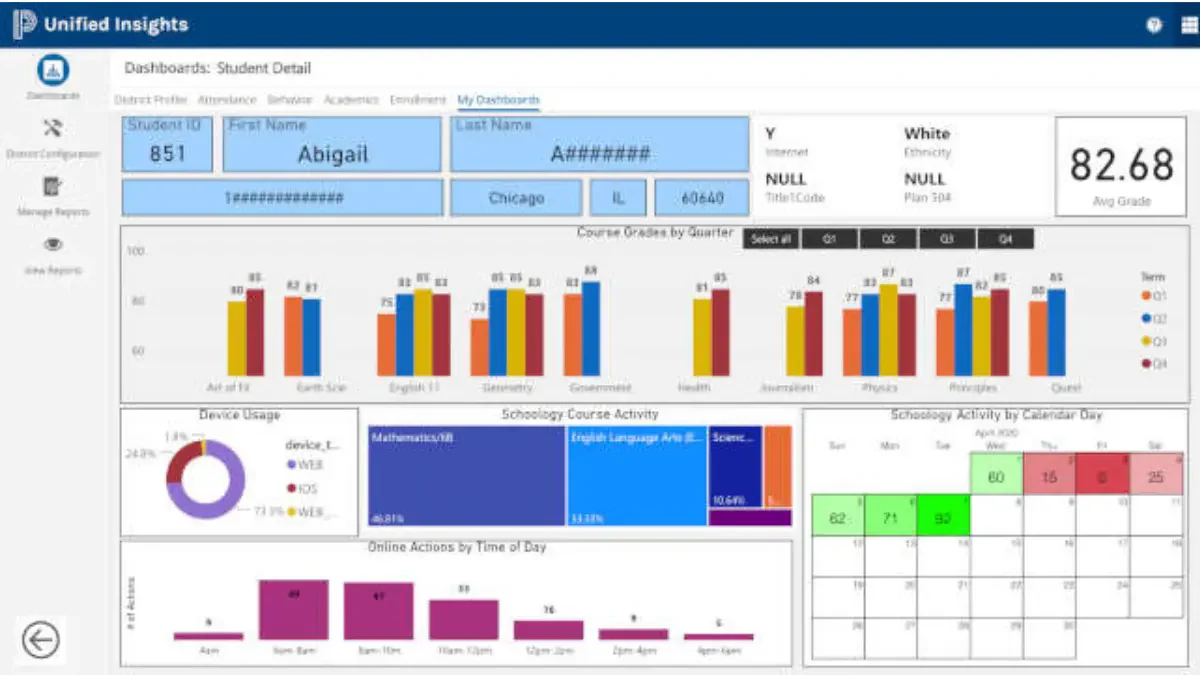
PowerSchool SIS is a comprehensive school management system built to enhance operational efficiency and support academic success through powerful data insights and seamless integration. With flexible modules and inclusive features, it’s an ideal choice for K–12 institutions in Malaysia seeking a customizable, data-driven solution.
Key features:
- Advanced reports.
- LMS that supports whole child instruction.
- Student support services.
PowerSchool SIS is ideal for K–12 schools that prioritize data-driven decision-making and advanced analytics. Its scalability and strong integration capabilities make it suitable for larger or growing institutions with complex academic needs.
| Pros | Cons |
|
|
2. HashMicro School Management Software
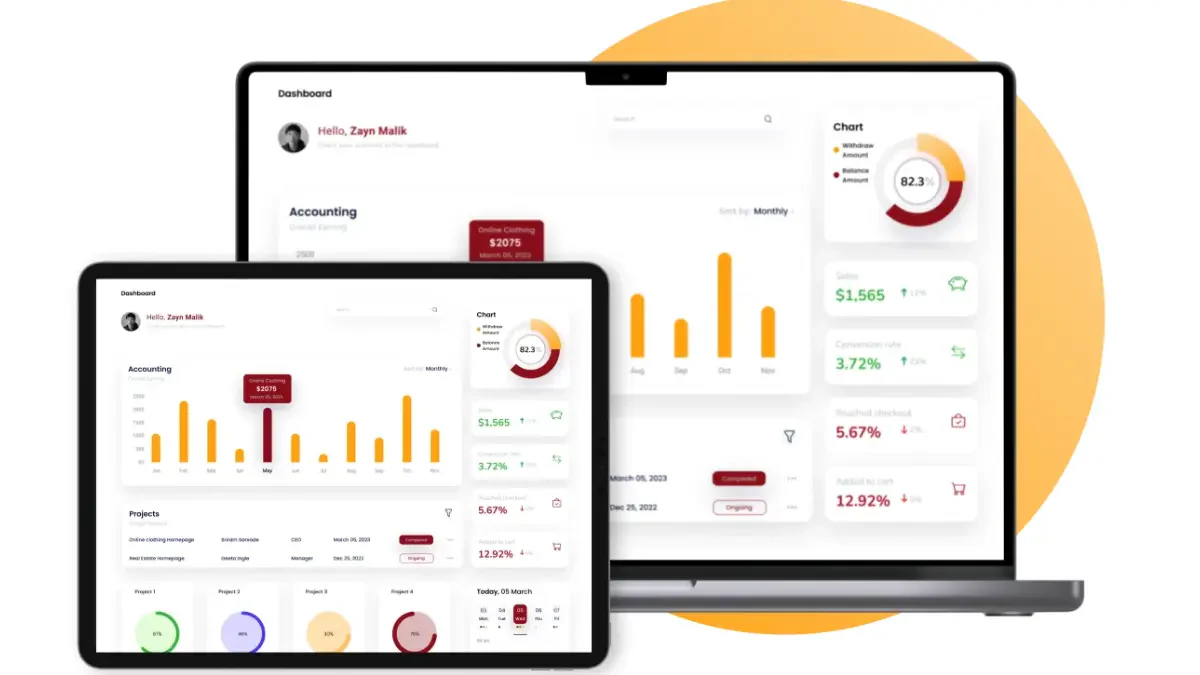
HashMicro’s School Management Software is a powerful, all-in-one solution designed to modernize school operations through automation and centralized control. Tailored for institutions in Malaysia, it enhances administrative efficiency while maintaining high standards of data security and transparency.
With features like real-time attendance tracking, academic reporting, and seamless communication tools, the system empowers schools to stay organized and responsive. Its adaptability to local requirements and dedicated support make it a reliable choice for both private and public educational institutions.
Key features:
- Student information management
- Attendance tracking
- Scheduling
- Gradebook
- Automatic report card generation
- Teacher competency monitoring
- Communication tools
- Document and certificate management
- Financial management
| Pros | Cons |
|
|
After reviewing the core features and operational benefits, it is also worth looking at the pricing structure to see how well the system fits your school’s needs and planning considerations.
3. Gradelink SIS
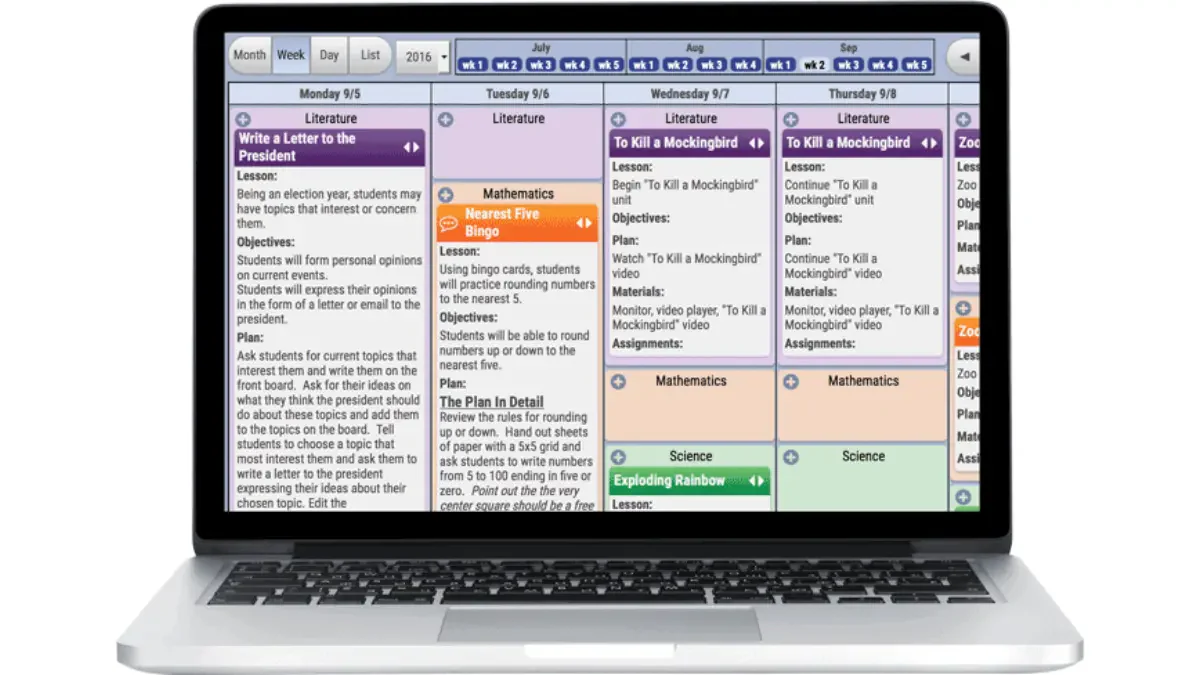
Gradelink SIS is a user-friendly school management software tailored for small to medium-sized institutions, helping streamline grading, scheduling, and student data management with ease. Its intuitive interface, smooth integration with educational tools, and strong customer support make it a reliable solution for schools transitioning to digital systems.
Key features:
- Simplified payments.
- Administrative reports.
- Classes & scheduling.
- Student information.
- Teacher gradebooks.
Smaller schools and private institutions may benefit from Gradelink's straightforward approach to student records, grading, scheduling, and communication, allowing administrators to focus on education rather than system complexity.
| Pros | Cons |
|
|
4. Veracross
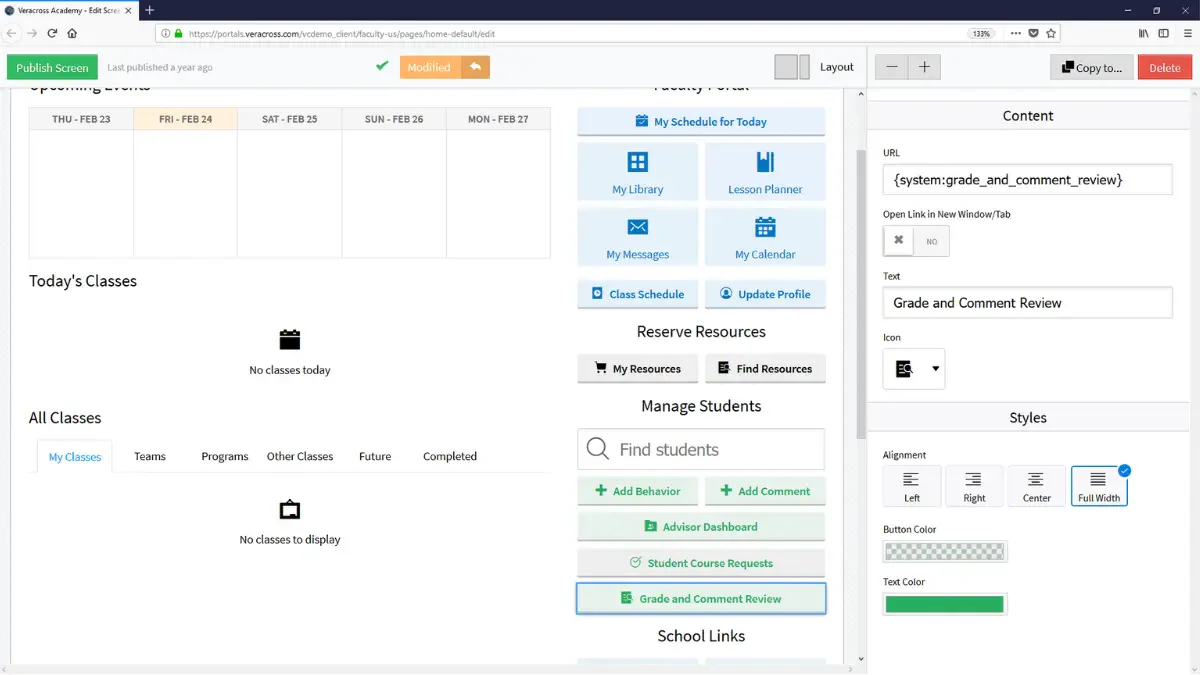
Veracross is an all-in-one school management system designed for private and international schools, offering seamless integration of academic and administrative functions. With centralized portals and advanced communication tools, it enhances collaboration across students, parents, and staff—though initial setup may require technical support.
Key features:
- Role-based portals for parents, teachers, and students
- Email automation and communication tools
- Attendance management
- Academic scheduling
Veracross is well-suited for private and international schools that need centralized communication between parents, teachers, and students. Its all-in-one structure supports institutions with more complex administrative workflows.
| Pros | Cons |
|
|
5. Fedena
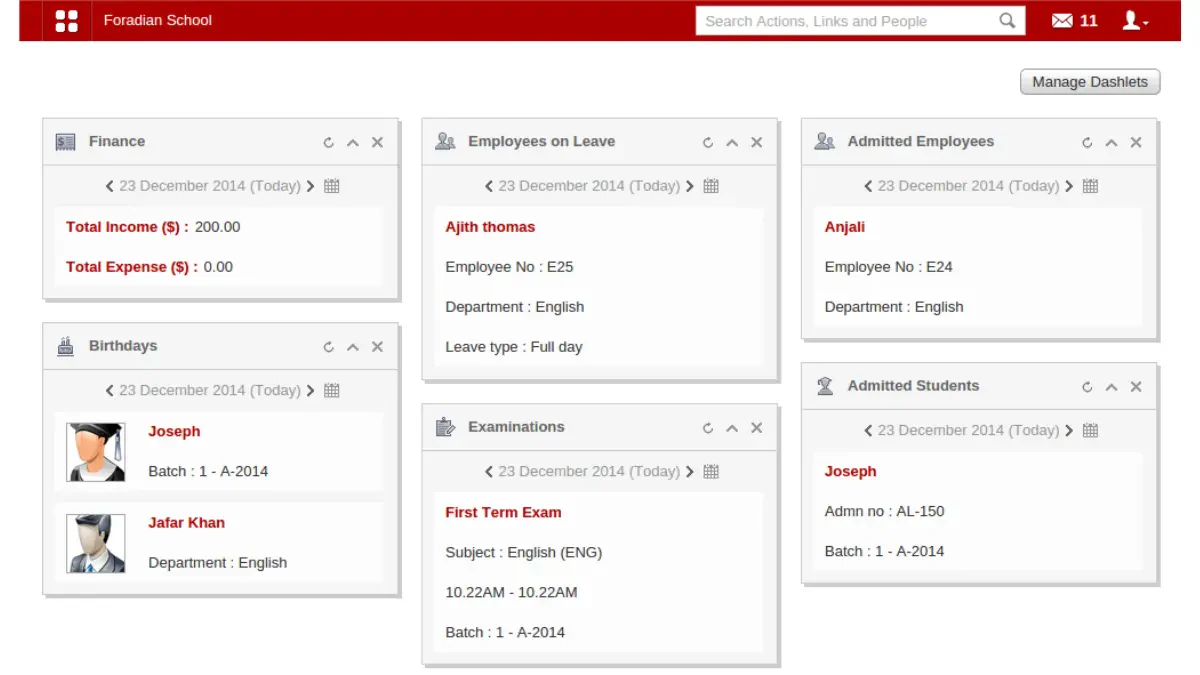
Fedena is a reliable and scalable school management system that simplifies core academic processes like scheduling, communication, and student data management through a user-friendly interface. Its modular, open-source structure makes it highly adaptable—ideal for institutions with multiple campuses or evolving administrative needs.
Key features:
- Timetable management
- Centralized student information system
- Communication and announcements
- Academic timetable management
- Role-based permissions
Fedena offers flexibility through its modular design, allowing schools to implement essential features first and expand functionality over time as their operational requirements evolve.
| Pros | Cons |
|
|
6. Synergy Education Platform
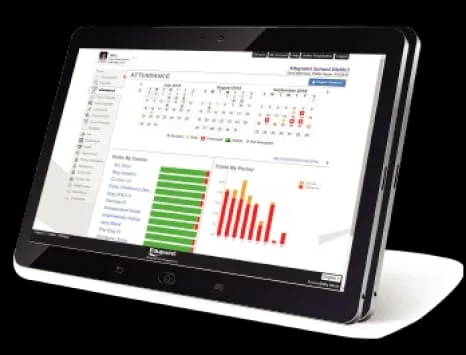
Synergy Education Platform is a unified school management system that enables schools and districts to manage academic, administrative, and reporting tasks efficiently from a single platform. With centralized control and in-depth performance tracking, it’s ideal for institutions seeking streamlined operations across multiple campuses.
Key features:
- Grade and assessment management
- Custom dashboards for teachers and admins
- Real-time reporting and analytics
- Centralised student records
Organizations managing multiple campuses can leverage Synergy's centralized oversight tools to maintain visibility into performance, attendance, and administration across schools from one platform.
| Pros | Cons |
|
|
7. Classe365
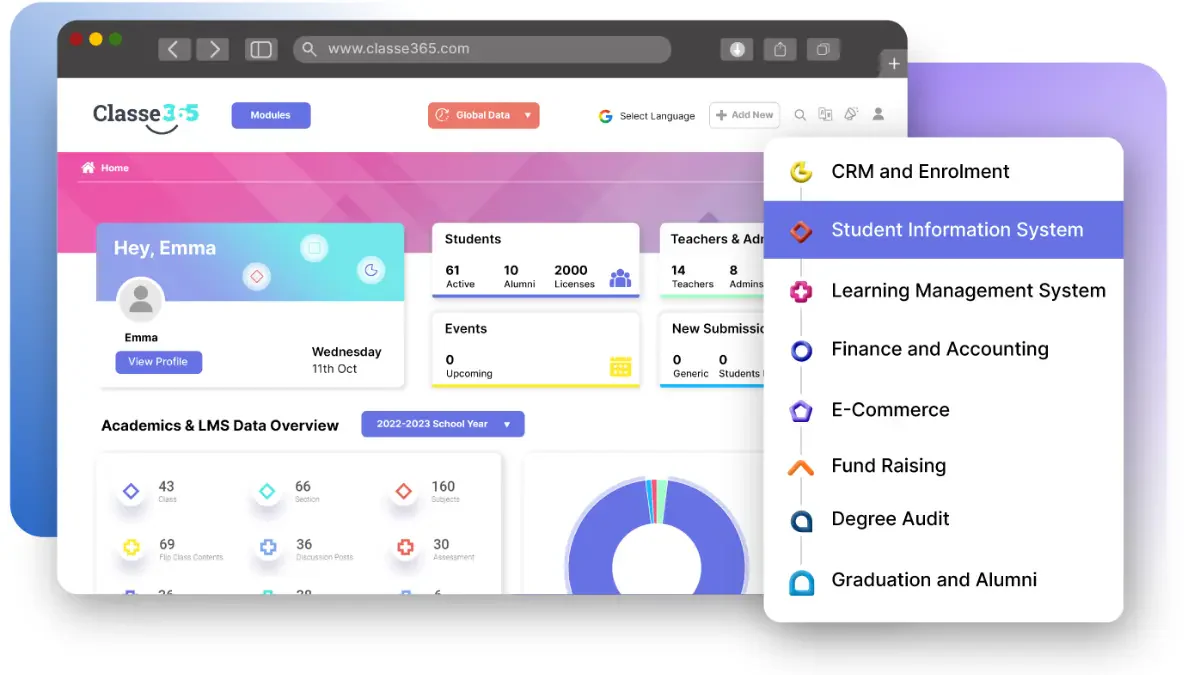
Classe365 is a flexible school management platform that unifies academic, administrative, and CRM functions, making it ideal for higher education and vocational institutions. With features like admissions, finance, and placement tracking, it offers a customizable, all-in-one solution for managing complex school operations.
Key features:
- Lead and admission management
- Attendance and health records
- Placement and alumni tools
- Academic analytics
Rather than focusing solely on academic administration, Classe365 supports the entire student lifecycle, helping institutions manage recruitment, admissions, enrolment, and alumni engagement within one system.
| Pros | Cons |
|
|
8. Pisara Solution
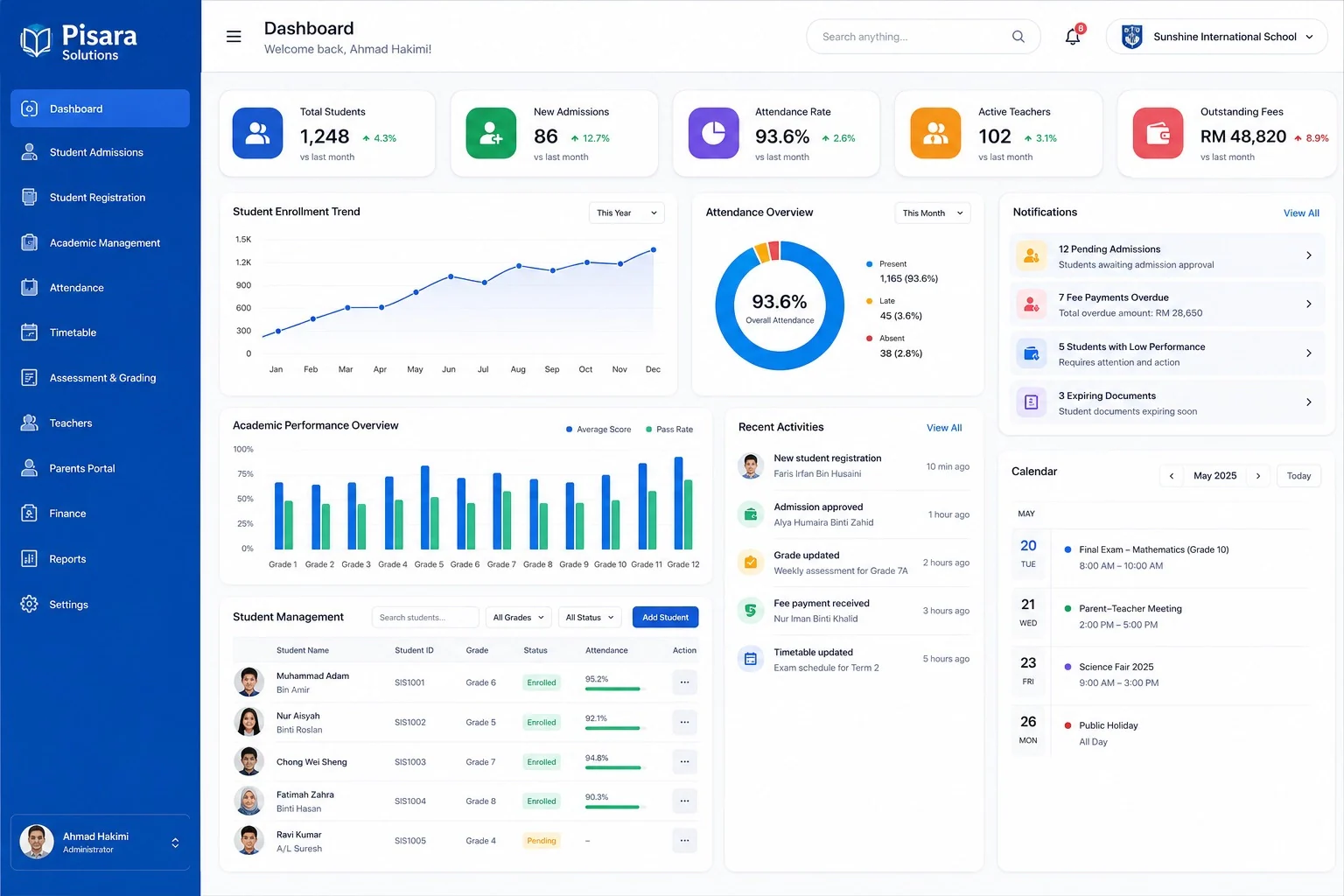
Pisara Solution is a locally developed school management system tailored for Southeast Asian institutions, offering essential tools for managing class schedules, attendance, and staff records. With a user-friendly interface and strong compliance with regional standards, it helps schools streamline operations while remaining flexible to future growth.
Key features:
- Student and teacher profile management
- Attendance and time tracking
- Class scheduling and academic calendars
- Performance reporting tools
Designed with regional educational practices in mind, Pisara Solution provides schools with a platform that aligns closely with Southeast Asian operational needs while remaining easy to adopt.
| Pros | Cons |
|
|
9. Thinkwave
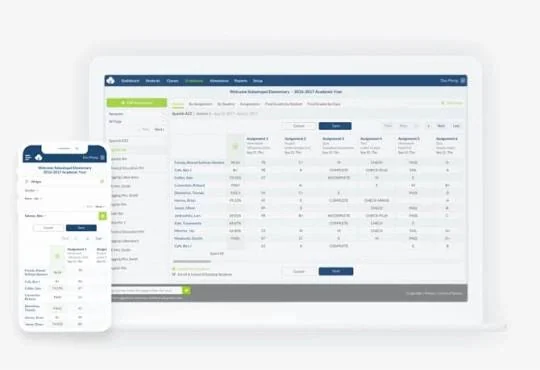
Thinkwave is a user-friendly, cloud-based school management system ideal for independent and private schools seeking simplicity and flexibility. With accessible tools for grading, attendance, and report generation, it streamlines academic monitoring—though its free version may be limited for full-scale use.
Key features:
- Cloud-based gradebooks and attendance
- Custom report cards and transcripts
- Email and messaging tools
- Real-time progress tracking
ThinkWave focuses on core academic management functions, making it a practical option for tutoring centers, alternative schools, and smaller institutions that prefer simplicity over extensive enterprise features.
| Pros | Cons |
|
|
10. Anak2U
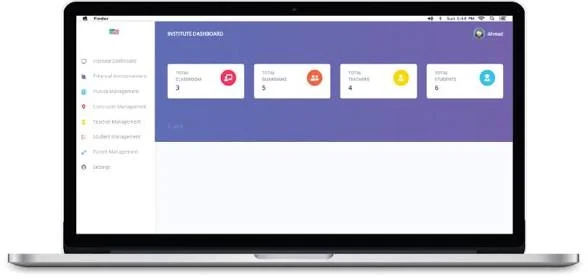
Anak2U School Management System is a digital platform built to help preschools, kindergartens, and childcare centres manage daily operations more efficiently. Designed for the Malaysian market, it combines student and staff management, attendance, billing, reporting, and parent communication in one system, making it easier for schools to keep administrative tasks organised while staying connected with families.
Key features:
- Student and staff management
- Attendance and daily activity tracking
- Billing and invoice management
- Parent communication and announcements
Purpose-built for childcare centers and preschools, Anak2U supports daily operations through tools for parent communication, attendance tracking, activity monitoring, and fee management.
| Pros | Cons |
|
|
11. Aeries SIS
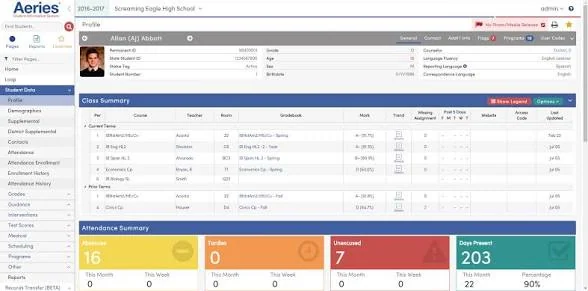
Aeries SIS is a student information platform designed to help K 12 schools manage academic records, attendance, communication, and daily administrative processes more efficiently. With tools for student data management, grade reporting, scheduling, and parent access, it helps schools keep information more organised while supporting smoother coordination across everyday operations.
Key features:
- Student information and academic record management
- Attendance tracking and grade reporting
- Class scheduling and timetable tools
- Parent and student portal access
Schools with strong compliance and reporting requirements may find Aeries particularly valuable due to its emphasis on record accuracy, accountability, and comprehensive student data management.
| Pros | Cons |
|
|
12. Alma SIS
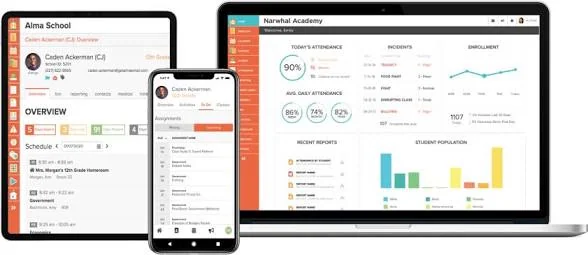
Alma SIS is a cloud based school management platform designed to help K 12 schools manage student information, academic records, and daily administrative tasks more efficiently. With features for attendance, scheduling, grading, and parent communication, it supports smoother coordination across school operations while giving staff easier access to organised and up to date information.
Key features:
- Student information and records management
- Attendance and scheduling tools
- Gradebook and report card management
- Parent and student portal for communication
By combining an intuitive interface with cloud-based accessibility, Alma helps schools transition to digital administration while improving collaboration among staff, students, and parents.
| Pros | Cons |
|
|
13. Skyward Student Management Suite
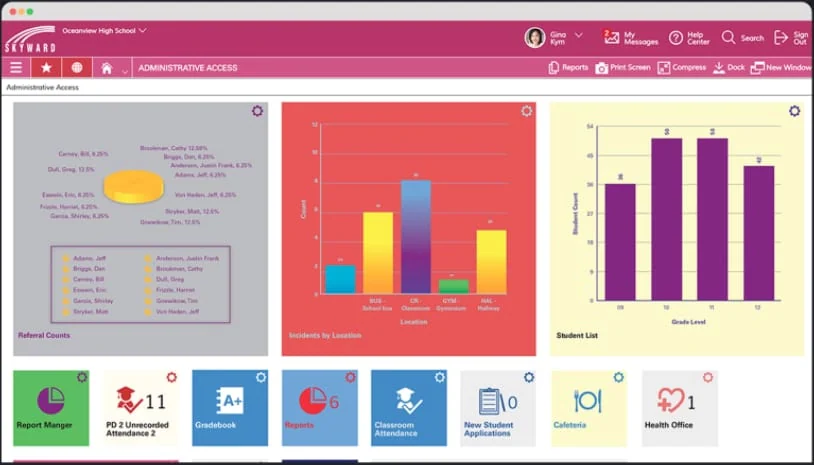
Skyward Student Management Suite is a comprehensive school management platform designed to help schools streamline administrative processes, improve family engagement, and manage student information more efficiently. With tools for attendance, scheduling, reporting, and communication, it supports smoother coordination across academic and operational functions while helping schools keep daily workflows more organised.
Key features:
- Attendance and student record management
- Class scheduling and course planning
- Report cards and academic reporting
- Parent portal and family communication tools
Family engagement remains one of Skyward's strongest advantages, providing parents with convenient access to attendance records, grades, schedules, and school communications.
| Pros | Cons |
|
|
14. School Diary
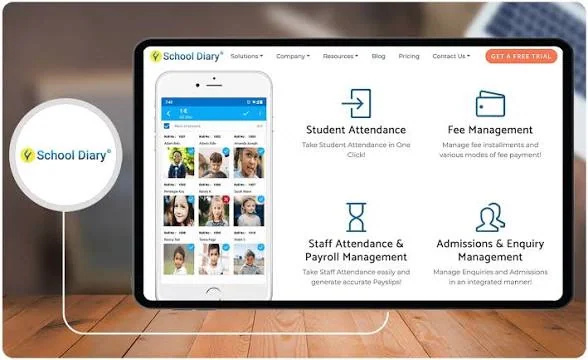
School Diary is a communication-centric school management system designed to simplify interactions between teachers, students, and parents through a mobile-first platform. With features like real-time messaging, attendance tracking, and academic monitoring, it offers a user-friendly solution for schools focused on efficiency and collaboration.
Key features:
- Messaging and announcements
- Admission and inquiry tracking
- Academic performance updates
- User role management
School Diary is ideal for schools that focus on communication and parent engagement. Its mobile-first approach makes daily updates and interactions more efficient.
| Pros | Cons |
|
|
15. Quick Campus
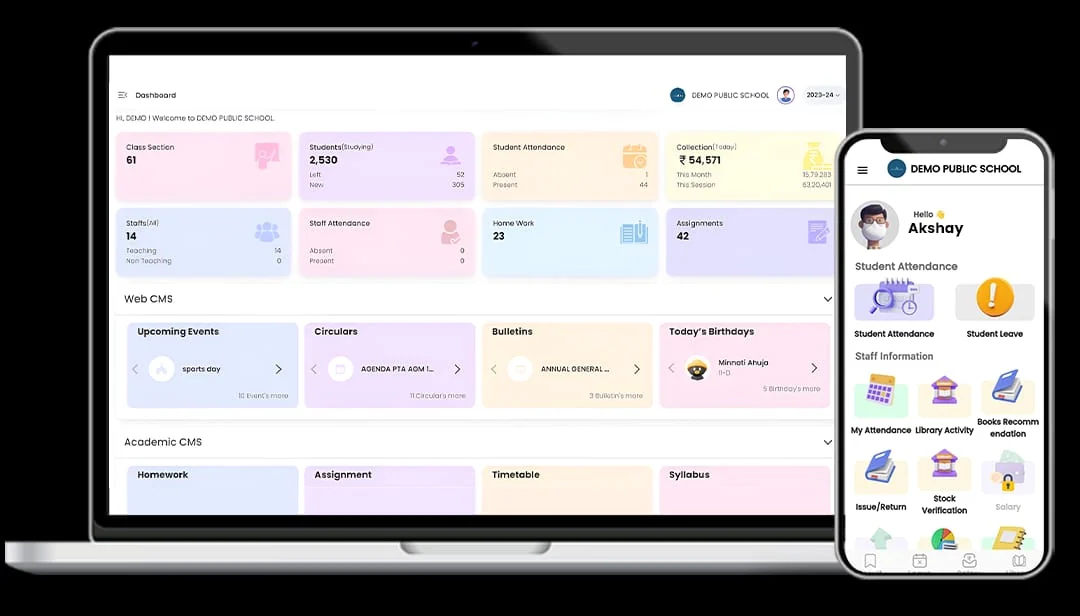
Quick Campus is an integrated education platform that unifies academic, administrative, and e-learning functions through intuitive tools and modular features. Designed for scalability and collaboration, it’s ideal for institutions looking to streamline operations and enhance engagement across their entire community.
Key Features:
- Learning and content management
- Capacity-building programs for educators
- Campus services and consultancy tools
- Timetable and performance dashboards
Quick Campus suits institutions looking for an integrated platform that combines academics, administration, and learning tools. Its modular system supports flexible and scalable education management.
| Pros | Cons |
|
|
Why Is a School Management System Essential for Malaysian Schools?
As digital transformation continues to reshape Malaysia’s education landscape, the need for a dependable school management system becomes more important for keeping daily operations organised and easier to manage. Beyond efficiency, it also helps schools maintain smoother coordination and faster access to information.
- Centralises core school functions: A school management software combines attendance, exams, schedules, and records in one unified platform, which helps schools manage daily operations with better consistency.
- Strengthens parent school engagement: With messaging portals and fee tracking features, schools can keep communication more consistent and make follow ups easier for parents to navigate.
- Supports informed, data driven decisions: With access to real time analytics and reporting, school teams can respond more quickly to issues and make decisions with clearer context.
- Ensures easier access to information: Cloud based software for school management gives staff and parents more flexible access to important information across devices.
- Prepares schools for long term digital growth: A more structured system gives schools a stronger foundation for improving processes and adapting to future operational needs.
How Does a School Management System Enhance Data Security?
A reliable school management software strengthens data security through features like encrypted databases, secure login credentials, and automated cloud backups. With controlled access settings, only authorised staff can view confidential information, helping reduce the risk of data leaks or unauthorised access.
Unlike paper-based systems that are prone to loss, theft, or damage, a digital school management system keeps records more secure and easier to retrieve when needed. This is especially important for schools that manage student records, academic reports, and administrative documents across different departments.
By adopting a more secure and organised digital system, Malaysian institutions can protect what matters most, including student data and internal records, while improving administrative efficiency. In this context, data security is not only a technical feature but also an important part of running school operations more responsibly.
How to Choose the Right School Management Software

Choosing the right school management system is a strategic decision that impacts the entire school community, from administrators and teachers to parents and students. To help your institution make the best choice, consider the key factors before investing in a school ERP software:
1. Understand your school’s operational needs
Before selecting any school management software, assess the main issues your school wants to solve, attendance tracking, academic performance, or parent-teacher communication. A well-matched academic management software should directly address these priorities.
2. Prioritize ease of use for all users
An intuitive and user-friendly school management system software ensures that administrators, teachers, parents, and students can use it effectively without needing extensive training. The smoother the interface, the faster your institution can adapt and benefit.
3. Look for essential and customizable features
Choose a school ERP software that offers modules for grading, communication, real-time reporting, and analytics. If your school has unique needs, the software for school management should allow for feature customization and integration.
4. Ensure scalability for future growth
Your school administration software should be able to grow alongside your institution, whether you’re adding new campuses, enrolling more students, or expanding digital learning services. A scalable educational ERP system avoids the hassle of frequent system overhauls.
5. Evaluate data security and compliance
When dealing with sensitive information, always choose a school management system that applies encryption, role-based access, and data backup protocols. Learning to create school management system solutions that follow data protection standards is key to long-term trust and reliability.
"When choosing school management software, the most important thing is not how many features a system offers, but how well those features match the way your institution actually operates. A system that is easy to use, scalable, and secure will usually deliver more long term value than one that looks impressive but adds complexity to daily workflows."
Key Features of School Management Software
The right school management software should support both academic and administrative activities without adding unnecessary complexity. While every platform offers different capabilities, these are five core features that schools should look for when evaluating a solution.
1. Student Information Management
A centralized student database stores enrolment details, academic records, attendance history, and personal information in one place. This makes it easier for authorised staff to access accurate records while reducing duplicate data and manual paperwork.
2. Attendance and Timetable Management
Digital attendance tracking and automated timetable scheduling help schools organise daily activities more efficiently. These features reduce scheduling conflicts, simplify attendance monitoring, and give administrators better visibility into school operations.
3. Gradebook and Examination Management
Teachers can record grades, manage assessments, generate report cards, and monitor student performance through a single platform. This creates a more organised evaluation process while making academic records easier to access.
4. Fee and Financial Management
Many school management systems include tools for tuition billing, payment tracking, invoicing, and financial reporting. By automating these processes, schools can improve payment accuracy and reduce the administrative workload associated with manual fee collection.
5. Communication and Reporting
Built-in communication tools help schools share announcements, attendance updates, and academic progress with teachers, students, and parents. Combined with real-time reporting and analytics, these features provide better visibility into school performance and support more informed decision-making.
Which School Management System Suits Your Business Most?
Choosing the right School Management System depends on your school’s size, administrative complexity, and how you manage student, teacher, and parent data across departments. To make it easier, the matrix below maps common school scenarios to the most suitable School Management Software solutions.
| School Management Software |
Why It Fits | Institution Scenario |
|---|---|---|
| HashMicro | HashMicro is a stronger fit for institutions that want student records, attendance, scheduling, reporting, billing, and communication in one connected system. It is especially relevant for schools in Malaysia that need a more centralised setup with room for operational customisation and long term scalability. | School in Malaysia that needs a broad system for academic, administrative, and financial coordination |
| PowerSchool SIS | PowerSchool SIS is suitable for schools that want a more data driven system with broad modules for reporting, student support, and academic administration. It works well for institutions that need a scalable K 12 platform and can manage a more complex interface. | K 12 school that wants strong student information management and analytics |
| Gradelink SIS | Gradelink SIS fits smaller schools that want student information, gradebooks, scheduling, and admin reports without adopting a more complex platform. Its appeal is stronger for teams that prioritise ease of use and a quicker learning curve. | Small to medium sized school that wants a simpler system for grading and scheduling |
| Veracross | Veracross is more suitable for schools that want role based portals, communication tools, and academic scheduling in one system. It is especially relevant for institutions that value connected school parent staff interaction and can support a more involved setup process. | Private or international school that wants integrated communication and academic administration |
| Fedena | Fedena is a better match for institutions that want flexibility in how they manage timetables, student data, communication, and permissions. It is useful for schools that expect operational needs to grow or change over time. | School with multiple campuses or evolving admin needs that wants a modular system |
| Synergy Education Platform | Synergy Education Platform fits larger institutions that need centralised student records, dashboards, and analytics across multiple users or campuses. It is more relevant for schools that need a broader system architecture and stronger reporting depth. | Large institution or district that needs centralised oversight and deeper performance reporting |
| Classe365 | Classe365 is suitable for institutions that want to combine admissions, finance, attendance, and student lifecycle management in one place. It is more useful for schools that need both operational and CRM style functionality. | Vocational or education institution that wants admissions, CRM, and academic workflows in one platform |
| Pisara Solution | Pisara Solution is more relevant for schools that want a straightforward system for attendance, profiles, scheduling, and performance tracking. Its regional orientation makes it easier to position for institutions that value Southeast Asian context. | Institution in Southeast Asia that wants a simpler platform for staff and academic coordination |
| ThinkWave | ThinkWave fits schools that want core gradebooks, attendance, transcripts, and reporting in a cloud based system without moving into a more feature heavy platform. It is better suited to schools that value simplicity over broader ERP style coverage. | Independent or private school that wants a lightweight cloud based grading and reporting system |
| Anak2U | Anak2U is a stronger fit for early education centres that want student and staff management, attendance, billing, and parent updates in one local platform. It is especially relevant for operators in Malaysia that want a simpler system aligned with local use. | Preschool, kindergarten, or childcare centre in Malaysia that wants billing and parent communication in one system |
| Aeries SIS | Aeries SIS is suitable for institutions that need a structured student information system with attendance, grade reporting, scheduling, and portal access. It works best for schools that already rely on SIS based workflows and want stronger data organisation. | K 12 school that wants a structured SIS for records, grades, and parent access |
| Alma SIS | Alma SIS is a better fit for schools that want student records, attendance, grading, and parent communication in a cloud based system with a simpler user experience. It is especially suitable for institutions that prioritise usability in day to day coordination. | K 12 school that values a user friendly cloud based platform for records and communication |
| Skyward Student Management Suite | Skyward is more suitable for schools that want student records, scheduling, reporting, and family access tools in one system. It fits institutions that need a stronger SIS foundation while also improving parent communication and administrative visibility. | K 12 school that wants strong administrative workflows with family engagement tools |
| School Diary | School Diary is more useful for institutions that want faster messaging, academic updates, and mobile based communication between schools and families. It works best when daily interaction and ease of access matter more than advanced planning features. | School that prioritises mobile first communication and simpler parent teacher coordination |
| Quick Campus | Quick Campus is suitable for institutions that want a broader platform covering learning tools, timetables, dashboards, and campus services. It is more relevant for schools that want one system to support both academic delivery and operational coordination. | Institution that wants academic, administrative, and e learning functions in one flexible platform |
Conclusion
Choosing the right school management software can make a meaningful difference in how schools handle daily operations, communication, and long term planning. With the right system in place, schools can manage records more efficiently, reduce administrative friction, and create a more organised environment for staff, students, and parents.
As more schools in Malaysia continue strengthening their digital capabilities, selecting a system that matches both current priorities and future growth becomes increasingly important. The options in this list highlight that each platform comes with different strengths, so the right choice will depend on how your institution approaches administration, academic workflows, reporting, and parent engagement.
If you want to assess how a system fits your operational needs more clearly, exploring a free demo can be a practical next step before making a longer term decision.

FAQ About School Management System
Yes, many school management systems support flexible fee structures, allowing schools to manage tuition, registration fees, transportation, extracurricular charges, and installment payment plans. More advanced solutions also automate invoicing, payment reminders, and financial reporting, helping private and international schools simplify fee administration while reducing manual work.
School management software reduces manual paperwork, improves communication between teachers and parents, automates administrative tasks, and provides real-time access to school data for better decision-making.
Pricing varies depending on the number of students, required modules, deployment model, and customization needs. Most vendors provide customized quotations based on institutional requirements.
Implementation time depends on the size of the institution, data migration complexity, and level of customization required. Smaller schools may complete deployment within weeks, while multi-campus institutions may require several months for full integration and staff training.
Yes. Since school management software stores sensitive information such as student records, parent details, and financial data, it should support security measures that align with Malaysia’s Personal Data Protection Act (PDPA). Features such as role-based access, data encryption, secure backups, and audit trails help schools protect personal information and manage data more responsibly.
Cloud-based school software runs on external servers and is accessed online, with subscriptions and vendor-managed updates. On-premise software runs on school servers, offering more control but requiring IT maintenance. Most schools prefer cloud-based systems for lower cost, easier access, and automatic updates.