










 Limited to 100 registrants

Running a supply chain in Malaysia is getting harder. Costs keep rising, customer expectations are higher than ever, and most businesses are still managing their resources manually which means stockouts, idle drivers, and wasted budget are practically a daily reality.
According to the Malaysian Investment Development Authority (MIDA), Malaysia has already approved 111 Integrated Logistics Services projects worth RM12.85 billion, meaning the market is growing fast and the pressure to operate efficiently is only going up.
For businesses operating in manufacturing, distribution, and e-commerce across Malaysia, the ability to allocate the right resources at the right time is a direct driver of profitability. Resource allocation is the strategic process of assigning financial capital, human labor, physical assets, and technology to the right operations at the right moment.
This guide covers the strategies, best practices, and tools that help businesses get resource allocation right, so the same problems stop repeating themselves month after month.
Key Takeaways
Resource allocation in supply chain means distributing labor, assets, capital, and technology to keep operations efficient and cost-effective.
Supply chains are built on four core resource categories human, physical, financial, and technological each requiring a different management approach.
Following proven best practices like rolling forecasts, optimal utilization targets, and SOP alignment helps prevent costly resource waste.
Understanding the difference between strategic and operational allocation allows businesses to balance long-term goals with day-to-day demands.
Better resource allocation starts with clear supply chain data, from stock movement to supplier status and warehouse capacity.
What is Resource Allocation in Supply Chain?
Resource allocation in supply chain is the process of distributing limited resources such as warehouse space, raw materials, labor, and delivery capacity to support business operations efficiently.
The goal is to ensure every resource is used properly. Poor allocation causes delays, stockouts, overstocking, and unnecessary costs that erode profit margins. It also helps businesses balance demand, capacity, and profitability across the entire operation.
Main Resource Categories in the Supply Chain Management
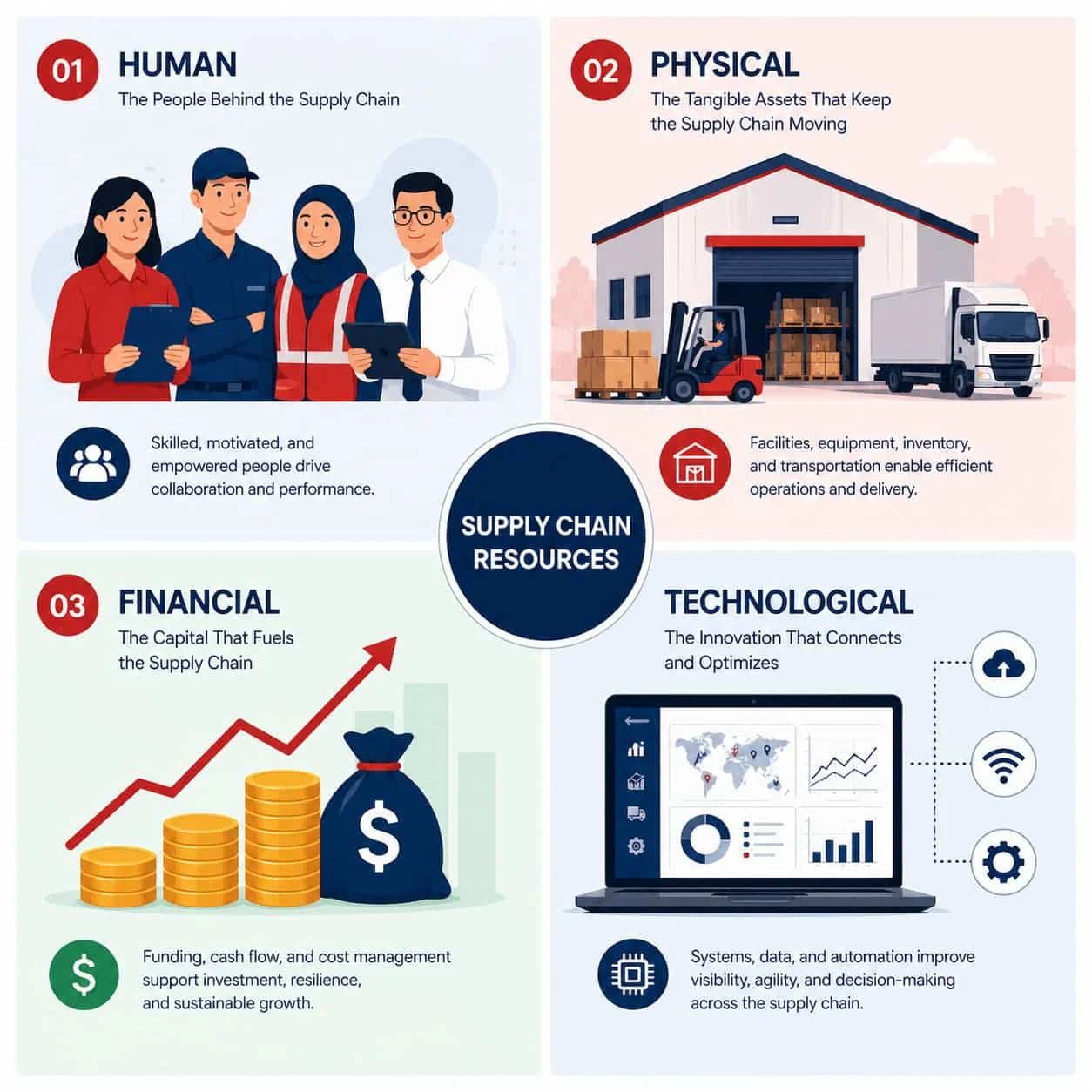
To allocate effectively, businesses must first understand what they are working with. In any supply chain, resources fall into four primary categories. Each requires a distinct management approach and a defined set of key performance indicators (KPIs).
1. Human Resources and Labor Management
Human capital is the most complex resource to manage. Variables such as skill sets, capacity limits, and local labor regulations all affect how workers should be deployed.
In a warehouse setting, for example, allocating too many staff at the receiving dock while the shipping department is overwhelmed creates costly backlogs. However, with real-time volume data, managers can redeploy staff dynamically to where demand is highest.
2. Physical and Tangible Assets
Physical resources include raw materials, finished goods inventory, machinery, vehicles, and warehouse space. Allocating physical assets also involves geographic decisions specifically, which distribution center should hold the bulk of high-demand stock.
These decisions are shaped by proximity to customers, local regulations, and freight costs. Furthermore, optimizing warehouse space through vertical storage or cross-docking can meaningfully reduce cost per unit handled.
3. Financial Resources and Capital Expenditur
Financial allocation involves budgeting across procurement, logistics operations, and emergency reserves. It requires a clear view of where capital will yield the highest return.
For instance, a company must weigh whether to expand its delivery fleet or secure higher volumes of raw materials to hedge against price increases. Financial allocation also informs “Cost to Serve” models, ensuring that resources go toward the most profitable product lines and customer segments.
4. Technological and Data Resources
In today’s environment, software and data are critical operational resources. Automating financial and workflow automation tools reduce the manual effort needed to track and reallocate resources.
However, technology investments must also be deliberately planned not all systems deliver equal value across different business
sizes and supply chain structures.
Best Practices for Optimal Resource Allocation
To achieve excellence in resource management, businesses should adopt standardized practices that promote transparency, agility, and accountability across the supply chain.
1. Implement a Rolling Forecast
Replace annual budgets with monthly or quarterly forecasts. This lets you shift resources toward high-demand areas in real time instead of being locked into a plan that no longer reflects reality.
2. Prioritize Flexibility Over Maximum Utilization
Running at full capacity leaves no room to handle errors or sudden demand. That 10–15% buffer is not waste, it is your operational safety net.
3. Use Cross-Functional Teams
When sales, finance, and supply chain plan together, resource gaps get spotted before they become problems. If a promotion is coming, operations needs to know early enough to prepare.
4. Invest in Continuous Training
A cross-trained workforce is easier to redeploy when demand shifts. Investing in skills directly reduces your dependency on specific individuals and supports stronger workforce management.
5. Monitor and Audit Regularly
Monitor inventory turnover ratio, labor productivity, and asset utilization regularly. If a metric is off, trace it back to the allocation decision that caused it and correct from there.
Strategic vs. Operational Resource Allocation
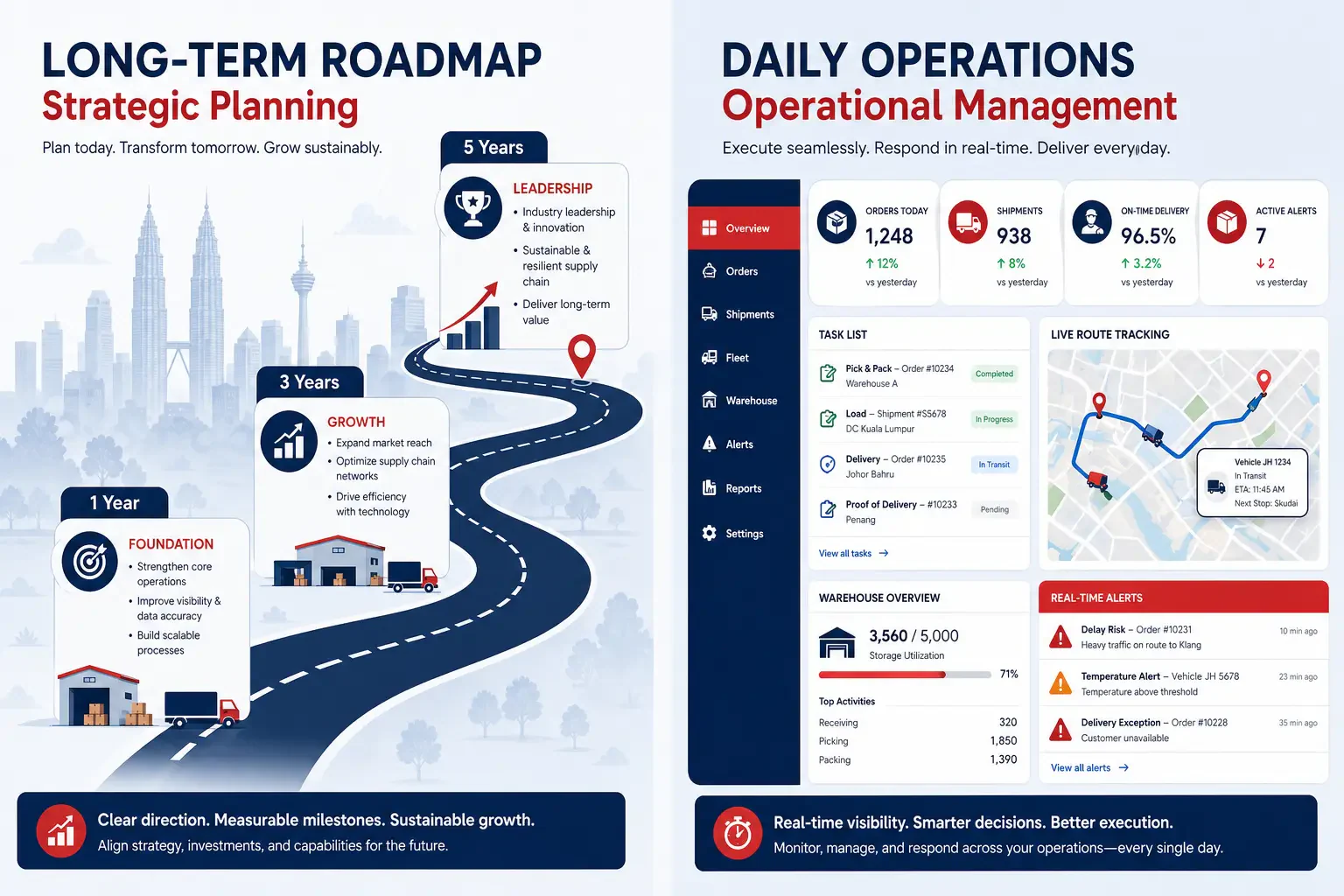 Resource allocation operates at two distinct levels. Understanding the difference between strategic and operational allocation is essential for balancing long-term goals with daily execution demands.
- Strategic Resource Allocation
Strategic allocation focuses on long-term goals, typically spanning one to five years. It covers high-level decisions like facility locations, entering new markets, or investing in large-scale automation infrastructure.
For example, a company aiming to offer the fastest delivery in Peninsular Malaysia will strategically prioritize building a network of micro-fulfillment centers over simply cutting transportation costs. These decisions require thorough predicting future demand accurately and risk modeling, as they are difficult to reverse once committed.
- Operational Resource Allocation
Operational allocation is the day-to-day or week-to-week management of assets. It deals with immediate realities: assigning drivers to routes, scheduling machine maintenance, or shifting inventory between locations to meet a sudden local demand surge.
When a machine breaks down on the factory floor, for instance, the operational manager must immediately reallocate the workload to minimize impact on final delivery timelines. This level of allocation is where the most immediate cost savings are found through inventory optimization and planning around market demand.
Overcoming Common Allocation Challenges
Even with a clear plan, resource allocation can fail when demand shifts, data is scattered, or teams compete for the same resources.
-
Demand Volatility and Uncertainty
Sudden demand changes can leave warehouses short of stock, workers, or delivery capacity. Rolling forecasts and flexible buffers help teams adjust resources before delays happen.
-
Siloed Data and Lack of Visibility
When procurement, warehouse, and logistics use different data, allocation decisions become inaccurate. For example, procurement may keep ordering while storage is already full. A centralized view helps reduce the bullwhip effect in supply chain planning.
-
Resource Scarcity and Internal Competition
Teams often compete for the same drivers, budget, or warehouse space. Clear allocation rules help prioritize resources based on business impact, not departmental pressure.
Measuring the Success of Your Allocation Strategy
To confirm that your strategy is delivering results, you must track metrics that directly reflect the efficiency of your resource distribution. The key indicators to monitor are:
- Resource Utilization Rate: The percentage of time a resource — machine, vehicle, or worker is actively contributing to production or delivery.
- Order Fulfillment Cycle Time: How long it takes from resource assignment to task completion. Strong order fulfillment performance is a direct indicator of allocation efficiency.
- Cost Per Unit Delivered: A direct measure of how effectively financial and physical resources are being converted into revenue.
- Stockout vs. Overstock Ratio: A measure of how well inventory (a key resource) is balanced against market demand, closely tied to effective inventory control practices.
Regular review of these metrics ensures that allocation decisions remain grounded in operational reality rather than outdated assumptions.
The Role of Technology in Resource Optimization
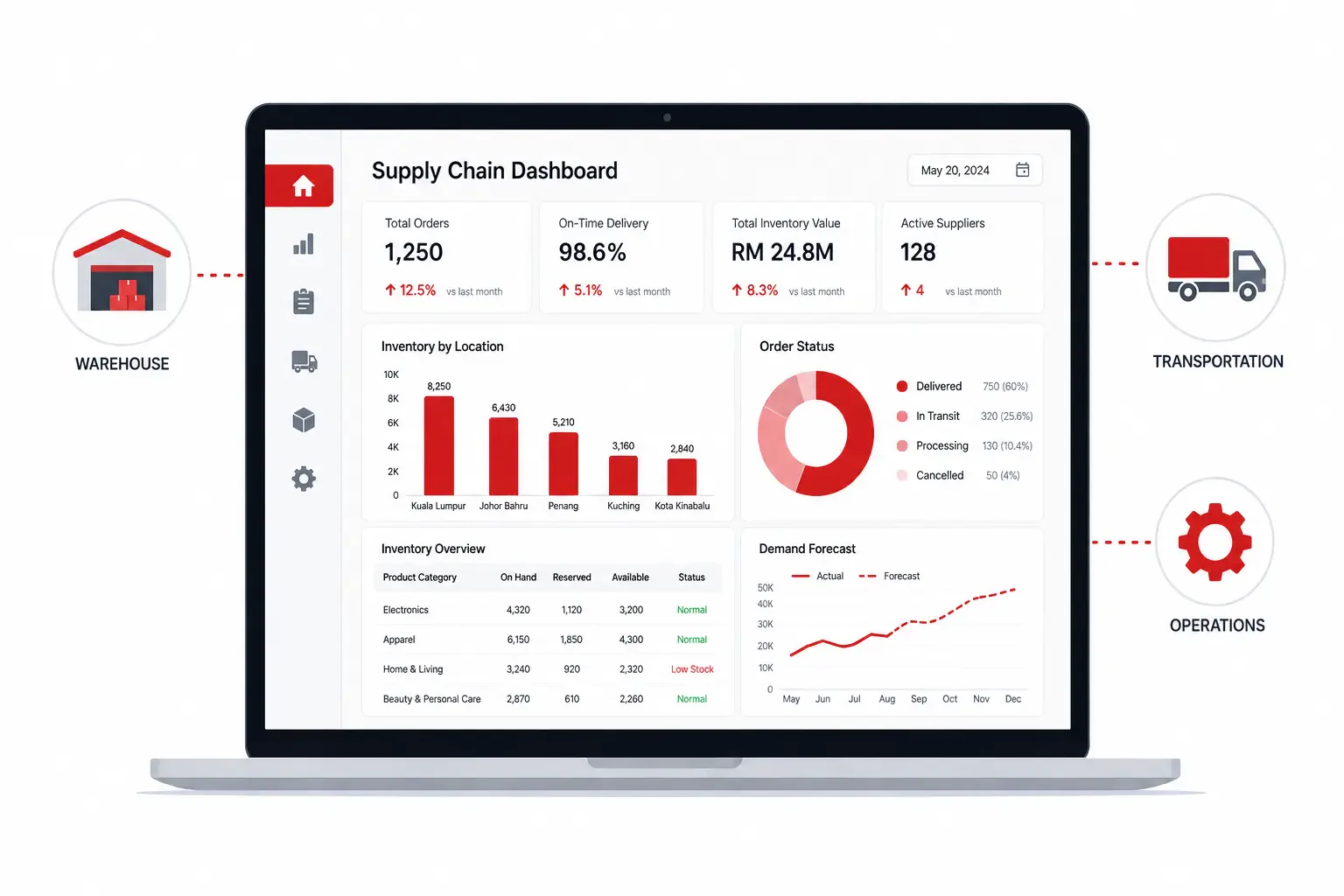
The complexity of modern supply chains has long surpassed the capabilities of manual spreadsheets. Technology is now the primary enabler of real-time, accurate resource distribution.
- ERP software sits at the heart of this transformation:
These systems automate labor scheduling, track inventory movement across multiple warehouse locations, and can even predict when a delivery vehicle requires maintenance before it disrupts a route. - AI in workflow automation pushes the boundaries further:
AI and machine learning can analyze historical data to surface patterns that manual review would miss, for example, identifying that warehouse throughput consistently drops on specific days due to local traffic patterns, enabling managers to preemptively reallocate labor.
For Malaysian businesses looking to build supply chains that are both efficient and resilient, the right combination of ERP, automation tools, and real-time data visibility is not a luxury. It is a competitive necessity.
Conclusion
Resource allocation is the operational heartbeat of every supply chain. For businesses in Malaysia where logistics costs remain high and market demands continue to accelerate mastering the distribution of human, physical, financial, and technological resources is a direct path to lower costs, greater resilience, and stronger customer satisfaction.
The journey toward optimal allocation is continuous. However, with the right strategies, clear metrics, and the right technology in place, it becomes a sustainable competitive advantage rather than a recurring operational headache.
Ready to see how it works in practice? Schedule your free demo today and let our team show you how Malaysian businesses are making smarter resource decisions without the guesswork.

FAQ About Resource Allocation
Resource allocation is the process of assigning limited resources such as labor, inventory, warehouse space, vehicles, budget, and technology to the right supply chain activities. In supply chain management, it helps businesses balance demand, capacity, and cost so operations can run without unnecessary delays, stockouts, or wasted resources.
An example of resource allocation is moving warehouse staff from receiving to packing when online orders suddenly increase. Another example is shifting delivery vehicles to high-demand routes or placing more fast-moving stock in a distribution center closer to customers. These decisions help businesses respond faster without overusing one resource while another sits idle.
Use a WMS or ERP with multi-location tracking. A simple trigger: reallocate when one location exceeds 85% utilization while another sits below 60%.
Resources are allocated by reviewing demand forecasts, stock levels, workforce capacity, delivery schedules, and operating priorities. Businesses can use rolling forecasts, cross-functional planning, and supply chain data to decide where resources should go first. The goal is to place resources where they create the most operational impact while reducing delays, overstocking, and unnecessary costs.
Quantify what poor allocation is already costing lost sales from stockouts, discounted overstock, overtime from bad scheduling. Put a ringgit figure on it, and the ROI justifies itself.
Yes. East Malaysia routes have longer lead times and higher freight costs, so safety stock levels there need to be higher. Model each region separately rather than applying one national standard.