









 Limited to 100 registrants

Global supply chains operate through complex, interconnected systems like sourcing raw materials from one country, manufacturing components in another, and assembling the final product in yet another spanning multiple regions and stakeholders. This complexity heightens the risk of disruptions that can lead to delivery delays, rising costs, and reduced competitiveness.
In Malaysia, supply chain challenges are becoming more evident due to its role in regional trade and manufacturing. Disruptions such as port congestion and supply shortages have affected key industries. This makes risk management increasingly important for local businesses.
Today, supply chain disruption is a strategic concern, not just an operational issue. Even small delays can trigger wider impacts across industries. Understanding the causes and effects helps companies respond more effectively.
Key Takeaways,
Supply chain disruption refers to any event that interrupts the flow of goods or services, leading to delays, shortages, and increased operational costs.
Building a resilient supply chain means balancing efficiency with adaptability so businesses can continue operating and recover quickly during disruptions.
Digital innovation helps businesses improve supply chain resilience by providing visibility and data insights to anticipate and respond to disruptions more effectively.
To manage disruptions effectively, businesses need the right digital tools and visibility. Find out how the right solution can support your supply chain by clicking the banner below.
Why understanding the Supply Chain Disruption Matters?
Supply chain disruption is any event that interrupts the normal flow of goods, materials, or services. It can cause delays, stock shortages, higher costs, and changes to daily operations.
Disruptions can come from internal factors, such as equipment failure, warehouse issues, labor problems, or IT outages. They can also come from external factors, such as regulatory changes, economic shifts, natural disasters, or international conflicts.
One common impact is the bullwhip effect, where small changes in demand or supply create larger problems across the supply chain. Understanding these risks helps businesses plan better, reduce delays, and build a more resilient supply chain.
Identifying the Causes of Supply Chain Disruptions

The causes of supply chain disruption are as diverse as the global economy itself. To effectively manage risk, organizations must identify the specific triggers that are most likely to impact their operations. These triggers are generally grouped into several key categories, each requiring a different mitigation strategy.
1. Natural Disasters and Climate Change
Environmental events are a key driver of global supply chain disruptions. Disasters like earthquakes, floods, hurricanes, and wildfires can damage infrastructure, disrupt transportation, and halt production. The growing intensity of climate-related events, such as Panama Canal droughts or East Asian typhoons, continues to increase long-term risks for global trade.
2. Geopolitical Instability and Trade Policy
Geopolitical tensions and trade policies are major sources of supply chain uncertainty. Tariffs, sanctions, and trade conflicts can rapidly shift sourcing costs and disrupt supplier networks. At the same time, regional conflicts may restrict key routes, increasing logistics issues and encouraging companies to diversify beyond single-country sourcing.
3. Economic and Labor Factors
Economic instability, including inflation and currency changes, can weaken suppliers and disrupt order fulfillment. At the same time, labor shortages and strikes can delay the movement of goods. A lack of skilled workers in logistics roles also makes it harder for companies to adapt to sudden market changes.
4. Technological and Cybersecurity Risks
The increasing use of digital systems in supply chains introduces new vulnerabilities. Cyberattacks, such as ransomware targeting shipping companies or logistics providers, can halt operations for extended periods. System failures in cloud platforms or ERP software can also limit visibility, making it difficult to track inventory or process transactions, especially when third-party systems are involved.
The Financial and Operational Consequences of Supply Chain Failures
Supply chain failures rarely affect just one area of a business. Instead, they trigger a chain reaction that can harm financial performance and brand reputation. While the immediate impact is often cost-related, the long-term effects can be even more serious.
Increased Operational Costs
Many Malaysian manufacturers use “a blanket system” purchase agreements to lock in pricing and scheduled deliveries with suppliers. However, when disruptions cause delays, production stalls while fixed costs continue to accumulate. Late-arriving materials may also go to waste, compounding losses and driving operational costs beyond budget.
Revenue Loss and Market Share Erosion
Product shortages can drive customers to competitors, especially during extended disruptions. Failure to meet demand or fulfill contracts may result in penalties and lost retail opportunities. Over time, this can weaken a company’s market position and customer base.
Reputational Damage
Supply chain issues can quickly attract public attention, especially on social media. Delays or product unavailability can damage brand perception, particularly during peak seasons. Without clear communication and visibility, businesses may struggle to maintain customer trust during disruptions.
Implementation Steps for Building a Resilient Supply Chain
As global uncertainty increases, supply chain management is no longer focused on efficiency alone but also on adaptability. Resilience refers to a supply chain’s ability to continue operating, adjust, and recover during disruptions. Achieving this requires companies to redesign how their supply networks are structured and managed.
- Diversification of Sourcing (Multi-Sourcing)
Relying on a single supplier increases vulnerability to disruptions. By working with multiple suppliers across different regions, businesses can reduce the impact of localized risks such as natural disasters or political issues. Although this approach adds complexity, it strengthens supply chain continuity and reduces dependency on one source. - Inventory Buffering and “Just-in-Case” Models
The Just-in-Time (JIT) model is cost-efficient but can fail during disruptions. Many companies are now adopting a Just-in-Case (JIC) approach by maintaining safety stock for critical items. With proper data analysis, businesses can balance inventory levels while avoiding unnecessary storage costs. - Nearshoring and Regionalization
Shifting production closer to key markets helps reduce risks linked to long-distance logistics and global instability. Nearshoring and regional supply networks can shorten delivery times, lower transportation costs, and improve operational control. This approach also supports sustainability goals and aligns with evolving consumer expectations.
The Role of Digital Innovation in Risk Mitigation
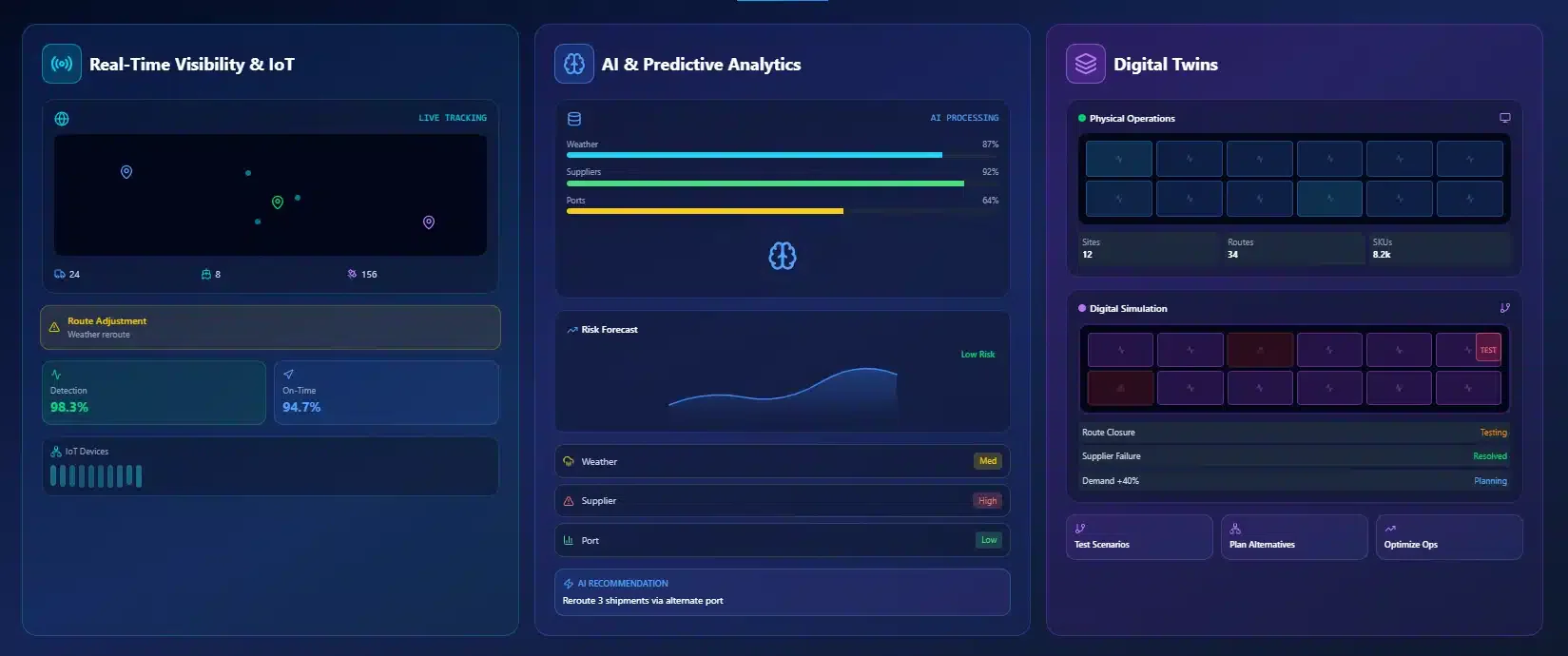
Digital technology plays a central role in strengthening supply chain resilience. Managing complex global networks without digital tools is highly challenging, especially when speed and accuracy are critical. Through better visibility and data-driven insights, businesses can anticipate disruptions and respond before they escalate.
1. Real-Time Visibility and IoT
Visibility is essential for effective supply chain control. IoT sensors and GPS tracking provide real-time updates on the location and condition of goods in transit. This allows companies to detect delays early, adjust delivery routes, and keep customers informed using integrated data platforms.
2. Artificial Intelligence and Predictive Analytics
AI and predictive analytics help businesses identify potential risks by analyzing large volumes of data, including weather trends and supplier performance. These tools enable companies to anticipate issues such as supplier instability or port congestion. With advanced supply chain systems, organizations can test different scenarios and make more informed decisions.
3. Digital Twins
A digital twin is a virtual model of a physical supply chain used for simulation and planning. It allows businesses to test the impact of disruptions, such as supplier failure or route closures, before they occur. This approach helps identify weaknesses and supports more effective contingency planning based on data.
Enhancing Collaboration through Supplier Relationship Management
A supply chain’s performance depends on every participant within it, including lower-tier suppliers that are often overlooked. Building resilience means going beyond direct vendors and encouraging collaboration across the entire network. Companies need to treat suppliers as strategic partners rather than just transactional providers.
- Transparency and Information Sharing
Traditional supplier relationships often focused only on cost reduction, limiting communication. A more collaborative approach encourages sharing data on demand forecasts, inventory levels, and potential risks. This transparency helps both parties respond better to market changes and reduces the risk of demand fluctuations such as the Bullwhip Effect. - Supplier Development and Auditing
Forward-thinking companies actively support their suppliers’ growth and stability. This can include improving operational processes, strengthening quality control, or enhancing cybersecurity practices. Regular evaluations of supplier relationship management, financial health, and risk preparedness help ensure long-term reliability. - Agile Contracting
Strict long-term contracts can create challenges during disruptions. Flexible agreements allow adjustments in order volumes or alternative sourcing under specific conditions. This approach gives businesses more adaptability while maintaining strong partnerships with key suppliers.
Future-Proofing the Supply Chain: Trends and Predictions
The future of supply chain management will be defined by an ongoing struggle between efficiency and volatility. Several emerging trends will shape how businesses approach disruption in the coming decade.
Sustainability as a Resilience Driver: Circular supply chains, which focus on recycling and reusing materials, reduce the reliance on volatile raw material markets. As regulatory pressure on carbon footprints increases, sustainable practices will become synonymous with risk reduction.
Autonomous Logistics: The development of autonomous trucks, ships, and warehouse robots will help mitigate the impact of labor shortages. While the technology is still maturing, it promises a more consistent and scalable logistics infrastructure that is less susceptible to human-related disruptions.
Blockchain for Traceability: Blockchain technology offers an immutable record of every transaction and movement within the supply chain. This level of traceability is crucial for verifying the origin of goods, ensuring compliance with international laws, and quickly identifying the source of quality issues during a crisis.
Conclusion
A supply chain’s strength depends on every participant, including lower-tier suppliers that are often overlooked. Building resilience requires companies to go beyond direct vendors and foster collaboration across the entire network. Treating suppliers as strategic partners helps improve coordination and long-term stability.
Transparency plays a key role in modern supplier relationships. By sharing information such as demand forecasts, inventory levels, and potential risks, both parties can respond more effectively to market changes. This approach reduces uncertainty and helps prevent issues like sudden demand fluctuations.
Businesses can improve resilience by developing suppliers and using flexible contracts. Regular evaluations keep suppliers reliable, while adaptable agreements help adjust during disruptions, try our free demo to see how it works.

FAQ about Supply Chain Disruption
Disruptions lead to increased operational costs through expedited shipping and higher material prices, revenue loss from stockouts, and long-term reputational damage that can result in market share erosion.
Just-in-Time (JIT) focuses on minimizing inventory to increase efficiency and reduce costs, but it is vulnerable to disruptions. Just-in-Case (JIC) involves maintaining safety stocks of critical items to provide a buffer against unexpected supply chain interruptions.
Yes. Businesses can use Business Interruption (BI) insurance for losses from their own operational damage, or Contingent Business Interruption (CBI) insurance for losses caused by disruptions at a supplier’s facility. Coverage scope varies, so consulting an experienced broker is recommended.
Small businesses can start with low-cost strategies: maintaining at least two alternative suppliers, keeping safety stock for critical items, using affordable cloud-based inventory tools, and regularly reviewing supplier reliability. Even a simple contingency plan offers significantly more protection than none at all.
Technology provides real-time visibility through IoT, predictive analytics via AI to forecast potential issues, and digital twins to simulate and test the impact of various disruption scenarios.